
The Baby Sugar Pea is distinguished by its large pods and high yields. It is designed for cultivation in harsh climates and boasts other positive qualities that distinguish it from other pea varieties.
Who developed the variety and when?
The variety was developed by domestic breeders M. N. Gulkin, V. G. Kachainik, and N. V. Nastenko. Officially, the variety was approved for cultivation only recently – in 2015, after it was added to the State Register of Russian Cultivation.
Pros and cons
Despite its relatively recent breeding, peas have already gained popularity among gardeners and consumers, as they have been highly appreciated. This is due to the variety's best qualities and attributes:
Baby sugar snap peas have no critical shortcomings, but some gardeners recommend planting them exclusively in sunny areas and in the most fertile soil possible.
Description of the plant and fruits
The plant has fairly long stems, ranging from 55 to 70 cm in length, and even longer under favorable conditions. Other characteristic features of the bush include:
- leaves - medium in size, classic green shade, but the surface has a waxy coating;
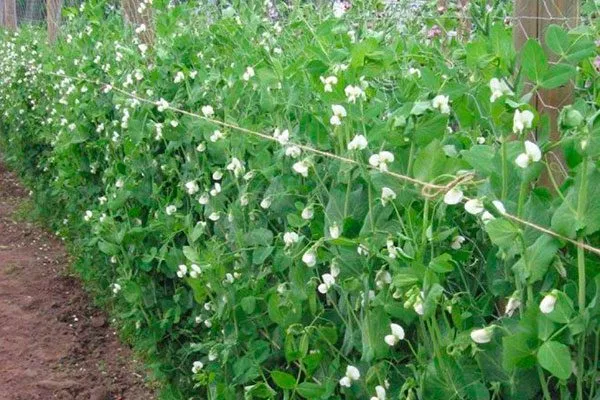
- flowers – big and white;
- the location of the lower row of pods – about 30 cm from the ground surface;
- stem type – It is a climbing plant, so it needs to be tied to a supporting structure.
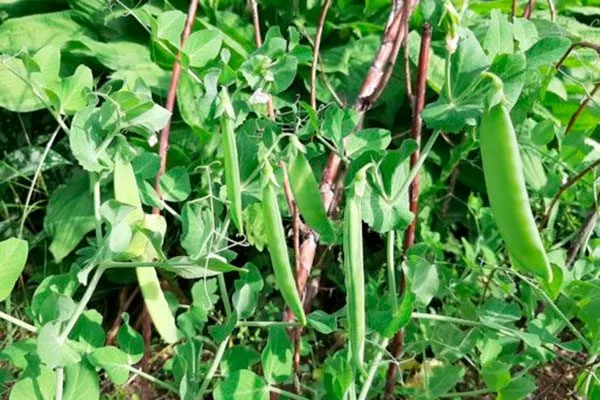
The peas are large, so a thousand seeds weigh on average 200 g. Other indicators:
- form - slightly curved;
- pod length – 10-11 cm;
- width - 1.2-1.3 cm;
- feature of the top – with a sharpening;
- skin color when fully ripe – light green;
- parchment layer – absent;
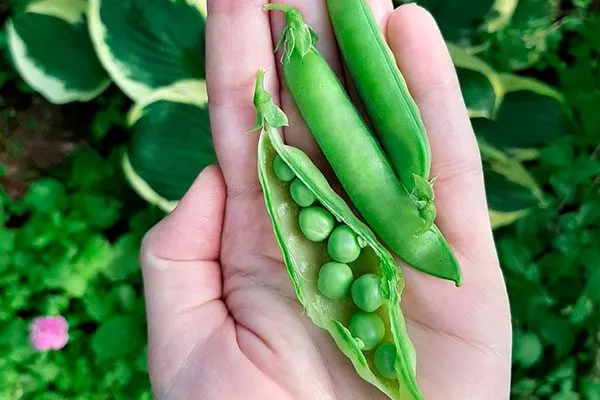
- the number of beans in one pod is 89 pcs.
Taste characteristics and purpose
It's no coincidence that peas are called both sugar snap peas and baby peas, as they have a particularly sweet flavor and a delicate texture. Furthermore, the peas themselves can be eaten young, before they become hard.
Ripening and yield
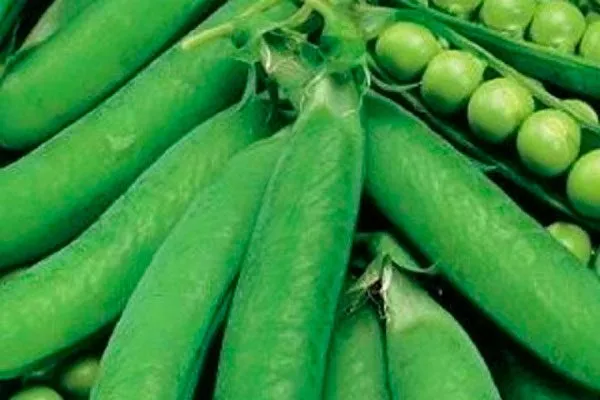
This is a mid-early variety in terms of ripening time, as the pods can be picked as early as 55 days after the first shoots appear. In cooler regions, the harvest period shifts slightly, with the harvest taking 65 days. A yield of 1.8 to 2.2 kg can be harvested per square meter.
Landing features
For growing the Detsky pea variety, it's recommended to choose the period from April 25-28 to May 9-12, when daytime temperatures don't drop below 12 degrees Celsius (55 degrees Fahrenheit) and nighttime temperatures don't drop below 2 degrees Celsius (36 degrees Fahrenheit). This pea variety grows best after grains and other crops, such as tomatoes, potatoes, beets, and cucumbers. It prefers sunny locations and light, permeable soils with a neutral pH.
Other requirements:
- For successful planting, it is recommended to select fertile areas with good lighting and protection from the wind.
- Before planting, the soil should be fertilized and loosened.
- If the soil acidity level is not neutral, it can be adjusted using alkaline mixtures.
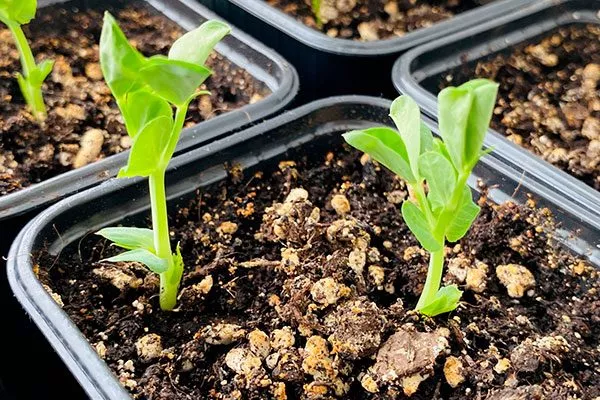
Growing is done using seeds, as beans root easily in open beds and grow rapidly. Before sowing, prepare the seeds for planting:
- Selecting seeds is an important step in the preparation process. First, it's necessary to weed out any unsuitable seeds. The seedlings are placed in a container filled with water and soaked until they swell. Empty seeds will float to the surface; these should be removed.
- After selection, the seeds are disinfected. For this purpose, they can be soaked in a potassium permanganate solution. The disinfection procedure should not exceed 25-30 minutes.
- It's also recommended to treat the peas with a growth stimulant before sowing. This will help speed up and improve germination and plant development.
While preparing the seeds, it's important to fertilize and loosen the soil. This will help prevent the spread of diseases and pests, reduce soil acidity, and improve yields.
When planting seeds, you should follow a certain pattern:
- It is recommended to leave a gap of up to 28-30 cm between rows;
- between seeds in a row – 13-16 cm;
- The planting depth should be approximately 4.5-6 cm.
- ✓ The optimal seed planting depth should be at least 4.5 cm to protect against birds.
- ✓ The distance between plants in a row should be at least 13 cm to ensure sufficient space for growth.
Subtleties of agricultural technology
Watering is an important part of crop care. It's essential for maintaining optimal soil moisture levels and ensuring normal plant growth and development. For peas, it's recommended to water periodically, following a specific schedule:
- On average, watering peas once a week is sufficient. However, during periods of drought or high temperatures, it is recommended to increase the frequency to once every 5 days. During rainy seasons, additional watering is not required, as sufficient water is supplied from natural sources.
- The most effective method of pea watering is drip irrigation. It delivers water directly to the plant roots, preventing the soil from drying out.
- It is acceptable to use a small watering can, using about 10 liters of water per 1 square meter of sowing area.
- Particular attention should be paid to watering peas during the flowering period, as the plant requires more intensive moisture. Therefore, watering should be done three times a week.
- Before planting, add compost or humus to the soil at a rate of 5 kg per 1 sq. m.
- After 2 weeks from germination, feed the plants with a solution of mullein (1:10).
- During the flowering period, apply phosphorus-potassium fertilizers to improve fruit formation.
What else needs to be done:
- To ensure a good pea harvest, it's important to loosen the spaces between rows after each watering. This creates aerated soil, which promotes growth.
- If you don't have time to loosen the soil between the rows, you can use mulching. To do this, spread grass, straw, or sawdust between the rows of peas. Mulch acts as a protective layer, retaining moisture in the soil and preventing its rapid evaporation.
- For fertilizer, use potassium salt and superphosphate, dissolving 10 g of each in a bucket of water. Apply the first dose of this beneficial mixture shortly before flowering, then repeat every 14 days. Nettle infusion is an excellent fertilizer option.
- It's important to remove weeds promptly. Due to its vine-like structure, peas quickly become entangled with growing weeds, making them difficult to remove.
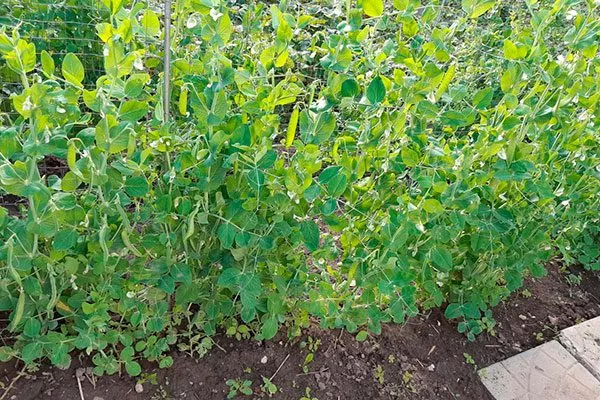
- After the seedlings emerge, supports are installed in the beds. The vines are attached to the supports. The stems are secured when they reach a length of 13-18 cm.
Resistance to diseases and pests
Sweet baby peas are resistant to most common diseases. However, excess moisture, caused by overwatering, can lead to harmful infections, including powdery mildew and rot.
As for pests, they rarely make their presence known. However, there is a risk of attack by pea weevils. An insecticide called Abzats is effective in combating this annoying pest.
Review of reviews
Baby Sugar Peas are distinguished by their impeccable taste, early harvest, and relative undemanding nature. They are equally popular among gardeners and consumers, and have a long shelf life, making them suitable for long-distance transport. The key to successful cultivation and a decent harvest is providing the plants with the sunniest possible location.