
Black-eyed peas are an unusual vegetable, unusual for our climate. They are a legume and used in cooking, folk medicine, and as livestock feed. Their distinctive feature is their black seeds. This variety is widely grown in Eastern countries, but is also popular worldwide.
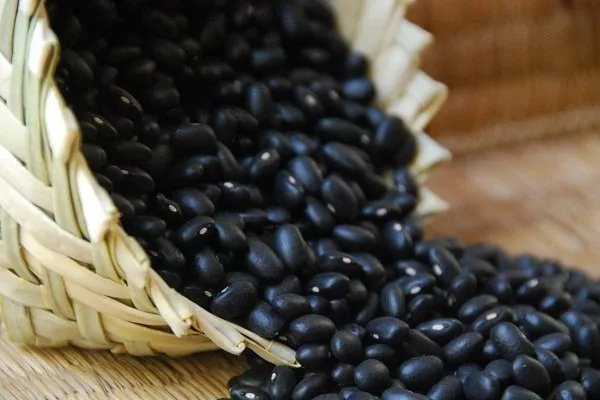
Black peas are used in medicine and cosmetology
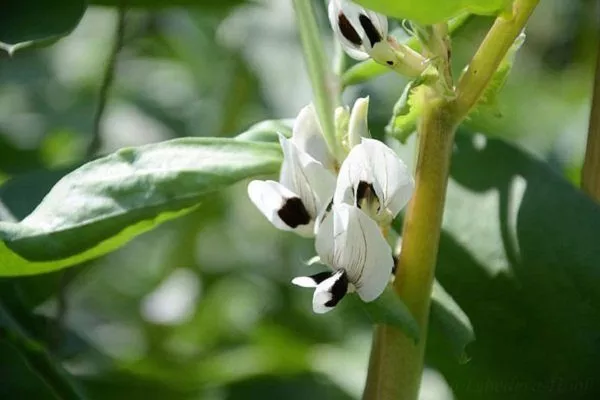
Black pea flowers are self-pollinating.
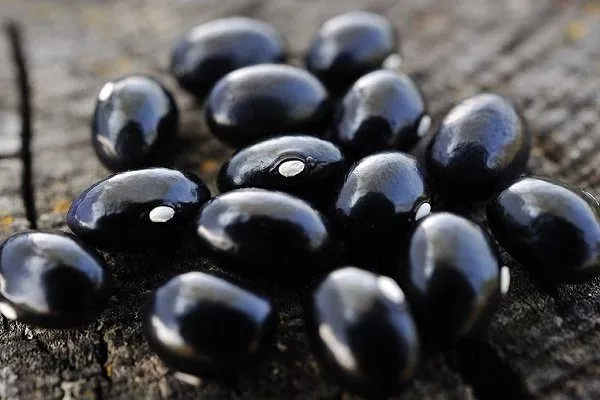
Black-eyed peas
Characteristics of black peas
Black-eyed peas have a robust root system with well-branched, developed rhizomes. This annual plant produces bisexual, self-pollinating flowers, a hollow, green stem, and tendrils that cling to fences. In extremely hot climates, cross-pollination occurs.
Dried peas are high in calories—364 kcal per 100 g. After boiling, the calorie content drops to 127 kcal.
Appearance
Black-eyed peas are distinguished by their bare stems, which reach a maximum length of one and a half meters. The variety is recognized by the following external characteristics:
- Depending on the variety, the flowers have different shades - white, dark purple, red;
- flower length – 1-3 cm;
- perianth - five-membered double;
- inside the flower there are 10 stamens and a pistil;
- fruits - rich dark color;
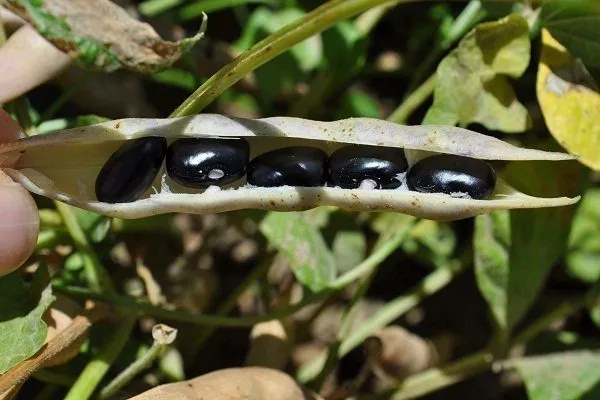
- pod size – from 8 to 12 cm;
- number of beans – 5-10 pieces, cylindrical or round;
- taste and aroma – pronounced with spicy notes.
Black peas' favorite habitat in the wild is hills, meadows, and forests.
Pros and cons
Black peas, like regular green peas, have mass advantages:
- used in cooking for preparing many dishes – soups, porridges, pies, casseroles, etc.;
- used in folk medicine and cosmetology;
- contains many useful substances, therefore it has medicinal properties;
- variety of consumption methods – fresh, boiled, fried, sprouted;
- low cost of the product;
- ease of care and cultivation;
- The uniqueness of the shade is black.
Composition and properties
The high nutritional value of black peas is comparable to that of meat products, especially the chickpea variety. This legume contains large amounts of the following nutrients:
- vitamins – group B, A, PP, C;
- it contains micro- and macroelements – zinc, iodine, magnesium, iron, sulfur, potassium, manganese, chromium, fluorine, molybdenum, nickel, etc.;
- easily digestible proteins;
- amino acids;
- antioxidants;
- starch;
- carbohydrates;
- dietary fiber;
- fiber;
- saturated fatty acids;
- pyridoxine;
- lysine.
Due to such a rich composition, black peas have the following properties: properties:
- improving brain function;
- increasing performance;
- normalization of the functionality of the digestive system;
- regeneration of damaged tissues and cells;
- cleansing the body of carcinogenic and other harmful substances;
- maintaining the cardiovascular system in working order;
- acceleration of metabolism;
- strengthening the immune system;
- removal of harmful cholesterol;
- improving the structure of the skin;
- energy saturation;
- normalization of stool;
- improving visual acuity;
- increase in hemoglobin;
- appetite suppression due to prolonged feeling of satiety;
- restoration of normal blood glucose and insulin levels;
- improving sperm quality.
The iron and folate found in black peas help alleviate anemia (they boost the body's hemoglobin levels). Therefore, this vegetable is recommended for women during pregnancy and during heavy menstrual bleeding.
Black pea varieties
| Name | Soil type | Flowering period | Disease resistance |
|---|---|---|---|
| Smooth black peas | Lightweight, with a pH level of up to 7 | 1-1.5 months after sowing | Moderate |
| Brain peas | Lightweight, with a pH level of up to 7 | 1-1.5 months after sowing | High |
| Chickpeas | Lightweight, with a pH level of up to 7 | 1-1.5 months after sowing | Moderate |
| Blue pod | Lightweight, with a pH level of up to 7 | 1-1.5 months after sowing | High |
| State farm variety | Lightweight, with a pH level of up to 7 | 1-1.5 months after sowing | Moderate |
- ✓ Resistance to local climatic conditions.
- ✓ Resistance to regional specific diseases.
- ✓ Ripening times corresponding to the duration of the warm period in the region.
Black peas are divided into two subspecies, based on the shape and structure of the grains:
- Smooth black peas Characterized by a smooth surface—no wrinkling. The peas remain in this same state after drying. Their main advantage is their high starch content.
- Brain peas Black beans are characterized by their wrinkled texture and increased sweetness, but minimal starch. When fresh, the beans have a smooth surface, but after drying, it wrinkles.
Varieties:
- The most common variety of black peas is considered to be the garbanzo bean, whose homeland is Central Asia.
- Blue pod is characterized by blue-violet pods and dark brown seeds when fully ripe.
- The state farm variety also has dark brown beans.
How to grow black-eyed peas?
Black-eyed peas begin flowering 1-1.5 months after sowing. Seedlings emerge in the leaf axils at the level of the sixth leaflet.
Sow seeds after air and soil temperatures have stabilized. In central Russia, this is usually late April. Planting continues throughout the summer, but the final sowing should be in early July.
Black-eyed peas can enrich the soil with nitrogen. This is because beneficial microorganisms develop on the rhizomes, absorbing and fixing nitrogen from the air.
Preparing for landing
Peas aren't considered a particularly demanding crop, but they do require careful attention to agricultural practices. Planting is done in stages. Black-eyed peas can be sown dry, but experts recommend a few adjustments:
- Sort the seeds by hand, discarding any damaged ones. These seeds will not grow into a plant.
- To increase plant resistance to diseases and pests, warming is recommended. To do this, dissolve boric acid in hot water (40 degrees Celsius) (1 g of boric acid per 5 liters of water). Leave the beans for 5 minutes, then remove and dry.
- Be sure to soak the beans in warm water for 12-15 hours to speed up the germination process. This will ensure that all the elements will produce a harvest. If you're planting a small amount of peas, soaking them with a damp cloth will suffice.
Black-eyed peas are recommended to be planted after pumpkins, cabbage, potatoes, tomatoes, and cucumbers. These are the most optimal predecessors. Legumes should not be planted after beans, peas, lentils, or peanuts.
Site and soil requirements:
- The location should be well-ventilated and receive maximum light. However, peas can also grow successfully in the shade.
- The plant's roots do not tolerate excessive moisture, so the groundwater level should not be less than 1 m (the roots are quite long).
- The best soil is light, with a pH level of 7 or higher. Excessive acidity is unacceptable. In this case, liming is used to normalize the pH.
Black peas prefer fertile soils, but do not tolerate excess nitrogen, so the site is prepared as follows:
- In the fall, carefully dig the soil to the depth of a spade. This oxygenates the soil, making it looser. To reduce acidity, add lime or wood ash in the fall. Peas don't like fresh organic matter, so it's added in the fall. Well-rotted manure, chicken manure, and compost are all good options.
- In spring, be sure to apply mineral fertilizers: 25 g of potassium salt and 55 g of superphosphate per square meter. You can also fertilize with saltpeter (10 g per square meter). If the soil is too poor, molybdenum, boron, and copper can be added separately.
The process and scheme of planting black peas
Requirements:
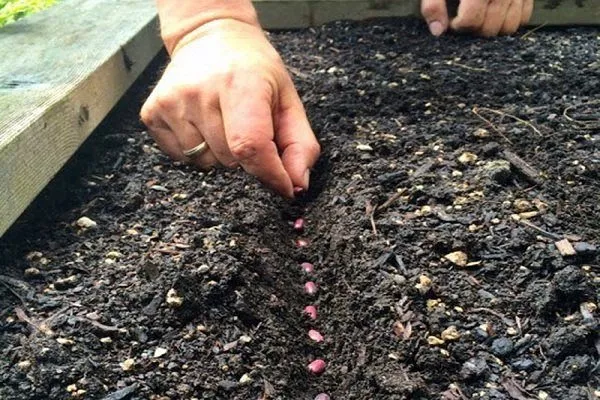
- the depth of planting sprouted seeds is from 3 to 4 cm;
- there should be 40-50 cm between the furrows;
- The preferred distance between grains is 15 cm, but the distance can be made smaller (minimum 5 cm).
Planting seeds in open ground:
- Level the surface of the area with a rake, breaking up any clods of earth.
- Dig furrows up to 7 cm deep and 2-3 cm wide, then fill them with wood ash mixed with compost in equal parts. This reduces the depth of the furrows to 4 cm. Keep in mind that in heavy soils, the bean planting depth should be at least 5 cm.
- Moisten the soil and lay out the grains with the sprouted side up.
- Sprinkle with soil and compact the surface.
- Birds love to peck at the seeds, so create a protective system using non-woven fabric or translucent film. The first shoots will appear in about a week.
Some gardeners sow crops such as sorrel, lettuce, and other crops between rows of peas, saving space. Others plant black-eyed peas near young fruit trees, especially apple trees. This provides the garden with essential nitrogen.
Watering and loosening
To successfully grow black-eyed peas, water the crop every two days immediately after sowing the seeds outdoors. It's important to monitor the air temperature—in case of unexpected frost, cover the crop with plastic or apply mulch.
The soil surface should be loosened after moistening (watering or rain), but not every time. The first loosening is done 15 days after germination. Hilling of the seedlings is also done during this period. Subsequent loosening is performed as needed, when a dry crust forms on the soil.
Watering requirements:
- Black peas require a medium level of moisture – the soil should not be over-dried or over-watered.
- The amount of water added and the frequency of watering depend on climate and weather conditions, but on average, the crop is watered once a week before the flowering period.
- During the flowering period and the formation of pods, peas need to be watered once every 3-4 days.
- 1 sq. m requires up to 10 liters of water.
- The water should be settled (if collected from a tap) or rainwater. The temperature should match the ambient air temperature, so the collected liquid can be stored in direct sunlight.
Top dressing
Since black-eyed peas require fertile soil, they are fertilized. Organic fertilizer is first applied during the growth phase (before flowering). Liquid mullein and nettle infusion are used. Manure is diluted with water at a ratio of 1:10. 3 liters of mullein is sufficient per square meter.
The second application of fertilizer is done after flowering. This requires 1 tablespoon of nitroammophoska per bucket of water.
Plant garter
Pea plant shoots are quite weak, so they tend to fall to the ground as the fruit develops. They can be left in this position, but this makes it difficult to loosen the soil, hill, weed, and water. Furthermore, the plant will not receive enough sunlight.
Staking is done when the stem reaches 15 cm. For this, metal or wooden stakes up to 1 m high are used, spaced half a meter apart. Wire or rope is stretched across them in several rows. To properly shape the bush, the plant's tendrils are guided along the support structure.
Topping
This procedure is performed to increase yield. The tops of the pea plant are pinched during the growth of lateral shoots. This ensures that nutrients are evenly distributed throughout the plant, accelerating the formation of new fruiting shoots.
Carry out the procedure in the morning and in sunny weather, which allows the culture to recover faster.
Bird protection
Birds (especially crows) love peas, so when the pods begin to form, it's recommended to equip the support structure with a net (a fishing net can be used). The net is stretched around the entire perimeter and always on top.
Pests and diseases
Black peas are susceptible to certain diseases and insect infestations, so it is important to know what preventative measures and treatment/control methods are used:
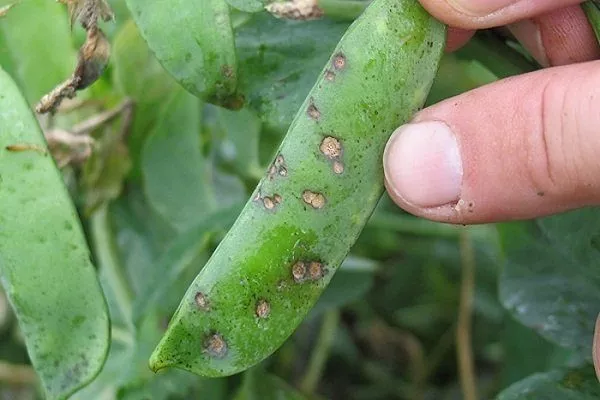
- Fusarium Root rot (a fungal disease) occurs when the roots are overwatered. It is characterized by the formation of brown spots on the stem and yellowing of the underside of the foliage. Treatment is futile because the root system has rotted.
To prevent this, monitor the soil moisture level. If the summer is too rainy, be sure to cover the plant with plastic film to prevent direct water from reaching the bushes. - Rust The disease manifests itself as foliage damage and subsequent death. The foliage turns brown. Treatment involves treating the bush with Bordeaux mixture (1%).
- Powdery mildew Occurs most frequently. The etiology is fungal. Symptoms include the formation of gray-white, then brown-black spots on leaves, stems, and pods. Ultimately, the plant dies. Treatment involves colloidal sulfur (1%) and fungicides (Quadris, Topaz, Topsin, Skor, Fundazol).
- Ascochytosis Dry spots with dots along the edges form. Stems and leaves are affected. To get rid of the disease, simply spray the plant with copper oxychloride (4%).
- Pests – pea moth, leaf roller, cabbage or garden moth, aphids. Folk remedies for control include an infusion of tomato tops or garlic. For the first recipe, you'll need 3 kg of finely chopped tops and 10 liters of water. Let it steep for 2 days. For the garlic infusion, add 20-30 g of garlic to a bucket of water. Let it steep for 24 hours.
Harvesting and storage
Collection Black peas are harvested gradually, as the beans don't ripen all at once. Therefore, the pods need to be picked every couple of days. The lower pods ripen first. The pods need to be picked carefully, but it's best to use scissors to avoid damaging the stem.
Storage methods:
- Fresh peas can be stored in the refrigerator for a maximum of a week.
- For long-term storage, use a freezer. Frozen black-eyed peas are placed in plastic bags.
- Peas can be dried by spreading them out on a well-ventilated surface for several days. An oven is also an option. Store the dried product in natural fabric bags away from insects. An airtight glass container is ideal.
- Peas are excellent for canning.
To ensure long-term preservation of the legume crop, ripe peas that show no signs of disease or damage are selected.
Reviews
Black-eyed peas are easy to grow and require little care. They don't require any special conditions; simply enrich the soil with nutrients. They're a unique food that can replace meat for vegetarians.