
Ambrosia is a sugar snap pea variety. It is grown outdoors in various regions of Russia. It has excellent flavor and many other benefits. To achieve these benefits, it requires proper planting and care.
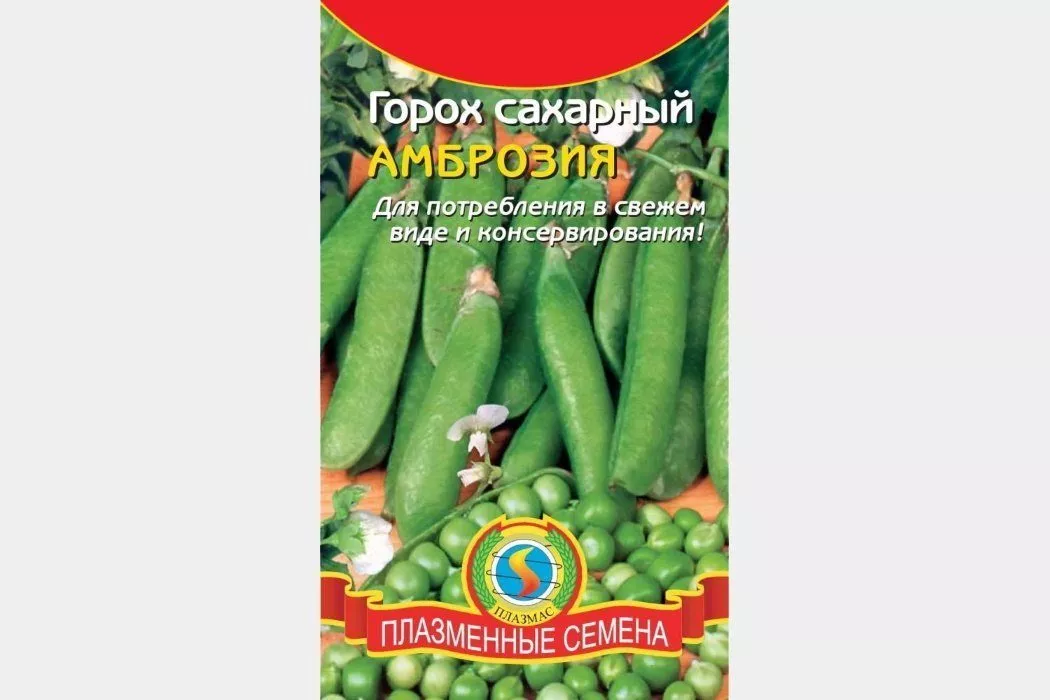
Pea variety Ambrosia
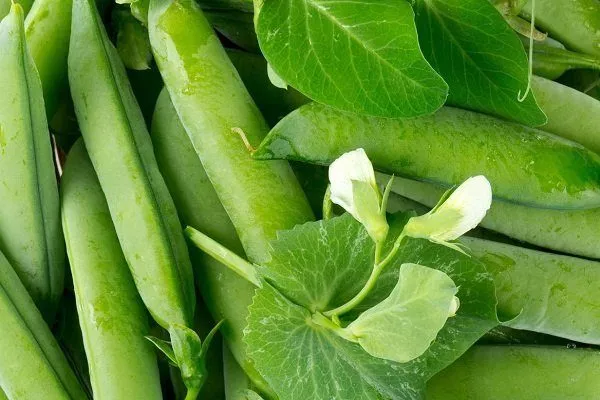
Ambrosia peas have excellent taste.
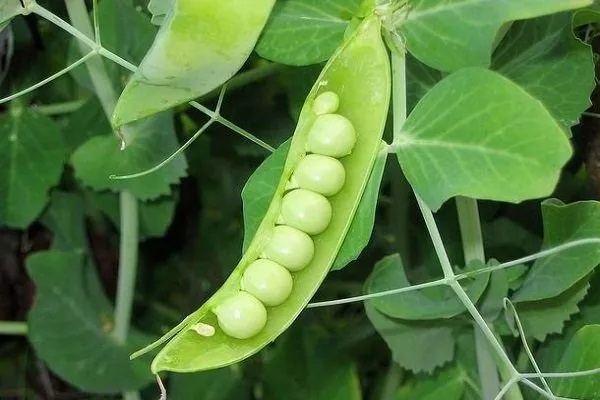
The Ambrosia pea variety matures in 55 days.
Description of the variety, advantages and disadvantages
Ambrosia is one of the most popular sugar snap pea varieties in Russia. It has the following characteristics:
- plant height – 50-70 cm;
- hollow stem;
- the beans are wide and long, the shape is slightly curved;
- light green color of pods at technical maturity, 7-8 peas;
- beans with thick and fleshy walls, sweet taste, no parchment layer;
- the average length of the pods is 9 cm, the diameter of the peas is 0.8-0.9 cm;
- Peas are green at the stage of technical maturity, after full ripening they become light yellow and wrinkled;
- maturation takes an average of 55 days;
- yield – up to 1.2 kg per 1 sq. m.
The Ambrosia variety owes its widespread recognition among gardeners across the country to its advantages:
- rapid ripening;
- excellent taste characteristics;
- friendly ripening of beans;
- good yield;
- average disease resistance;
- versatility – Ambrosia peas are good fresh and canned, they can be frozen;
- minimum food waste – not only the peas, but also the unripe pods are edible;
- the possibility of growing as a green manure - due to the accumulation of a large amount of nitrogen during the growing season, peas are an excellent predecessor for many crops;
- Green mass and hay can be used as animal feed.
Optimal conditions for growing
To obtain a high-quality and abundant harvest of Ambrosia peas, it is necessary to create certain conditions for its cultivation:
- sunny place on the site;
- sufficient distance from groundwater;
- correct predecessors – it is better to plant ragweed after cucumbers, pumpkins, potatoes, tomatoes, cabbage;
- correct fertilizing for predecessors – the introduction of organic fertilizers is necessary;
- the soil is fertile, cultivated, light, preferably sandy loam or loamy;
- recommended acidity level: 5.5-7 pH;
- The soil must be rich in calcium.
- ✓ The soil acidity level must be strictly within the range of 5.5-7 pH for optimal absorption of nutrients.
- ✓ The soil must contain high levels of calcium, which is critical for the formation of strong stems and beans.
It's important to remember crop rotation rules, which involve properly alternating crops within a single plot. Peas should not be returned to their original location for at least four years.
If the soil is sod-podzolic and acidic, then phosphate rock should be added during fall tillage. 35-40 g of fertilizer is needed per square meter. Another option is lime. 0.5-0.7 kg of the product is needed per square meter.
In the fall, when digging the pea plot, add organic matter and phosphorus-potassium fertilizers. Dig the soil deeply, to a depth of about 25 cm.
Fresh manure should not be applied to the crop. This will cause the peas to branch out and increase the risk of disease.
Landing
Ambrosia peas are recommended for planting in early May. Consider the climate of your specific region, as it's recommended to plant them 1-1.5 months after the last frost. Peas are not susceptible to short-term frosts, and they thrive in cooler weather.
Ambrosia peas can be sown at various times. The recommended interval is 10 days. This planting schedule maximizes the harvest period.
To plant Ambrosia peas, follow the following algorithm:
- Pour room temperature water over the seedsThe water should completely cover the planting material and be changed every two hours. Soaking for 12-15 hours is sufficient. Alternatively, soak the seeds in hot water (no more than 50-55 degrees Celsius) for 5 minutes, adding micronutrient fertilizer.
- Soak the seeds in a solution of potassium permanganate for 15 minutes.This measure serves as a disease prevention measure.
- Prepare the siteThe bed should be leveled and loosened. Make furrows or holes, leaving 20-30 cm between rows.
- Water the furrows (holes) and sow the seedsThere should be a distance of 6-10 cm between adjacent plants. Plant the seeds 3-4 cm deep. If the soil is very light, you can increase the depth by 1-2 cm.
- Cover the crops with soil, patting her lightly.
- Soak the seeds in room temperature water for 12-15 hours, changing the water every 2 hours to remove germination inhibitors.
- Treat the seeds in a solution of potassium permanganate for 15 minutes to prevent diseases.
- Heat treat the seeds in water at 50-55°C for 5 minutes to stimulate germination.
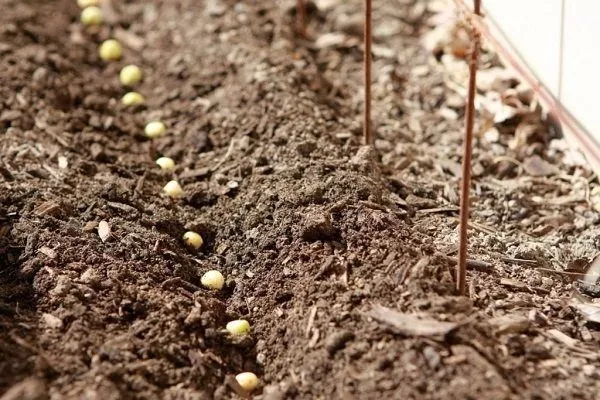
It's recommended to provide cover before seedlings emerge to prevent birds from dispersing the seeds. Plastic film, dry branches, or netting can be used.
Care
Grow peas It's not complicated. Care should be comprehensive, but all measures are standard.
Watering
Peas require essential moisture; lack of it will cause flowers and ovaries to drop. Initially, water weekly, but once flowering begins, increase the frequency to 2-3 times a week.
Loosening, weeding
Good soil aeration is essential for successfully growing Ambrosia peas. Regular loosening of the soil helps ensure this. It is recommended to do this after each watering and heavy rain. Loosen the soil between the rows.
A key aspect of pea care is timely weed control. Weeds negatively impact the growth and development of the crop, deplete essential moisture and nutrients, and increase the risk of disease and pests.
When weeding, remove plant debris from the garden bed immediately. Mulch should be applied if necessary.
Care must be taken when loosening and weeding. The plant's root system is located close to the soil surface and is easily damaged.
Support
Growing Ambrosia peas without support is not recommended. A trellis can be used instead. Support is necessary when the plant is less than 20-30 cm tall. As the plant grows taller, the stems will begin to lodge, the peas will not receive enough sunlight, and dampness will form under the plants—perfect conditions for rot, slugs, and snails.
The lack of support also leads to uneven ripening of the beans. As a result, the flavor suffers, and the beans don't accumulate enough nutrients and sugar.
Top dressing
Ambrosia peas grow successfully in fertile soil without additional fertilizer, provided the plot is properly prepared in the fall. Mineral fertilizers can also be used. Apply them twice: once before flowering, and again before fruit set.
When growing crops in depleted soil, it's helpful to use herbal infusions. If the spring is cold, nitrogen fertilizers are needed.
Pest and disease control
When growing Ambrosia peas, the crops need to be inspected regularly. This allows for early detection of signs of disease and pests and problem solving:
- Pea weevil (bruchus)The pest lays golden-yellow eggs on the underside of leaves in the spring. Larvae cause more damage to crops than adults, so the eggs should be removed immediately. Insecticides can help control the pests. A universal remedy is Aktara.
- Pea mothCaterpillars feed on peas, leaving webs and excrement inside the pod. Spraying can be used to control the pest. Tobacco dust, garlic infusion, and wormwood are effective.
- AphidLeaves affected by the pest become discolored and deformed, leaving sticky residue. Insecticides such as Fosfamide, Aktara, Corado, and Karbofos can help get rid of the pest.
- AscochytosisThe disease most often affects beans, appearing as light, round spots. The fungus spreads from the lower leaves, where pale spots appear. Affected plants should be removed, and the area treated with a fungicide. Bordeaux mixture, Fitosporin, and Fitoverm can be used for prevention.
- FusariumSymptoms include yellowing, curling, drying, and leaf drop, as well as browning and death of roots. Affected plants must be removed, as saving them is virtually impossible. Treat the area with a fungicide.
Harvesting and storage
Ambrosia peas are harvested in July and August. The process is not carried out in one day, but in stages. Peas should be harvested as the pods ripen. This is indicated by a bright green color and a good filling of peas. Loss of color and the appearance of a white net indicate overripeness.
It's best to harvest early in the morning. Pick the pods carefully, holding the stems to avoid damaging them.
Fresh peas don't keep for long. Whole pods should be stored in the refrigerator or another cool place. The Ambrosia variety is good eaten fresh and in salads. Peas are also used in cooked dishes, most often in stews and soups.
There are different ways to prepare Ambrosia peas:
- DryingBegin immediately after harvesting. Shell and sort the peas. Dip them in boiling water for a minute, then immediately cool under running water and repeat the process again. Dry, spread in an even layer on a baking sheet, and bake in the oven at 40-50 degrees Celsius for 3 hours, then leave at room temperature for the same period. Repeat the process twice. Store the peas in airtight jars.
- FreezingShell and sort the peas, lay them out in a single layer, and freeze. Freeze the peas in portions, either in a single container or bag. If frozen correctly, all the peas will separate. The Ambrosia variety is sugar pea, so you can freeze it in its pods.
- ConservationShell the peas, sort them, boil for half an hour, drain, and place in jars. Pour in brine—10 g each of sugar and salt per liter of water. Roll up the jars.
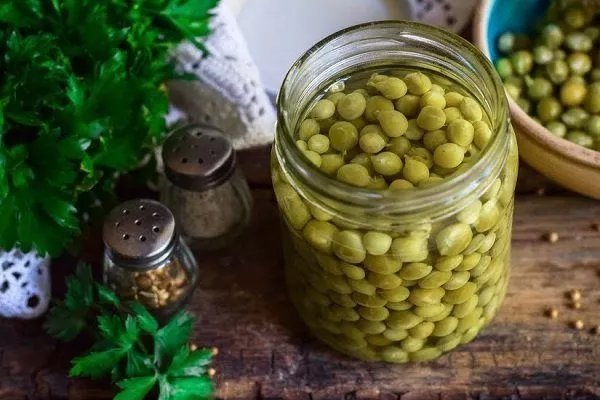
Ambrosia peas are versatile—both the pods and the peas themselves can be eaten fresh, canned, and used in a variety of dishes. Growing them is easy, provided you provide them with the necessary conditions.
Honestly, the name is off-putting, but I grew Ambrosia peas, and I can say it's a really good sweet variety. It makes excellent preserves. I've even canned them with the pods when they were still young. They're delicious.