
Alpha is a shelling variety of annual garden pea. It's suitable for growing in virtually any region and is excellent fresh and canned. To ensure a good harvest, it's important to plant it correctly and care for it throughout the growing season.
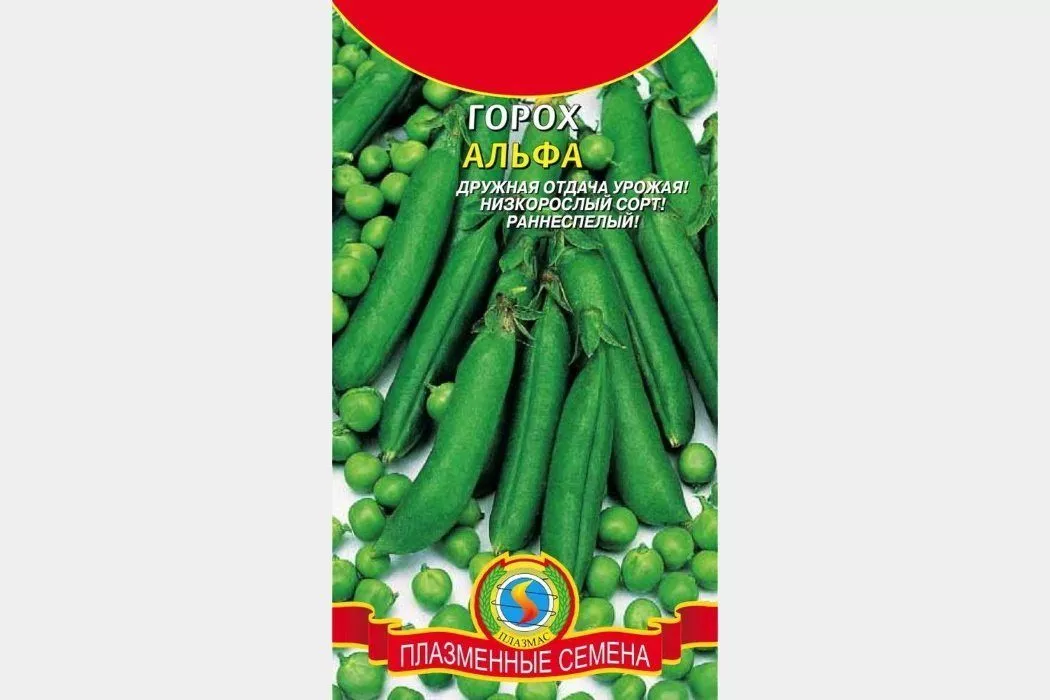
Alpha pea variety
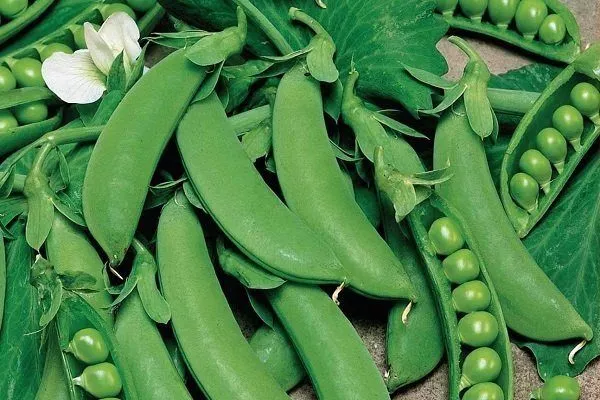
Pea Alpha is an early variety
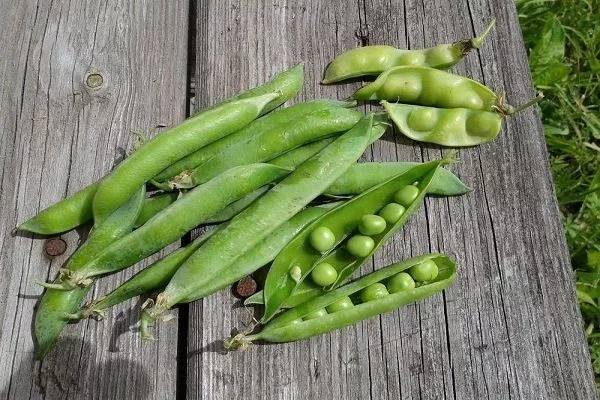
Alpha pea variety is frost-resistant
Description of the variety, advantages and disadvantages
The Alpha variety was developed by the All-Russian Research Institute of Plant Growing, with the Crimean Experimental Breeding Station participating in the development. The result is the following characteristics:
- semi-dwarf crop, 50-55 cm tall;
- the beans are dark green, average length is 8 cm, width is 1.3 cm, containing 5-9 seeds;
- the pod is saber-shaped or slightly curved;
- the pulp is green, the taste is sweetish;
- the variety is early ripening – on average 50 days pass from germination to harvest;
- up to 10 nodes are formed before the first bean, up to 20 in total;
- simple stem with shortened internodes;
- average yield – 0.5 kg per square meter.
The Alpha variety has many advantages:
- open ground cultivation;
- cold resistance;
- resistance to spring frosts;
- early ripening;
- uniform size and color of beans;
- a vast area suitable for cultivation – only a few regions are excluded;
- no need to organize supports on the bed;
- resistance to fusarium and ascochyta blight;
- excellent taste characteristics;
- the versatility of the fruit – it can be eaten fresh or preserved;
- The crop is effective as a green manure.
The Alpha variety has few disadvantages:
- regions excluded from the territory recommended for cultivation;
- instability to some diseases;
- relatively low yield.
Optimal conditions for growing
Growing peas Alpha is available in many regions. The Urals, Volga-Vyatka, and Northern regions are exceptions.
- ✓ The optimal depth of groundwater is at least 1.5 m to prevent root rot.
- ✓ Annual rotation of crops on the site is required to prevent the accumulation of specific pests and diseases.
For successful cultivation certain conditions are necessary:
- the soil is sandy loam, loamy or clayey;
- the best option is neutral soil acidity 6.5-7 pH, slightly acidic soil is acceptable;
- the area should preferably be sunny, it is also good to plant the crop under an apple tree;
- the landing site should be protected from the wind;
- Peas feel good after cabbage, sugar beets, cucumbers, pumpkin, and corn.
If the soil is too acidic, chalk or dolomite flour will help. They should be applied in the fall, while ash is better for spring tillage. If the soil pH is higher than 8, lime is required. Apply 0.35 g of the product per square meter.
Mulch is essential for dense soil. If the soil is clayey and infertile, nitrogen fertilizers are needed in the spring before planting peas.
The plot for planting peas should be prepared in the fall. During the fall digging, add potassium-phosphorus fertilizer. Fresh manure should not be used, as the crop does not tolerate it.
Landing
Alpha peas are sown from seeds in open ground. The crop is frost-resistant, so planting can be planned for around April 20th. Consider the climate of your region. Alpha seeds germinate at 2-5 degrees Celsius.
- Two weeks before planting, calibrate the seeds, discarding damaged and non-standard ones.
- One week before planting, treat the seeds with a bacterial preparation to enhance nitrogen fixation.
The growing season lasts just over six weeks, so you can plant peas until the first ten days of July. It's best to plant the crop in batches, spaced two weeks apart, so you can enjoy a fresh harvest longer.
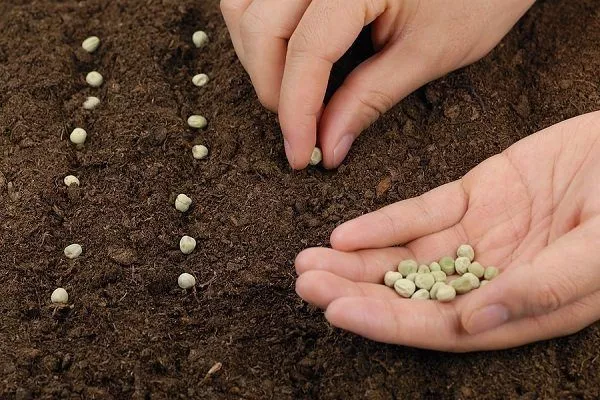
Planting peas isn't difficult. Follow these steps:
- Stratification of planting materialThis preparation is carried out immediately before planting. The seeds must be soaked in hot water for 2 hours. The temperature should not exceed 55 degrees Celsius.
- Disinfection of planting materialAt this stage, it's good to use a weak solution of potassium permanganate; boric acid is also effective. This preparation prevents many diseases and pests.
- Soaking planting materialThis step is optional, but it helps speed up seed germination. Soak the seeds for 12 hours.
- Preparing the garden bedThe soil should be dug over and weeded in the fall. Repeat the digging if necessary, especially in heavy soil. The soil should be loosened and leveled, and furrows should be made. Leave 30 cm between rows. The depth of the furrows depends on the soil characteristics. If the soil is light, the seeds can be placed 5-7 cm deep. In heavy soil, a furrow depth of 3 cm is sufficient. It is convenient to make small holes instead of furrows.
- Sowing seedsThey should be covered with soil and lightly patted down. The distance between adjacent plants should be 15 cm; you can plant them more densely to ensure that only the strongest shoots are left.
Seedlings appear in about 1.5 weeks. During this period, the bed should be covered with plastic, netting, or dry branches. This cover will protect the seeds from birds.
Caring for crops in open ground
The Alpha pea is relatively easy to grow, but it does require some care. This includes watering, weeding, loosening the soil, hilling, and pest and disease control.
Watering
The Alpha pea variety requires regular watering. For good growth, the plant requires moist soil. Watering is especially important during flowering and on hot days, which the plant does not tolerate well.
Watering frequency depends on the growing season and weather. Before flowering, watering once a week is sufficient. Once the first flower stalks appear, increase watering to 2-3 times a week, using 10 liters per square meter. Continue watering at the same rate throughout the fruiting period, no matter how long it lasts.
Do not allow the soil to dry out, otherwise the flower stalks and ovaries will fall off.
Weeding, loosening, hilling
Weeding the beds regularly is essential, otherwise the peas will grow poorly and wither. Combining weeding with loosening the soil is effective. Plant debris should be removed from the beds immediately.
Loosening the soil after each watering is necessary. This prevents the formation of a crust that interferes with the penetration of water and oxygen.
Hilling should be carried out when the height of the crop reaches 15 cm.
Top dressing
After planting, the crop requires only fertilizer applied in the fall or during spring tilling. If the soil is depleted, an herbal infusion can be used.
Fertilizing peas effectively before flowering is recommended. You can use a complex mineral fertilizer or a micronutrient fertilizer with organic additives. Another application is recommended before fruit set.
Topping
To increase the number of lateral shoots, pinch off the tops. This should be done while the plants are less than 20-25 cm tall.
Supports
Supports are not necessary for this variety, but several can be provided. The stems are held upright by intertwined tendrils. Supports allow each bush to receive more sunlight, which will positively impact the growth and development of the plant and the ripening time of the harvest.
Pest and disease control
The Alpha variety is susceptible to powdery mildew. It appears as a white, felty coating on the leaves and stems. Affected plants should be removed immediately, as the fungal spores are carried by the wind, and the plantings should be treated with a fungicide. Prevention includes burning plant debris in the fall and deep tilling of the soil.
Alpha peas can be susceptible to pests, most commonly the pea moth or aphids. These can be controlled with a garlic infusion. To do this, take 0.3 kg of garlic, crush it, add a bucket of water, and let it steep for 10 hours. Use the resulting solution as a spray, and repeat weekly for prevention.
In spring, there's a risk of weevil infestation. These beetles slow down seedling development and can even kill them. To prevent this, burn plant debris and plant crops early in the spring. Control the pest with malathion.
Harvesting and storage
Alpha peas aren't harvested all at once, but gradually as the pods ripen. It's best to harvest in the morning. Harvesting the peas isn't difficult—you just need to carefully pick the pods, holding the stems to avoid damaging them.
Pods that have become pale and too dense, with a white netting, are already overripe. They need to be removed quickly, otherwise new ovaries will not form.
If you plan to plant next year's crop from your own seed, leave the required number of pods to fully ripen. When the pods begin to brown and dry out at the base of the plant, cut them off at the base and hang them indoors. The room should be dry and well-ventilated; in good weather, a canopy is sufficient. Dry the beans for two weeks. Then remove the pods and sort them. Discard any blackened or deformed ones. Allow the selected pods to dry completely.
Fresh peas can be stored in the refrigerator or a cool place. For long-term storage, canning, drying, or freezing are recommended. Freeze peas in single-layer portions; place frozen peas in a bag or airtight container. Dry peas in a ventilated area and store in airtight containers (bags, cloth bags, and paper packaging are not suitable, as they often harbor insects).
A video review of the Alpha pea variety can be seen in the following video:
Alpha peas are a variety with excellent characteristics and minimal drawbacks. Their sweet flavor is loved by both children and adults. If all growing guidelines are followed, they will yield a good harvest.