
Growing beans is fairly simple, provided they receive warmth and fertile soil. However, a common problem is yellowing of the plant. This can lead to crop failure or reduced yield. There are many possible causes of this problem. It's possible to avoid them entirely, or even revive the seedling, if you recognize the cause of the discoloration early.
Causes of yellowing beans
It's impossible to pinpoint a single cause for bean yellowing, as the condition is influenced not only by biological factors but also by the gardener's carelessness (over-indulgence). The main causes include the following:
- Diseases. Plants can be attacked by fungal, bacterial, and viral pathogens. Their activity always results in discoloration of either the entire crop or individual parts.
- Pest damage. Insects that are particularly dangerous to beans do not cause yellowing of leaves or stems. These symptoms are usually caused by the spores of fungal and bacterial diseases carried by the pests.
- Deficiency/excess of nutrients in the soil. Often, at some point during crop cultivation, gardeners stop paying due attention to plant nutrition. Or, conversely, they believe that extra fertilizing will yield a larger harvest.
Then the beans begin to signal their health. The first sign of "discontent" is a change in the foliage color, primarily to yellow tones. - Failure to comply with agricultural practices. A common cause, especially among beginning gardeners. Over- or under-watering, lack of weeding and loosening, and many other factors, especially when combined with poor growing conditions, inevitably lead to yellowing and drying out of the plant.
Below, we'll examine in detail the common causes of bean leaves and stems turning yellow from green. We'll also provide methods for preventing and restoring the plant.
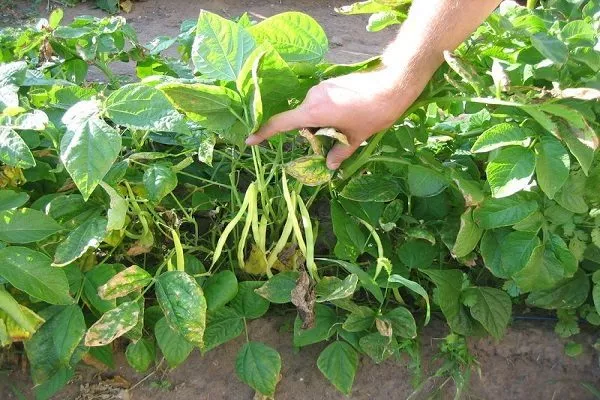
Fungal diseases and their treatment
Fungal infections are treatable and can be prevented through preventative measures. The fungal diseases described in the table cause yellowing of beans.
| Name of the disease | Symptoms | Reasons | Treatment and prevention |
| Septoria or rusty spot
| From the bottom of the plant all the way to the top, the leaves turn yellow. Rusty spots then appear, and the leaves fall off. Subsequently, the stems and fruits are affected. | Crop rotation rules are violated, there is insufficient lighting and a lack of nutrition. | Spray with a solution of salt and water (250 ml of salt per 10 liters of water).
If the plant is severely affected, use Bordeaux mixture (1%) or Hom, Revus, Fundazol. Apply fertilizers containing nitrogen. Treat seeds before planting. Thin out the crops and loosen the soil. |
| Downy mildew or peronosporosis | Light yellow (possibly whitish) spots appear on the undersides of the leaves. The leaf blade then becomes covered with a dark gray mold with a purple tint. The entire plant may become affected, and the fruit becomes deformed. | High humidity. Cool weather. | Spray the plants with fungicides Acrobat, Quadris, Strobi.
Remove plant debris and avoid overwatering. |
| Black leg or root rot | Leaves turn yellow, dry out, and curl. Plants (usually young ones) wilt. Reddish blood vessels are visible on cut stems and petioles, while in healthy plants they are green. The stem near the ground turns black and rots along with the roots. | Damp, cool weather. | Remove and burn severely diseased plants.
Spray the soil in the garden bed with Ditan to prevent further spread of the disease. Practice crop rotation. Plant beans after cabbage and tomatoes. |
| fusarium | The yellowed leaves dry up. If you pull out the bush, you'll find a brown, dying root system. The stem, when cut, is also brown. | Incorrect crop rotation, waterlogged soil. | Remove and burn affected plants. Choose varieties resistant to fusarium. |
Bacterial diseases and their treatment
Bacterial diseases are less common in beans than fungal ones, but they still occur. The most common infection is brown bacterial spot. Its symptoms, causes, and possible treatments are listed in the table.
| Symptoms | Reasons | Treatment and prevention |
| The leaves are covered with small light yellow spots. The spots enlarge, developing a yellow, dark green, or dark brown border. Gradually, the spots cover the entire leaf.
The leaves wrinkle, dry up, and fall off. The beans turn yellow and wrinkled. | Lack of light, warm and humid environment. | Treatment should be started at an early stage. Spray with a 1% Bordeaux mixture.
Practice crop rotation, pre-treat seeds, and choose resistant varieties. |
Viral diseases and their treatment
Damage to the entire plant, and yellowing of the foliage in particular, can be caused by viral diseases. The most dangerous ones are listed in the table.
| Name of the disease | Symptoms | Reasons | Treatment and prevention |
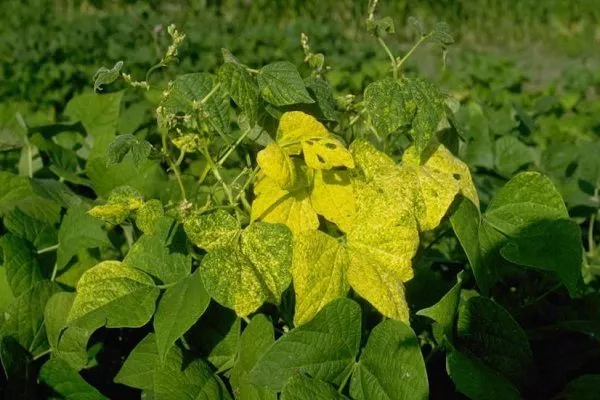
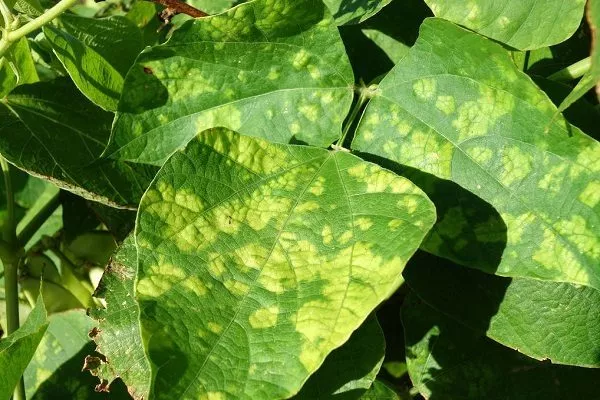
| Yellow mosaic | Leaves become covered in yellow spots, and veins become visible. The affected area sag. Growth slows, and all biological processes are disrupted. | The virus is transmitted by sucking insects - cicadas, aphids, and bedbugs. | Observe planting timings. Don't delay them too long, or flowering will coincide with insect flight season. |
| Ordinary mosaic | Leaf veins lighten. Areas of the leaf blades turn yellow. Chlorophyll production ceases, and plant growth and development slow down. | The virus is transmitted from wild and cultivated plants of the legume family through plant debris and insects. | Remove plant debris. Weed the beds. Treat for insects. |
Bean pests
Beans are plagued by numerous insect pests that can damage foliage and even ruin the harvest. However, insects pose a greater threat as disease carriers. These insects are the ones that eventually cause the crop to turn yellow.
Cicadas, aphids, and bugs are especially common on beans. They carry the following diseases on their abdomen and legs:
- yellow mosaic;

- ordinary mosaic.
As a preventative measure, plant garlic, calendula, and other strongly scented plants near bean crops. If an infestation occurs, follow these steps:
- Spray the plants with an infusion of onion peels, tomato tops, celandine, walnut leaves, etc. It will help with a small accumulation of insects.
- If the infestation is severe, treat the plantings with Aktara, Trichodermin Gaupsin, or similar pesticides. The table lists pests commonly found on beans.
Excess and deficiency of nutrition
Yellowing leaves are often caused by nutrient deficiencies. Deficiencies of various elements can cause leaf color changes. The table below explains the cause in more detail.
| Missing micronutrient | Symptoms and consequences | Correction of the situation and prevention |
| Bor | Photosynthesis is disrupted and the leaves turn yellow. | Feed the plants with boric acid. Dissolve 2 grams of boric acid in a 10-liter bucket of water. Water 10 square meters of plantings with this solution.
You can carry out foliar feeding with a solution of 5 g of boric acid and 10 liters of water. |
| Phosphorus | The leaves become dull, turn yellow, curl, and then their edges turn brown. | Fertilize beans with superphosphate at a rate of 40–50 g per square meter. Better yet, apply 30 g of superphosphate per square meter before planting.
Instead of Superphosphate, it is permissible to add 2 glasses of wood ash per 1 sq. m. to the soil. |
| Nitrogen | Beans enrich the soil with nitrogen, but they also require it themselves. If nitrogen is deficient, plants grow slowly. Leaves turn light green, then turn yellow and die. Stems appear thin and fragile. | When digging the soil, add horse manure extract or chicken manure. Use 5 kg of manure per square meter.
|
But too much nutrition also has a negative impact on the plant. The following components can be present in many ways:
- Excess potassium causes leaf lightening and the appearance of uniform spots. When there's too much potassium, certain micronutrients—iron, calcium, and others—can't be absorbed, leading to the death of the plant.
- Excessive phosphorus saturation of the soil is a rare occurrence. Signs of trouble include general yellowing of the plant, interveinal chlorosis, scorched leaf edges, and dry spots on them. The plant may also lose leaves.
How often should I feed? Do this twice:
- the first when the first true leaf appears;
- the second at the budding stage.
The best time to apply fertilizer is during fall tillage. Use organic matter (fresh manure, compost). Or, during spring soil preparation, use only well-rotted manure. Also, add wood ash.
- ✓ Availability of genetic marking of resistance to major diseases.
- ✓ Self-pollination ability to reduce the risk of infection through insects.
Violation of agricultural technology rules
Care and planting practices play a significant role in maintaining the health of beans. There are stages that directly cause the beans to turn yellow. They are as follows:
- Over-watering of the soil. During dry periods, it's easy to overwater the bed, which will cause the bean foliage to become lighter. Overwatering is especially dangerous during ripening. One preventative measure is choosing a well-ventilated area.
- Drought. Beans will drop their buds and their leaves will turn yellow if the soil becomes excessively dry. Beans can only tolerate short-term droughts without consequences. Drying of the topsoil indicates the need for watering.
- Too much lighting. Beans love light, especially young plants. Their leaves turn toward the sun, receiving the necessary amount of ultraviolet light. However, deliberately planting beans in bright, direct sunlight is not recommended.
- Crop rotation. A must in bean cultivation. Viral and fungal diseases that cause foliage yellowing develop if beans are grown in the same spot. Rotating the crop's location within the plot should be done annually.
When changing beds, keep in mind that sowing after legumes is prohibited (they are prone to the same diseases). However, nightshade crops, cabbage, and cucumbers make good predecessors. - Preparing the soil. Unsuitable soil (heavy, acidic) will lead to bacterial and fungal diseases. This will cause the bean leaves to turn yellow, and the yield will decrease.
The soil should be light (sandy loam or loamy) with a neutral to slightly acidic pH (pH 6.2-7.5). If the soil is heavy, adding sand, compost, peat crumbs, or sawdust will help. - Weeding and loosening the space between rows. Septoria leaf spot (rust spot), which causes yellowing of foliage, develops in dense plantings, creating ideal conditions for fungal diseases. Weeds can harbor the infection and transmit it to healthy bean seedlings.
- Seed treatment before planting. This will help prevent bacterial brown spot, downy mildew, and blackleg, which cause yellowing of the crop. Soaking is done in a pale pink solution of potassium permanganate, a soda solution (1 teaspoon of soda per 1 liter of water), or a solution of water and hydrogen peroxide (2–3%).
- The right choice of seeds. When purchasing seed, choose varieties resistant to viral infections and fungal diseases. The following varieties are particularly suitable: Karamel, Shakhinya, and Maslyany Korol.
- Treatment with chemicals against insects. Regular treatment with Aktara, Trichodermin, and infusions (folk remedies) will protect the plant from carriers of viral diseases such as common mosaic and yellow mosaic.
- Site preparation. In the fall, thoroughly clear the beds of plant debris and weeds. These contain fungal spores and pest larvae. When the weather cools down sufficiently, deeply till the soil, removing roots.
- Preparing the soil. Enriched soil will ensure healthy plant growth, otherwise the beans will turn yellow from lack of nutrition.
- Maintaining spacing between plants. Overcrowding will lead to poor ventilation, insufficient light, and bacterial brown spot, which causes the leaves to turn yellow.
The distance between rows should be 30–35 cm. Between plants in a row – 5–8 cm.
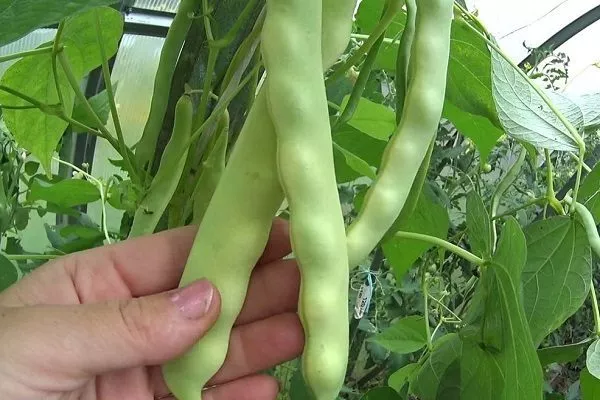
Yellowing of bean leaves can be caused by diseases and pests, poor agricultural practices, or nutritional deficiencies. Careful care and prevention are essential. It's important to remember that at the end of the season, yellowing foliage may simply indicate that the beans have stopped growing and maturing.