
Not everyone is familiar with cowpea, a nutritious component of the diet and a useful plant in folk medicine. But it's worth paying attention to. Its beautiful greens and rich vitamin and mineral content make it a leading ingredient in healthy eating. We'll discuss how to grow cowpea and harvest it properly later in this article.
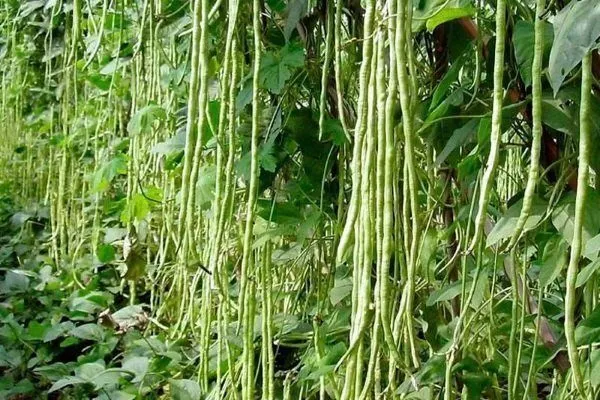
Vigna: What is this plant?
Cowpea is a herbaceous plant, not found in the wild, resembling a bean in appearance. Crossbreeding and pollination with beans are impossible. Cowpea, planted annually, can grow as a bush or a climbing vine, and can be tall or short. Some varieties are particularly attractive when they flower.
People call cowpeas "cow peas" or "sweet beans".
The crop's origin is Africa. From there, it spread to America and Europe. It is very popular in East Asian countries. In our country, cowpea's popularity is only just gaining momentum.
The plant's shoulder blades, when still young and ripe, and the beans are eaten. The plant offers a number of benefits due to its valuable composition.
Main characteristics of the culture
Cowpea has a long, straight stem covered with large, trifoliate leaves arranged in pairs. Flowers appear during the flowering phase. Their color depends on the cowpea variety and can range from soft purple to yellow, white, and blue.
The fruits have a thin, elongated shape. The lack of a parchment layer gives cowpeas an advantage over asparagus and other types of beans. As they ripen, seeds—beans—appear inside. Their color can be black, white, milky, or other colors.
The culture has a rich composition of vitamins and microelements, which makes its presence in the diet useful and necessary.
Benefits of cowpea
The cultivated plant is a source of vitamins, microelements, and fiber. Beans and pods contain:
- potassium;
- calcium;
- sodium;
- manganese;
- phosphorus;
- copper;
- iron;
- magnesium;
- zinc;
- arginine;
- vitamin C;
- B vitamins, etc.
This composition provides the following beneficial effects on the body:
- lowers blood sugar levels;
- increases hemoglobin;
- stabilizes blood pressure;
- normalizes bowel function;
- helps in weight loss;
- prevents swelling and removes excess fluid from the body.
Popular cowpea varieties
The crop has many varieties and hybrids. The most common are 'Macaretti,' 'Countess,' and 'Korean.'
| Name | Ripening period | Length of pods | Yield per bush |
|---|---|---|---|
| Macaretti | Mid-season | 35 cm | 1.5-2 kg |
| Countess | Early | 50 cm | 2.5 kg |
| Korean | Early ripening | 12 cm | 1 kg |
Macaretti variety
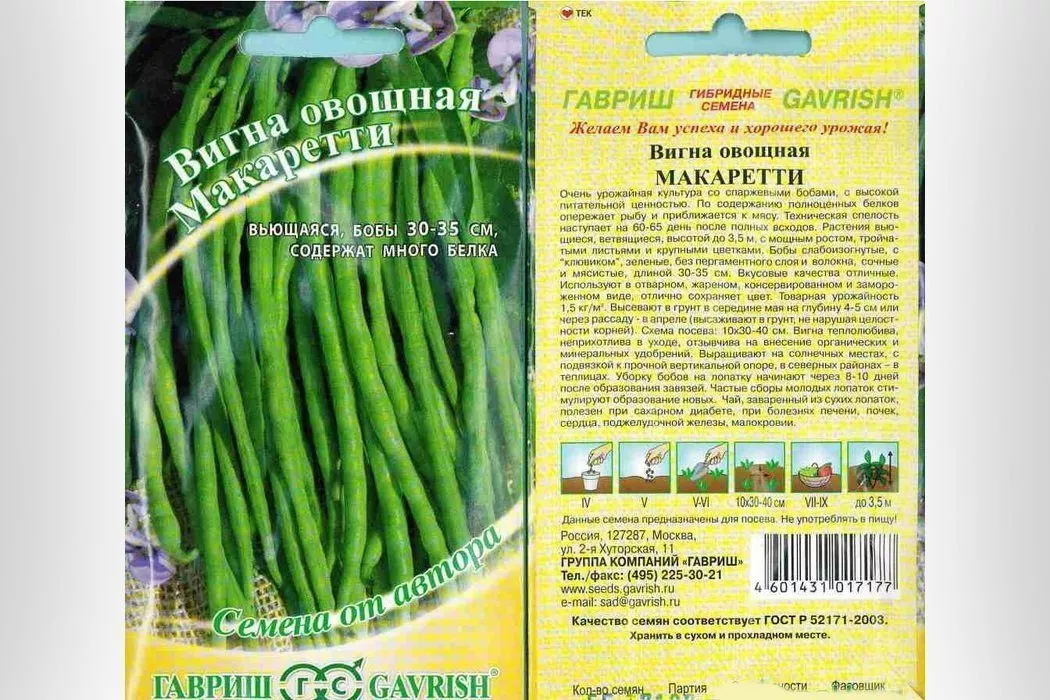
A mid-season, high-yielding variety. The vines grow up to 3 m long. The first harvest begins 2.5 months after germination. The long green pods reach 35 cm in length. The yield is average—1.5 to 2 kg per bush. The fruits are tasty and nutritious.
Countess variety
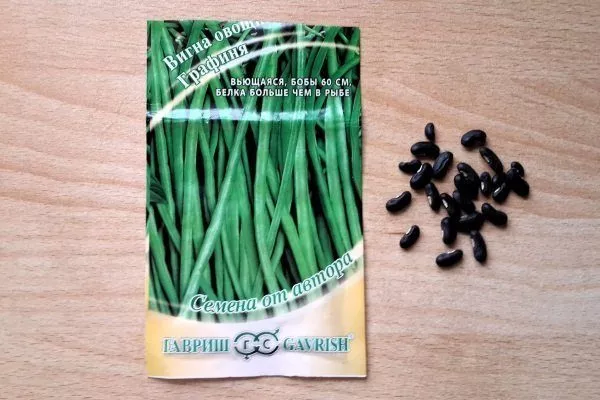
An early variety. The crop is ready for harvest in 63-65 days. Half-meter-long pods grow on long vines. The pods are free of coarse fibers, making them very tender and juicy. The beans are black. Yields are up to 2.5 kg per plant.
Korean variety
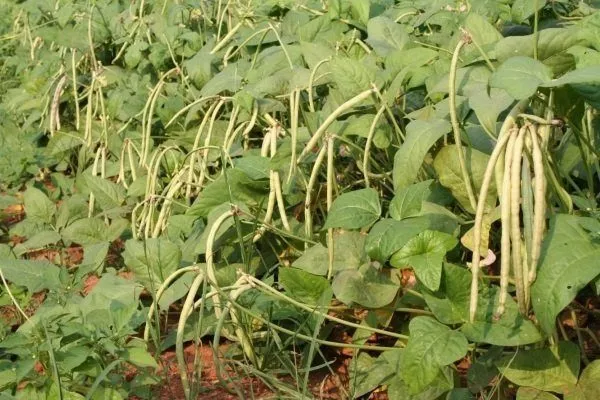
An early-ripening variety. The plant has a bush-like habit, making it suitable for growing in compact areas. The pods are short—up to 12 cm. The yield is approximately 1 kg per plant.
Planting and growing cowpeas
Preparing the soil and seed is essential for subsequent planting. Proper agricultural care and creating favorable conditions for the cowpea will result in beautiful blooms and a bountiful harvest.
- ✓ The soil temperature for sowing must be at least 15°C, otherwise the seeds will not germinate.
- ✓ Cowpea requires support for climbing varieties already in the early stages of growth to prevent damage to the stems.
Soil preparation
Choose a sunny, dry site for planting cowpeas. The plant does not tolerate excessive shade, waterlogging, or drafts. Practice crop rotation.
Cowpea requires a lot of nutrients during the growing season, so the soil afterward remains depleted of minerals and nutrients. It should not be replanted in the same location for at least three years.
Cowpea prefers non-acidic, loose soils. Therefore, when tilling the soil in the fall, if the soil is highly acidic, it is necessary to add chalk, limestone, or ash. The application rate is approximately 1 kg per square meter. As the organic matter decomposes, the soil will become more alkaline, and the acidity will decrease.
Organic matter improves soil quality, not only making it lighter and looser but also enriching it with nutrients and improving aeration. When plowing in the fall, you can spread humus or manure over the plot at a rate of 2.5-3 kg per square meter. Adding potassium and phosphorus fertilizers is also a good idea. Superphosphate at a rate of 25-30 g per square meter and potassium salt at 20 g per square meter are suitable.
If your soil isn't depleted, and you use organic fertilizers during fall preparation, you can avoid adding mineral fertilizers. The advantage of organic fertilizers is that they decompose slowly, accumulating optimal amounts of nutrients in the soil by spring, and their effect on the plant is quite long-lasting.
Preparing and sowing seeds
Cowpea seeds germinate very slowly if the soil isn't warm enough, so sowing them outdoors is only possible in southern regions. In cooler climates, planting them outdoors is only possible with seedlings.
To sow cowpeas, a necessary step is to prepare the planting material:
- Soak the seeds in warm water for 4-6 hours to swell. This will soften their shells, which means they will germinate sooner.
- To disinfect seeds, soak them in a weak solution of potassium permanganate for 15-20 minutes. Don't overdo the concentration; the solution should be light pink. After the time has elapsed, rinse the seeds with clean water and dry them until they become free-flowing.
To obtain seedlings, seeds are sown in individual containers. These can be any reusable container, but peat cups are preferred. The planting and growing process involves the following steps:
- Fill the container with soil and plant 1-2 seeds in each, deepening them 1 cm into the soil.
- Spray the surfaces with water and cover the glasses with glass or transparent film to retain moisture.
- Place the containers on south-facing windows.
- Water the soil regularly. No additional fertilizer is required.
- When the first 4 leaves are formed, reduce soil moisture.
It takes 35 to 40 days for seedlings to reach the planting stage. The sowing date is calculated based on this time. It will vary slightly from region to region.
Transplanting
Seedlings can be planted when the air temperature does not drop below 15 degrees Celsius and the soil has warmed to a depth of 10-12 cm. If necessary, provide a shelter over the bed using PVC film and metal arches.
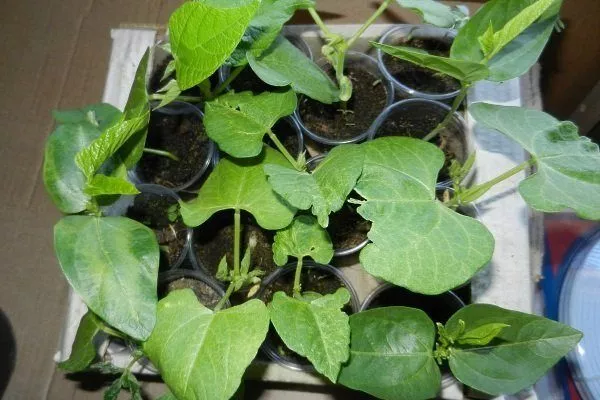
The planting scheme suggests leaving a width of 70-80 cm between rows, and maintaining a distance of at least 65 cm between planted bushes.
The process of planting seedlings:
- Moisten the soil before planting.
- Cut rows or make indentations according to the planting pattern.
- Place a peat pot with seedlings into the hole and sprinkle it with soil, lightly compacting it.
- When planting seedlings from reusable containers, carefully remove them and plant them in the hole together with the root ball.
- Carry out watering.
You can grow cowpeas outdoors without seedlings. Simply wait for favorable weather conditions and plant three seeds per hole. As they grow, select the healthiest shoot and remove the remaining two. Initially, cover the bed to protect the plants from temperature fluctuations.
Fruits form faster when the crop is grown in open ground using seedlings.
Watering and fertilizing
For irrigation, use settled, slightly warmed rainwater or well water. Keep the soil moist, keeping in mind that cowpeas don't like being overwatered. However, don't let the bed dry out completely.
When feeding your plants with mineral fertilizers, combine them with watering. To do this, dissolve the following in 10 liters of water:
- potassium chloride - 5 g;
- superphosphate - 15 g.
The following means can also be used:
- mullein - in a ratio of 1:20;
- urea - 1 tbsp.
Make furrows about 5 cm deep parallel to the rows. Fill the grooves with fertilizer and cover with soil.
Plant care during the growing season
As the plant grows, cowpea requires regular cultivation. First of all, when growing the climbing form, install supports, trellises, or cucumber netting to allow the cowpea to climb. Once the vine reaches 2.5 meters in length, pinch it back.
Weeding should be performed to eliminate weeds when the crop reaches at least 10 cm in height. Until then, manual weeding is recommended. Be careful and gentle when doing so to avoid damaging the cowpea's root system.
Loosen the soil regularly to prevent a dry crust on the surface from interfering with the plant's growth. This procedure will prevent the soil from drying out excessively and improve air circulation to the cowpea roots.
Harvesting and storage
Green cowpea pods should be harvested no later than 7-10 days after they emerge, during the milky stage. Picking the pods encourages the rapid formation of new ones. Otherwise, they will become stringy and tough.
| Storage method | Shelf life | Conditions |
|---|---|---|
| Freezing | Up to 12 months | -18°C |
| Drying | Up to 24 months | Dry, cool place |
The pods don't keep for long, so they should either be eaten immediately or frozen. For winter use, cut the pods to the desired size, package them in bags, and place them in the freezer.
To harvest the beans, wait until the pods are fully ripe and dry. The pods should be hulled, and the beans should be dried and stored in a cool place. Chop the dried pods and store them in a dry place. They make a healthy infusion.
For planting, seeds that have been stored for no more than 5 years are used.
In this video, a gardener explains how to harvest cowpeas in a timely manner:
Cowpea in cooking
Cowpea is a healthy food. Its protein content surpasses even that of fish and meat. And the pods are a valuable source of fiber.
The plant contains toxins, so it should not be consumed without heat treatment.
The seeds are used to make pureed soups and sauces, and are added to salads and main dishes. They are sprouted and used as part of a diet. The green pods make a wonderful side dish.
Gardeners' reviews
Cowpeas are quite easy to grow. Even novice gardeners can handle it, as the plant doesn't require any special conditions or cultivation techniques. With proper care, it produces up to 3 kg of valuable harvest per bush, which can be preserved in various ways for year-round consumption.