
Growing beans outdoors, provided all the proper growing conditions are met, will not only yield a bountiful harvest but also enrich the soil with nitrogen. The article below covers planting and care tips for beans, as well as a list of the best varieties.
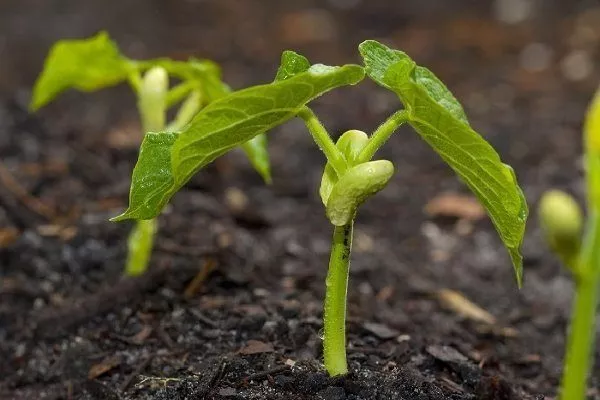
Botanical description of beans
Beans are annual vegetable crops. Their botanical characteristics include:
- Stem. Straight, tetrahedral, thick, reaches a height of 30-120 cm. Branches weakly.
- Leaves. They have a complex structure and consist of 3-5 leaves.
- Root. Powerful, goes deep to 1.5 m.
- Inflorescence. Racemes with 4-14 flowers in shades of white, yellow, blue, or brown. The wings may have black spots.
- Fruit. The pods are long and can be straight or curved. Length ranges from 4 to 20 cm, depending on the variety. The pods are green when technically ripe, darkening as they mature. Each pod contains two or more seeds. The color, shape, and size of the seeds vary by variety, ranging from yellow, green, purple, brown, black, and variegated.
- ✓ Resistance to diseases typical for your region.
- ✓ Adaptation to climatic conditions (length of daylight, temperature).
- ✓ Purpose of the harvest (for fresh consumption, processing or feed).
Varieties of beans They differ in terms of ripening time, yield, fruits, plant height, and agronomic characteristics.
The best varieties
Compared to other garden crops, beans don't have many varieties, despite their history spanning thousands of years. All varieties are divided into four groups based on ripening time:
- early – from germination to the first ripe pods it takes 60-65 days;
- mid-early – 65-75 days;
- mid-season – 70-90 days;
- late — about 100 days.
Also, all beans are conventionally divided into two types of varieties:
- Northern. Characterized by early maturity, increased frost resistance, and undemanding conditions, they are ideal for regions with short, cool summers.
- Western European. For the southern and central regions of the country, where the climate is warmer.
| Name | Ripening period | Plant height | Productivity |
|---|---|---|---|
| Velena | 90 days | up to 1 m | 1.1-1.7 kg/m² |
| Belorussian | 70-100 days | 1-1.4 m | 0.5 kg/m² |
| Virovsky | 95-102 days | not specified | 0.56 kg/m² |
| Aushra | 120 days | not specified | 29 c/ha |
| Russian blacks | not specified | 0.6-1 m | 0.5 kg/m² |
| Bobchinsky | 60-65 days | 0.6 m | 1.3-1.6 kg/m² |
| Windsor White | not specified | 1-1.2 m | 1.6-1.8 kg/m² |
| Patio | 50 days | 30-40 cm | not specified |
| Pink flamingo | 60 days | 60 cm | not specified |
| Childish delight | 70-90 days | about 1 m | not specified |
| Optics | 88-100 days | up to 1 m | not specified |
| Royal Harvest | not specified | not specified | not specified |
| Summer resident | not specified | more than 1 m | not specified |
| White pearl | 55-65 days | 1 m | not specified |
Velena
A mid-early sugar variety, ripening in 90 days. Plant height is up to 1 m. Pods are 12 cm long, each containing 4 beans. The fruits are round, soft white, later turning light fawn. Yields 1.1-1.7 kg per square meter.

Belorussian
Tall, mid-season beans. Plant height is 1-1.4 m. One plant produces up to 6 pods. They ripen approximately 70 days after germination, and are ready to harvest after 100 days. The pods are large, straight, and contain 3-5 tasty, juicy, and fleshy pods each. One of the most common varieties in Russia. One square meter yields 0.5 kg of beans.
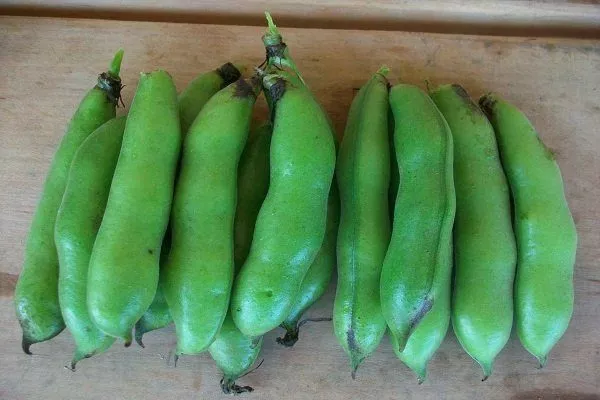
Virovsky
A mid-season variety. Ripens to full technical maturity in 95-102 days. The pods are slightly curved, 8-9 cm long. The fruits are oval, off-white or lemon-yellow, and matte. Excellent flavor during the milky stage. Yield: 0.56 kg per square meter.
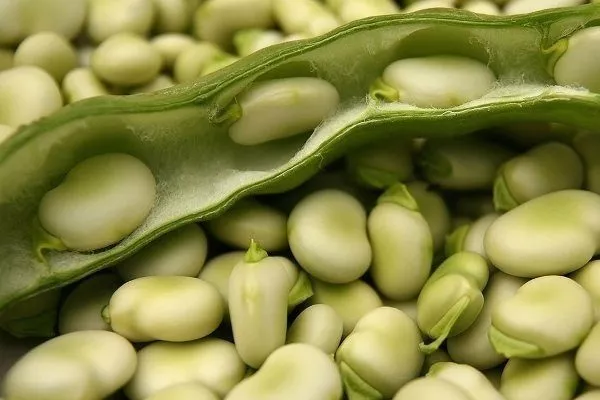
Aushra
A fodder variety. Matures in 120 days. Pods are 6-8 cm long, containing 3-4 beans per pod. Drought-resistant. Yield: 29 c/ha, green mass: 340 c/ha.
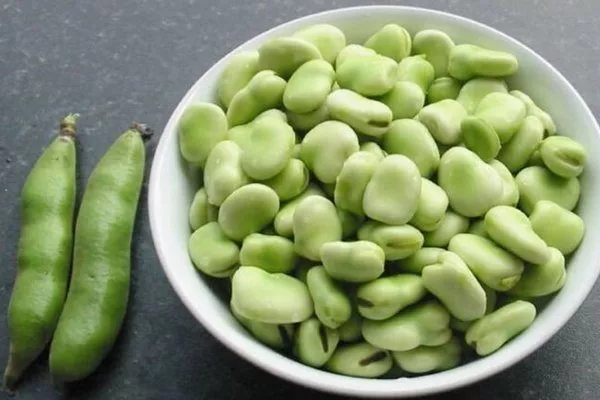
Russian blacks
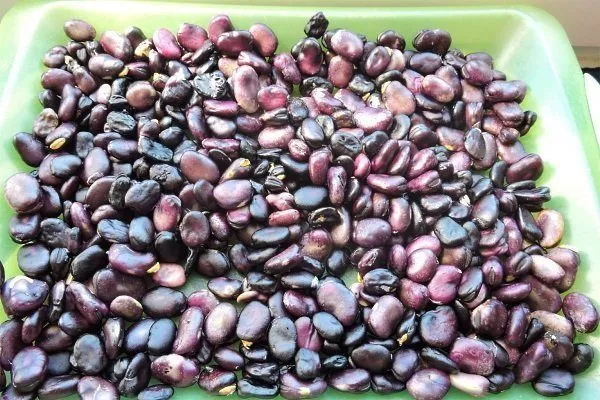
A mid-early, frost-resistant variety with a distinctly sweet flavor. The plant is branched and grows 0.6-1 m tall. The pods are small, up to 8 cm, and contain three beans each. The fruit has a delicate, juicy, and sweet flavor. The seeds are light green at maturity, turning purple when fully ripe.
They prefer to grow in sunny areas. They yield 0.5 kg per square meter. This is an old, proven variety, developed in the USSR and officially registered in 1943.
Bobchinsky
A mid-early sugar variety. It takes 60-65 days from germination to technical maturity. Plant height is 0.6 m. The pods are straight or slightly curved. Yield is 1.3-1.6 kg/m2.

Windsor White
A high-yielding variety with a mid-season ripening period. Developed in Europe, it performs well in harsh climates and tolerates spring frosts. The plant is tall, with shoots reaching 1-1.2 m in height. The pods are large, fleshy, and smooth. Each pod contains 2-3 milky-green beans. As they ripen, they turn brown.
Beans have an excellent flavor and are rich in vitamins A, B, and C. They are very caloric – several times higher than potatoes. The yield is 1.6-1.8 kg per square meter.
Patio
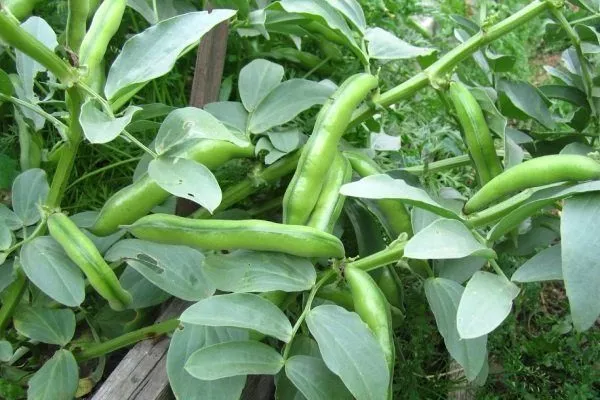
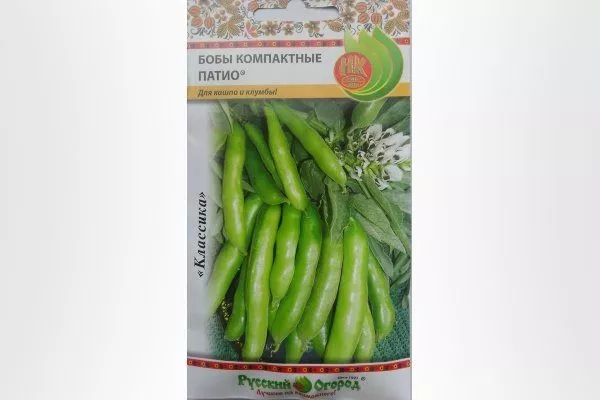
This variety ripens earlier than others. Its main distinguishing feature is its compact size. The plant height is no more than 30-40 cm. This variety is suitable for growing in pots – these beans can be grown on balconies and patios. The bushes quickly develop foliage, and the ovaries ripen 50 days after planting. A single pod contains up to 8 pods. The flavor is pleasant and can be eaten during the milky stage of ripeness. They are suitable for processing. Harvest is in July-August.
Pink flamingo
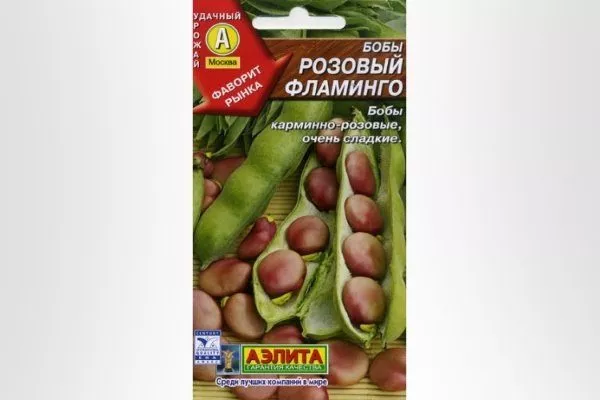
This variety is classified as new. It ripens mid-early, taking 60 days from germination to technical maturity. The plant grows up to 60 cm in height. Each bush produces 8-16 light green pods, each 7-8 cm long.
A plus of this variety is that the pods don't split open after ripening. The seeds are large and carmine-pink. They are delicious fresh and suitable for various processing methods.
Childish delight
A mid-early variety. Ripens in 70-90 days. The plant has medium foliage and grows to a height of approximately 1 m. The pods are wide, strongly curved, and green when ripe. The seeds are large, oval, and white.

Beans repel Colorado potato beetles and moles.
Optics
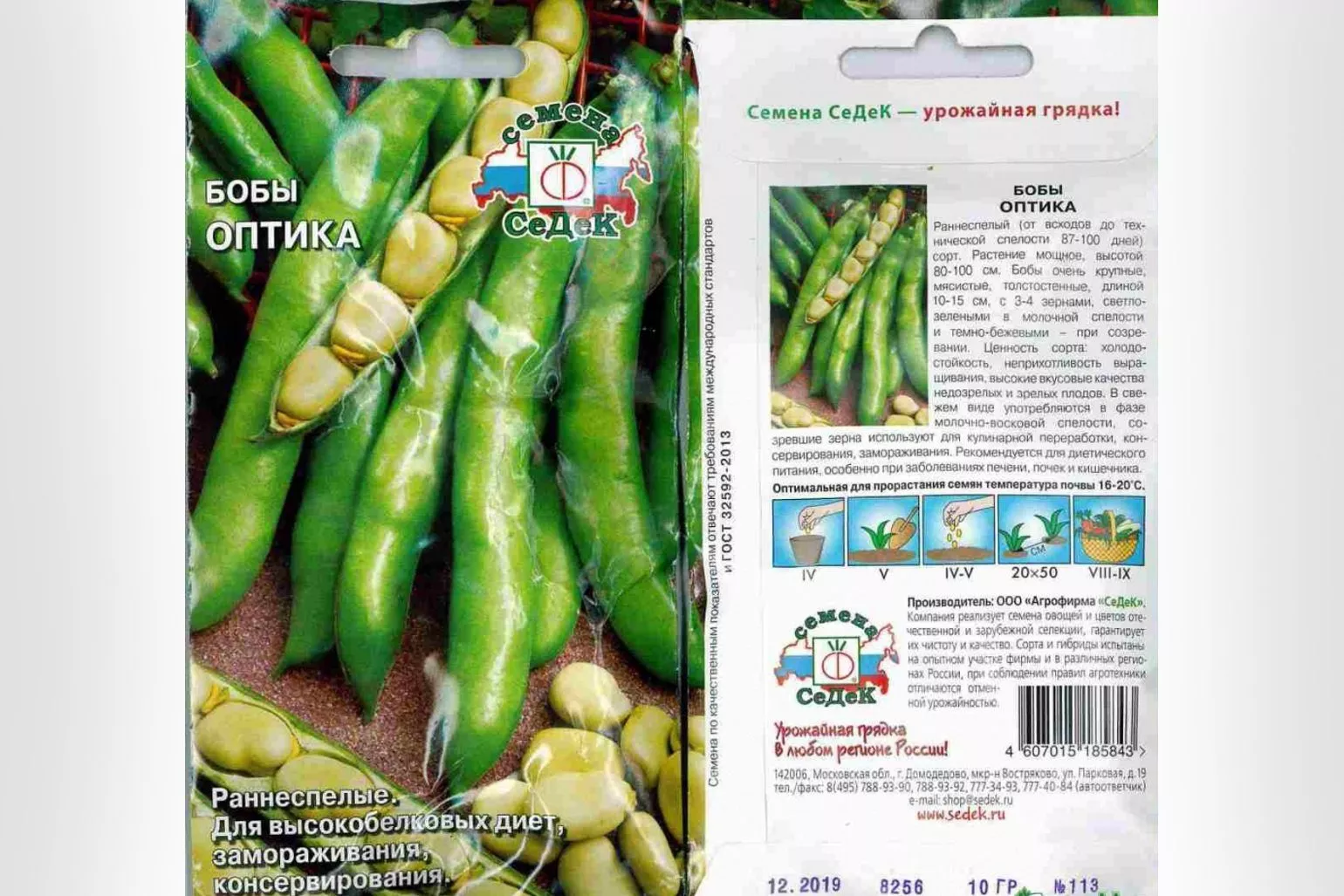
An early variety, it matures in 88-100 days. A vigorous plant, it grows up to 1 m in height. The pods are large, fleshy, and have thick valves. They are 10-15 cm long. Each pod contains 3-4 seeds. The beans are light green at the milky stage of ripeness.
Once ripe, the seeds turn dark beige. They are delicious fresh and suitable for canning, freezing, and cooking. This variety is recommended for dietary use.
Royal Harvest
A mid-early, highly productive variety. An upright plant with fleshy, long pods. The fruits are large, with as many as 8 in a pod. It is characterized by uniform ripening and excellent flavor.

Summer resident
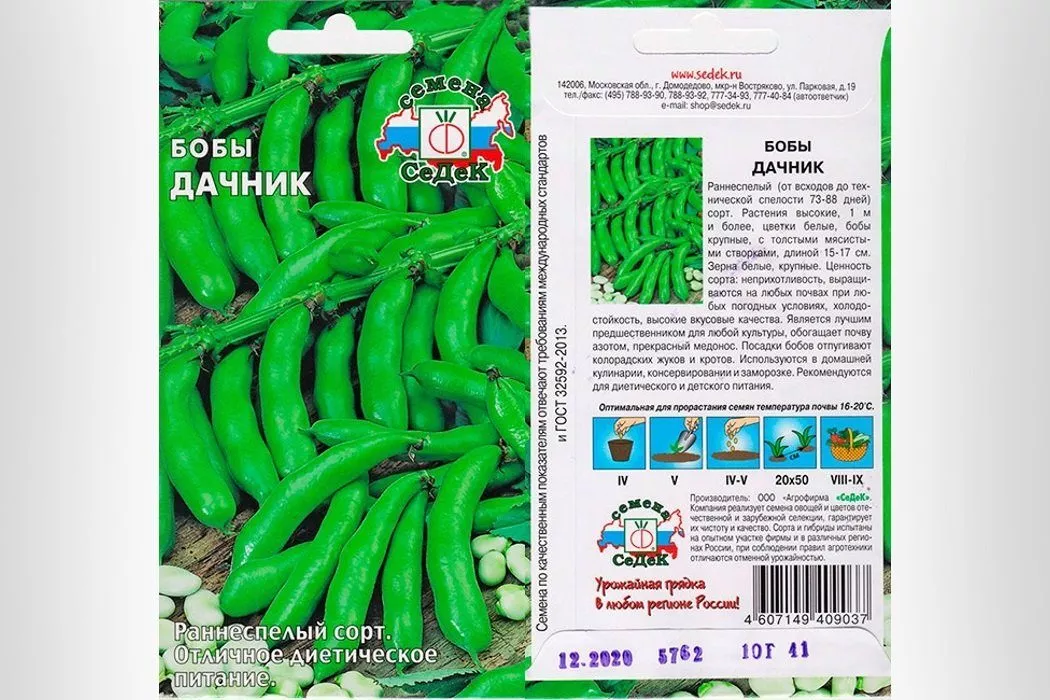
A tall, early-ripening variety. Grows over 1 m in height. The pods are large, with fleshy valves. The pods are up to 17 cm long. The seeds are large and white. Recommended for baby food and dietary nutrition.
White pearl
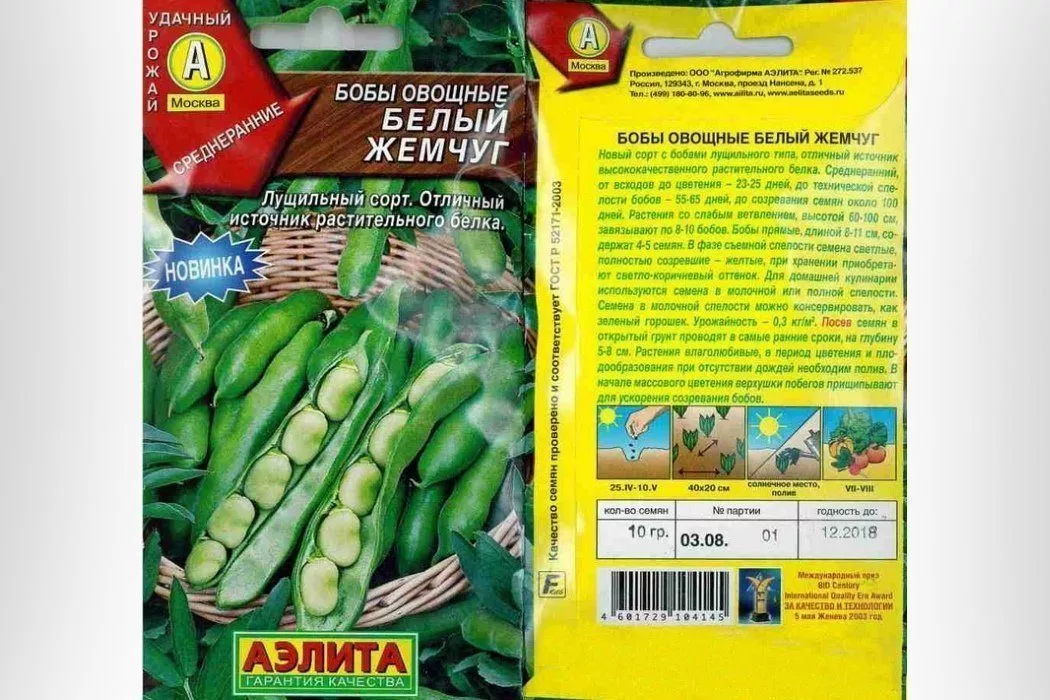
This variety was recently developed. The pods are shelling. From germination to technical maturity, the fruit takes 55-65 days. Height: 1 m. A single plant produces up to 10 pods, straight and long. Each pod is up to 11 cm long, with 4-5 fruits per pod. The seeds are initially light-colored, turning yellow when ripe, and turning light brown during storage.
Features of cultivation
Beans are the most cold-hardy garden crop. Growing them requires specific temperatures and humidity conditions:
- Beans are long-day plants and are undemanding in terms of temperature. They germinate at 3°C and can withstand temperatures as low as -4°C. Seeds germinate at 3°C and germinate in 12-13 days.
- The growth temperature is 21-23°C. Beans don't like hot weather. At high temperatures, the flowers fall off, and many barren flowers appear.
- The plant loves moisture. Watering is especially important during the flowering period. It does not tolerate drought well.
- Beans make the soil loose and prevent weeds from growing.
How to choose a site?
Site requirements:
- Soils are fertile loams, slightly acidic or neutral.
- Beans thrive on moisture, so it's best to plant them in low-lying areas. They can also be planted between vegetable rows or on slightly elevated sites where snow melts early. The soil should be moist, but not too wet, otherwise the seeds will rot.
- If there is not enough potassium in the soil, it is added under the roots.
- Good natural light.
- ✓ Soil pH should be between 6.0-6.5 for optimal nutrient absorption.
- ✓ The soil temperature during planting should not be below +5°C to ensure good germination.
Good and bad predecessors
The crop reacts poorly to excess nitrogen in the soil. Beans produce this chemical element themselves. When planting beans, it's important to consider the preceding crop:
- Good ones. Beans grow well after cabbage, potatoes and cucumbers, pumpkins and tomatoes.
- Bad ones. Areas where peas, peanuts, soybeans, beans and lentils were previously grown are not suitable.
Planting in open ground
Beans are an easy-to-grow crop. Proper preparation for planting greatly increases the likelihood of a bountiful harvest.
Preparing the soil for planting bean seeds
Soil preparation procedure:
- The soil is dug to the depth of a spade. In the fall, compost or manure is added at a rate of 3-4 kg per square meter. Ash is also added to the soil to reduce acidity.
- In the spring, repeat digging. During the spring digging, add mineral fertilizers and 15 g of urea.
When to plant seeds?
Beans are sown as soon as favorable weather conditions develop—the soil must warm to at least +5°C and be sufficiently moist, filled with meltwater. In central Russia, this time occurs in early May. Delaying planting will reduce plant growth and development. Late planting increases the risk of fungal diseases and insect infestations.
The seedling method is rarely used. It allows for a faster harvest, but requires additional effort. This method is used in regions where spring arrives late.
The procedure for growing seedlings:
- Soaking seeds for 12-14 hours.
- Planting in individual containers. The planting time is early April. The seedlings are grown in a greenhouse for about a month.
How to increase seed germination?
Preparing seeds for planting:
- Seeds for sowing are carefully selected, discarding any defective or substandard ones. If a pod has a hole, it is also discarded—it has been damaged by a beetle borer. If you break a seed in half, you can see a larva nesting inside. Such seeds are not suitable for planting.
- Seeds are germinated at 4-10°C. To do this, wrap them in a damp cloth for 1-2 days. Avoid over-wetting the cloth, as this will cause the seeds to rot rather than germinate. Place the beans on one damp cloth and cover with another. Another germination option is to place the seeds in a plate of water for 5-6 hours. Soak the beans in a germination stimulant for 4 hours. Avoid over-soaking the seeds in water or germination stimulants.
Planting methods
Planting beans with seeds in open ground can be done in two ways:
- Wide-row single-line. Leave 40-45 cm between rows. 20-25 cm between adjacent plants. The distance should be such that the beans do not interfere with each other's growth.
- Double-line tape. The distance between the tapes is 45 cm. Between the lines – 20 cm, between the bushes – 10 cm.
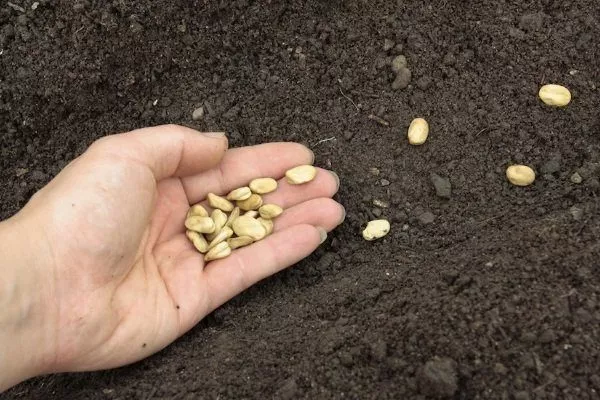
The seeds are planted 6-8 cm deep. The sowing rate is 25-35 g per 1 sq. m. The seeds are placed in moist soil, but the soil is still watered after planting.
The best neighbors for beans
This crop gets along well with many vegetables. Beans can be planted near tomatoes, corn, radishes, horseradish, spinach, and mustard. But their best companion is cucumbers. Beans are recommended for planting around cucumber beds.
Beans are also compatible with potatoes, but they should be planted exclusively along the perimeter of the plot—to avoid them stealing nutrients, as beans are very "voracious" crops. If you plant beans between rows, the tubers will grow too small.
Beans benefit from being planted near herbs – they grow well alongside basil, lavender, oregano, rosemary, and yarrow. They should not be planted near onions, garlic, peas, marigolds, and wormwood.
Harvesting
Beans are harvested beginning in the summer. Several harvests are required during the season. The interval between harvests is one to two weeks. Beans are eaten fresh, when the fruit is green, juicy, and milky-ripe.
The seeds reach milky ripeness approximately a couple of weeks after flowering. The pods are first picked at the base, where the fruits ripen first. The pods are broken off by hand, being careful not to damage the plant.
Caring for garden crops
Caring for beans is simple: they need to be watered on time, loosened, hilled, fed, and weeded in a timely manner.
- Regularly loosen the soil after each watering or rain to ensure oxygen reaches the roots.
- Hill up the plants when they reach a height of 50 cm to improve stability.
- Pinch off the tops during flowering to prevent aphid attacks.
Feeding beans
If the soil has been properly prepared, including the addition of organic and mineral fertilizers, there's no particular need for additional feeding. However, if any steps were missed during soil preparation, the plant's appearance will indicate a problem—it may need additional feeding.
Features of bean feeding:
- During germination, the crop is fed with urea and mullein, 20 g and 0.5 liters per square meter, respectively. The components are dissolved in 10 liters of water, and the resulting solution is watered into the beds at 0.5 liters per plant.
- Add 10 g of superphosphate, 5 g of potassium salt and ammonium nitrate per 1 sq. m.
If the beans have slowed in growth, they are fed with potassium-nitrogen fertilizer - 10-15 g per square meter.
Features of watering
Beans thrive on moisture, and regular watering is crucial in their cultivation. Watering is recommended during flowering and fruit set. However, it's important not to overwater—if water stagnation occurs, the plant's roots can rot. Another disadvantage of excessive watering is that it encourages excessive foliage growth, which can detrimental to yield.
If there's no rain, water the beans twice a week, applying about a bucket of water per square meter.
Weeding, loosening
Because the plant has a strong root system, it suppresses the growth of "foreign" weeds. Any weeds that do grow should be removed to prevent them from hindering the plant's growth and development. This is especially important during the initial stages, when the plant grows larger, suppresses competitors, and weeding becomes unnecessary.
When the plants reach 50 cm in height, they are hilled. Twice a season, hilling is performed. Raking the soil toward the stems improves the plant's wind resistance.
Pinching the tops
The tops are pinched off when flowers emerge. Aphids swarm the young leaves, sucking out the sap. By plucking off about 10-15 cm of the tops, the gardener deprives the pests of a food source. This also ensures the fruit develops and ripens evenly.
Tying up and creating support for shoots
There are bean varieties that reach 1 m or more in height. These plants can break in the wind, as their stems are quite fragile. Tall varieties need to be tied up.
The following types of supports are used for tying:
- Wooden supports They are driven into the ground near the bush. The plant is tied to the support with soft twine. The height of the stakes is 1 m.
- Trellis. To construct them, stakes are driven into the edges of the bed. Between them, a soft cord is placed to which the stems are tied.
How to fight pests?
To avoid losing the harvest, crops infested with dangerous insects are treated with special compounds.
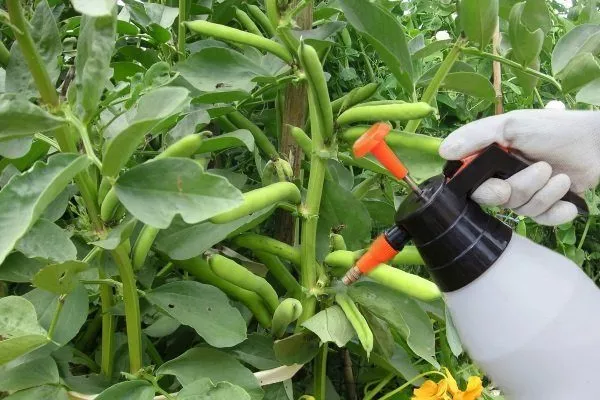
Bean pests and their control:
| Pest | Harm | Treatment |
| Black bean aphid | Attacks young shoots, stems become crooked. | Pruning off the tops during active growth – up to 15 cm long. Treat with Karbofos. |
| Bean weevil | The butterfly lays eggs in young ovaries. The larvae, having penetrated the seed, eat it. | Soaking seeds in a saline solution. |
| Sprout fly | Fly larvae feed on bean roots. | Regular loosening of the soil and removal of weeds. |
Fighting diseases
Beans rarely get sick; this crop is disease-resistant. However, preventative measures are a good idea, as any disease can lead to crop loss—all or part of it.
Common bean diseases and their symptoms:
| Disease | Symptoms | Treatment |
| Anthracnose | Brown spots appear on leaves and stems. Bean pods become covered in dark ulcers, and fruit development is impaired. | Spraying plants with 1% Bordeaux mixture. |
| Rust | This fungal disease causes changes in plant tissue—stems and leaves turn white and soft. It thrives in damp climates. | Agrotechnical methods are used - fertilizing and seed treatment. |
| Powdery mildew | Symptoms appear during the flowering period. A white coating appears on all above-ground parts of the plant. This coating lasts throughout the growing season. | Treatment with 1% colloidal sulfur (0.50 g per 1 sq. m). Dust with powdered sulfur (3 g per 1 sq. m). |
Preventive measures:
- Application of potassium and phosphorus fertilizers.
- Destruction of plant residues after harvesting.
- Warming seeds before planting in water at +50 °C.
Storing beans
If beans are picked in your own garden and immediately refrigerated, they should be stored for no more than 2-3 days. Remove the beans from their pods just before use—this will ensure they are softer. Once removed from the pods, the seeds quickly dry out and become hard. Podded beans have a longer shelf life—up to 7 days.
Storage features:
- Frozen fresh beans will keep for about six months. Store them in the freezer in plastic bags or containers. Blanch the beans for a few minutes before freezing.
- Dried beans can be stored for up to 1 year. It's important to maintain proper storage conditions—cool, dry—and, most importantly, check the seeds periodically for defects.
- If fresh fruit has shriveled during storage, it's best not to eat it. This could be due to improper storage conditions, or possibly due to a fungal infection.
Bean cultivation is extremely simple, and their unique frost resistance allows for good yields even in northern regions. Growing this crop is doubly beneficial – you not only get valuable food in the form of beans, but also enrich your plot with nitrogen.