
Growing beans requires little care and is usually quick and easy. The fruits of the Moskovskaya Belaya variety are rich in nutrients and can be used in a variety of dishes, including canning and freezing.
Breeding history
This bean variety was developed by Russian scientists at the Research Institute of Selection and Seed Production as a vegetable crop. Since 1943, the Moscow White Green-Pod Bean 556 has been successfully grown in the Central and Northwestern regions of Russia.
Description of the variety
Before you begin growing beans, it's important to familiarize yourself with the key characteristics of your chosen variety. This variety is popular with both novice and experienced growers.
Characteristics of the appearance of the plant and fruits
Moscow White Beans are a vegetable crop characterized by bush-like growth, ranging from 30 to 35 cm in height. The plants have moderate to medium foliage. The leaves are yellowish-green with a slight sheen on the surface.
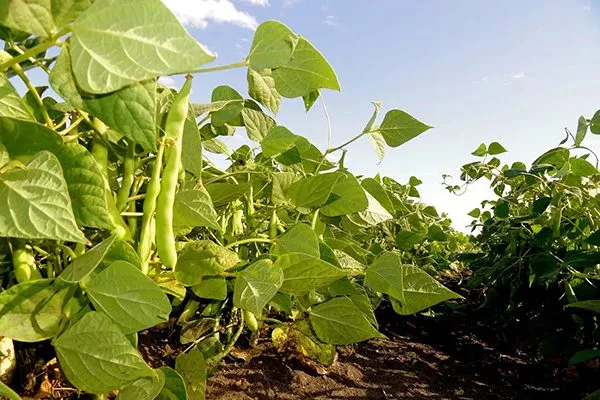
The stems are moderately branched and spreading. The flowers are a uniform white hue. The fruits of this bean variety are large pods, reaching 9 to 11 cm in length.
The fruits are flat and cylindrical, sometimes curved. The parchment layer on the fruits is barely visible. The beans have a delicate texture.
Purpose and taste
The fruits delight with a wonderful combination of flavor and aroma. Furthermore, they are a versatile variety, allowing them to be used in a variety of preparations. These healthy legumes are suitable for home cooking and are also widely used in canning.
Ripening time
The Moscow White Green Bean 556 produces tasty beans with a medium ripening time. With proper care and growing conditions, it takes approximately 55-65 days from germination to fruiting.
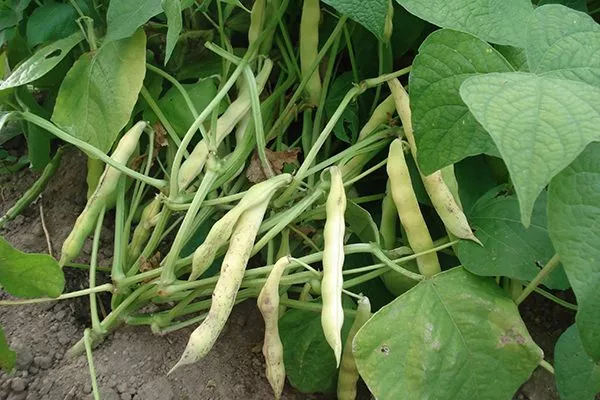
The fruits typically ripen on the plants between July and August. Bean formation occurs simultaneously.
Productivity
This cultivar exhibits high productivity, making it a popular choice for cultivation on large farms and agribusinesses. Marketable yields range from 9-15 tons per hectare.
Beneficial properties
White beans are a source of important nutrients. Their vegetable protein content is 20-30%, making them an excellent alternative to meat, suitable for vegetarians and those fasting.
Kidney beans are enriched with almost all B vitamins and folic acid, which helps normalize digestion and maintain the health of the nervous and cardiovascular systems.
Advantages and disadvantages
Moscow white green beans 556 have many advantages that attract many gardeners.
Some gardeners consider it a disadvantage that the fruits on the bushes ripen in the middle of the season.
What climate does Moscow white bean grow best in?
Moscow White beans thrive in temperate continental climates. They are most commonly grown in Russia, Ukraine, and Moldova. Breeders specifically developed this variety, primarily with the central part of the Russian Federation in mind, where warm summers are scarce.
How and when to plant?
Let's highlight the key points for the correct planting of Moscow White Green-Pod Beans 556:
- Plant beans in open ground at the end of May or the beginning of June.
- Avoid planting it next to potatoes, cucumbers, cabbage, strawberries, tomatoes, and onions, and do not plant it next to previous crops of other legumes.
- Choose well-lit and warmed areas for beans, protected from winds and drafts, and avoid lowlands and swampy areas.
- Before planting, loosen and dig the soil thoroughly. Add organic and mineral fertilizers.
- The optimal planting pattern is 50x50 cm, and the seed sowing depth is no more than 3 cm.
- The soil should have a neutral acidity.
- ✓ The soil should not only be neutral in acidity, but also have good drainage capacity to avoid water stagnation.
- ✓ To prevent diseases, before planting, seeds must be treated with a solution of potassium permanganate (1 g per 100 ml of water) for 20 minutes.
After planting, thoroughly moisten the soil in the beds.
Moscow Green Beans 556: Care
This vegetable isn't fussy and doesn't require much care. Given favorable conditions, beans won't cause much trouble. Particular attention should be paid to watering, fertilizing, and protecting against pests and diseases.
How to water
Moscow White Green Pod 556 beans prefer moist soil, but the plants are sensitive to excess moisture, which can affect quality and yield. It's important to water the plants regularly during fruit set and growth. Here are the basic principles of bean watering:
- After sowing the seeds, water the crop at a rate of 7 liters of water per 1 sq. m.
- Before buds appear, water the bushes once every 7 days.
- During the formation of 5 leaves, stop watering until flowering begins.
- When flowering begins, increase the intensity of watering by 2-3 times.
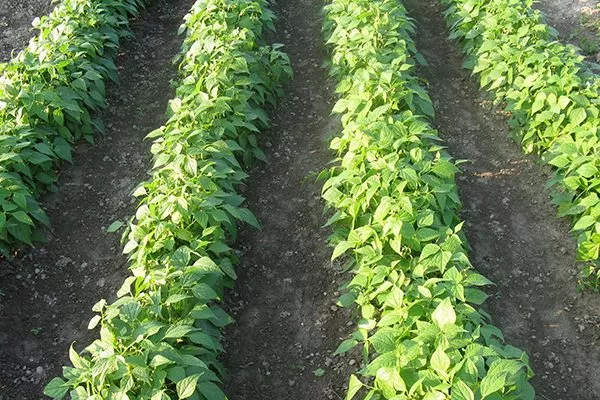
After watering, a crust may form on the soil, so regular loosening of the soil is recommended to prevent this.
How to fertilize?
If the soil is fertile, no additional fertilizer is needed. However, if the bush is weak and requires support, the following types of fertilizer can be used:
- Rotted manure with saltpeter.
- Growth concentrate with potassium humate, stimulating development, formation of inflorescences and ovaries.
- Urea.
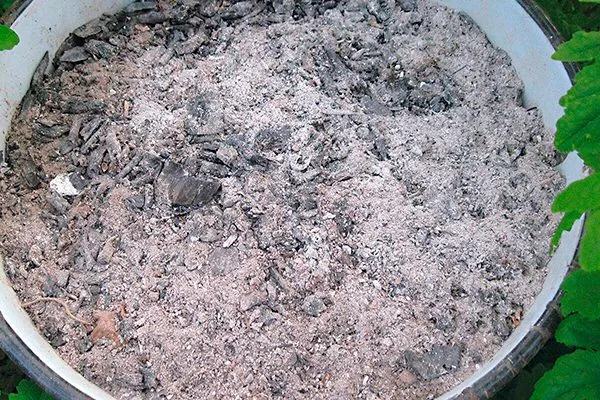
The first feeding is done one month after germination, using fertilizers containing phosphorus and nitrogen. The second feeding is done three weeks after the first, using potassium salt (10 g per square meter).
How to fight pests and diseases?
Moscow white beans are generally resistant to pests and diseases. However, problems can sometimes arise, and it's important to know how to deal with them. As a preventative measure, bean seeds are often soaked in special solutions before planting.
Common slugs can be a potential threat to vegetable crops. Regularly weeding the grass around the bean plants is a preventative measure. If slugs have already begun feeding on the plants, remove them by hand. If time is short, place rocks or garden tools to attract their attention.
Common bean diseases include:
- Bacteriosis. It appears as spots and can damage the entire garden bed. The disease can remain in the soil and on stems for years.
- Anthracnose. Characterized by the formation of brown, circular spots on the bushes, then the leaves turn yellow and fall off, and the beans may be damaged.
- Viral mosaic. The leaves become spotted and the veins lose color, which leads to a loss of decorative appeal.
Reviews of the variety
Among the variety of legumes grown in gardens and summer cottages, beans occupy a special place. One of the outstanding varieties of shelling beans is the Moscow White Green-Pod 556. Proper care is essential to ensure high yields.