
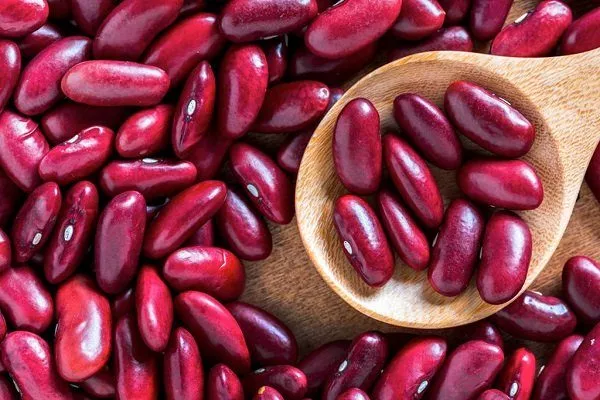
Red beans are a heat-loving crop valued for their high protein content, flavor, and nutritional benefits. Learn how to plant, grow, and store kidney beans until the next harvest.
The History of Red Beans
Beans were first cultivated by the peoples inhabiting the South American continent. The wild plant was domesticated over 7,000 years ago. Somewhat later, beans were also cultivated in Egypt, the Roman Empire, and China.
By the Middle Ages, beans had been forgotten in Europe for unknown reasons. They were re-discovered by Spanish explorers. It was they, following Columbus's voyage, who brought bean seeds to Spain, which soon became one of the most nutritious and sought-after crops there.
Red beans were brought to Russia in the 16th century. Initially seen as an ornamental plant, they only began to be cultivated as a food crop in the 18th century.
There are about 150 types of beans in the world, and red beans are just one of them.
The best varieties of red beans
| Name | Ripening period | Bush height | Productivity |
|---|---|---|---|
| Common red | Average | 50 cm | 2.5 kg/sq.m |
| Little Red Riding Hood | Late-ripening | 45 cm | 3 kg/sq.m |
| Chocolate Girl | Late | 40-55 cm | 3.5 kg/sq.m |
| Early ripening | Early | Not specified | Not specified |
This variety differs in the shape of the pods and beans, taste, ripening time, type of bush (upright and climbing) and other characteristics.
Popular varieties of red beans:
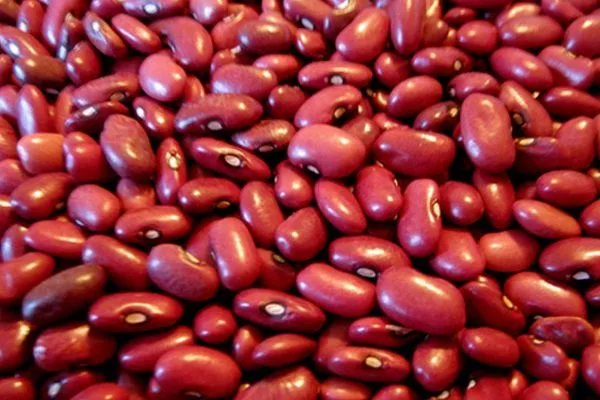
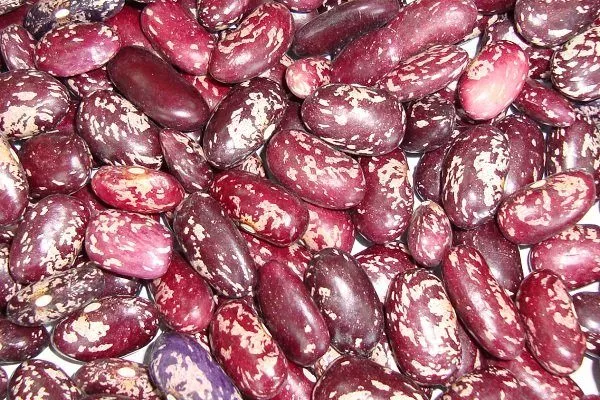
- Common red. The bushes grow up to 50 cm in height. The pods are 10-12 cm long, each containing 8-10 red seeds. Each bean weighs 3 g. 2.5 kg of beans are harvested per square meter. Ripening time is average.

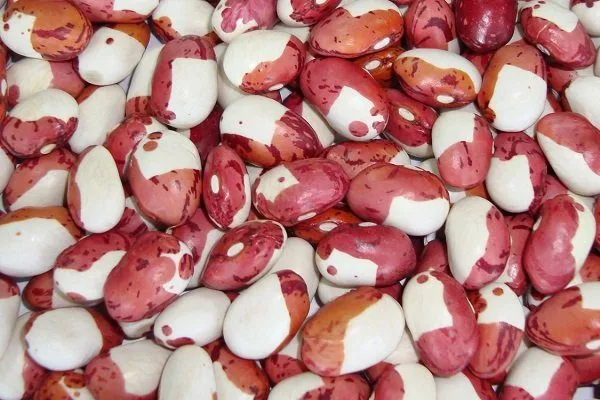
- Little Red Riding Hood. The beans are predominantly red in color, with some white. This is a late-ripening variety with bushes up to 45 cm tall. The medium-length pods contain 8-10 beans. Yields are 3 kg per square meter or more.
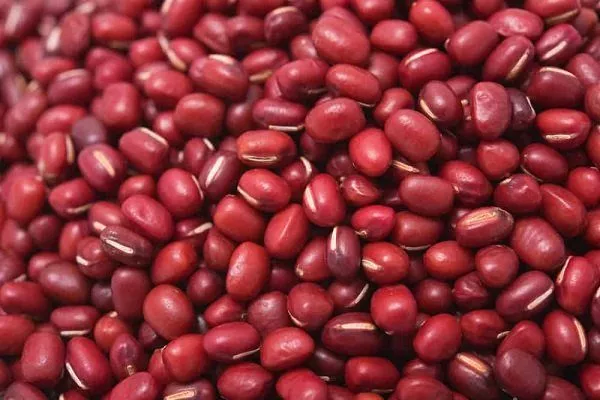
- Chocolate girl. A late, large-fruited variety with bushes 40-55 cm tall. The pods are up to 15 cm long, each containing 6-7 reddish-brown beans. Each bean has a white stripe. Yields over 3.5 kg/sq. m.
- Early ripening. An early variety with pinkish-red beans with white speckles. Each bean is up to 2 cm long.
The benefits and harms of red beans
All beans contain easily digestible plant protein, which successfully replaces meat. Red beans contain approximately 25% protein, and their energy value is equal to that of their animal counterparts.
Benefits of red beans:
- promotes weight loss;
- suppresses appetite;
- prevents diabetes and cardiovascular diseases;
- improves blood circulation;
- normalizes the functioning of the digestive system;
- promotes the elimination of toxins;
- strengthens the immune system.
Red beans contain record amounts of boron, calcium, copper, magnesium, potassium, and aluminum. They are also rich in vitamins C, E, K, and B.
Eating raw beans is strictly prohibited, as it can cause poisoning. Fresh beans contain toxins that are easily neutralized by cooking or soaking.
Beans should be eaten with caution in the following cases:
- Gout. Eating large amounts of beans is also not recommended for those predisposed to this condition. Beans are high in purines, substances that release uric acid when broken down, which the kidneys may be unable to eliminate.
- Diseases of the stomach and intestines. Beans cause gas and bloating.
Rules for planting red beans
The key to successful growth and high yields of beans is proper timing and well-prepared soil. This heat-loving plant should not be planted before stable warm weather sets in.
- ✓ Soil pH should be between 6.0-7.0 for optimal bean growth.
- ✓ The soil must have good drainage to avoid water stagnation.
Timing of planting seedlings and in open ground
Beans are a heat-loving crop, so seeds dropped into cold soil will not germinate and may even rot. Planting begins when the top 10-15 cm of soil warms to 12-15°C.
Don't rush bean planting; they should be done after the weather warms up and night frosts have been eliminated. Seedlings die at temperatures of 1°C. For active growth and development, the crop requires temperatures of 20°C to 25°C.
Timing of sowing beans in the ground:
- in the Urals – at the beginning of June;
- in Siberia – in the second ten days of June;
- in the central region – at the end of May-beginning of June;
- in the North-West region – in the first ten days of June;
- in the south – in the second half of April.
Bean seedlings can be planted in early April. May is also a favorable time.
Site selection and soil preparation
Beans are planted in well-lit areas free from drafts and strong winds. Any soil is suitable, except for excessively heavy clay soils, which can cause stagnant water and cause root rot.
In the fall, dig the soil as deeply as possible, after spreading organic and mineral fertilizers over the area. For every square meter of area, apply:
- humus or compost – 4 kg;
- dolomite flour – 1 tbsp;
- ammonium nitrate – 1 tbsp;
- superphosphate – 2 tbsp. l.
It is recommended to plant beans after:
- cabbage;
- tomatoes;
- cucumbers;
- potatoes;
- eggplants;
- pepper.
Undesirable predecessors include all legumes. Beans grow poorly after peas, soybeans, lentils, and peanuts. They should not be planted in a plot after these crops for at least 3-4 years. Beans grow well next to carrots, beets, onions, tomatoes, cucumbers, and cabbage.
Planting red beans in open ground
It is recommended to soak the seeds in water overnight before planting. If you use an ash infusion instead of water, the soaking time can be reduced to 2-3 hours. Immediately before sowing, soak the seeds in a weak boric acid solution for 3-4 minutes.
The procedure for planting red bean seeds in the ground:
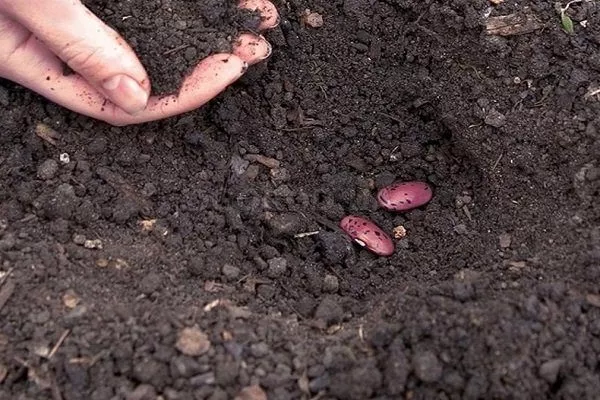
- In a plot dug and fertilized in the fall, make furrows at intervals of 40 and 50 cm for bush and climbing beans, respectively. The furrow depth should be 5-6 cm.
- Place the seeds in dry furrows, keeping intervals of 20-25 cm and 30-35 cm for bush and climbing varieties, respectively. To increase germination, plant the seeds more frequently, but you will need to remove any excess seedlings later.
- Instead of furrows, you can make holes. Then, place 3-4 green beans in each hole. When seedlings emerge, select the healthiest one and remove the others or transplant them to another bed.
- Cover the crops with loose soil and level with a rake.
- Water the area using the sprinkler method.
- If you are unsure about night temperatures, temporarily cover the crops with film.
Planting seedlings
In regions with cold, prolonged springs, it is recommended to grow beans using seedlings to bring the pods closer to ripening by 2-3 weeks.
Bean seedlings are grown in large containers or individual pots, including peat pots. The recommended containers for growing seedlings are individual 250 ml cups with a diameter of 8 cm.
The procedure for sowing beans for seedlings:
- Soak the seeds before planting them in the soil. It's best to let them sprout.
- Make drainage holes in the cups. Place them on a tray and fill them with potting soil. Soil options:
- Mix peat, humus and garden soil in a ratio of 1:1:2.
- Take compost, turf soil and sand in a ratio of 1:1:0.1.
- Mix garden and turf soil with sand in a ratio of 3:2:0.1.
- Water the soil using a sprinkler and make small holes in the center of the cups. The holes should be 4-5 cm deep. When sowing in containers, leave 7-8 cm between the seeds.
- Place 1 or 2 beans in each hole, preferably with the sprouts facing down or sideways. Fill the holes with soil and compact lightly.
- Cover the seedlings with plastic wrap and place them in a warm room. Remove the covering material periodically (2-3 times a day) for 10-15 minutes to prevent condensation from forming.
- When seedlings emerge, remove the film and lower the temperature by 2-3°C. Place the containers with the seedlings closer to the light.
- Water the seedlings whenever the soil dries out. You can also add a mineral complex fertilizer, such as Diammophoska (dissolve 3 g in 1 liter of water). Fertilize once every 10 days.
Apply fertilizer only after the seedlings develop their first true leaves. Before applying fertilizer, water the soil lightly to avoid burning the roots.
Transplanting seedlings into open ground
Bean seedlings are planted a month after sowing the seeds. Planting should be done quickly, so it's best to sow the beans a little later to avoid having to plant the seedlings in cold weather.
When to plant bean seedlings:
- in the Urals – end of May-beginning of June;
- in Siberia – the beginning or second ten days of June;
- in the central region – the second half of May-beginning of June;
- in the North-West region – end of May – first ten days of June;
- in the south – in the second half of April-beginning of May.
The procedure for planting bean seedlings in open ground:
- Two weeks before transplanting the seedlings outdoors, begin hardening them off. Place the containers/cups containing the seedlings outside every day, preferably in the morning. Initially, for 30-60 minutes. Gradually increase the time.
A couple of days before planting the seedlings, leave them outside overnight. - In prepared beds, dug over and leveled with a rake, make depressions every 15-20 cm. Leave a distance of 40-50 cm between rows (depending on the bean variety).
- If the beds have not been fertilized, add compost and wood ash to each hole – 50 and 20 g, respectively.
- Water each hole with warm, settled water.
- Remove the seedling from the container along with the root ball and place it in the hole. If the seedlings were grown in peat pots, place them in the hole along with the seedling.
- Cover the seedlings with soil and compact it gently.
- When planting climbing bean varieties, provide supports.
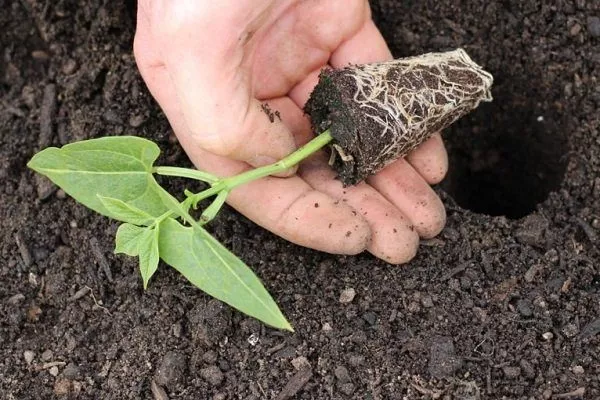
To ensure easy removal of seedlings from their planting containers, water them before planting.
Care and cultivation of red beans
Beans are one of the most undemanding plants, requiring little attention from gardeners. They have basic needs: moisture, warmth, nutrition, and weed-free soil.
Watering rules
Beans thrive on moisture, so they should never be left without water. Watering is especially important during the early stages of development. The recommended frequency is once a week.
Watering rates, l per 1 sq. m:
- after emergence – 5-6;
- during flowering – 10-12;
- in the phase of formation and maturation of beans – 16-18.
Water beans in the morning or evening. Use settled or rainwater. Avoid letting it fall on the above-ground parts of the plants. It's best to water between the rows.
Loosening the soil
Loosening the soil begins after the seedlings emerge. As the beans grow, loosening is combined with weeding. Loosening the spaces between the rows allows oxygen to reach the plant roots, promoting their growth and development.
Tips for loosening red beans:
- Don't allow a crust to form, even before the seedlings emerge. The sprouts, when breaking through, may break on the hard layer.
- Bush varieties are hilled three times. Raking soil up to the stems increases the bushes' stability. The first time, the beds are hilled when the plants reach 10 cm in height, the second time at 20 cm, and the third time when adjacent beds are contiguous.
Top dressing
Beans don't require additional fertilizing if fertilizer was applied during tillage or into the planting holes. However, if this wasn't done, or the soil is poor and the variety requires additional nutrition, fertilizing is recommended during the growing season.
Features of feeding:
- They primarily add potassium and phosphorus. The crop obtains nitrogen from the soil itself, thanks to nodule bacteria.
- At the initial stage, it is recommended to apply superphosphate, and during flowering and fruit set, potassium salt. The application rate is 30 g per square meter.
- Dry fertilizer is applied during loosening or spread between rows. Solutions are poured through the narrow spout of a watering can, being careful not to get on the leaves and stems of plants.
Garter
Only climbing varieties of red beans require staking. Without support, the plants will end up on the ground, become diseased, and rot. Yields will drop, or the pods will fail to ripen at all.
Tips for staking red beans:
- Wooden stakes 1.5-2 m long are used as supports. Plastic and metal supports are not suitable, as the plant stems will not be able to climb them.
- The second option is a trellis. Two supports are placed along the edges of the bed, and wire, thick twine, or large-mesh netting is stretched between them to provide support for the bean stems.
- Another option for garter is inclined wooden slats installed along the entire bed at an angle.
Diseases and pests
Red beans are not susceptible to disease, but under unfavorable conditions they are susceptible to fungal and viral infections, as well as bacterial rot. These are usually caused by gross violations of agricultural practices, poor crop rotation, and neglect of preventative measures.
- ✓ Mosaic: leaves become wrinkled with blister-like swellings.
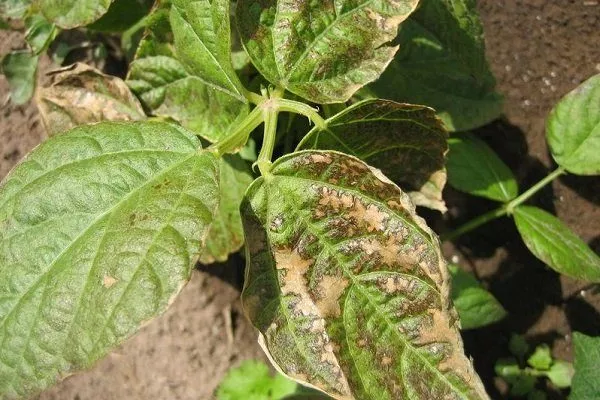
- ✓ Anthracnose: light brown spots on leaves and stems.
Common diseases:
- Mosaic. Plants become covered with mosaic spots, leaves wrinkle, and blister-like swellings may appear. This viral disease has no specific treatment. Affected plants are uprooted and destroyed.
- Anthracnose. A fungal disease that causes light brown spots on leaves. These spots are round on the leaves and elongated on the stems. The pods rot, and the beans inside them become sources of infection. Fungicides help control the disease.
- Root rot. Affects seedlings. The disease is commonly known as "black leg." There is no cure. Prevention is necessary: avoid overwatering, disinfect the soil, and maintain crop rotation.
- White and gray rot. A fungal infection that affects all plant tissues. A white or gray coating covers stems, leaves, and pods, which soften and rot, resulting in the death of the plant.
- Powdery mildew. The causative agent is a fungus. It appears in high humidity. It spreads quickly and is highly contagious. The leaves of plants become covered with a white, powdery coating. The plant turns yellow and dries out.
Means of combating fungal diseases:
- Spraying with 1% Bordeaux mixture 1 or 2 times with a 10-day interval.
- Treatment with biofungicides – Fitosporin, Mikosan, Trichodermin and others.
- Spraying with a solution of colloidal sulfur is especially effective against anthracnose and powdery mildew.
Beans are susceptible to various pests: some eat the leaves and nip at the stems, others suck the sap, and still others eat the beans. Preventative measures, insecticides, and folk remedies can help control them.
The most common pests are:
- Slugs. They are nocturnal and feed on all parts of plants. They are repelled from garden beds by sprinkling lime and ash between the rows.
- Aphid. They suck the juices from leaves, forming colonies on their undersides. Folk remedies such as spraying with infusions of tomato or tobacco tops, onion peels, and celandine help repel the insects.
- Pea weevil (bruchus). Beetle larvae damage bean plants by eating away their pulp. Crops are treated with Gaupsin, Bicol, and Verticillin. These products are effective against pea weevils, codling moths, thrips, and spider mites.
Harvesting and storing red beans
Harvesting shelling beans for grain begins when the beans are fully ripe. Wait until they become firm and acquire the color of mature seeds.
Harvesting times vary by variety and growing region. Early and early varieties can be harvested from late July to late September. When the leaves are dry and the pods have turned yellow, it's time to harvest.
How to harvest and store beans:
- Pull out the bushes. Or better yet, cut them down so that the nitrogen-rich nodule bacteria remain in the soil.
- Place the pods on plastic or burlap to prevent the loss of any seeds that fall from the pods. If the weather is unpredictable, store the harvest under a shelter to protect it from rain.
- Once the pods are completely dry, begin shelling. Place the harvested beans in canvas bags or plastic bottles and store in a cool, dry place.
Some gardeners don't shell their beans, but hang the pods from the ceiling in a barn or shed, and then harvest the beans as needed.
Pods and green beans can be frozen. Fresh beans don't keep for long; they quickly wilt and spoil. They should be eaten within 8-10 days, frozen, or canned. Before freezing, blanch the beans for 2 minutes and then store them in containers.
Growing red beans is relatively straightforward; the cultivation techniques are simple and accessible even to novice gardeners. The key to a good harvest is choosing the right planting time, ample watering, and preventative measures.