
Beans are a valuable legume suitable for cultivation not only in open ground but also in greenhouses. Indoor cultivation allows for a harvest regardless of weather conditions and provides the most favorable environment for the growth and development of the pods.
Features of growing beans in a greenhouse
Common beans are compact. They require very little space to grow and produce fruit. And with just a little space in the greenhouse, you can harvest two crops of pods—an early one and a late one.
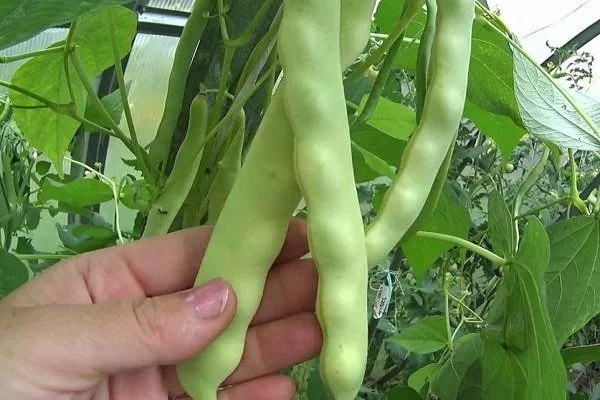
Bush beans, while producing the same yield, require more space, but are easy to harvest. A small plant produces dozens of pods hanging in clusters.
Features of growing beans in a greenhouse:
- in a greenhouse, the legume plant does not need pollinators, since it is a self-pollinating crop;
- Sowing beans in late winter or early spring requires a heated greenhouse.
Thanks to greenhouse cultivation, it's possible to grow early beans—gardeners harvest their first crop about a month before the pods appear in the ground. Early beans are often grown commercially, as they command a much higher price in early summer than during the full ripening period.
Choosing a bean variety for a greenhouse
Although beans aren't considered particularly fussy plants, it's not recommended to grow just any variety in a greenhouse. Instead, choose legumes that have performed well in greenhouse cultivation.
Curly
| Name | Growth type | Pod length | Pod color |
|---|---|---|---|
| Blue Lake | Curly | up to 15 cm | Dark green |
| Cobra | Curly | up to 18 cm | Green |
Unlike bush beans, climbing beans can climb supports and nets. In open ground, they are often used as a vegetable crop and as a decorative fence ornament.
- ✓ Ability to self-pollinate in closed ground conditions.
- ✓ High vertical space requirement for optimal growth.
The best varieties of climbing beans for indoor cultivation:
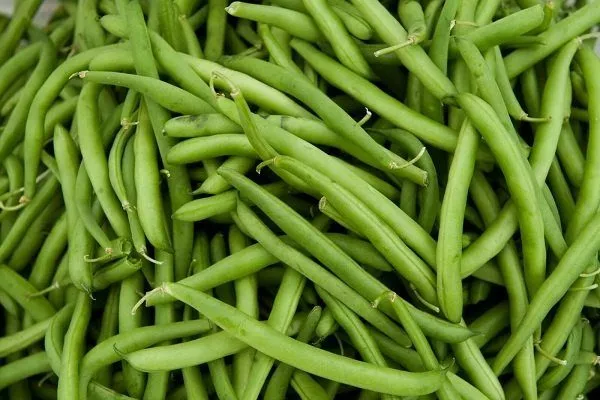
- Blue Lake. A highly productive asparagus variety. It requires supports and poles for growth. The plants are vigorous, well-foliated, and reach a height of up to 3 m. They produce dark green pods—thin (up to 1.1 cm in diameter) and long (up to 15 cm). The beans are medium-sized and white.
This variety boasts excellent flavor and yield. Suitable for fresh and processed consumption, it is resistant to fungal and viral diseases.

- Cobra. This British asparagus variety has tasty, tender pods. It is characterized by high yields, a long fruiting period, and vigorous growth. The pods are green, juicy, rounded in cross-section, and up to 18 cm long.
The beans are cylindrical, slightly curved, black, and glossy. They bloom with lilac flowers, making them a beautiful addition to flowerbeds and pots. They are planted in greenhouses in early spring.
Bushy
| Name | Growth type | Pod length | Pod color |
|---|---|---|---|
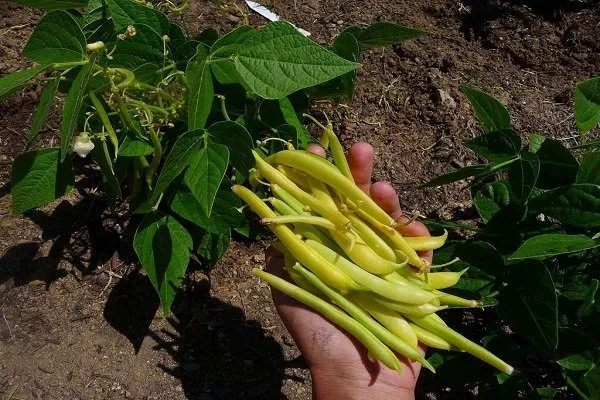
| Golden Tipi | Bushy | up to 16 cm | Golden |
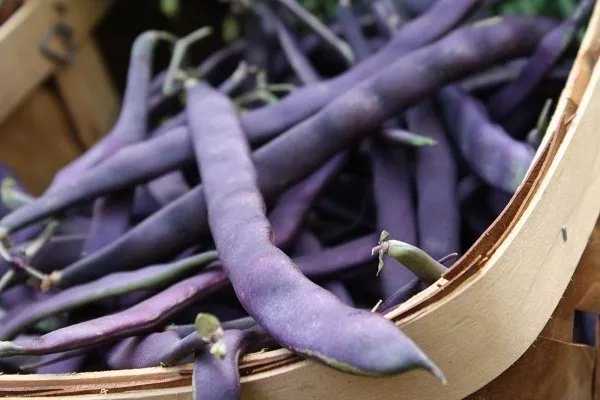
| Purple Tipi | Bushy | 12–14 cm | Dark purple |
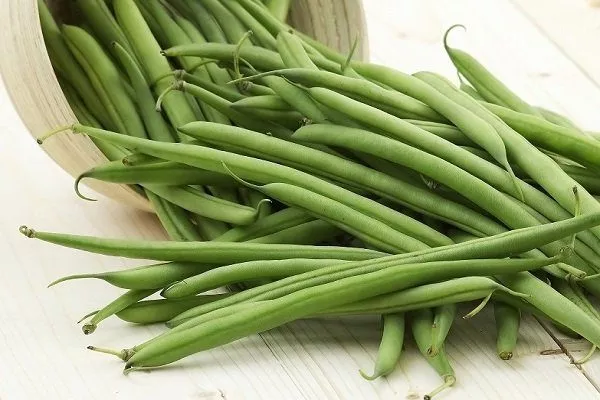
| Ferrari | Bushy | up to 14 cm | Green |
Bush varieties are characterized by their small stature. Bushes reach no more than 0.6 m in height. They do not require support. They are actively grown on a large scale for the food industry.
Most bush varieties have excellent agronomic characteristics. They are productive, hardy, early maturing, undemanding, and cold-resistant.
The best varieties of bush beans for indoor cultivation:
- Golden Tipi. A very early, all-purpose variety. Suitable for fresh consumption, both in dishes and for canning. The pods are golden, dull, up to 16 cm long and 1 cm in diameter.
This variety boasts a long flowering and fruiting period. It is resistant to the common bean mosaic virus.
- Purple Tipi. This early-ripening variety has low bushes—up to 40 cm tall. Each plant bears approximately 15 dark purple pods. They reach 12–14 cm in length and turn green when cooked. They lack a parchment layer and are distinguished by their excellent flavor. The pods are widely used in cooking, pickling, and freezing.
- Ferrari. A Polish mid-late variety of asparagus bean. It is characterized by high yields. The plants are upright, up to 40 cm tall. The pods are green, fleshy, and slightly sweet, up to 14 cm long. They are fiberless and lack a parchment layer. The flavor is excellent. The beans remain firm for a long time.
The variety is disease and stress resistant and easily adapts to new conditions. It's versatile—suitable for both immediate consumption and canning.
Soil requirements
The soil in the greenhouse is prepared in advance, adding fertilizers and, if necessary, compounds that improve its quality and structure. What type of soil do beans prefer?
- with high humidity;
- type - chernozem, loam, sod-podzolic;
- fertility - high, preference is given to organic matter;
- acidity - neutral or slightly alkaline (beans do not grow on acidic soils);
- structure - loose.
- ✓ The pH level must be strictly within 6.0-7.0 for optimal absorption of nutrients.
- ✓ Drainage is essential to prevent water stagnation, which leads to root rot.
To deoxidize the soil, use wood ash—200–300 g per 1 square meter. It is scattered over the surface and mixed thoroughly.
Microclimate requirements
To ensure that beans grow in a greenhouse no worse than in the open air in southern regions, it is necessary to create a favorable microclimate.
Features for a greenhouse:
- Lighting. Beans are short-day crops. During the initial growth stage, the recommended daylight duration is up to 12 hours. Under these light conditions, plants progress to fruiting more quickly. Later, beans grow with longer periods of light.
- Temperature. The optimal temperature range for growing any beans is +22… +23°C. The greenhouse must be ventilated daily.
- Humidity. The ideal humidity level is 50–60% for air and 70–80% for soil. The soil should be as dry as possible at night, as high humidity can promote plant diseases when temperatures drop. Air that is too dry encourages the growth of aphids and spider mites.
Sowing dates
Legumes are sown based on soil temperature. As soon as the soil warms to 10°C, sowing begins. This rule applies to any type of soil, both indoors and outdoors.
Greenhouse beans are sown in late February or early March (plus or minus two weeks, depending on the region). If planting occurs in February, artificial lighting is provided. In unheated greenhouses, beans are sown around mid-April.
The best neighbors and predecessors
Crop rotation and planting patterns are taken into account in greenhouses. Failure to comply increases the risk of disease and leads to reduced yields.
Beans grow best in a greenhouse after:
- carrots;
- beets;
- Luke;
- cucumbers;
- pepper;
- eggplants;
- cabbage;
- tomatoes;
- potatoes.
Beans grow well alongside potatoes, cucumbers, and strawberries. They require exactly the same growing conditions as legumes.
But even if a gardener has only one greenhouse but wants to grow several crops that require different microclimates, there is a solution. Zoning is done using film.
Methods for planting beans in a greenhouse
Beans are sown in greenhouse soil in two ways: as seeds directly into the greenhouse soil or as seedlings. In either case, the seeds must be prepared by calibrating and soaking. Planting dry beans is possible, but they will take longer to germinate.
Seedling method
A heated greenhouse allows you to keep seedlings directly in it. If the greenhouse is unheated, bean seedlings are kept indoors. Sowing is carried out at the end of winter.
Growing order:
- For sowing, select large, unblemished beans. Disinfect them for half an hour in potassium permanganate (1 g per liter). Rinse and soak in warm water for 10–12 hours. No longer, or the seeds will turn sour. Remove and, wrapping them in a damp cloth, store them in a warm place.
- Don't wait for the sprouts to grow tall. As soon as the seeds sprout, start sowing. Don't forget to harden the seeds by placing them in the refrigerator for 6 hours.
- Sow the beans in individual cups or peat pots. The diameter of the pots should be no more than 8 cm. Fill the empty containers with a growing medium or a homemade potting mix of 2 parts garden soil, 1 part peat, and 1 part humus.
- Moisten the soil in the cups before sowing. Plant the seeds 3–4 cm deep. If you have a large number of beans, plant two at a time. When sprouts appear, evaluate them and remove the weaker ones. Cover the cups with plastic wrap to create a favorable microclimate.
- Keep the containers in a well-lit place - on a windowsill or in a greenhouse at a temperature of + 16… + 18°C.
- About a week before transplanting indoors, move the seedlings to a greenhouse to allow them to adapt to the new conditions. Once acclimated to the changes, the seedlings will more easily cope with the stress of a new "home." This rule applies when growing seedlings outside a greenhouse.
- Transplant seedlings into prepared beds, maintaining spacing: 15 cm for bush varieties, 20 cm for climbing varieties. Prepare holes slightly larger than the planting containers.
Video about sowing bean seedlings:
If you don't want to bother with seedlings, beans can be sown directly into greenhouse soil. This option is especially convenient in heated greenhouses.
How to sow beans in a greenhouse:
- Loosen and fertilize the soil. Disinfect any soil, including store-bought. Water with a solution of Fitoflavin (2 ml per 10 liters of water). If the soil in the greenhouse needs replacing, prepare a homemade soil mixture of 1 part garden soil, 2 parts sod soil, 2 parts humus, 1 part each of peat and sand.
- Prepare the soil for planting: lay new soil in layers of 10–15 cm. Sprinkle each layer with phosphorus-potassium fertilizer—20 g—per 1 sq. m.
Before planting, add organic matter (compost/humus up to 10 kg per 1 sq. m, ash - 200 g per 1 sq. m) and mineral fertilizers (rock phosphate, potassium sulfate, potassium salt, or nitroammophoska according to the instructions) to last year's soil. Dig everything thoroughly. - Rake the prepared bed and make furrows in it. Space adjacent rows 30–60 cm apart. Place dry or sprouted seeds in the prepared rows at intervals of 15–20 cm. Place the seeds 3–4 cm deep.
- Water the crops and cover with soil, peat, and mulch. If you're planting climbing varieties, install supports immediately.
Features of agricultural technology
Greenhouse-grown beans require the same comprehensive agronomic management as open-field plants. However, adjustments are made for the specifics of greenhouse cultivation, microclimate characteristics, and challenges specific to greenhouse cultivation.
Watering
In a greenhouse, unlike in open ground, you can't rely on rain, so growing in greenhouse conditions requires regular watering.
Features of watering beans in a greenhouse:
- Adjust the frequency of watering based on the condition of the soil: so that it is moderately moist, not too dry and not too wet;
- Beans do not respond well to heat and drought, so leaving them without water is unacceptable;
- Vary the amount of water depending on the conditions: the colder and damper it is, the less the norm;
- recommended watering time is morning or evening;
- Add water only to the roots; pouring it on the leaves is not recommended;
- For watering, use only settled tap or well water;
- The maximum amount of water required for the crop is from July to mid-August - 15 liters per 1 sq. m.
Top dressing
Beans respond well to potassium-phosphate fertilizers, but do not tolerate excess organic nitrogen. Humus, compost, and other organic matter are added to the soil only when preparing the greenhouse soil.
How and what to feed beans with:
- When planting, add superphosphate - 30 g - per 1 sq. m. and potassium fertilizer without chlorine (it inhibits nodule bacteria) - 20 g of potassium sulfate.
- Fertilize the beans a second time during the budding period. Add superphosphate (15 g) and potassium sulfate/potassium magnesium sulfate (5 g). The dosage is per square meter.
When it comes to organic phosphate fertilizers, choose regular wood ash—an aqueous solution of 200 g per 10 liters per square meter. Apply the solution to the roots, not to the leaves. - During flowering and budding, it is recommended to feed beans with a solution of boric acid - 5 g - per 10 liters of water, using the foliar method.
Weeding and loosening
There should be no dry soil crust around the beans. Loosen the soil regularly to ensure aeration of the roots. Drying out the roots will kill the plants. If the beans are grown by direct seeding in greenhouse soil, apply the first light soil loosening when the sprouts reach 6–7 cm in height.
During the second tilling, hill up the bean plants; by this time, they should be about 10 cm tall. Remove weeds while tilling. To reduce the frequency of tilling, cover the soil with mulch—hay, straw, etc.
Garter and shaping of whips
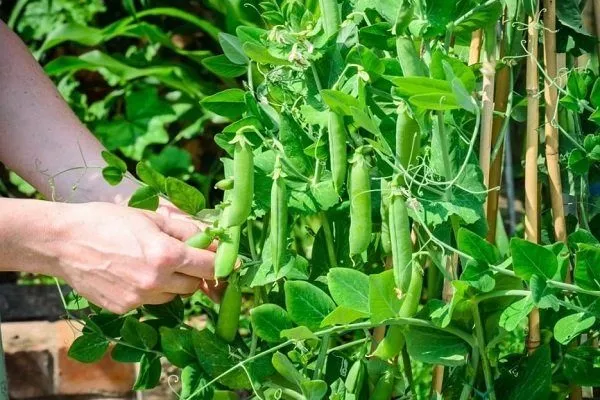
To ensure that greenhouse space is used to maximum advantage, climbing bean varieties are tied up.
The order of garter:
- Install 1.5 m high supports or trellises in the greenhouses.
- Begin this process when the plants reach 20–30 cm. Use soft twine. As the side shoots grow, tie them to the supports.
- When the plants reach a height of 2 m, pinch off the tops. The purpose of this procedure is to slow down the growth of the beans and redirect nutrients to the formation and maturation of the pods.
If the beans are planted in a dense group, the staking process can be simplified by using plastic mesh. Simply tie the plant once, and the beans will then begin to climb the supports themselves.
Protection from diseases and pests
The most common problem with beans is fungal diseases. Viral and bacterial infections are second.
Most often beans get sick:
- Powdery mildew. It usually appears during high humidity and is accompanied by the formation of a dirty gray coating. It can destroy up to 15% of the crop. Treatment involves spraying the bushes with a 1% Bordeaux mixture.
- Anthracnose. The disease causes sunken brown spots. Treatment involves Fundazol or its analogues. There are also folk remedies, such as a baking soda solution—one cup of powder dissolved in 10 liters of water.
- Mosaic. Green and yellow bean varieties are affected by this viral disease. Affected areas first swell and then rot completely.
There is no cure for the disease. Prevention is recommended, including using healthy seed, planting mosaic-resistant varieties, and promptly controlling aphids.
Bean crops can be damaged not only by diseases but also by insect pests. These include sucking and chewing insects, all of which are equally dangerous to the crop.
Bean pests:
- Grain. The main enemy of all legumes. Small black beetles—up to 5 mm long. Control: keeping the seeds at freezing temperatures.
- Sprout fly. A gray fly with black stripes on its back. Its larvae gnaw through bean seeds. It prefers cool weather and dies during drought. Recommended products include Karbofos, Fufanon, Iskra, and their equivalents.
- Weevil. A small, dark, elongated beetle. It feeds on roots and tubers. Control is achieved with the biological product Fitoverm and insecticides such as Aktara, Iskra, and others.
Harvesting
Early varieties are harvested 60 days after germination. Late beans ripen a couple of weeks later. Pods are picked selectively as they ripen, at intervals of 5–7 days.
It's recommended to use picked beans immediately, or freeze them if there are a lot. Beans shouldn't be stored for long periods of time, as they will lose their freshness. Pickling is another storage method. Pickled beans will keep for 1–2 years.
If you want to get a vitamin-packed bean crop in early summer, it's easy to find a small plot in your greenhouse to plant it. Growing this vegetable won't take much time or effort. If using seedlings isn't possible, sowing the seeds directly into the soil in the greenhouse will also yield results, but it might take a week longer.