
There are numerous varieties of green beans, many of which are adapted to different latitudes across the country. But the clear leader is the "Oil King" variety, due to its compact size, which means it doesn't take up much space. It's considered early maturing, tasty, and easy to grow. Another common name for this variety is "Royal Bean."
Description of the variety
The Maslyany Korol bean variety has three authors: M. N. Gulkin, V. G. Kachainik, and N. V. Nastenko. The variety is considered relatively new, as it was only added to the state register in 2015.
Characteristics of the appearance of the plant and fruits
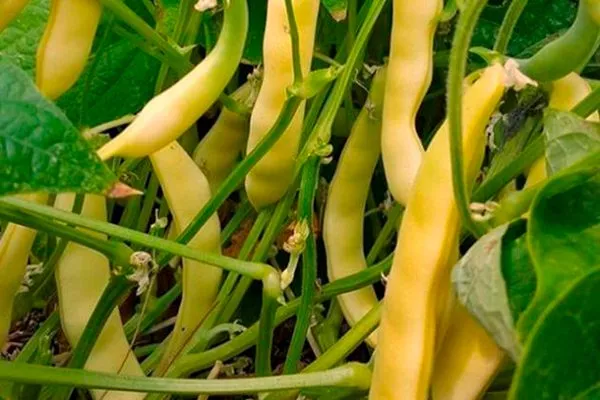
The Butter King is an upright, bushy plant that requires staking. This will keep the pods completely clean during inclement weather. Characteristics of the variety:
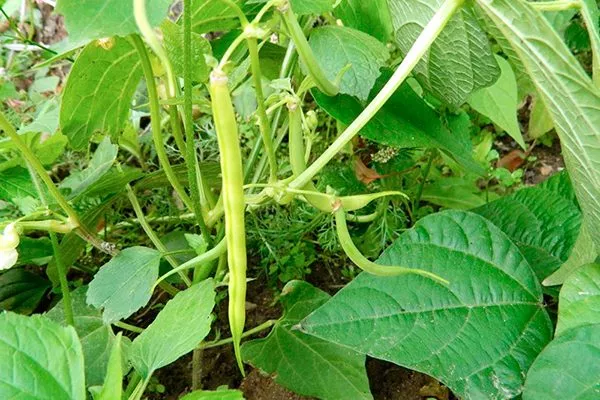
- Bush. Straight shoots grow up to 40, maximum 50 cm. The bush is considered compact and not heavily branched. The growth habit is medium, with slightly wrinkled leaves of a standard green hue. The pods are attached at a height of 7 to 15 cm.

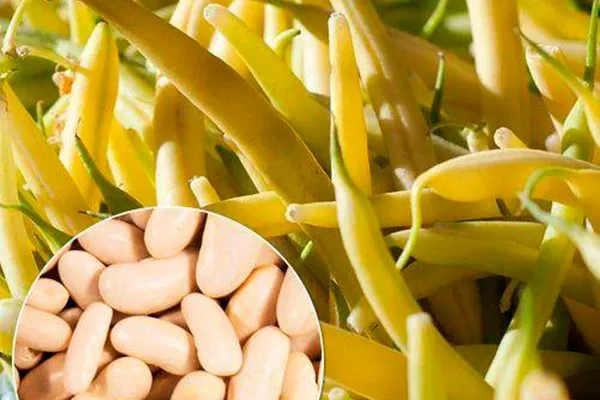
- Fruit. A single pod is 22-25 cm long and bright yellow when ripe, but initially green, later turning a soft yellow. The beans are 2-3 cm in diameter, 4-5 cm in length, weighing approximately 5-5.5 g, and white in color. The fruit's texture is delicate and very soft, lacking fibers and a parchment layer. The shape is curved with a round cross-section, and the tip is slightly curved.
Purpose and taste
The taste of Butter King beans is sweet with a hint of freshness. Their sugary texture is particularly appealing to consumers. Therefore, these beans are used in a variety of ways – in soups, salads, stews, and more. However, they are especially recommended for baby food and dietary nutrition.
Ripening time
The Maslyany Korol variety is considered early ripening, as the harvest of fully ripened fruits can be collected as early as 50 days after sowing.
Productivity
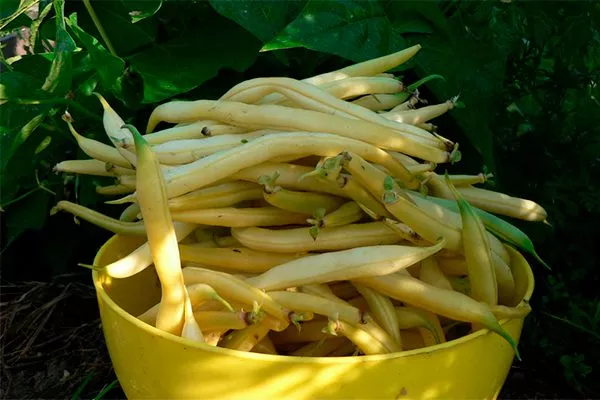
This variety is characterized by a good yield: 1.5 to 2 kg can be harvested per square meter. However, if you begin harvesting young pods a week after flowering, the yield increases.
Growing regions
Royal beans easily adapt to all climatic conditions of the country, including the Ural, East Siberian, and Far Eastern regions.
Advantages and disadvantages
The Butter King has many positive aspects.
Growing
There are two ways to plant the Butter King green bean: directly into the ground or from seedlings. The second option is only used in regions with harsh climates.
How and when to plant?
When planting outdoors, work begins when the risk of frost has passed. Generally, the soil temperature should stabilize at 10-12 degrees Celsius. When growing from seedlings, sowing into containers should begin a month before transplanting into the garden.
Preparation of planting material
Since this variety has poor germination rates, it's important to prepare the seeds properly. Here's how:
- Select your planting material. It's important to eliminate any hollow seeds that are unsuitable for planting. To do this, fill a container with room-temperature water, add the beans, and soak them for 8-10 hours. If any beans float to the surface of the water after this time, discard them, as they don't contain embryos. This also promotes soaking.
- Disinfect the seeds. To do this, prepare a pink solution of potassium permanganate and soak the beans for 1 hour.
- To speed up and improve germination, dilute any growth stimulant according to the instructions. Leave it in the solution for at least 2 hours.
- 5-10 minutes before planting, soak the planting material in boric acid - 0.2 g per 1 liter of water. Keep for 30 minutes.
- ✓ Use only fresh seeds, as germination decreases by 50% after the second year of storage.
- ✓ The temperature of the water for soaking should be no lower than 20°C and no higher than 25°C for optimal awakening of the seeds.
Requirements for planting site and soil
The site where you plan to grow king beans should be bright and sunny, with fertile and loose soil. Sandy loam and loamy soil are ideal, but it's important that the soil be alkaline, or slightly acidic. Dolomite flour and lime are used to reduce acidity.
Please pay attention to the predecessors after which it is best to plant the Butter King bean:
- cabbage;
- potato;
- cucumbers;
- celery№
- carrot;
- beet;
- tomatoes;
- eggplants.
The planting site needs to be prepared. Experts recommend doing this in the fall, but if that's not possible, at least 30 days should pass. Here's how to prepare the beds:
- Tidy up the area by removing all debris, branches and leaves.
- Dig to the depth of a spade. Also, add any organic matter—rotted manure, compost, humus, etc.—about 8-10 kg per square meter. If the soil is too sandy or depleted, add 25 g of superphosphate per square meter.
- Level the surface and make sure there are no large lumps.
The landing process
The rules for planting the Butter King bean depend on the sowing method.
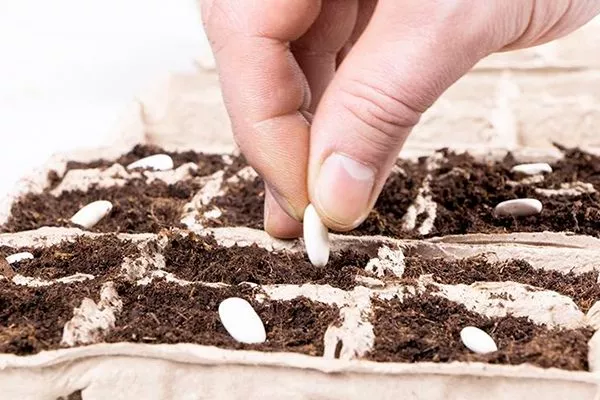
Beans are planted in open ground as follows:
- Prepare the holes. The distance between them for king beans ranges from 45 to 60 cm, no more. The depth depends on the soil type. If the soil is moderately dry, 5 cm is sufficient; if it's always dry, 6 cm; and if it's slightly damp, 4 cm.
- Water the planting holes and allow the water to soak in completely.
- Bury 2 grains in one hole.
- Cover with substrate.
- Moisten again, but lightly.
- Mulch the soil with a layer of up to 3 cm.
- Cover with plastic wrap. Do this every evening, and remove the covering in the morning.
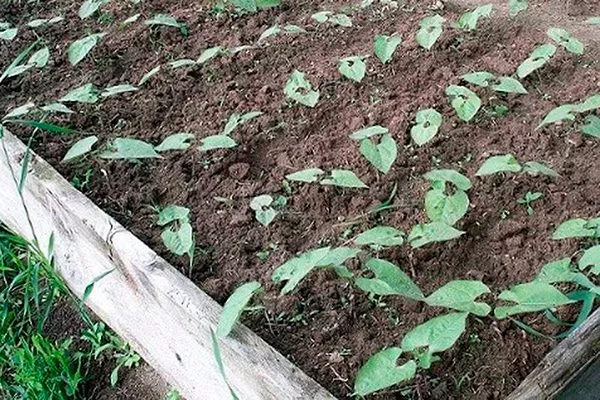
When using the seedling method, proceed as follows:
- Prepare the containers. For beans, it's best to use peat or plastic cups right away. This eliminates the need for transplanting, which can negatively impact the root system. Furthermore, removing the seedlings from the cups is much easier when transplanting them to their permanent location.
- Prepare the substrate. You'll need 2 parts each of humus and peat moss and 1 part sawdust.
- Pour the substrate into the containers and plant the beans 3 cm deep.
- Moisten with a spray bottle and cover with another glass or film.
- Move it to a sunny windowsill.
Remove the covering every day for 15-30 minutes and water periodically, avoiding standing water. You can repot once three true leaves have formed, which is approximately 3-4 weeks.
Caring for Butter King bean crops in open ground
The main care procedures include watering, fertilizing, and staking. For this, simply install trellises or support stakes. Don't forget to loosen the soil and remove weeds.
Watering
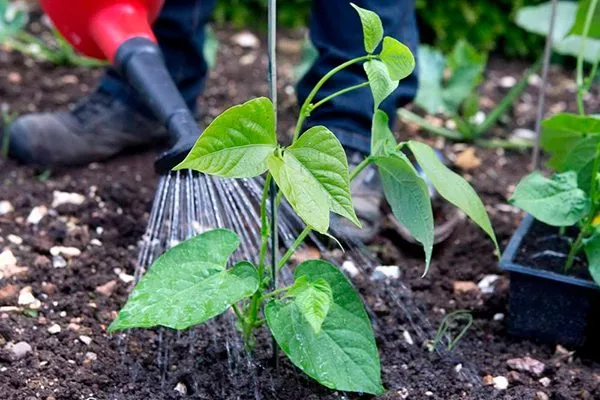
The Maslyany Korol variety tolerates drought well, but will die from excessive moisture, so watering should be moderate. During flowering, moisten the soil twice a week; during the rest of the year, watering once every seven days is sufficient. Water when the top 3 cm of soil is completely dry.
Top dressing
If you applied organic and mineral fertilizers before planting, the next feeding is only necessary after the first leaves have formed. How to fertilize king beans:
- the first time – 35 g of Superphosphate is required per 1 sq. m;
- the second time, when the budding period begins, add 10 g of potassium salt per 1 sq. m;
- when the pods ripen, wood ash in liquid or dry form is required.
- The first feeding should be carried out 2 weeks after the emergence of seedlings, using a complex mineral fertilizer with a predominance of nitrogen.
- The second feeding should be carried out at the beginning of flowering, using fertilizer with a high content of phosphorus and potassium.
- The third feeding should be carried out during the period of pod formation, using wood ash as a source of potassium and microelements.
Harvesting Butter King beans
The first harvest of tender pods can be harvested 7-12 days after the ovaries have formed, but the beans reach technical maturity 50 days after sowing. Therefore, this delicious product can be consumed over a long period.
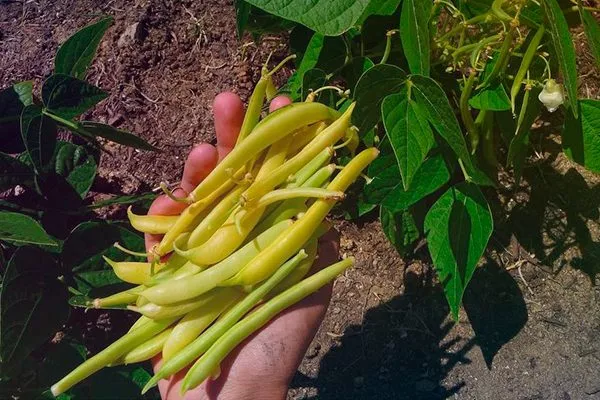
It is advisable to use pruning shears for harvesting so as not to damage the root system when picking off the pods.
Diseases and pests
The Butter King asparagus bean is considered highly resistant to diseases and pests, so it only becomes susceptible to problems if cultivation practices aren't followed. Spider mites are the most common pest. Root rot can also occur if overwatering occurs. To prevent these problems, treat the plants with insecticides and fungicides in the spring.
Reviews of the variety
The Butter King bean is considered a versatile, healthy, and nutritious crop. Growing it is easy—the key is to carefully monitor the soil moisture level. Excess moisture can contribute to root rot. Don't forget to fertilize the plants, remove weeds, and weed regularly.