
Beans are a hardy, easy-to-grow crop, but they're not immune to diseases and pests. To avoid losing some or all of their harvest, gardeners should regularly inspect their bean beds. This allows for early diagnosis of problems and appropriate action.
Fungal diseases of beans
Fungal diseases are the most common category affecting beans. They typically develop as a result of unfavorable weather conditions and poor agricultural practices. Most fungal infections are treatable and can be prevented through preventative measures.
| Name | Disease resistance | Ripening period | Productivity |
|---|---|---|---|
| Gray mold | Low | Early | Average |
| Anthracnose | Average | Average | High |
| Sclerotinia | High | Late | Low |
| Cladosporiosis | Average | Average | Average |
| Cercospora leaf spot | Low | Early | Low |
| Root rot | High | Late | Low |
| Powdery mildew | Average | Average | Average |
| Peronosporosis | Low | Early | Low |
| Rust | High | Late | Low |
| Fusarium | Average | Average | Average |
| Septoria | Low | Early | Low |
- ✓ The optimal soil moisture level to prevent fungal diseases should be 60-70% of the total moisture capacity.
- ✓ To prevent fungal infections, the air temperature should not exceed +25°C during the day.
Gray mold
Gray mold is caused by a pathogen found in the soil, on plant debris, or in infected seeds. The disease manifests itself during flowering. During this period, the plants shed their petals, spreading the fungus throughout the leaves and stems of bean plants.

Characteristics of gray mold:
- Symptoms. At first, the leaves become covered with light-brown spots that quickly enlarge. The leaves turn yellow and curl, and a fluffy coating appears on them. The stems become brittle, and the pods that touch the soil also spoil. The beans shrivel and become inedible.
- Reasons. High humidity caused by rainy weather or too much watering.
- Treatment. Do not use fungicides to control this disease. Instead, take preventative measures, such as disinfecting seeds and storage areas and sowing marigolds, nasturtiums, and mustard before beans.
- Prevention. Do not sow in areas where legumes were grown, or near perennial grasses or legumes. Harvest, clean, grade, and dry seed beans promptly.
Gray mold usually doesn't spread during dry summers. The main trigger for the disease is moisture.
Anthracnose
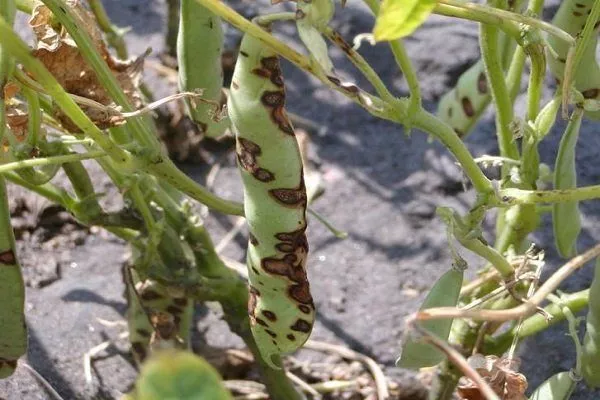
The fungus attacks the above-ground parts of the plant throughout the growing season. If the disease begins during seedling emergence, brown-red spots appear on the leaves. The beans may die immediately.
Features of anthracnose:
- Symptoms. The leaves become covered with dark, sunken, oblong spots. First, the leaf veins darken, then brown spots appear, which eventually develop into holes as the tissue dies and falls out.
The pod valves become ulcerated, and the fungus "eats" through them, spoiling and infecting the beans. They become covered in brown spots, rot, shrivel, and lose weight. - Reasons. Cool and humid weather. Humidity levels favorable for fungal growth range from 92% and temperatures from 13 to 25°C. The pathogen can spread with rain and wind.
- Treatment. All plant residues after harvesting must be destroyed.
- Prevention. Spraying with 1% Bordeaux mixture.
Anthracnose causes yield losses and infection of seed material.
Sclerotinia (white rot)
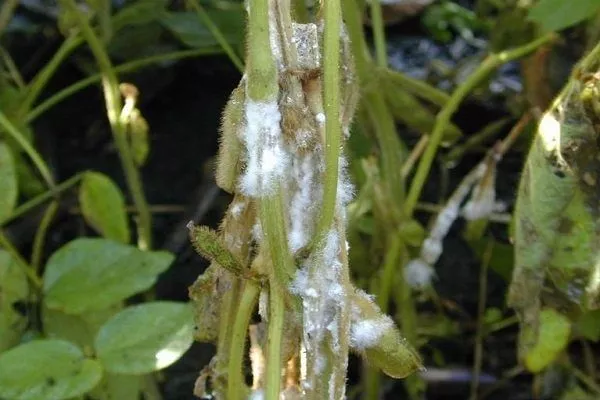
The disease affects the roots and above-ground parts of plants. It spreads through planting material, soil, and plant debris.
Features of anthracnose:
- Symptoms. The leaves and stems soften and become covered with mucus, followed by a white mycelium, which eventually develops into black sclerotia. The pods become soft, crack, and become covered in white flakes. The beans also become covered with dark sclerotia.
- Reasons. The fungus actively develops in areas with high humidity and poor ventilation, such as greenhouses and storage facilities.
- Treatment. You can spray the plants with Hom. You can also use it to disinfect the soil. Dilute the product in water at a rate of 40 g per 10 liters. Spray the plants at the first signs of disease. The maximum number of applications per season is three. You can also spray the beans with Fitosporin or Rovral.
For minor damage, use folk remedies - sprinkling with crushed charcoal, lubricating the stems with a mixture of chalk, water and potassium permanganate (3-5 g of powder per 10 liters of water). - Prevention. Maintaining crop rotation, disinfecting seed material, removing weeds, replacing soil in greenhouses (if beans are grown indoors).
Fungicide spraying should be stopped at least one month before harvest.
Cladosporiosis (olive mold)
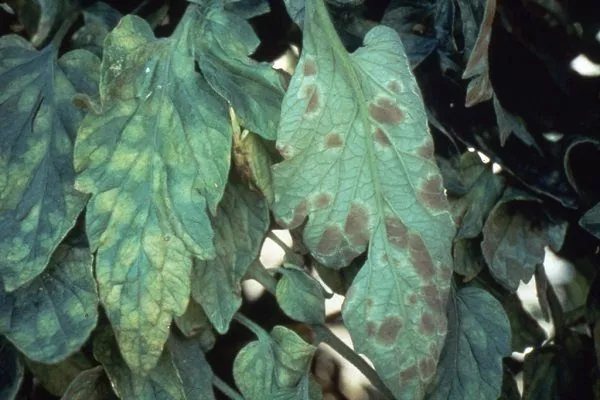
The fungus usually spreads rapidly during rainy weather. The most dangerous period occurs during pod filling—this is when the risk of infection is highest. An infected plant loses its ability to grow and produce beans.
Features of Cladosporiosis:
- Symptoms. All above-ground parts of the plant are covered with a velvety coating, black or olive.
- Reasons. High humidity—over 85%, temperature—22…24°C. The risk increases with condensation on the leaves and humidity close to 100%.
- Treatment. Treatment with Quadris (0.8-1 l/ha). The preparation is especially effective as a preventative measure.
- Prevention. Maintaining optimal temperature conditions and relative humidity of no more than 80%.
The pathogen attacks wheat and other grain crops. Planting beans near cereals is not recommended.
Cercospora leaf spot
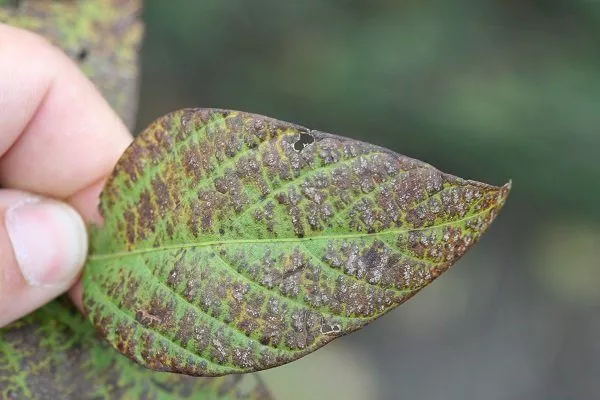
The disease is also known as gray spot of legumes. It affects not only legumes, but also potatoes, soybeans, alfalfa, and other crops.
Features of cercospora leaf spot:
- Symptoms. Leaves become covered with gray spots with a purple border and reddish-brown spots with a concentric pattern. Affected leaves quickly die.
- Reasons. High humidity, rainy weather, temperatures from +22 to +28°C.
- Treatment. Treatment of plantings with Protazox, which effectively suppresses the germination of fungal spores and conidia.
- Prevention. Treatment of seed material with Protect, compliance with crop rotation rules, incorporation of plant residues, use of uninfected planting material.
The disease negatively impacts crop yields, with losses affecting both the quality and quantity of harvested beans.
Root rot (black leg)
This common fungal disease is especially dangerous at the seedling stage if beans are grown using the seedling method, or at the initial stage of vegetation when grown in open ground.
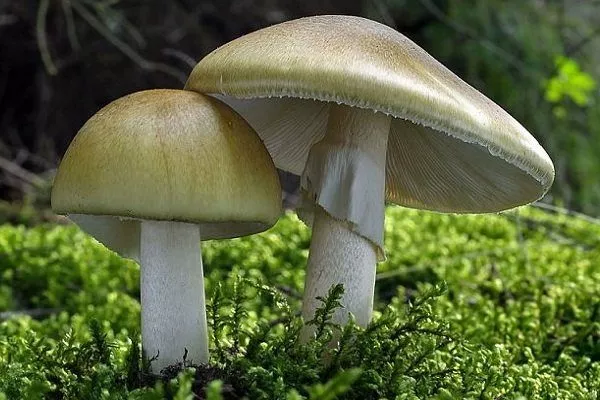
Features of black leg:
- Symptoms. Young plants wilt, droop, and the leaves dry up. When cut across the stem, the plant's blood vessels are reddish rather than green. If you tug on the plant, it easily pulls out of the soil—the root barely holds it in place. A distinct narrowing is visible at the junction of the stem and root—the root collar.
- Reasons. Overwatering when growing seedlings - high humidity in the greenhouse or too much and frequent watering.
- Treatment. The disease is incurable. Uproot and destroy the seedlings.
- Prevention. Use of disinfected substrate when growing seedlings, neutralization of acidity by adding wood ash (200 g per 1 sq. m).
Maintaining the intervals between neighboring plants, the frequency and rate of watering, loosening the soil and preventative watering with a solution of Fitosporin or soda (1 teaspoon per 250 ml of water).
Blackleg in young plants is incurable, and the plant dies. If mature plants are affected, they may survive, but don't expect a healthy harvest.
Powdery mildew
The disease affects virtually all garden crops and appears on beans during flowering. It progresses throughout the growing season, suppressing plant growth. The earlier the disease is detected, the greater the chance of controlling it through therapeutic spraying.
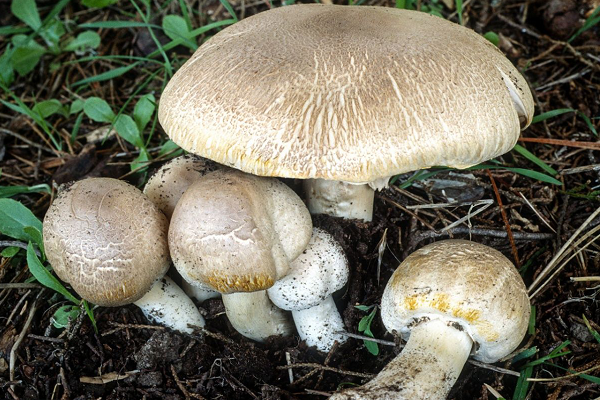
Characteristics of powdery mildew:
- Symptoms. The leaves and stems become covered with a powdery coating—it looks as if the plant has been dusted with flour. Over time, the whitish coating turns grayish, and exudation appears.
- Reasons. Unfavorable weather conditions promote the spread of fungus. The risk of infection increases with sudden temperature fluctuations and dense plantings.
- Treatment. Treatment with a 1% suspension of colloidal sulfur (50 g of liquid per 10 sq. m). Or dusting the plantings with sulfur powder (300 g per 10 sq. m).
- Prevention. Mandatory destruction (burning) of plant residues and crop rotation - do not plant beans in the same place for several years in a row.
Powdery mildew of beans does not lead to the complete death of the bushes, but reduces the yield by 10-15%.
Peronosporosis
Another name for this disease is downy mildew. The fungus attacks all above-ground parts of the plant. The disease can develop in two ways: locally or generally (diffusely).
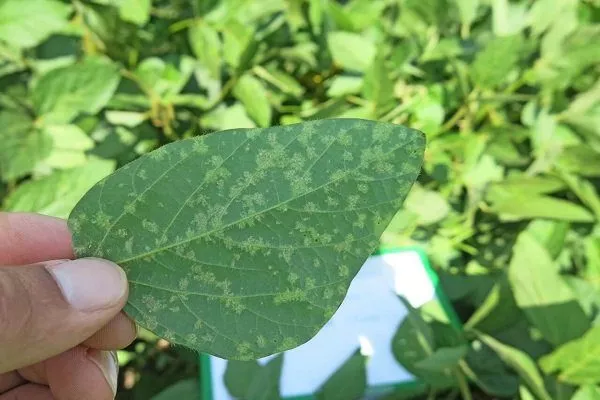
Features of downy mildew:
- Symptoms. Unlike true powdery mildew, this disease causes the bloom to appear on the underside of the leaf, not the upper part. It is accompanied by the appearance of whitish or light yellow chlorotic spots. These spots then develop a dark gray bloom with a purple tint.
- Reasons. High humidity.
- Treatment. Spraying with fungicides Acrobat, Quadris, Strobi.
- Prevention. Destruction of plant residues.
With diffuse disease, the entire bean plant becomes deformed. The plant tips practically touch the stems. The plants begin to resemble heads of cauliflower. The disease causes significant yield losses.
Rust
Fungal spores easily spread throughout the area, infecting garden crops. Rain and wind facilitate the spread of the pathogen.
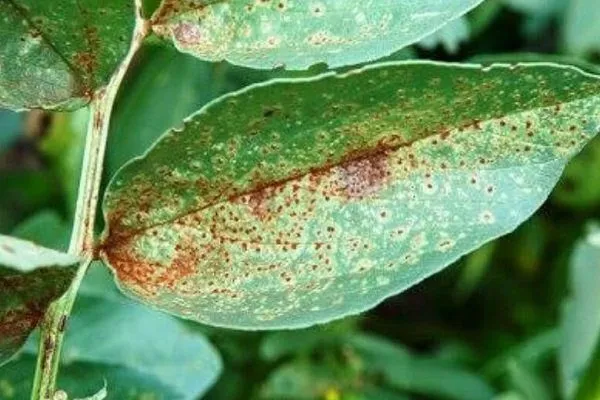
Features of rust:
- Symptoms. Brownish voids (pustules) appear on the stems, leaves and pods, which darken over time, sometimes to a black color.
- Reasons. The disease occurs in warm and humid weather, and infection most often occurs from milkweed, which is considered an intermediate host for the rust pathogen. Excess nitrogen in the soil promotes the disease.
- Treatment. Absent. Preventive measures are necessary.
- Prevention. Weed and plant debris control in crop fields. Spray crops with a 1% Bordeaux mixture solution before flowering.
Rust disrupts photosynthesis and chlorophyll production in plants. Plants become weak and unviable, and a good harvest is impossible. Losses can reach approximately 30%.
Fusarium
The disease affects both seedlings and fruiting beans. The fungus deforms the sprouts and ulcerates the cotyledons. Seedlings and young plants usually die. If the fungus attacks the seed in the soil, sprouts fail to emerge at all.
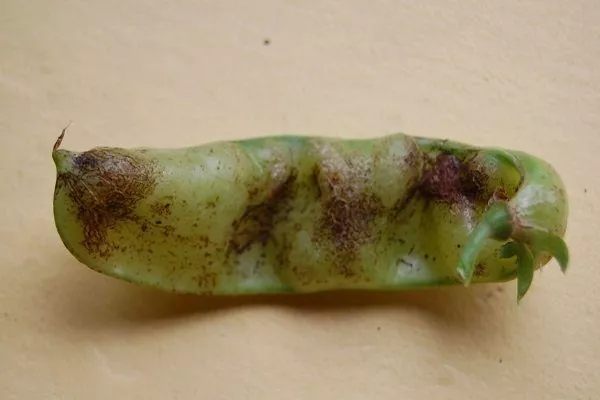
Features of fusarium:
- Symptoms. If you remove infected seeds from the soil, you'll notice a pink coating. This same coating subsequently covers the cotyledons of the seedlings. The disease can be diagnosed by the brown half-ring of the rudimentary radicle.
The disease can also develop during the flowering stage. Leaves suddenly turn yellow, dry out, and fall off. The root collar darkens. The beans become discolored. - Reasons. Infection occurs through soil and seeds. Spread is facilitated by warm, humid weather.
- Treatment. Infected plants cannot be cured.
- Prevention. Seed and soil treatment, and removal of plant debris. Crop rotation. Spraying with Fundazol, Trichodermin, and their analogues.
Fusarium is a dangerous and widespread disease that affects cultivated and wild plants.
Septoria (rust spot)
This fungal disease affects all beans. It's often called brown spot or rusty spot due to the characteristic spots.
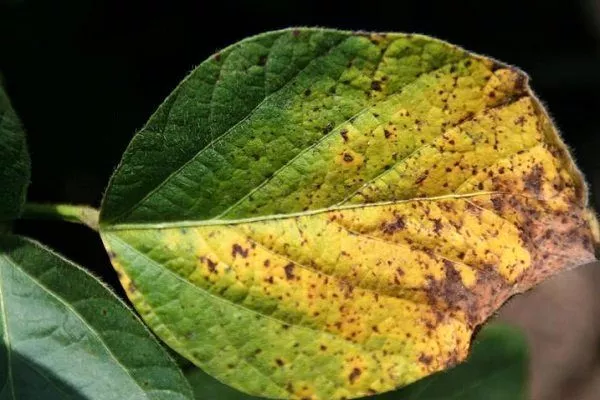
Features of septoria:
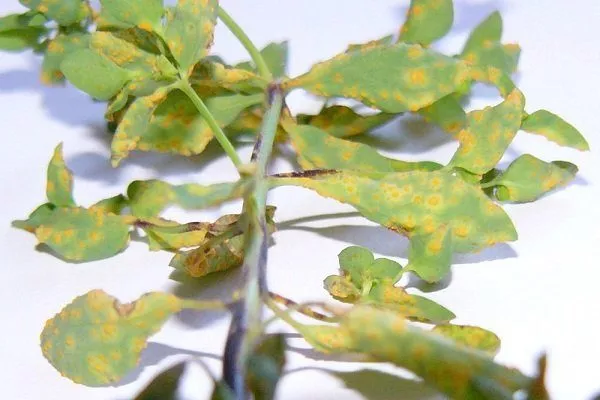
- Symptoms. The above-ground parts of bean plants become covered with rusty spots. They spread from the bottom of the plants to the tops. The leaves are affected first (they turn yellow and fall off), then the stems and beans.
- Reasons. Violation of crop rotation rules, lack of light and nutrients.
- Treatment. For minor infestations, spray with a saline solution (250 ml of salt per 10 liters of water). For severe infestations, spray with 1% Bordeaux mixture, Hom, Revus, Fundazol, and their equivalents.
- Prevention. Fertilization, especially nitrogen-containing fertilizers. Seed treatment, thinning of crops, regular loosening.
Bacterial diseases
Bacterial diseases don't affect beans as often as fungal infections, but there are a huge number of them. Diseases caused by pathogenic bacteria are called bacterioses. They all have virtually identical and indistinguishable symptoms.
The most common bacterial disease of beans is brown bacterial spot. This disease is widespread and affects most of the above-ground parts of bean plants.
Features of bacterial (brown) spot:
- Symptoms. Leaves become covered with small, light-yellow, chlorotic spots. These enlarge over time, developing a yellow, dark green, or dark brown border. The spots merge and cover almost the entire leaf.
Affected areas wrinkle, dry out, and fall off, while dead leaves fall off. Veins in affected areas may curl and twist. Beans turn yellow and wrinkled. - Reasons. Bacteria thrive in low light conditions and in warm, humid environments.
- Treatment. Treatment only makes sense in the early stages of bacterial diseases—as soon as the first signs appear. Spray plants with a 1% Bordeaux mixture.
- Prevention. Maintaining crop rotation, collecting healthy seeds, pre-treating them, and growing resistant varieties.
- ✓ The presence of water-soaked spots with a yellow halo on the leaves may indicate a bacterial infection.
- ✓ Rapid wilting of a plant without any apparent reason is often a sign of bacterial infection of the root system.
The yield of beans affected by bacterial infections is reduced by approximately a quarter.
Viral diseases
Viruses, unlike bacteria and fungi, cannot exist on their own in the environment. They survive by moving from plant to plant. Viruses can also attach themselves to bacteria. If a plant becomes infected with such pathogens, they become infected with a viral infection along with bacterial diseases.
80% of mosaic virus infections occur in conjunction with bacterial spot disease. Insects are another route of infection. They carry viruses on their paws and other body parts. Viral diseases are incurable. The only way to combat them is through prevention and proper agricultural practices.
Yellow mosaic
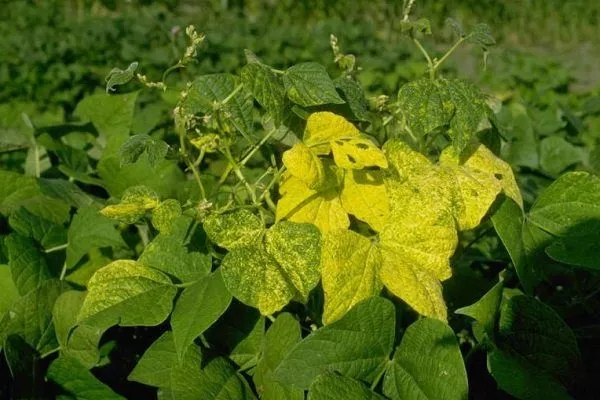
Yellow mosaic virus causes lightening and veining of bean leaves. They become covered with yellow spots, which then fade and droop. Plants slow growth and become bushy.
The virus is transmitted by sucking insects such as cicadas, aphids, and bugs. The disease slows photosynthesis and disrupts all biological processes. Beans do not carry the virus.
Green mosaic
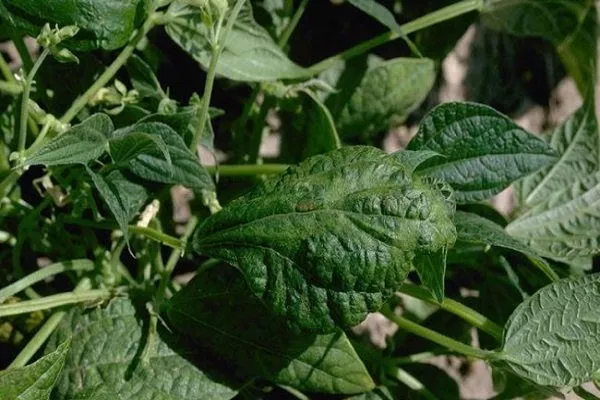
Green or common mosaic disease is characterized by the appearance of dark and light green spots. These alternate on the leaves, creating a mosaic pattern. The spots gradually fade, and blisters form on the affected leaves, which eventually become deformed.
Bean plants grow poorly, are stunted, and yields decline. If young plants are affected, there may be no harvest at all. Unlike yellow and other mosaic viruses, green mosaic virus is transmitted not only by insects but also by seeds.
Ordinary mosaic
The virus inhabits wild and cultivated legumes. It is transmitted by aphids. It is also transmitted through plant debris. The disease begins with a discoloration of the veins, which become lighter. Then, patchy yellowing occurs in the areas between the veins.
Lightened areas lose the ability to synthesize chlorophyll, and the plants slow down sharply and develop poorly. Mosaic disease negatively impacts yield, but the virus is unable to penetrate the beans themselves. Mosaic infection cannot be transmitted through seed.
Deforming mosaic
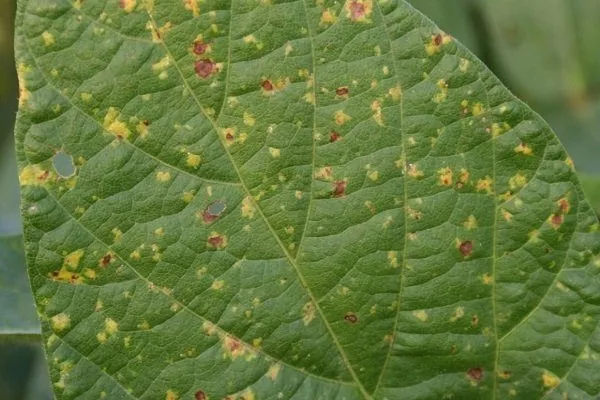
The virus is characterized by a change in the shape of the above-ground parts of the bean plant. The disease deforms the leaves and bracts. They become wrinkled, curled, and covered with spots. Light chlorotic spots appear on the leaves. Over time, they become thin and pale, and then translucent.
Plants infected with the deforming mosaic virus at a young age no longer develop properly. The bushes don't grow upward, but produce rosettes with wrinkled leaves. As the plant matures, its pods become deformed, with the valves becoming thick and malformed.
The seeds of infected plants turn yellow, but they are not infected by the virus and do not serve as a source of infection. Like the common mosaic virus, deforming mosaic is transmitted by aphids.
The main pests of beans
Beans don't have as many pests as, say, tomatoes or raspberries, but they can destroy a significant portion of the crop. The crop is attacked by insects of a wide variety of species and feeding patterns. Some chew the leaves and suck the juices, while others bore holes in the beans or gnaw at the roots.
| Name | Methods of control | Period of activity | Vulnerability to drugs |
|---|---|---|---|
| Grain | Seed treatment, planting garlic and dill | Ripening of beans | High |
| Tuber weevil | Deep plowing, early sowing | The entire growing season | Average |
| Whitefly | Glue traps, tobacco checkers | Warm season | High |
| Sprout fly | Early sowing, garlic infusion | April-May | Average |
| Aphid | Planting garlic, calendula, infusions | The entire growing season | High |
| Slugs | Sprinkling with ash and superphosphate | Damp weather, night | Low |
Grain
The most dangerous enemy of beans, it literally pierces the beans, gnawing out their contents. The bean weevil attacks all legumes and appears when the beans begin to ripen.
Features of the grain beetle and how to control it:
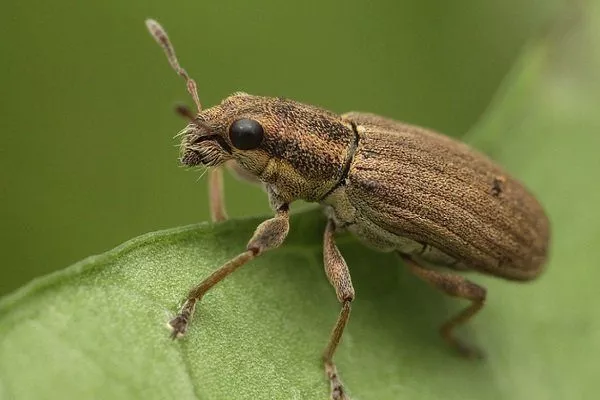
- Description of the pest. A small beetle, up to 0.5 cm in size, it has a brown carapace, while the abdomen and elytra tips are yellow-red. The beetle reproduces in garden beds and storage areas during warm weather. Females lay clutches of fifty eggs, which hatch into larvae that penetrate the beans. There they develop.
A single bean can contain up to 20 larvae at a time. The beetle produces up to three generations per year. - How to fight? Treat the seeds with potassium permanganate or hot water. Plant garlic and dill near the bean beds. Use chemical treatments only as a last resort, if other methods fail. Spray the beans with Decis or Aktara once before flowering.
It's recommended to harvest beans before the pods begin to split. To disinfect the seeds, roast them in the oven or freeze them for 3 days.
Tuber weevil
This ubiquitous beetle is found in all climate zones except the tundra. Both the beetles and their larvae gnaw at leaves.
Characteristics of weevils and how to control them:
- Description of the pest. These are brown beetles 2.5–9 mm long. The larvae are white, bristly, with a yellow chitinous head.
- How to fight? Practice deep plowing and early sowing. Spray crops with specialized preparations and insecticides, such as Vantex, Lannat, and Tibor.
Whitefly
This polyphagous insect prefers greenhouses. It typically attacks seedlings, but in warm weather it also attacks open ground.
Features of whitefly and how to control it:
- Description of the pest. These microscopic insects resemble moths in appearance. They are 1 mm long and are visible due to their large numbers. The larvae are flat, pale green, and less than 1 mm long.
- How to fight? Sow beans outdoors. Set sticky traps, fumigate with tobacco smoke, and spray with insecticides such as Karbofos, Aktara, Actellic, etc.
Sprout fly
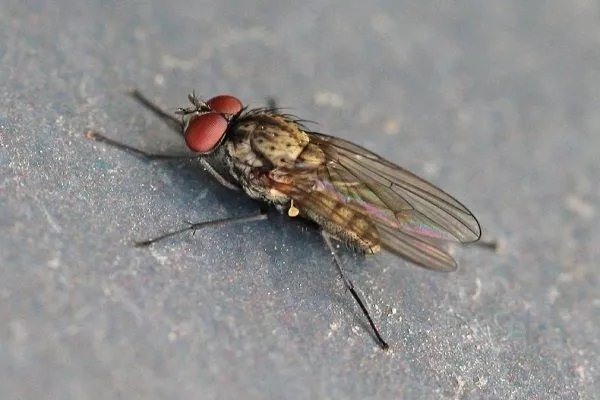
The insect attacks a variety of garden crops. It attacks beans during the germination stage. Pupae that overwinter in the soil release flies in April-May, which lay eggs in the soil.
Characteristics of the sprout fly and how to control it:
- Description of the pest. The fly is inconspicuous, grayish-brown, and about 0.5 cm long. Its back has dark stripes. Larvae emerge from the eggs after a week and penetrate the planted bean seeds. The sprouts rot or produce weak plants. After 2-3 weeks, the larvae transform into pupae.
- How to fight? Sow beans early to ensure they germinate before the larvae appear. Avoid using fresh manure in the spring—apply it in the fall, as it attracts flies. Spray the plants with garlic infusion—it repels insects. Sprinkle with tobacco dust, ash, or pepper.
In particularly severe cases, use insecticides. You can spray the beans with Fufanon or similar products.
Aphid
The insect attacks almost all garden crops. It can also attack beans.
Features of aphids and how to control them:
- Description of the pest. A small green sucking insect that lives in colonies on the undersides of leaves.
- How to fight? Plant garlic, calendula, and other strongly scented plants nearby. Spray with various infusions—onion peels, tomato tops, etc. As a last resort, treat with Aktara, Trichodermin, or similar products.
Slugs
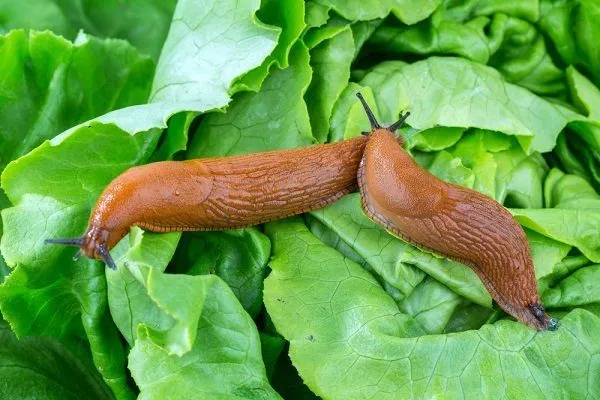
Slugs are practically omnivorous and come out to feed in damp weather or at night. They are very voracious and can cause irreparable damage to crops.
Features of slugs and how to control them:
- Description of the pest. Worm-shaped mollusks up to 7 cm long. As they crawl, they secrete mucus, leaving behind shiny trails.
- How to fight? Sprinkle the plantings with ash or superphosphate, set traps and baits, mulch the crops with pine needles or nettles.
Any bean disease, even treatable ones, causes significant yield losses, so prevention is crucial. Most bean diseases can be prevented by spraying, proper agricultural practices, and various preventative measures.