
White beans are an edible vegetable plant from the legume family. The crop includes dozens of bush and climbing varieties. With proper cultivation techniques, gardeners can reap high yields of this nutritious and valuable crop.
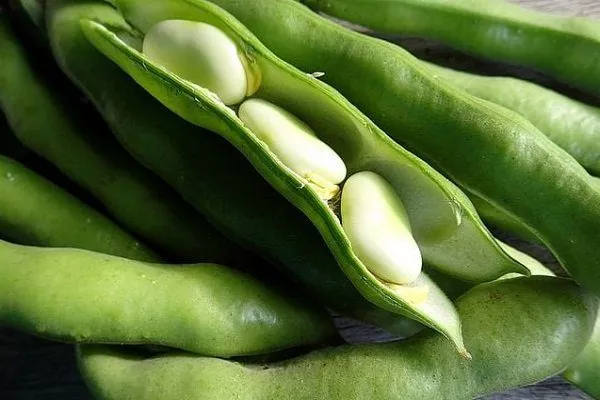
The History of White Beans
The white bean's homeland is South America. It's believed that the wild bean's natural habitat was in what is now Peru. From there, thanks to Native American traders, the plant spread throughout South and Central America.
White beans arrived in Europe in the 15th century, brought by Spanish explorers. Like many new crops, Europeans used them not only for food but also as an ornamental plant.
Beans appeared in Russia in the 17th century, but it was only towards the end of the 18th century that "French beans" began to be grown for food.
Specifics of white beans
White beans are a food especially prized by vegetarians. They contain plant-based proteins, making them a popular choice for meat during Lent.
Composition and caloric content
In addition to protein, white beans contain plant fiber, amino acids, calcium, magnesium, and vitamins E and B. They are a low-calorie product that promotes weight loss.
Per 100g of white beans:
- energy value – 102 kcal;
- carbohydrates – 47 g;
- proteins – 21 g;
- fats – 2 g.
Benefits of white beans
White beans are valued not only in cooking, but also as a healing remedy. Regular consumption of beans improves overall health.
The effect of white beans on the body:
- the functioning of the cardiovascular and nervous systems is normalized;
- stimulates the production of gastric juice;
- blood sugar levels decrease;
- vision improves;
- the immune system is strengthened;
- swelling is eliminated/prevented;
- strengthens nails and hair;
- metabolism improves;
- the body is cleansed of toxins.
White beans are good for bones and teeth due to their high calcium content.
Not only the beans themselves, but also the bean inflorescences and pods are used for medicinal purposes. They are used to treat pancreatitis, heart failure, kidney disease, rheumatism, arrhythmia, atherosclerosis, gout, and genitourinary disorders.
Contraindications and complications
Kidney beans are eaten only after cooking. Raw seeds contain toxins that can cause poisoning.
A side effect of eating beans is flatulence. To prevent this, it's recommended to soak the beans overnight in water before boiling them. This method reduces cooking time.
Beans are contraindicated in those with increased gastric secretion. There are certain conditions in which beans should be consumed with caution and after consultation with a doctor:
- gout;
- cholecystitis;
- stomach ulcer.
Eating large amounts of white beans in older age is not recommended. If allergic reactions occur, avoid the product completely.
The best varieties of white beans
| Name | Ripening period | Disease resistance | Growth type |
|---|---|---|---|
| Chali | Mid-early | High | Bushy |
| Black eye | Early | Average | Bushy |
| White mares | Late | High | Curly |
| Beloserka | Average | Average | Bushy |
| Lotus | Mid-early | High | Bushy |
| White flat | Early | High | Bushy |
| Moscow White | Average | High | Bushy |
| Navy | Late | Average | Bushy |
There are varieties of white beans that differ in maturity time, bean size, flavor and texture, plant size, yield, and other criteria. Gardeners especially value varieties that combine ease of care with high yields and excellent flavor.
Popular varieties of white beans:
- Chali. A variety with large beans. The fruits are delicate and flattened. They are used to make soups, side dishes, salads, and stews. The flavor is similar to potatoes. The beans cook very quickly—up to 45 minutes. Up to 1.7 kg of beans can be harvested per square meter.

- Black eye. This variety has the most tender beans and a high energy value. The beans cook quickly and have high medicinal value. They are used as a preventative anti-cancer agent. A yield of 1.2 kg of beans per square meter is obtained.
- White mares. A large-podded climbing bean with lush foliage. Each pod contains three beans. It is used as a food and ornamental crop.
- Beloserka. A variety with a high sugar content. Up to 50 pods grow on a single bush. The fruits are medium-sized and round. Yields up to 2 kg/sq. m.
- Lotus. A mid-early, high-yielding bean variety. The fruits are fleshy and suitable for mechanical harvesting. The fruits are used in cooking, cosmetics, and for canning. Yield: 1.5 kg/sq. m.
- White flat. It is distinguished by its high micronutrient content. The variety is undemanding of soil conditions and grows in almost all regions of Russia. Yields up to 1.5 kg/sq. m.
- Moscow white. This green-podded variety was bred specifically for central Russia. It tolerates temperature fluctuations and short daylight hours well, and is disease-resistant. The average yield is 1-1.5 kg/sq. m.
- Navy. An ancient South American variety with small, pea-shaped beans. It is distinguished by its high fiber content.
The fruits have diuretic, hypoglycemic, and antimicrobial properties. Beans take a long time to cook. If soaked for 5 hours, they cook in an hour. About 1.5 kg of beans are harvested per square meter.
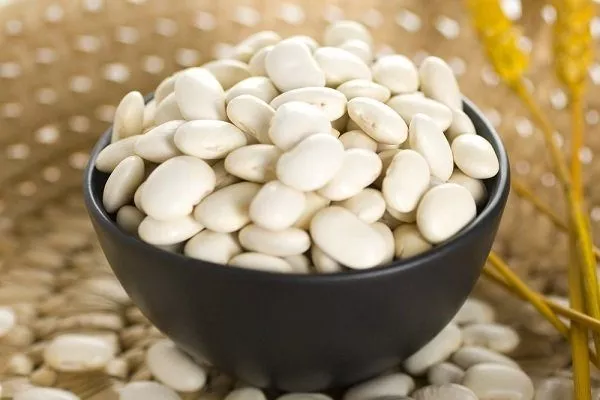
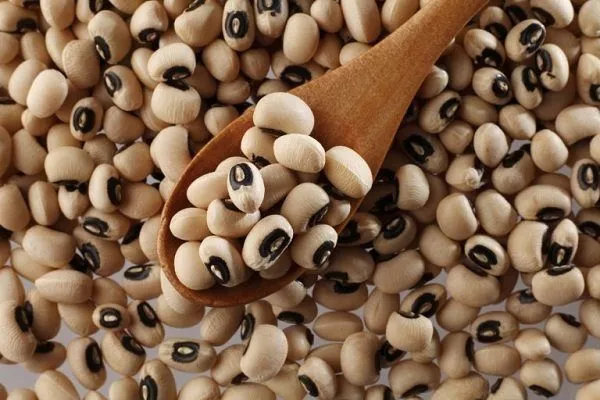
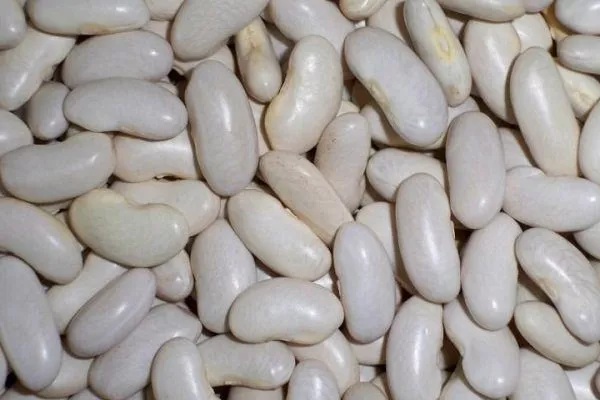
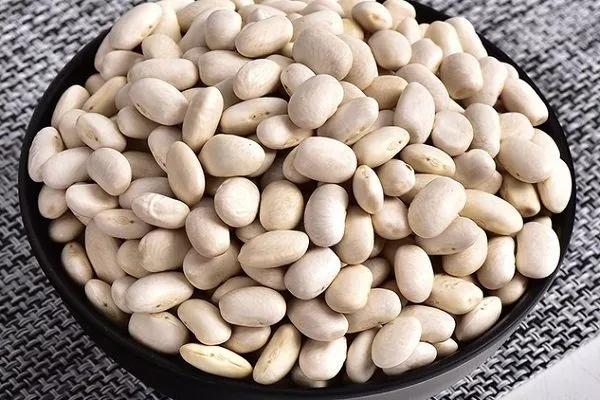
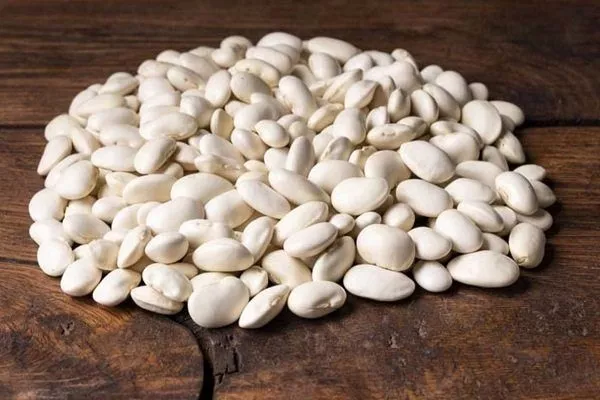

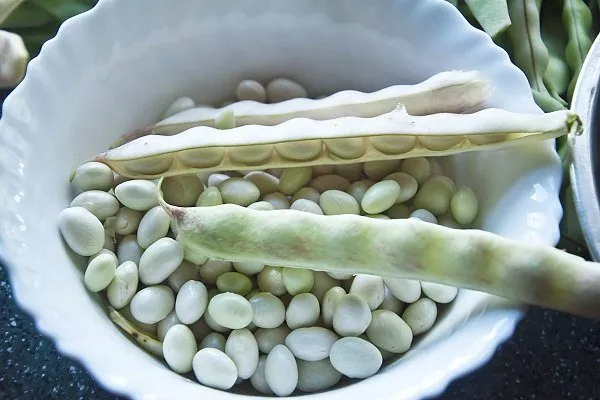
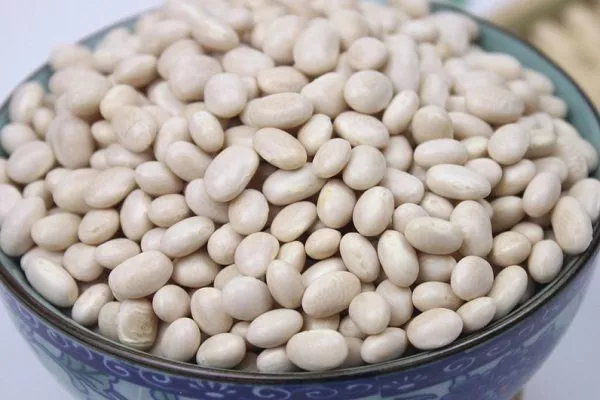
Different varieties of beans are grown separately from each other. The crop is prone to cross-pollination, so if white beans are planted near red ones, the latter may develop reddish spots.
Peculiarities of planting white beans
Bean yield depends largely on growing conditions and the quality of the seed. A gardener's job is to prepare the seeds and soil for planting according to all agricultural practices.
Planting dates
White beans are planted in the ground from seeds, waiting until the soil warms to +10…+12°C. In temperate climates, the crop is sown in May, taking into account the ripening time and weather conditions.
- ✓ Optimum soil temperature for seed germination: +10…+12 °C.
- ✓ The planting depth of seeds in clay soils should not exceed 4 cm.
Bush beans are planted 1-2 weeks earlier than climbing beans. Fast-maturing varieties are sown before the end of June. They are harvested until the first frost.
In regions with cold springs, it is recommended to grow beans using seedlings. Seeds for seedlings are sown approximately a month before planting.
Seed preparation
To increase bean yields, seeds are sorted, soaked, disinfected, and hardened before planting. Pre-planting preparation helps prevent many diseases and improves plant immunity and cold resistance.
How to prepare white bean seeds:
- Sorting. Visually inspect the seeds. Discard any empty, damaged, or wrinkled ones. For a more thorough sorting, use water—any non-viable seeds will float to the surface.
- Disinfection. Soak home-collected seeds, as well as purchased seeds that have not undergone pre-sowing preparation, in potassium permanganate for 20 minutes to disinfect them.
- Soak. After soaking the seeds in potassium permanganate, rinse them with clean water and soak them in a wood ash infusion for 2 hours. Or simply soak the seeds in clean water overnight. These seeds are more resistant to cold snaps.
- Hardening. Place the seeds on the bottom shelf of the refrigerator (optimum temperature is +2°C) for one week. Wrap the seeds in a damp cloth to prevent them from drying out.
Five minutes before sowing, seeds are immersed in a boric acid solution to protect plants from pests and diseases.
Rules for soil preparation
Beans should be grown in well-lit areas, away from strong winds and drafts. Soil type isn't particularly important, as long as it's fertile and well-drained. Beans grow best in light soils and don't like heavy clay soils.
Soil preparation:
- Dig up the area to the depth of a shovel blade.
- Add organic matter during digging – 4 kg of compost or humus per 1 sq. m. Add 1 tbsp. of dolomite flour, 2 tbsp. of superphosphate, and 1 tbsp. of ammonium nitrate.
When applying fertilizer, avoid overdosing on nitrogen fertilizers, as they stimulate the growth of green mass, which is often detrimental to the pods.
Gardeners often use climbing and semi-climbing beans as a "filler." They are planted along the edges of beds and plots. Thanks to their nodule bacteria, beans enrich the soil with nitrogen.
Good neighbors for beans:
- beet;
- carrot;
- cucumber;
- potato;
- pumpkin;
- tomatoes.
It is not recommended to plant beans next to other legumes, so as not to provoke the spread of pea moth and other specific pests of these crops.
Sowing white beans
It's recommended to plant beans in a staggered pattern. The planting pattern is chosen based on the variety—the height and spread of the plants. If you're planting tall climbing beans, install wooden supports near the holes beforehand.
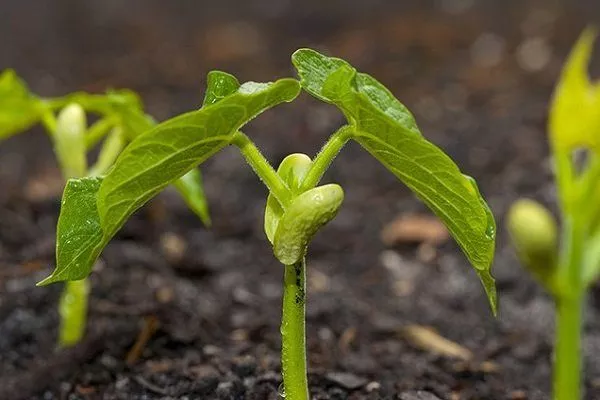
Sowing order:
- Prepare planting holes. For bush varieties, the depth should be 20-25 cm; for climbing varieties, 25-30 cm. The distance between rows should be 40 and 50 cm, respectively. The hole depth should be 6-7 cm; in clay soil, up to 4 cm.
- Place 3-4 beans in each hole. When seedlings emerge, select the strongest and healthiest ones and remove the rest.
- Fill the holes with soil and compact it lightly – this will help retain moisture in the soil and speed up seed germination.
- Mulch the soil with peat, humus or other suitable material.
If you grow beans from seedlings, the first ready-to-plant pods will appear two weeks earlier. To obtain seedlings, sowing begins in late March. The seedlings will be ready by May – they are planted in open ground, covered with plastic if necessary.
Care and cultivation
Beans are a relatively undemanding crop. Provided with good conditions, they grow without causing problems for gardeners. Particular attention should be paid to watering and soil cultivation, and when growing climbing varieties, staking the plants is also important.
Watering
Beans are extremely sensitive to soil moisture. Both overwatering and drought are equally harmful. Both conditions result in plant stunting and reduced yields. The crop especially needs water during the fruiting period.
Watering features:
- watering rate after sowing – 6 liters per 1 sq. m;
- frequency of watering before bud formation – once a week;
- at the stage of formation of 4-5 leaves - watering is stopped until flowering begins;
- When inflorescences appear, the watering rate is doubled, and then increased to 18-20 liters per 1 sq. m.
Beans don't tolerate hot and dry periods well. If these occur during flowering, the plants lose their flowers. A similar effect occurs with a lack of moisture.
After watering, the soil is loosened to prevent crusting. During loosening, the bushes are hilled to ensure they are more stable and do not fall to the ground in rainy weather.
Top dressing
Beans are undemanding about soil composition, so the fertilizer applied during tilling is usually sufficient. If the plants are lagging or developing poorly, supplement with organic and mineral fertilizers.
Dry fertilizers and solutions should not come into contact with the above-ground parts of plants to avoid burning them. Granular fertilizers are spread in rows, while liquid fertilizers are poured through the narrow spout of a watering can.
The order of feeding in case of nutrient deficiency:
- The first feeding is done one month after germination. A complex nitrogen-phosphorus fertilizer, such as superphosphate, is recommended at 30 g per square meter.
- The second feeding is carried out three weeks after the first. This will allow the plant to form full-sized pods with the optimal number of beans. Potassium salt is added at a rate of 10 g per square meter.
Many gardeners, instead of mineral fertilizers, during the second feeding, add wood ash - it contains a lot of phosphorus, magnesium and potassium.
Garter
Low-growing beans don't need staking. Supports are only needed for tall and climbing varieties. They allow the plants to grow freely upward. Without support, the plants won't produce the desired yield.
The supports are made of wood—the plant cannot climb plastic or metal objects. Staking not only increases bean yield but also prevents crop loss—the bean plants, spreading along the ground, can rot and become diseased.
- ✓ Use only wooden supports for climbing varieties.
- ✓ Tie the stems counterclockwise for better growth.
There are two options for garter:
- On separate supports. The beans are tied up once the bushes reach 15 cm in height. The stems are wrapped around wooden supports, moving them counterclockwise.
- On the wire. A wire is stretched between 1.5 m high supports, to which bean shoots are tied with ropes or twine.
Diseases and pests
Pests and diseases significantly impact bean yields. Preventative measures, such as weed control and spraying plants with a 1% Bordeaux mixture solution, can help prevent damage.
Beans are primarily affected by bacterial diseases. If agricultural practices are not followed, the plants often suffer from various rots and spotting.
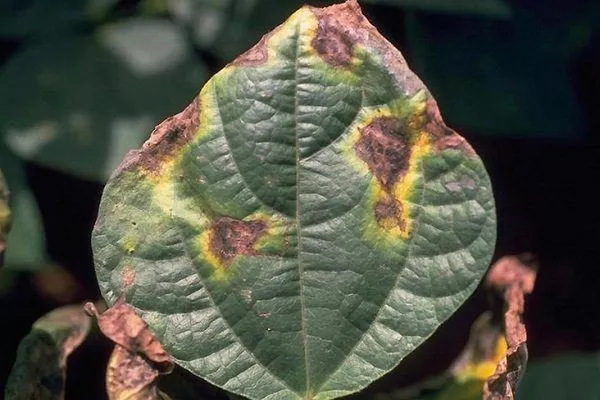
The most common diseases:
- Anthracnose. It is accompanied by the appearance of brown, sunken spots—round or irregular in shape. Leaf veins turn brown, and the leaves themselves turn yellow. Holes appear at the site of the spots, and the leaves die. Fruit becomes covered with ulcers.
- Bacteriosis. The disease causes spots to appear on the above-ground parts of plants, often resulting in plant death. The pathogen can persist for years in the soil and on plant debris.
- Viral mosaic. Necrotic spots appear on the leaves and the veins become discolored.
To prevent diseases, bean seeds are soaked before planting in solutions of Trichodermin and Baktofit (the proportions are indicated in the instructions).
The most malicious pests of beans:
- Sprout fly. It gnaws at young shoots and can destroy entire crops. It's important to remove plant debris promptly and maintain crop rotation. Beans should not be planted in the same area for at least 4-5 years.
- Bean weevil. The larvae of this beetle eat the beans from the inside out. Roasting the beans in the oven (60…70°C) helps save the harvest.
- Pea moth. The caterpillars of this butterfly eat the pulp of beans. Safety precautions are the same as for the bean fly.
If pests are found on bean plants, the beds need to be treated. Popular pest control products include Guapsin, Trichodermin, and Planriz. However, these should only be used before the beans bloom and strictly according to the instructions.
Harvesting and storage
Green and dry beans are eaten. Unripe (green) pods are harvested in the summer—in July or August (the harvest time depends on the planting time and the early maturity of the variety). Harvesting of hard beans begins in September.
Features of bean harvesting:
- Green pods are picked for food when the beans inside reach 3-4 mm in length. Not only the seeds, but also the pods are eaten.
- Beans are harvested in several stages, at intervals of approximately one week. The pods are picked as they ripen.
- Don't allow the beans to become overripe. The pods may split open, the beans will fall to the ground, and some of the harvest will be lost.
- If it's harvest time and rain is expected, the bean bushes are cut back completely. They are placed in a dry place, such as under a shelter, as good ventilation is essential. Once the bushes are dry, the beans are shelled.
- When harvesting, the bushes are cut rather than pulled out. The nodule bacteria, remaining in the soil, rot and enrich it with nitrogen.
Green beans don't keep for long. They quickly lose moisture and spoil, becoming unusable for food or processing within a few days. To keep beans fresh longer, store them in the refrigerator, including the freezer.
Options for winter storage of white beans:
- In grains. The dry pods are shelled and the bean seeds are placed in canvas bags or plastic bottles.
- In the bushes. Cut beans can be stored in a dry, well-ventilated area with a moderate temperature. Hang the beans from the ceiling to keep them away from rodents. Shell the beans as needed.
White beans are a valuable crop worthy of the attention of cooks and gardeners. Requiring little investment or farming effort, this vegetable produces healthy green pods in the summer, and in the winter, you can enjoy delicious and nutritious beans.