
The Kudryavaya cherry is a compact, columnar plant with unusual fruits. Their wavy texture gives them their name. However, their yield is no different from that of taller varieties. The Latin name is Prunus avium 'Kudryavaya'. Gardeners claim that the trees not only produce berries but also serve as ornamentals.
Who developed the variety and when?
It's unclear exactly who and when bred this variety, but it is known that it was developed by domestic breeders. This cherry is not listed in the Russian state register, but it is popular among gardeners. It grows in the central and central regions of Russia. The variety is also found in Belarus.
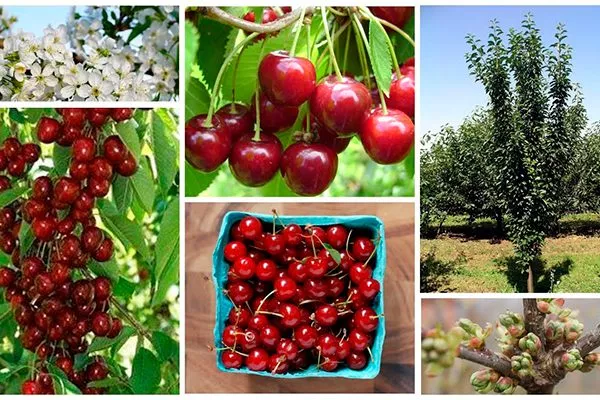
The appearance of the tree
The columnar cherry is a medium-sized tree, reaching a height of 200 to 250 cm. It is distinguished by its shortened branches, which facilitates harvesting. Other characteristic features include:
- crown – elongated, compact and narrow, not exceeding 70-80 cm in diameter;
- growth type – vertical;
- shoots – strong and robust, lateral branches are located almost close to the trunk;
- leaves - narrow in shape, with clearly visible veins, light green in color;
- flowers – quite large, white.
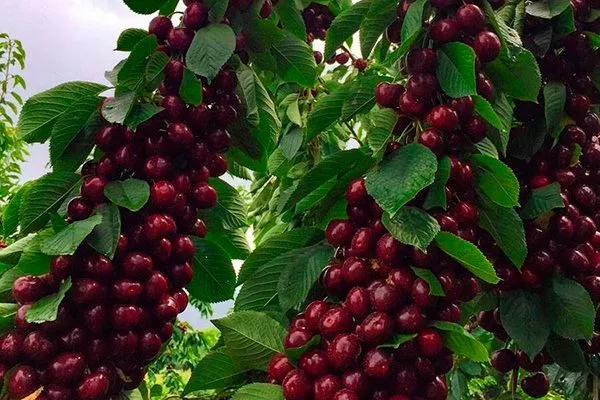
Fruits and their taste characteristics
The berries are characterized by their wavy appearance when viewed from a distance, with small, curly protrusions on their surface that are visible upon close inspection. Other characteristics:
- size - medium, the weight of one berry is about 9-12 g, and the length is 0.5 cm;
- the color of the skin and pulp is red, depending on weather conditions and the amount of sun it can be darker or lighter;
- pulp consistency – juicy and fleshy;
- bone – medium in size, separates from the pulp;
- fruit shape – rounded;
- skin – glossy, moderately dense, does not crack;
- aroma – pronounced;
- taste - Mostly sweet, but there is a slight sourness.
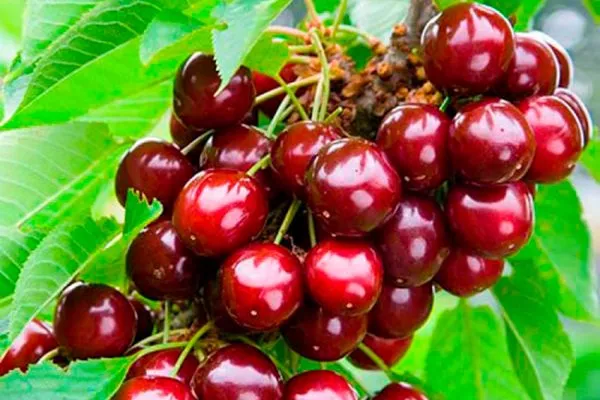
The fruit has a versatile purpose: the pulp is used to make compotes, juices, and fruit drinks, preserves and jellies, and is used in fillings and desserts. Experienced cooks add it to sauces for main courses, and winemakers use it to make liqueurs and wine. The berries are not considered watery, so they are suitable for freezing and drying.
Ripening period, yield and other characteristics
Curly cherry is partially self-fertile, so pollinators are essential for a bountiful harvest. The tree blooms in May and bears fruit after July 10th. Fruiting is early—you can enjoy delicious berries as early as the third year.
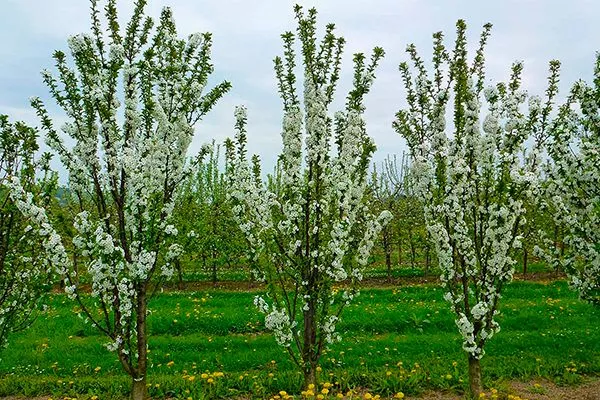
The yield is quite high for such a small tree – from 15 to 40 kg are harvested from one plant, depending on the age and growing conditions.
Subtleties of planting
To successfully grow cherries, it's important to consider certain planting nuances. For the Kudryavaya cherry, the following are important:
- the place should be protected from drafts;
- the area is as sunny as possible;
- soil - neutral acidity and fertile, composition is not of particular importance;
- groundwater level – at least 4 m from the ground surface;
- autumn planting is carried out from mid-August to early November, depending on the climate, spring planting is carried out when the air temperature stabilizes at +13-15 degrees;
- the distance between plantings in one row is 100-120 cm, the distance between rows is 150-250 cm;
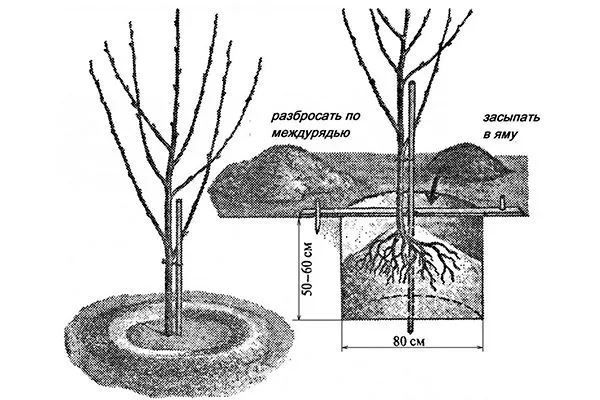
- planting hole depth – 60-7 cm;
- the composition of the substrate for one hole is equal parts humus and turf/garden soil (you should end up with 2 buckets), 1 glass of wood ash (250 ml) and 1 tbsp. of superphosphate;
- the location of the root collar is level with the surface of the bed or 2 cm higher.
- ✓ The planting hole depth should be at least 60 cm to provide sufficient space for the root system.
- ✓ The distance between trees should be at least 100 cm within a row and 150 cm between rows for optimal growth and development.
Care and cultivation
The variety does not require special care, but pay attention to the following:
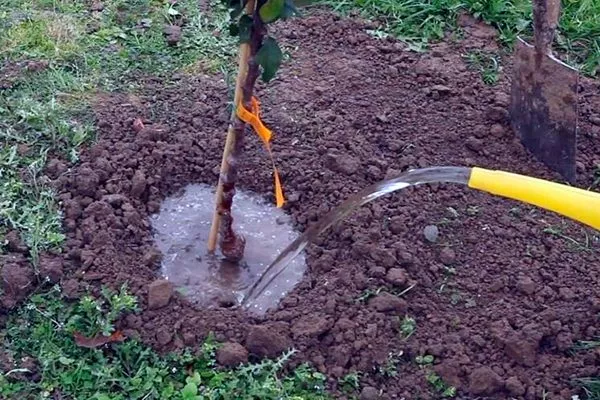
- the tree loves moisture, water it 3 to 5 times during the entire growing season (up to 3 years of age, much more often, so that the root system and aboveground part grow);
- water is applied only to the roots;
- the tree does not require shaping, only sanitary pruning is carried out in spring and autumn;
- You need to feed it four times: in early spring with urea, at the end of May with ammonium nitrate, after flowering with mullein and charcoal, and before wintering with a mixture of potassium sulfate (50-60 g) and superphosphate (150 g).
Diseases and pests
This cherry tree has average disease/pest resistance, so you may encounter the following problems:
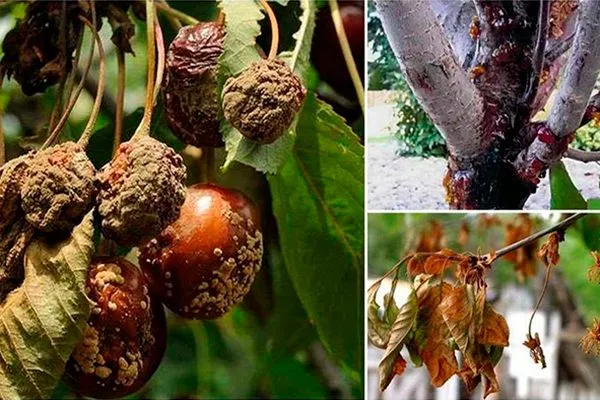
- Scab. Various systemic fungicides are used for treatment. Leaves and weeds should be removed from the area around the tree to prevent infection.
- Spotted hole. Bordeaux mixture is used for treatment: 100 ml of the preparation per 10 liters of water.
- Anthracnose. Polyram is used - 1 g of substance per 10 liters of water.
- Clusterosporiasis. Bordeaux mixture is used at a concentration of 3%.
- Pests. Aphids, caterpillars, and weevils pose a danger. Specialized insecticides are used for prevention and control.
To prevent problems, please follow these rules:
- in autumn and spring, whitewash the tree trunks;
- Before bud break, spray the trees with Bordeaux mixture (1%);
- During the growing season, use the biological preparation (harmless) Fitosporin;
- Get rid of weeds in a timely manner;
- Remove fallen leaves, branches, debris and berries from the garden.
Advantages and disadvantages
Curly cherry is characterized by a number of positive qualities, among which the following stand out in particular:
Gardeners haven't identified any critical defects. However, they note that the tree requires pollinators and is susceptible to diseases and pests.
The Kudryavaya cherry is a columnar variety characterized by vertical growth. The berries ripen unevenly, and harvesting is considered a prolonged process. Transportability and shelf life are excellent, and the tree can be propagated using all possible cherry tree methods.