
The Krepysh potato is a popular table potato variety that has become a favorite among gardeners and homesteaders. Early ripening, excellent flavor, and low maintenance—this combination of qualities simply couldn't go unnoticed by farmers, both amateur and professional.
History of creation
The Krepysh variety was developed by Russian breeders from the A.G. Lorkh All-Russian Research Institute of Potato Farming. It was bred using the Shurminsky-2 potato, which was crossed with the 2953-34 hybrid. The Krepysh variety was added to the State Register in 2005.
Description of the Krepysh variety
The Krepysh potato has a number of distinctive external features that make it easy for even the most casual gardener to recognize. This distinctive appearance, combined with its excellent flavor, has played a significant role in its popularity.
- ✓ Resistance to degeneration: the variety can retain its qualities for up to 5 years without renewing the seed material.
- ✓ High adaptability to various climatic conditions, which makes it suitable for cultivation in most regions.
Features of the plant's appearance:
- Bushes — medium-sized or tall. Average height is 60-65 cm. Stems are initially erect, then bend downward as they grow.
- Escapes heavily foliated in the upper part, and practically bare in the lower part.
- Leaves — green or dark green, medium-sized, about 10 cm long. The leaves have wavy edges and are almost completely devoid of veins.
- Flowers Large, 1 cm in diameter, reddish-purple. A faint anthocyanin tint is present on the underside. The flowers are collected in medium to large inflorescences of 8-9.
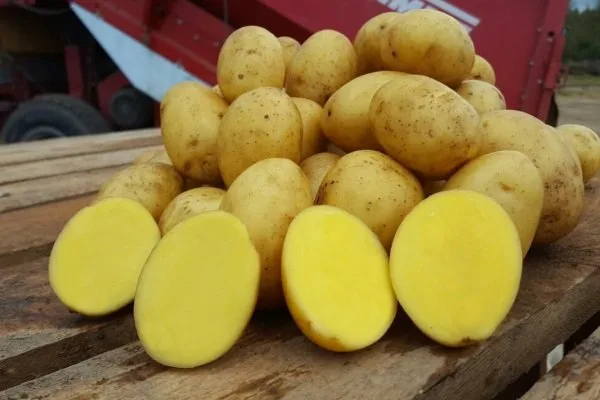
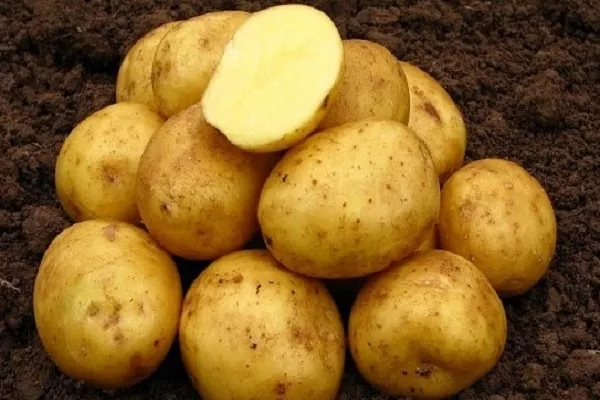
The roots are yellowish, oval-shaped, with medium-deep eyes and a smooth, translucent skin. Each potato weighs 80-100 g, but some specimens can grow larger. A single plant produces 7 to 13 tubers. The flesh is creamy and firm.
Taste and uses
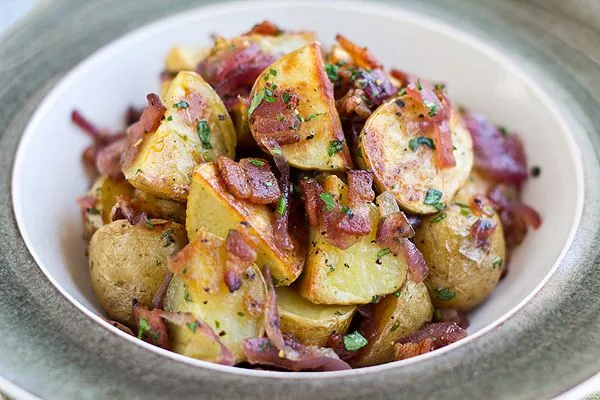
Krepysh potatoes have a very good flavor. They cook well and can also be used to make chips, French fries, and frozen foods. The potatoes do not darken when boiled. The pulp contains 10-12% starch.
Potatoes are suitable for preparing first and second courses, salads, they can be fried, boiled in their skins.
Characteristics
This early-ripening variety has a growing season—the period from sprout emergence to tuber maturity—of just over 60 days. For early harvests, it's recommended to plant the bushes on the 45th day. The average yield is 125-245 centners per hectare, with a maximum yield of 275 centners per hectare.
This variety is characterized by minimal berry formation. Marketable tubers yield approximately 85-99%. Marketability depends on weather conditions and fertilizing regimen. The shelf life of tubers is 97%. The variety is characterized by moderate drought tolerance and relatively high immunity to most potato diseases and pests.
Pros and cons of the Krepysh variety
It's no surprise that the popular Krepysh variety has quite a few advantages. But gardeners should not only familiarize themselves with the advantages of this potato; it's also important to know if it has any disadvantages.
Advantages:
Flaws:
Landing features
Successful potato growing depends largely on proper planting. It's important to choose a good location, prepare it well, and plant the seed tubers at the right time.
- ✓ Soil pH should be between 5.5-6.5 for optimal potato growth.
- ✓ The organic matter content in the soil should be at least 3% to ensure the necessary nutrition.
Landing features:
- Choose a sunny site with good daytime exposure. This variety grows best in loamy and sandy loam soils with good water and air permeability. In addition to organic matter, add river sand (10 kg per square meter) to heavy soils.
- The best predecessors for potatoes are carrots, legumes, cabbage, and meadow grasses.
- The optimal planting time in the central part of the country is early May. Potato planting times vary by region, depending on climate and weather. The most important thing to remember is to avoid planting tubers in cold soil. The soil must warm to at least 8°C.
- It's recommended to germinate seed potatoes indoors at a temperature of 15°C. Three weeks before planting, spread the potatoes evenly across the floor in a single layer. Turn them occasionally to ensure even sprouting throughout the entire tuber.
- Early, fast-growing potatoes require fertile soil rich in organic matter. The planting site is prepared in the fall. The beds are dug over, adding humus or manure (10 kg per square meter). In the spring, the soil is loosened with large hoes to improve its aeration.
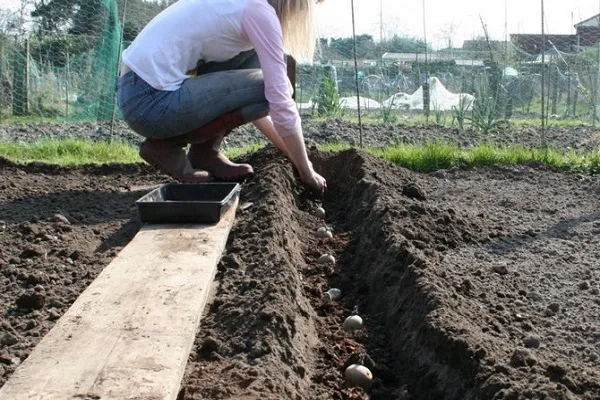
- The distance between planting holes is 35 cm, between rows - 65 cm. The recommended planting depth is 10 cm.
How to care?
The Krepysh potato is a high-yielding variety, but it requires certain care to achieve good productivity.
How to care for potatoes:
- Watering is usually done during prolonged droughts. The best time is evening. The soil should be moist to a depth of 10 cm.
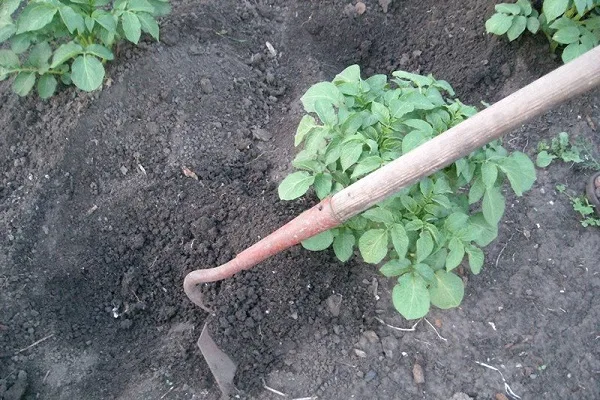
- The beds are loosened for the first time 10 days after planting. Loosening is done to a depth of 2 cm. Weeding is carried out as weeds grow.
- When the stems reach 10 cm in height, the first hilling is carried out, the second time the potatoes are raked when the bushes stretch to 25 cm, the third time - at the stage of bush closure.
- During the active growth phase, the bushes are fed with ammonium nitrate at a rate of 30 g per 10 liters of water. When flower stalks are forming, the plants require nitroammophoska in a similar ratio. When flowering ends, superphosphate and potassium sulfide are added at a rate of 30 g and 25 g per 10 liters of water, respectively.
Diseases and pests
The Krepysh variety is resistant to many potato diseases, including Alternaria blight, potato canker, various viruses, and scab. However, the plants require preventative treatment against late blight, to which the variety is not particularly resistant.
Fungicide treatments help prevent the disease; these should be started as soon as tubers begin to form. To prevent the disease, it's also important to remove all plant debris left over from the area after harvesting.
The most dangerous pest for the Krepysh variety is the Colorado potato beetle. It can be controlled with folk remedies or insecticides such as Confidor, Prestige, or similar products.
Cleaning and storage
Potato plants begin to wither in late June or early July. When the shoots are completely dry, the potatoes can be dug up. Harvesting is best done in dry weather. The dug potatoes are left in the beds for about two hours and then transferred to a drying room.
It's recommended to dry potatoes for three weeks before storing them. This will ensure they will keep well in the cellar. The temperature should be maintained at 4°C and the humidity at 85%.
Reviews
The Krepysh potato will certainly appeal to early potato lovers. This variety has excellent flavor, good yields, is hardy, and undemanding—everything gardeners value in potatoes.