
Clay mash is an economical yet highly effective solution, regularly used to protect against insect pests, fungal diseases, sunburn, and harmful rodents. Most gardeners use this slurry to provide reliable crop protection and promote fruitfulness.
Clay mash: what it is and how it benefits plants
The method of preparing the mixture may vary depending on its purpose, but the main component is always clay – a sedimentary rock that is plastic, water-resistant, and has the ability to suppress the spread of pathogenic bacteria.
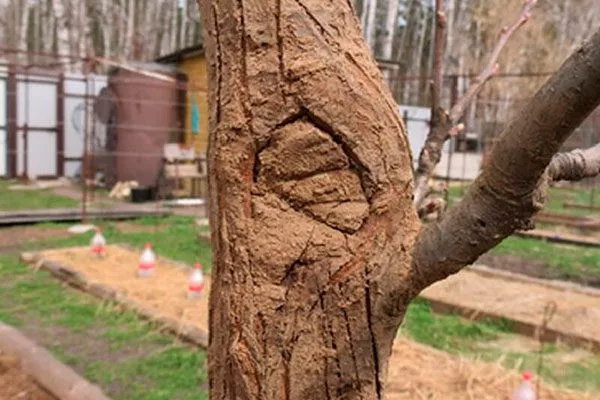
Other features:
- Clay contains chemical compounds such as silicon dioxide (SiO2 – silica) and aluminum oxide (Al2O3 – alumina), as well as many other oxide compounds and organic substances that contribute to its beneficial effects.
- Gardeners actively use this composition to protect and restore fruit and berry plants due to its strong antiseptic properties and the ability to prevent seedling roots from drying out during transportation.
- It is recommended to use kaolin slurry to protect the covering of fruit trees from external pests.
- Due to the low cost of ingredients and the easy mixing process, the method is more effective and environmentally friendly compared to commercially available chemicals.
- The use of such a natural remedy significantly improves the survival rate of seedlings and extends the shelf life of root vegetables.
- This mixture is used as a whitewash and protective coating for garden plantings.
Despite the wide range of specialized products for caring for fruit and berry crops, kaolin mash with added wood ash remains a popular choice among European gardeners due to its effectiveness and natural composition.
Why is clay mixture better?
The advantages of the clay "cocktail" include not only its effectiveness, but also the low cost of materials, ease of preparation, as well as high plasticity and excellent water-repellent properties.
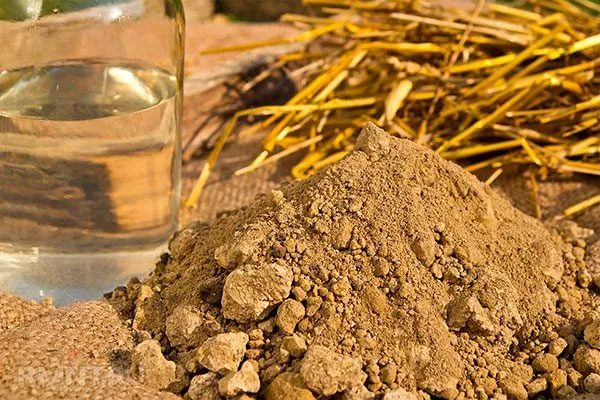
The solution actively combats pathogenic microorganisms, protects plants from adverse weather conditions such as sun, wind, and cold, and promotes rapid regeneration of damaged areas of the root and bark.
Main advantages:
- antiseptic properties, which reduce the risk of disease;
- speed of preparation;
- water resistance, which protects the bark from excess moisture;
- protection from sun rays, low temperatures and chapping;
- an effective barrier shield against insect pests and pathogenic fungi, viruses, and bacteria;
- restoration of damaged areas of tree bark;
- minimizing costs for tree prevention and treatment.
The healing and protective properties of clay mortar, known as clay mash, are widely known and appreciated by experienced owners of summer cottages and garden plots.
How and where is the mixture of clay and other components used?
Kaolin has traditionally been used in construction and ceramic production, to protect garden trees from solar radiation and winds, and to restore damaged bark.
Universal medicinal mixture
To prepare a clay solution that is suitable for eliminating any problems, follow these steps:
- To prepare the mixture, take a quarter of a bucket of clay and fill it with an equal amount of water.
- Mix thoroughly until smooth and leave the mixture to settle for two days.
- After this time, strain the resulting viscous mass, similar to the consistency of pancake batter, through a mesh with a mesh size of 5x5 mm, removing large fractions.
- Add half a bucket of fresh manure from herbivorous animals. Horse manure is preferred for its superior regenerative properties, although cow manure will also work. Avoid using bird or rabbit manure, as they can cause deep skin lesions.
- To enrich the solution, add 4-6 tablespoons of Fitosporin-M paste or 45-55 ml of ReanimatoR solution. Fitop-Flora-S and Fitop 67 are also suitable. Alternatively, you can use a "soft chemical," such as copper sulfate. To do this, dissolve 95-105 g of crystals in 1 liter of warm water and pour into the clay mixture, then mix thoroughly again.
- ✓ Use only clean, uncontaminated clay to avoid introducing pathogens.
- ✓ The water for the solution should be at room temperature for better dissolution of the clay.
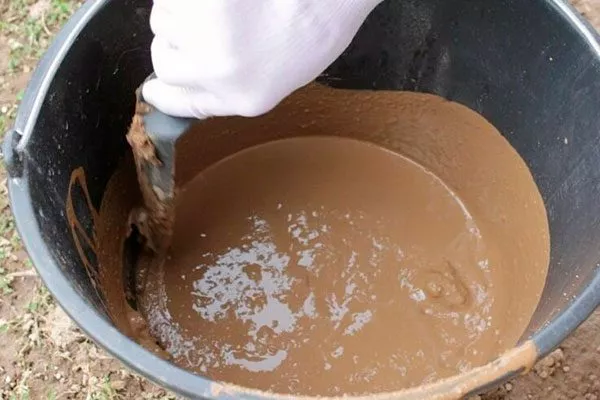
For treating the root system of seedlings
Clay powder slurry is primarily used to protect seedling roots. A mixture of clay, humus, and water in a ratio of 0.5:1:10 prevents roots from drying out during long transportation or delayed planting.
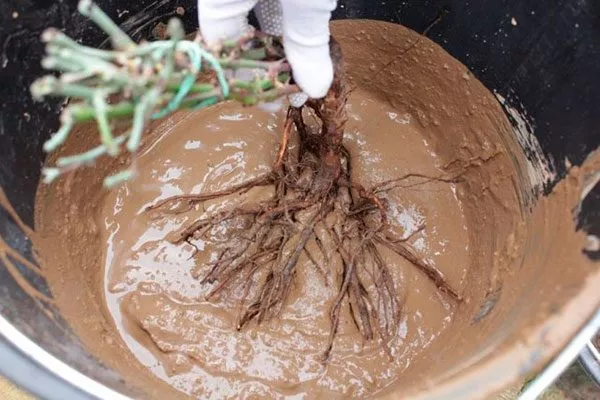
How to do:
- Dip the roots of the seedling into the prepared mixture, then roll them in sawdust, which serves as mulch.
- For further protection, wrap the roots in burlap or place them in a plastic bag.
Instead of garden pitch
Tree wounds create an opportunity for infection by various pathogenic fungi and microorganisms, which negatively impacts plant growth and fertility. To protect the bark from external damage, you can use a clay mixture as an alternative to garden pitch.
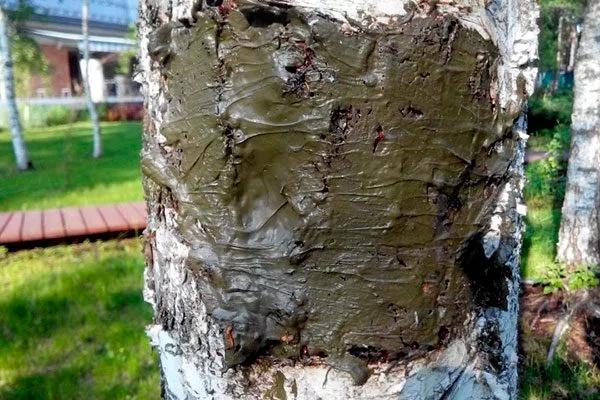
The mixture is applied to cracks and other damaged areas after winter, mixing it to a consistency that allows for careful application with a brush or spatula. This mixture adheres well to the bark and conforms to the shape of the tree trunk.
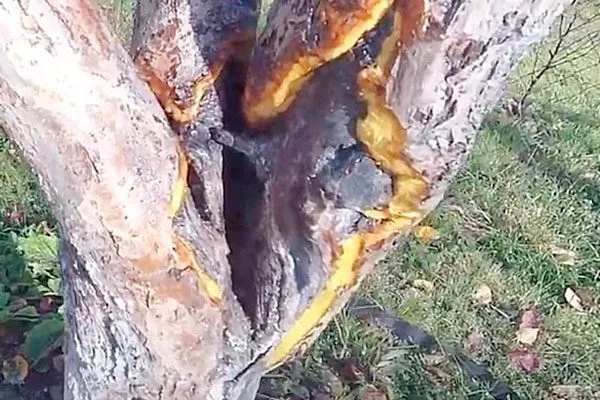
If the bark has been damaged by rodents, insects, or diseases, special attention must be paid to the wound's treatment:
- Treat with a liquid solution of copper sulfate, concentration 3%.
- Apply a bandage made of a bandage or cotton cloth, previously moistened with a clay-lime mixture.
- Leave it for six months – as the bark grows, the tissue will gradually unravel without interfering with healing.
There is another option:
- To prepare garden putty, take clay, cow dung and straw in a ratio of 2:1:1.
- Add water to the required viscosity.
The clay mixture should be applied carefully, directly to the damaged areas, leaving the wound edges clean. When adding additional components, ensure precise proportions are observed to avoid damage to the trunk due to improper concentrations.
For whitewashing tree trunks and branches
Kaolin slurry is also used instead of whitewashing trees and shrubs to protect trunks from pests and sudden temperature fluctuations. To do this, follow these steps:
- Dissolve slaked lime in a bucket of water - 2.2-2.5 kg.
- Add clay - 1-1.2 kg.
- Add copper sulfate - 45-55 g.
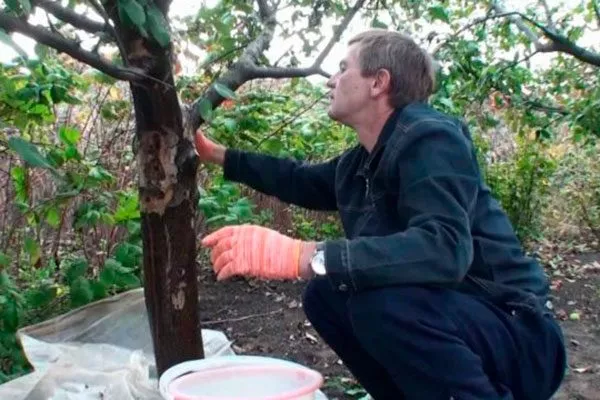
The mixture should be thick, but still liquid enough to not run off, and at the same time avoid the formation of lumps and cracking after drying.
For the preservation of vegetables and ornamental crops
The clay mixture is also used to preserve root vegetables (carrots, celery, beets) and flower tubers over the winter. After being immersed in the mixture and drying, it forms a protective crust that prevents moisture loss and protects against bacterial attack.
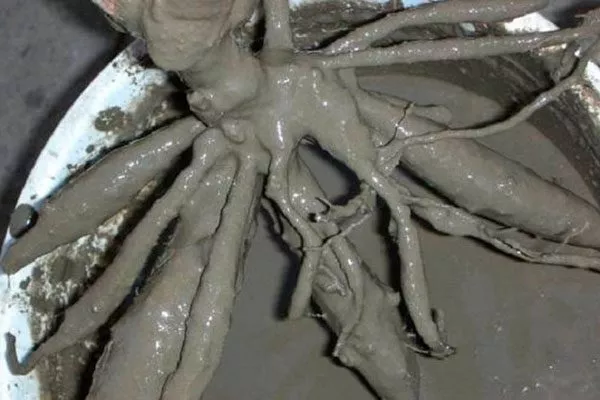
After processing and drying, the dahlia tubers are stored in a dark and cool room; before planting in the spring, the clay crust is easily removed by tapping on the tubers.
Using clay to treat bark rash
To prepare your own protective "mixture" for treating the trunks of fruit and berry plants, follow the instructions below:
- Take a bucket of clean water.
- Add no more than 2.3-2.5 kg of slaked lime to it.
- Next, add fatty clay (1-1.2 kg) and copper sulfate (about 50 g).
- Mix all ingredients thoroughly until lumps disappear and a pasty, lump-free consistency is achieved.
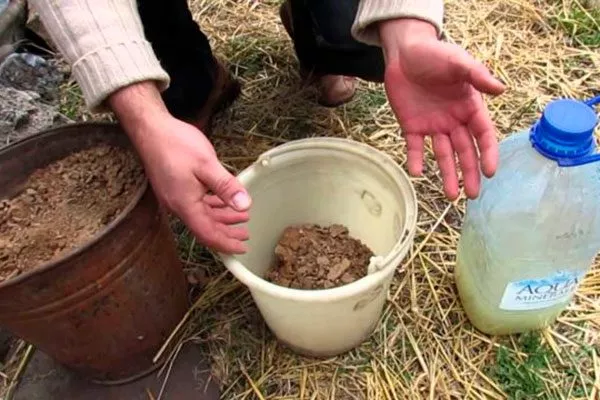
The resulting clay-lime mixture is suitable for whitewashing and helps protect them both in spring and summer.
Features of processing fruit and berry crops with clay solutions
Before treating trees with the mixture, it's important to remove lichen and loose bark from the base of the trunk. This should be done manually, without using plastic or metal scrapers, which could damage the tree. For cleaning small cracks, it's recommended to use a wooden knife or a sharpened wood chip.
Rules:
- Pruning unwanted branches is best done in dry weather to prevent slow healing of cuts. This is done in spring and fall, so the clay slurry is applied at this time.
- After the preparatory stage, disinfection treatment follows, which should also be carried out in dry weather conditions. A mixture of copper sulfate and a soap-ash solution is commonly used for disinfection, spraying it so that the droplets only cover the bark surface in a thin layer.
- It is recommended to whitewash tree trunks no more than two or three times during the growing season. The main procedure is carried out in the fall, from October to early November, the next in the last month of winter or the first month of spring, and the third in mid-July, although some experts consider the last procedure unnecessary.
Clay slurry is an easy-to-use and cost-effective way to protect garden trees from fungal diseases, pests, and adverse weather conditions. Proper use of this mixture provides reliable crop protection and helps preserve root vegetables over winter without losing their flavor or nutritional value. When used correctly, clay slurry has no significant drawbacks.