
Bakchar's Pride is a large-fruited edible honeysuckle variety. This mid-season variety is renowned not only for its high yield, but also for the impressive size of its berries, their remarkable flavor, and their medicinal properties.
Breeding history
This variety owes its appearance to the Bakcharsky support point of northern horticulture, in particular to its employees:
- Gidzyuk I.K.;
- Savinkova N.V.;
- Pavlovskaya A. P.;
- Tkacheva A. T.
The variety was obtained by pollination of Turchaninov's honeysuckle. Approved for use in the Russian Federation in 2006.
Description and characteristics of the variety
Experienced gardeners easily recognize this variety of berry by the appearance of the bush and the fruits it produces. It has many unique characteristics.
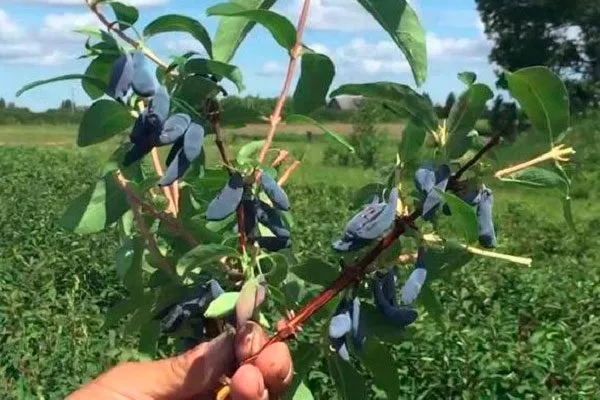
Appearance of the plant
The bushes of this variety have the following distinctive features:
- compactness;
- round shape;
- medium height (height - up to 160 cm);
- spreading (width - up to 120 cm);
- medium thickness;
- the color of skeletal branches is light brown, one-year shoots are green;
- young branches are thin, strong, “weeping”;
- foliage: medium-sized, tough, leathery, slightly pubescent;
- The flowers are bell-shaped and have yellowish-green petals.
- ✓ Young branches are thin, strong and have a “weeping” shape, which is a unique characteristic of the variety.
- ✓ The leaves are medium-sized, hard, leathery, slightly pubescent, which also helps in identification.
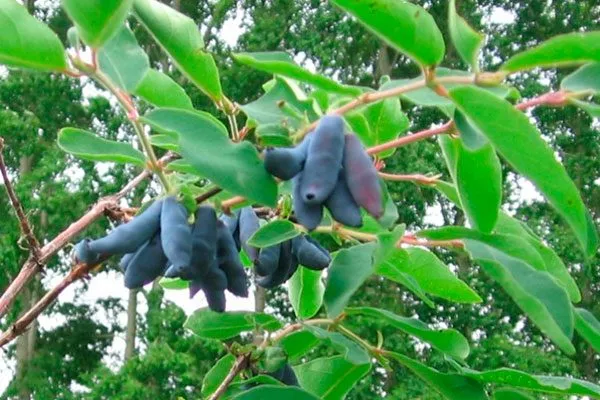
Berries and their taste qualities
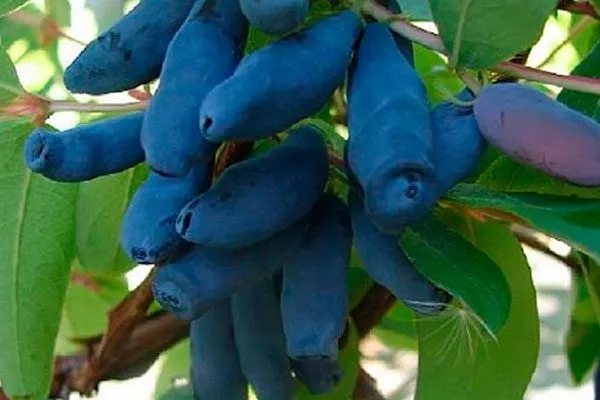
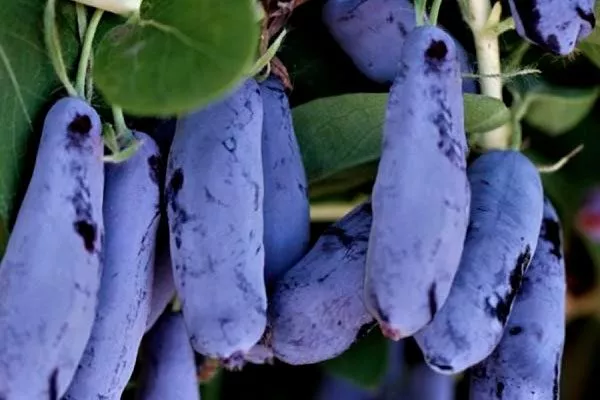
The pride of Bakchar's fruit is larger than most edible honeysuckle varieties. This is the cultivar's signature feature. They reach 4 cm in length and weigh between 1.7 and 3 g.
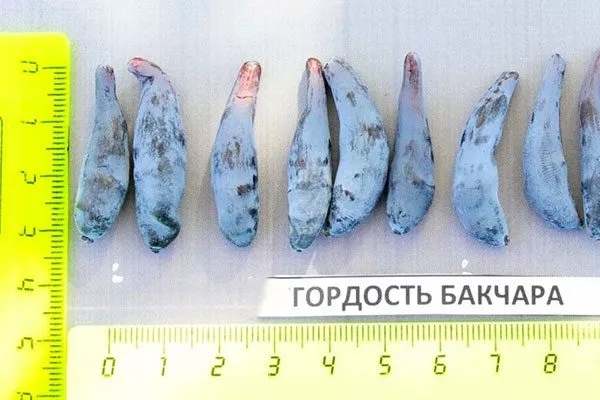
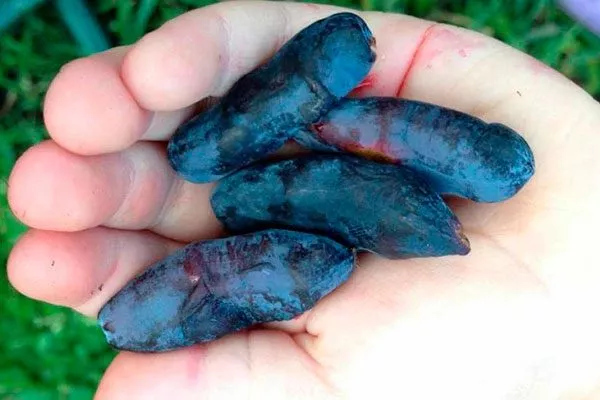
The fruits also have other characteristics:
- slightly curved, spindle-like shape;
- purple color;
- medium-thick skin;
- the presence of a waxy coating on it.
Bakchar's Pride is a dessert variety of honeysuckle. Its flavor is predominantly sweet, with a hint of tartness. Its pulp is fibrous and medium juicy. The variety has a tasting score of 4.8 points.
The composition of the berries of this variety, which determines their excellent taste, is as follows:
- sugars - 6.4%;
- acids - 2.6% (ascorbic acid content in 100 g of pulp - 35.1 mg).
This variety of honeysuckle has medicinal properties: anti-inflammatory, disinfectant, and diuretic. Eating it can lower blood pressure, strengthen capillaries, and increase vitality.
Pollinators
| Name | Disease resistance | Pest resistance | Frost resistance |
|---|---|---|---|
| Pride of Bakchar | High | High | High |
| The Giant's Daughter | Average | Average | High |
| Delight | High | Average | High |
| Bakchar giant | Average | High | High |
Bakchar's Pride requires cross-pollination to bear fruit. Be sure to plant other honeysuckle varieties nearby in the garden.
Gardeners consider the following to be the best pollinators for bushes of this variety:
- The Giant's Daughter;
- Delight;
- Bakchar giant.
Features of fruiting
Bakchar's Pride bushes begin bearing fruit at 3-5 years of age. They reach their peak yield in their eighth year.
Ripening period, yield
The berries on this variety's bushes begin ripening in the first weeks of July. After the 20th of the month, gardeners begin harvesting the honeysuckle in large numbers.
The yield of Pride of Bakchar depends on the age of the bushes:
- 2.6 kg per 1 plant - for young bushes;
- 3.5-4 kg - starting from the age of eight.
When grown industrially, the average yield of the variety is 9300 kg/ha.
Features of application
The honeysuckle harvest of this variety is universal in its application:
- the berries are eaten fresh;
- they make jam and compote from them;
- canned;
- frozen for the winter.
Cooking reduces the amount of nutrients contained in the pulp of this variety's fruit. The maximum health benefits come from eating the Pride of Bakchar berries fresh. They are a rich source of vitamins C, A, and B, as well as valuable micro- and macronutrients.
Resistance to diseases and pests
The variety is resistant to diseases and pests. However, failure to follow proper agricultural practices and neglect preventative measures can lead to berry bush diseases. In this case, it suffers from:
- fungal infections (rot, spotting, powdery mildew);
- harmful insects (scale insects, caterpillars, aphids, mites).
Resistance to cold and drought
Bakchar's Pride bushes are frost-hardy. They can withstand temperatures down to -30°C and are resistant to recurrent frosts (down to -8°C).
Drought is a real enemy of this honeysuckle variety. Its bushes don't tolerate a lack of moisture well, which affects the quality of the harvest (the berries develop a distinct bitterness).
Suitable regions and climate requirements
Pride of Bakchar seedlings are suitable for cultivation in many parts of the country. They grow well in the following regions:
- Northern;
- North-West;
- Central;
- Far Eastern;
- Volga-Vyatka;
- Central Black Earth;
- North Caucasian;
- Middle Volga;
- Lower Volga;
- Ural;
- West Siberian;
- East Siberian.
Difference from other varieties and hybrids
Bakchar's Pride stands out from other mid-season edible honeysuckle varieties. It surpasses them in many respects. A comparison of the varieties' characteristics is provided in Table 1.
Table 1
| Name of the variety | Average berry weight, g | Taste properties | Yield rate, kg per 1 bush |
| Pride of Bakchar | 1.7-2 | dessert taste, sweet and sour | 3.5-4 |
| Violet | 1.5 | sweet and sour taste | 1.8 |
| Berel | 1 | sweet and sour taste with tartness | 3-4 |
| Duet | 1.5 | sweet and sour taste with bitterness | 3 |
| Vasyuganskaya | 0.8 | sweet and sour taste | 2.5 |
| Slav | 1 | sweet and sour | 2 |
| Pushkinskaya | 1.05 | sweet and sour pulp, very aromatic | 3.5 |
Pros and cons
Experienced gardeners list the following qualities among the advantages of the Pride of Bakchar variety:
This variety of honeysuckle also has several disadvantages:
Secrets of growing
The honeysuckle variety "Pride of Bakchar" is easy to grow, but there are some subtleties to planting. For a bountiful harvest, choose a sunny spot in the garden. Honeysuckle yields less in shade. Ensure good ventilation and avoid areas with drafts.
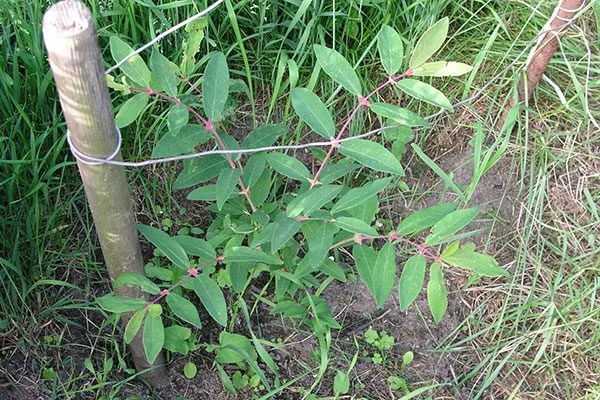
Bushes of this variety grow and bear fruit best in areas with the following soil:
- medium-moisture;
- loose;
- with acidity of 7.5–8.5;
- fertilized with organic matter.
- ✓ The soil acidity level must be strictly within 7.5–8.5, otherwise the plant will not be able to absorb the necessary nutrients.
- ✓ The soil should not only be loose, but also have a high water-holding capacity to prevent the roots from drying out.
Plant honeysuckle 'Pride of Bakchar' from late summer to early November. Follow these step-by-step instructions:
- Dig a planting hole 40 cm deep (the diameter is the same).
- Place a drainage layer (5 cm thick) of pebbles or broken bricks on the bottom.
- Add 10 kg of compost, 1 kg of wood ash, and 30 g of superphosphate over the drainage layer. Stir. Fill the mixture with water (10 l).
- Form a mound in the center. Place the seedling on it. Spread out the roots. Cover them with soil.
- Firm the soil around the plant. Water the honeysuckle generously.
- Mulch the tree trunk circle.
Care
Caring for the Pride of Bakchar variety is easy. Follow these steps:
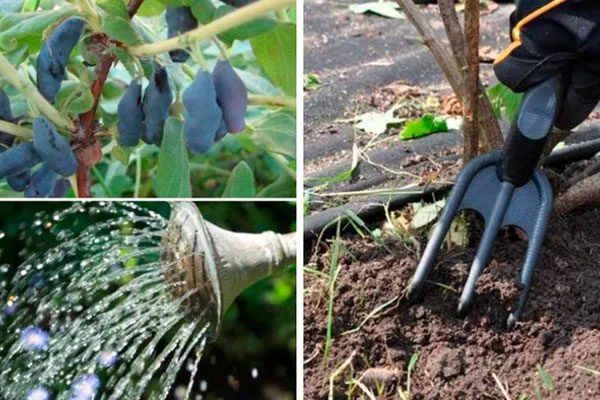
- Water the bushes generously and regularly., especially in hot weather. Determine the frequency of watering based on the soil condition. Avoid allowing it to dry out or become waterlogged. During flowering and berry ripening, water the bushes daily. Use 30 liters of water per plant. In early spring, water the plantings with hot water (+60°C). This will promote bud break and help eliminate pests and fungal spores.
- Loosen the soil after watering and rain to improve the flow of air and moisture to the roots of the berry crop.
- Weed, ridding the honeysuckle planting of weeds.
- Fertilize the bushesIf you apply fertilizer when planting a seedling, do not feed it again for two years. Fertilize the mature plant with organic matter in the spring. In late summer and early fall, apply a mixture of wood ash (0.5 kg) and 2 doses of superphosphate (35 g). During flowering, feed the bush with a mineral fertilizer.In addition to root feeding of honeysuckle, spraying with a urea solution (10 g per 10 l of water) is also recommended.
- Carry out sanitary pruning In the fall or early spring. Remove broken and dry branches. Starting at six years of age, rejuvenate honeysuckle. Prune back old branches completely. Leave 5-6 strong shoots.
Protection from diseases and pests
The Bakchara Pride variety is resistant to the main berry diseases. Under adverse weather conditions or poor agricultural practices, this honeysuckle is susceptible to:
- Fungal diseasesIdentify them by the appearance of brown or tan spots on the leaf blades, a white coating on them, and rot.
For preventative purposes, in early spring, treat the planting with Fundazol or spray it with a solution made from 10 liters of water, 3 g of shredded laundry soap, and 10 g of copper sulfate.
Wood ash, colloidal sulfur, and Topaz will help you fight powdery mildew. - Pests (aphids, scale insects, caterpillars, honeysuckle mites). These parasites damage young shoots and foliage. To combat them, use Confidor, Mavrik, and Rogor.
Preparing for winter
Bakchar's Pride is a frost-hardy variety. Even the blossoms are frost-resistant. Begin preparing this variety of honeysuckle for winter before the first frost. Water the soil generously.
Cover young, fragile shoots with agrofibre. Mature bushes don't require insulation, especially if you're growing the crop in a temperate climate.
Reproduction
Honeysuckle 'Pride of Bakchar' can be propagated by seed. However, this process is very labor-intensive and time-consuming. Therefore, experienced gardeners often resort to vegetative propagation methods, such as:
- Dividing the bushIn the spring, before the buds open, or in the fall after the leaves have fallen, dig up a three-year-old plant and divide the bush into sections. Leave each section with a full root. Plant the divisions in a suitable spot in the garden.
- LayeringIn June, select several young shoots from a mature plant. Bend them down into loosened soil, plant them 4 cm deep, and secure with staples. In the spring, separate the rooted shoots from the main plant and transplant them to their permanent location.
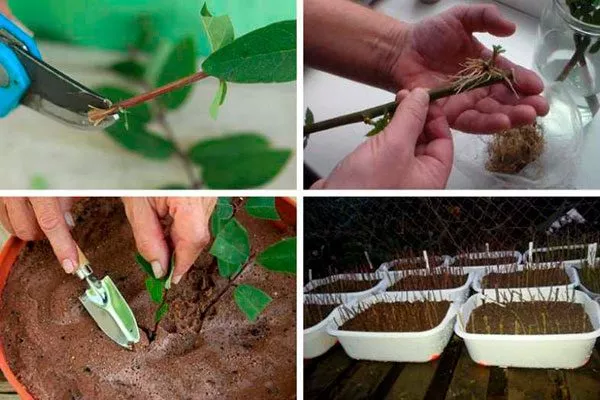
- CuttingsTo propagate, divide the young shoots into 10 cm long sections after the honeysuckle has finished flowering. Remove the lower leaves from the cuttings and soak them in a growth stimulant solution for 24 hours. Plant in moist soil. Cover the cuttings with plastic to create a greenhouse effect.
Difficulties in growing
By following the planting and care guidelines for this garden crop, you won't encounter any difficulties growing it. However, if you cultivate the Pride of Bakchar variety in the wrong location, you may encounter the following problems:
- the yield decreases, and bitterness appears in the taste of the fruits when bushes are planted in a shaded place;
- deformation of leaves and the appearance of holes in them are observed when mites, aphids, and caterpillars appear on the site;
- A whitish coating forms on the back of the leaf blades (this is how powdery mildew manifests itself) as a result of over-watering of the soil.
Harvesting
Gardeners begin harvesting this variety of honeysuckle in large numbers in mid-July. Ripe berries fall from the bush on their own. They can be collected by shaking them from the branches onto a mat.
Reviews
The honeysuckle variety "Pride of Bakchar" has gained popularity among Russian gardeners due to its frost resistance, large fruit, and high yields. It has received numerous positive reviews from enthusiastic gardeners growing it across the country.