
The Zvezdochka variety is deservedly popular among gardeners and summer cottage owners. It is widely grown due to its ease of maintenance and excellent fruit flavor. These apples belong to the category of winter table and dessert varieties.
History of apple tree breeding and regions for cultivation
In 1927, a new apple variety called "Zvezdochka" was developed at the Institute of Genetics and Breeding in the USSR. This was thanks to the efforts of the renowned Soviet scientist S. F. Chernenko, who created this variety by crossing the Lithuanian Pepinka and the Scarlet Anise.
The new apple variety combines the best traits of its parents, including the pleasant flavor and attractive appearance of its fruit, as well as high yields. These advantages have made it one of the most sought-after varieties among gardeners.
Zvezdochka is recommended for growing in the Northwestern, Volga-Vyatka, Middle Volga, and Central parts of the country. However, keep a few nuances in mind:
- In the Moscow region This variety can successfully grow and produce a harvest, as it can withstand temperatures down to -20°C and has high resistance to fungal diseases.
However, given that winter temperatures in this region can drop to -30°C, it is necessary to provide the plant with protection from the cold, using, for example, cloth wraps and mulching the trunk circle. - In the Central Belt In Russia, the Zvezdochka variety also enjoys well-deserved popularity among gardeners due to its adaptability to local conditions and the ability to cultivate it without any particular difficulty, provided standard agricultural practices are followed.
- In the North-Western regions For growing Zvezdochka, it is recommended to use dwarf rootstocks, which improves frost resistance and reduces the likelihood of fruit loss due to wind.
In addition, the dwarf form promotes a more even distribution of roots, which is important when growing in conditions of close groundwater.
Features and specifications
When choosing the Zvezdochka apple tree, it's important to consider its specific dendrological and botanical characteristics. This variety is characterized by tall growth: without proper pruning, the tree can reach 7-8 meters by the age of 20, complicating maintenance and fruit harvesting.
The appearance of the tree
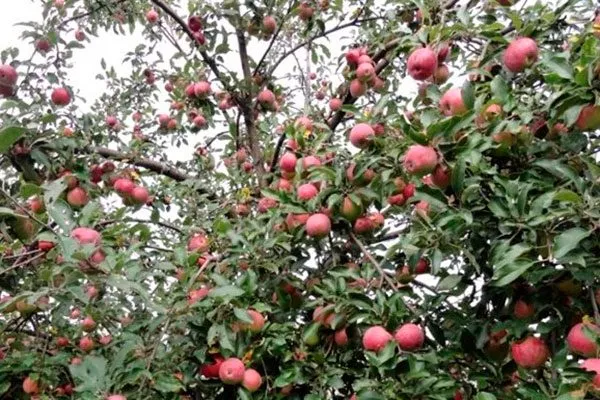
Young trees have a spherical crown, which becomes more spread out and drooping with age. Branches diverge at an angle of almost 90 degrees, and fruiting is concentrated at the tops and thin branches.
Other varietal characteristics:
- The tree's branches are thin and long, with reddish-brown bark that darkens over time, becomes rougher, and begins to peel off.
- The crown can be voluminous, especially in mature trees, occupying a space of up to 700 cm in diameter, which must be taken into account when planning the planting.
- The leaves are small, oval, and dark green. They are matte, slightly fuzzed on both sides, and can be slightly wrinkled and serrated.
- The Zvezdochka's root system, like that of most apple trees, is branched but generally squat. A central taproot is present only when using a specific rootstock.
Description of fruits
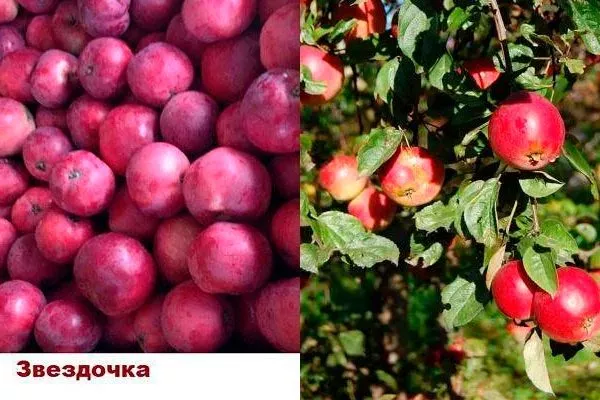
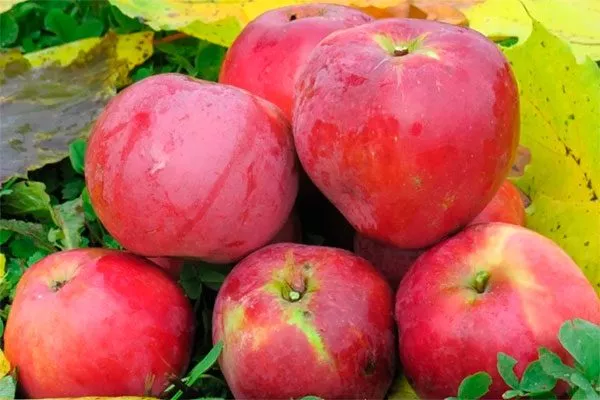
Apples typically weigh no more than 80-150 grams, ranging in size from medium to small. They are round or slightly flattened, with barely noticeable ribs.
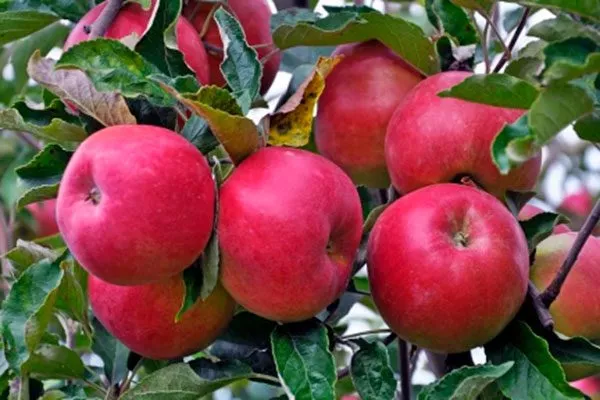
The variety is valued for its attractive fruits, which are distinguished by:
- smooth, wrinkle-free and rough skin;
- bright dark red blush, with a glossy waxy coating;
- shortened and thin stalk;
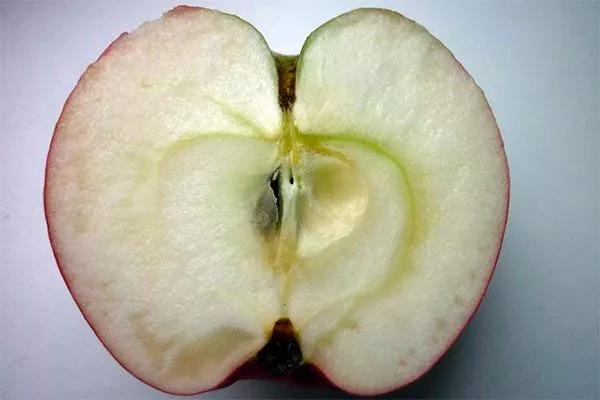
- white juicy flesh with a greenish or pinkish tint;
- small round seeds of dark brown color;
- harmonious taste that successfully combines sweetness and sourness.
The chemical composition of apples is as follows:
- P-active substances (catechins) – 134.8 mg.
- Ascorbic acid (vitamin C) – 15 mg.
- Total sugars (fructose) – 10.3%.
- Titratable acids – 0.64%.
- Pectins (fiber) – 13.2%.
These fruits have very low grain content, and their flavor is balanced and harmonious, with a sweet dessert aftertaste. The aesthetic evaluation of the fruits matches their taste, scoring 4.8 out of a possible 5.
The fruits are ideal for dessert. They are also excellent for eating fresh, making jam, preserves, and canned compotes for winter, as well as for juicing, drying, and making aromatic cider. Their sweet and sour flavor and honey aroma are ideal for homemade baked goods and sweets.
Pollination and productivity
Characterized by competitive productivity and the ability to bear fruit continuously without rest periods:
- Moderate efforts can result in a yield of 90-170 kg of aromatic apples from each mature tree;
- There have been cases where up to 200-240 kg of apples were harvested from a tree in one season. Although this is an exception, with proper care, such figures are achievable.
The Zvezdochka apple tree is self-pollinating, so cross-pollination isn't necessary for a productive apple harvest. In this case, the yield may not be very large. Therefore, it's recommended to mix plantings of different apple varieties in both private and commercial intensive orchards.
The best pollinators for this variety are winter apple varieties such as Bogatyr, Zhigulevskaya, Ladoga and Antonovka.
Ripening and fruiting
In the third year after planting, the tree can begin to harvest its first small crops, but full-scale apple production will not begin until the fifth to seventh year. Dwarf rootstocks, however, promise faster results, making them the preferred choice for many gardeners.
Other indicators:
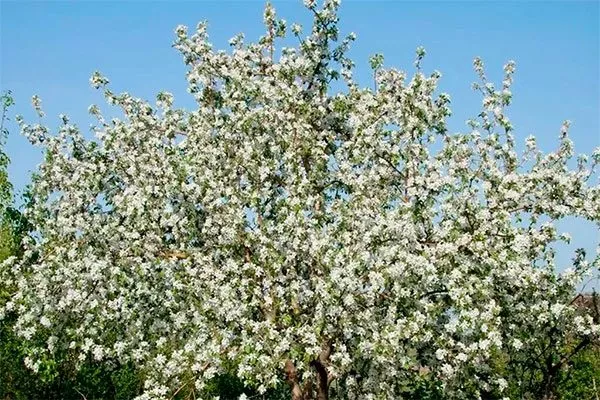
- Apple tree budding occurs when other varieties have already finished blooming, requiring particularly careful selection of pollinators. Apple trees begin blooming between May 20 and June 10, depending on the climate of the specific region and the weather conditions of the year.
- The tree's growth is insignificant - 5-10 cm per year, but by the tenth year the apple tree is fully mature.
- Apples can retain their taste and consumer qualities for up to six months, which is a significant period.
- The fruits reach maturity by late September or early October. It's important to time the harvest, as overripe fruits will fall from the tree immediately. In this case, the harvest must be processed immediately, as it cannot be stored.
Winter hardiness and disease resistance
The variety was created taking into account its ability to withstand extremely low temperatures – it adapts well to various climatic conditions, but without proper care at temperatures below -22-25°C it can freeze and die.
The reason for this sensitive response is the fragility of the wood and the underdeveloped root system. Therefore, it is necessary to protect the plants during cold weather, allowing them to withstand temperatures as low as -35°C.
It boasts good resistance to scab, the most common fungal disease of apple trees, which is especially appreciated by gardeners. However, other diseases affect it just as severely as other varieties.
Harvesting and storage
Zvezdochka is a winter variety. Harvesting usually occurs at the beginning of the fall season. Due to the fruit's tendency to spontaneously fall as they ripen, it is recommended to begin harvesting as soon as possible and complete it by mid-September.
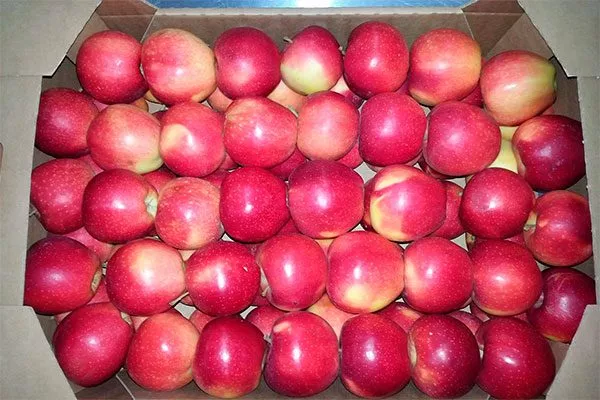
Apples are characterized by their excellent shelf life. In a room with a temperature of 0 degrees Celsius and humidity of 85%, they can be stored without losing their quality until March.
Rootstocks and subspecies
The variety has a number of different forms, among which rootstocks with improved characteristics have gained particular popularity:
- Dwarf apple trees Zvezdochka They don't exceed 250-300 cm in height and are distinguished by a particularly compact crown. Despite their smaller size, they retain all the advantages and characteristics of the original variety.
Trees begin to bear fruit in their second or third year of life, making them particularly attractive to gardeners seeking a quick harvest. - Semi-dwarf apple trees Zvezdochka, Although they can reach heights of over 300 cm, they are more resistant to low temperatures than other varieties. The first harvest takes 4-5 years after planting.
Trees can withstand temperatures down to -35-37°C without significant loss of fruit. The apples on these trees are small, weighing no more than 100 grams, but they produce a larger quantity of fruit, with up to 200 kg harvested annually.
Unfortunately, among the varieties of the Zvezdochka variety there are no columnar trees.
Landing rules
When choosing a planting site, you should choose a well-lit area, as a lack of light can significantly slow down the growth of the apple tree, which will lead to a decrease in both the volume and the quality of the harvest.
Recommended timeframes
The survival rate of the Star is directly related to the timing of landing:
- Spring The most suitable season is when the danger of cold weather has passed. The best period is from April 20 to May 20, when the snow has melted and warm daytime weather will provide the necessary soil warming for growth.
- Autumn Planting apple trees can result in the tree not having time to adapt to new conditions and dying from strong cold winds and low temperatures.
Site requirements
A sunny location on the south, southwest, or southeast side of the garden is preferable. As the apple tree ages, its crown will expand, creating significant shading, so the tree should be planted at least 6-10 m away from the ground.
Old trees can also become an obstacle for a young seedling, as their roots will compete for nutrients. No root suckers from any trees should remain in the new garden.
Other requirements:
- The ideal soil for the star is loamy, sandy loam, sod-podzolic and neutral soil with a slight acidity of pH from 5.7 to 6.0.
- Vegetable crops are the best predecessors. However, avoid planting on soil where apple or pear trees recently grew.
- Preparing the planting hole and apple tree seedling is not difficult even for a novice gardener:
- the selected site must be thoroughly cleared and plowed;
- then you need to dig a planting hole with a diameter of at least 40-50 cm and a depth of about 50-55 cm;
- Fertilizer should be added to the soil removed from the hole - to improve soil fertility, add 8 kg of peat and 100 g of wood ash per 1 sq. m.
- A stake is installed in the center, which should protrude 150-180 cm above the top layer of soil.
Selection of seedlings
It's important to choose the right seedlings. When purchasing, pay attention to the plant's root system: it should be:
- whole;
- without growths and signs of diseases/pests;
- well developed.
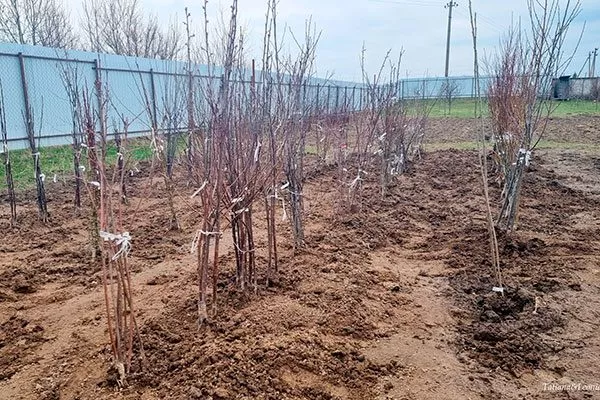
Before planting, a light pruning of the tree won't hurt, but the roots should never be trimmed. Assess the appearance of the sapling even before selecting it—the trunk should be intact and free of any signs of damage.
Technology of carrying out works
To ensure your apple tree bears fruit and thrives, follow a few planting guidelines. Consider the following steps:
- Form a mound near the wooden peg.
- Carefully place the seedling into the hole, gently spreading the roots and compacting the soil around them. The root collar should be approximately 7 cm above ground level.
- Once the seedling is planted, tie it to a stake, moisten the soil and cover it around the trunk with straw.
Care instructions
When growing a tree, it is necessary to follow the basic principles of plant care: regularly moisten, nourish the soil if it is depleted, prune, and carefully prepare the tree for the winter period.
Watering
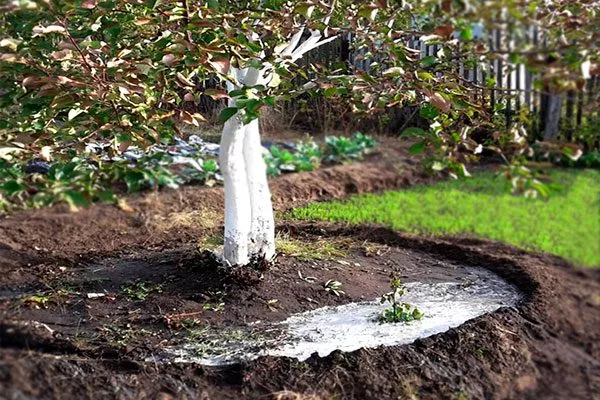
This variety does not tolerate excessive moisture, so it's advisable to create a drainage ditch around the trunk to remove excess moisture. The soil should be periodically turned and aeration improved.
Peculiarities:
- in the first year after planting, Zvezdochka requires several waterings during the season (20-30 liters of water);
- in subsequent years, you can reduce the frequency of watering, but increase the volume of water each time by 1.5-2 times;
- water should be poured directly around the trunk;
- during dry periods it is necessary to further increase the frequency and volume of watering;
- The key moment for watering is the period of flowering and fruit formation - otherwise, during drought, the Zvezdochka apple tree may lose its ovaries.
Autumn irrigation after harvest (if there's no rain) is also important, as it will protect the tree from frost, preserve the root system, and pave the way for fruit bud formation for the following season. The best time to apply water is in late September or early October.
Top dressing
To keep trees healthy and fruitful, they need to be fertilized twice a year:
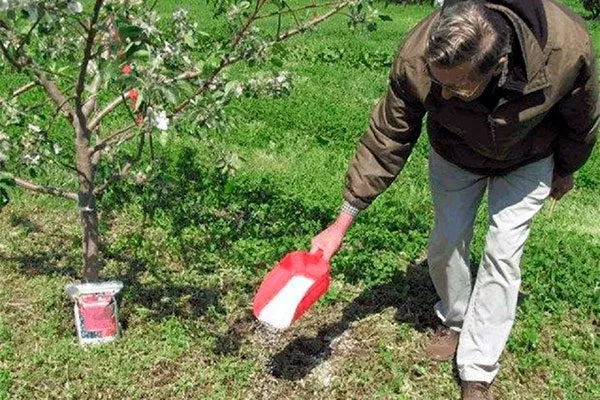
- In the spring. When warm days arrive, add peat (7 kg per 1 sq. m) and organic fertilizers – rotted manure or humus (7-10 kg) – to the soil.
- In autumn. Once the trees have produced fruit, apple trees respond well to nitrogen-free fertilizers. An example is a mixture of 1 tablespoon of potassium, 2 tablespoons of double-granulated superphosphate, and 10 liters of water. This solution is evenly sprayed onto the soil beneath the trees, using 10 liters per square meter.
Trimming
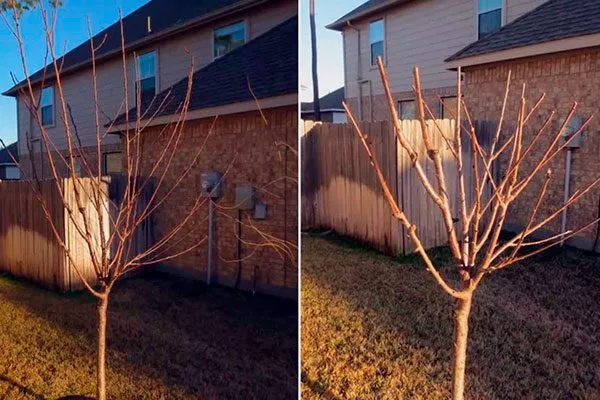
To increase apple tree fruit production, prevent disease, and create an attractive appearance, annual pruning is recommended. The optimal time for this is early spring, before the leaves begin to emerge. During the dry season, in the fall, only dead or rotten branches are removed.
For efficiency, two main methods are used:
- Thinning – Provides better light to the tree. To do this, remove branches that interfere with each other and shorten the main shoots. This process promotes the formation of a proper crown and is performed in the spring before the sap begins to flow actively.
- Shortening or pinching - This method is necessary to limit excessive growth of young branches on the Zvezdochka apple tree. It is the least traumatic and does not cause wounds. The optimal period for pruning is from mid-August to mid-autumn.
A key step in crown formation is pruning the seedling by approximately a third of its height. However, it's important not to overdo it, as excessive pruning can harm the tree.
Preparing for winter
To ensure that the Zvezdochka apple tree successfully survives winter frosts, it is necessary to carefully prepare it for winter conditions:
- Clear the area around the trunk of any remaining leaves, dry branches, unpicked fruits, and completely remove any weeds.
- Water the soil around the roots of the apple trees thoroughly to prevent deep freezing of the ground.
- Loosen the soil in the trunk area and moisten it with a layer of peat, straw or compost.
- Treat the trunk with white paint based on slaked lime or acrylic to protect it from damage by pests, diseases, sudden changes in temperature and solar radiation.
- Cover the apple tree with a bag or other material that allows air to circulate.
For young trees, a different scheme is proposed:
- tilt the seedling towards the ground;
- cover with plastic sheeting;
- When the snow accumulates, form a protective barrier out of it.
With the arrival of spring, remove the covering from the apple trees as soon as possible and till the soil around the trunk. This will ensure successful flowering and fruiting.
Pest and disease control
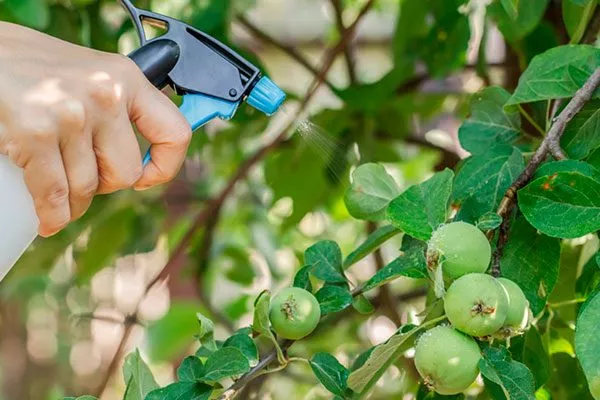
The Zvezdochka variety is resistant to scab and is rarely affected. However, if the disease does occur, it is necessary to treat the tree with a specialized product during bud break and after flowering. Experienced gardeners recommend using Horus.
Other problems may arise:
- If the fruit is affected by rot, treat the tree with Fundazol, adding 40-50 g of the substance to 10 liters of water.
- Topaz is effective for combating powdery mildew on flowers and leaves: mix one ampoule with 10 liters of water.
- To combat codling moth, spray the tree with a solution of chlorophos and malathion three times during the summer. The first spraying should be done approximately two weeks after flowering, using a 0.2% chlorophos solution (20 g per 10 liters of water) and a 0.3% malathion solution (30 g per 10 liters of water).
- To get rid of apple leafhoppers, fumigation is recommended. This should be done in the evening hours in calm weather, during the leafhopper's active flight period, before they have time to lay eggs.
Place piles of moistened straw between the rows of trees (one pile per 10 square meters) and sprinkle the straw with tobacco dust. Continue fumigating the garden for two hours, preventing the piles from igniting and periodically keeping them at a slow burn. - In winter, wrap nylon tights around the tree trunk to protect against rabbits or mice. Alternatively, install special rodent nets.
The use of film in this case is not recommended, as it can lead to cracking of the bark and its separation from the wood.
Pros and cons
The Zvezdochka apple tree has a number of advantages, making it particularly valuable in horticultural practices. These advantages include:
Similar varieties
Among the apple crops that are similar to Zvezdochka, it is worth noting:
- Antonovka ordinary. It is distinguished by its tall growth and the formation of a broad, ground-facing crown. The apple tree begins bearing fruit in the seventh year after planting.
The fruits are oval-shaped, light yellow, and have a sweet, dessert-like flavor. A single tree can yield up to 150-200 kg of apples. Harvesting begins in early autumn. - Striped anise. Characterized by vigorous growth and the formation of a dense, conical crown, the apples can be harvested in October. The fruit has aromatic flesh and a harmonious flavor. It is prized for its high yield—up to 200 kg of apples can be harvested from a single tree.
- Cinnamon new. This variety has a broad crown and apples weighing approximately 150 grams, boasting a harmonious flavor and rich aroma. Harvesting occurs in October. It has gained popularity due to its high yield, which can reach 150 kg per tree.
These varieties resemble Zvezdochka in their large size, time of fruiting, apple ripening time, and competitive yields.
Reviews
The Zvezdochka apple tree is an undemanding plant. With proper planting and care, you can grow a robust tree that will annually yield a bountiful harvest of sweet, healthy, and beautiful apples. If you haven't found this particular variety, you can try growing similar apple trees or using rootstocks.