
The Zhigulevskoye apple tree is an autumn variety, defined by the ripening time of its fruits. Its apples retain their flavor and aroma long after harvest, making them particularly popular among gardening enthusiasts.
History of apple breeding and growing regions
In 1931, renowned apple breeder and pomologist Sergei Pavlovich Kudrin began crossbreeding experiments with various apple varieties at his breeding station in Samara. His goal was to create a variety that would produce high yields, boast excellent flavor, and preserve the fruit for a long time.
- By 1936, thanks to crossing the American Wagner variety with the local Borovinka, a new hybrid was obtained, which was named Zhigulevskoye.
- In the 1940s, apple trees began to be tested on various farms, but their continuation was interrupted by the war.
- The variety was recognized as elite only after the end of military operations and was officially registered in the State Register in 1965.
- He has received numerous awards, including gold medals at international exhibitions.
The Zhigulevskoye variety is classified as moderately winter-hardy:
- According to the State Register, it can be cultivated in the Central, Central Black Earth, North Caucasus, Middle Volga and Lower Volga regions.
- In more northern regions, such as the Moscow region, apple trees can be damaged by frost, especially around the trunk—the most vulnerable part of the tree. During severe winters, flower buds can also freeze.
- In Eastern Siberia, this apple variety can be grown as a creeper, which allows the tree to be covered with snow, providing protection from frost.
Description
To delve into the unique characteristics of this apple variety, you should read a detailed description of the Zhigulevskoye apple tree and study the planting and growing recommendations.
Crown
This Russian apple variety is distinguished by its robust root system, capable of efficiently extracting water and nutrients. However, the plant does not tolerate excessive moisture, so it is not planted in marshy areas.
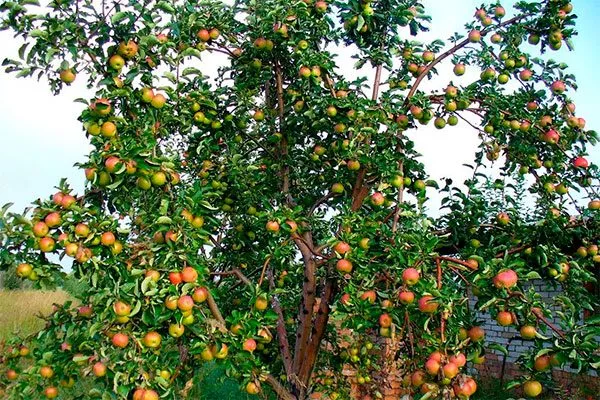
Varietal characteristics of the tree:
- The Zhigulevskoye apple tree reaches a height of about 300 cm. When grafted onto a dwarf rootstock, it reaches a height of 200 cm.
- The tree's crown can be either highly rounded or broadly pyramidal, depending on the pruning technique used. Experienced gardeners prefer the latter, as it provides better light and aeration for the crown.
Forming a wide pyramidal crown is easier, which further simplifies plant care compared to a high, rounded crown. - Zhigulevskoye is distinguished by its dark-brown shoots, which grow upward and have a straight configuration. In spring, all the buds awaken simultaneously.
- The apple tree's bright green leaves are large, oblong-ovate, and reminiscent of boats. The leaf blades are finely serrated, and the tips are recessed.
- The apple tree blooms early, when there's still a risk of spring frost, requiring gardeners to pay special attention to protecting the plants from cold snaps. During budding, the Zhigulevskoye apple tree is adorned with whitish-pink flowers. They are large and open like saucers.
Fruit
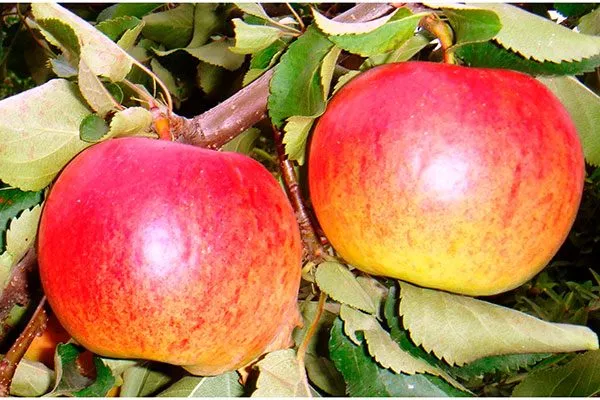
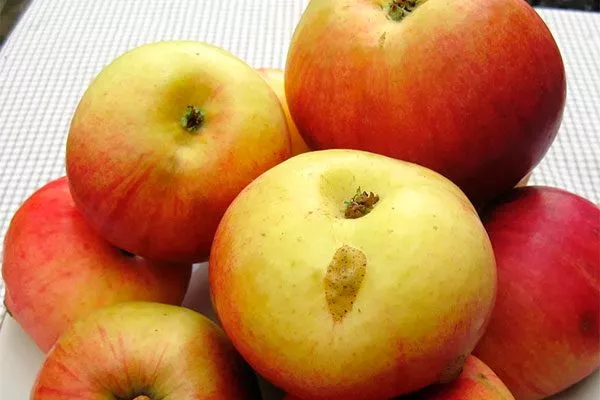
The fruits of the Zhigulevskoye variety are large in size – their weight ranges from 120 to 200 g, with some giants reaching 350-370 g. The apples can be round in shape or have thicker ribs.
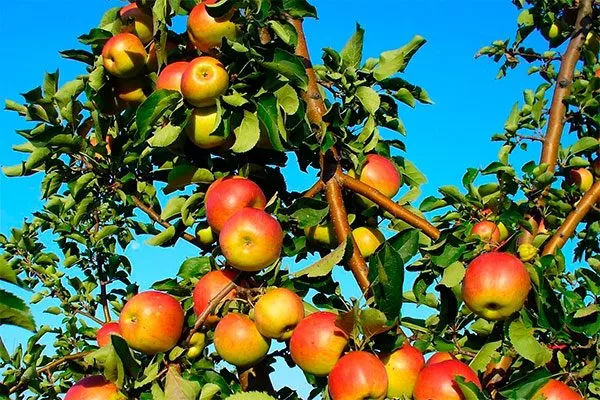
Other characteristics:
- color - half of the surface of the Zhigulevskoye apple is covered with a dark red spot, while the rest is bright yellow with a slight relief and sometimes with small warts;
- skin – shiny, durable and oily;
- seeds – located inside the fruit in the form of a closed chamber.
According to consumers and experts, Zhigulevskoye apples have a pleasant sweet and sour flavor and are not very juicy. Despite an average taste test score of 3.8 out of 5, the fruit is popular for its soft, coarse-grained flesh and creamy color.
Characteristics of the apple tree
When choosing fruit trees for their garden, experienced gardeners carefully study their characteristics, identifying both their advantages and potential disadvantages. These are the key criteria.
Productivity and self-fertility
This variety's tree is not self-fertile, so the presence of neighboring pollinators is critical. Some time-tested varieties are particularly well-suited for this role:
- Gray anise;
- Antonovka ordinary;
- Spartacus;
- Kutuzovets;
- Kuibyshevskoe.
If you can't plant any of these varieties, it's recommended to choose ones with a similar flowering time to Zhigulevsky. If you have a beehive nearby, the bees will easily take over the pollination process.
This variety has a medium maturity. A single mature tree can yield up to 250 kg. If the tree is less than 3 m tall, the yield may be lower. Dwarf varieties produce up to 10 kg of fruit within two to three years of planting.
Winter hardiness and disease resistance
Some argue that the apple tree's ability to withstand cold is insufficient, considered its main drawback. However, a number of parameters are considered, not just its ability to survive in low temperatures:
- an apple tree can withstand temperatures down to -28-30°C for a month or two without harm, and sometimes even lower values;
- but it is not able to survive sudden temperature changes and thaws alternating with frosts.
Zhigulevskoye is resistant to scab, but not to the codling moth. Therefore, it is important to regularly treat the trees with fungicides and insecticides to ensure their health and longevity.
Ripening and fruiting
After planting, a young tree will begin to bloom only in its second or third year, but this is only if a dwarf rootstock is used. Otherwise, fruiting begins in its fifth or sixth year. Keep in mind that flower buds should be completely removed during the first few years of flowering, allowing the tree to concentrate on shoot and root growth, which will ensure successful fruiting in the future.
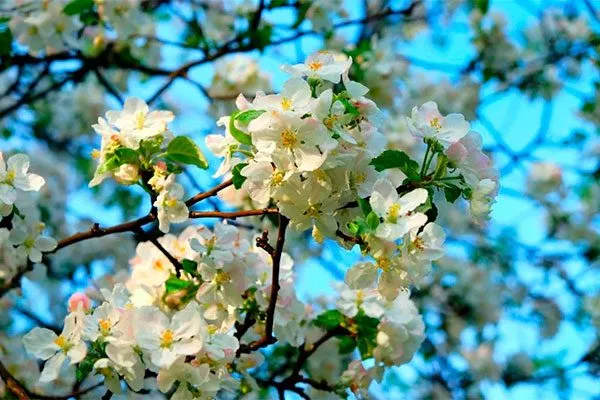
Expected flowering time:
- The Zhigulevskoye apple tree begins to bloom in May, but the exact dates will depend on the chosen rootstock, local conditions and weather;
- To determine the exact timing, it is recommended to observe the plant for several years;
- In subsequent years, budding will occur at approximately the same time, usually between May 10 and 20.
Fruiting and tree growth:
- The Zhigulevskoe tree grows quickly, reaching a height of 0.5 to 0.8 m or more per year, so it reaches fruiting already at full size;
- in the seventh to ninth year after planting, you can begin to harvest 180-200 kg of sweet and aromatic apples;
- Apple trees ripen gradually, starting from the end of August until the beginning of September - this is the period of technical maturity, when the fruits can be left on the tree until October without fear that they will fall or spoil;
- For long-term storage, it is recommended to collect them earlier and place them in the cellar - here they retain their qualities for three months;
- Only 20-30 days after harvesting do the apples fully reveal their taste and aroma.
Rootstocks and subspecies
This variety of fruit-bearing plant can be planted on a variety of rootstocks, while the quality and characteristics of the fruit will be preserved, although they will change slightly (but not critically):
- Dwarf rootstock. With this cultivation method, the fruit-bearing tree retains the characteristics of its parent, but does not exceed 200 cm in height. Its ability to withstand winters and its lifespan are reduced, but fruit production increases. Within three to four years, a harvest of 40-50 kg per tree can be expected.
- Creeping rootstock. With this cultivation method, trees are grafted onto creeping rootstocks, which does not eliminate the need for proper crown shaping. Without this, the tree will grow uncontrollably. Cultivation involves completely cutting out the central trunk down to the first buds and shaping divergent branches.
Planting an apple tree
An optimal approach to planting a seedling is key to its survival and future harvest. It's important to carefully select a site for growing the apple tree, evaluate the quality of the seedling, and follow planting guidelines.
Landing time
Basic recommendations include determining the right time to plant an apple tree. The planting period depends on the climate and the dormancy period of the plants, typically the end of leaf fall in the fall or the beginning of sap flow in the spring. However, pay attention to the following recommendations:
- In the southern regions of Russia, In regions such as the Lower Volga region, Krasnodar Krai, Stavropol, Crimea, and the Don region, it's preferable to plant seedlings in the fall, three to four weeks before the first frost, which corresponds to September-October. This gives young trees time to establish roots and prepare for winter.
- In the northern regions, In the Murmansk, Vologda, Kirov, and Arkhangelsk regions, the Komi Republic, the Urals, and Western Siberia, planting is advisable in spring to avoid autumn frosts, which can damage young trees. Spring planting is carried out when temperatures are consistently above 0°C and the soil surface has thawed.
- In the central and western districts Planting can be done in spring or autumn, depending on weather conditions, in the last ten days of April or the last days of September and the beginning of October, respectively.
Choosing a landing site
When choosing a site for Zhigulevskoye apple trees, keep in mind that this variety prefers sites with abundant sunlight. However, south- and east-facing slopes should be avoided, as the former can be prone to frost cracking due to sudden temperature fluctuations, while the latter experiences more significant temperature fluctuations.
Nuances when choosing a space:
- It's important to protect trees from winds, especially in winter, using various structures or fencing. If these aren't available, windbreak trees such as birch, linden, juniper, or shrubs such as lilac, hazel, and acacia can be planted downwind.
- The Zhigulevskaya apple tree has a strong root system, so it is not suitable for areas with a low water table—no higher than 2.5-3 meters. For apple trees grafted onto dwarf rootstock, this figure should be reduced to 1.5-2 meters.
If the groundwater level is higher, it is necessary to arrange drainage or plant trees on higher ground. - Apple trees require fertile soils with high water and moisture permeability. Regarding acidity, this variety prefers a neutral or slightly alkaline pH of 5.5-8.5, but a pH of 6.0-7.5 is considered optimal.
Light and medium loams are the best options, while sandy and sandy loam soils are less suitable due to apple trees' high moisture requirements. Marshy and saline soils are unsuitable for cultivation.
Selection of seedlings
When choosing a seedling for planting, you should be guided by certain criteria:
- It is best to buy seedlings in specialized stores or nurseries to be sure of their variety and quality;
- preference should be given to young plants – one or two years old, as they take root better and have increased resistance to diseases and sudden temperature changes;
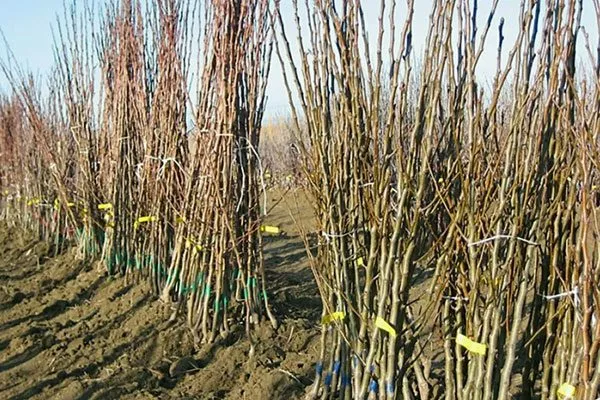
The seedling must have:
- adequate height: for a one-year-old tree – at least 100 cm and without lateral branches, for a two-year-old tree – about 150 cm with two or three skeletal branches (3-5 branches for dwarf apple trees);
- a healthy and not dry root, 25-40 cm long with two skeletal and fibrous shoots (the root system of a dwarf apple tree resembles a sponge made of small and thin roots diverging in different directions);
- bark without cracks or other damage;
- the buds are in a dormant state, that is, not swollen.
Planting a seedling
When planting a large number of apple trees in one area, maintain a 4-meter spacing between them in rows. It is recommended to add a pollinator apple tree for every 4-5 trees of this variety.
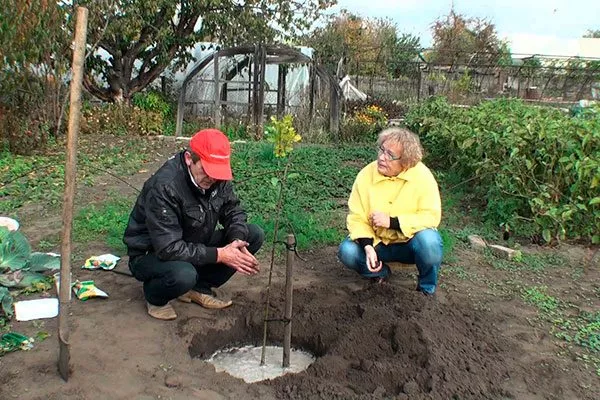
The Zhigulevskoye apple tree planting procedure includes the following steps:
- Dig the holes 2-3 weeks before the operation. They should be at least 90-100 cm in diameter and up to 70-80 cm deep.
- Improve the bottom of the hole by adding a drainage layer at least 5-7 cm thick. Gravel or fine crushed stone can be used as drainage.
- Add the next layer—a nutrient-rich substrate made from equal parts garden soil and compost, enriched with mineral fertilizers containing phosphorus and calcium. Add the soil mixture until it fills the hole about a third full.
- In the center, create a mound on which to place the seedling, and next to it, drive in a support to secure the tree.
- Distribute the roots along the slopes of the hill so that the root collar is 4.5-5.5 cm above the level of the tree trunk circle.
- Fill the hole with the remaining substrate and compact it lightly.
- Pour at least 15-25 liters of water under each tree.
Tree care
Care procedures are standard, but there are some varietal requirements and subtleties without which it is impossible to achieve maximum productivity from an apple tree.
Feeding rules
To achieve a bountiful apple harvest, plants require regular fertilization. During the first three years after planting, if the soil has been pre-fertilized, minimal doses may be sufficient. Otherwise, it is recommended to fertilize apple trees three times per season.
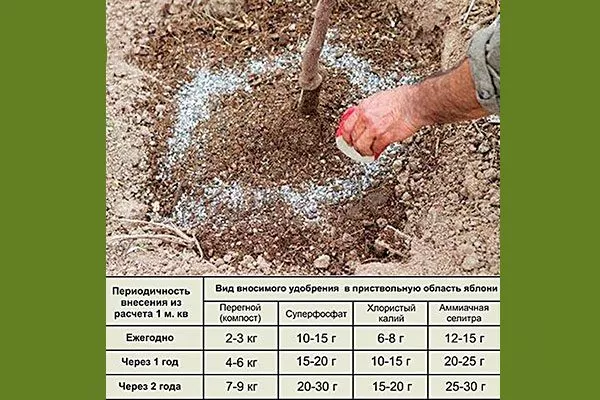
Fertilizer selection depends on gardener preference: both mineral and organic options can be used. The following schedule and dosages, developed specifically for the Zhigulevskoye apple tree, can be followed:
- Spring. After the tree's leaves emerge, apply the first fertilizer using a nitrogen-containing fertilizer. You can choose one of the following (per plant) and distribute it evenly around the tree's trunk:
- nitroammophoska – up to 40 g;
- ammonium nitrate – about 35 g;
- urea – 500 g;
- humus – 25-30 kg.
- Bloom. When the Zhigulevskoye apple tree's flower buds begin to open, it urgently needs a potassium and phosphorus boost. At this critical time, liquid fertilizers should be applied (each mixture requires 10 liters of water; each apple tree requires 35-40 liters of solution):
- potassium chloride sulfate – 55-60 g;
- Superphosphate – 90-100 g;
- urea – 250-300 g;
- cow slurry – 4 l;
- chicken manure – 1.5 l.
- Pouring fruits. During apple ripening, it's also important to consider the nutrition of your garden crops. There are many nutrition options:
- Pour 100 liters of water into a large barrel, add potassium humate (10 g) and nitrophoska (500 g). Mix all ingredients thoroughly. Each apple tree requires 20-25 liters of the prepared liquid mixture.
- Fill a large container with chopped, seedless green grass and add water at a ratio of 1:10. Cover the container with plastic wrap, leaving a small opening for air. After 25 days, the green fertilizer will be ready for use.
Apple trees respond well to foliar feeding:
- in July, trees are sprayed with a solution of potassium and phosphorus;
- In the fall, prepare a solution of potassium and double superphosphate.
Apply mineral fertilizers only according to the instructions. After fertilizing, it's important to loosen the soil and water the apple tree. This will help the plant obtain the necessary nutrients for vigorous growth and development.
Features of watering
A comfortable environment for plants is achieved when the soil layer is saturated to a depth of 70-80 cm. For fruit trees of this variety, it is important to provide them with adequate watering. Key points:
- periods – immediately before budding, during fruit filling and in the fall before wintering;
- the norm for one adult apple tree is 20 liters of water are required, carefully pouring it into special furrows around the tree;
- dosage for young animals – Young seedlings require more frequent watering – about five times during the growing season, with each tree requiring approximately 4-5 liters of water.
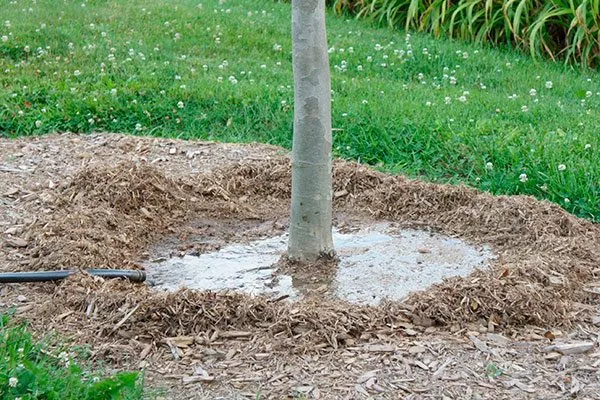
Maintaining ideal soil for apple trees requires loosening the soil for three days after watering. It's advisable to cover the area around the tree trunks with a layer of mulch. Peat, compost, sand, or well-rotted sawdust can be used.
Crown formation and pruning
The Zhigulevskoye apple tree has a robust crown that requires periodic pruning as it develops. In the spring, before the leaves fully emerge, pruning is done to establish the skeletal structure. In the fall, damaged, dried, or non-fruiting branches and offsets are removed.
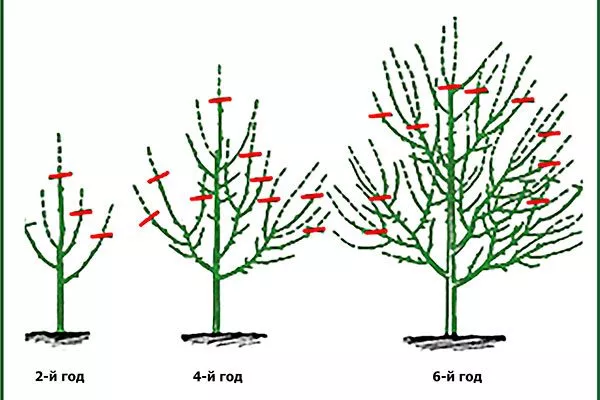
Tree pruning is divided into sanitary and formative:
- The first involves removing damaged, dead, and diseased branches, which are cut back to the base. Additionally, clumps of stems are removed, especially those growing inward.
To avoid large gaps between the tiers of branches, the height of the central trunk is reduced every year. - Crown formation begins as early as the second year after planting. Basic pruning guidelines include the following:
- the thickest and longest branches should remain on the first tier;
- the upper tier is made shorter than the lower one to prevent it from being shaded;
- branches of adjacent tiers are not arranged in parallel.
Stlantsy
In northern climates, the crown is trained to a horizontal position. The size of the dwarf tree should be such that it can easily be covered with snow, meaning its height should not exceed 3 meters.
To form this crown shape, proceed as follows:
- in July, lay the shoots in a horizontal position and fix them with metal hooks;
- In spring, remove the clamps to return the branches to a vertical position and prevent the formation of suckers;
- At the end of June, shorten the young branches, leaving 3 to 4 leaves on them to stimulate the growth of new shoots from the buds.
Treatment of trees from diseases and pests
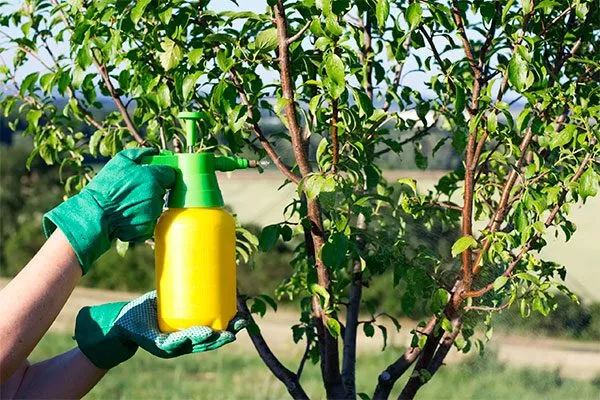
To protect fruit crops from pests, use a natural and effective product called Healthy Garden, following all the recommendations for its use. For general prevention, spray in the spring with:
- insecticides and fungicides;
- Bordeaux mixture;
- folk remedies.
During the cold season, apple trees can become a target for mice. These little pests avoid the distinctive smell of diesel fuel, so to repel them, branches soaked in this aromatic compound are placed under the trees.
Preparing for winter
This tree requires special attention, especially during periods of low temperatures. If you don't live in a mild climate, you should protect it by covering the root zone with spruce branches, straw, or agricultural mats.
Don't forget to wrap the trunks with protective materials such as roofing felt, burlap, agrofibre, or nylon tights. If necessary, you can use a ball-shaped covering method, suitable for low-growing trees like the Zhigulevskoe.
To prevent these shelters from becoming a haven for insects that seek shelter for winter hibernation at the tree's roots, it is recommended to paint the trunks with white lime in the fall. To repel rodents, coat the trunks with grease or lard.
Collection, storage
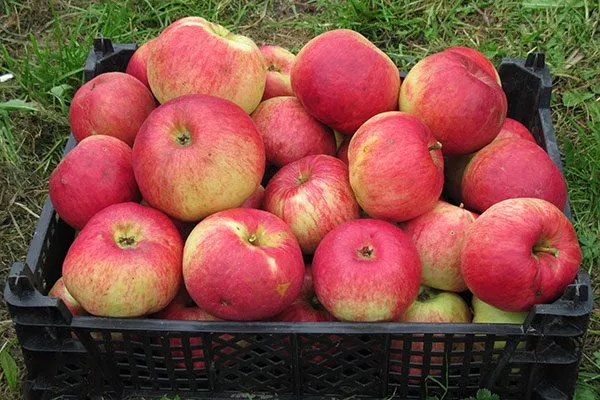
The Zhigulevskoye apple harvest period occurs in August and September. After harvesting, the fruits require some time to fully ripen, typically taking 2 to 3 weeks. These apples are not damaged when dropped, simplifying the sorting and preparation process.
Follow these recommendations:
- For optimal storage of crops, temperature conditions in the range from 0 to 4 degrees are preferable;
- Do not wash apples before placing them in wooden or cardboard boxes, as this may cause them to spoil quickly;
- It is recommended to carefully wrap each fruit in thick paper;
- It is important to ensure good ventilation of the room and maintain air humidity at 55-60%.
Pros and cons
Reviews
The Zhigulevskoye apple variety is admired for its many qualities: it begins bearing fruit quickly, has a high yield and excellent taste, and is ideal for intensive gardening, as it possesses all the necessary qualities.