
Red Chief is an apple dream brought to life by American breeders. They created a variety whose fruits live up to the very best expectations of apples. During the fruiting season, the tree is covered with large, bright red fruits with a superb flavor. And they retain this flavor until late spring.
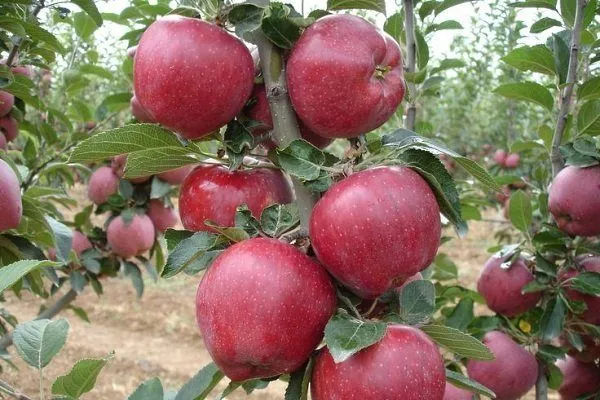
Red Chief variety
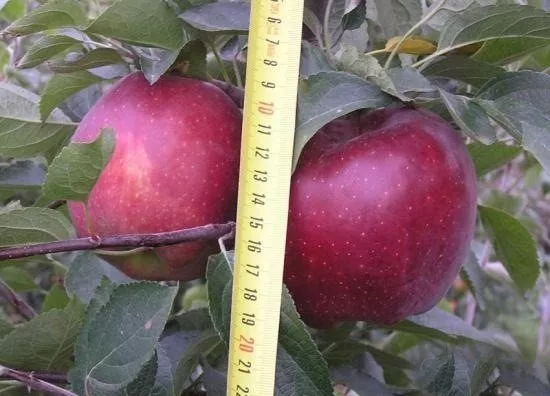
The fruits are large, weighing up to 250 g
When and how was the variety developed?
The Red Chief is a prime example of apple varieties developed on the American continent. Its origins date back to the 20th century. It was bred from the Red Delicious. Some believe the new apple variety was created not intentionally, but accidentally—by crossing the Golden Reinet and Grims Golden varieties. The Red Chief first appeared on the market in 1914.
- ✓ Optimum soil pH for Red Chief: 6.0-6.5.
- ✓ The distance between trees when planting should be at least 4 meters to ensure sufficient space for the root system to grow.
Description and characteristics of the Red Chief apple tree
Red Chief is an early-ripening autumn variety. Its excellent marketable appearance and high yield make it ideal for commercial cultivation. The fruits ripen around the end of September and reach consumer maturity in December.
Characteristics of the Red Chief variety:
- Tree. Medium-sized, with a compact, rounded crown. This allows for nearby planting of apple trees of other varieties without fear of competition. Annual tree growth is 5-7 cm.
- Fruit. Relatively large. Average weight is 180-200 g, with some specimens reaching 400 g. They have a conical, slightly elongated shape, with five tubercles at the top. The creamy flesh is quite dense and not particularly juicy. The base color is green-yellow, but a bright red tint spreads throughout the fruit. The apple skin is covered in wax, easily visible on the surface. The taste is excellent, with a tasting score of 4.8 out of 5.
Pros and cons of the variety
Advantages:
- Planting density. This is possible due to the tree's compact crown and medium height. The requirement is the use of medium-sized or dwarf rootstocks.
- Early fruiting. Two years after planting in a permanent location, the apple tree begins to bear fruit.
- The attractiveness of the fruit. The apples are beautiful and delicious – ideal for retail. The fruit is high in sugar and vitamin C, but low in acidity.
- The fruits are insensitive to mechanical damage and are easy to transport.
- Apples have a long shelf life. Even without special storage conditions or equipment, the fruits retain their marketability until February.
- Wide distribution area.
- Low maintenance requirements.
- High immunity against powdery mildew and fire blight.
Flaws:
- Insufficient frost resistance. The tree requires winter insulation.
- Doesn't tolerate drought well. It's important to moisten the soil regularly.
- Low resistance to bitter spot, glassy flesh, rot and scab.
Fruiting and yield
Red Chief is a high-yielding variety. Fruiting is influenced by:
- Age of the tree. Initial harvests are limited to 30 kg per tree. With age, the tree's productivity increases—a single plant can produce up to 120-150 kg of apples.
- Weather conditions. Yields decline if there were extremely low temperatures in winter or a hot, dry summer. Fruiting can even become irregular after unfavorable weather.
Are pollinators required?
This variety is self-sterile. To ensure a high yield, apple trees of a different variety should be planted near Red Chief for pollination. Recommended pollinator varieties:
- Golden Delicious;
- Elstar;
- Gloucester.
Regionality and suitable climate
Red Chief is a moderately winter-hardy variety. The tree freezes at temperatures below -25°C. It also doesn't tolerate spring frosts well. Suitable growing regions include central and southern Russia. The optimal climate for this variety is moderate.
Cultivation of this variety is not recommended north of the Moscow region. Even in the Moscow region, it requires insulation to help it tolerate low temperatures without harming its health or the harvest.
Preparing and planting the Red Chief apple tree
Before planting seedlings, a gardener must select a suitable site and prepare a hole for planting. The site's characteristics and initial growing conditions determine the tree's subsequent growth and fruiting.
Selecting a location and preparing the soil
The development and yield of an apple tree largely depend on the planting location. When deciding where to plant a Red Chief seedling, consider the following site requirements:
- Good lighting. To ensure the fruits acquire their vibrant colors during ripening, they need adequate sunlight.
- No drafts and protection from the north wind.
- Avoid stagnant water – do not plant seedlings in depressions or hollows.
- The optimal soil type is loam. The variety's frost resistance decreases on sandy loam soils.
- Low groundwater levels. Proximity to water can cause root rot, which can kill seedlings.
Slopes and hillsides are preferred. It's recommended to plant on the south side of buildings, structures, and fences—they will provide shelter during recurring frosts.
For planting, select seedlings on medium- or dwarf-sized rootstocks. The trees are then planted according to a 4 x 1.5 m pattern.
Soil preparation:
- Autumn. As autumn approaches, the soil is cleared of crop residue and dug over. Digging should not be delayed for long; it is best done in late summer or early fall. Any weeds that emerge after digging are removed. The digging depth is the level of the fertile soil layer.
- Spring. In spring, the soil is loosened. This loosening breaks up the soil crust formed over the winter and prevents moisture evaporation from the soil.
Some people believe that digging before planting seedlings is unnecessary, but this agricultural technique has significant advantages:
- the soil accumulates moisture and nutrients;
- pest larvae move closer to the surface and freeze in winter;
- the fertile layer is leveled over the entire surface.
Next, soil preparation is carried out taking into account its type:
- Clayey. The soil is dug over to a depth of half a meter. Its composition is improved with humus, sawdust, river sand, rotted manure, peat or compost, and lime. Then, mineral fertilizers are added—complex fertilizer (100-150 g) or superphosphate (70 g), as well as potassium fertilizer (50 g).
- Sandy. A year before planting the seedlings, the soil is dug over to a depth of no more than half a meter. Clay, compost, manure, peat, humus, lime, potassium, and superphosphate are added.
If you're planting a whole garden, the soil is sown with green manure. When the grass grows, it's mown and left to lie until it's ready to be dug.
Deadlines and requirements
You can plant seedlings in spring and fall. This is recommended:
- at the end of April;
- in mid-September or early October.
When choosing autumn for planting seedlings, it's important to consider the risk of frost. Plant the trees so that there's at least a month between planting and the likely frost date. This time is necessary for the seedlings to root properly.
When choosing a planting time, the specific climate of the region is also taken into account. For example, in the Moscow region, spring planting is preferable.
Step-by-step planting instructions
The order of planting seedlings:
- Planting pattern: 4x1.5 m.
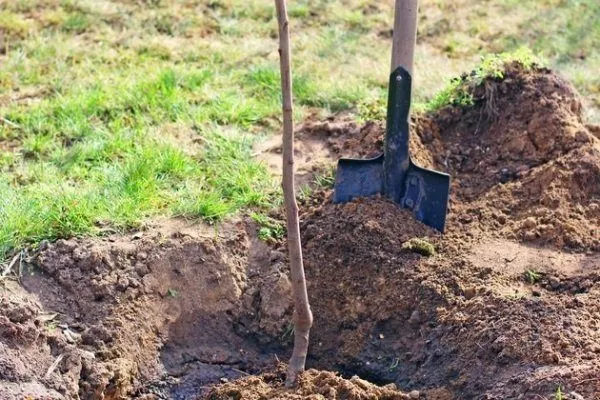
- The depth of the pit is 60 cm, the width is 70 cm.
- Drainage material (dry branches) is placed at the bottom of the hole. Peat and humus are added on top.
- After sprinkling the soil with organic fertilizer, place the seedling on the mound, spreading out the roots. Fill the hole with soil and water the seedling with two buckets of water.
Tree care
Caring for the Red Chief variety involves a full range of standard agricultural practices. The yield depends on the correct and timely implementation of these procedures.
Watering and mulching
Throughout the spring and summer season, apple trees need to receive the required amount of moisture. Watering is done as needed – the soil should not dry out, but water should not stagnate; moderate moisture is essential.
After watering, the soil must be loosened—around the trunk and throughout the entire area covered by the crown. During loosening, weeds are removed, as they absorb nutrients intended for the tree. Furthermore, loosening ensures air circulation in the soil.
The soil around the tree trunk is mulched in the fall. This prevents roots from freezing during the winter. Mulch is made from materials that improve the soil structure, nourish it, and protect it from erosion, washout, freezing, and drying out.
When choosing mulch, consider the material's ability to allow air to pass through the soil and remove harmful compounds. Humus is best for Red Chief mulch, but the following are also suitable:
- sawdust;
- mown grass;
- fallen leaves;
- hay;
- organic compost.
Fertilizer
Fertilizer applied at planting lasts a long time for the seedling. Further feeding follows a simple pattern:
- In summer, during the first year of planting, nitrogen fertilizers are applied.
- In the year of the first fruiting, potassium-phosphorus fertilizers are applied.
- During the first flowering, it is necessary to add superphosphate or urea.
When the tree begins to bear fruit, it is fed 4 times per season with mineral fertilizers and urea.
All fertilizers are applied to the trunk circle. Fruit-bearing apple trees are fertilized 3-4 times a year:
- At the end of April, add urea (500-600 g) or scatter humus around the tree (6 buckets).
- During flowering, the tree is fertilized a second time. In hot weather, apply liquid fertilizer. Dissolve 1 kg of superphosphate, 800 g of potassium sulfate, 10 l of liquid manure, and 5 l of liquid poultry manure in 200 liters of water. Urea (500 g) can be added instead of manure and poultry manure. One tree requires 40-50 liters of solution. Water the tree before fertilizing, then apply the fertilizer, and water again.
Fertilizer application rates based on the age of the fruit tree
| Year of planting | Diameter of tree trunk circle, m | Organic fertilizers, kg | Nitrogen, g | Phosphorus, g | Potassium, g |
| 2 | 2 | 6 | 10 | 10 | 15 |
| 3-4 | 2.5 | 10 | 20 | 20 | 30 |
| 5-6 | 3 | 15 | 30 | 30 | 45 |
| 7-8 | 3.5 | 20 | 60 | 40 | 60 |
| 9-10 | 4 | 25 | 75 | 50 | 75 |
| 11-12 | 5 | 40 | 120 | 80 | 150 |
Spraying and pest control
The Red Chief variety suffers most from:
- Scab. This is a fungal disease that affects virtually every part of the tree, including the fruit. It can completely destroy the harvest. Fungicides such as Skor, Horus, Raek, and Bordeaux mixture are used to combat scab. Treatments with horsetail infusion and dry mustard solution are also helpful.
- Spotting. Another fungal disease that affects apple tree leaves. To prevent it, spray the tree with Bordeaux mixture or copper oxychloride. A folk remedy is an infusion of ash and garlic.
- Codling moth. The larvae of this pest eat the pulp of fruits, consuming a significant portion of the harvest. Control is achieved through a combination of agricultural practices and insecticide spraying.
| Disease | Red Chief's Sustainability | Recommended preventive measures |
|---|---|---|
| Scab | Average | Fungicide treatment in early spring |
| Powdery mildew | High | Minimal, only at the first signs |
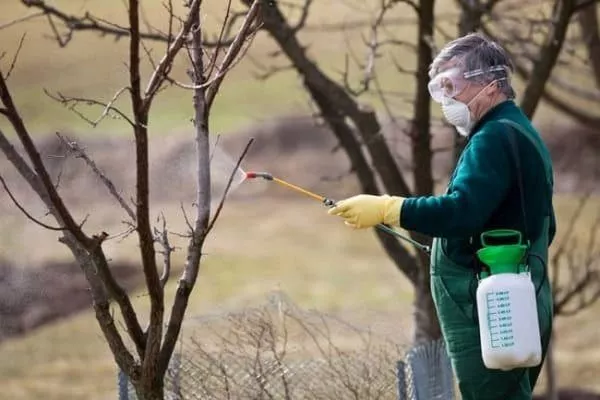
For preventive purposes it is recommended:
- remove plant debris in a timely manner;
- dig up the soil in autumn;
- thin out the crown, ensuring normal air circulation;
- plant apple trees on elevated areas.
Spraying procedure:
- First treatment – Before the buds open, the trees are sprayed with insecticides.
- After flowering – Repeated insecticide spraying. Delay and most of the fruit will be affected by codling moth.
- Last processed – during fruit filling, but no later than a month before harvesting.
It is strictly forbidden to spray trees during flowering - this will kill pollinating insects and ruin many ovaries.
Trimming
Apple tree pruning scheme:
- The first pruning is carried out immediately after planting the seedling - its central conductor is cut by 15 cm, leaving no more than five buds.
- In the second year, they begin to form the crown - pruning is carried out so that the branches are not located opposite each other.
- Next, sanitary pruning is performed – removing diseased, damaged and weakened branches from the tree as needed.
After each pruning, the cuts are treated with garden pitch to prevent infection.
Reproduction
The Red Chief variety is sold by nurseries that sell fruit tree seedlings. Hobby gardeners can grow their own Red Chief apple tree if they wish.
There are three methods of propagation practiced:
- cuttings;
- layering;
- vaccination.
A tree propagated by any of the above methods retains its original varietal characteristics. While grafting is a rather difficult propagation method for beginners, anyone can grow a tree from layers and cuttings.
We recommend you read the article, which will tell you about spring grafting of apple trees.
Propagation by layering:
- A one-year-old tree is planted, making a large slope towards the ground.
- In the spring, young shoots are dug in.
- The shoots formed from the buds are hilled and watered.
- In autumn, rooted shoots are insulated.
- When the next spring arrives, the shoots are cut off from the mother plant with pruning shears and planted in a place prepared for planting a new tree.
Propagation by cuttings is even simpler: a branch is broken and secured. It is then cut and immersed in water with activated charcoal for three weeks to allow roots to develop. The finished planting material is then planted in a greenhouse.
Preparing for winter
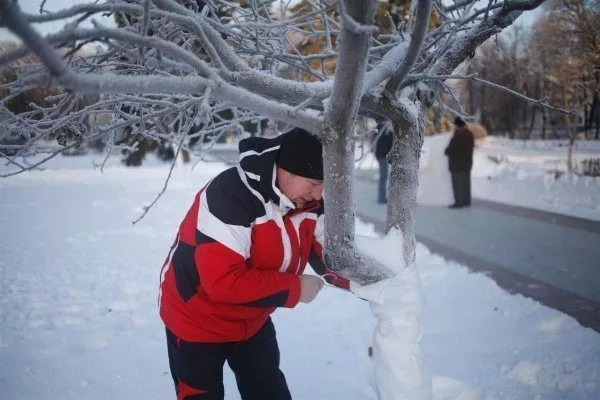
Preparing an apple tree for winter begins with sanitary pruning and cleaning the area around the tree. Leaves are removed from the area around the tree trunk, and the soil is tilled. Preparation for winter begins no earlier than when the average daily temperature reaches 10°C.
Procedure for preparing for winter:
- whitewashing the lower branches and the base of the apple tree trunk (read more about whitewashing an apple tree here);
- mulching with humus;
- protection from rodents and frost.
How to protect a seedling from freezing:
- a support or frame is built around the trunk;
- burlap is thrown over the seedling and tightly tied with twine - carefully so as not to damage the trunk;
- As soon as snow falls, it is thrown on top of the seedling, covered with burlap.
To insulate seedlings, non-woven material that does not allow air to pass through cannot be used.
For mature apple trees, the root system is insulated by covering the area around the tree with spruce branches, which will protect the tree's roots from freezing. Spruce branches can also be used to insulate the trunk. The branches can be secured with rope.
Various methods are used to protect against rodents, including protective and deterrent methods. The latter includes, for example, hanging black plastic or brightly colored cardboard on tree branches. Special deterrents are also available for purchase.
The following materials will help protect the tree from both frost and rodents:
- burlap - for tying;
- metal mesh – for making a fence.
It is recommended to spread poison in the holes of mice and rats - these pests must be eliminated by radical means.
Harvesting and storage
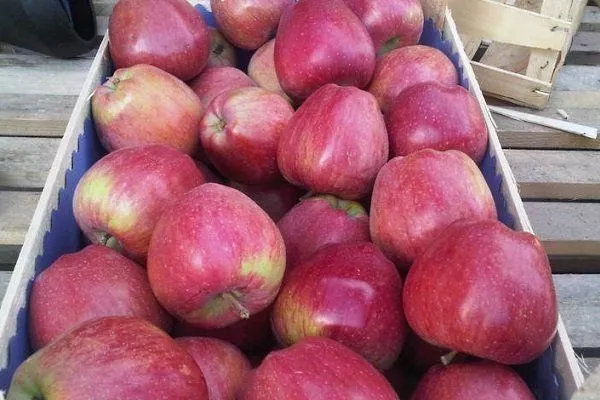
Red Chief is a long-storage variety. Its fruits, harvested in September, are stored and retain their excellent quality for a long time. Under favorable conditions, including temperature and humidity, the apples can last up to seven months.
Red Chief fruits, thanks to their dense pulp, are resistant to damage and therefore tolerate transportation well.
Reviews of the Red Chief variety
Hobby gardeners and consumers alike have left numerous compliments in their reviews. They particularly note qualities such as resistance to powdery mildew and the ability to grow in various regions of the country. The quality of the fruit is especially praised, with consumers drawn to its flavor and rare beauty.
The Red Chief variety is deservedly popular among gardeners. The only obstacle to its expansion into the regions is the harsh climate. Its shortcomings are outweighed by the clear advantages of this time-tested variety: it is easy to grow, productive, produces large fruits, and its apples have a truly magical appearance.