
The Kovalenkovskoye apple tree is a summer dessert variety and one of the most popular among Belarusian breeding efforts. It produces beautiful purple apples that immediately catch the eye in the garden. In addition to its excellent commercial qualities, this remarkable Belarusian variety has other advantages that deserve the attention of our gardeners.
History of the variety's creation
The Kovalenkovskoye variety was developed at the Institute of Fruit Growing of the National Academy of Sciences of Belarus. It was obtained by open pollination of the Lavfam variety. Authors: G.K. Kovalenko and M.I. Sukhotsky.
The variety was added to the State Register of Belarus in 2005 and to the State Register of the Russian Federation in 2006. Second name: Red Sweet.
Description of the tree
The Kovalenkovskoye variety is a medium-sized tree, reaching 4.5-5 meters in height. The crown is rounded and moderately dense. Fruiting occurs on the rings and spurs. The skeletal branches extend from the trunk at almost a right angle, with their tips pointing upward.
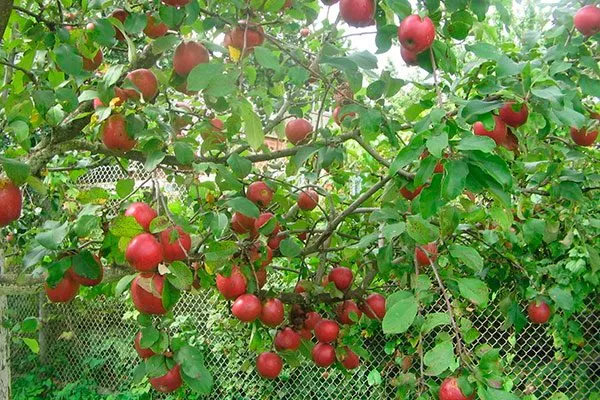
The trunk bark is gray, smooth, and even. The shoots are thick to medium-thick, dark red in color, with elongated, pubescent buds. The leaves are dark green, oval-elongated, with wavy, serrate-dentate edges. The flower buds are large, rounded, and pubescent.
The Kovalenkovskaya apple tree produces medium to large flowers, a pinkish-cream hue. The buds are pink and have a faint fragrance.
Description of fruits
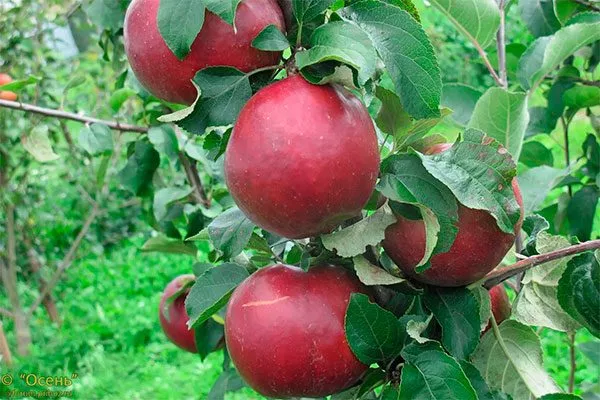
The Kovalenkovskoye variety produces large, attractive fruits with excellent commercial qualities. A diffuse blush covers almost the entire surface of the apple.
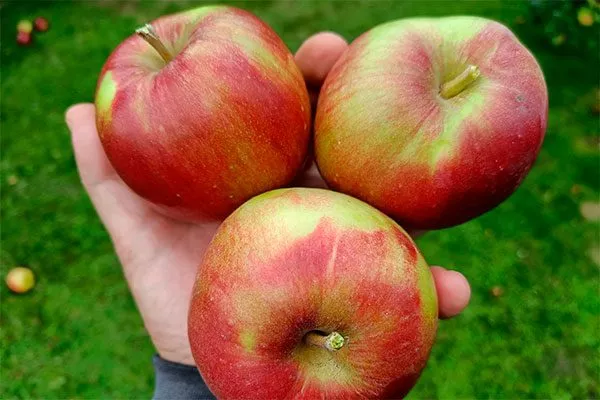
Fruit characteristics:
- Main color: light green.
- Covering color: purple.
- Form: rounded.
- Weight: 150-180 g
- Skin: medium density and thickness, oily and smooth.
- Pulp: white, medium-dense, fine-grained.
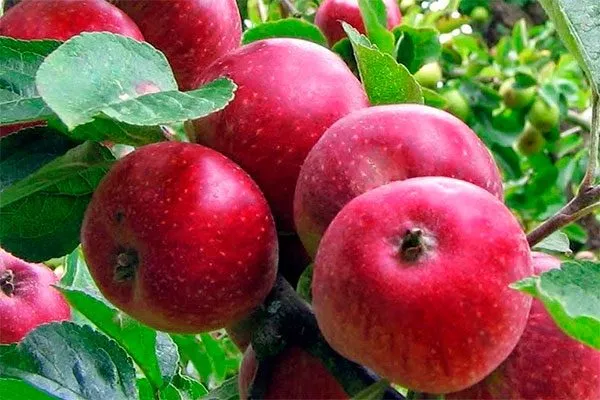
At consumer maturity, the light green color changes to light yellow, and the covering color remains purple.
Characteristics
The Kovalenkovskoye variety has excellent agronomic characteristics, allowing it to be successfully grown in a variety of conditions. This apple tree adapts well to a variety of climates, soils, and weather conditions.
Main characteristics:
- Ripening periods. This is a late-summer variety. The fruits reach harvesting maturity in the second or third week of August. The harvest season lasts from late August to late September.

- Precocity. It is a precocious variety, entering the fruiting period quite early. The first fruits on the tree ripen as early as the third year after planting.
- Productivity. Very high yield. A single mature tree yields between 40 and 80 kg of apples. The Kovalenkovskaya apple tree produces fruit regularly and consistently, without interruption. When grown in large quantities, the variety yields up to 40 tons per hectare (at a planting density of 1,666 trees per hectare).
- Frost resistance. It is distinguished by good winter hardiness. The apple tree can withstand temperatures down to -35°C. In principle, it can be grown not only in central Russia, but also in Siberia and the Urals. However, it is not yet widely distributed there; for now, the Kovalenkovskoye variety is mainly grown in less severe conditions.
- Pollinator varieties. It is self-fertile and does not require pollinators. However, experienced gardeners note that the yield of self-fertile apple trees increases significantly if pollinator varieties are grown nearby. It is recommended to plant varieties that bloom at the same time as the Kovalenkovskaya apple tree, such as Renat, Bely Naliv, and Kitayka Zolotaya.
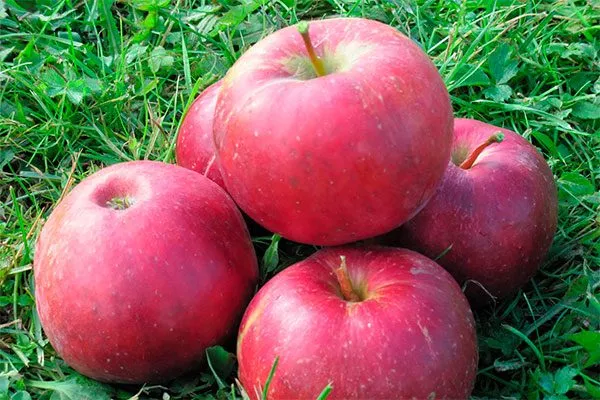
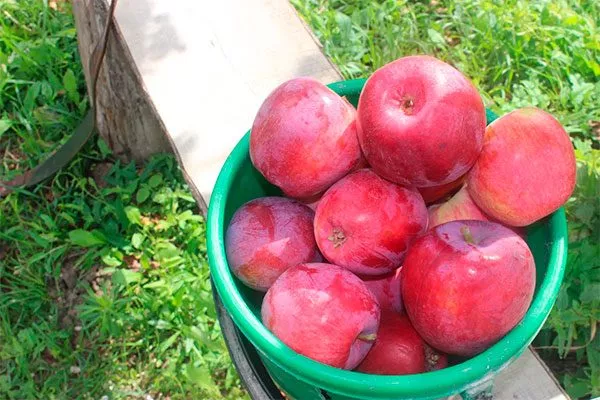
The apples have a richly sweet flavor, with virtually no tartness. The flesh is juicy and lightly aromatic. The flavor of the harvested fruits improves with storage—it becomes even sweeter and richer. If you pick green apples, their full flavor will develop in about a week.
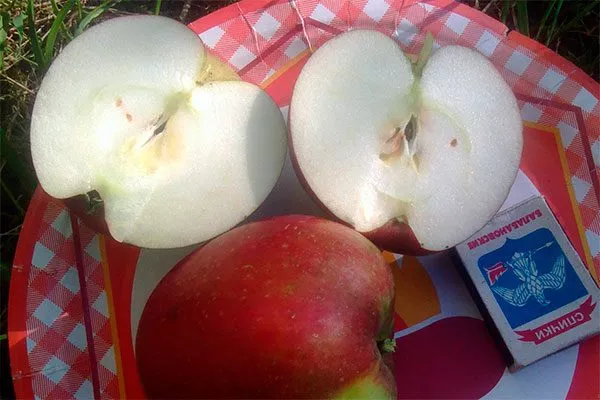
The tasting score is 4.8 on a 5-point scale. This variety is versatile: the apples are eaten fresh and used to make preserves, such as jam, preserves, compotes, and juices. After heat treatment and all other cooking methods, the apples retain their distinctive flavor and aroma.
Chemical composition of Kovalenkovskoye apples:
- Soluble solids - 13.6%.
- Titratable acids - 0.19%.
- Sugars - 10.9%.
- Ascorbic acid - 12.2 mg/100 g.
Pros and cons
The Kovalenkovskoye apple tree boasts numerous advantages that experienced gardeners will appreciate. However, the variety also has its drawbacks, which it's advisable to be aware of in advance.
Landing
For successful growth and fruiting, the Kovalenkovskoye apple tree requires a good start—it's important to plant it correctly, creating optimal conditions for its establishment and further development.
Selecting and preparing a seedling
For planting, it's best to choose 1- or 2-year-old seedlings—they take root quickly and easily, unlike older varieties. It's recommended to buy them from specialized nurseries, as they sell varietal seedlings and reduce the risk of purchasing planting material contaminated with diseases and pests.
When purchasing bare-root seedlings, it's important to assess their condition. They should be well-developed, long (about 30 cm), and free of rotten or dry areas. The bark should be smooth, free of defects and signs of disease. The seedling should have a uniform branching pattern, with branches angled at least 45 degrees to the trunk.
Before planting the seedling in a permanent location, it is recommended to prepare it:
- The root system is soaked in water for 4-24 hours so that they are saturated with moisture.
- Immerse the roots in a growth stimulator, such as Epin or Zircon, for the time specified in the instructions.
- Immediately before planting, the roots are dipped in a clay slurry to ensure good survival.
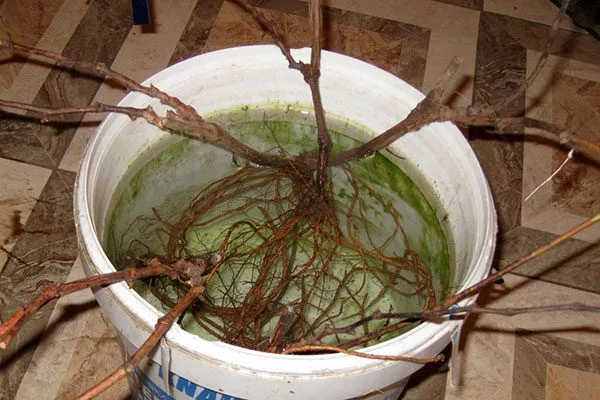
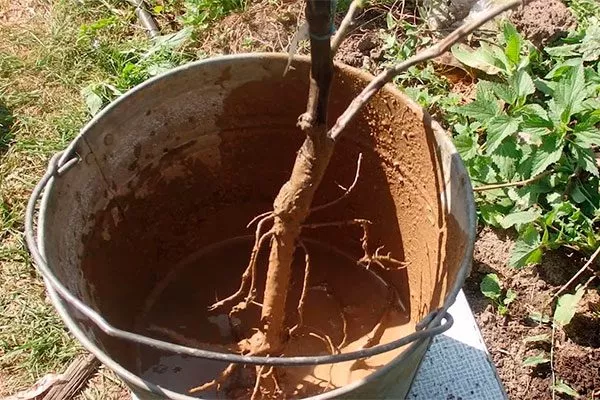
If there are rotten, dry or damaged shoots in the root system, they are removed and then treated with a fungicide, for example, Fitosporin or Fitolavin.
Planting dates
Spring is the preferred time for planting in regions with harsh winters. Seedlings are planted when the soil has warmed sufficiently, usually in March or April (the exact timing depends on the regional climate).
Fall planting is usually done in southern regions. Trees are planted 3-4 weeks before the onset of frost. Planting is typically done in September-October. Bare-root seedlings are not planted in summer, as their roots will simply overheat in the hot soil and die.
How to choose a site for planting an apple tree in Kovalenkovskoye?
An open, well-lit location, protected from strong winds and drafts, is ideal. Apple trees grow best in loamy and sandy loam soils that are loose and fertile. The groundwater level should be no higher than 2 meters above the ground surface.
There should be a 3-4 m gap between the apple tree and buildings, as well as other trees. It is not recommended to plant the tree where an apple tree previously grew, as there is a risk of infection with diseases that affect this crop.
Site preparation
The area where apple trees are to be planted must be prepared in advance: dug, fertilized, the soil structure improved, and its acidity adjusted.
Features of site preparation:
- The soil, cleared of weeds, is dug to the depth of a shovel blade.
- When digging, add organic matter: 10 liters of rotted compost or humus per 1 square meter. It is also recommended to add 30-40 g of nitroammophoska and 500 g of wood ash per 1 square meter.
- For heavy clay soils, add 10 liters of river sand per 1 square meter. For sandy soils, on the contrary, add clay in the same proportion.
Before digging, it's recommended to measure the soil's acidity using litmus test strips. The normal pH for apple trees is 6-7. A slightly acidic or neutral environment is desirable. Acidic soil (pH below 5.5) leads to phosphorus, potassium, and magnesium deficiencies, while alkaline soil causes problems with iron and manganese absorption, resulting in leaf chlorosis.
To deacidify the area, add slaked lime or dolomite flour—300 g per 1 sq. m.; in alkaline soil, you can add high-moor peat and humus—5-7 kg per 1 sq. m.
Preparing the planting hole
Planting holes are prepared in advance. If apple trees are planted in the spring, they can be prepared in the fall. Otherwise, the holes are dug and filled with soil mixture approximately 3-4 weeks before planting.
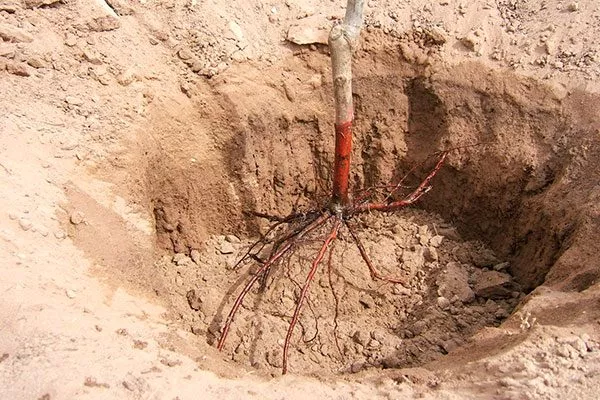
Features of preparing a planting hole:
- The hole should be approximately 30% larger than the seedling's root system. The diameter of the hole is typically 0.8-1 m, and the depth is 10-15 cm greater.
- The top fertile layer obtained when digging holes is set aside separately from the rest of the soil - it will be needed to prepare the soil mixture to fill the hole.
- Place drainage material—fine expanded clay, pebbles, or broken brick—at the bottom of the hole. This is extremely important in areas with clay soil to drain water away from the roots. However, drainage is not necessary in fertile and sandy soil.
- Fertile soil is mixed with 20 liters of compost or humus, mixed with 15-20 g of complex mineral fertilizer. The hole is filled two-thirds full with the soil mixture. A 10-15 cm hole is made from the center, and a support about 1.5 m high is driven into the hole.
Planting a seedling
Plant apple tree saplings when there's no direct sunlight—in the morning, evening, or on a cloudy day. This will protect the tree's young, tender bark from sunburn.
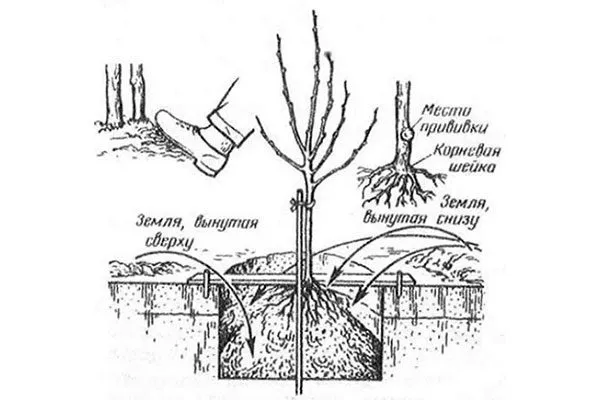
Landing features:
- Place the seedling in the hole so that its root collar is 5-6 cm above ground level. If it's too deep, add more soil. The roots should lie flat on the slopes of the mound, not curling upward or to the side.
- Holding the seedling with one hand and shaking it periodically to remove air pockets, use the other hand to cover the roots. Compact the soil and form a circle around the trunk with a small earthen ridge around the perimeter.
- The seedling is tied to the support with a soft garden bandage or twine, forming a figure-eight loop.
- The planted tree is watered with warm, settled water. 30 liters per plant is sufficient.
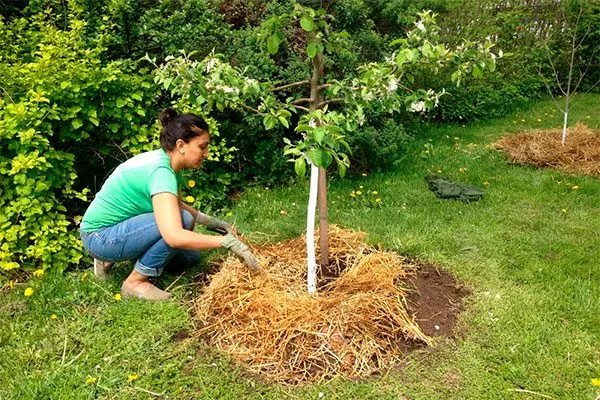
- After the water has been absorbed, the area around the tree trunk is mulched with dry grass, compost, or peat. The layer should be 5 cm thick. It should not touch the tree trunk.
Seedlings, especially in the south, need to be shaded to protect them from the scorching sun. For this purpose, use agrotextile, spunbond, or garden netting.
Care
The Kovalenkovskoye variety is unpretentious and can withstand a wide range of challenges, including weather, but it does require some care to ensure a good yield. All the maintenance is standard and doesn't require any special skills or knowledge from gardeners.
Watering and loosening
The Kovalenkovskoye apple tree must be watered regularly, as the variety is not very drought-resistant. Young, newly planted trees are watered once a week; mature trees are watered less frequently, depending on the weather and soil conditions. In hot weather, trees are watered thoroughly every two weeks. In normal weather, watering the apple tree once a month is sufficient.
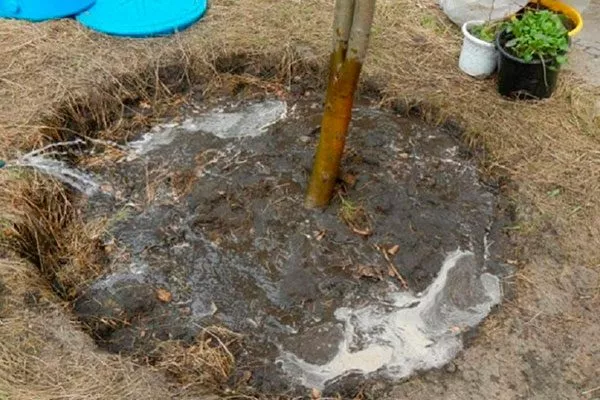
The recommended watering rate for a young tree is 40-50 liters, and for a mature tree, 70-100 liters per square meter of the tree's trunk circle. Avoid watering during harvest to avoid cracking the fruit.
Fertilizers
Fertilizers are applied throughout the season, depending on the tree's needs and soil fertility. On average, apple trees are fertilized 3-4 times a year, applying fertilizer to the roots. Foliar feeding (spraying) may also be used, which ensures faster nutrient absorption.
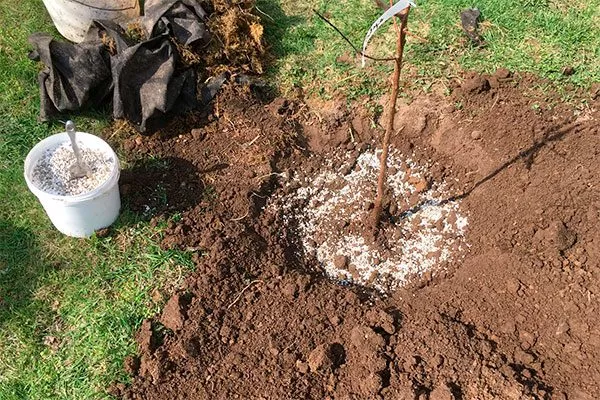
Approximate fertilizing regime for the Kovalenkovskoye apple tree:
- In early spring, nitrogen-containing fertilizers are added, for example, ammonium nitrate and urea - 20 and 30 g per 1 square meter, respectively.
- Before flowering, you can add a solution of superphosphate - 50 g diluted in 10 liters of water.
- At the stage of ovary formation, nitrophoska is added - 50 g per 10 liters of water.
- After harvesting the apples, the tree can be fed only with phosphorus-potassium fertilizers, superphosphate or potassium sulfate - 30-50 g per tree, respectively.
In the fall, you can also add organic matter—manure, humus, bird droppings, etc.—to the apple tree. This helps the tree recover and boost its immunity after fruiting, as well as stock up on strength before the coming winter.
Trimming
Pruning is a mandatory agricultural practice, without which normal fruiting, development, and health are impossible. Pruning is performed annually, in spring and fall, as the Kovalenkovskaya apple tree's crown tends to become dense.
The Kovalenkovskoye variety requires the following types of pruning:
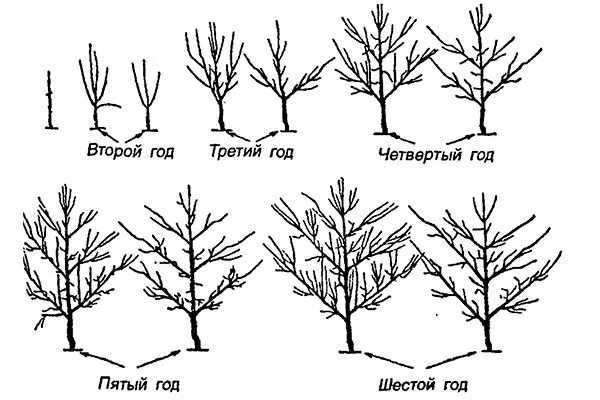
- Formative. This is carried out during the first five years of the tree's life, until the correct crown shape is formed. If the apple tree is planted in the fall, pruning is postponed until spring; if it is planted in the spring, the trunk is immediately shortened to a height of 0.75 m.
- Two years after planting, the strongest branches are shortened by 50%, and the weakest by 30%. Branches in the bottom row are also shortened by 30%, and the top is shortened to the level of the upper lateral branches.
- In the third year, remove four branches extending from the trunk at an angle greater than 45 degrees. Strong branches are shortened again by half their length, and weak branches by two-thirds. The top is again shortened to the level of the upper lateral branches.
- In the 4th year, the procedure is repeated, trimming the trunk to the level of the lateral branches.
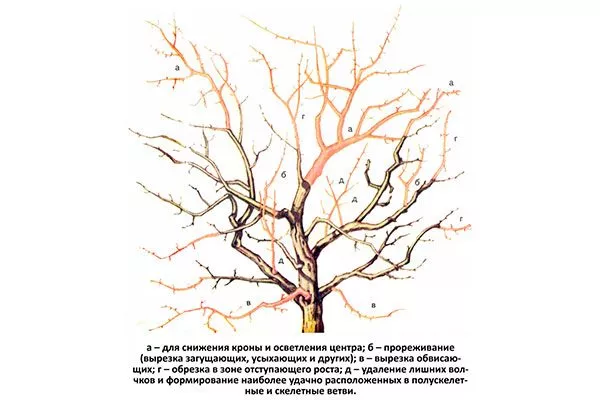
- Rejuvenating. It replaces formative pruning, beginning five years after planting. This type of pruning involves removing vertical and basal shoots and drooping branches. It is also possible to shorten the trunk to simplify tree care and fruit harvesting. Pruning is usually performed in March-April and can be spread out over two to three years.
- Sanitary. It is performed annually throughout the tree's life. It involves removing all dry, diseased, frozen, and damaged branches.
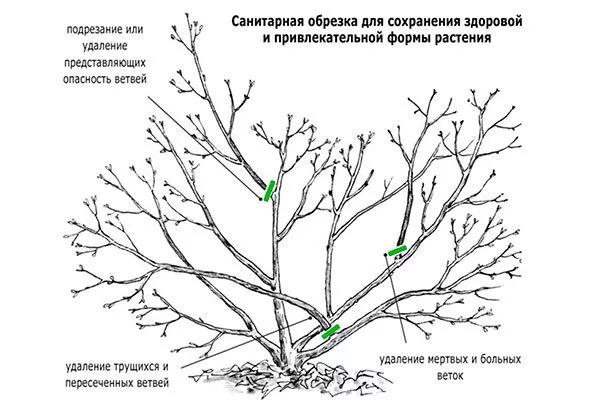
The cut areas must be coated with garden pitch to prevent infection from penetrating into the tree tissue.
Shelter for the winter
The Kovalenkovskoye variety tolerates low temperatures well, but requires insulation in regions with critically cold winters.
First of all, the trunk area is covered with a thick layer of sawdust or dry leaves (they should be taken from healthy trees, so as not to introduce pests and infections into the root zone.
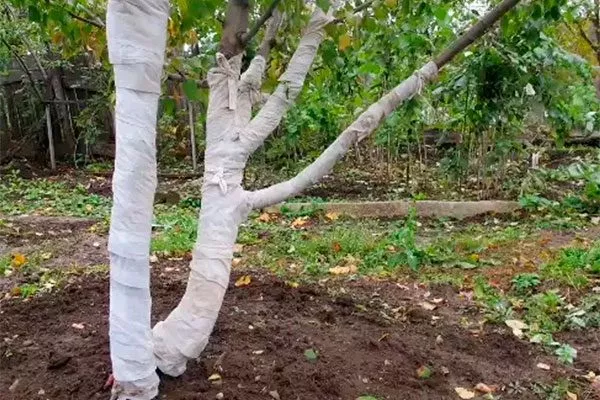
The trunks of young trees are wrapped in agrofibre, burlap, or other breathable material, or insulated with spruce branches. In winter, snow is also piled into the root zone.
Fighting diseases
This variety has moderate disease resistance. Under unfavorable conditions, it can be susceptible to scab, moniliosis, and other fungal infections.
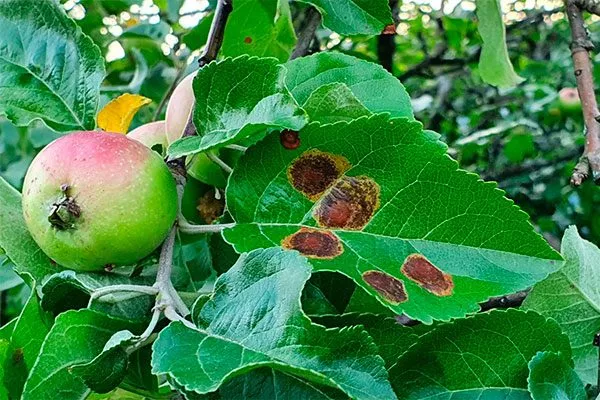
To prevent this, the tree is sprayed in the spring with Fitosporin-M, Fitolavin, etc. The treatment is carried out in dry weather so that rain does not wash the preparation off the leaves and shoots.
Pest control
The Kovalenkovskoye variety is most often attacked by codling moths, aphids, sawflies, and blossom beetles. Pests are controlled using a variety of methods, including removing damaged parts of the tree, setting traps for caterpillars, shaking pests off branches onto plastic, and digging up the root zone.
To combat insect pests, you can use both safe means - biological preparations "Fitoverm" or "Bitoxibacillin", and chemical poisons, for example, "Karbofos", "Endobacterin", "Fufanon".
Harvesting and storage
When ripe, Kovalenkovskoye apples don't fall from the tree, clinging tightly to the branches. Readiness for picking is determined not so much by their appearance as by how easily they separate from the branches. Furthermore, ripe apples leave dents when pressed. The seeds of these fruits are dark brown.
The fruits are carefully removed from the branches and placed in low boxes. Store the apples in a dark place for up to six weeks, or in the refrigerator for up to two months.
Reviews
The Kovalenkovskoye apple tree is a nearly universal variety that will make a great addition to any garden. Growing these purple apples requires little effort, and the cultivation techniques are quite simple, making it accessible even to novice gardeners and summer residents.