
The "Bogatyr" variety is prized for its high yield and the sweet, tart flavor of its fruit. Learn more about the variety, its characteristics, yield, types, planting and care instructions, as well as growing conditions in different regions and much more useful information below.
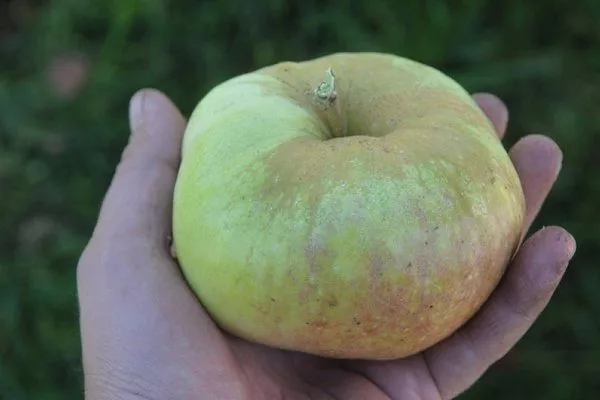
The Bogatyr variety lives up to its name.
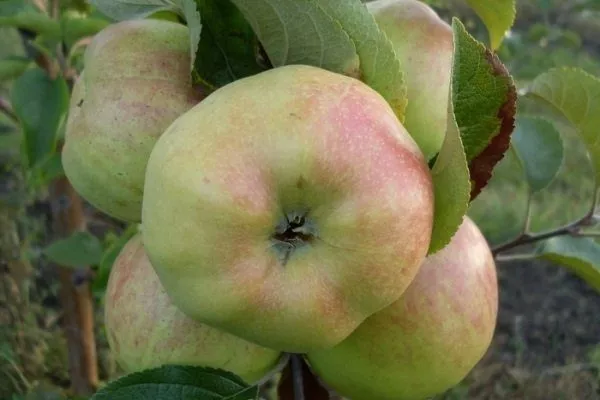
Apples of the "Bogatyr" variety
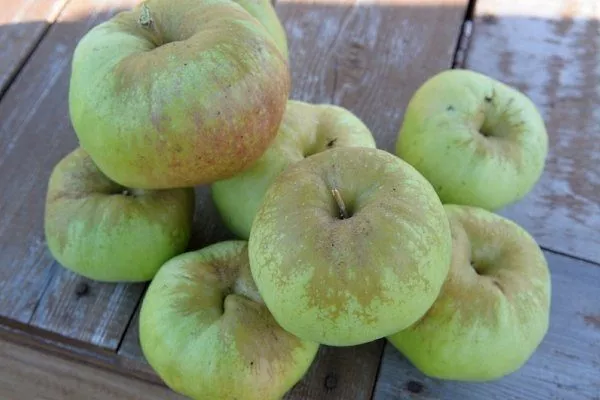
The fruits of the Bogatyr apple tree variety are stored for a long time, which is only good news
Origin
This variety was developed by Semyon Fedorovich Chernenko, a renowned breeder. He crossed the popular Antonovka with the Western European Renet Landsberg variety. From the former, Bogatyr inherited excellent cold resistance and adaptability, and from the latter, the large size and tasty flesh of its fruit.
"Bogatyr" was approved by Michurin himself.
Description and characteristics of the apple tree
The tree lives up to its name. It is tall, reaching up to 6 meters. Its crown is as wide as its height, spreading widely, conical or rounded. Its interior is bare, "transparent," as new branches do not grow. The branches are thick, strong, flexible, and well-connected to the trunk. The bark is olive-colored. The leaf blades are oval and serrated, with a light pubescence on the underside.
In spring, the apple tree is covered in white-pink blossoms. Most of the fruit is produced on the shortest rosette shoots, or runners, and less frequently on the fruiting twigs.
The fruits are easily recognized by their flattened shape and large size—the average weight is about 160 g, with specimens reaching a maximum weight of 400 g. The apples' surface is smooth, without roughness, and broadly ribbed. The harvested fruits are light green; when ripe, they turn yellow. The sides of the fruits exposed to sunlight are covered with a bright blush. The apples' rough skin makes them excellent transporters.
The flesh has a fine-grained texture. It is dense, crisp, white, and aromatic. The flavor is sweet and sour. Compared to the Antonovka, the Bogatyr has a lower acid concentration, making the fruit sweeter.
- ✓ High resistance to scab, which reduces the need for chemical treatments.
- ✓ Fruits do not fall off when ripe, which minimizes crop losses.
This variety is recommended for cultivation in the Central Black Earth, Volga-Vyatka, and Central regions, but gardeners in the Northwest and Siberia have not remained aloof and are happy to grow "Bogatyr" in their gardens.
Self-fertility, fruiting and yield
"Bogatyr" requires the help of pollinators. Several apple tree varieties are planted nearby:
- Zhigulevskoe;
- Melba;
- Sinap Severny;
- Strefling.
A review of these and other best apple varieties with photos and descriptions is located here.
The first fruits appear in the fourth year after planting a two-year-old seedling. If bud grafting was used, the apples won't be ready to eat until the sixth or seventh year.
Yields depend on the age of the apple tree—the older it is, the more kilograms of fruit can be harvested. A 9-year-old tree can yield up to 60 kg, while a 16-year-old tree can yield 80 kg or more. Fruiting occurs annually, but yields decline periodically.
Apples are eaten fresh, they are excellent for pickling and compotes, and when making jam they remain whole and do not boil over.
Apple ripening time and storage
The fruits hold well on the branches and do not fall off. The stalk is thick and short. Since this is a late-winter variety, the fruits ripen after harvest. Harvesting maturity occurs by mid-September. However, experts advise against rushing the harvest, as this negatively impacts the appearance and quality of the fruit. Fruits picked early tend to shrink during storage.
These apples shouldn't be eaten immediately; they need to be stored until they reach consumer maturity, which doesn't occur until mid-December or even late December. "Bogatyr" is the perfect variety to grace your New Year's table. When harvested in a timely manner, these apples can be stored until late May, and in some cases, until mid-June. They retain their appeal, remaining fragrant and crisp.
The video below will help you clearly see the "Bogatyr" apple variety:
Advantages and disadvantages
The advantages of the variety include:
- early and annual fruiting;
- high frost resistance;
- good adaptability;
- non-shedding of ripe fruits;
- excellent appearance of fruits;
- transportability - apples can be transported over long distances;
- excellent taste;
- versatility;
- immunity to the fungal disease scab.
The following are some of the disadvantages:
- the apples are green when ripe for picking, so it is difficult to determine when to harvest;
- high rustiness of fruits.
Subspecies
There are several subspecies of this apple variety:
- Semi-dwarf. Owners of small plots in the Central Black Earth Region graft "Bogatyr" onto semi-dwarf rootstocks. This way, it will begin bearing fruit earlier—in the fifth year—and the tree's height will not exceed 4 meters, making it easier to maintain.
- Dwarf. An apple tree grafted onto a dwarf rootstock will produce its first apples in its fourth year. Its height rarely reaches 4 meters. Because the 'Bogatyr' has a very spreading crown, regular annual pruning is required.
- Columnar. This type of apple tree requires constant attention and care. First, the root system must be properly formed, then regular pruning is necessary.
We recommend reading the article about How to prune an apple tree correctly.
Tree planting rules
To ensure that trees produce a rich harvest, certain planting rules are followed.
Selecting a location and timing of planting
Apple trees prefer sunny, well-lit areas. Groundwater should be deep, preventing meltwater from accumulating around the trees in the spring. If the site is in a low-lying area, drainage or water drainage must be provided before planting. The best soil type for apple trees is loamy, permeable soil. Plants are spaced 6 meters apart due to the spreading crown.
Planting is done either in the spring, after the last frost has passed, or in the fall before it begins. In southern regions, autumn is recommended—it's long and warm, giving the roots time to establish. In temperate climates, spring planting is preferable, before the sap begins to flow.
Preparing the pit
The hole for planting is prepared in the fall 2-3 weeks in advance, but if this procedure is planned for the spring, then the planting sites are prepared in the fall.
Pit size on loamy soils:
- depth - 80 cm;
- diameter - 80 cm.
On sandy loam soils, the hole is made larger, as they are poor in nutrients and require a large amount of topsoil. On clay soils, apple trees are planted only on dwarf rootstocks in a mound.
If necessary, add drainage material to the bottom of the pit—expanded clay, stones, broken brick, or wood scraps. On sandy soils, on the other hand, add a water-retaining layer of clay, meadow soil, or silt.
The topsoil is mixed with organic fertilizer. A bucket of rotted manure is added to the hole, along with the same amount of prepared topsoil and 1 kg of wood ash. Mix everything thoroughly with a pitchfork, create a mound, and leave it alone to enrich the soil with nutrients.
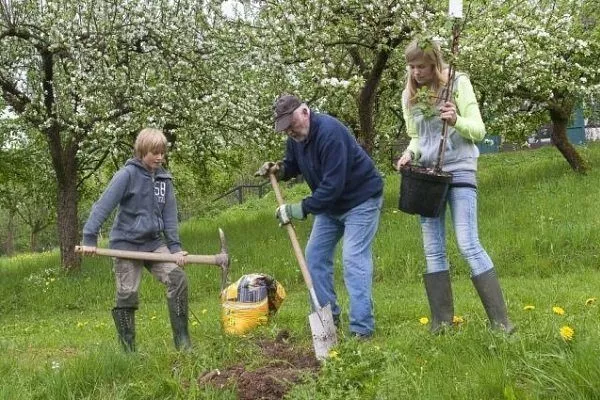
Planting stages
When planting, follow these instructions:
- When purchasing a bare-root seedling, soak it in water for 24 hours before planting. Then, carefully inspect the roots, trimming off any rotted or damaged ones. Sprinkle the cut areas with crushed charcoal to prevent rotting.
- A peg is driven into the hole in the center.
- The seedling is placed so that the root collar is 30-35 cm from the soil surface.
- The roots are covered with prepared fertile soil and compacted.
- Pour out 1 bucket of water.
- Cover the top with soil, adding 150 g of phosphorus fertilizers.
- Make a hole and pour in another bucket of water.
- The soil is mulched, and the tree is tied to a stake with a figure-eight loop.
- The aboveground part is cut off.
Apple tree care
Caring for an apple tree involves timely and proper watering, fertilizing, pest and disease prevention, pruning, and preparation for winter.
Watering
Young seedlings require regular watering—once a week. After two months, reduce the frequency. Mature trees need watering 4-5 times during the spring and first half of summer, and up to 8 times during dry periods.
The moisture should saturate the soil to a depth of 50 cm. 2-3 buckets are poured under each tree.
Top dressing
Fertilizing is not necessary in the first year after planting, provided the soil has been properly prepared. Subsequently, the trees are fed in the spring with nitrogen fertilizer (30 g of urea dissolved in 10 liters of water).
In autumn, ash and phosphate fertilizers are added, or manure or humus is added.
Prevention and spraying
To combat pests and diseases, spraying must be done in several stages:
- in the spring before the buds open, treat with Inta-Vir, Strobi or Fury;
- The same preparations are used for repeated spraying during budding;
- During the flowering period, treat the garden with a solution of boric acid;
- repeat the procedure after a week.
Trees are treated with pesticides in dry, windless weather, strictly following the manufacturer's instructions on the packaging. In the fall, trees are protected from rodents by setting up various traps and wrapping roofing felt and spruce branches around the trunk.
Trimming
In the spring, before the sap begins to flow, perform formative pruning. All shoots growing inward are cut out, thickening the crown. Old branches are removed, but it's important to remember that fruit forms on 4- and 5-year-old shoots.
In the fall, only sanitary pruning is necessary. This involves removing broken, diseased, and weak shoots.
Wintering
After harvesting, the tree must be prepared for winter. The area around the tree trunk is thoroughly cleared of plant debris, leaves, and fallen fruit. The soil is dug, loosened, and mulched. If autumn rainfall is low, the soil around the tree is watered weekly.
The trunk and skeletal branches are whitewashed. This will protect them from sunburn and pests.
As soon as snow falls, it is raked up to the apple tree trunks. Snow is the best insulator. But it must be removed promptly in the spring.
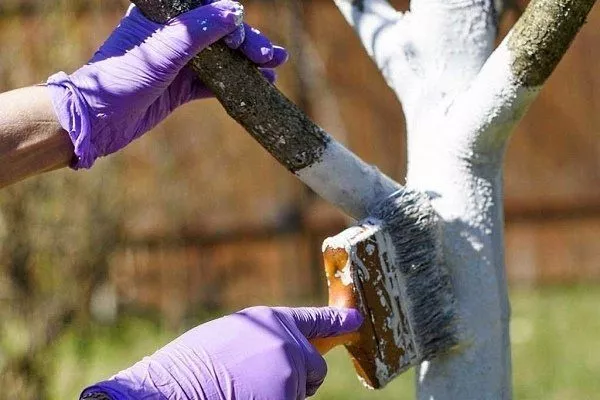
We recommend you read the article, which will tell you aboutHow and with what to whitewash an apple tree.
Growing characteristics in different regions
There are certain nuances in growing this variety in different regions:
- Moscow region and central zone. These regions are recommended by experts for growing the Bogatyr variety. They offer optimal climatic conditions for its normal growth and development. The apple tree produces a consistent harvest every year and requires no additional treatments.
- Ural.The soil here is unsuitable for growing this crop. Therefore, when planting seedlings, they must be fertilized with organic matter. The area around the trunk is carefully tended, with the soil loosened and watered regularly. In the fall, mulching is essential to protect the roots from early frosts. As the tree ages, it adapts to frost.
- Siberia. Despite the harsh winters, this variety is cultivated in both Eastern and Western Siberia without any particular restrictions. The main thing is to follow proper agricultural practices and insulate the trees for the winter.
The best varieties of apple trees grown in the Moscow region are describedHere.
Reviews
Gardeners generally have positive things to say about the "Bogatyr" variety, but there are also those who don't like it:
The productivity and unpretentiousness of the Bogatyr apple variety, its relatively early fruiting, ease of transportation, long shelf life, and excellent taste make it one of the most beloved and cultivated varieties in our country.