
White Naliv is an ancient variety that remains popular today. Gardeners prize it for its early, ripening apples, white and tender, delicious and beautiful. This variety is productive and long-lived, making having a White Naliv in the garden a point of honor for every gardener.
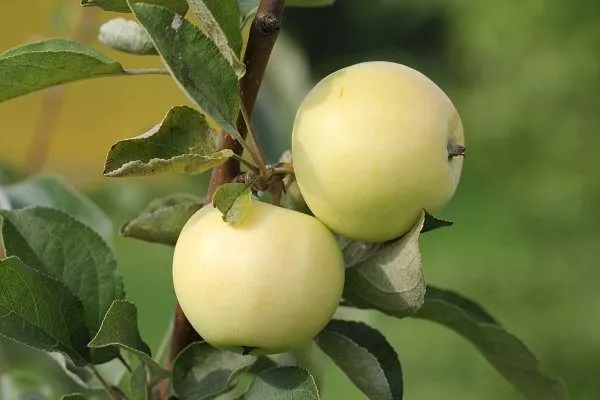
Variety "White filling"
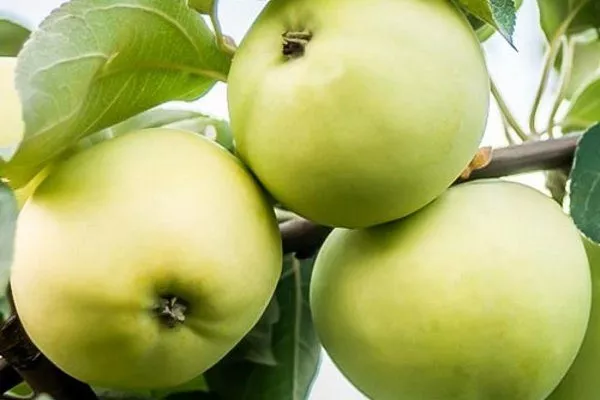
The flesh is white and juicy, but if it becomes overripe, it becomes mealy (cottony).
History of the variety's origin
There's no clear consensus on the origins of the White Naliv. Some experts believe it originates in the Baltics, while others believe it's an Old Russian variety originating in the Volga region. Another variety, Papirovka (translated from Polish as "paper apple"), came to us from the Baltics. It's similar in appearance to the White Naliv, but upon closer inspection, numerous differences are revealed. It's worth noting that many reputable sources today disagree on the distinction between the two varieties.
Like any old variety, Bely Naliv has acquired many names, among the most well-known being Dolgostebelka, Nalivnoye Beloye, and Pudovshchina. It has been widely used in breeding, and about two dozen new varieties have been developed with its participation.
Zoning
Thanks to its high winter hardiness, White filling grows and bears fruit without problems in the central zone – here it does not freeze even in the coldest winters.
This variety is grown in many regions of Russia. The exceptions are the Northern Urals, the Far East, and Eastern Siberia. However, even here, if desired, white apples can be grown using the creeping form of the tree.
Description and characteristics of the White filling apple tree
This variety is unique for its long lifespan. Some specimens continue to bear fruit even after reaching 70 years of age. However, the fruits become somewhat smaller with age. The variety is easily recognized by its distinctive external features.
White Naliv is an early summer variety. It ripens at different rates in different climate zones:
- in the south – mid-July;
- middle zone – mid-August;
- Siberia – second half of August.
Tree
The White Naliv apple tree is a classically beautiful, medium-sized tree, reaching a height of 5 m. Characteristics of the tree:
- Bark. The color is light gray. Young apple trees have smooth bark. Over time, it becomes rough.
- Crown. When the tree is young, its crown is elongated and pyramidal in shape. As it matures, it develops a rounded, moderately spreading crown.
- Leaves. The shape is ovoid. The color is green, the size is medium, and the underside is slightly pubescent. They differ from other varieties by their longer petioles (hence the name "Dolgosteleka").
- Flowers. Large, white, saucer-shaped flowers. The petals often have a pinkish "bloom." The flowers are borne in large inflorescences.
Fruit
Fruit formation occurs on white-green rings. Fruit description:
- Form. The apples are large, round-conical, tapering towards the cup.
- Weight. The fruits on young apple trees grow up to 150 g, on old ones – up to 60 g.
- Pulp. White, juicy, sweet taste with a slight sourness and a subtle apple aroma.
- Color. Green apples turn white as they ripen. Apples hanging on the south side of the tree develop a delicate light pink blush when ripe. On one side of the fruit, there's a seam running from the stem to the calyx.
- Skin. Thin, sour compared to the pulp.
- Taste. The flavor changes as they ripen. Unripe apples are sweet and sour. As they ripen, the apples become sweeter, the sugar content increases, and the fruit acquires a dessert-like flavor with a subtle tartness. Fruits generously filled with juice are especially delicious. Tasting score: 4.7.
- ✓ Long leaf petioles, which distinguish this variety from others.
- ✓ The presence of a seam on the fruit, running from the stem to the cup.
White Naliv apples are delicious fresh and a valuable raw material for processing. They are used to make jam, preserves, juices, and wines. The fruit is quite sweet, containing 9% sugar.
You can see a review of the "White Filling" variety in the video below:
Root system
The type of root system is determined by the characteristics of the rootstock:
- vigorous ones have a powerful central rod;
- low-growing (dwarf and semi-dwarf rootstocks) – highly branched root system without a central core.
Productivity
White Naliv is a productive variety. With proper care, the tree is simply covered in fruit. The average yield is 80 kg per tree. If provided with ideal conditions, the tree can produce up to 200 kg of apples.
The first apples are harvested in the fifth year of planting a two-year-old sapling. Fruiting becomes more regular as the tree matures.
Self-fertility and pollinator varieties
This variety is self-sterile and requires pollinators. For pollination of White Filling, we recommend:
- Antonovka;
- Ottawa;
- "Lungwort";
- "Moscow pear"
- "Candy";
- "Golden Chinese woman";
- Cypress
- "Early pear";
- "Mantet".
If a pollinator variety isn't planted nearby, the tree will produce few ovaries, and their size will be smaller than normal. Pollinators should preferably be selected from varieties whose flowering time coincides with that of the White Filling.
Winter hardiness
The variety is winter-hardy, able to withstand harsh winters while maintaining its fruit set. It also survives spring frosts without sacrificing the future harvest. Its winter hardiness is insufficient for growing in northern regions, where growing White Filling is impractical.
Disease resistance
The variety is not particularly immune. White Naliv is susceptible to a number of diseases and pests, requiring preventative treatment. For example, White Naliv lacks immunity to one of the most serious fruit tree diseases: scab. This scourge particularly attacks densely populated and unthinned trees. Wet weather also contributes to scab.
Subspecies and variants
| Name | Ripening period | Fruit weight | Disease resistance |
|---|---|---|---|
| Golden Filling | Mid-July | 140 g | High |
| Pink filling | Mid-August | 200 g | Average |
| Honey filling | End of July | 70-90 g | High |
| Ural filling | The second half of August | 100 g | High |
| Steppe | End of August | 45 g | High |
| Isetsky | Mid-August | 130 g | High |
White filling has many variations – different varieties of filling apples have been bred on its basis:
- Golden Filling. A large-fruited variety with pale golden apples. Fruit weight is 140 g. It is almost immune to scab and black canker. This variety is not listed in many catalogs.
- Pink filling. The fruits are large, weighing over 200 g. They are light green in color and have a blush. They are turnip-shaped. They are distributed primarily in the Nizhny Novgorod region.
- Honey filling. The most delicious fruit-filling variety. The fruits are small – 70-90 g – and sunny yellow. Rarely susceptible to scab. Winter hardiness is low.
- Ural filling. Small fruits (100 g) with almost no aroma. Greenish-golden apples with a blush. High winter hardiness and early maturity – harvest in 2-3 years.
- Steppe. Small yellowish fruits – up to 45 g. Distributed in the Far East. Winter-hardy.
- Isetsky. The fruits are medium-sized (130 g), light yellow in color. They are early fruiting and winter hardy.
White filling can be grown on different rootstocks; there are three types of this variety:
- Dwarf. It surpasses other varieties in yield. Easy to grow and care for, the plant reaches only 3 meters in height. It is undemanding and can thrive in areas where tall trees cannot. It tolerates high groundwater levels and takes up little space. It is early-bearing, producing fruit in just 2-3 years. For good yields, it is essential to follow proper cultivation practices, water, and fertilize regularly.
- Semi-dwarf. It differs little from the dwarf variety. Trees become distinct even when mature. The semi-dwarf variety is approximately 25% larger than the dwarf variety, reaching a height of 4 m.
- Creeping. This low-growing variety is characterized by maximum frost resistance and can bear fruit in Siberia.
Landing features
When planting seedlings, the climatic conditions of the region, specific weather conditions, and the variety's requirements for growing conditions are taken into account.
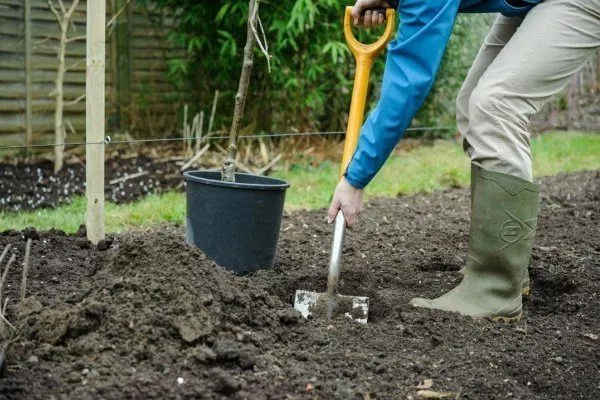
Conditions for landing White filling:
- The best soils are loam.
- Waterlogged soils are not suitable.
- If the plot is located in a lowland, its seedlings are planted on a hill.
- Good lighting is essential. A south- or southwest-facing site is recommended.
- The site should be protected from north winds by a planting, fence, or wall. The distance from the protective barrier to the tree should be at least 2.5 meters.
- If a seedling is planted on clay soil, its structure is improved by adding river sand to the planting hole.
- Optimal soil acidity is pH 66.5 (neutral and slightly acidic).
- ✓ The groundwater level should not be higher than 2 meters from the surface.
- ✓ The optimal depth of the planting hole to improve drainage on clay soils is 1 meter.
There should be no roots of other trees near the planting site, as they will take water and nutrients from the soil.
Landing dates
When to plant White filling - in spring or autumn - depends on the climate zone; in regions with harsh winters, the spring option is preferable.
Seedlings are planted no earlier than the end of April. The latest deadline is early May. Planting requires warm and dry soil. Spring planting is recommended for young seedlings.
If the seedlings are over two years old, autumn planting—in early October—is possible. At least a month should pass between planting and the first frost and the freezing of the soil—this determines the planting time.
Preparatory activities
Before planting, soak the seedling in water for 24 hours. The hole is prepared a month before planting. Here are some key points to consider when preparing the hole:
- The seedling planting pattern is 4x5 m.
- A hole is dug – 80-90 cm in diameter, 60-70 cm deep. On clay soils, the depth of the hole is 1 m (taking into account drainage).
- A mixture of black soil, peat, humus, and sand, mixed in equal parts, is poured into the hole. 300 g of superphosphate and 3 liters of wood ash are added.
If the hole is dug in the fall, only humus (1:1 mixed with soil) and ash (0.5 l) are added to it; if in the spring, fertilizer is added to the last portion of soil that is sprinkled on the seedling.
Step-by-step planting instructions
The procedure for planting a seedling:
- Inspect the seedling. If brown spots appear on the cut roots, trim the ends. Check for any rot lesions; these should also be trimmed. If you missed dipping the seedling in the slurry, do so immediately before planting to prevent the roots from drying out.
- The prepared seedling is lowered into the hole, into which a support stake has already been inserted. The stake is positioned so that it shields the plant from the sun, on the south side of the trunk.
- Spread the roots, carefully placing them on a mound of soil-humus mixture. Make sure the root collar doesn't fall below ground level; it should be about 5 cm above ground level.
- The hole is filled with fertile soil, compacting it thoroughly. While filling the hole, the trunk is shaken vigorously—this helps fill the voids formed between the roots with soil. This technical detail of planting will prevent the tree from drying out.
- The trunk is tied to a support peg – this will prevent sunburn and protect the roots from shaking in strong winds.
- They water it. One tree requires 3 buckets of water.
- Mulch the soil around the trunk to retain moisture. The mulch thickness should be at least 5 cm.
Care and cultivation of the White filling variety
There is nothing special about caring for the White filling, but the more care you give the tree, the greater its return will be – a higher yield, larger and tastier apples.
Watering, loosening and weeding
White Naliv is responsive to moisture. Frequent (but moderate) watering will result in juicier, full-bodied fruits. Watering guidelines:
- You should not over-water the soil, as this will cause the roots to rot.
- Watering options include sprinkler, drip, groundwater, and surface irrigation. It's best to water during cooler times of day. Evening is the best time.
- The recommended watering rate for a one-year-old tree is 2 buckets. This rate doubles each year. Two-year-old trees require 4 buckets, and so on. Trees older than 5 years are watered at 50-100 liters per square meter.
- The first spring watering is carried out before the buds open.
- The second watering for mature apple trees is carried out during the period of ovary formation.
- The third watering is a few weeks before harvest.
- The last watering is in October; its purpose is to prevent the tree from freezing over the winter. Watering is done in warm weather.
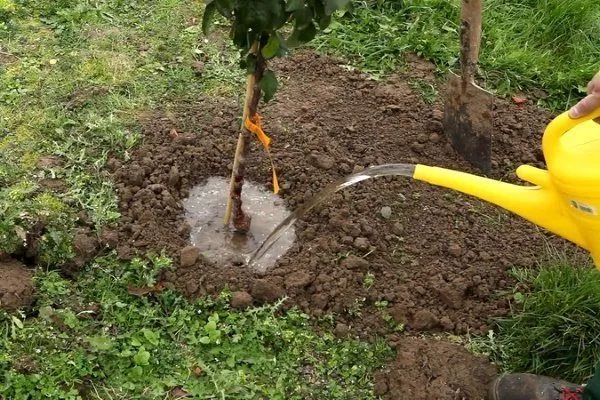
For the first 5 years, it is recommended to water the seedlings weekly.
Avoid watering apple trees during the ripening period and after harvest. When the growing season is still in progress, watering will encourage the growth of young shoots that are not adapted to winter. This will cause the tree to freeze and may even die.
Each watering is completed with loosening. Then, mulch is applied to the soil around the trunk to aerate the roots and retain moisture. Weeds must also be removed, as they rob the tree of nutrients from the soil. Weeds accelerate soil drying. Timely weeding prevents weed seeds from maturing and shedding.
Top dressing
The tree receives enough nutrients at planting to last for 3-4 years. After that, the apple tree requires additional feeding. There are no special feeding requirements for the White Filling.
Fertilization of the White filling variety is carried out according to the standard scheme for apple trees:
- Organic fertilizer—compost/humus—is applied every 3-4 years during spring tilling. The application rate is 5-7 kg per 1 sq. m.
- Mineral fertilizers are applied every year:
- in spring – urea or carbamide (30-40 g per 1 sq. m);
- during the period of fruit formation, and then again after 2-3 weeks - a solution of potassium monophosphate (10-20 g per 1 sq. m);
- in autumn, during digging – superphosphate (30-40 g per 1 sq. m.);
- In summer, it is possible to feed with manure - liquid cow dung or diluted chicken manure.
Feeding of White filling begins in the spring, as soon as the growing season begins.
Apple trees growing in acidic soils should be treated with chalk or lime every four years—200 g per tree—to neutralize the acidity. Dolomite flour or even old plaster can be used as an alternative.
Fertilizer doses for one apple tree are in Table 1.
Table 1
| One year after landing | Diameter of tree trunk circle, m | Compost, kg | Urea or ammonium nitrate, g | Calcium nitrate or ammonium sulfate, g | Double superphosphate, g | AVA Fertilizers (phosphorus) | Potassium sulfate, g | Ash, g |
| 3-4 | 2.5 | 15-20 | 45 | 100 | 47 | 40 | 60 | 230 |
| 5-6 | 3 | 20-25 | 65 | 150 | 70 | 60 | 90 | 340 |
| 7-8 | 3.5 | 30-40 | 130 | 300 | 90 | 78 | 120 | 460 |
| 9-10 | 4 | 40-45 | 160 | 375 | 116 | 100 | 150 | 580 |
| 11-12 | 4.5 | 50-60 | 260 | 600 | 186 | 150 | 300 | 1160 |
Pruning and crown shaping
White filling, like other varieties of apple trees, requires 4 types of pruning:
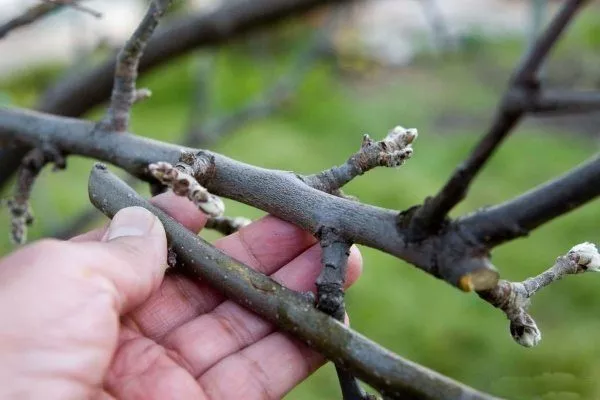
- Formative. A sparse, tiered crown is recommended. Two or three tiers are recommended. The crown should be formed from 5-6 skeletal branches extending from the trunk at an angle of 60-70 degrees. Branches extending at a shallower angle are bent back with twine or weights. Crown shaping occurs during the first 3-4 years of the tree's life.
- Sanitary. Remove all damaged and old branches.
- Rejuvenating. Apple tree growth slows down around 25-30 years of age. During this period, the tree requires pruning—cutting back to 2-3 year-old wood.
- Supportive. 80% of fruit wood consists of rings. However, many branches that branch off at an acute angle are prone to breaking and should be bent back or pruned.
The variety has many paired branches—"sleeves"—and the weaker shoots should be removed. Pruning is done while the tree is young to minimize wounds. Senile and unproductive shoots and other growths are regularly removed. Branches should be pruned based on growth vigor; the faster the shoot grows, the larger the pruned end.
The first pruning is done before planting to create a compact crown. Then, each spring, old and diseased branches are removed. Pruning is performed before the sap begins to flow.
To prevent flowering from exhausting the young tree, flowers are picked off in the first few years. In subsequent years, their number is regulated to prevent overcrowding.
What can be grafted?
Basic rules for grafting White filling:
- Grafting according to the "seed to seed" principle.
- Grafting onto a variety that matches in ripening time.
Experts do not recommend using White filling as a rootstock for winter varieties.
You can learn more about methods of grafting apple trees in spring from this article.
How to propagate white filling?
Methods of propagation of White filling:
- By vaccination. Grafting is done with buds or cuttings:
- to an apple tree of a different variety, to a rowan or pear;
- for wild game;
- on clonal rootstock.
- Growing from seed. The method is complex, time-consuming and patient, and risky – you can end up with a tree with small, sour fruits.
- By layering. A simple and effective method for growing your favorite variety from its branch.
Preparing for winter
In winter, the bark of the White Naliv tree is a delicacy for rodents. To protect the trunk, gardeners usually wrap the tree with roofing felt. Burlap or heavy mesh can be used instead. Another option is to coat the trunk with liquid compounds, such as lard or another hare-repellent substance.
Young trees require special care—if their bark is damaged, they will likely die in winter. Spruce branches are used to protect them from the cold. It's also important to protect the plant's roots. To do this, mulch the trunks of all trees under five years old with manure. If winter snowfall is low, the trunk is earthed up to a height of 15-20 cm.
Ripening and fruiting
The timing of flowering, ripening, and fruiting of White filling depends on the climatic characteristics of the region and may shift depending on weather conditions.
The beginning of fruiting
The onset of fruiting depends on the variety. For example, one tree may bear fruit in the second year after planting, while another may not do so until six years after planting. Everything depends on the rootstock. Apple trees on dwarf rootstocks begin bearing fruit earlier, but also stop earlier.
Bloom
A distinctive feature of the White Naliv is its large flowers. Blooming is profuse—the tree is simply covered in blossoms. In the central part of the country, flowering occurs in early May. In more southern regions, such as the Stavropol Territory, the variety blooms somewhat earlier. Flowering timing also depends on specific weather conditions. Early flowering is always risky, as frost damage can damage the buds.
Apple ripening times
In many orchards, White Naliv apples are the first to ripen. They typically ripen by late July or early August. In any case, they are definitely ripe by August 20th. The ripening time, like the flowering time, depends on weather conditions. Harvesting is done in two stages, with a break of 1.5 to 2 weeks.
Fruiting cycle
White Naliv fruiting follows a certain cycle. And you can never predict how often a harvest will occur. While you can try to regulate the yield, the cycle itself depends on underlying factors that are impossible to control.
Gardeners plant several White Naliv trees—if they're lucky and the cycle doesn't coincide, the orchard will have white apples every summer. Sometimes, some trees bear fruit every year, but their apples are small, while others produce large fruit, but only every other year.
What to do if the apple tree does not bloom or bear fruit?
If an apple tree isn't blooming or bearing fruit, there's likely a mistake or other external cause. The lack of fruiting may be due to:
- incorrect planting - perhaps the root collar is buried deep in the soil;
- poor soil or nearby trees negatively affect growth;
- pests and diseases;
- incorrect crown formation.
Gardeners often face the problem of apples dropping. This problem can have several causes:
- insufficient hydration;
- codling moth infestation;
- unfavorable weather conditions.
Diseases and pests
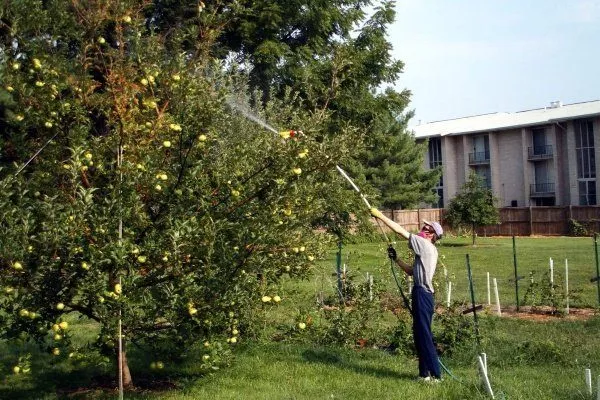
To prevent diseases and the spread of pests, it is recommended to carry out a number of measures annually:
- collect and destroy weeds and plant debris;
- dig the soil deeper;
- thin out the crown, carry out sanitary pruning;
- clean off damaged bark, whiten the trunk and skeletal branches;
- attach trapping belts to tree trunks;
Diseases and pests that threaten the White filling variety are listed in Table 2.
Table 2
| Pests/diseases | Symptoms of damage | What to do? |
| Scab | Light green, oily spots first appear on the leaves, which then turn brown and velvety. Later, the spots appear on the fruit, which cracks and becomes deformed. | Treat the tree and soil during the budding period with Bordeaux mixture - 400 g per 10 liters of water. Treatment with Fitolavin and Raek preparations also helps. |
| Powdery mildew | Affects all parts of the tree. Leaves turn yellow and dry out, the tree fails to bear fruit, and then dies. | When the leaves open, spray with Bordeaux mixture or Topaz – 2 ml per bucket of water. After flowering, spray the apple tree with copper oxychloride. The third spray is with 1% Bordeaux mixture. Alternatively, you can prepare a solution: 50 g of copper sulfate and 20 g of liquid soap per bucket of water. |
| Codling moth | Three weeks after flowering, the butterfly lays eggs on leaves and fruits. The caterpillars consume the fruit pulp and even the seeds. Losses can reach 90% of the crop. | Insecticide treatment 2.5 weeks after flowering. Suitable products include Methadion, Cidial, and Zolon. |
| Green apple aphid | It settles on foliage and shoots. Leaves curl, shoots dry out. Ten generations of aphids occur per season. This pest greatly weakens the plant. | Spray with insecticides after the buds open. If there are numerous aphids, repeat the spraying. |
| Apple blossom weevil | The butterfly lays eggs in the flower buds. The larvae eat away the receptacles, and the buds wither. Beetles emerge from the pupae inside the flower. | Insecticide treatment during bud break, the second time – when the beetles emerge from the buds. |
Harvesting and storage
White Naliv fruits ripen uniformly. This quality requires proactive efforts from gardeners—not only must they harvest quickly, but also process them, as the fruit's shelf life is poor. Apples with such soft flesh only last a few weeks. The sooner they are processed, the less losses. White Naliv makes excellent preserves—jams, marmalades, and other sweets.
This variety is delicious fresh, especially if the summer was sunny and watered generously. However, the juicier the fruit, the less shelf-life it offers. Apples spoil especially quickly if the tree was watered during harvesting—a common mistake among novice gardeners. Such fruits are completely unsuitable for transport—the slightest impact will cause brown spots.
Growing characteristics in different regions
Depending on the climatic conditions of the region, the form of cultivation of White filling is selected:
- Moscow regionWidely distributed. This variety can be found in most orchards in the Moscow region. It bears fruit every two years. These are the first apples in the orchard, so gardeners forgive them for their poor storage quality and poor transportability.
- Siberia. The apples that grow here are not large – 60-90 g. The tree begins to bear fruit at the age of 5-6 years.
- Ural. Here, ripe apples are grown in a basal form, which is more frost-resistant. The fruits ripen in late August.
- Bashkiria. Here they grow the particularly frost-resistant White filling, with triangular fruits.
- Far East and Amur Region. Although the variety is not included in the Far Eastern District, White Naliv, adapted to local conditions, is successfully grown here.
The White Naliv variety has its fair share of drawbacks: it doesn't keep well, it's practically impossible to transport, and its yield is cyclical. But these shortcomings are offset by its advantages. By planting this super-productive variety in your garden, you'll always be the first to enjoy juicy apples, preserve them, and even share them with your family and neighbors.