
Yablochny Spas is a fast-growing summer variety, often considered the pride of modern Russian breeding. It boasts not only a catchy and memorable name but also unique characteristics. This variety has every reason to become one of the most popular in our gardens, both private and commercial.
Description of Apple Savior
Yablochny Spas (Apple Savior) has large trees with beautiful, even ornate fruits—it's no coincidence that the variety was named after the folk festival. Through careful selection, scientists have succeeded in developing a versatile variety—hardy, vigorous, and productive.
Origin
Yablochny Spas is a promising new triploid variety, in which the Vf gene provides immunity to scab. It was developed by crossing apple trees with different chromosome sets—the breeders used tetraploid Papirovka and Redfree.
Initial breeding work was conducted at the Krasnodar Federal Scientific Center for Horticulture, Viticulture, and Winemaking. Subsequent development was carried out by Oryol breeders. The new variety was introduced in 2004, and five years later it was officially registered in the State Register of the Russian Federation.
The Yablochny Spas variety was bred using a polyploidy technique. Apple trees typically have two sets of chromosomes—one from the maternal tree, the other from the paternal tree. Through artificial crossbreeding, breeders obtain varieties with three or four such sets.
Growing regions
This variety has a wide distribution. It grows throughout almost all of European Russia, the southern Urals, and Siberia.
Apple Savior bears fruit well in the northwestern regions, but only if winter shelters are provided, which are covered with snow during particularly severe frosts—this helps protect the roots from freezing.
Tree height
This variety is considered tall. The tree reaches gigantic proportions, reaching a height of 10-15 m. At this size, harvesting can be difficult. To facilitate the process, prune the apple tree — to the height you need.
Maintaining the tree's height at a certain level not only facilitates apple picking but also pruning and spraying. The optimal height for the Apple Savior tree is 6-7 m.
Crown width
The Apple Savior tree has a medium-sized crown. The largest branches reach 2 meters in length, and the crown diameter is twice that—4 meters. Its shape is rounded, and the density is medium. Under these conditions, the fruit receives sufficient sunlight and ripens well.
Annual growth
Young tree shoots gain 40-60 cm in length per year. If the growth is greater, the apple tree is receiving too much water or fertilizer. Excessively grown shoots are susceptible to frost. In summer, pinch them back and reduce watering slightly.
What do apples look like?
The fruit's primary color is yellowish-green. Crimson stripes are scattered throughout the fruit. The number and intensity of these stripes depend on the sunlight. The more sunlight, the brighter and redder the apples.
Apple Savior apples are round-conical, slightly flattened, and ribbed. The average fruit weight is 200-215 g.
Taste qualities
Spas apples are versatile fruits that are delicious both fresh and canned. A special feature of these apples is that their flesh retains its structure during cooking. Spas apples make excellent jam.
The pulp is juicy, fine-grained, and contains about 10% sugar. The apples taste sweet with a slight tartness. The tasting score is 4.3 points.
Pollination
The Apple Spas variety is partially self-fertile, but without pollinators, it won't produce much of a harvest. When planting the tree, immediately plant two or three apple trees of a different variety for pollination.
The most suitable pollinators:
- Beauty;
- Joy of Hope;
- Candy;
- Melba.
Productivity
The first apple harvest is already in the third year after planting the seedling in its permanent location. The harvested fruit quantity increases year after year, reaching its peak in the seventh year, when a tree yields approximately half a centner (145 centners) of apples per hectare.
A distinctive feature of the Apple Savior is its annual, uninterrupted, abundant fruiting.
Frost resistance
The variety tolerates low temperatures well, surviving temperatures down to -25°C without insulation. Bark and bud frost damage occasionally occurs, but this is reversible and does not affect yield. On the winter damage scale, the variety received a score of 0 in favorable winter conditions and 1.5 in extreme weather.
Disease resistance
The variety is resistant to all types of scab and has good resistance to others. diseasesSpas also has high resistance to many fruit tree pests.
Thanks to their high immunity, apple tree maintenance costs are reduced, requiring fewer insecticides and fungicides. This increases the profitability of cultivating the variety, making the produce more environmentally friendly and safer.
Lifespan
This variety is distinguished by its long lifespan. If the tree is provided with favorable conditions and proper care, it can produce fruit for approximately 70 years, which is very good for an apple tree.
Apple trees on rootstocks
To obtain trees that are easier to process and harvest, gardeners use dwarf and semi-dwarf rootstocks.
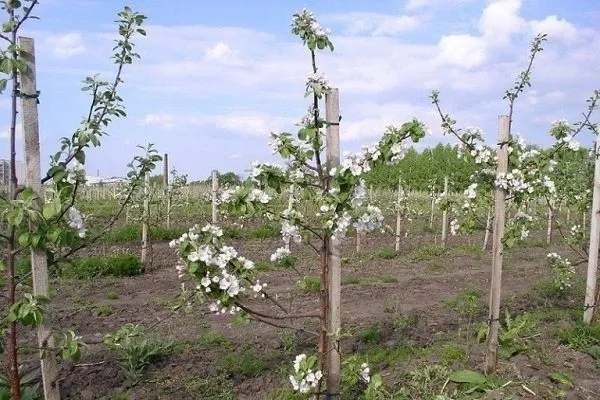
What do trees on rootstocks look like:
- height - 3-6 m;
- crown - round, medium density, diameter - 3-4 m;
- skeletal branches are curved, spaced far apart, and located almost at right angles to the trunk.
The variety shows good results on dwarf and semi-dwarf rootstocks:
- forms a strong root system;
- tolerates cold winters with little snow;
- yield - more than 60 c/ha.
Advantages and disadvantages
Planting Apple Savior
Adherence to planting technology and timing is essential for the tree's successful growth and development, as well as its subsequent fruitfulness. Equally important in the life of an apple tree is choosing the right site—if it's unsuitable, the tree will bear little fruit or even die altogether.
Choosing a location
Saplings should be planted in a well-lit area, protected from wind and drafts—apple trees dislike them. It's important that the groundwater level is at least 1.2 meters above the surface. Sites on slopes or slightly elevated areas are preferable.
Yablochny Spas isn't picky about soil; it thrives equally in sandy loam, clay loam, and chernozem. The key is to ensure the soil isn't too acidic. The variety prefers slightly acidic soils. If the pH is above 5-6, add 300 g of wood ash per square meter.
Deadlines
Apple trees are planted in the fall or spring. Apple Spas is a summer variety, and many gardeners recommend planting it in the spring. Choose your planting timing based on regional climate conditions and the condition of the trees.
How to determine when it's time to plant apple trees in the spring:
- the soil has thawed and warmed up;
- the buds on the trees have not begun to bloom.
If planting is done in the fall, work is usually carried out in late September, with the deadline being mid-October. It is important to allow at least three weeks between planting and the onset of frost.
Technology and scheme
Prepare the planting holes several weeks in advance. For spring planting, they can be prepared in the fall. In any case, allow at least three weeks between digging the hole and planting the seedling. This allows time for the fertilizer to dissolve and the soil mixture to settle.
- ✓ Availability of a quality certificate from the nursery.
- ✓ No visible damage to the bark and root system.
- ✓ The seedling should be no more than 2 years old for better survival.
For planting, use only healthy seedlings purchased from reputable nurseries. What does a good apple tree seedling look like?
- healthy roots, without damage or dry areas;
- the trunk under the bark is bright green;
- no mechanical damage or signs of disease;
- If planting is in autumn, there should be no leaves on the tree.
The planting technology is standard: dig a 1x1 m hole and fill it with soil mixture.
Work order:
- Place a 10-15 cm drainage layer of gravel or vermiculite on the bottom of the hole.
- Drive in a stake (support) for the future seedling. It should stand here for about 4-5 years.
- Pour the ingredients into the pit and mix, leave to infuse:
- rotted manure - 20 kg;
- compost / peat / humus - 20 kg;
- double superphosphate - 0.2-0.3 kg;
- potassium chloride - 0.1-0.15 kg.
- After a few weeks, start planting: place the seedling on a mound of soil, spread out its roots and cover with soil.
- Form a tree trunk circle around the trunk and water the apple tree generously.
- Mulch the tree trunk circle with peat or humus.
Recommended planting pattern:
- the distance between neighboring trees is 1-1.2 m;
- row width: 4-4.5 m.
You can learn more about planting an apple tree in the following video:
Agricultural technology of Apple Savior
Proper planting of a seedling is only half the battle. It's important to provide the young tree with everything it needs to thrive and grow, creating optimal conditions for it. If an apple tree isn't properly cared for, it will grow weak and fail to produce the desired harvest.
Watering
The first time you water the tree is when you plant it—pour 20 liters of water into the area around the trunk. From then on, visually determine the frequency of watering. If the top layer of soil has dried out, it's time to water the young apple tree.
Water mature trees much less frequently, but be sure to do so (if there is no rain) during the following periods:
- before the buds open;
- during flowering;
- at the stage of fruit formation;
- at the stage of maturation;
- after harvesting the fruits.
Watering rates depend on the age of the apple tree (liters per trunk circle):
- 1-2 years - from 20 to 30;
- from 3 to 5 years - from 40 to 50;
- 6-7 years – from 60 to 80.
For watering, use warm, settled water. Pour it carefully into the depression made around the trunk.
Top dressing
During the first two years, a young apple tree doesn't need any additional feeding—the fertilizer placed in the planting hole is sufficient. Apply fertilizer strictly according to the recommended dosage—don't overdo it, otherwise the tree will waste energy building up green mass.
Start feeding the Apple Savior from the third year of life:
- In early spring, apply ammonium nitrate - 50 g;
- in summer, during the apple filling period, add ammonium nitrate again - 35 g;
- In late autumn, scatter double superphosphate and potassium chloride in the tree trunk circle - 80 g and 70 g respectively.
Trimming
The tree undergoes two types of pruning: formative and sanitary. The former is aimed at shaping the crown, while the latter is aimed at removing unhealthy branches—those that are dry, diseased, broken, or deformed. Also remove branches growing inward and parallel to the trunk.
Perform formative pruning in spring or fall, and sanitary pruning can be done twice a year. Prune branches only when sap has stopped flowing, which typically occurs in early spring or late fall.
Preparing for winter
In mild continental climates, limit yourself to covering the area around the trunk. Cover it with spruce branches, straw, or hay. Wrap the trunk with pieces of roofing felt or tar paper. You can also use regular burlap or agrofibre.
To protect tree bark from rodents, coat it with melted lard or grease in the fall. To protect apple trees from insects that overwinter under the bark and in the soil, whitewash the trunks with lime.
Pest and disease control
Apple Spas has high immunity to many fruit tree diseases. Gardeners do not use preventative fungicide sprays. Treatment is only necessary when disease outbreaks occur. However, only apply it before flowering.
For pest attacks such as aphids, mites, and codling moths, use standard insecticides. Apple trees are typically sprayed with broad-spectrum, universal insecticides such as Decis, Aktara, Bi-58, and similar products.
In private plots, spray using backpack sprayers; in larger farms, use trailed or self-propelled devices.
Fruiting characteristics of Apple Savior
When choosing the Yablochny Spas apple tree for planting, study its varietal characteristics regarding fruiting and harvest storage. Then you'll fully enjoy its delicious apples.
Ripening and fruiting
The Yablochny Spas tree begins bearing fruit fully in its fifth or sixth year. The apples ripen no earlier than mid-August, sometimes even as late as early September. The timing depends on the climate in the growing region and current weather conditions.
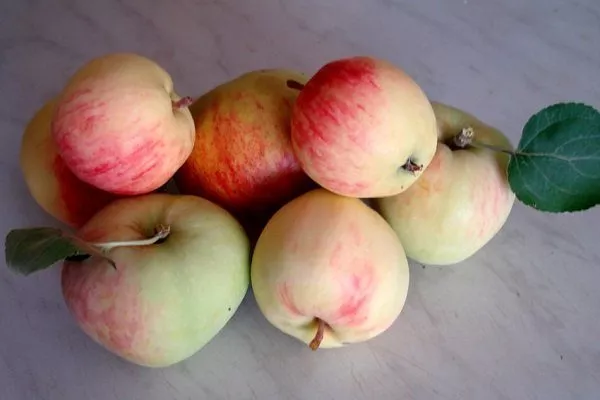
The variety was named after the church holiday, Apple Savior, celebrated annually on August 19th. The fruits are usually ready for harvest by this time.
Harvesting and storage
Pick ripe fruit immediately. Apples don't hang on Spasskaya Street for long. They become overripe, lose flavor, and fall quickly. Harvest from tall trees using fruit pickers or stepladders.
This summer variety shouldn't be stored for long periods. The apples are ready to eat immediately after picking. Store the fruit for no more than six weeks after picking.
Common problems
Despite the variety's unique hardiness and undemanding nature, its high immunity, and other advantages, Yablochny Spas does have its share of problems. The most common are failure to bloom or bear fruit, and apple drop.
Apple Savior does not bloom or bear fruit.
If the Apple Savior tree hasn't borne fruit, it means a serious mistake was made somewhere, as it bears fruit annually. Reasons for the lack of flowers and fruit:
- Incorrect landing. It's a mistake to plant the root collar of seedlings too deep—this slows their development. The trees may even dry out. If the apple tree is planted on the north side, in a drafty area, or in the shade, fruiting may also fail.
Another reason for the lack of flowering and fruiting is a high groundwater level. This can be solved by diverting the water into a drainage ditch. - The crown is formed incorrectly. Mistakes in pruning branches can result in a lack of fruit, or the fruit that ripens is very small. Most often, the problem is due to a dense crown. The apple tree expends a lot of energy on it, leaving none for fruit. It's important to prune all excess branches every year.
- Problems with pollination. If you don't plant apple trees for cross-pollination, problems with fruiting are inevitable. Several apple trees of other varieties should be growing near Yablochny Spas.
- Too many buds. In this case, the tree simply doesn't have time to form fruit. Most of the flowers fall off. To prevent this, prune excess side branches promptly.
- Incorrect feeding. If an apple tree receives too much or too little fertilizer, flowering problems may occur. For example, overfertilizing in the fall can result in bud drop.
- Frosts in spring. If flower buds are exposed to low temperatures, they will fall off. Lighting smoke bombs can help prevent this.
- Pests. An apple tree may fail to bloom if it's attacked by bud-destroying pests. Address the problem with trapping belts and insecticide sprays (before bloom).
The apples are falling
One of the most frustrating problems gardeners face is fruit drop. Everything seems to be going well, the apples are ripe, and all that's left is to wait for them to ripen and harvest. And then the fruit starts to drop, and with it, hopes for a harvest are dashed.
Reasons why apples fall:
- Incorrect watering regime. Too frequent or too rare watering causes the same reaction - fruit shedding.
- Lack of nutrients. If the tree is not fed correctly, it will lose vitality and lose its fruit.
- Increased acidity. In acidic soils, bacteria multiply rapidly, the tree loses health, weakens, and its fruits fall off.
- Pests. There are a huge number of insects that cause apple drop. Aphids, codling moths, and many other garden pests cause apple drop.
Reviews
Yablochny Spas is a young variety that is particularly attractive to gardeners for its strong immunity, early fruiting, delicious apples, and consistent yield. In just a few years, this variety has earned recognition among both gardeners and ordinary apple lovers.