
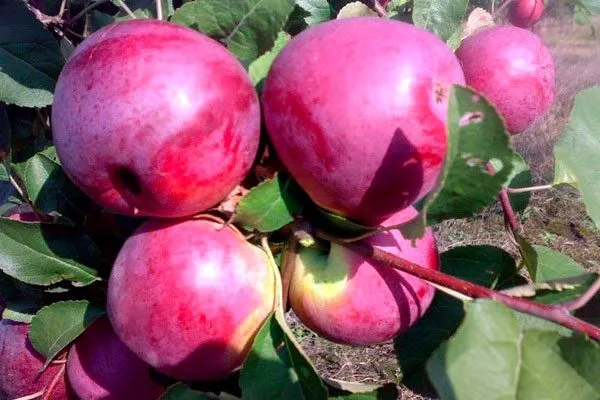
The Vishnevoe apple tree is a variety created by local breeders. Its fruits are distinguished by their attractive appearance and rich reddish hue. They are also renowned for their high yields. This variety is often found in home gardens and farm fields. Gardeners highly praise both the cultivation process of these apples and their excellent taste.
History of selection
Vishnevoe was developed by specialists at the I.V. Michurin All-Russian Research Institute of Vegetable Breeding (VNIIS) under the guidance of renowned breeding expert Sergei Ivanovich Isaev, known for his developments for the climatic conditions of Russia's central region. The development team included breeders G.A. Lobanov, V.K. Zayats, and Z.I. Ivanova.
Features of hybridization:
- The Pepin Saffron and Antonovka Obyknovennaya varieties were used as the starting materials for creating the hybrid. The new variety was given a name that reflects not only the vibrant color of the fruit when ripe, but also the color of the bark, which ranges from dark cherry to deep red.
- In 1938, the Vishnevoe variety was registered in the State Register, and the final zoning took place in 1954.
- Antonovka ordinary gave Vishnevy high yield, resistance to diseases, in particular scab, Pepin Saffronny - regular fruiting, average shelf life of fruits and a pleasant aroma.
The variety has become one of the most popular among gardeners due to the high quality and flavor of its fruit. Today, Vishnevoe is widely cultivated in Russia, in both commercial and private gardens, and is prized for its ease of cultivation.
Genetic overview of the Vishnevoe variety:
- Genotype: Saffron Pepin x Antonovka ordinary.
- Triploid: self-sterile.
- Clutch group: XVI.
- S-gene alleles: S2S27.
The Vishnevoe variety is a valuable source for further apple breeding. It has been used as a parent variety in the creation of new varieties, including Orlovskoye Polosatoye, Pamyat Tikhomirova, Uslada, and others.
Characteristics
Disadvantages of this variety include low winter hardiness, vulnerability to drought, slow growth and a relatively short shelf life of the fruits.
| Parameter | Indicator |
|---|---|
| Lifespan of a tree | 10-15 years |
| Annual growth | 15 cm |
| Root system depth | 50-60 cm |
| Tree height | 300-500 cm |
| Crown diameter | 400-600 cm |
This is a typical winter apple tree, but is one that grows best in moderately cold winter conditions.
Zoning
The cherry variety is ideally adapted to the Central Black Earth region and thrives particularly well in the Tambov and Voronezh regions. Consider these other nuances:
- In the Lower Volga region, the variety also shows high viability.
- This variety is ideal for winters with soft snow cover and for the Central Belt, but is not suitable for the Urals and northern regions.
- In the Moscow region it needs to be insulated.
Unfortunately, Vishnevoe has not become widespread, although it is well known among gardeners and confidently takes its place among apple trees with a well-deserved reputation.
Description of the tree
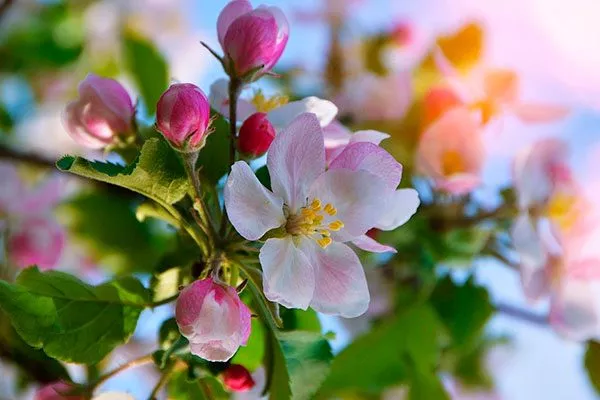
Flowering occurs in the third week of May, and the flowers have a particularly strong and pleasant scent, attracting bees and other pollinating insects. In the first few years of a seedling's life, buds should be removed, but from the third year onward, a few can be left.
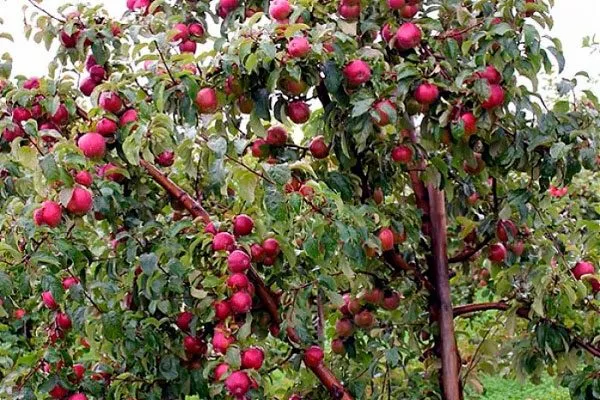
The tree has the following characteristics:
- Plant characteristics:
- The height is usually 300-500 cm, but gardeners often limit it through pruning to a maximum of 350 cm;
- the lifespan of a tree is 10-15 years;
- annual growth is 15 cm;
- the root system is superficial (50-60 cm), which requires covering and mulching the trunk circle during cold weather;
- The crown is round or semi-round, spherical, oval or broadly oval, cup-shaped, not columnar, dense, moderately spreading, but over time it can become more spreading and weeping.
- Shoots:
- the branches are compactly arranged and extend from the trunk at a right angle;
- young shoots are thin and straight, over time they retain their straightness and elasticity, but become of medium thickness;
- located compactly and harmoniously;
- fruit twigs are medium-sized, but thick and elastic;
- internodes are shortened, lenticels are numerous;
- The branches are reddish-cherry, with the bark color transforming to light brown over the years.
- Leaves:
- medium size, with smooth edges, without depressions, finely serrated, with small but noticeable serrations;
- the back side of the leaf is lighter, with slight pubescence, which gives the color a grayish tint;
- The petioles are long and quite thick.
- Pedicels:
- have a white hue with a slight creamy tint, which harmoniously combines with pink;
- flower sizes are standard for apple varieties;
- buds are located in inflorescences of 3-4 pieces;
- The petals are oval, the pistil column is of medium length, and the stigmas are at the level of the anthers.
Fruit
Gardeners pay special attention to the characteristics of the fruit, so it is important to familiarize yourself with the key description of the Vishnevoe (Vishnevka) apple tree fruit:
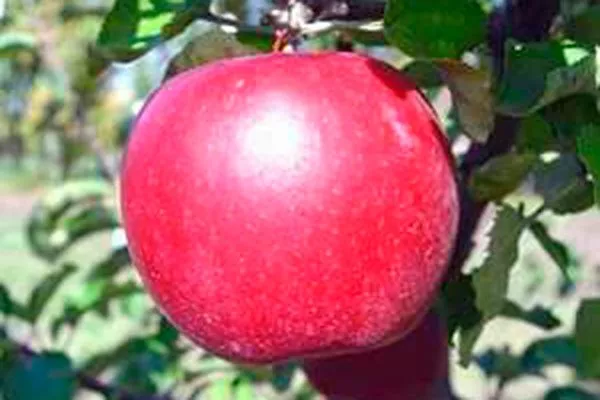
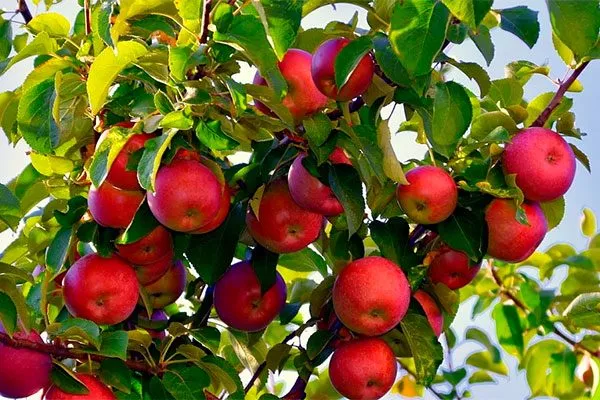
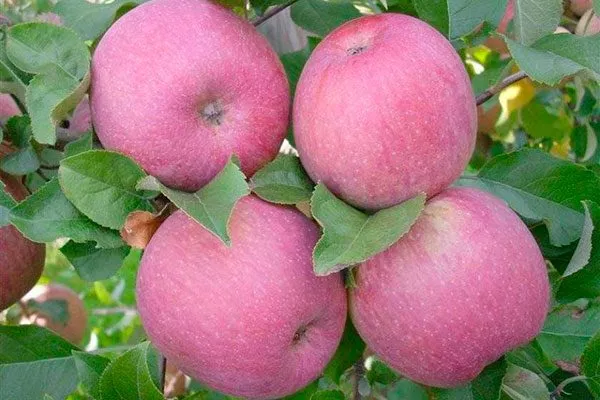
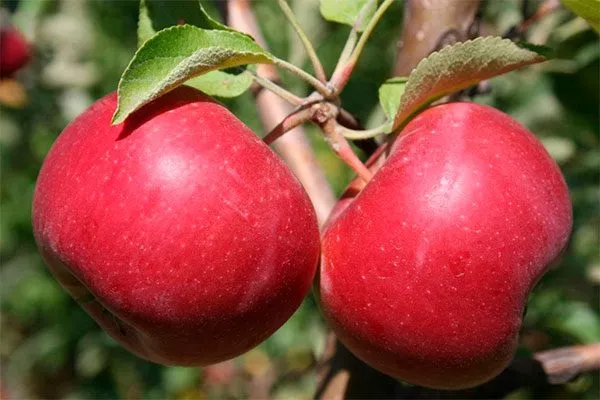
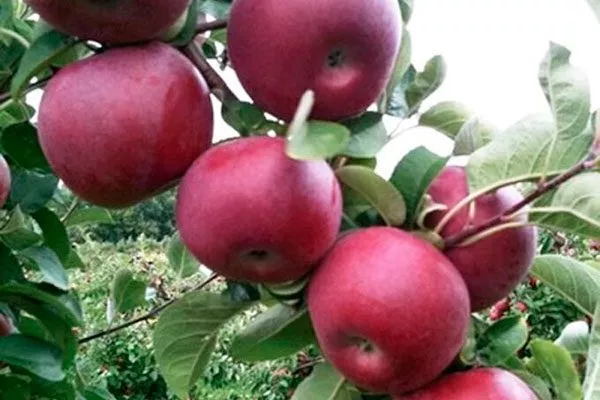
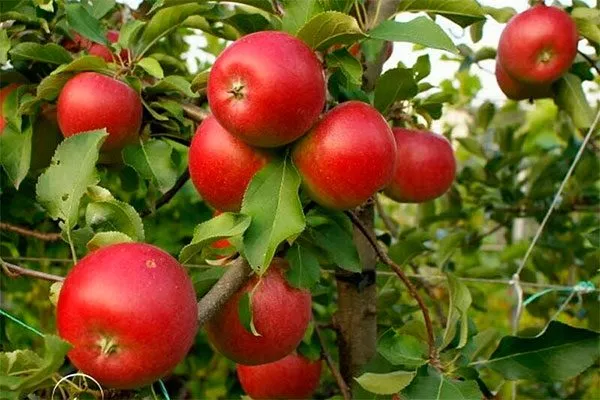
- The shape of the apples is Rounded and slightly elongated, reminiscent of leaves in their symmetry and uniformity. The fruits have a smooth surface without protrusions.

- Peel – is distinguished by its tenderness and subtlety:
- It shines thanks to its gloss and light waxy coating, which does not significantly affect the color;
- unripe fruits with a greenish-yellow tone and a slight pink blurry blush;
- over time, the base color becomes lighter, sometimes even approaching white;
- During ripeness, apples become covered with a rich cherry blush that covers the entire surface, which may be lighter or even only slightly pink under unfavorable growing conditions and insufficient sunlight;
- Subcutaneous grains are clearly visible and have a light tone.
- Weight - fluctuates between 110-140 g, larger specimens are extremely rare.
- The inside of the apples is has the following characteristics:
- the pulp is dense and hard, with small grains;
- it is juicy, tender and crispy;
- The color of the pulp can be white or cream.
- Storage and transportation – Apples are known for their excellent shelf life and resistance to rot. Although they are supposed to last up to 180 days, the actual shelf life is about two months, until mid-February.
Beyond this period, apples lose their structure, aroma, and flavor. During this period, they are considered to be suitable for transport due to their firm flesh. - Taste - Slightly tart with a hint of sweetness, typical of red varieties, but with a subtle aroma. The apples' flavor is harmonious and balanced. The tasting score is 4.3-4.5 out of 5, consistent with consumer consensus, and the appearance score is 4.5.
- Calorie content of Cherry apple – The calorie content is approximately 40-45 kcal, which is similar to other popular varieties such as Idared. This value is lower than that of sweeter varieties such as Fuji, which contain 70 kcal.
100 grams of apples contain 4 g of vitamin C, which is a high figure.
Rootstocks
Cherry has no official modifications based on the original variety, but it is cultivated on a variety of rootstocks:
- From dwarf to semi-dwarf. With such rootstocks, the variety acquires early fruiting properties: the first fruits can be expected as early as the second or third year after planting. Vegetative propagation via cuttings ensures the tree's longevity and increased resistance to various adverse factors.
- Columnar forms. Vishnevoe doesn't have them, so offering such options may indicate intentional deception on the part of the seller.
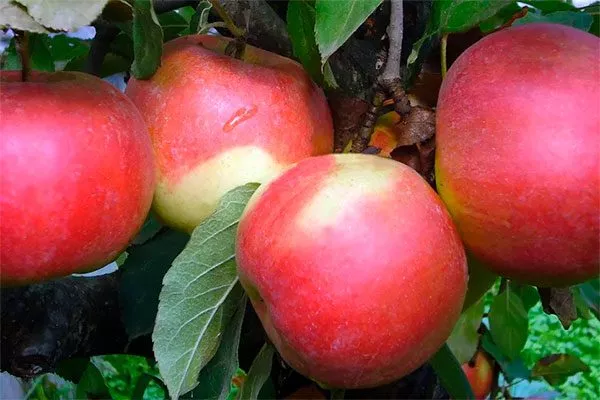
Varieties most similar to Vishnevoe:
- Idared;
- Jonathan;
- Mac;
- Pepin Saffron.
Frost resistance
Apple trees have average tolerance to low temperatures: they freeze at temperatures down to -22 to -27°C, and even temperatures approaching these temperatures increase the risk of frost. Cherry trees are particularly sensitive to frost and are recommended to be grown at temperatures down to -15 to -18°C without additional insulation, making them unsuitable for northern regions and the Urals.
Other features:
- In the Moscow region, Vishnevka can be successfully grown, but special attention is required to provide the seedling with adequate insulation during its first few years of life. Later, the tree usually adapts on its own.
- Frosts are possible in spring, causing minor but not severe damage to the tree. Remove frozen and dead branches and then fertilize with ammonium nitrate or nitrophoska (1 tablespoon per 10 liters of water).
- An apple tree can survive the mild winters of the Central Belt without any problems, but it is still recommended to provide it with protection using mulch.
- In colder regions, such measures become vital. Particular attention must be paid to insulating the area around the tree trunk, as the root system is located at a relatively shallow depth.
Pollination
Cherry trees are incapable of self-fertilization, so cross-pollination is necessary to ensure a productive harvest. To achieve this, other apple varieties should be planted within a maximum radius of 150-200 meters from the tree, ensuring that they bloom simultaneously. Combinations with varieties planted in a row prove particularly effective.
The following apple varieties can serve as ideal partners:
- Antonovka;
- Saffron pepin;
- Idared;
- Mac;
- Sinap northern.
However, any apple trees that bloom at the same time as the Cherry tree can be used as pollinators.
Productivity and fruiting
Cherry apple yields range from 120-150 kg per tree, which, while not as much as the Welsey variety, which yields 200 kg, still surpasses many others. This variety is distinguished by its continuous fruiting without any interruptions.
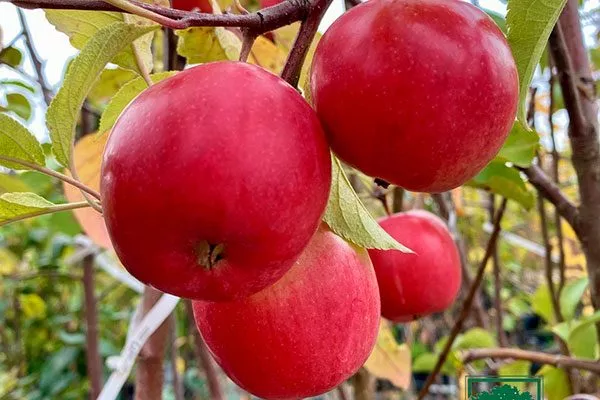
Apples become ripe for consumption in the first ten days of September and last for two weeks. Please note the following:
- After harvesting, apples reach consumer maturity in 10-14 days - if you do not rush to eat the picked fruits and wait, the acidity will gradually decrease, and the taste of the apples will become sweeter and more aromatic;
- The variety is not prone to shedding, despite the fact that the fruits sometimes adhere tightly to the branches.
Cherry apples are characterized by average early fruiting: a full harvest is achieved in the 5th-6th year, but the first fruits can be obtained already in the third year.
Storing the apple harvest
For long-term storage of fruits, the following conditions are necessary:
- humidity not less than 85-90%;
- cool temperature within +3°C to +10°C;
- a place inaccessible to light (should be at a sufficient distance from the ground and root crops);
- good ventilation of the room;
- storage in cardboard boxes or wooden crates.
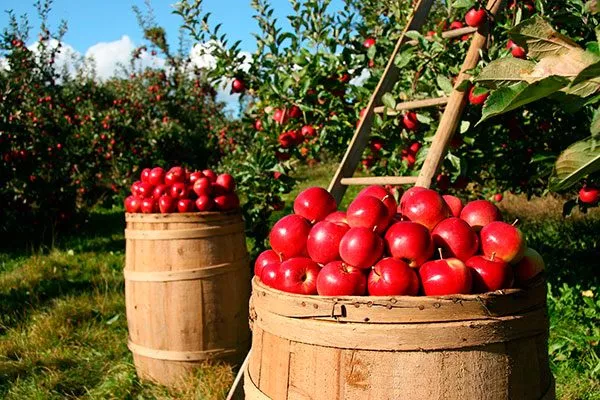
It's important to ensure the fruit rests on a layer of hay, paper, or sawdust, although this isn't critical for this variety, given its relatively firm nature. The fruit should be placed in a single layer, avoiding contact with each other.
Landing
To successfully plant a bare-root seedling, it should be pre-soaked in warm water for 5-8 hours. Optionally, the roots can be treated with a dilute solution of potassium permanganate or insecticides for 30-60 minutes.
Requirements
As for the procedure for planting seedlings, the following general rules apply:
- It's best to choose a location with ample sunlight and no drafts. Shaded areas are unsuitable, as these conditions may prevent the tree from blooming, or its fruit will be small, tasteless, and lacking in vibrant color.
- Low-lying areas with high groundwater levels should be avoided, as the roots extend to a depth of 50-60 cm. Stagnant or waterlogged areas are also not suitable for planting.
If you can't find an alternative, you can use a barrier made of roofing felt or slate sheets, driven into the ground to a depth of 2-2.5 m. Under these conditions, even shallow roots of the seedling will be able to develop well.
How to choose a seedling?
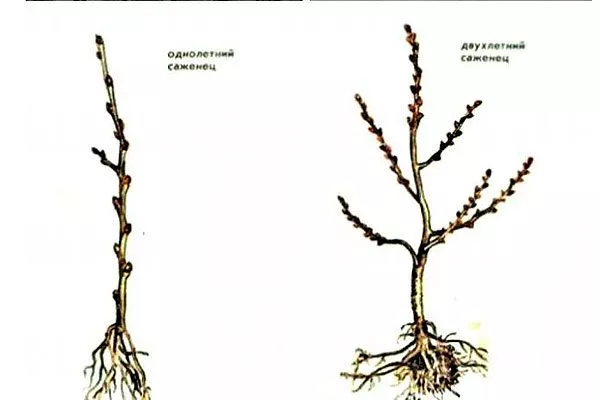
Selecting a seedling for planting should be done carefully. The optimal age is one to two years. The root system and trunk should be flexible, free of signs of disease, rot, or mechanical damage, and the bark should be undamaged.
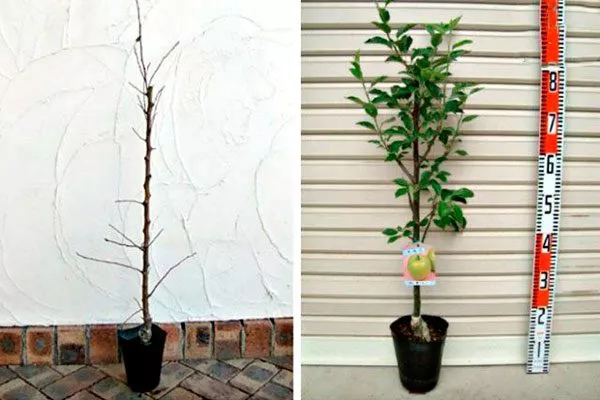
Healthy seedling roots include at least three strong branches and many thinner ones that shouldn't break under moderate tension—this could indicate the beginnings of rot. A cross-section of the roots will reveal white flesh.
Time for planting seedlings
Spring planting takes place in late March or early April, after the threat of frost has passed. Ideally, the soil for the hole should have been prepared and fertilized in the fall. Fall planting is possible in October after the leaves have fallen, but in this case, special attention should be paid to insulating and mulching the tree for the winter. A good solution is to dig the hole in the spring and leave it there over the summer, which promotes better soil aeration.
But there are some nuances:
- Seedlings with a closed root system, for example, in pots or briquettes, should be planted during the growing season - from mid-April to early October.
- For plants with an open root system, this period is more limited, since after purchase, the seedling must be planted immediately so that the roots do not remain without soil for too long.
Pit, soil preparation, planting
To ensure successful tree planting, carefully prepare the hole well in advance, at least a month before planting. It is not recommended to heavily fertilize the soil immediately before planting, as this can damage the root system, slowing the tree's growth.
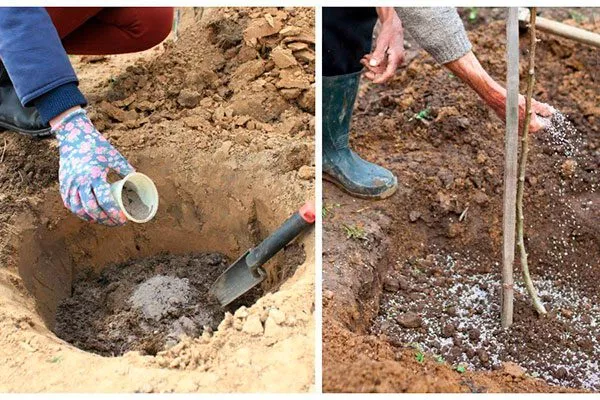
If fertilizers are applied in advance, they will promote healthy tree growth.
Subtleties of planting:
- The hole should be 80-90 cm deep and 100 cm in diameter. A support stake should be placed in the center of the hole, slightly above the tree's branches. This is important, as the variety's root system is close to the surface, and the support will help the tree gain a foothold. The stake should be removed after 5 years.
- The excavated soil is separated into a fertile layer (20-25 cm thick) and the remaining soil. The fertile soil is mixed with organic fertilizers (cow manure, bird droppings, peat), and a mound of this substrate is formed at the bottom of the hole.
- The roots of the seedling are laid out on the mound, carefully straightened and covered with the remaining soil, compacting it to eliminate the possibility of air bubbles forming.
- To complete the process, tie the seedling to a stake, form a circle around the trunk with a border around the perimeter, and water the seedling with 35-40 liters of water. Then, mulch with humus, hay, straw, or compost.
- After a few days, the soil will finally compact. At this point, add additional soil and replenish the mulch.
- The neck of the seedling should protrude 6-8 cm above the surface to prevent it from taking root in this place.
- If the soil in the garden is too wet or there is significant precipitation in the region, then drainage of expanded clay, vermiculite, charcoal, broken brick, or sand with fine gravel should be added to the bottom of the hole.
All components should be fine and mixed with a small amount of soil.
Care
Schedule of major works
- March: sanitary pruning, whitewashing of trunks
- April: First nitrogen fertilizer application
- May: Preventive treatment against scab
- June: formative pruning of young shoots
- August: potassium-phosphorus fertilization
- October: moisture-recharging watering, mulching
To maintain optimal soil condition, plants require regular loosening to ensure adequate ventilation and oxygenation. This is especially important for the root system of this species.
Watering, loosening the soil, caring for the tree trunk area
Periodically loosen the soil around the tree trunk. This should be done at least twice a year, being careful not to damage the roots. Along with loosening the soil, remove weeds and shoots from the area, which is essential in the spring and fall, and also as needed.
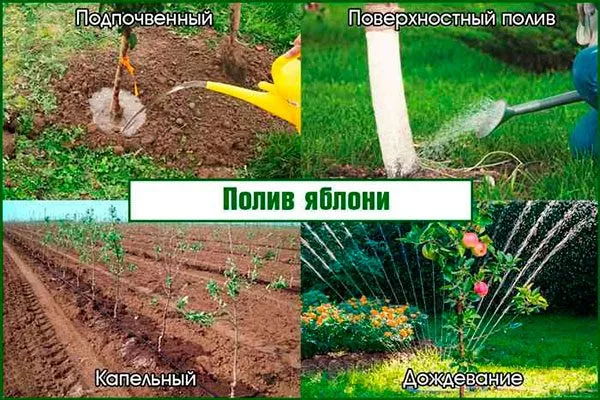
Watering:
- Young seedlings They should be watered every two weeks during the growing season until the first fruits appear. The amount of water should be 20 to 30 liters, divided into two doses—morning and evening. A slight reduction in frequency in the absence of drought will not cause harm, but this interval should be roughly maintained.
- Adolescent and mature trees Water approximately five times a year using 40-60 liters of water each time, but during drought the above norms should be followed.
Irrigate along the edges of the tree trunk area, for which purpose a small border is built around it.
Mulching, insulation
Mulch in spring, summer, and fall. Regular monitoring and timely renewal of the mulch layer are essential. Hay, straw, compost, and various organic materials, including a mixture of peat and humus (the latter should not come into contact with the tree's base), can be used. Alternatively, agrofibre can be used.
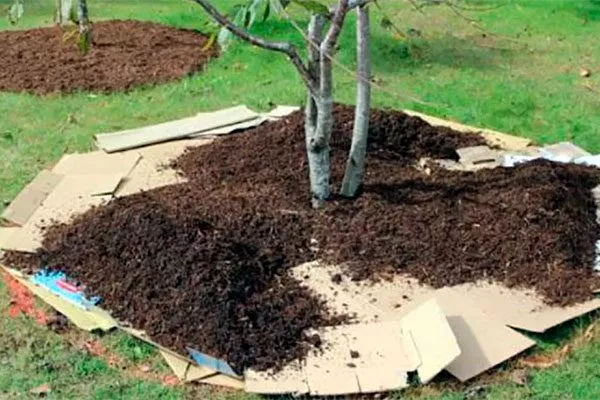
During periods of low moisture, mulch acts as a barrier to prevent moisture evaporation from the soil, and during the winter, it provides thermal insulation for the root system. At temperatures below critical levels—approximately -20°C—frost will not cause significant damage, but at lower temperatures, additional insulation is essential.
The following measures are used for this:
- thorough mulching;
- protective covering around the base of the tree with hay;
- wrapping the trunk and branches with agrofibre, burlap, roofing felt or any other suitable materials.
Top dressing
Feed the trees every six months or three times a year.
| Period | Fertilizer | Standard for wood |
|---|---|---|
| Early spring | Ammonium nitrate | 30-40 g |
| Before flowering | Nitroammophoska | 50-60 g |
| After flowering | Potassium salt | 40-50 g |
| Autumn | Superphosphate | 60-70 g |
| Autumn | Humus | 10-15 kg |
If the soil is fertile, a single application of fertilizer will be sufficient. Both commercial and natural fertilizers can be used, such as mullein tincture, a mixture of bird droppings and water (1:20 ratio), or other traditional ingredients.
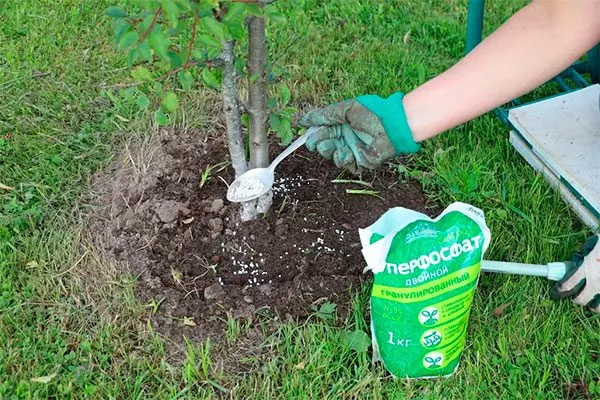
Rules:
- in the autumn period use complex fertilizers containing potassium and phosphorus;
- in spring or early summer – nitrogen-based fertilizers, which are especially important for Vishnevoe, as it is characterized by not very active growth.
Trimming
Standard pruning techniques include three main types: shaping, sanitary, and thinning. Rejuvenation pruning is not used, as these trees live up to 15 years:
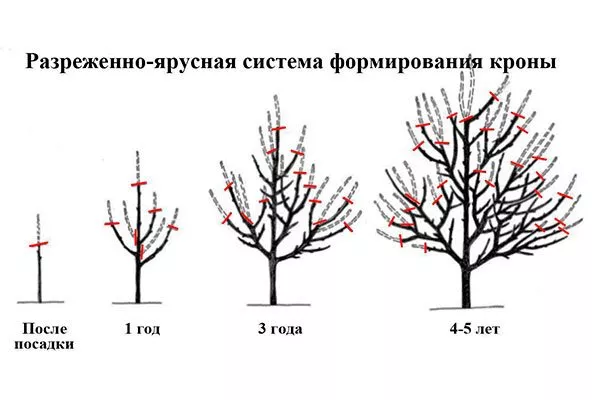
- Formative Pruning is carried out in the spring, before the active flow of sap begins, that is, at the end of March or the beginning of April, when the air temperature does not fall below -5 degrees and does not rise above +7 degrees.
General pruning rules:- the procedure begins in the first year of the tree’s life;
- the central stem is shortened by a third, and all branches by 6-8 cm so that they remain below the rod;
- Strong shoots are preserved, as they form the basis of the crown, placed as far away from each other as possible and deflected in different directions from the trunk, and weak ones are removed.
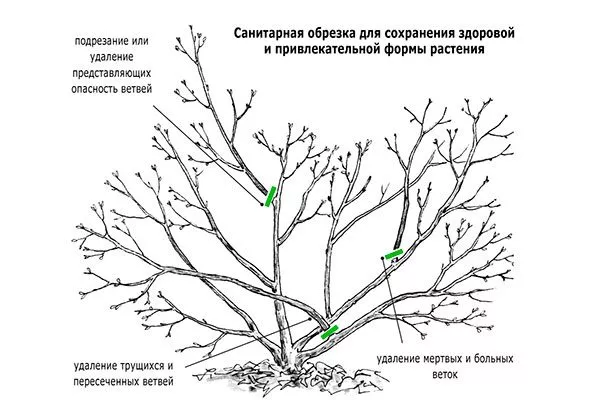
- Sanitary Pruning is performed in spring and fall, removing dead, damaged, diseased, and weak branches. Thinning is also performed during this period, removing branches that grow vertically or inward. All damaged and diseased branches must be burned immediately after pruning to prevent the spread of infection into the soil.
Diseases, pests, protection
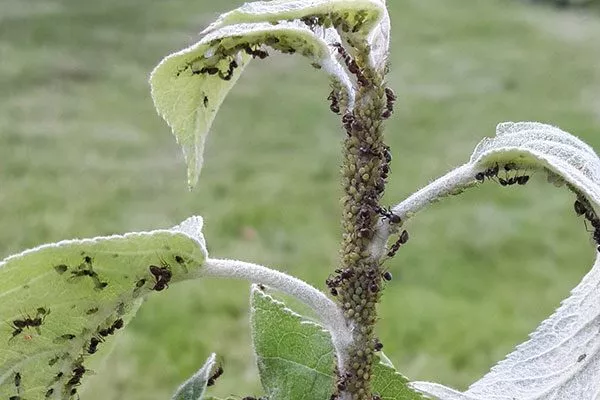
Cherry has no natural resistance to scab and other diseases, but it exhibits higher resistance to them than its parent, Saffron Pepin. In high-humidity conditions, the likelihood of these diseases increases significantly.
In such cases, spraying and preventative measures become critically important.
Prevention includes:
- treatment of trunks with a special whitewash in spring and autumn;
- removal of diseased and deformed branches;
- clearing the area around the trunk from weeds;
- spraying trees with fungicides during bud formation;
- Monitoring soil moisture levels to prevent over-watering.
To protect against rodents, use roofing felt, tar paper, and grease to coat the trunk. Whitewashing the trunk and lower branches is also recommended. Whitewashing a young tree in the spring will prevent sunburn. Avoid insecticide treatments during flowering to avoid repelling bees and other pollinating insects.
Advantages and Disadvantages
Gardeners' reviews
The Vishnevoe apple tree is a winter variety for the central region, suitable for mild winters. Its yield, early fruiting, and height are average. The crown is naturally harmonious and not prone to excessive thickening. The apples have a standard flavor, but with a pleasant aroma. The cultivar's agronomic requirements are also standard. Despite this, it is actively used commercially.