
Venyaminovskoye is an apple variety prized for its harmonious combination of flavor and marketable appearance. The trees are renowned for their long lifespan and good frost resistance. Thanks to their thick skin, the apples withstand storage and transportation well, making them popular among gardeners and farmers.
History of selection and zoning
The crop was developed by Russian breeders Zhdanov, Serova, Dolmatov, and Sedov. The hybrid was based on seeds obtained from open pollination of the 1981 harvest.
The crop is recommended for cultivation in the regions of Central Russia, including:
- Middle zone;
- Volga region;
- Northwest;
- Black Earth Region;
- southern regions.
Description
Venyaminovskoye is a popular early-fruiting variety that requires little care. It boasts good winter hardiness and thrives in a variety of climates, maintaining consistent fruiting.
The appearance of the tree
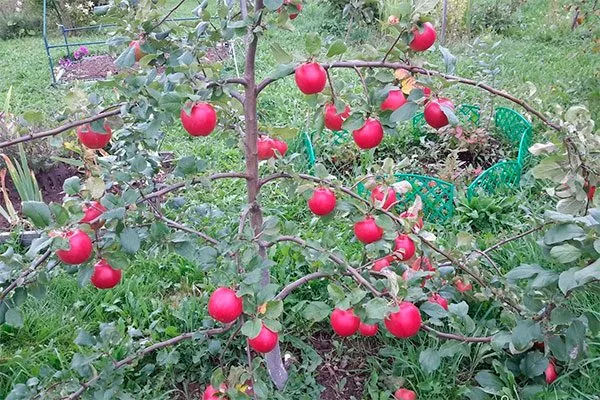
The plants are considered medium-sized, although in practice they often reach impressive sizes. When grown on vegetative rootstock, the height is approximately 4.5-5 m, but with regular pruning, the crown can be kept more compact.
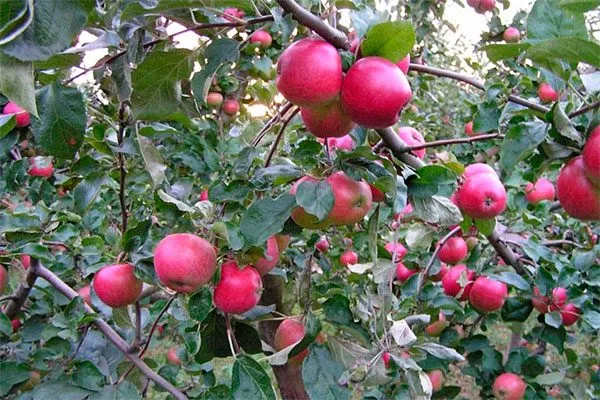
Without proper care, trees can grow taller than 6.5-7 m, making harvesting significantly more difficult.
Other distinctive characteristics:
- Crown – predominantly spherical or round, not too dense, not prone to rapid overgrowth.
- Escapes – Thick, geniculate, long, sometimes arched, usually directed upward, covered with smooth, glossy, steel-colored bark. Fruiting is primarily concentrated on the annular segments.
- Leaves - The leaves are medium-sized, ovoid with a short tip, and often spirally twisted. Their color ranges from bright to dark green, and the leaf surface is matte. The underside and petioles are noticeably pubescent. The leaf tissue is wrinkled, with pronounced, coarse ribbing.
- Root system – well-branched, powerful, located at medium depth and effectively seeks moisture in the soil.
Description of fruits
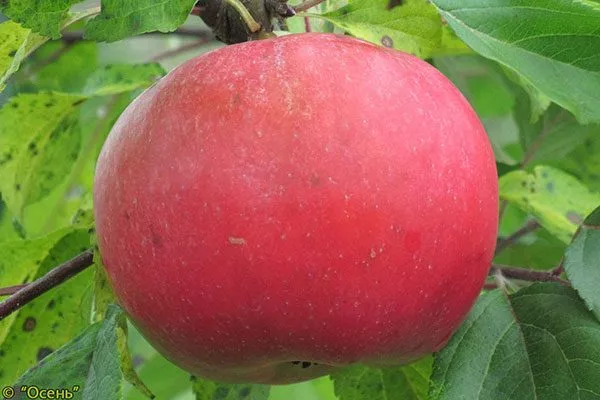
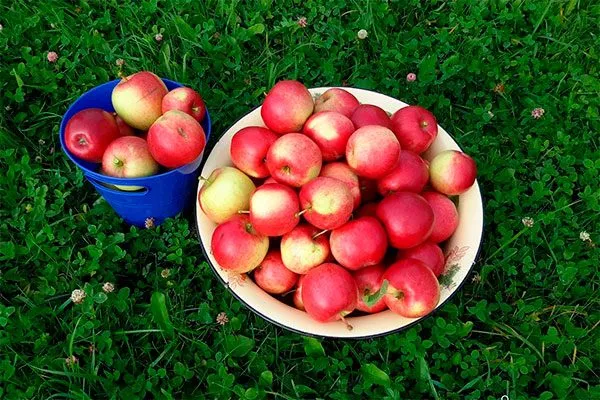
Apples often vary in shape and size, even on a single tree. They average 120-145g in weight, but in particularly good seasons, specimens weighing 220-245g, and sometimes up to 300g, can be found.
Features and main characteristics of the fruits:
- Form - rounded, slightly flattened, can have a conical or turnip-shaped configuration, often beveled to one side, with wide, smoothed edges.
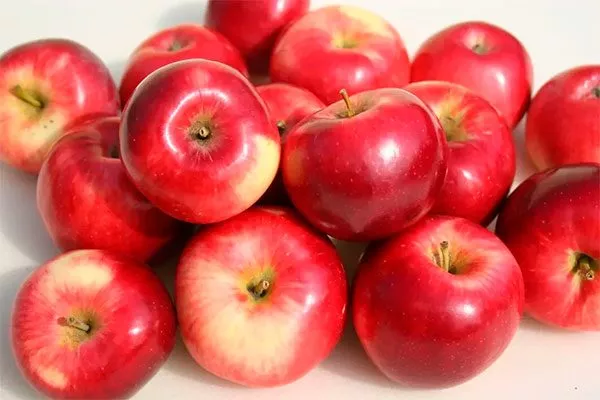
- Peel - Dense, elastic, but not coarse. When fully ripe, it takes on a green-yellow or lemon hue, gradually turning golden.
- Covering blush – Dense, diffusely mottled, raspberry-red or beetroot-colored, it covers 55% to 95% of the apple's surface—the more sun, the brighter the color. A streaky pattern may be visible on the stalk and sepals.
- Gray subcutaneous dots - numerous and clearly visible.
- Pulp – white or with a light green tint, dense, coarse-grained, very juicy and crispy, with a characteristic tang.
Sometimes thin reddish veins can be found under the skin.
Chemical composition of fruits:
- titratable acids – 0.72%;
- sugar – 8.9%;
- pectins – 7.3%;
- Vitamin C – 5.9 mg;
- P-active substances (catechins) – 223 mg.
Characteristics of the apple tree
Among the key qualities of the Venyaminovskoye variety, fruit flavor, yield, and winter hardiness deserve special attention. These traits make the variety attractive to gardeners in various regions. Detailed information on these and other parameters is provided below.
Taste and uses
The apple's flavor is rated as harmonious and pleasant, with a distinct sweet-and-sour balance. This is a classic table apple variety, favored by most consumers. Tastings have rated the fruit between 4.4 and 4.6 on a five-point scale.
Ripening time, fruiting, productivity
Apple harvesting typically takes place in mid-September, between the 15th and 20th. Although the fruit is ready for picking by this time, it doesn't reach its full flavor and consumer maturity until mid-October.
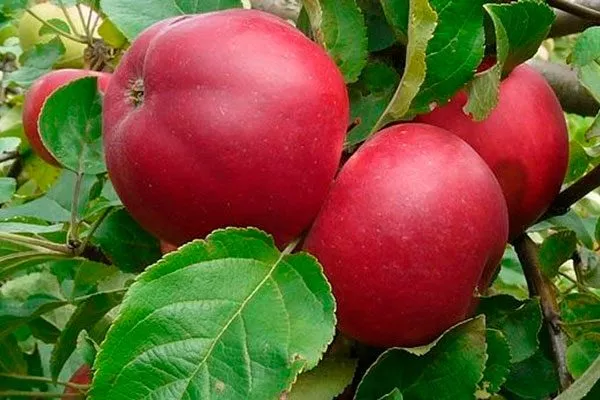
The crop yield is approximately 150 centners per hectare, significantly higher than the control variety Antonovka Obyknovennaya (approximately 95 centners per hectare). During the first years of fruiting, the tree produces 30 to 50 kg of fruit, and after 10 to 12 years, the yield increases to 80 to 100 kg per tree.
Winter hardiness and growing regions
Venyaminovskoye is characterized by excellent frost resistance. During artificial freezing tests at -40°C, the buds suffered minimal damage—only 0.6 points—the bark and cambium remained intact, and the wood showed only slight frost damage of 0.9 points.
Thanks to its good frost resistance, the plant is also suitable for harsher conditions, such as the Urals. However, in this case, it is especially important to carefully cover young trees for the winter to protect them from extreme temperatures.
Pollinators and apple tree immunity
The Venyaminovskoye apple tree is a non-self-fertile variety, so to produce a fruit, it requires pollinators with similar flowering times. The following varieties are well suited:
- Sharopai and Arkad (summer type);
- representatives of the Vyaznikov group, including the Mironchik variety.
Having suitable neighbors nearby significantly increases apple set and yield stability.
Subspecies and rootstocks
Currently, the Venyaminovskoye variety has no subspecies, although breeding work continues. It is highly likely that different varieties with unique characteristics and improved qualities will emerge in the future.
Currently, the tree is grown on either seedling or dwarf rootstock. The latter produces a more compact tree and larger fruit, but reduces winter hardiness.
Planting an apple tree
It is recommended to cultivate the crop in the fall, 3-4 weeks before the first frost, usually in early October. Adhere to the following conditions:
- For the tree, choose a sunny location on a slight elevation where there is no stagnant water and where the groundwater is no closer than 2 m to the surface.
- It's not advisable to plant rowan trees or large trees nearby. The best soil for Veniaminovsky is light loam with a neutral or slightly acidic reaction (pH 6-7).
- Prepare the soil in advance: dig it up and add compost or humus at a rate of 10 kg per 1 square meter. If the soil is heavy and clayey, add 3-5 kg of sand or sawdust.
- Purchase seedlings from reliable suppliers – healthy, at least 50 cm tall, without signs of disease or damage.
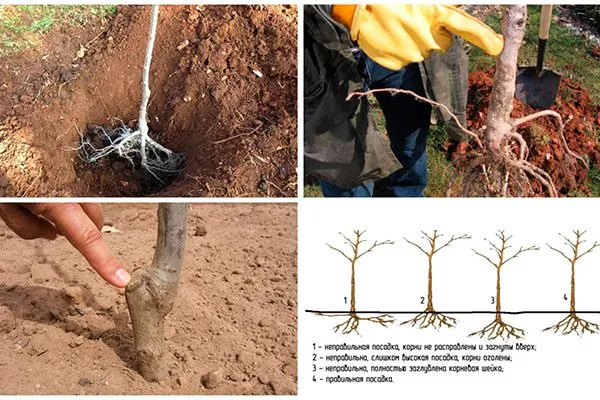
The planting process includes the following stages:
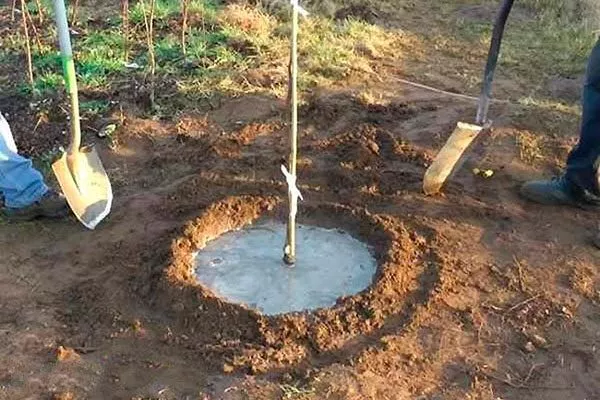
- Dig a hole 80-100 cm in diameter and depth. When planting several plants, maintain a distance of at least 4 m between them.
- Place a wooden peg in the center.
- Place a layer of stones on the bottom for drainage.
- Place the seedling in the center and fill it with a mixture of garden soil, peat and humus in a ratio of 2:1:1.
- Lightly compact the soil so that the root collar remains 5-7 cm above ground level.
- Tie the tree to the stake with rope for support.
- Water generously with settled water.
- After a few days, mulch the tree trunk circle for the winter using straw, hay, sawdust, pine needles or other materials.
Care instructions
The plant requires care and a little attention. For abundant harvests, follow these simple farming practices:
- Pay special attention to watering. Young seedlings should be watered weekly, and mature trees approximately once a month. During dry periods, double the frequency, and sprinkle the crown in the evening. Use warm, settled water.
- After heavy rains and watering, loosen the soil around the trunk and remove weeds if necessary. To conserve moisture in the summer, mulch the surface with sawdust, hay, or grass clippings.
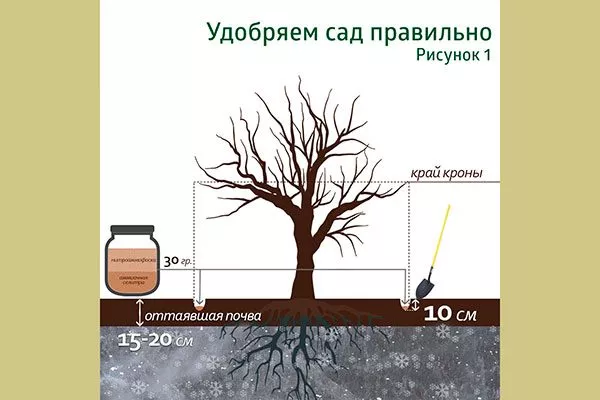
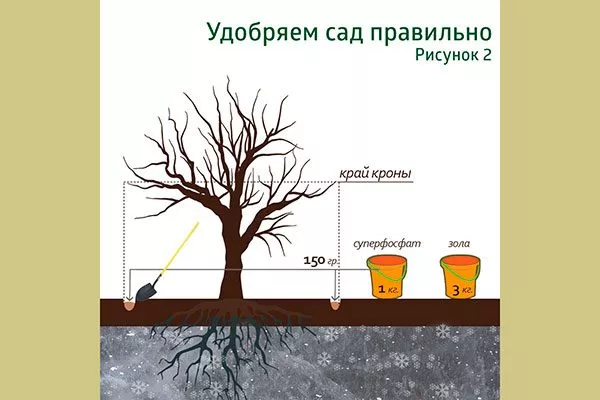
- Apply fertilizer in the spring using urea or ammonium nitrate, and during budding and fruit set, apply superphosphate and potassium sulfate. You can alternate mineral fertilizers with organic matter, such as mullein infusion diluted with water at a ratio of 1:10.

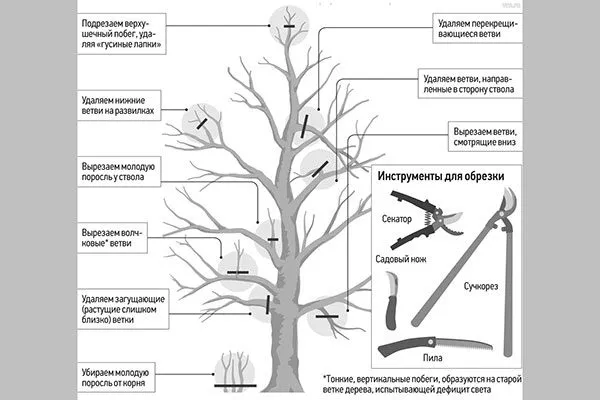
- Perform formative or corrective pruning annually before the sap begins to flow. Shorten the central shoot and lateral branches by about a third of the annual growth, which helps maintain a compact crown.
Perform sanitary pruning in the spring, along with shaping, or in the fall after leaf fall. Remove dry, damaged, and broken branches. When the tree reaches 15-18 years of age, rejuvenation pruning will be necessary—gradually remove 2-3 old shoots at a time.
Venyaminovskoe is highly resistant to scab and other diseases and rarely suffers from pests. For additional protection, use folk remedies such as infusions of wormwood, onion peel, hot pepper, and wood ash. Use them individually or in combination for spraying the trees.
In case of severe infestation, use chemicals:
- during the period of kidney formation – copper sulfate for processing;
- before budding begins – Bordeaux mixture or Karbofos according to the instructions;
- during fruit setting – Fozalon;
- during fruiting – urea.
These products effectively combat not only aphids, but also fruit bark beetles, codling moths, hawthorn moths, and apple moths. Before winter, be sure to remove fallen leaves, insect nests, and fallen fruit from around trees.
Collection and storage
Harvest Venyaminovskoye apples in mid-September. After harvesting, store them in wooden crates under optimal conditions:
- temperature from 0 to 6 degrees Celsius;
- air humidity is about 70%;
- lack of light;
- good ventilation.
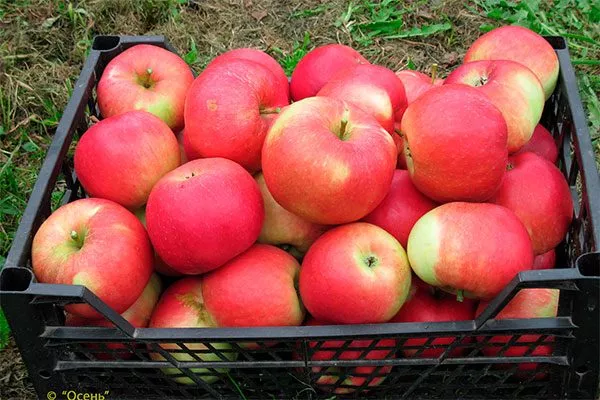
If these conditions are met, the fruits will not lose their freshness and taste for up to five months – until the end of February.
Pros and cons
The Venyaminovskoye apple tree is a high-yielding variety with tasty and attractive fruits. The trees are long-lived, reaching up to 70 years. Thanks to its good frost resistance, this variety is successfully grown in virtually all regions of Central Russia.
Reviews
Venyaminovskoye is a winter apple variety characterized by good productivity and longevity. The fruit has a balanced sweet and sour flavor, firm skin, and excellent shelf life. It is resistant to scab and frost, making it suitable for cultivation in various regions of Central Russia, ensuring a consistent, high-quality harvest.