
Uslada is the name of a popular early autumn apple variety, characterized by high marketability and excellent shelf life. Its hallmark is the advantageous combination of fruitfulness and resistance to diseases, pests, and low temperatures.
History of selection
The author is the Russian breeder Isaev, a student of Michurin. To develop Uslada, the scientist, representing Lomonosov Moscow State University, spent many years crossing different varieties with wild species. His goal was to create a frost-resistant apple tree that would withstand dampness and resist scab.
In 1961, he achieved success. The new variety inherited the best qualities of its "parents," Narodny and Severyanka, for which the talented biologist used the following varieties:
- Bellefleur-Chinese;
- Folder;
- Borovinka;
- Taiga;
- Siberian.
Regions suitable for cultivation
In 1996, Isaev's brainchild was approved for use in the Central Region of the Russian Federation, where it remains popular among gardeners and farmers. In this part of the country, Uslada is often grown on an industrial scale.
Thanks to its adaptability to any weather, this variety has become established almost everywhere. It is successfully grown in the north. It thrives especially well in the temperate climate of the central part of the country. It produces excellent results in areas with rainy and cool summers. It is popular in Ukraine and Belarus.
Description of the tree
This fruit tree is characterized by a semi-dwarf growth habit. It is a medium-height tree (3-4 m) with a dense, rounded crown that spreads up to 5 m in width. With age, the crown changes shape, becoming more elongated. The plant's appearance is described by the following characteristics:
- skeletal branches: they are of medium size and grey in colour, growing vertically at a slight angle;
- shoots: dark brown in color, with light pubescence, not thick, have small internodes and a round cross-section;
- foliage: green, large, upward-facing, ovoid with a short, pointed tip, serrated edges, covered with fluff on the back side.
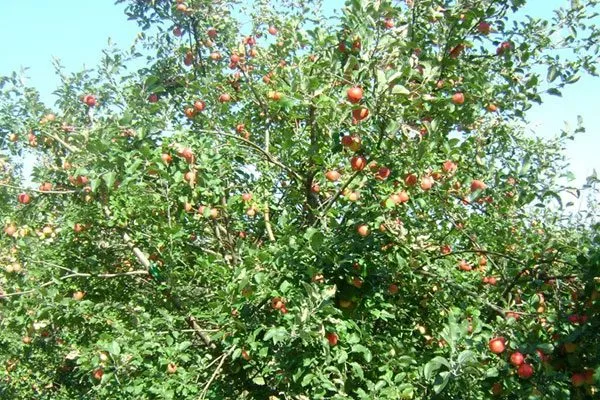
Thanks to its compact size and strong roots, the apple tree thrives in small garden plots. When grown on a dwarf rootstock, it will reach a height of no more than 3 m, with a crown width of 2-3 m.
Appearance and taste of apples
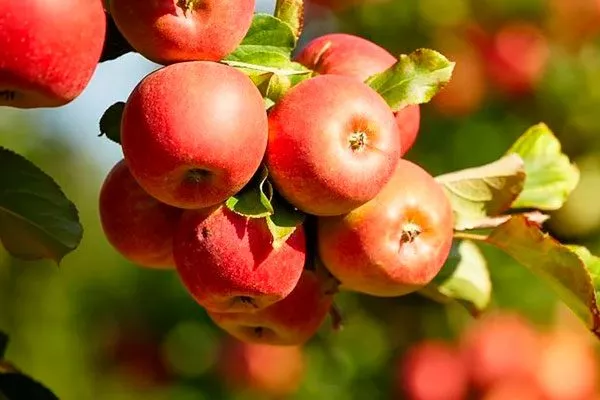
The fruits of the Uslada are attractive in appearance, but not particularly large. They are characterized by the following characteristics:
- neat rounded shape;
- weight - 100-135 g (maximum weight - 180 g);
- smooth surface with no signs of ribbing;
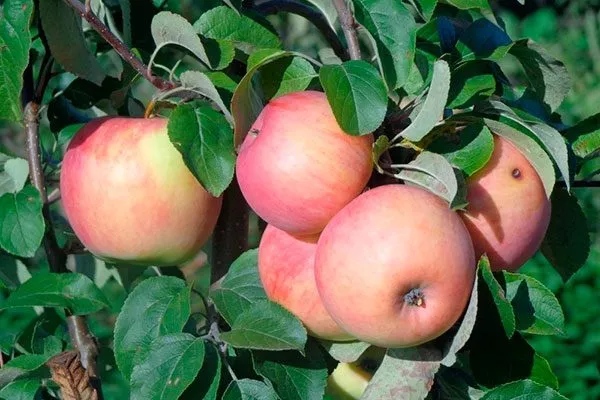
- yellow-green base color, almost completely hidden under a washed-out red blush;
- with a strong, glossy skin, from under which white dots can be seen;
- snow-white flesh with pinkish veins, fine-grained, dense and juicy.
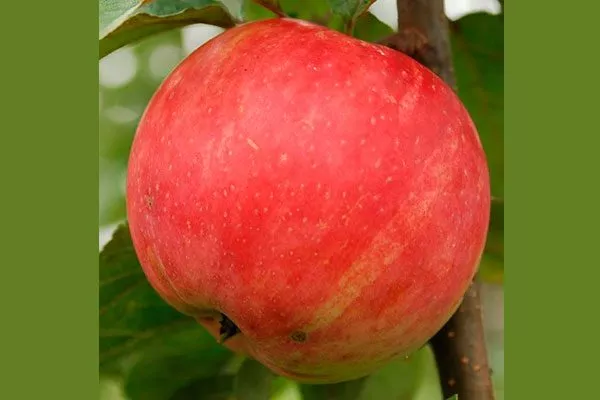
Due to the excessively dense crown, it's possible to harvest apples that are uneven in size and shape. Some apples may be more elongated (conical). However, their consumer qualities are not affected.
The variety's tasting qualities are excellent. The Uslada fruit has a pleasant flavor, harmoniously balancing sweetness with tartness and a wonderful raspberry aftertaste. This is accentuated by a light fruity aroma.
Amount of harvest
Gardeners and farmers consider this variety of garden crop to be very productive. The fertility rates of a mature tree are:
- 60 kg is the minimum quantity of apples when growing the Uslada variety;
- 80 kg is the maximum possible yield, which is ensured by cultivation in favorable conditions and high-quality care.

Storing the apple harvest
Thanks to their dense flesh and tough skin, Uslada fruits retain their marketability for a long time and withstand transportation well. They have excellent shelf life (3 to 6 months). The fruits remain beautiful and juicy until mid-winter if stored in a dry, cool place, arranged in wooden crates.
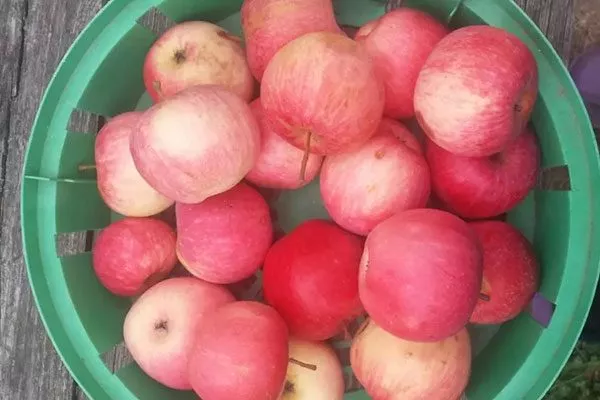
To extend the life of this apple variety until spring, try these tricks:
- send slightly unripe fruits to the cellar;
- place them in a breathable container in one or more layers;
- ensure proper storage conditions: temperature range from 0°C to +3°C, air humidity level of 80-85%, ventilation;
- Wrap each apple in paper or parchment.
Collection and use of fruits
Remove apples from the branches as they ripen. Due to the tree's dense canopy, they ripen unevenly. To solve this problem, practice regular pruning.
This variety is characterized by its low yield and lack of tendency to shed. The fruits tend to be firmly attached to the branches by their stalks. Although the risk of fruit spoilage from falling to the ground is minimal, harvest them promptly. Remember that overripe fruits do not store well.
Uslada has a universal purpose. Juicy and sweet, these apples are most often eaten fresh.
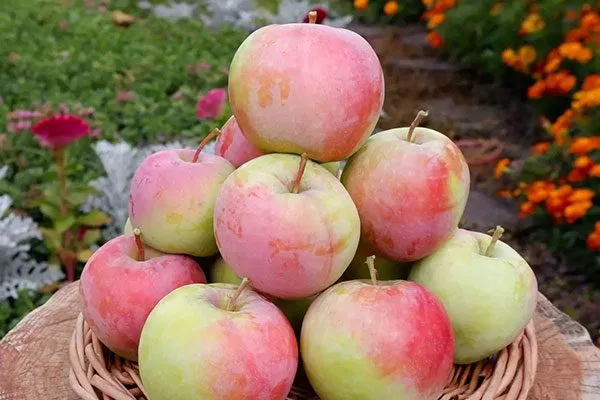
Housewives use them for culinary purposes:
- processed into juice;
- they cook jam, preserves, marmalade, jelly, and compote;
- used as a filling for pies and other types of homemade baked goods;
- prepare natural and healthy treats such as marshmallows, pastilles, and marmalade;
- make puree for baby food;
- canned for the winter.
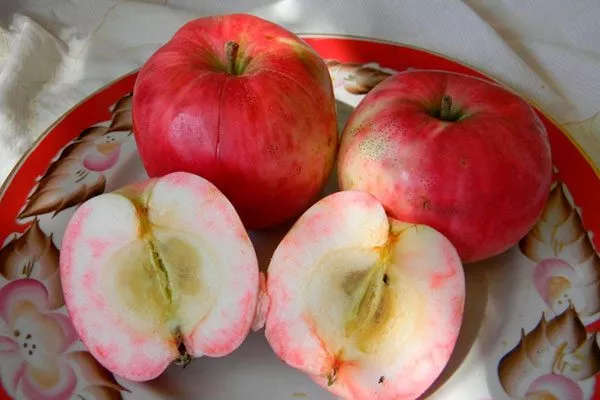
Uslada fruits are especially beneficial when eaten raw. They are rich in vitamins, minerals, pectin, glucose and fructose, fiber, and organic acids. Their nutrient content is as follows:
- natural sugars - from 8.3 to 12.8% (average - 10.7%);
- titratable acids - 0.56%;
- vitamin C - 20.8 mg/100 g (depending on growing conditions, the amount of ascorbic acid in 100 g of product can vary from 15.4 mg to 25.1 mg);
- tannins - 53 mg/100 g.
Thanks to their rich chemical composition, fruits are suitable for dietary menus and children's meals. They provide numerous health benefits, including promoting normal gastrointestinal function.
The subtleties of fruiting and annual growth
Trees of this cultivar delight gardeners with their rapid growth. They actively grow shoots, producing at least 25 cm in length per year. To maintain a compact crown and prevent it from becoming dense, the plant requires careful pruning.
An apple tree reaches productive maturity in its fourth to fifth year. It begins bearing fruit in late summer and continues to produce fruit until mid-September. This process occurs annually. The older the plant, the more fruit you'll harvest.
Frost resistance, flowering and pollinators
Uslada is characterized by excellent tolerance of low temperatures. It can withstand temperatures as low as -30°C. The tree successfully overwinters at a stable -20°C, after which it blooms and bears fruit well.
Before the cold weather arrives, it needs to be insulated:
- hill up, making a mound up to 0.3 m high;
- mulch with organic matter to protect the roots from freezing;
- cover the lower part of the trunk with spruce branches;
- wrap in burlap (this measure is recommended for young apple trees and those growing in harsh climates).
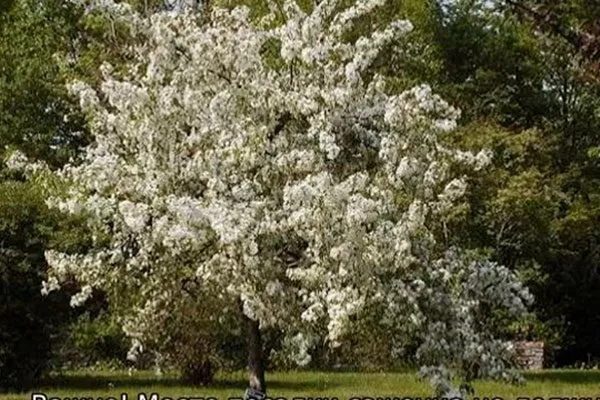
The fruit tree blooms in May, during the second half of the month, or in early June. It lasts from 10 to 14 days. During this time, the branches are densely covered with fragrant, creamy-white buds.
Uslada is self-sterile. To ensure a good harvest, ensure cross-pollination. Plant the following apple tree varieties in your garden, 4 meters from the trunk:
- Pear;
- Orlik;
- Bogatyr;
- Folder;
- President;
- Welsey.
Apple tree Uslada - subspecies and variants
There are several types of trees of this cultivar. Learn more about them to make caring for this fruit tree easier.
Columnar
Although the Uslada apple tree belongs to the semi-dwarf subspecies, it cannot be grown as a living, fruiting columnar tree. The variety is not suitable for this purpose.
A characteristic feature of this variety of fruit crops is their increased need for constant care, including root development and regular pruning. They are suitable for small gardens and commercial cultivation.
On a dwarf rootstock
Experienced gardeners use this method with Uslada to achieve positive results such as:
- acceleration of fruiting;
- increasing plant resistance to freezing.
Use dwarf rootstock to grow apple trees if you live in a region with a harsh climate and very cold winters.
On clonal rootstock
Its main difference from seed-grown varieties is their ability to inherit genetic traits. By grafting the Uslada variety onto it, you're guaranteed to get a tree with the traits specified by the breeders.
Landing rules
Plant a semi-dwarf apple tree in your garden in early spring. The best time is after the snow melts and the soil has warmed sufficiently. This can also be done in the fall, in late September or early October. This will allow a strong root system to develop before the growing season begins.
Selecting and preparing a planting site
The success of growing the Uslada variety is largely determined by choosing the right location for your apple tree. Select a site that meets the following requirements:
- generously illuminated by the sun throughout the day;
- protected from wind and drafts;
- well drained;
- located on an elevation;
- not flooded by groundwater (which must be at least 3 m deep).
Fruit trees thrive in soil types such as black soil, sandy loam, and loam. Planting a tree in heavy, acidic, and moist soil significantly increases the risk of disease.
Preparing the seedling
Pay close attention to your choice of planting material. The tree's health depends on it. Purchase seedlings from a reputable seller. Make your purchase when you plan to plant them outdoors. If you're doing this in advance, choose a tree with a closed root system.
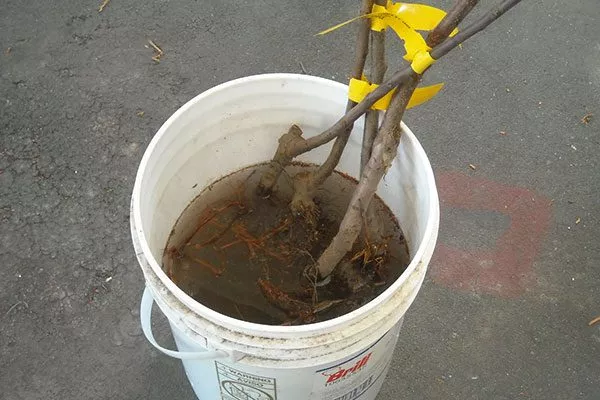
Carefully inspect the young apple tree. The best choice is a one- or two-year-old plant that is beautiful and healthy and exhibits the following characteristics:
- strong trunk and shoots;
- at least 1 m in height (for a one-year-old seedling);
- smooth and clean bark without growths and spots;
- free from mechanical damage and deformation;
- with elastic and moist roots that bend well and are not brittle.
Before planting, soak the lower part of the tree for several hours in a rooting solution.
Landing technology
Move the apple tree to your garden on a dry, cloudy day. Follow these step-by-step instructions for planting:
- Dig a hole. Ideally, its dimensions are 70 x 50 cm (depth and width). Loosen the soil at the bottom.
- Partially fill the hole with fertile soil (10 l) mixed with humus (20 l) and peat (5 kg). Fertilize it with superphosphate (25 g) and nitrogen and potassium fertilizers (15 g each). Form a mound at the bottom of the hole.
- Install a support - a wooden stake.
- Pour 10 liters of water into the planting hole.
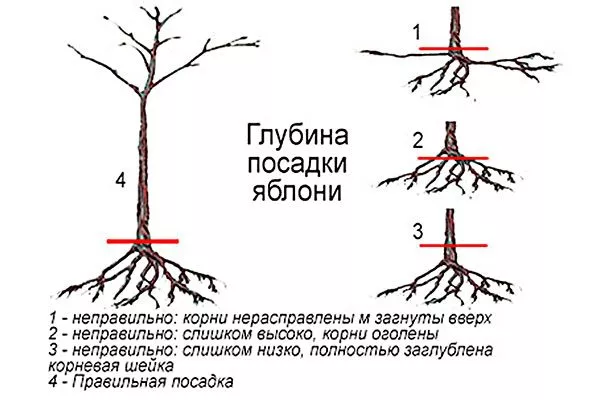
- Place the apple tree on a mound of nutritious soil mixture. Carefully spread out its roots.
- Cover them with soil. Firmly compact the soil around the trunk.
- Water the seedling and mulch the area around the tree trunk with organic matter.
Care
The Uslada variety pleases gardeners with its low maintenance. Adhering to proper fruit cultivation practices will keep it healthy and maximize yields. Pay particular attention to pruning, watering, fertilizing, and pest and disease prevention.
Watering
Carry out this mandatory care procedure by following generally accepted rules and recommendations received from experienced gardeners:
- moisten the soil under the apple tree 4-5 times during the month;
- Pour 20 liters of water, settled and warmed in the sun, under 1 adult plant;
- water the apple tree twice a day (morning and evening), using 10 liters of liquid at a time;
- at the height of the summer season, the crop's need for moisture increases (during this period it forms fruit ovaries and develops buds for the future harvest);
- In the second half of August, stop watering the apple tree planting to avoid active growth of young shoots and a decrease in the plant's frost resistance (if the warm period turns out to be dry and hot, continue watering until the weather gets colder).
Tree trunk circle
Pay close attention to the soil around the apple tree's trunk. Loosen it to improve oxygen supply to the roots. Repeat this procedure at least five times during the season. Combine it with weeding.
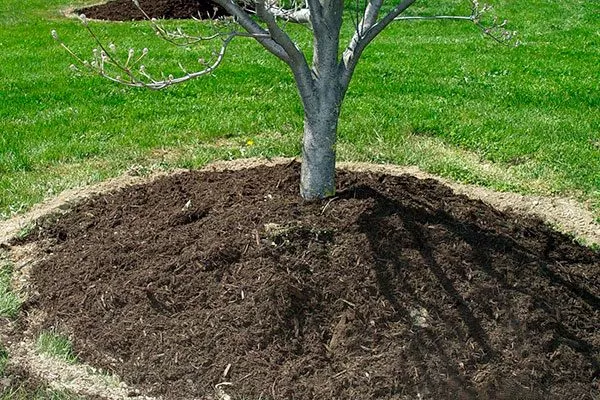
Mulch. This helps retain moisture in the garden soil, enrich it with nutrients, and prevent weed growth. Use organic matter:
- humus;
- sawdust;
- dry grass.
Top dressing
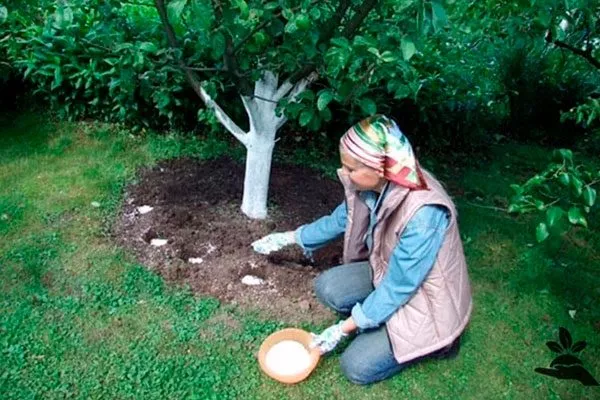
An apple tree requires additional nutrition for proper growth and development, as well as abundant fruiting. If you added sufficient fertilizer to the hole when planting the tree, begin feeding it in its second year. Follow these guidelines:
- in the spring and first half of summer, apply nitrogen compounds;
- during autumn soil digging - phosphorus-potassium fertilizers, organic matter;
- Every year in early autumn, cover the area around the tree trunk with rotted cow manure (consumption rate - 5 kg per 1 sq. m) or compost (8 kg/sq. m);
- During the flowering period, use liquid fertilizers;
- pour nutrient solutions into a trench dug around the tree trunk (its depth is 30 cm);
- Do not neglect foliar feeding (to get larger and sweeter fruits, spray the foliage with a solution of zinc sulfate).
Trimming
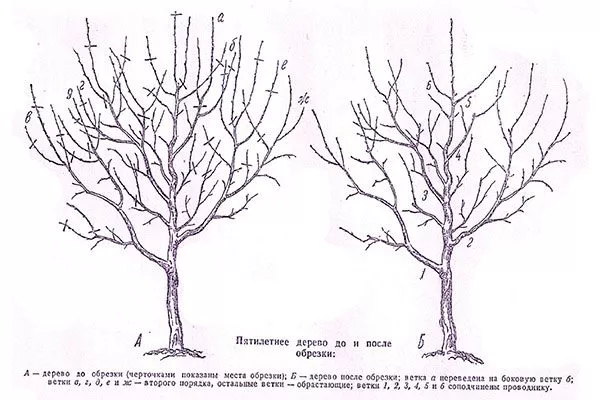
This procedure is important when growing the Uslada apple tree variety, as its crown is prone to becoming dense and growing uncontrollably. Begin formative pruning in the first spring of planting. Follow these guidelines:
- shorten a one-year-old seedling to 80 cm (leave 50 cm of trunk height and 30 cm of skeletal layer formation zone);
- for two-year-old trees, form a trunk at a height of 50 cm, and also remove all shoots, leaving 3 main branches (2 of them should grow in one direction, the third in the opposite direction, and the central conductor should rise above them by 15-20 cm);
- in the third year of the plant’s life, begin forming the second tier (leave 2 branches growing 50 cm above the first tier, shorten them and the central conductor);
- In the fourth year, repeat the procedure, after which the crown will be finally formed.
Preparing for winter
Experienced gardeners, despite Uslada's good frost resistance, do not neglect to cover it for the winter. Using protective materials (burlap, roofing felt, spruce branches, plastic or metal mesh) not only helps the plant survive the cold but also protects the trunk from rodents.
Diseases and pests
This variety delights gardeners not only with its wonderfully flavorful fruit but also with its high resistance to infections and pests. Uslada is resistant to many fungal infections, particularly scab. Thanks to its strong immunity, it is successfully grown in areas with rainy and cool summers.
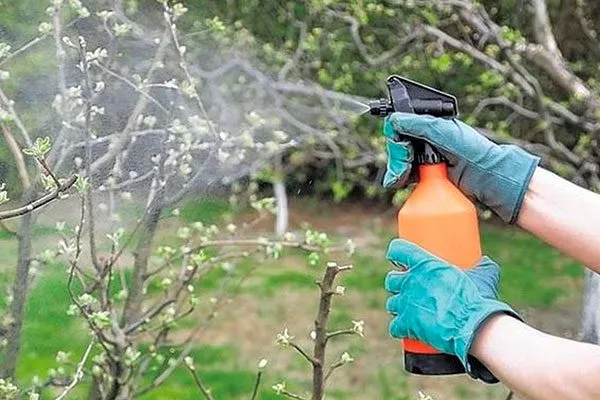
Experienced gardeners do not neglect prevention. tree diseaseEvery year in the fall, they remove fallen leaves from under the apple tree to prevent bacteria and insects from breeding and rodents from hiding in them. In the spring, before the plants awaken, they are treated with a composition made from the following ingredients:
- water - 10 l;
- lime - 250 g;
- copper sulfate dissolved in warm water - 250 g per 2.5 l.
At the time of bud break, they spray the trunk and shoots, as well as the soil in the area around the trunk, with insecticidal preparations:
- Voliam Targo;
- Insegar;
- Nurell D.
Pros and cons
Before planting the Uslada apple tree in your garden, study all its advantages and disadvantages.
Reviews
Uslada is a semi-dwarf apple variety popular with gardeners and farmers. Its strong immunity and tolerance to adverse conditions make it suitable for cultivation in many regions of Russia, as well as Belarus and Ukraine. Its fruits are beautiful, tasty, juicy, and aromatic. They transport well and can be stored for up to six months in cool, dry conditions.