
The autumn-ripening Uralskoye Nalivnoye apple tree is popular in the northern regions of Russia. This hybrid variety has unique properties, making it particularly suitable for growing in harsh climates.
History of selection
Uralskoye Nalivnoye is a fall-winter apple variety. The hybrid was created at the Chelyabinsk Breeding Station by crossing Papirovka and the wild apple tree Ranetka Krasnaya.
Responsibility for the birth of this variety lies on the shoulders of local breeder P. A. Zhavoronkov, who submitted it for state testing in 1949.
Growing regions
The Ural Bulk variety, with its excellent adaptability and ability to grow, bear fruit, and ripen even in harsh climates, has become the most popular variety across vast territories:
- Southern Urals;
- Northern and Northwestern Federal Districts of Russia;
- Far East and Kazakhstan.
Not many varieties can bear fruit in Siberia, but the Ural Bulk variety has adapted to these conditions and can withstand Siberian cold, provided it is grafted onto local rootstocks or wild varieties. The tree is much less tolerant of the extreme heat of the south, prone to sunburn.
In the Tyumen region, harsh winter winds threaten many cultivated plants, so the Uralskoye Nalivnoye apple tree is cultivated exclusively as a creeping variety. In the spring, this apple variety awakens earlier than other semi-cultivated varieties, beginning to unfurl its leaves.
Features of the variety
This apple variety is considered semi-cultivated. The tree is small, but when grafted on a double base, the Ural apple tree can outgrow other varieties, sometimes even suppressing their growth.
Tree
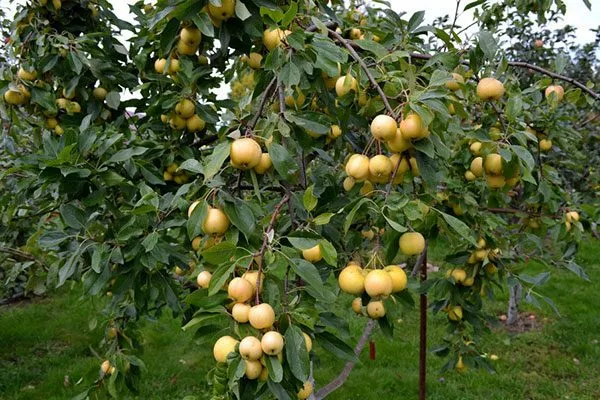
The Uralskoye Nalivnoye apple tree is a medium-height tree (usually reaching 300-400 cm), but without regular pruning it can reach 700-800 cm. There are also other varietal characteristics:
- The crown is dense and rounded, and in older trees can be excessively dense. It reaches 350-450 cm in diameter. Its weeping form is due to flexible, elastic, and thin branches that are densely covered with fruit.

- The shoots grow at a right angle to the trunk, and the bark on them and the skeletal branches has a greenish-brown-gray hue. Buds begin to develop as early as the first year of the seedling's life. Fruit may appear on the previous year's growth or on small twigs.
- The leaves are light green, elongated, with finely serrated edges and no pubescence.
- The apple flowers are light pink in color, medium in size, have the shape of a small cup, are pubescent, have pistils of medium height and stigmas located at the same level as the anthers.
Fruit
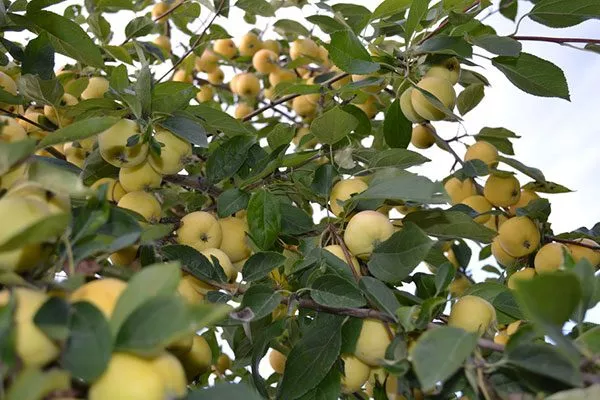
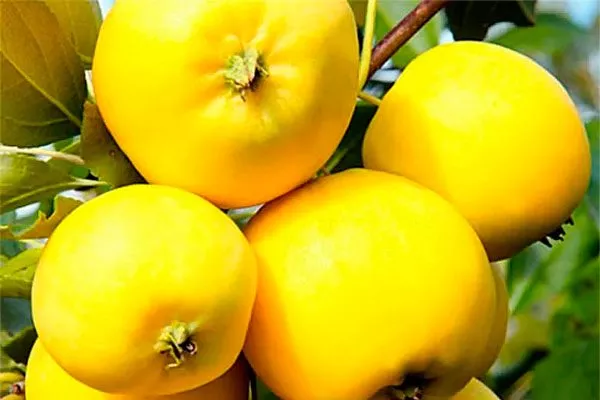
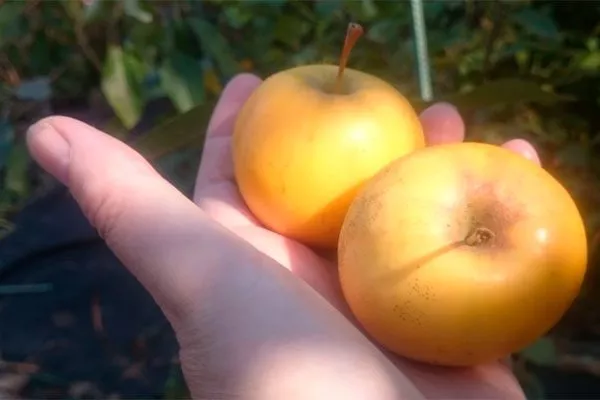
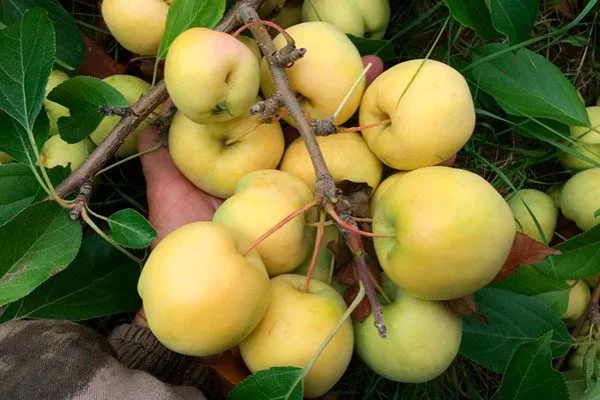
The apples are small, weighing approximately 50-60 grams, and on older trees they can be even smaller. They are round and symmetrical, sometimes with a slight ribbed texture. These apples are very similar to the Papirovka variety:
- The fruits are light green, but over time they turn yellow, and a delicate pale pink color appears on the sun-facing side. Small spots can be seen on the skin.
- Apples have long and strong stalks, which allows them to remain firmly attached to the branches and not fall off.
- The skin is smooth and shiny, but as ripening approaches, its surface becomes oily, which can lead to dust sticking to the surface.
- Ripe apples have a sweet honey taste with a slight sourness, spice and an exquisite aroma.
- Provided storage rules are followed, Uralskoye Nalivnoye can remain fresh for up to 45-60 days.
- 100 g of apple contains:
- sugar – 11%;
- dry matter – 14%;
- ascorbic acid – 9 mg;
- titratable acids – 0.6%;
- P-active substances – 100 mg.
Winter hardiness
The Ural bulk apple variety is characterized by very high cold tolerance, surpassing many Siberian varieties. It can easily survive even the harshest winters.
During the unusually low temperatures of the late 1970s, when thermometers registered -57°C, most varieties suffered severely from the cold, with the Borovinka and Antonovsky varieties dying. Meanwhile, the Uralskoye Nalivnoye variety suffered only minor frost damage and quickly recovered within a single season.
Disease/pest resistance
Apple trees' resistance to various fungal diseases is considered average. In years when fungal infections are particularly active, trees suffer from scab, but only the leaves are affected, leaving the fruit unharmed. By following disease prevention guidelines, including regular treatments and whitewashing, the likelihood of disease occurrence is significantly reduced.
The danger from pests is also low if preventative spraying and whitening of the trunk is carried out.
Pollination and yield
This apple variety is known for its rapid fruiting and excellent productivity. Just two years after planting, you can expect to harvest several dozen apples. While this may seem insignificant, the yield increases rapidly.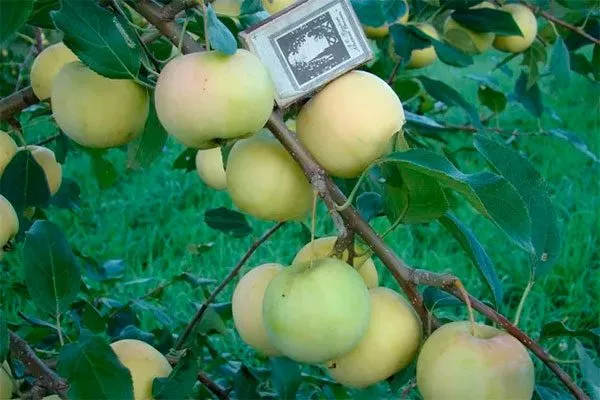
Peculiarities:
- The harvested yield typically reaches 150-180 kg per tree, making the variety competitive in productivity with the Anis variety. There have been cases where up to 250 kg of exquisite apples were harvested from a mature tree.
- This variety is self-fertile, but to achieve a bountiful harvest, apple trees of other varieties must be grown within a radius of 50 to 150 meters. Such pollinators include:
- Borovinka;
- Bellefleur-Chinese;
- Uralsk resident;
- Yandykovskoye.
Ripening and fruiting of apple trees
As early as the second year after planting, the tree can delight you with its first flowers. However, to give it time to strengthen its root system and form a crown, flower buds should be pruned before they open. This will allow the tree to better adapt to its environment and prepare for future harvests.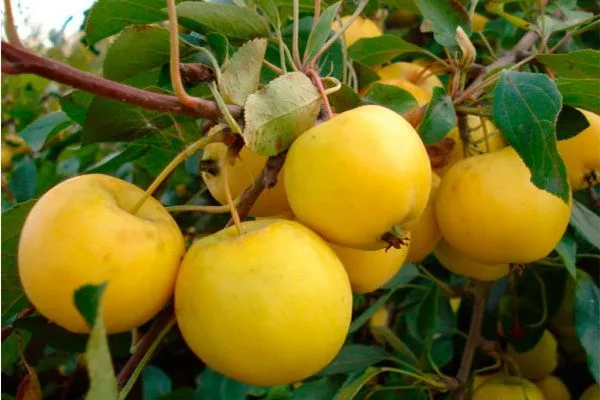
Nuances:
- In the third or fourth year, the first 10-25 apples already appear.
- This variety blooms slightly later than typical European apple trees, which is especially valuable for the climate of Siberia and the Urals. In June, when the danger of frost has passed, fragrant white flowers bloom on the tree.
- The apple tree develops at an impressive rate, growing 45-60 cm in height annually, which allows it to quickly reach its optimal size.
- Apples reach maturity by mid to late September, which is the optimal time for harvesting and subsequent processing or storage.
Collection and storage periods
To ensure apples retain their flavor and freshness, it is important to follow certain rules:
- collect fruits only on a sunny day;
- apples growing on the south side of trees ripen faster than others, so they should be picked first;
- All damaged fruits, as well as those that have fallen to the ground, must be discarded, as they will not only not survive, but may also cause infection of the remaining apples.
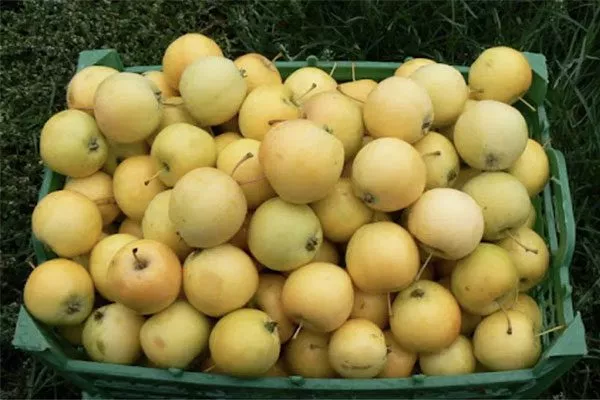
Early fruits are ideal for eating, while those picked later are suitable for making juices, compotes, and jams. Although this variety is considered an autumn variety, storing apples for more than 60 days under ideal conditions will be challenging.
Rootstocks, subspecies
Although this apple variety has been around for decades, finding a truly comparable alternative is difficult. Among the varieties that boast characteristics similar to the Ural Bulk Apple are:
- Ural Big;
- Ural souvenir.
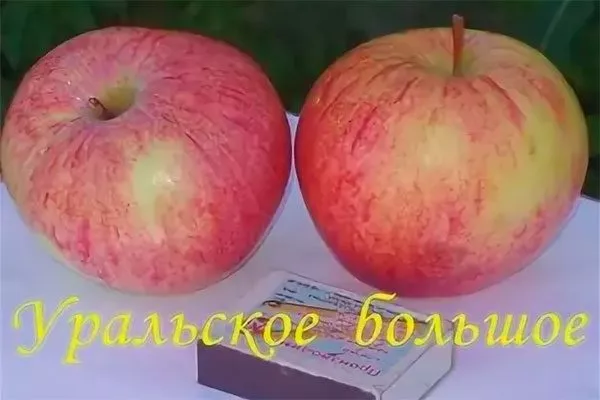
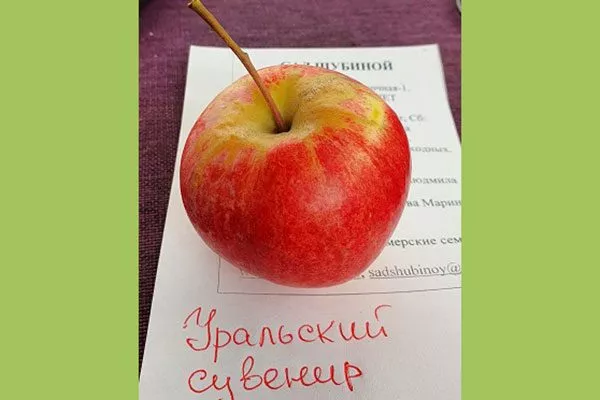
These autumn-winter varieties, originating from the Ural region, are not only cold-hardy but also have a flavor reminiscent of Papirovka, from which they inherited their characteristics.
Subspecies, depending on the rootstock:
- Autumn yellow - This variety is grown on a vegetative rootstock, reaches a height of 600-700 cm, and produces smaller fruits (80-100 g). However, the tree also has a dense crown, requiring regular pruning. Apples of this variety ripen in September and can be stored until January-February.
- Semi-cultured - This variety inherited more traits from its ancestor, the Renet, resulting in smaller fruits weighing only 55-70 g, ripening in late August-early September. It is highly adaptable to various climatic conditions and can withstand even the harshest winters.
- Dwarf - Uralskoye Nalivnoye can be grafted not only with apple trees but also with rowan or pear trees, resulting in a dwarf variety that grows no taller than 200 cm. Fruit on these trees ripens to a standard size (120-150 g), making care and harvesting more convenient and automated.
Landing features
To grow a healthy tree, it's important to choose the right seedling. When choosing, pay attention to the root system—it should be fully developed. Ideally, the tree should be grown in conditions similar to those where it will be planted.
Landing dates
Trees of this variety can be planted in spring or fall, but the latter is considered more suitable. Seedlings planted after the leaves have fallen root better and begin to form buds by the second year.
Selecting a site and a seedling
The Ural plum tree requires sufficient space to develop its dense crown. It should not be planted in areas with limited space, as this will lead to deformation and curvature of the shoots, which, in turn, will prevent the fruit from developing fully.
Excellent lighting and a calm wind are key factors for a rich, high-quality harvest. But there are other criteria as well:
- When choosing a planting site, ensure there is no shade and sufficient light. Coverings and buildings should not block sunlight from reaching the tree, as this variety prefers bright areas.
- It is not recommended to plant it near bodies of water or in lowlands, as water can accumulate and damage the root system, causing rotting.
- Groundwater levels close to the surface negatively impact seedling development. The higher the groundwater level, the fewer nutrients the root system will absorb. The maximum permissible groundwater level is 2.5 meters.
Subtleties of choosing a tree:
- A seedling must be grafted, which is its most important quality. If it isn't grafted, it won't adapt to new conditions. Specimens purchased from nurseries are usually pre-treated. Grafted trees have strong roots that don't break when pressure is applied.
- A well-developed root system is essential. Ideally, roots should be at least 5-6 cm long, firm, strong, and of uniform thickness. Any damage or stains on the roots are grounds for not purchasing this material.
- The best seedling is one with thick bark and is covered with leaves. If you peel back the bark slightly, you should see a green, juicy interior underneath.
- It's preferable to plant biennial crops. One-year-old seedlings should be buried in a sheltered location for the winter and only then grafted to obtain ready-to-use planting material.
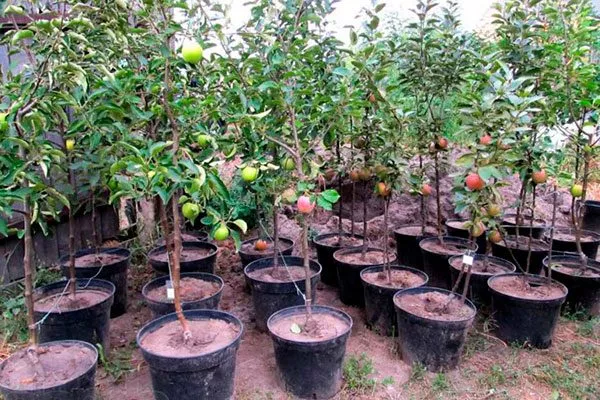
To strengthen the immunity of a young tree, you can soak it in a solution of Fitosporin or another preparation, although this procedure can be avoided.
Technology
To prepare the soil for spring planting, gardeners begin work early, in the fall. This method is the most effective way to enrich the soil. In the fall, carry out the following preparatory work:
- Dig a hole of suitable size;
- fill it with fertilizer;
- Cover with mulch or protect from winter weather with other material.
If fall preparation is not possible, the hole is dug immediately before planting, two weeks in advance. Fall preparation involves digging the hole two weeks before the scheduled planting date.
The hole should be 80 cm deep and the same diameter, which is optimal for the tree's root system. For soil fertilization, you can use a mixture of manure and water or superphosphate with ash. If using potassium salt, pay attention to the proportions:
- 100 g potassium salt;
- 200 g Superphosphate;
- 200-250 g of ash.
Mix the fertilizer thoroughly with the soil and place it at the bottom of the hole. The mixture is then left to settle for a week, after which the soil is dug further. Wait another week before planting.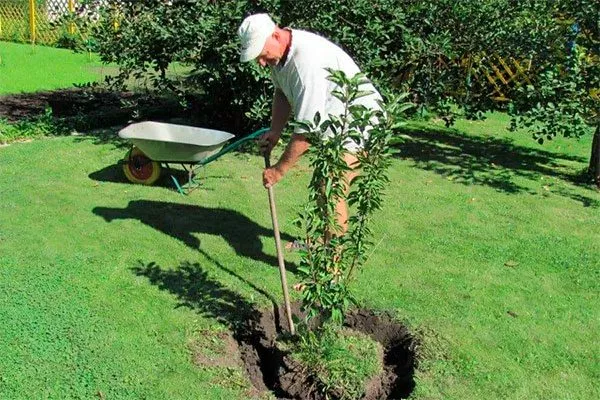
The tree's rootstock is carefully leveled and placed in the hole, covered with fertile, uncontaminated soil. The top layer of soil is then compacted, creating a mound of soil around the trunk. This helps protect the plant from overwatering and facilitates more thorough watering in the future.
Subtleties of care
Caring for Ural Bulk Seedlings requires a certain amount of knowledge and attention. During the initial period, which lasts 2-3 years, it's important to regularly remove weeds and monitor soil moisture levels, irrigating the trunk area as needed.
Watering
During the summer months, the variety requires one watering per month, with 20-30 liters of water per tree. If the soil is sandy and the summer is particularly hot, the frequency of watering increases to 4-6 times per month.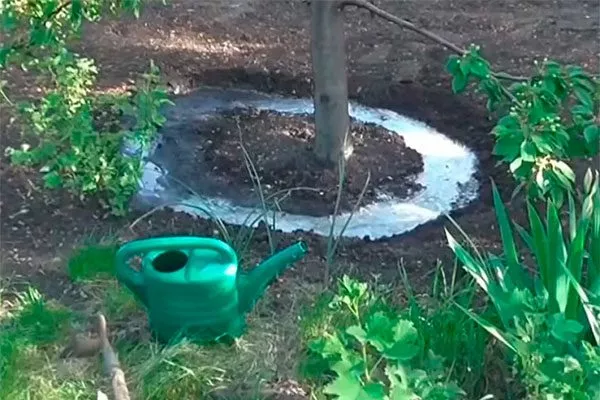
The approach to watering depends on weather conditions and looks like this:
- first - produced before bud break;
- second - carried out two weeks after flowering;
- third - a month before the start of the harvest;
- last - after the apple harvest, when the autumn leaves begin to fall.
Fertilizers
During the initial period of seedling development, provide them with nutrients, including nitrogen, phosphorus, and potassium fertilizers. Fertilization can be done either root or foliar.
Approximate diagram:
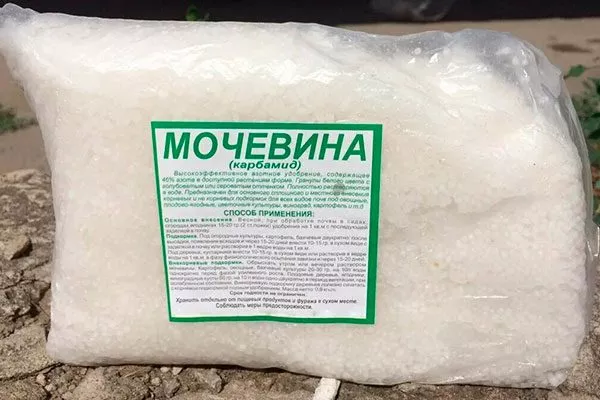
- At the beginning of spring, it is recommended to water with the addition of urea: 2 tablespoons of the substance are needed per 10 liters of water.
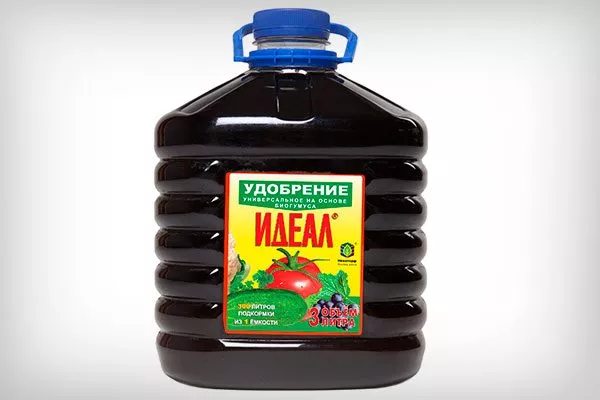
- In May-June, foliar feeding is carried out using the Ideal preparation: add 1 tbsp. to 10 liters of water.
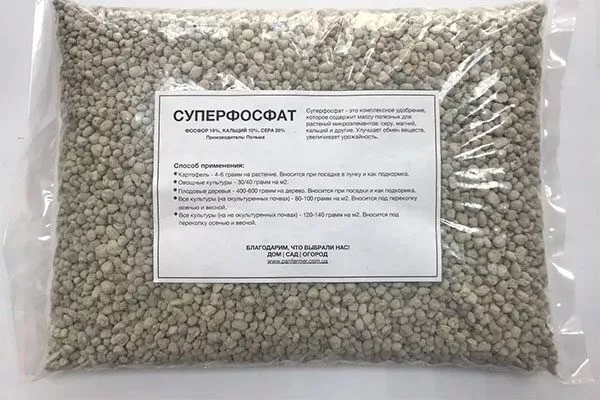
- In September, Superphosphate is used to fertilize the apple tree: 2 tbsp per 10 liters of water.
Some features:
- Dry fertilizers are applied to the soil at a distance of 30-40 cm from the apple tree trunk, after being dug in to a depth corresponding to the depth of a shovel blade.
- To maintain the health of apple trees, spray them with wood ash and urea—2 tablespoons per 10 liters of water. This procedure is repeated twice: before budding begins and three weeks after it ends.
- Solutions based on microelements such as zinc, copper and manganese are used during fruit ripening.
- The final foliar feeding is carried out 28-30 days before the start of harvest.
Pruning and shaping
Pruning trees with dense crowns is a key part of their care. The procedure serves two key purposes: to form a proper crown and to protect the plant from diseases and pests. The timing of pruning depends on its purpose and can be in spring or fall:
- In spring, choose the right time when the tree has recovered from the winter ordeal, but new buds have not yet begun to grow. Remove any old or damaged branches. Be sure to treat any wounds on the tree with a disinfectant.
- Autumn pruning is more important than crown shaping, as it helps the tree prepare for winter. Remove diseased and damaged branches, leaving only healthy shoots.
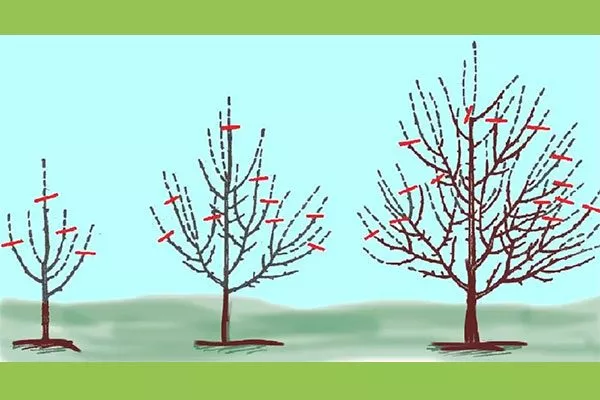
Formation of the crown of apple trees of this variety should begin already in the first year, as they are prone to strong crown compaction:
- the central trunk is shortened by a third, leaving only 2-3 branches as skeletal ones, which are located 6-7 cm below the main one;
- any trimming can then be performed, but the most common is the sparse-tiered technique;
- Every year, you should remove branches growing inwards into the crown, water sprouts, and anything that interferes with the tree's uniform exposure to sunlight.
Protection from frost and rodents
This variety is highly frost-resistant, so it doesn't require any complex protection measures for overwintering. However, it's a good idea to lay a layer of straw or dry grass around the base of the tree to protect the root system from freezing, especially for dwarf and other shortened rootstocks.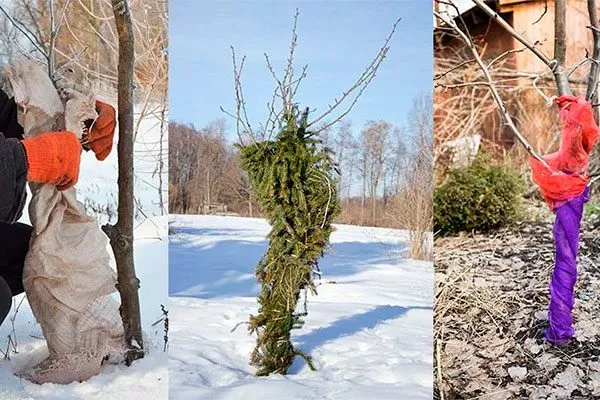
To protect against pests and rodents that may be active in winter, it is necessary to take the following measures:
- in the fall, whitewash the trunks with lime solution or treat them with specialized industrial preparations;
- Apply a layer of grease or melted lard to the lower part of the barrel, which will provide effective protection;
- To prevent hares from eating the bark, wrap the trees with fine-mesh netting.
Diseases and pests of the variety
Uralskoye Nalivnoye has moderate resistance to scab, but during unfavorable seasonal periods it can be susceptible to this fungal disease, as well as fruit rot and powdery mildew. The variety is susceptible to moniliosis and sunburn.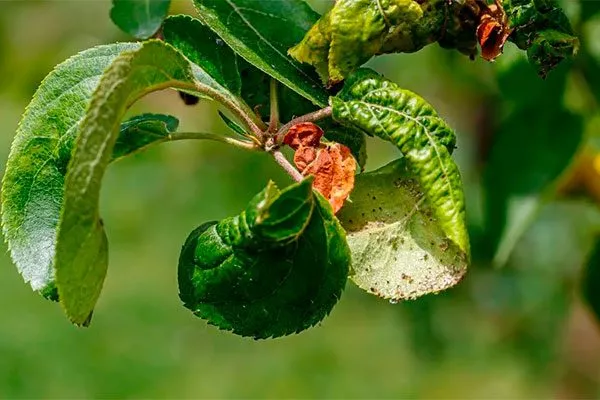
To prevent diseases, it is recommended to spray trees with a fungicide complex twice a year and irrigate them with urea in the spring.
Among the insect pests that can be found in the Ural region are:
- green aphid,
- leaf roller,
- codling moth.
They can be controlled using corrugated paper traps or by using special chemicals such as Karbofos.
As a preventative measure, whitewash the trunk and dig around the tree trunks. Dry leaves should be removed and destroyed to prevent pests from laying eggs in them. All rotten fruit should also be removed from the area.
Pros and cons
Advantages of Ural Bulk:
Reviews
Uralskoye Nalivnoye deservedly holds a leading position among varieties that can grow in harsh climates. This variety not only tolerates cold but also recovers from adverse conditions, demonstrating excellent productivity, making it attractive to gardening enthusiasts, professionals, and owners of large garden plots.