
Unlike wild trees, garden trees always have a man-made root circle—a slightly recessed area around the trunk. It's roughly equal in diameter to the root system and plays a vital role in the tree's life. We'll explain why root circles are important and how to care for them.
Why care for the tree trunk area?
In nature, trees grow perfectly well without tree trunks, but in the garden, they're essential—how else can you water the trees without wasting water, how can you apply and incorporate fertilizer into the soil? Every gardener chooses their own method of care—some simply loosen the soil, others seed the root zone with grass.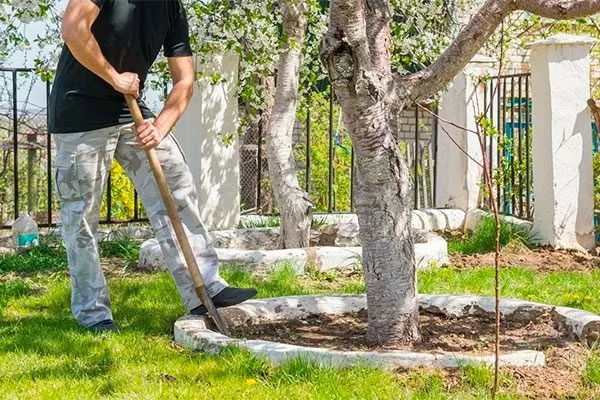
Work carried out in the tree trunk circle:
- Regular loosening — to prevent the formation of a hard soil crust that does not allow oxygen to reach the roots.
- Application of dry fertilizers — Organic matter or granular fertilizer is evenly scattered around the tree trunk, then worked into the soil with a hoe. Afterward, the tree is watered to dissolve the granules and allow them to be absorbed more quickly.
- Application of liquid fertilizers — Fertilizers diluted with water are poured into the tree trunk circle.
- Weeding — it's usually carried out simultaneously with loosening. Weeds must be removed regularly; they not only absorb nutrients intended for the tree but can also attract insect pests, which then migrate to fruit trees.
- Autumn digging allows you to get rid of many insect pests that hibernate in the soil.
- Cleaning up fallen leaves From the tree trunk circle is a mandatory measure for disease and pest prevention. Along with the leaves, fungal spores, other pathogens, and insect larvae are destroyed.
Regular care of tree trunks maintains their decorative appearance and, most importantly, improves soil air and water permeability, ensures free access of water and nutrients to the tree's root system, eliminates pests, and prevents soil compaction.
Methods of maintaining tree trunk circles
In gardening, there are several methods for maintaining soil under trees. The choice depends on the size of the garden and the personal preferences of the gardener.
Digging
A system that involves digging (or plowing) the soil is called arable farming. It involves cultivating the soil not only around the tree trunks but also between the rows. This system of maintaining the tree trunk area is most often used in commercial orchards.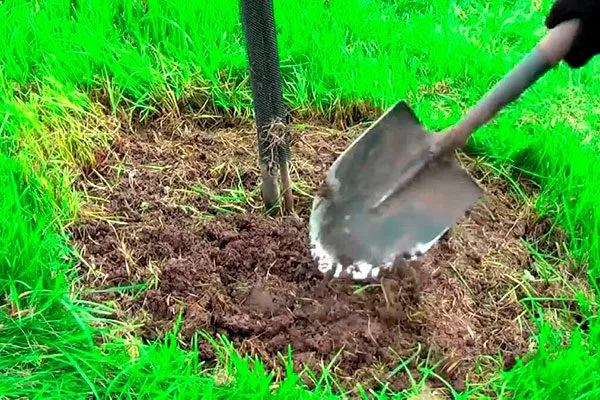
In private gardens, loosening the soil alone may not be enough. To maintain order in the root zone and provide trees with optimal conditions for growth, development, and fruiting, a thorough digging is required. A standard spade or garden fork can be used for this task.
Digging up the tree trunk circle is carried out in the following cases:
- The root zone is in a neglected state - many weeds grow in it, including perennials with powerful roots.
- Seasonal digging. This is carried out in spring, summer, and fall, and is often combined with other agricultural practices. In spring, digging is combined with fertilization, while summer digging is often replaced by loosening—this is carried out after heavy watering if the soil circle is not mulched. Before fall digging, all plant debris, rotten fruit, and fallen leaves are removed from the circle—all of these are collected and destroyed. Trees are watered and fertilized with potassium and phosphorus fertilizers, after which the root zone is mulched with organic matter.
The soil around the tree trunk is dug with the shovel blade facing the tree—this reduces the risk of damaging the roots. The soil is dug to a depth of 10-15 cm. Digging begins 15 cm from the trunk; in the immediate vicinity, the soil should only be loosened. Between rows, the soil can be worked to a depth of 25-30 cm.
It's important to remember that frequent digging disrupts the natural structure of the soil and can even damage the surface roots of trees. It's also important to know that not all trees and fruit and berry bushes tolerate digging well. Crops such as raspberries, currants, and gooseberries experience reduced yields after digging, while plums and sea buckthorns may even die.
Sod-mulch system
This system is considered preferable for private gardens. The soil in the root zone is not dug; it is only raked between rows if it becomes too compacted, and then deeply loosened with a pitchfork without turning the soil over.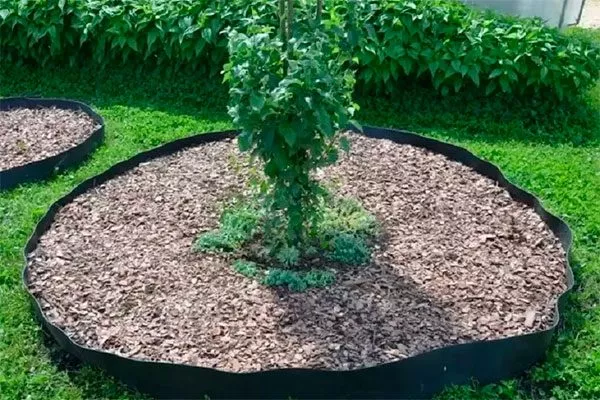
Features of the sod-mulching system:
- For the first few years after planting, the soil between the crowns is loosened by hand with hoes or tilled with a subsoiler. After a couple of years, there is no longer any need for weeding or subsoiling, and annual weeds are killed by the mulch.
- The system requires that the tree trunk area be covered with a layer of mulch, which nourishes the plant, retains moisture evaporation, and protects the soil from overheating in the summer and freezing in the winter. The mulch layer thins over time as it is gradually broken down by soil microorganisms, so it is added repeatedly throughout the summer.
The trunk circles of trees and shrubs can be mulched with a variety of organic and inorganic materials.
Organic matter is most often used as mulch:
- Organic fertilizers - well-rotted humus, peat or compost.
- Leaves — healthy, free from disease, mites, or other pests. Preference should be given to foliage from trees that are rarely affected by diseases and pests, such as rowan, barberry, magnolia vine, birch, and poplar.
- Beveled grass - without roots and seeds.
- Other materials - sawdust, tree bark, straw, pine needles.
Inorganic materials that can be used for mulching tree trunks include special film and polypropylene soil-covering materials, agrofibre, slate, gravel, rubber crumb, roofing felt, etc. They do not fertilize the soil, and many also do not inhibit weed growth.
Mulching is a very simple yet effective gardening technique aimed at increasing crop yields. However, it has its advantages and disadvantages.
Old mulch should be periodically supplemented with fresh mulch or completely changed - at least once a season.
Turfing (sodding)
This method is often used in commercial orchards. It is particularly suitable for fruit trees such as apples, pears, and plums. Sodding—the creation of a grass cover—can be continuous or intermittent, either between rows only or on alternate rows.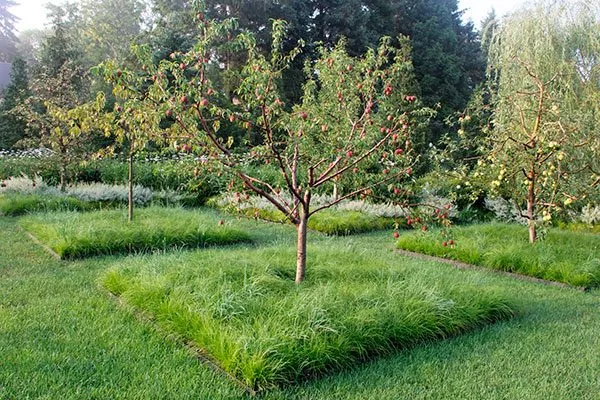
Not all fruit and berry crops respond equally to sodding. If a dense grass cover is created around the tree trunks, trees and shrubs require more water and nutrition—approximately a third more.
Features of creating turf:
- It is created only for mature, fruit-bearing trees.
- It is recommended to use special "cultivated" grasses with a shallow root system for turfing, so that there is less competition with trees and shrubs.
- A universal grass mix for all types of soil consists of meadow bluegrass (1.6 g/sq. m), red fescue (2.6 g/sq. m), meadow fescue (3.6 g/sq. m), fine bentgrass (0.8 g/sq. m), and perennial ryegrass (4 g/sq. m).
- It's important to remove all weeds promptly, while they're still young. This especially applies to sow thistle, couch grass, dandelion, and field bindweed.
- During the summer, the turf cover is mown several times.
Legumes, such as broad beans, beans, and field peas, can be used as green manure because they enrich the soil with nitrogen. Many green manures are not only beneficial but also attractive. To make the circles more attractive, you can sow mustard, rapeseed, or phacelia in them.
What can be planted in tree trunk circles?
In addition to traditional grasses, other plants can be planted under trees. This option is used in private gardens where aesthetics are sought in addition to practical benefits. Low-growing, low-maintenance, and shade-tolerant plants are typically planted in the root zone. It's also important to avoid invasive plants that can spread across the property, taking over new areas.
Ground covers
These creeping plants can form a dense carpet that requires virtually no maintenance. They don't require mowing or weeding. Over time, the plants can close in, gradually enclosing not only the root zone but all the open space between the trees.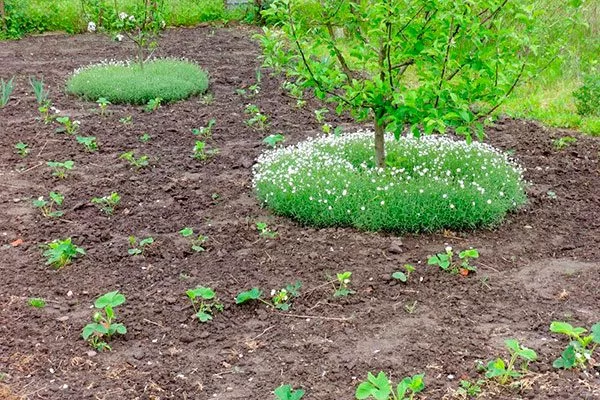
The best ground covers for the garden:
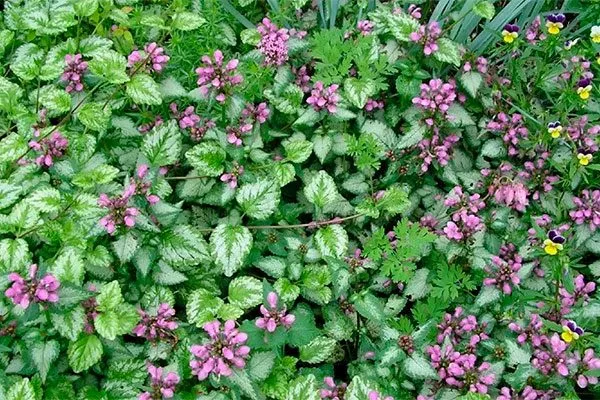
- Lamium maculatum. This relative of the dead nettle has striking leaves covered in a silvery coating. Some varieties of dead nettle have variegated leaves with unusual patterns. In summer, the plants bloom, with purple flowers gathered in clusters that adorn the tops of the shoots. The plants grow up to 20 cm tall.

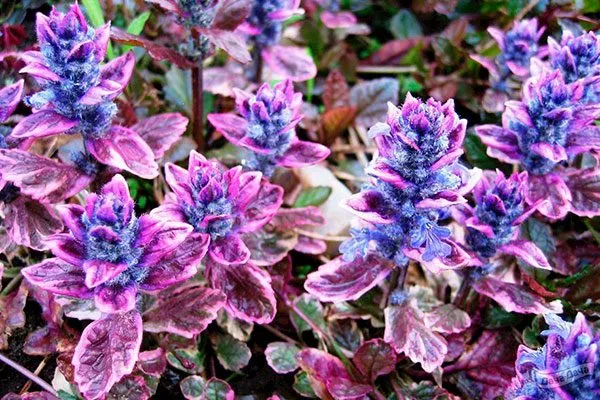
- AyugaIt's also known as creeping bugleweed. It's very undemanding, tolerates drought well, and grows well in shade. There are different varieties of bugleweed, and the ornamental ones have dark, beautiful leaves. In late spring, the plants produce flower stalks with small blue flowers. The maximum height of the plants is 20 cm.
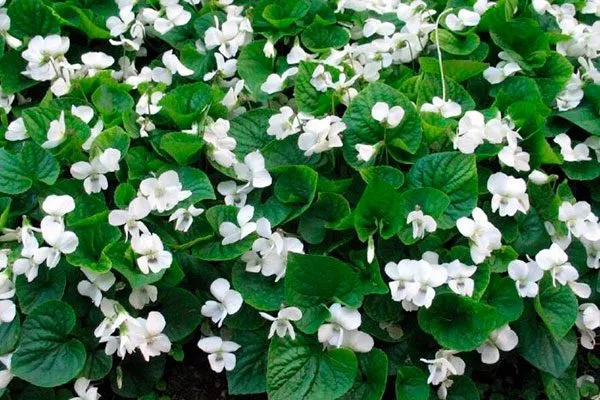
- Sister violet. It has large, heart-shaped leaves and small flowers of violet or purple hues. It is a close relative of the horned violet and the viola. This plant grows very quickly, reaching a height of 20-25 cm.
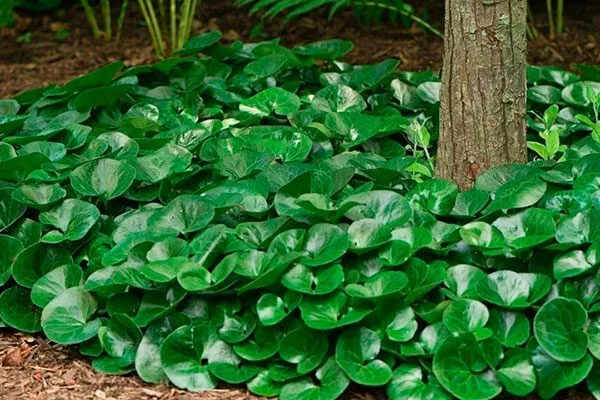
- European asarum. This is a very shade-tolerant plant, whose leaves remain green even in winter. The plant forms a dense mat about 10-15 cm high. Its leaves are shiny, smooth, and richly green, reminiscent of pitcher plants. They emit a tart aroma.
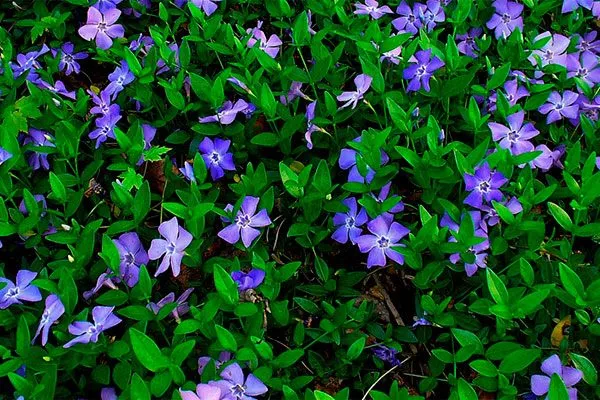
- Periwinkle. It has small, glossy leaves and blue flowers that resemble panicle phlox. The plant has a robust root system and is prone to rapid growth.
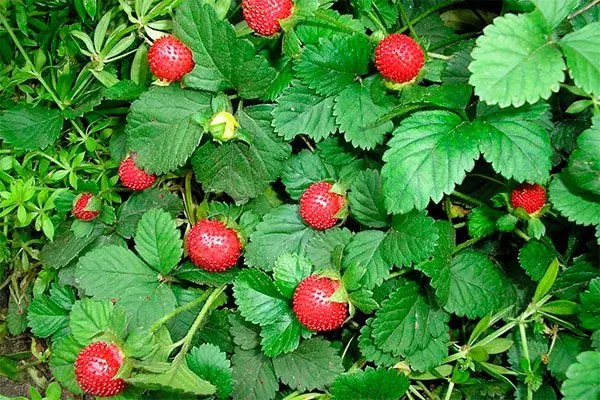
- DuchesneaIts leaves resemble those of strawberries. It bears small, bright red berries that are tasteless. It spreads by runners, quickly filling in empty space and creating a dense carpet. Its flowers are small and bright yellow.
Ornamental foliage perennials
These plants attract the eye with their beautiful foliage; they are capable of growing in one place for many years, decorating the garden.
The best ornamental foliage perennials:
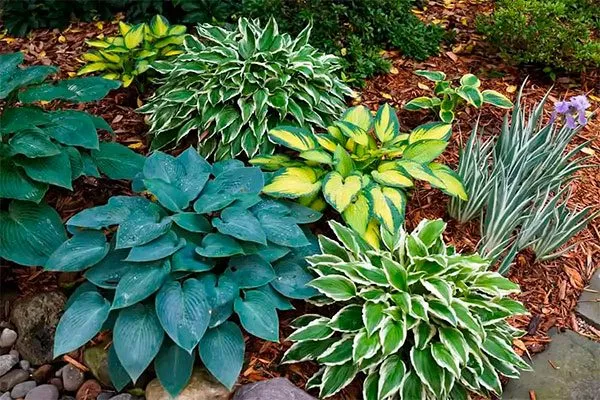
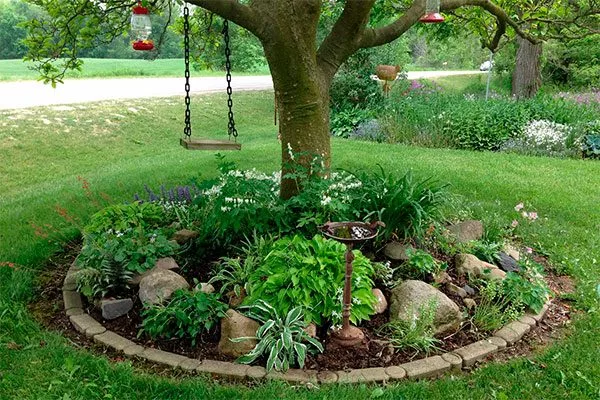
- Hosta. An ideal plant for shaded areas, it comes in a wide variety and can be used to create striking compositions. Hostas can be planted, for example, around the perimeter of a tree's trunk.
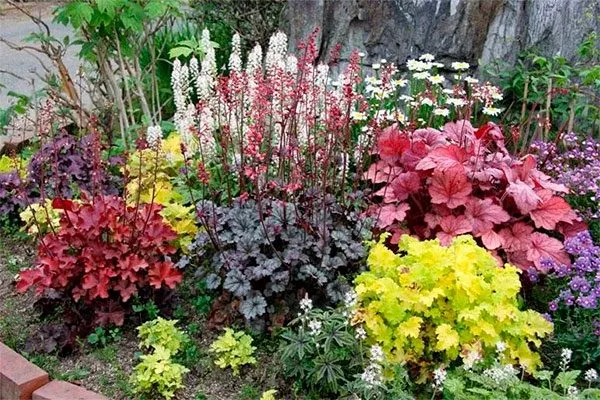
- Heuchera. Varieties come in a variety of leaf colors—yellow, orange, wine, ruby, and purple. The plant can reach a diameter of 50 cm. It grows well in shade but requires watering. Not all varieties survive winter well in temperate climates—which ones are suitable for a particular location is usually determined through trial and error.
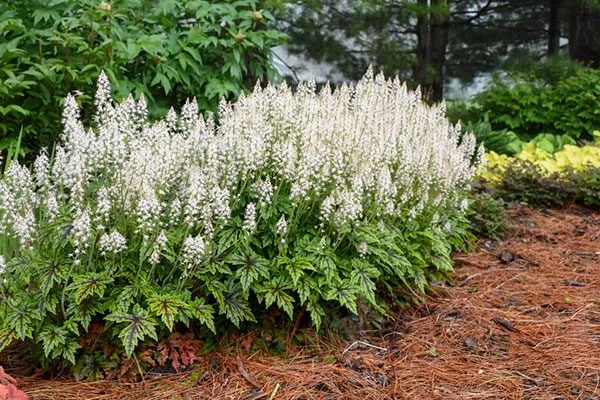
- Tiarella. It has evergreen, serrated leaves reminiscent of maple leaves. Varieties with red leaf patterns are particularly striking. The plant blooms in May, producing pale pink flowers gathered in clusters.
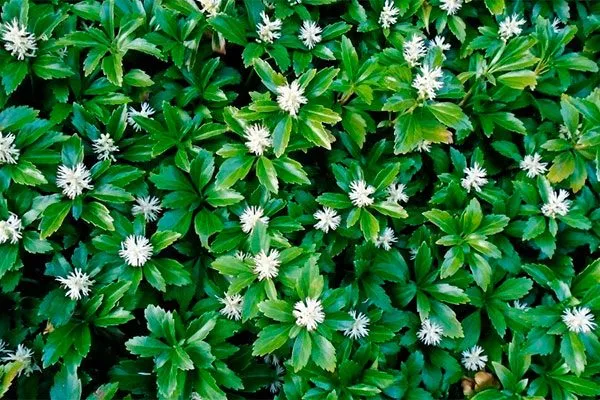
- Pachysandra terminalis. This is a subshrub plant, reaching a height of 30-35 cm. Its leaves are dense, glossy, up to 10 cm long, and crown the tops of the shoots, arranged in three tiers.
Primroses
These plants begin blooming even before the trees have leaves. Early spring brings plenty of sun to the garden, so primroses don't experience a shortage of light. Just be careful not to plant lilies of the valley near the roots—they are aggressive and spread by root suckers, quickly taking over the area.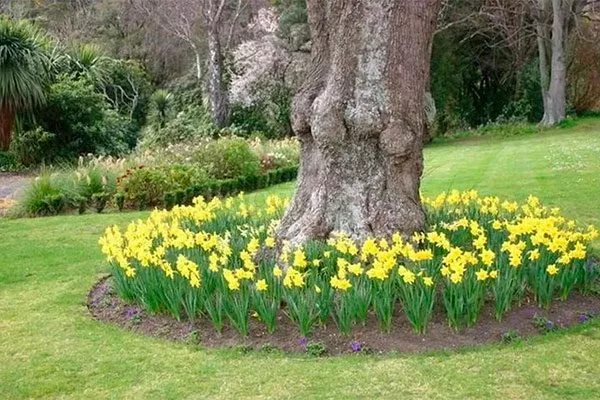
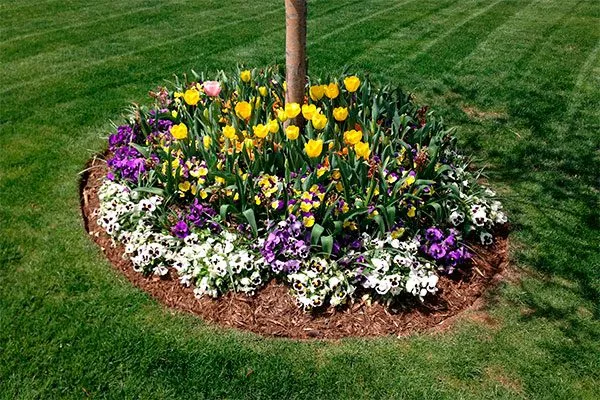
Various bulbous primroses, such as scillas, crocuses, and low-growing tulips, can be planted in the tree trunk circles. They don't need to be dug up and replanted; they'll create a beautiful bloom each spring.
Wild flowering plants, such as liverwort, corydalis, anemone, and others, can also be used to decorate the root zone. They self-seed well, confidently crowding out weeds. Their flowers are subdued, making them ideal for eco-style gardens.
Annuals
Tree trunks can be planted with bright, easy-to-grow annuals, such as marigolds, calendula, and nasturtiums. They thrive in partial shade and can be sown directly into the ground or grown from seedlings. These flowers have powerful phytoncidal properties, repel pests, and improve the soil.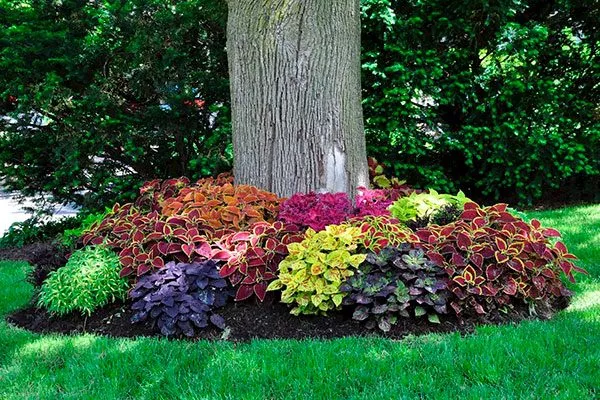
Impatiens look beautiful in the root zone. These pastel-colored annuals can be low-growing or tall, with single or clustered flowers, single or double.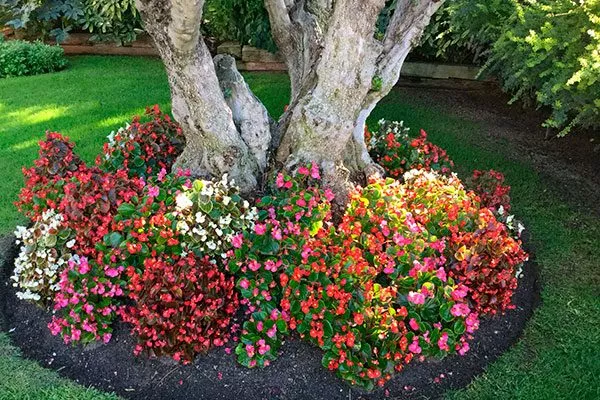
Perennials
These ornamental plants live for more than two years. Unlike annuals, they can overwinter and resume growth in the spring.
The best perennial flowers for tree trunk circles:
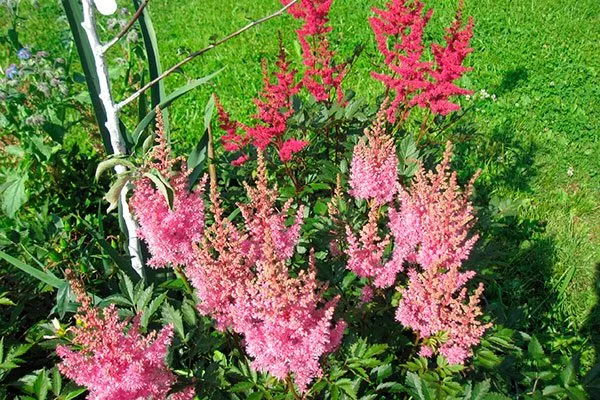
- Astilbe. It grows well in shade and has beautiful, lacy leaves. Its inflorescences are fluffy and paniculate. The flowers can be white, pink, or crimson. Astilbe sometimes needs to be divided, as its roots become densely intertwined at the base of the bushes.
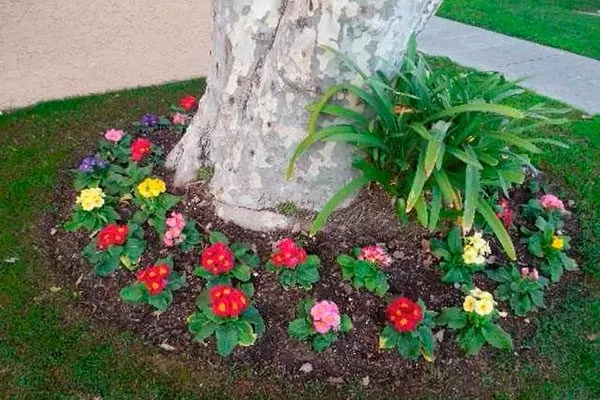
- Primrose. A close relative of wild primroses, it boasts vibrant flowers in a wide range of hues. Yellow, lilac, pink, and purple primroses transform tree trunks into spectacular flowerbeds.
- AquilegiaIt remains decorative all season long. The bush grows to 30-40 cm tall. In late spring, it produces numerous flower stalks with pink or purple buds. Bicolor varieties are now available—white and red, yellow and red, and others. There are also varieties with double flowers.

Flowering biennials can be sown in the root zone. Daisies, forget-me-nots, and violets can be used to decorate the garden. They look beautiful in continuous beds and around the tree trunks.
Garden plants
Food-producing plants, such as berries or vegetables, can be planted in the trunk circles of mature trees. Their root systems are shallow, so they pose no harm to larger, fruit-bearing trees.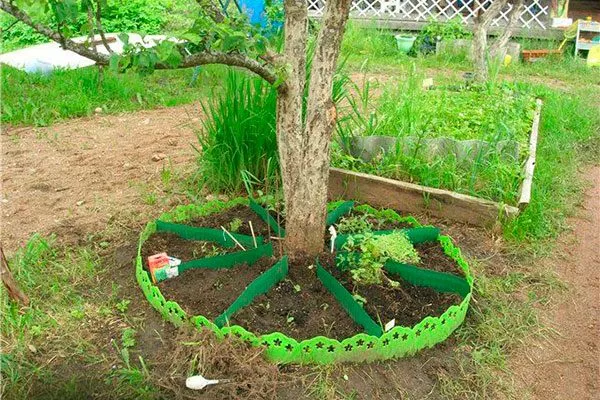
For example, strawberries—regular or garden—can be grown in the root zone of fruit trees and shrubs. Onions and garlic, which grow well in partial shade, as well as radishes, dill, and parsley, can also be grown under trees.
Border tapes
Besides digging, mulching, and sowing green manure, flowers, and other plants, there are other ways to decorate the tree's trunk area. A very simple and practical option is to surround the tree with a border. The area around the tree's trunk can also be mulched with compost. This option is suitable for practical people who don't strive for decorativeness and want to minimize the time spent on garden maintenance.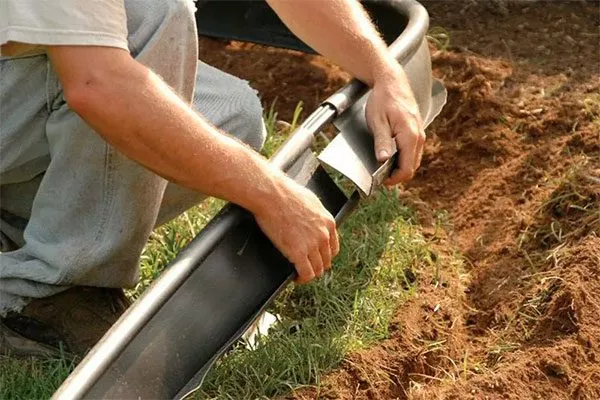
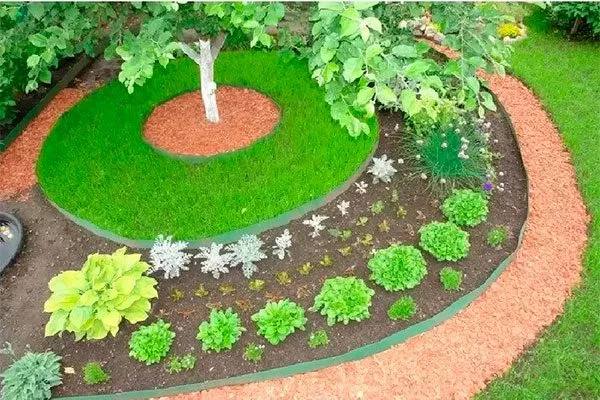
A border tape is a flexible barrier 10-30 cm high that is dug into the ground. It creates a clear boundary between the tree trunk circle and the rest of the garden. Furthermore, the tape maintains the shape of the circles; without it, the soil will spread over time, and weeds will penetrate the root zone.
Border tapes can be made from:
- plastic - they are flexible, cheap, lightweight;
- metal - durable, but more expensive and heavier, more difficult to install.
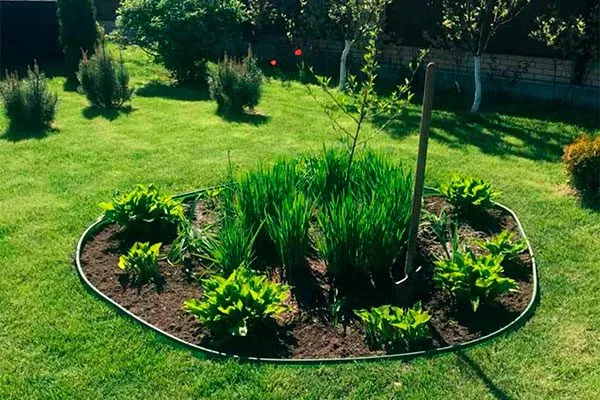
Border tapes can also be decorative, with patterned edges, emulating decorative forged ironwork, or natural stone. They can also vary in thickness—from 0.5 to 2 mm—and color. Most commonly, tapes are green and black, matching the colors of grass and earth, respectively.
Design tips
When decorating tree trunks, you can use original design solutions that will give the plantings a well-groomed and aesthetically pleasing appearance, making the garden cozy and inviting for relaxation.
Design tips:
- If you're designing a garden in a rustic style, you can plant yellow and orange flowers and ornamental sunflowers around the tree trunks. They'll complement the wickerwork, pots, and other rustic trappings harmoniously.
- Flowering plants with lilac and purple flowers, violets, phacelia, and the like are suitable for a Provence-style garden.
- You can create a mini rock garden in the tree trunk circle. This will require small stones, pebbles, and shade-tolerant groundcover plants.
- If the garden is designed in a landscape style, which implies maximum proximity to nature, the tree trunks can smoothly "flow" into winding paths and bright streams of flowering and ornamental plants.
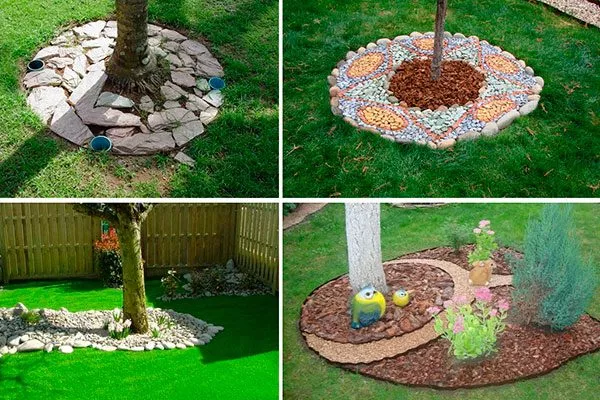
When working with tree trunks, you can successfully combine usefulness with decorative qualities. When growing fruit crops, proper care for the trees and shrubs comes first, and only then should aesthetics be considered. In any case, visual appeal should not degrade the growing conditions of fruit and berry crops or interfere with their care.