
Welsey is an apple variety ideal for beginning gardeners, as it requires little care and is forgiving of minor mistakes. It boasts enviable disease and pest resistance, is frost-resistant, produces high yields, quickly produces excellent-tasting fruit, and allows for long-term storage.
History of appearance and role for breeding other varieties
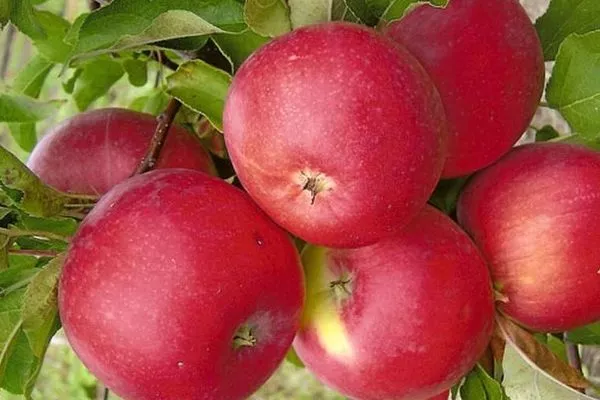
Welsey apples are widely available both on store shelves and in private gardens, and their appearance is sure to impress. Their flavor is sweet and sour, with hints of pineapple or strawberry, making them a popular ingredient in baked goods.
The Welsey variety is known under other names:
- Abundant.
- Fruitful.
- Fertile.
- Tartu rose.
- Tartu pink.
- Wealthy.
The Welsi variety has been used as the basis for the development of many new varieties of apple trees in various countries. Tartu Pink is itself the original form for selection, and in the CIS alone, more than 30 varieties have been developed with its participation, including:
- Altai ruddy (Welsi + Gornoaltaiskoe);
- Aelita (x Cinnamon Striped);
- Student (+ Seedless Michurinskaya);
- Cinnamon new (+ Cinnamon striped);
- Memory of the warrior (+ Antonovka ordinary).
Of particular note is the interesting American variety based on Plodorodny with complete immunity to scab (with the Vf gene) – Prima.
The variations of Welsey's origin are multifaceted:
- The most plausible scenario is that the variety arose as a result of uncontrolled pollination, presumably in the 1860s in the orchards of M. Gideon in Minnesota, USA. It originates from the seeds of a narrow-fruited Siberian apple tree, known as the ornamental wild apple tree Peter.
- Information from the website of the All-Russian Research Institute of Selection states that the variety was obtained from the seeds of the Cherry Siberian apple variety by the same M. Gideon in America in 1860.
- Doctor of Agricultural Sciences F. D. Likhonos believes that this variety appeared as a result of natural pollination of the ancient Borovinka variety, which originated from folk selection.
- Since the early 1940s, Welsi has been undergoing state trials. It was studied by specialists at the Oryol Fruit and Berry Station, the Shushenskoye State Variety Testing Station (Krasnoyarsk Krai), the Voronezh Pomological Nursery, and numerous other experimental stations. In 1947, it was officially registered in the State Register of our country.
Description and characteristics of the Welsey apple tree
Welsey's unique characteristics make it highly sought after and are actively used in breeding. Therefore, it's important to carefully study all aspects and characteristics of the variety before planting.
Which regions is it suitable for?
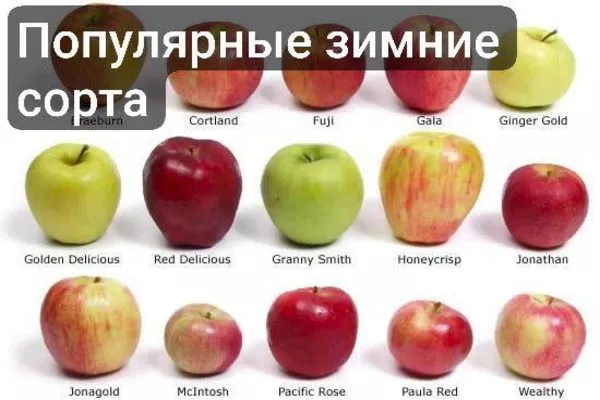
Welsey is considered a winter variety, although in some regions, especially in the south, it is considered an autumn or late autumn variety, since the fruits can be harvested even in early autumn.
It has a rich history, but is renowned for its average frost resistance and has been zoned in several regions and districts of Russia, including:
- Northwestern;
- Central;
- Central Black Earth;
- North Caucasian;
- Lower Volga.
Wealthy adapts well to the conditions of Ukraine, Belarus, the Baltics, and Europe as a whole, as well as to the climates of many other countries with similar or even harsher and drier conditions. This variety is also grown in the northern US.
The appearance of the tree
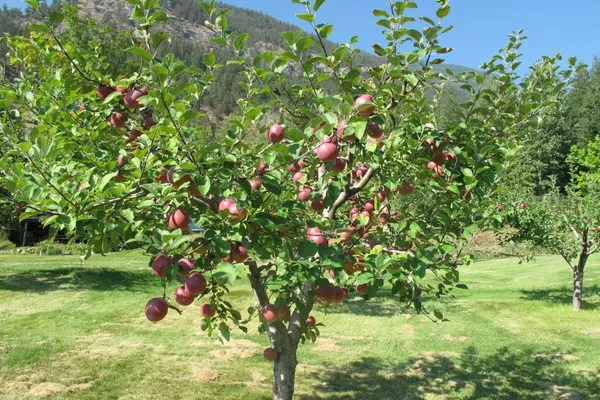
The tree's young crown is broadly pyramidal or semi-expanded, but over time it becomes rounded or spherical, while remaining slightly elevated. Skeletal branches attach to the main trunk at an acute angle.
Pay attention to other varietal characteristics:
- The shoots are characterized by a vertical orientation, but under the weight of a bountiful harvest, they can droop downward, especially in the upper tiers of the canopy. If an excessive number of apples are formed, a severe tilt occurs, causing the branches to break off.
This problem can be solved by using support structures or by partially removing the more mature apples. The branches are brownish in color, medium in diameter, and lightly pubescent. - This variety is characterized by moderate but fairly rapid growth, although some sources describe it as fast-growing. Its lifespan is 20-25 years, which is considered a drawback.
- The roots of this species are unbranched and located close to the soil surface, requiring additional insulation during cold periods. A central taproot is not always present, depending on the quality of the rootstock.
- The buds are slightly expanded, densely pubescent, and convex. The lenticels are numerous, round, large, and compact.
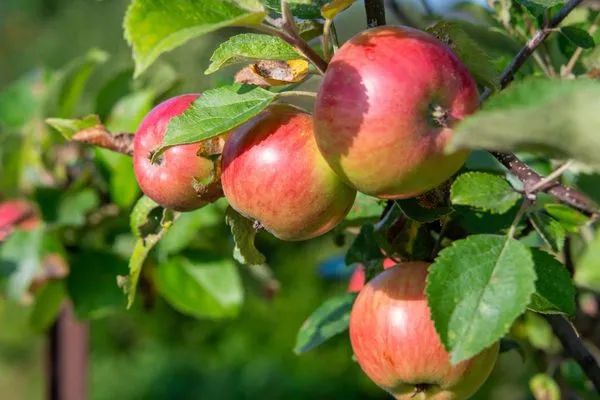
- The leaves are medium-sized, but tend to be large, and are sparsely spaced on the shoots. The leaf blades are significantly curved, often folded, and develop into a twisted tip. They are glossy, dark green, with serrated and strongly wavy margins.
The leathery surface of the leaves has a rough texture and folds, giving them a shagreen appearance. The leaves are arranged at right angles to the axis.
- The petioles are elongated, thin, and slightly pubescent. The stipules are lanceolate and medium-sized.
- The flowers are characterized by a purple hue, visible during their development, and the petals are white with a light pink tint, tightly folded. The buds are medium in size.
Tree height characteristics depending on rootstock
The height of the tree is determined by the choice of rootstock:
- Semi-dwarf and dwarf rootstocks are the most popular. They are recommended for temperate climates and can grow up to 3 m.
- There are also semi-escarpment rootstocks. They are particularly suitable for areas with high groundwater levels and are more frost-resistant, making them suitable for Siberia.
- Trees grown on tall rootstocks are less common (usually found in traditional, abandoned rural orchards). Under these conditions, trees can reach 5-6 meters. This rootstock is recommended for regions with milder, southern climates.
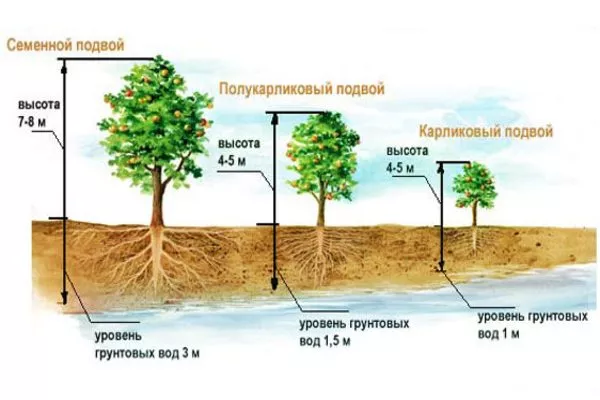
Welsey is distinguished by its high survival rate and compatibility with any rootstock, which makes it useful not only for propagation, but also for restoring fruiting to old trees.
Description of fruits
The fruit's shape resembles a turnip; it is round or slightly flattened at the ends, resembling a flattened sphere. There are no longitudinal grooves or ribs. The skin is smooth, without a matte finish, and a waxy coating is rare.
Depending on its ripeness, the apple changes color:
- unripe fruits have a predominantly greenish, yellowish and reddish color at the same time, creating a brownish tint with a barely noticeable red blush;
- as the apple matures, it acquires a more pronounced red tone, which can be more or less saturated, and the yellow-green background becomes lighter and warmer;
- A characteristic feature of ripe apples is a striped blush covering most of the fruit, sometimes it is solid and intensely red (such fruits are called Red Wealthy).
During storage, the color of the apples becomes more golden.
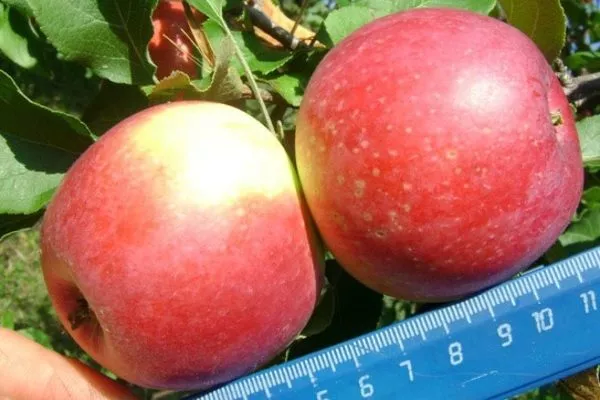
Other parameters:
- Size The fruits are medium to small, weighing 80-150 g.
- Peel The fruit is thin, but strong and smooth, the dots on it are large and noticeable, but rare.
- Internal structure fruit:
- the saucer is deep, with a characteristic smoothness and a narrow base;
- closed cup;
- the heart is small, the seed cavities are closed;
- The seeds are dark brown, oblong and pointed.
- Fruit pulp:
- compacted;
- juicy;
- white, sometimes with a greenish tint, sometimes with red, pinkish veins, especially near the peel, if the fruit has a pronounced blush.
- Peduncles long and thin, which can lead to their detachment. The funnel is deep and has a distinct conical shape.
Pollinators of the Welsh apple tree
The Welsey apple tree is self-fertile, so it can produce fruit without the need for cross-pollination. This means that for Welsey to thrive, it doesn't require the planting of donor trees (other apple varieties) nearby.
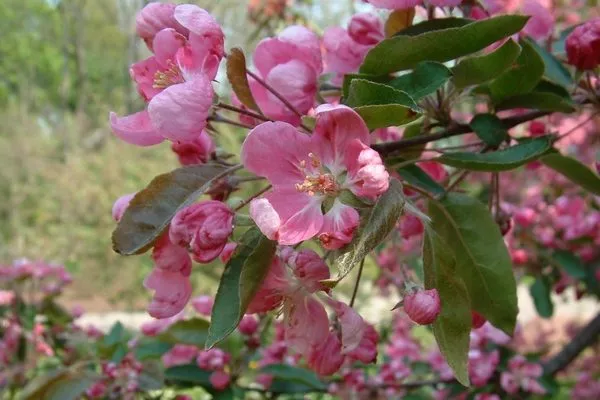
This feature is a significant advantage, as it is not dependent on weather conditions that affect pollinating insects. However, the presence of neighboring apple trees capable of cross-pollination may be beneficial or desirable.
Apple tree varieties that can be planted as donors include:
- Delicious,
- Antonovka,
- Mac,
- Borovinka.
Productivity
Izobilnoye boasts a competitive yield, averaging 180-200 kg per tree. A record yield of 275 kg per plant was recorded by the All-Russian Institute of Breeding.
The number of fruits on a tree is directly proportional to their size: the more fruits there are, the smaller they are. However, this doesn't negatively affect their taste.
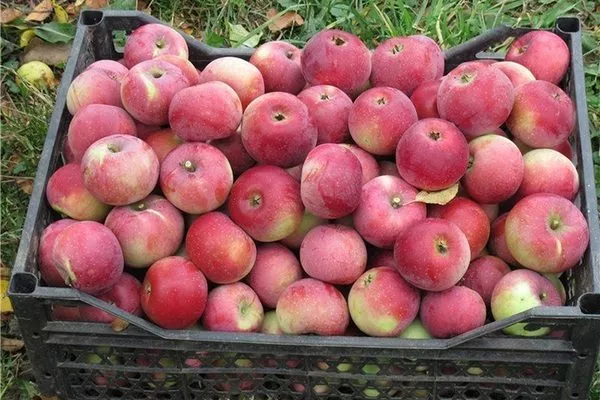
Welsh has a tendency to bear fruit periodically, but this effect is not particularly pronounced. Apples should be picked as they ripen, starting from the periphery of the tree and gradually moving toward the center.
The ripening period of the Welsey apple tree and fruiting
Flowering occurs in May. This apple variety is characterized by rapid vegetative development: the first fruits (two to four apples) can be expected as early as the second or third year after planting, and a full harvest is formed in the fourth or fifth year (if the tree is grown on vigorous rootstocks).
To achieve a bountiful harvest, you will have to wait a little – seven to eight years.
Features of the variety:
- Fruiting is characterized by abundance and diversity: fruits form on rings, spears, twigs, and lateral shoots, resulting in numerous sessile fruiting assemblages. Most of the fruits are concentrated at the ends of the shoots, which should be taken into account when shaping the crown.
- Young trees of the Welsh variety demonstrate high productivity, but after reaching 15 years of age they can begin to show periodicity of fruiting, producing a crop every second year (although this is not an absolute rule).
- The average active lifespan of an apple tree ranges from 30 to 45 years, after which it begins to age and lose its productivity completely. Read on to learn how to extend its lifespan. Here.
- Apples are not firmly attached to the branches, which can lead to them falling at the end of ripening if the harvesting deadlines are not met, lagging behind by five to ten days and hanging longer.
In climates similar to those in the Oryol region, it is recommended to harvest Welsey apples in the second half of September. The shelf life for consumption is until mid- to late February.
Frost and drought resistance
The apple tree is considered winter-hardy, but its frost resistance is not strong – it tolerates temperatures down to -22 to -25°C, which is average. If the temperature drops below these values and the tree is unprotected, then:
- the tops will freeze first;
- then the branches;
- after the root system (will be at risk of damage due to its fragile structure and proximity to the surface).
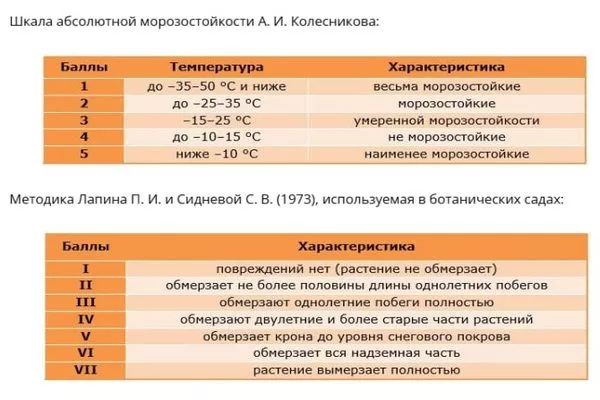
With adequate insulation, including mulching around the roots and wrapping the trunk and branches with roofing felt or agrofibre, apple trees can withstand temperatures as low as -30°C. This is especially true for regions with harsh climates, such as Siberia and the Far East.
The Izobilnoye variety is ideal for arid regions, as it does not tolerate excessive root waterlogging. When choosing a planting site, ensure the groundwater level does not exceed 120-150 cm. During dry summer periods, the apple tree should be watered no more than once every ten days.
Tasting evaluation, taste and scope of use
Welsey apples are characterized by a distinctive flavor, combining tartness and sweetness with a delicate pineapple aroma that gardeners particularly appreciate. This variety has a unique aroma that can resemble strawberry, pineapple, honey, or caramel notes.
The flavor of Welsey apples depends on weather conditions and growing conditions. Warm, sunny conditions produce sweeter apples, while cool, rainy days, and shaded areas result in a less tart, sweeter flavor.
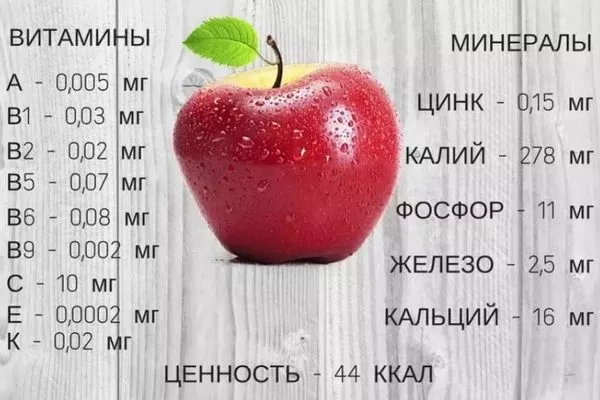
The chemical composition of 100 g of Tartu Pink apples includes:
- P-active substances – 185.1 mg;
- vitamin C – 10.2 mg;
- sugar content (fructose) – 10-10.1%;
- pectins (fiber) – 10-10.5%;
- titratable acids – 0.61%.
Apples have a moderate sugar content, giving them a slightly tart flavor. In harsher climates and without proper care, apples can become more watery.
Welsey apples are widely used:
- fresh;
- in cooking for baking;
- for making juices;
- as a base for jams;
- in any technical processing.
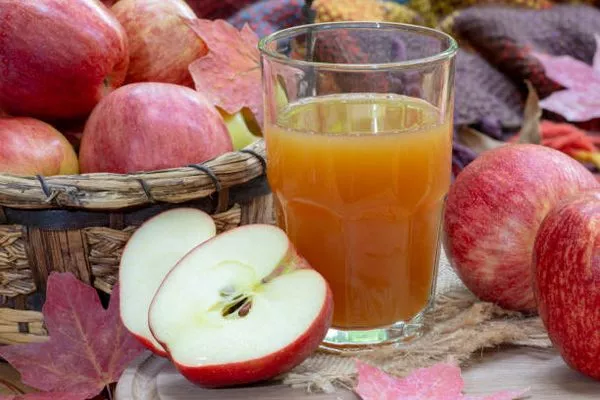
Although the tasting score may be somewhat lower than other varieties, Welsey is very popular due to its unique taste and aroma and is often used for baking, compotes and wines.
Planting the Welsey apple tree
Growing Welsey promises good results when planted in both spring and fall, but spring planting provides better frost resistance. The ideal time for planting is early April, when the risk of frost is minimal.
Place, conditions, seedlings
If spring is the plan, prepare the soil for planting in the fall: dig, fertilize, and clear away debris and weeds. It's recommended to begin preparing the hole a few days before planting, at least 7-12 days.
Criteria for selecting a site for an apple orchard:
- preferably a bright place without penetration of cold winds and drafts (average frost resistance indicators are taken into account);
- Welsh can tolerate some shade, but a well-lit area is preferable, otherwise the taste of the apples may deteriorate.
- The root system is not deep, so it is necessary to ensure that the groundwater is far enough from the surface.
- The variety does not tolerate overly wet soils and swampy areas where root shoots may rot.
Any land is suitable for planting, but only if it is sufficiently fertile.
The rules for choosing a seedling are classic:
- the best plants are offered by large nurseries;
- One-year or two-year-old plants are optimal, and two-year-old seedlings should be in containers;
- height – from 100 to 150 cm;
- roots - without damage, rot, signs of disease or pests, the same applies to the trunk;
- if the seedling is older, then the presence of at least two to four elastic shoots is required;
- If it is a young plant, then there should be evenly spaced and healthy buds along the trunk.
Technology
Before planting, it is recommended to soak the seedling in water for 7-9 hours, adding some clay (approximately 250 g per 5 liters). Before soaking, the roots can be treated with a weak solution of insecticide or potassium permanganate (2-3 g per 5 liters).
Preparing the hole and the planting process is a simple technology:
- Dig a hole. The hole you dig should be 75 to 90 cm deep and about 50 to 70 cm in diameter.
- Set aside the top layer of fertile soil to create the substrate. Add about 500-600 g of various fertilizers to the mixture, including humus, peat, compost, ash, and phosphates. Mineral fertilizers are used only if the soil is poor.
- If the groundwater level is high, improve aeration by adding a drainage layer, which takes up a third of the excavated soil and contains broken pottery, brick, sand, and expanded clay. This layer is poured and filled with water (20-30 liters).
- Place a stake in the center of the hole to secure the seedling. You can also drive it in after filling the hole, but it's best to do it right away to avoid damaging the roots.
- Fill the soil with the substrate, creating a pyramid shape. Place the seedling's roots on it, spreading them out to avoid tangling. Add the remaining fertile soil gradually, layer by layer, compacting it lightly to eliminate air pockets.
The tree's neck should protrude 6-10 cm above the surface, while the grafting site should be 4-5 cm higher. - After filling the soil, compact it again gently, but without applying excessive force. Step back 50 cm from the trunk and form a small mound at this distance. Add 25-30 liters of water into the mound.
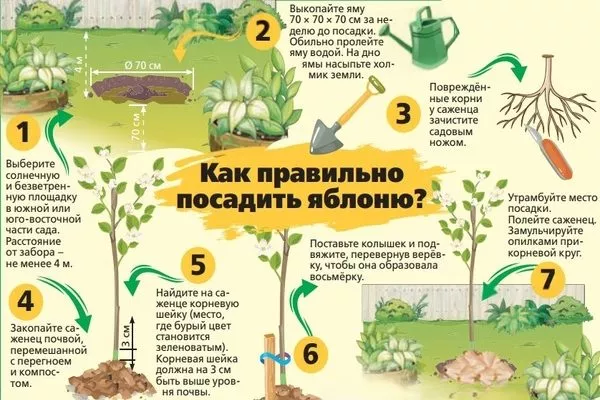
For dwarf tree varieties, the minimum distance between plants is 2-3 m, while for tall species it is recommended to increase the interval to 4 m or more.
Agricultural technology and care
Tree care technology includes such important procedures as soil loosening, crown shaping, watering, and pest control.
Particular attention should be paid to insulation. While the general rules are standard, there are some specific nuances that need to be considered for Welsey.
Loosening the soil, mulching, insulation
All key events must be carried out within a specific timeframe and in strict compliance with the following rules:
- Mulching the tree trunk area is done in the fall and spring, simultaneously with watering and loosening the soil. Hay, straw, or manure can be used, but it is important to avoid direct contact of the manure with the tree trunk.
- Along with mulching, it is recommended to carry out cleaning: remove fallen organic matter, weeds and undergrowth.
- To protect the tree from frost and cold temperatures, it is necessary to cover the root zone with grass mats or similar materials. This is especially important due to the tree's average winter hardiness.
To ensure the tree survives the winter cold, first clear it of damaged branches and paint the trunk white (read how and what to whitewash an apple tree with). Here). To protect the soil around the trunk, resort to mulching with sawdust or spruce needles.
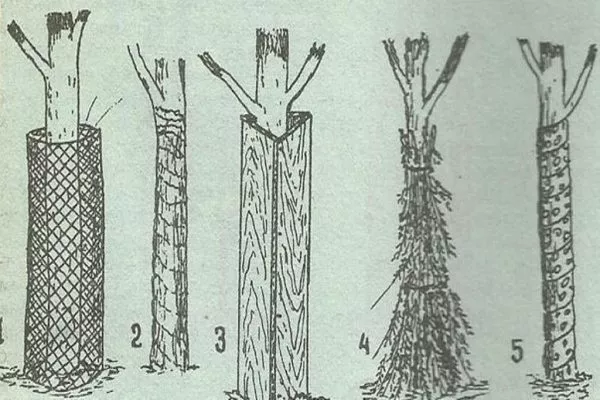
If a very harsh winter is expected or you're working with young saplings, it's important to insulate the tree by covering the trunk and branches with roofing felt, burlap, or tar paper. This will also protect the tree from rodents. Before starting work, coat the trunk with grease or lard for additional protection.
Watering
During dry weather, regularly moisten the soil using the standard method: add 20-30 liters of water every two weeks. If it rains during this period, cancel the treatment.
Although inadequate watering will not cause significant damage to Welsey, overwatering also has a negative impact on the tree.
Top dressing
Productive plants readily absorb organic fertilizers:
- steamed manure;
- bird manure;
- bone meal;
- mixtures based on wood ash.
In anticipation of autumn, before the fruits are fully ripe, use fertilizers with a complex of microelements:
- potassium salts;
- phosphates;
- organic components.
During the spring awakening period, apply nitrogen-containing compounds.
Trimming
Weaithy tree requires the following tree pruning procedures:
- Formative. Perform this procedure twice a year—in April and October, when the sap no longer flows through the branches. At this time, remove excess branches, and shorten the remaining ones by a third.
- Sanitary. This is a critical step in maintaining the health of the tree and involves regularly removing diseased, dead or damaged branches.
- Rejuvenating. It begins when the tree is 10 years old, after it's been planted in open ground, and involves completely pruning two or three older shoots. This isn't necessary for fruit production, but it can improve results with cross-pollination.
Pest and disease control
Despite the apple tree's natural defense mechanism against some fungal diseases, they still require control. Moreover, the apple tree is susceptible to diseases and pest attacks:
- Cytosporosis - A dangerous fungal disease that manifests as dark growths on the bark. This disease is untreatable, so it is recommended to remove affected branches and destroy them by burning.
- Rust - It can be identified by characteristic yellow-brown spots on the leaves. To combat this disease, use fungicides such as Fitosporin or Topaz, spraying them onto the tree's crown.
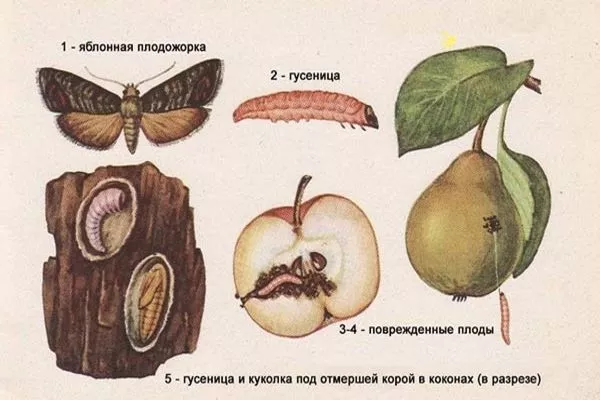
- Codling moth – A small moth that lays eggs in the bark. The larvae immediately move to the apples and begin feeding on them. If left unchecked, the codling moth can destroy the entire crop. Insecticides such as Tira Aktara or Actellic are used to control the pest.
- Hawthorn - Although the moth itself isn't a serious threat to apple trees, its larvae can cause significant damage to leaves and fruit. To prevent this, trees are sprayed with insecticides before flowering.
Storing apples
To preserve your harvest for the long term, adhere to the key requirement: high humidity in the room to prevent drying out and reducing the fruit's quality. Otherwise, the requirements are standard:
- a room with moderate heat – within +3…+7°C;
- using boxes with ventilation holes, in which the fruits are placed under a layer of straw, hay or paper.
You can learn about interesting ways to store apples Here.
Pros and cons
It is worth noting that the reduction in fruit size during a bountiful harvest can be considered not a disadvantage, but a characteristic of the variety, since it does not affect the taste and overall yield.
Reviews
Welsey apple trees are suitable for garden plots, homesteads, and commercial orchards. Among their advantages are scab resistance, abundant fruiting, and excellent flavor. The apples have excellent marketability. Most of the Welsey apple tree's drawbacks (reduced yield with large fruit sets and a shallow root system) are relatively minor.