
The "Svezhest" apple tree is prized for its high frost resistance and resistance to common diseases, including scab. This variety is easy to care for and adapts well to the climate of central Russia. Its apples are renowned for their excellent presentation, pleasant taste, and long shelf life, making them ideal for both fresh consumption and processing.
History of selection
The "Svezhest" apple variety is considered relatively new, having been developed in the 1970s. A team of specialists from the All-Russian Research Institute of Fruit Crop Breeding, E. N. Sedova, V. V. Zhdanova, and Z. I. Serova, worked on its selection.
For hybridization, the Antonovka-Krasnobochka variety and the complex hybrid PR12T67, obtained as a result of crossing F2 M. Floribunda and the American variety Welsi, were used.
The crop bore its first fruits in 1985. By 1994, it had already been classified as an elite variety and submitted for state testing, and in 2001, it was officially included in the State Register.
Description of the Freshness apple tree with photos
This variety boasts numerous advantages, making it popular among gardeners in the central regions. The hybrid is prized for its scab resistance and ease of care, making it particularly suitable for growing in variable weather conditions and with minimal tillage.
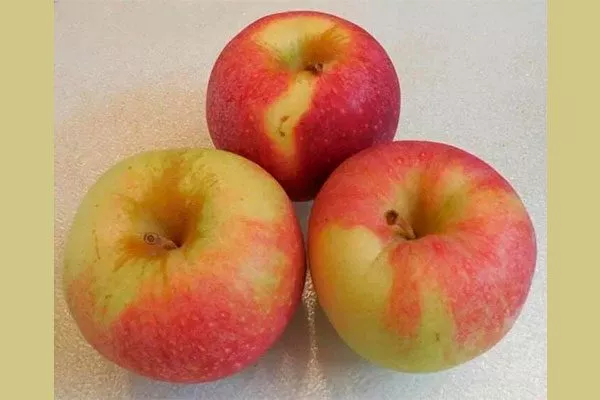
The appearance of the tree
It is a medium-sized plant with vigorous growth. It reaches a height of approximately 4 m, while maintaining a compact, rounded crown.
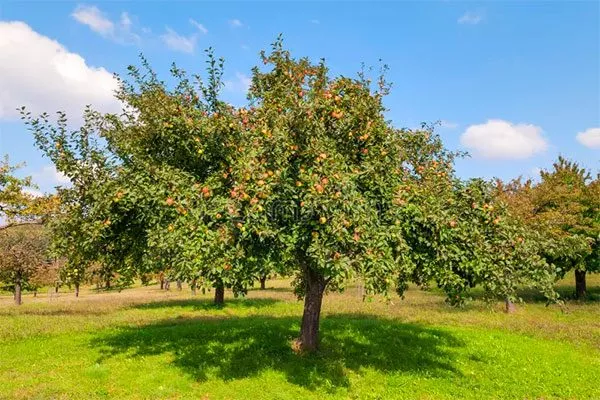
Distinctive characteristics of wood:
- Main branches The branches are slightly curved, and the shoots grow vertically. The bark is smooth and brown. The lateral branches are medium-thick, geniculate, light brown, and slightly pubescent at the tips.
- On the stems Small lenticels are visible. The buds are smooth, conical in shape, and tightly pressed to the shoots.
- Leaves Large, broadly ovate, deep green, with serrated edges and curved tips, they are borne on long, lightly haired petioles. The leaf blade surface is glossy, slightly concave, and wrinkled, with distinct veins.
- Bloom The "Freshness" variety produces abundant flowers. The corymbose inflorescences consist of 4-6 white-pink buds. The flowers are medium-sized and have an elongated, saucer-shaped configuration.
Description of fruits
Apples are characterized by moderate sizes – on average they weigh 130-150 g, rarely reaching 200 g. The main characteristics of the fruit:
- form - round, slightly flattened, with pronounced wide ribbing;
- skin – oily, glossy, at the stage of technical ripeness it is colored greenish-yellow, on the illuminated side a bright red streaked blush appears;
- subcutaneous points – yellow tint;
- peduncles – straight, medium length and thickness;
- funnel – clean, without any liveliness;
- cup – closed;
- saucer – wide and deep, with noticeable grooves;
- seminal chambers – closed, located in the center, inside are dark brown seeds;
- core – pronounced, large;
- pulp – When cut, it is dense, fine-grained, with a slight greenish tint, and very juicy.
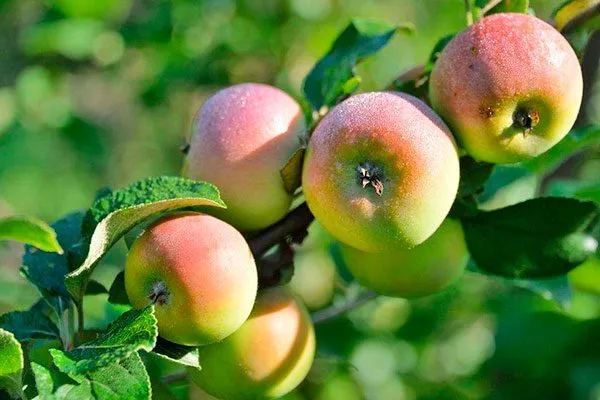
Characteristics of apple tree Freshness
This hybrid is prized for a number of significant qualities, making it a popular choice among gardeners in our country. Before growing this crop, it's important to understand all the nuances to avoid potential problems.
Taste qualities
The apples have a pleasant, balanced flavor, earning them a tasting score of 4.3. Their aroma is mild, typical of most apple varieties.
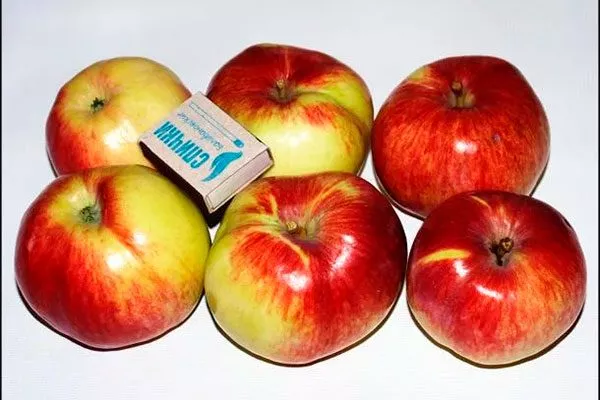
Thanks to its distinct sweet-tart flavor, this hybrid is considered a table variety rather than a dessert one. The fruits are used in a variety of dishes and preserves:
- salads;
- jams and preserves;
- compotes and juices;
- pies, casseroles and other baked goods;
- pickled and canned apples for winter supplies.
Apple tree ripening time Freshness, fruiting
It's an early-fruiting variety, classified as late-winter based on its ripening date. Technical maturity occurs around mid-September, which is the recommended time to begin harvesting. At this point, the apples remain firmly attached to the branches and can remain fruitless until November.
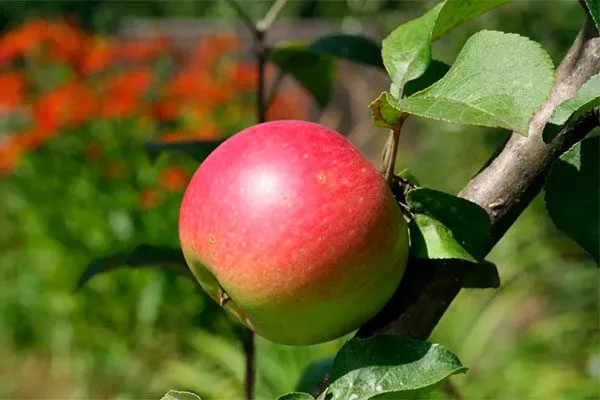
Fruiting begins in the 9th year after planting in the garden. However, if using rootstock and grafting onto a mature tree, the first fruits may appear as early as the 3rd or 4th year.
Apple tree winter hardiness, freshness and growing regions
The hybrid is successfully cultivated in regions with harsh climates due to its natural frost resistance. The trees tolerate sudden temperature fluctuations well and are resistant to recurrent frosts.
During periods of extreme heat or cold, it is recommended to regularly inspect plants for damage and signs of disease – this is an important condition for a successful wintering and healthy crop.
Its high adaptability makes it possible to grow the Freshness apple tree in the Moscow region and other areas with cool and unstable climates. Thanks to its low maintenance, the apple tree has become widespread in central Russia. It requires little care and easily tolerates adverse weather conditions.
Pollinators and productivity of the Freshness apple tree
The crop has a low self-pollination capacity, so to ensure a bountiful harvest, pollinator trees must be planted nearby. Varieties with similar flowering times, especially late-blooming apples, are best.
Under standard growing conditions, a single plant can yield up to 45 kg of fruit. The yield per hectare is approximately 150 centners.
Apple tree fruit production increases with age. While the control variety's productivity previously stood at 61 centners per hectare, in recent years this figure has reached 187 centners per hectare, subject to proper care.
Disease resistance
The hybrid is noteworthy for its robust immunity and successfully resists most fungal and bacterial infections. The variety is particularly valuable due to its genetic resistance to all five known races of scab, one of the most dangerous apple diseases.
Subspecies and rootstocks
While it's difficult to say whether the Freshness variety has a wide variety of subspecies, it is successfully grown on various rootstocks. The most popular is the dwarf rootstock, which produces compact trees approximately 2-2.2 m tall.
These apple trees begin bearing fruit earlier, and their fruits are slightly larger than those of the mother plant. However, dwarf trees have lower frost resistance and a shorter lifespan—usually to 30-45 years.
Planting the Freshness apple tree
When growing this crop, choose open, sunny areas—in the shade, the tree will be weak and the apples will be small. Follow these recommendations:
- The plant does not tolerate high groundwater levels well. Because the roots penetrate deep, they can rot if water is too close, often resulting in the tree's death.
If the groundwater level is above 2.2-2.5 m, install a special "glazing blocker" - for example, dig a sheet of slate to a depth of about 2 m or lay a layer of roofing felt or tar paper to prevent moisture penetration. - The optimal time for planting is spring, when the threat of frost has passed and the buds have not yet opened (usually early to mid-April). This planting ensures better survival.
Planting in the fall is also possible, but choosing the right time is more difficult: the sap flow must have stopped, and frost must be at least 3-5 weeks away. When planting seedlings with a closed root system, continue planting throughout the growing season. - Prepare a hole approximately 60 x 90 cm in size a week or even 4-5 days before planting. Fill the bottom with fertile soil with a small amount of fertilizer, provide drainage, install a stake for tying, and water thoroughly (15-35 liters of water).

Step-by-step instructions:
- Place the seedling vertically so that the root collar rises 5-7 cm above the surface.
- Cover the roots with soil first to half the depth, compact it with your hands to remove air pockets, then add the remaining soil and lightly compact it.
- The final stage is mulching the soil surface around the tree.
Care instructions
To grow a strong and healthy tree, it's important to provide it with proper care. Follow standard agricultural practices:
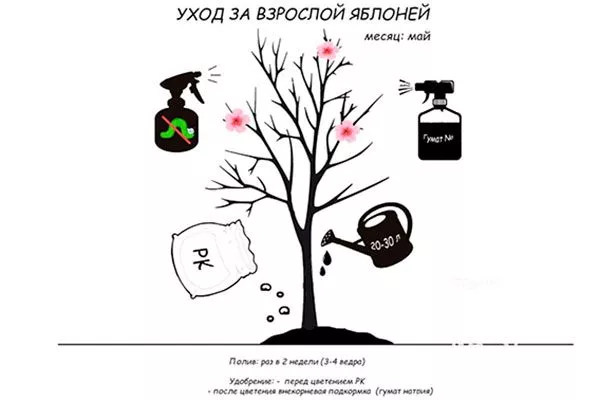
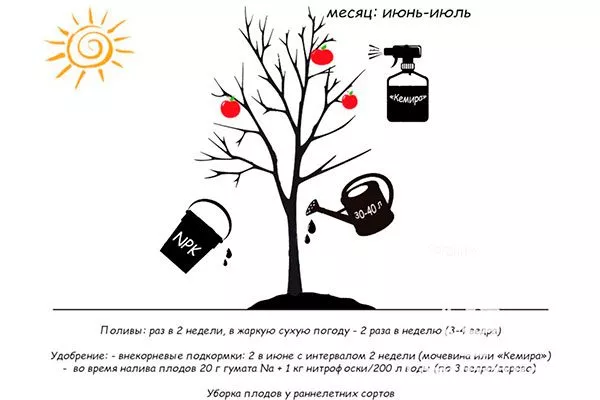
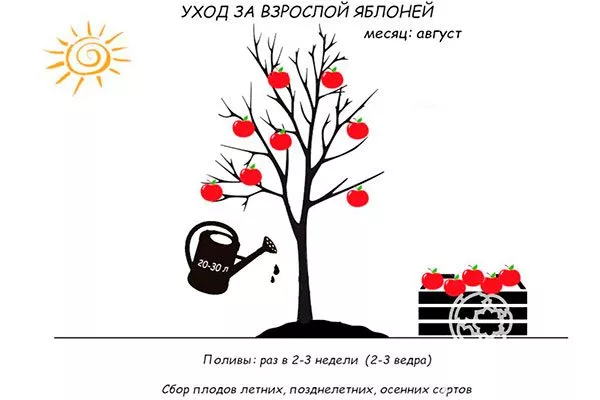
- Watering. In the first weeks after planting, water regularly, every 4-7 days, depending on the weather. Then, water 5-7 times per season. Irrigation is especially important during the period of apple formation and ripening to prevent reduced yield and quality during drought.

- Top dressing. Begin 2 years after planting. In the spring, apply nitrogen fertilizers (urea, ammonium nitrate) through thawed soil or as a solution.
Before budding and setting of ovaries, phosphorus-potassium fertilizers (superphosphate, potassium sulfate), as well as organic matter (infusion of chicken manure, mullein, herbal infusions) are important.
During budding, apply foliar fertilizer with boric acid or Boroplus, and during flowering, spray with Aquarin. In the fall, add organic matter to the tree's trunk circle, raking it in lightly.
- Trimming. Begin in the tree's third year to structure the crown and prevent it from becoming too dense. Remove shoots growing inward, suckers, and dead, broken, and pest-damaged branches.
Diseases and pests
The "Svezhest" apple variety is characterized by high disease resistance. Breeders created this hybrid with a strong immune system and a unique gene that protects against most common diseases.
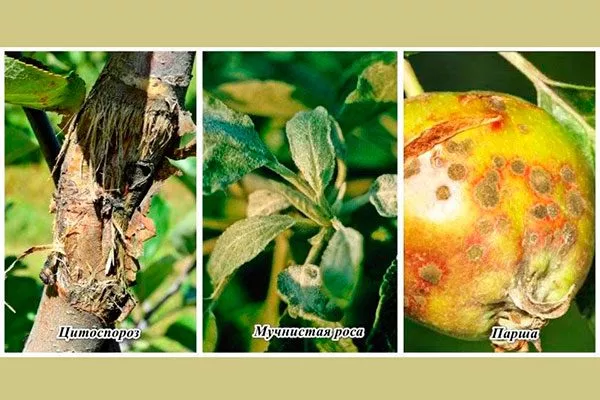
Despite excellent scab resistance, trees can still be susceptible to diseases such as black canker and fire blight. Prompt treatment of these diseases is crucial – without it, you can lose not only the harvest but also the tree itself, as the infection often leads to its death.
Helpful tips:
- Fire blight is often caused by poor care. To save a damaged tree, remove the affected areas and thoroughly disinfect the remaining plant.
- Young seedlings are particularly susceptible to attack by black canker, which is very difficult to eradicate once it has penetrated the soil. To prevent this, apply potassium fertilizers in advance.
Besides diseases, apple trees are also susceptible to pests. These can be controlled in a variety of ways:
- If the trees are attacked by leaf rollers, spray them with a solution of Nitrafen;
- Dandelion infusion helps protect branches from green aphids;
- A solution of chlorophos is effective in controlling apple moth;
- Treatment with a solution of Karbofos will protect against apple blossom beetles - do this before flowering begins.
Collection and storage
Apples can be picked as early as late summer, but early to mid-September is considered the optimal time. It's not necessary to harvest all the fruit at once, as they don't fall easily and can remain on the tree for a long time.
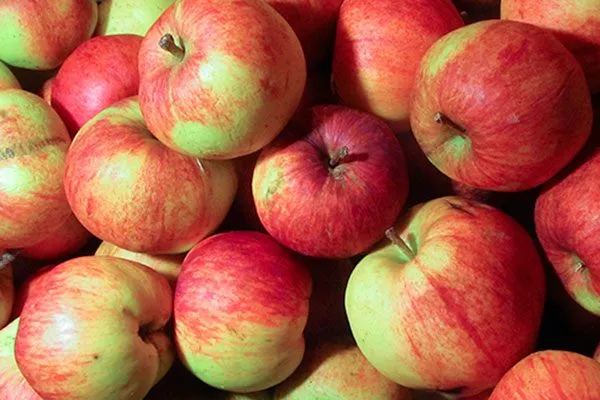
Fruits of this variety have excellent shelf life. When stored properly—at the right temperature and humidity—they retain their flavor and appearance for up to six months.
Pros and cons
The main advantage of this fruit crop is its high resistance to drought, disease, and frost. Additionally, gardeners often highlight the following advantages of the variety:
The hybrid has virtually no drawbacks, but some beginners consider the need for regular sanitary pruning in spring and autumn, which is important for maintaining the correct crown shape, a disadvantage.
Reviews
The "Svezhest" apple tree combines reliable, high-quality yields with resistance to drought and fungal infections. This variety is suitable for both experienced and novice gardeners thanks to its easy cultivation and excellent survival rate. Its excellent shelf life and flavor ensure consistent consumption and long-term storage.