
Stroevskoye is a winter-hardy apple variety prized for its high productivity and excellent fruit flavor. The apples are large, with juicy, sweet flesh and a pleasant tartness. This variety is characterized by good shelf life and excellent transportability, making it popular for cultivation in various regions with varying climates.
History of selection and zoning
The work began in the late 1970s. In 1981, the first hybrid seedling, number 814, was obtained at the experimental station of the All-Russian Research Institute of Fruit Crop Breeding. After open pollination, it was identified as a distinct variety. Its authors are considered to be E. A. Dolmatov, E. N. Sedov, Z. M. Serova, and V. V. Zhdanov.
By 1995, the variety was considered elite, and in 1998, it was sent for production trials to farms in central Russia. In the fall of 1999, at the VDNKh-EXPO exhibition, Stroevskoye was named a finalist and received a gold medal.
In 2001, it was officially included in the State Register for cultivation in the following regions:
- Central District;
- Central Black Earth Region;
- Lower Volga region of Russia.
Description of the Stroevskoye apple tree with photos
It's important to understand the key qualities of the crop to achieve abundant harvests. Below are the apple tree's key characteristics and its positive attributes.
Crown
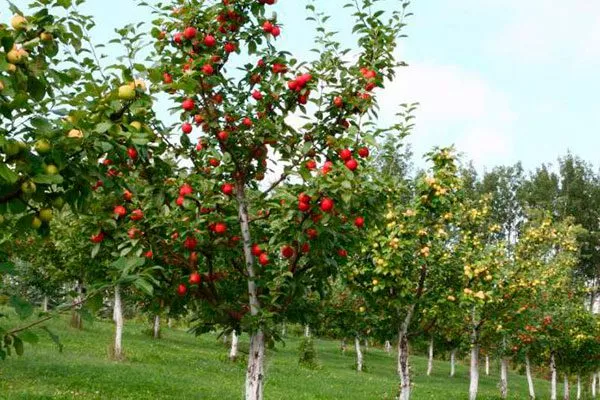
Trees of the Stroevskoye variety are medium-sized, fast-growing, and form a broadly pyramidal, moderately dense crown. Plant characteristics:
- Bark - Smooth, gray. Fruiting is mixed: apples are set on both rings and spears.
- Escapes – Medium-thick, brownish in color, well-pubescent, geniculate or faceted in shape and with a characteristic arcuate curvature. Lenticels are small and few in number. Buds are conical, appressed, and pubescent.
- Leaves - The leaves are large, light green, sometimes with a yellowish tint. The shape is elongated-ovate with a pointed tip and a spiral twist. The surface is wrinkled, glossy, with pronounced coarse venation. The leaves are concave in the center, the edges are wavy and serrated. The petioles are medium-length, thick, and pubescent.
- Crown – It is quite spreading, so when planting it is recommended to maintain a distance of at least 4 m between trees.

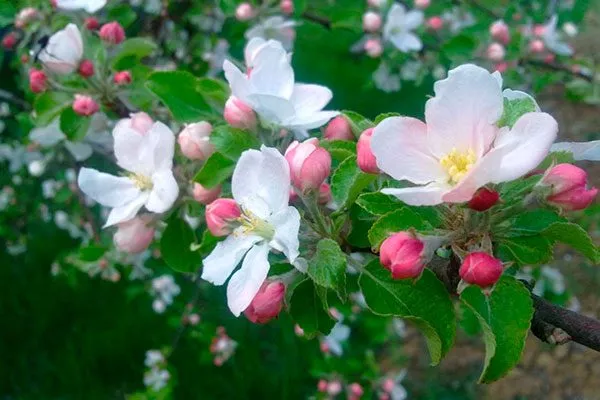
- Flowers – The flowers are collected in corymbose inflorescences of 4-6. The buds are light pink, the flowers are flat, with rounded, non-merging petals of a deep pink color. The pedicels are short, the pistils are at the level of the anthers, fused, and pubescent.
Description of fruits
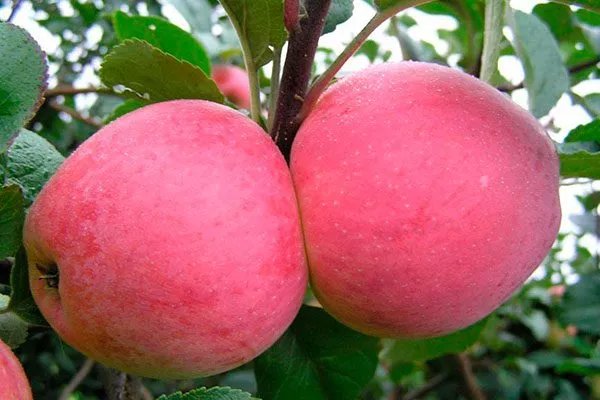
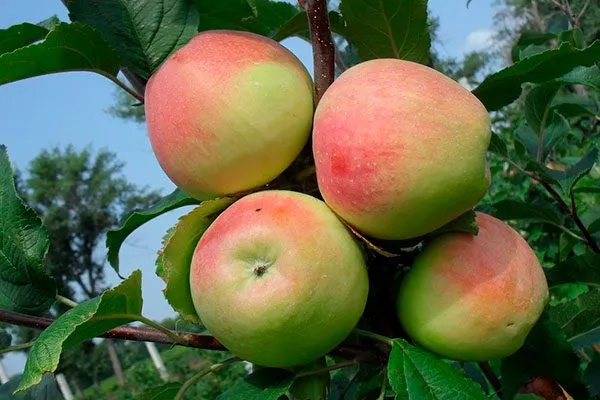
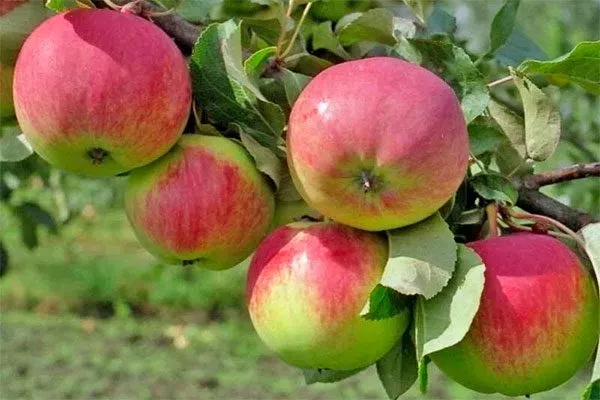
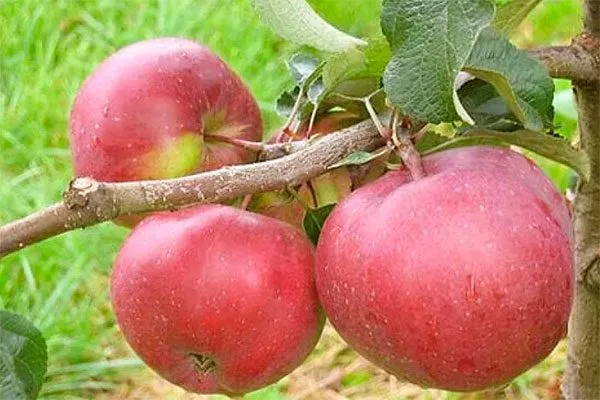
The apples are generally medium-sized, but larger specimens are also available. Distinguishing features of the fruit:
- weight - on average it is 110-120 g, maximum – up to 170-180 g;
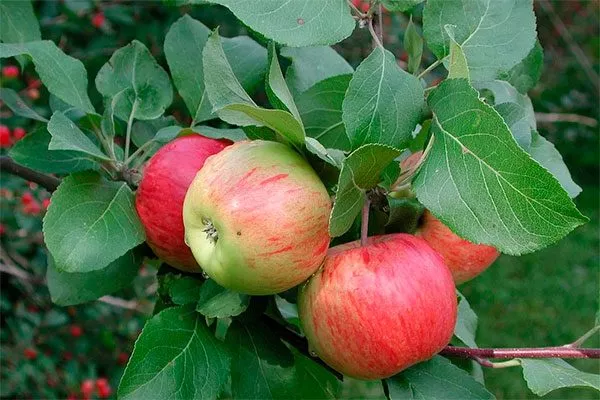
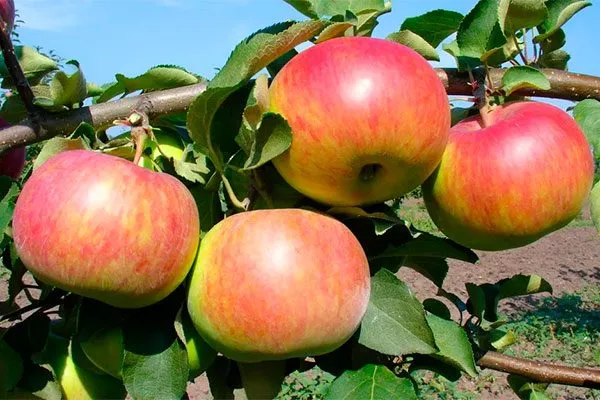
- form - conical, slightly flattened and slightly beveled, with a smooth, shiny surface without pronounced ribs, the wax coating is almost invisible.
- peel shade – At harvest time, the apples are greenish-yellow in colour, which over time turns into a rich golden-yellow tone;
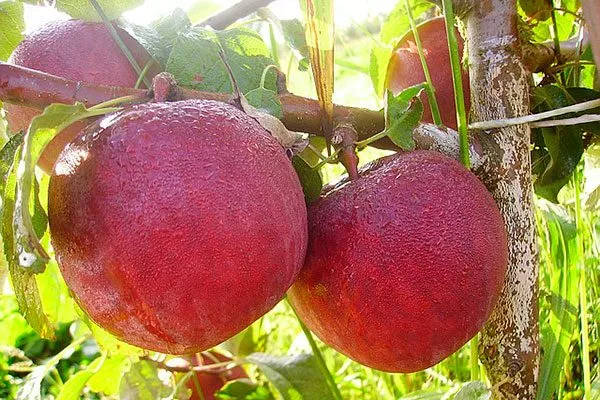
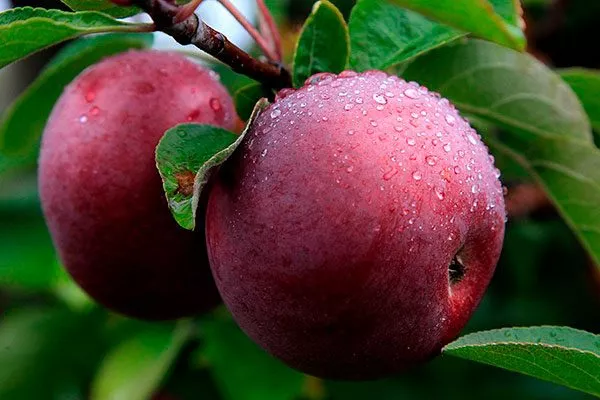
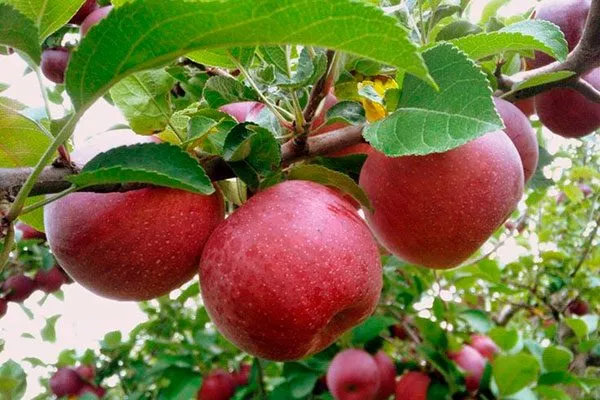
- cover color – is represented by a blurred blush of a reddish-crimson hue with blurred stripes;
- subcutaneous points – large, light gray;
- peduncle – thin, slightly rusty, closed cup, narrow saucer, grooved shape;
- seminal chambers – closed, and the seeds are narrow, conical, light brown in color.
Stroevskoye apples are distinguished by their excellent shelf life and resistance to transportation, making them suitable for both home and commercial cultivation.
Characteristics of the Stroevskoye apple tree
Among the variety's key characteristics, special attention is paid to fruit taste, yield, and frost resistance. These attributes are important for both private gardeners and commercial growers. The key parameters are listed below.
Taste qualities
One of the main advantages of this variety is its excellent taste. The apples received a high rating in the tasting, with a score of 4.4 out of 5. Their visual appeal is also high, with a score of around 4.5.
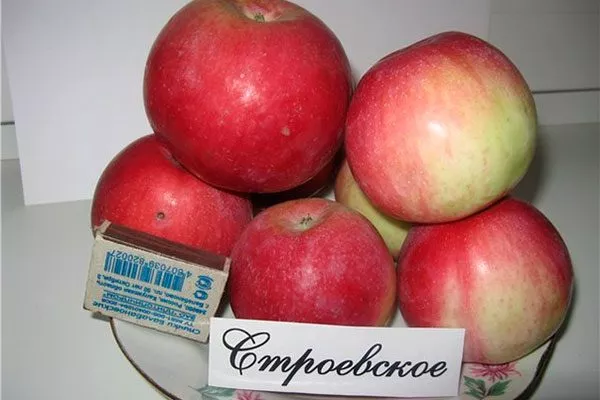
Stroevskoye is a table apple variety. The apples have a sweet, refreshingly tart flavor, and the flesh is white, firm, and juicy, with a moderate aroma. The fruit's nutritional composition includes:
- simple sugars – about 9%;
- acids – up to 0.52%;
- Vitamin C – more than 8.5 mg per 100 g;
- P-active substances – over 430 mg per 100 g.
The fruit is consumed primarily fresh—due to its good shelf life, the flavor intensifies over time. Initially, the flesh is slightly greenish, eventually acquiring a classic white color. The fruit is suitable for processing—it's used to make jam, juice, and other preserves.
Ripening and fruiting of Stroevsky
This variety is characterized by rapid growth and early development. Given proper care and favorable weather, the trees produce generous harvests.
The beginning of fruiting
The Stroevskoye apple tree is characterized by late fruiting. The first individual apples appear only 4-5 years after planting. Experienced gardeners recommend removing buds during this period to allow the plant to focus its energy on crown development and root strengthening.
The first full harvest, reaching 10-15 kg per tree, usually forms in the 8th-9th year of cultivation in open ground.
Flowering time
The plant blooms in May. The exact timing of bud opening depends on the climate and current weather conditions: flowering typically begins in the first or second ten days of the month, but in cold springs it can be delayed until the end of May.
This variety's flowers are large, gathered in compact clusters, flattened, and have fleshy petals. They are white with a delicate pink tint, fragrant, and densely cover the branches, giving the tree a decorative appearance.
Fruiting and growth
The trees are characterized by rapid growth, reaching their maximum height within just a few years. Average annual growth is 45-60 cm per growing season. Fruiting develops even more rapidly.
Harvesting takes place in the second half of September or early October. There's no need to rush – the fruits hold firmly to the branches and rarely fall, except when damaged by pests.
However, the variety has a limited shelf life: in specialized storage conditions, the apples will last until March, but without it, no longer than the end of December. After this period, the flesh becomes loose and loses its flavor, so it is recommended to consume or process the fruit in advance.
Productivity and factors affecting it
Stroevskoye is prized for its high productivity in both commercial and amateur cultivation. Mature trees aged 8-10 years yield an average of 129 centners per hectare. A single tree can yield over 50 kg of ripe fruit.
The following factors influence the indicators:
- quality of planting material (healthy seedlings that meet varietal characteristics);
- soil type and fertility (loamy soil with good drainage is preferred);
- regularity of agricultural care (pruning, watering, fertilizing, loosening, protection from diseases and pests);
- climatic conditions of the region (in warmer regions, fruiting may occur earlier);
- the presence of pollinators and insect activity during flowering;
- the condition of the crown and the degree of its density, which determines the access of light and air to the fruit formations.
Frost and disease resistance
The apple tree is characterized by good frost resistance. In tests conducted at temperatures down to -40°C (under controlled conditions), no significant freezing of the deep layers of bark and cambium was recorded.
The buds were only partially damaged (score 1.2 points out of 5 possible), and damage to the wood of the branches was 1.6 points – this indicates the high winter hardiness of the variety.
The plant demonstrates resistance to common diseases and pests. However, to maintain the tree's health and preserve the harvest, preventative treatments are recommended in the spring:
- before bud break;
- after flowering.
It is especially important to pay attention to protection against scab and codling moth, using biological products or modern systemic fungicides and insecticides.
Pollinators of the Stroevskoye apple tree
One of the variety's significant drawbacks is its inability to self-pollinate. To ensure a full harvest, the tree must be planted with other apple varieties nearby to act as pollinators.
It is not necessary for the trees to be similar in characteristics; the main thing is that their flowering periods coincide.
Good pollinators for Stroevsky are winter varieties that bloom in the second half of May, such as:
- Kandil Orlovsky;
- Imrus;
- Memory of the warrior;
- Veteran.
Rootstocks and subspecies
Growing the Stroevskoye apple tree from seed will not yield a good harvest in the future, and the fruiting period will also be significantly delayed. Since the variety is already characterized by late fruiting, the optimal solution is to use a dwarf rootstock for grafting.
This will significantly speed up the appearance of the first apples. Dwarf rootstocks G-134 and 3-17-38 are ideal for this purpose; they are highly compatible with the variety and have high winter hardiness.
Planting an apple tree in Stroevskoye
Choosing the right location directly impacts not only plant growth but also the quality of the future harvest. This variety thrives best in fertile soil with a neutral or slightly acidic reaction, without excess alkalinity. Sod-podzolic, gray forest soils, or chernozem are ideal.
Basic requirements:
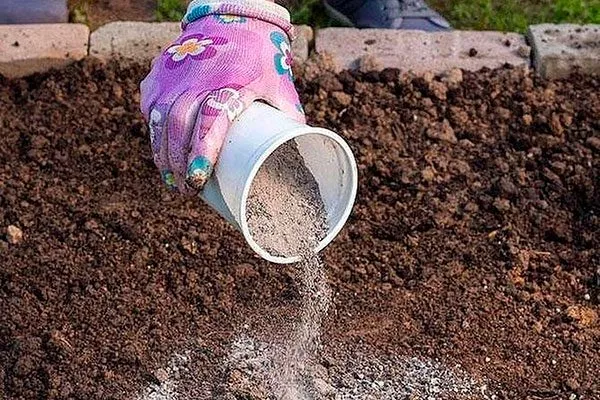
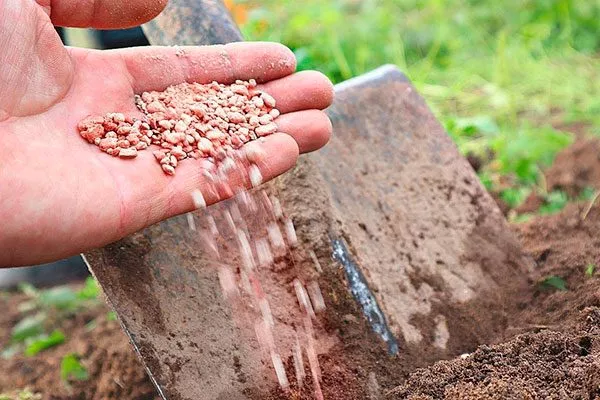
- A week before planting, it's important to thoroughly fertilize the soil to ensure even penetration and soil settlement. Use a mixture of organic and mineral solutions: for 4 kg of humus or compost, add 1.5 kg of superphosphate, 2.5 kg of phosphate flour, 1 kg of wood ash, and 150 g each of potassium sulfide and potassium chloride.
Fresh manure should not be used - it decomposes slowly and can cause over-watering and reduce the survival rate of the seedling. - To protect the apple tree from excess moisture, the site must have a good drainage system—this is especially important if the groundwater level is high. The tree does not tolerate stagnant water in the roots.
- Light is another important factor. The tree prefers sunny locations, and shade negatively impacts growth and fruiting. The ideal location is a well-lit area with moderate to high sunlight.
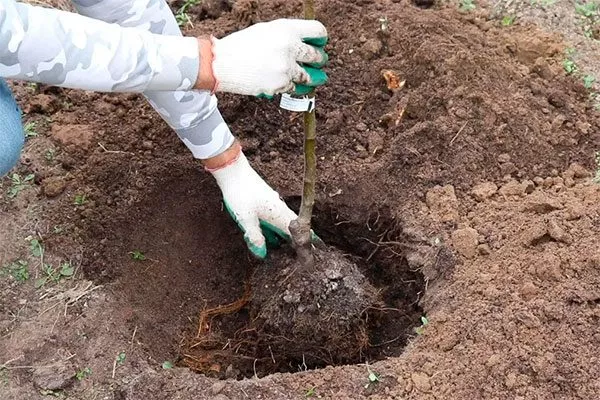
The planting technology for the Stroevskoye apple tree variety is standard:
- Dig planting holes measuring 80x100 cm, keeping a distance of about 4 m between them.
- Place a layer of small stones on the bottom for drainage.
- Prepare a fertile mixture of garden soil, peat, humus and sand in a ratio of 2:1:1:1.
- Place the seedling in the center, fill it with soil so that the root collar remains 5-7 cm above the soil level.
- Moisten with settled water and mulch the tree trunk circle.
Care instructions
Young apple trees require careful care to successfully adapt to new conditions. Follow these simple agricultural practices:
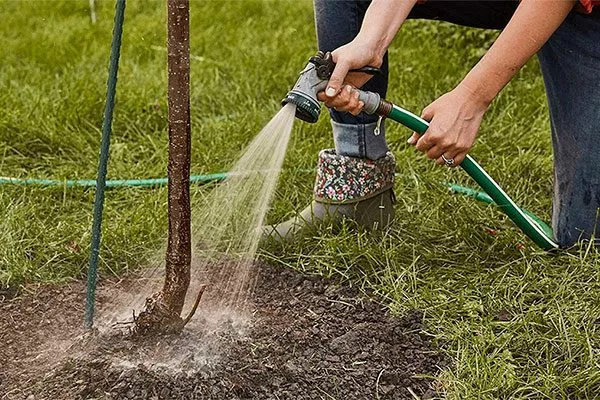
- Watering. During the first year, water the plant once every two weeks, then gradually reduce the frequency to three times per season. For mature trees, watering in spring and fall is sufficient, but during dry periods, increase the volume and frequency of watering.
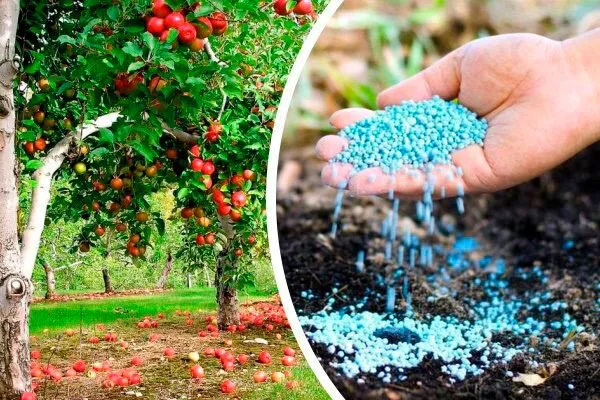
- Top dressing. The tree is relatively low-maintenance when it comes to fertilizer, but regular feeding increases yield. In early spring, apply a 1:10 dilution of rotted manure; in late spring, add compost; and during flowering, add minerals.
Before frost, apply organic fertilizers to strengthen the crop.
- Pruning and shaping. Begin structuring the crown with one-year-old seedlings: prune the trunk, leaving a height of 70-90 cm to form lateral branches. Leave 40-50 cm between them, and arrange the branches in tiers, preventing them from growing inward. Shorten the branch tips to limit the width of the crown.
Perform sanitary pruning annually, removing diseased and damaged shoots.
The variety is quite frost-resistant and does not require mandatory shelter in winter, but if the temperature drops below -40°C, it is better to protect the tree with additional shelter.
Collection and storage
Begin harvesting apples between September 15 and 20. For storage, use wooden boxes or other containers, placing them in cellars or basements with the following conditions:
- complete darkness;
- temperature from 2 to 8 degrees Celsius;
- humidity about 70%;
- regular ventilation.
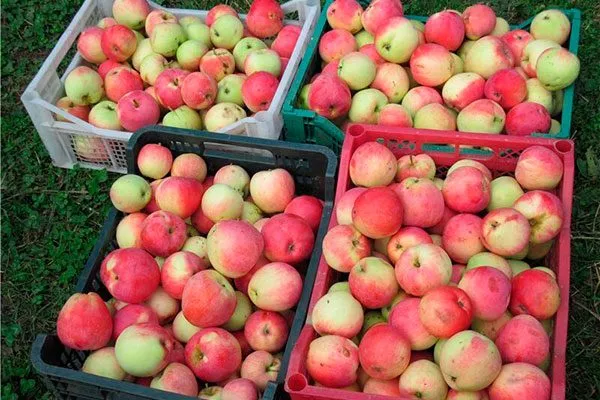
Without observing these conditions, the fruits remain fresh until the end of February, and if stored properly, they will be suitable until late spring.
Pest and disease control
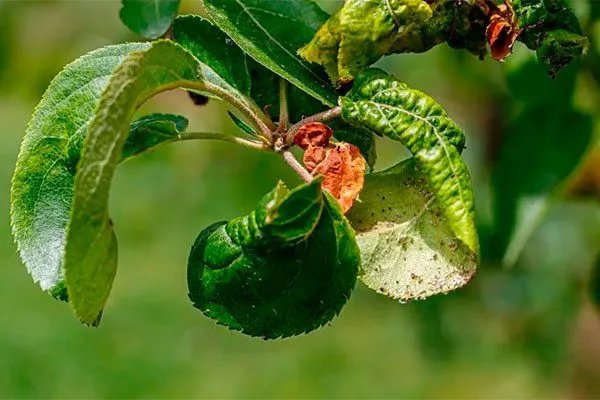
The variety has high resistance to diseases and insects. However, preventative measures are important:
- To prevent powdery mildew, treat the plant with colloidal sulfur (80 g per 10 l of water);
- The fight against moniliosis includes the timely removal and destruction of affected fruits.
Similar varieties
The Stroevskoye apple tree has several similar varieties, similar in appearance, fruit flavor, and tolerance to adverse conditions. Similar varieties are listed below:
- Freshness – A tree about 5 m tall with a spherical crown. It is resistant to scab and tolerates frost well. The fruits are barrel-shaped, sweet with a slight tartness.
- Antaeus - A compact plant growing to 2.5 m tall with a spherical crown. A frost-hardy winter Belarusian variety. The apples are large, sweet and tart.
- Darunak - A medium-sized tree growing to 4 m tall. A late-winter, productive variety, resistant to scab and low temperatures. Easy to care for. The fruits are crimson, sweet and tart.
- Spartan - A medium-sized, high-yielding variety. It is resistant to scab and can withstand severe frosts. The fruits are medium-sized, juicy, and sweet.
- Enchantress - A winter-hardy variety, it bears fruit from the seventh year. It is moderately resistant to scab. The apples are small, aromatic, and sweet with a hint of tartness.
- Christmas - The tree grows to a height of approximately 3 meters. It bears fruit quickly and is highly productive. It is rarely affected by scab and tolerates winter cold well. The fruit has a bright blush but falls quickly.
- Jonathan - A plant reaching up to 3 m in height. It is resistant to scab and powdery mildew. The fruits are tasty, juicy, sweet and tart, and a bright crimson color.
Pros and cons
Reviews
The Stroevskoye apple tree combines reliability and excellent flavor, making it popular among both novice and experienced gardeners. The variety is disease and frost resistant, and the apples retain their quality for a long time. Pollinators are required for consistent fruiting, and proper care ensures a bountiful harvest of delicious, intensely flavored fruit.