
Trunk damage is dangerous not only to the health but also to the life of the apple trees. Prevent it from occurring in any way possible, and if detected, repair it immediately.
What are the dangers of trunk damage?
Regardless of the extent of damage, the tree needs immediate help.
Consequences of trunk damage:
- infection with fungal diseases;
- weakened immunity;
- decline in crop yields;
- death of a tree.
What types of barrel damage are there?
Before repairing trunk damage, determine the underlying cause. All possible defects are caused by mechanical stress or infection. Each case requires its own treatment.
Mechanical damage
As a result of mechanical impacts, the apple tree trunk suffers various types of damage—cut wounds, cracks, peeling bark, etc.
Such defects may appear as a result of human actions, due to natural factors - hail, wind, temperature changes - or due to natural aging.
Splitting of the trunk
Strong winds can cause the apple tree trunk to split, leaving a large wound that doesn't heal on its own. The tree won't recover unless the gardener helps it.
If the trunk splits, immediately treat the wound with garden pitch, oil paint based on drying oil, or Bugorkov's balsam. Additionally, apply a mixture of glue and stimulating agents.
How to prepare a healing composition:
- Mix equal parts of Kornevin and Fundazol, add wood ash.
- Crush one Immunocytophyte tablet and add it to the previously prepared mixture.
- Add a little BF-6 glue. Just enough to get a mixture the consistency of sour cream.
Apply the prepared mixture to the wound, covering the healthy areas of the bark. Use the mixture immediately after preparation; it cannot be stored for long periods.
It is prohibited to treat wounds on the trunk with tar, kerosene and petroleum products.
Impact of pests
If you don't protect your tree trunk from the sharp teeth of mice, hares, and other rodents during the winter, you'll have problems. Animals seek out various prey during the winter, and so they gnaw on the bark of fruit trees.
If the bark is damaged superficially, right at the soil level, it's mice's work. Hares leave more serious damage throughout their entire growth height.
To protect the tree from damage, cover its trunk with protective materials:
- roofing felt;
- roofing felt;
- reeds;
- corn stalks;
- with coniferous branches.
Cover the trunk with one of the above-mentioned materials, covering the lower branches. In the spring, as soon as the snow begins to melt, remove the insulation to prevent the trunk from rotting.
Agrotechnical errors
Careless or inexperienced gardeners can damage apple tree trunks themselves. Damaged trees tend to heal on their own, and the wounds heal without human intervention.
Gardeners usually inflict wounds on trees while pruning. Even a small scratch on the trunk can become a gateway for dangerous infections. To prevent this, exercise extreme caution when working with cutting tools.
If cuts, wounds, scratches, or damaged bark do appear on the apple tree trunk, treat them with disinfectants and cover them with garden pitch as soon as possible.
Burns and frostbite
Due to exposure to high or low temperatures and sudden changes, cracks of varying depths appear on the bark.
What damage does temperature cause:
- Burns. Due to strong sun (from April to May), the bark peels. In affected areas, the trunk becomes slightly lighter. Here, the bark peels off in large chunks. Whitewashing helps prevent burns.
- Frostbite. The main symptom of frostbite is deep cracks in the bark. Trees usually heal frost cracks on their own. Once the sap begins to flow, the wounds heal, sealed by the tree sap. Do not treat such wounds with garden pitch.
It's recommended to wait until the tree sap has healed the wounds, then clean the affected areas and apply Ranet. Pre-winter warming can help prevent frostbite.
Infectious diseases
Apple trees are often affected by infectious diseases, which pose a serious threat. Bacterial and fungal infections can cause trunk damage.
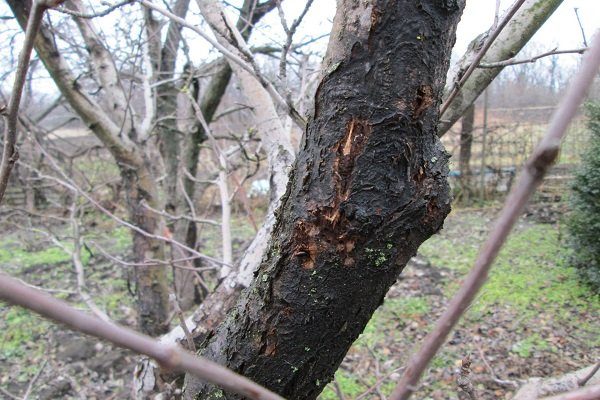
Black crayfish
This fungal disease is widespread in temperate climates. The pathogen feeds on living and dying tissue. Among gardeners, the disease is known as "Saint's Fire" or "St. Anthony's Fire." The infection spreads rapidly throughout the garden, causing the death of all fruit trees.
Symptoms:
- Cracks in the bark.
- Brown spots that eventually merge into spots. They enlarge and become covered with a black coating.
- The branches look burnt and the leaves turn black and curl.
- When black rings appear around the trunk/skeletal branches, the tree cannot be saved.
- ✓ The appearance of brown spots, which over time merge into spots and become covered with a black coating.
- ✓ The branches look burnt and the leaves turn black and curl.
How to fight:
- Remove the affected area at an early stage. Treat the cut with copper sulfate and cover with clay mixed with mullein. Treat the wounds with paint and a copper-containing product.
- When the tree has finished flowering, spray it with Bordeaux mixture to destroy any remaining pathogen.
If the tree is not treated, it will die within 2-3 years.
Cytosporosis
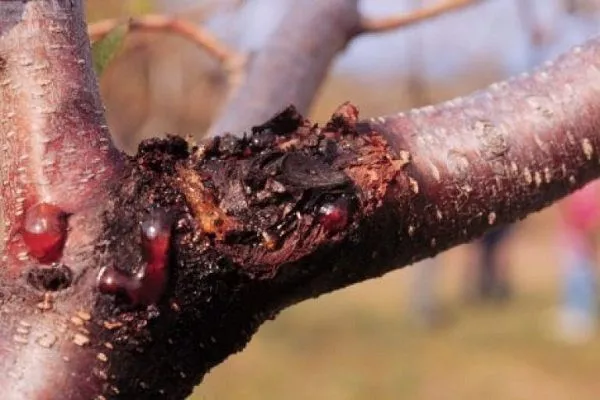
A fungal disease that is aggressive and spreads rapidly throughout the tree. The fungus penetrates through mechanical damage. It typically affects weakened trees suffering from nutrient deficiency. If left untreated, the tree dies within two years.
Symptoms:
- dark ulcers, framed by grey tubercles, appear on the bark;
- The affected areas develop in width and depth, causing the bark to crack.
How to treat cytosporosis:
- If the lesion is small, cut it off with a knife along with a piece of healthy wood.
- Disinfect the cut area with a solution of copper sulfate.
- Finish the treatment by smearing the sore spot with a mixture of mullein and clay.
Bacterial cancer
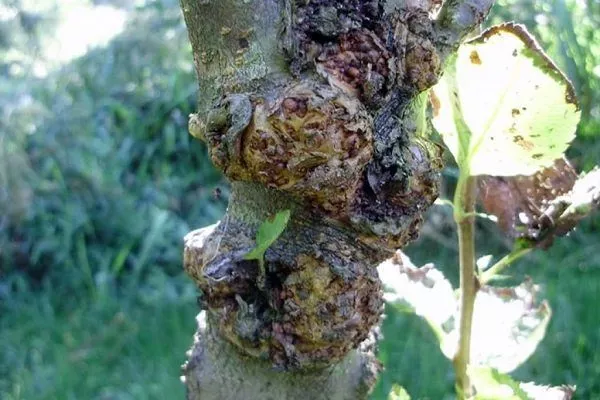
A dangerous disease caused by gram-negative bacteria. Infection most often occurs from new seedlings. It spreads quickly throughout the tree and is difficult to treat. If left untreated, the disease quickly desiccates the tree.
Symptoms:
- brown-green spots appear on the bark, which over time turn into soft blisters;
- gradually a crust appears in place of the blisters, under which the fungus multiplies;
- The leaves on the tree turn black and dry out.
How to treat bacterial cancer:
- Remove damaged parts. Cut them off and burn them immediately.
- Cover the exposed areas with mullein mixed with clay. Or prepare a mixture of equal parts rosin, ash, and wax. Fitosporin paste also promotes healing. It protects the wound and kills fungus.
- Treat the tree trunk circle and crown with a fungicide solution.
Some gardeners recommend placing “patches” of healthy apple tree bark over the cut sites.
European crayfish
This type of canker develops somewhat more slowly than black canker. The disease is caused by a fungus that overwinters under the bark and begins its destructive activity in the spring.
Reasons for the defeat:
- Infection occurs due to damage to the bark - a microcrack is enough for the fungus to penetrate into the tree;
- incorrect pruning of branches;
- tree grafting.
The disease occurs in one of two forms:
- Open. Deep lesions appear, penetrating right to the core. Externally, the lesions look like a tumor.
- Closed. The bark becomes covered with small growths that hide the wounds. Over time, these growths die off, exposing the wood beneath.
Treatment is the same as for bacterial cancer.
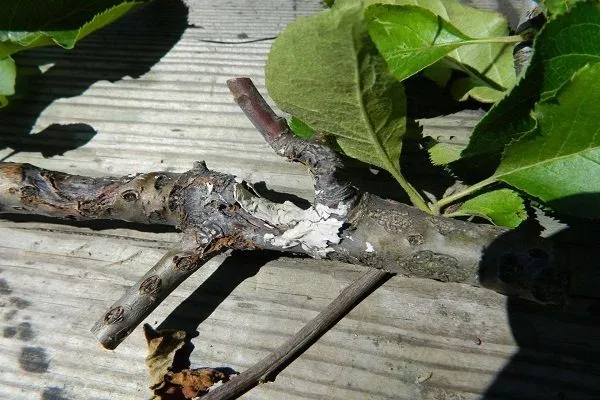
Lichens
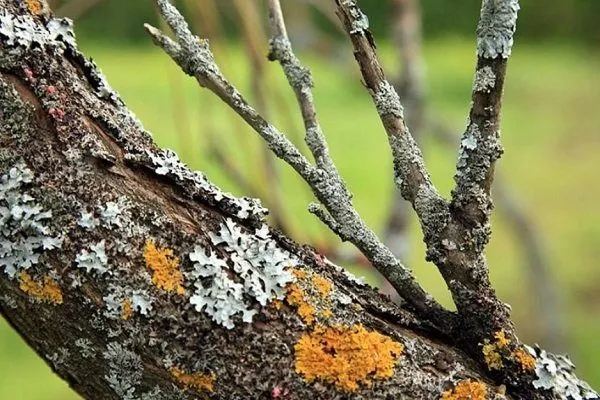
The older the apple tree, the greater the risk of lichen infestation. Lichens typically attack the tree during periods of high humidity and cool weather.
Lichens quickly spread across the tree, facilitating the spread of fungal diseases that lead to bark decomposition. Lichens themselves are harmless, but they can cause problems.
How to fight lichens:
- Twice a year, scrape the bark with a wooden scraper (don't use a metal one). Do this in the spring, before bud break, and in the fall, after leaf fall. The optimal temperature for this procedure is +1°C.
- Spray the tree with a copper sulfate solution—400 g per 10 liters of water. Or with a lime solution—1 kg of lime diluted in 10 liters of water. You can also use antifungal agents such as Skor, Fitosporin-M, or similar products.
Moderate watering, regular fertilizing and spraying help prevent the spread of lichen.
Methods for saving apple trees
Apple tree restoration is possible in many cases. The key is to begin treatment early. Pay particular attention in early spring, when pests are active and burns and frost cracks become visible.
Garden var
This versatile, industrially produced product is widely used by gardeners for wound healing. It's most often used during pruning, when the cuts need to be lubricated.
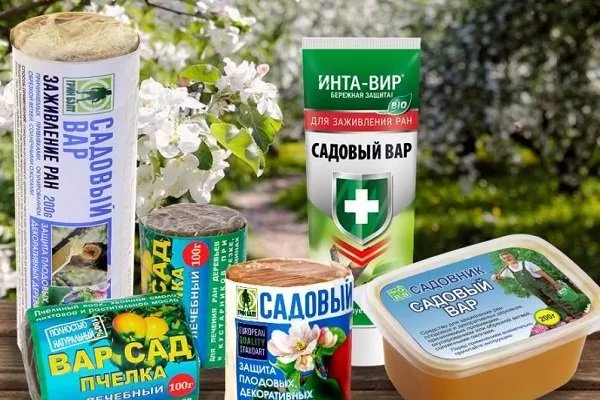
Experienced gardeners prefer to make a homemade substitute for garden pitch. To prepare an effective mixture, you'll need:
- rosin (thanks to it, the putty sticks tightly to the barrel);
- any unsalted fat;
- beeswax.
Fat mixed with wax creates a sun- and water-resistant film. Drying oil, paraffin, vegetable oil, and turpentine can be used instead of wax and fat.
There are many simple and affordable recipes for garden varnish for trees. Here are some of the most effective:
- Melt 500 ml of wax and 250 ml each of rosin and fat over low heat. Melt each ingredient separately. Mix the hot ingredients and pour them into cold water in a thin stream.
- Melt 250 ml of paraffin and mix with rosin and drying oil - 40 ml and 10 ml respectively.
- Mix 250 ml of vegetable oil and 500 ml each of wax and rosin.
- Mix 250 ml of turpentine with 350 ml of rosin and 500 ml of vegetable oil.
It's recommended to add wood ash to homemade garden pitch. It promotes wound healing and has an alkalizing effect.
Garters
If the bark damage is minor, fresh wounds can be treated with staking. If the damage occurred in winter, insulate the trunk by wrapping it in plastic or another waterproof material. As soon as the weather warms up, begin repairing the trunk.
How to make a garter:
- Treat the wounds with antibacterial ointment. It's available at health food stores and promotes faster healing. Apply the ointment to the affected areas with a brush.
- Wrap the affected area with a piece of cloth.

Instead of a store-bought solution, you can use a linden blossom decoction: boil 200 g of the blossom in 1 liter of water for half an hour. Treat the affected area with the decoction, bandage it, and leave it in place for the entire summer.
Treating wounds with a 3% copper sulfate solution promotes bark restoration. Apply it to the trunk, let it dry, and then wrap it in dark plastic to protect the wounds from sunlight and water.
Engraftment of the bark
In areas gnawed by rodents, the bark grafting method can be used. This is a complex method: a piece of new bark is grafted onto the damaged area. Grafting should only be done until the sap begins to flow.
The bark grafting method is especially effective when the trunk has been gnawed around the perimeter. A donor bark is needed for the "patch." If one is unavailable, take bark from a thick branch of the affected tree. The "patch" should be 5 cm larger than the damaged area.
The order of engraftment:
- Clean the wound.
- Apply a piece of new bark to the wound, in accordance with the direction of growth.
- Wrap the bark tightly with duct tape. Remove it only before frost.
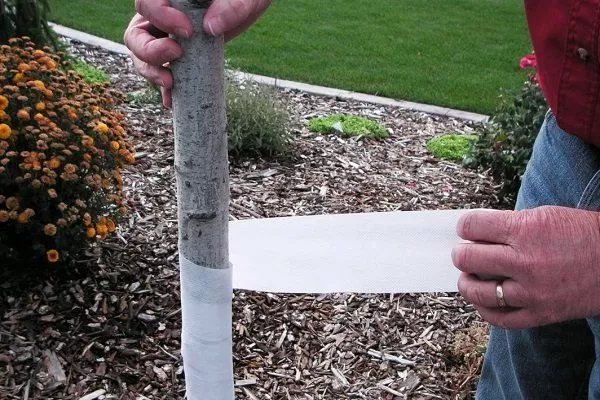
Section of the trunk
If the bark has been gnawed by hares and the tree is at risk of dying, perform a trunk pruning to reverse growth. Perform this work only before the sap begins to flow.
Reverse trunk pruning refers to cutting the trunk above the lower buds. This method is applicable to trees aged five years and older with well-developed roots (a major advantage of this treatment method).
In the spring, a mature, strong tree, after having its trunk pruned, produces many new shoots. The gardener should select only one—this will become the future apple tree. Remove all other shoots.
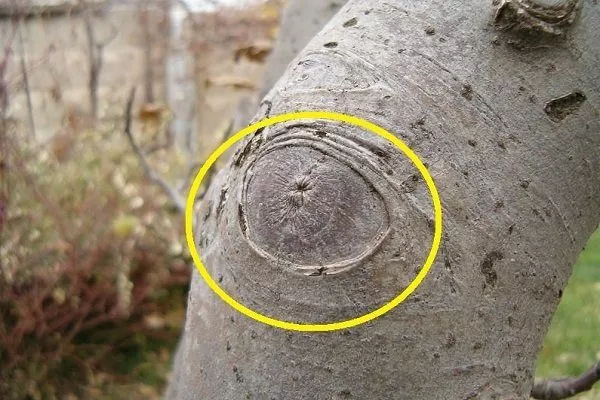
Clay mash
Folk remedies enthusiasts prepare their own remedies. Clay putty protects the tree from sunlight, moisture, and insect pests. If the damage is minor—up to 10 cm—the apple tree can be treated with a liquid mixture.
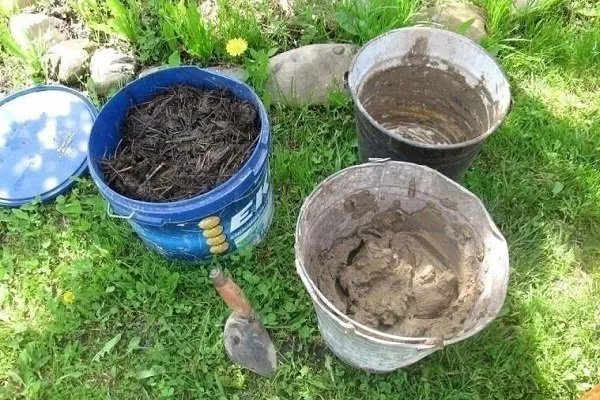
How to make clay mash:
- Take mullein and clay in a ratio of 1:2.
- Add some chopped straw to the mixture.
- Mix all ingredients and pour in warm water. Add enough water until the mixture reaches the desired consistency—thin sour cream.
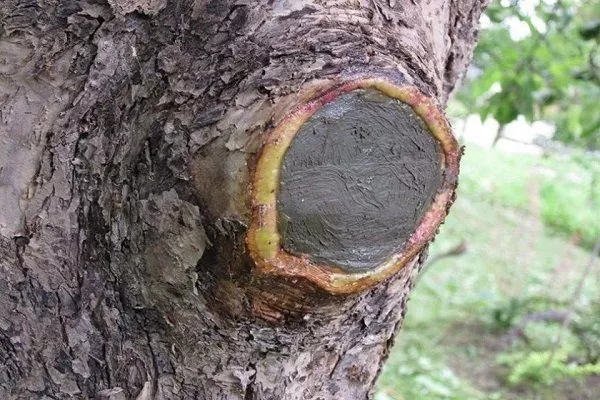
Cement mortar
If the damage to the trunk is so extensive that it cannot be repaired, at least prevent pests and fungi from entering. A cement mortar is used for this purpose. It doesn't heal, but it seals the wound and strengthens the partially damaged trunk.
How to prepare the solution:
- Mix 3 liters of cement with 10 liters of fine-grained sand.
- Add 250 ml of drying oil and dilute with water until the mixture acquires the consistency of thick sour cream.
The resulting mixture is suitable for sealing large wounds and cracks. Apply the putty only to damaged areas, keeping the edges of the bark clean. A ridge should form, sealing the wound.
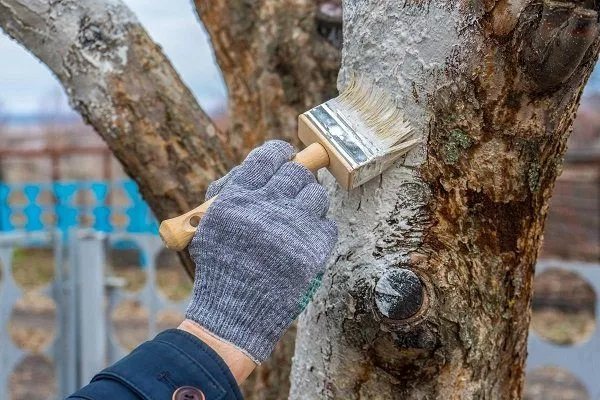
Water-based paint
Water-based paint isn't suitable for solving serious problems, but it can help heal minor wounds and damaged bark. It's also suitable for "whitewashing" trunks before winter.
Unlike oil-based paints, water-based paints allow air circulation. This quality prevents mold from growing under water-based paints.
Painting has to be repeated every season, since water-based paints are extremely unstable to weather conditions - the paint is washed off by rain over time.
Artificial bark
Unhealed wounds crack, and deep holes can develop. Seal these with a mixture of potting mix, garden pitch, oil paints, or a balsam varnish, often called artificial bark.
When dried, the mixture forms a protective film on the bark. It's thin, waterproof, and adheres tightly. The downside of artificial bark is its cost. 200 ml of the product costs about 500 rubles.
Processing of cuts
Carry out the procedure taking into account the season and current weather conditions. Specifics of processing cuts on the trunk:
- Autumn. Allow at least a week for the cuts to dry. This is especially important in humid weather and frequent rainfall. If it's raining or windy, don't seal the cuts.
- Spring. If the weather is warm and humid, wait at least 5 days. In dry weather, the waiting period is reduced to 2 days.
- Summer. Large cuts are generally not recommended during this period. Cut marks on green shoots do not require treatment; they will heal on their own.
- Winter. Avoid cutting back during this season, as they don't heal well in cold weather. Open cuts allow cold to penetrate deep into the tree tissue, which can kill even the hardiest apple trees.
How do you know if the treatment has been beneficial?
If the treatment efforts have been successful, the damaged apple tree will immediately "inform" the gardener. Signs that the treatment is effective include:
- the apple tree branches are actively growing, many ovaries are being formed;
- wounds heal and scar over successfully;
- the broken parts grow together;
- the bark restores its integrity.
Caring for a restored apple tree
Having treated the damaged tree, the gardener does not leave things to chance - he vigilantly monitors the condition of the apple tree, cares for it, and provides for all its needs.
How to care for a restored apple tree:
- Make sure that the affected areas - wounds and fractures - are not exposed to further mechanical damage, compression, exposure to sunlight or frost.
- In case of serious damage due to trunk breakage, replace the bandage regularly.
- Protect the apple tree from rodents, insect pests, frostbite, and gusts of wind.
- Trim the crown in a timely manner, trying not to damage the bark or injure the tree.
- Place supports under branches laden with fruit.
- In the spring, feed the tree generously with organic and mineral fertilizers, including foliar feeding. Spray the apple tree with a solution of copper sulfate, boric acid, etc. In the fall, apply potassium and phosphorus.
General preventive measures
Bark damage can have extremely serious consequences for an apple tree. To avoid dealing with the consequences of damaged trunks, it's recommended to take preventative measures:
- Urgent disinfection of wounds.
- Applying compresses to the wound to prevent infection.
- Destruction of cut parts, affected by the disease.
- Spraying with 3% Bordeaux mixture.
- Disinfection of garden tools.
- Regular treatment with insect repellents against weevils, bark beetles and other gnawing pests.
- Inspect the new seedlings. They should be perfectly healthy, free of defects and damage.
- In case of severe infestation, it is recommended to remove the tree to prevent the spread of infection throughout the garden.
Frequently asked questions?
Trunk damage can vary greatly. If it's minor, inexperienced gardeners simply ignore it. They don't treat major damage, believing the tree is hopelessly lost.
Beginners who encounter barrel damage often have the following questions:
- What to do if there is little bark left on the apple tree trunk? If the damage is severe—ring-type—the only solution is a "bridge" graft, which is performed in the spring. The grafting procedure is:
- Clean the wound.
- Disinfect the damage with copper sulfate.
- Divide the young shoots into cuttings and cut them at an angle on both sides.
- Make a T-shaped cut in the bark near the damaged area.
- Remove the buds from the cuttings.
- Insert the cuttings into the cuts made on the trunk, with the sharp ends.
- Seal the junction of the trunk and the cutting with garden solution, wrap it with cotton/linen fabric and polyethylene.
- Is it possible to save a tree with very severe damage? For treating serious wounds, covering them with paint or clay is not enough. Tar and mineral solutions should not be applied to wounds.
Treat large wounds with garden pitch or similar products. Seal holes with a sand-cement mixture. - How to treat cracks in a tree trunk? Temperature fluctuations can cause cracks to appear on the trunk. In the spring, the bark begins to peel and fall off. Carefully trim the edges of the bark adjacent to the crack. Wipe the damaged area with a copper sulfate solution and seal it with mullein or garden pitch.
Wrap the treated crack in cellophane. After a month, when changing the healing application, replace the film with matting to prevent the wrapped area from overheating.
Despite its low maintenance, apple trees require careful attention. Regularly inspecting the tree's trunk for damage can promptly address the problem and save the tree from death. Also, don't neglect general preventative measures.
A very relevant topic, thanks for posting! In response, I'd like to share my secret. My apple tree initially had black canker, which we cured, but one consequence remained: the bark had peeled. I read that it should be cut off completely, but we didn't risk it and decided to revive it on the advice of a neighbor (she's been growing apples for almost 40 years).
What I did:
I used a stiff brush to clean off the most affected areas, making sure to reach the living tissue.
Then I treated it with iron sulfate (I made a 5% solution). I applied it with a brush that is intended for whitewashing.
After the solution had completely dried, I treated the “wound” with a special product called Artificial Bark.
The following year, the apple tree was already doing well and bearing fruit. It's a shame I didn't take a photo of the results.