
There are many excellent apple tree varieties for the Moscow region, characterized by high yields and resistance to diseases and pests. This article examines early, mid-season, and late-ripening varieties that appeal to gardeners due to their ease of care.
Summer apple trees
Summer apple varieties are popular because they offer a rich source of juicy fruit during the summer, providing a boost of beneficial vitamins. These varieties are ideal for planting in the Moscow region – they are easy to care for and boast excellent yields.
| Name | Yield (kg per tree) | Ripening period | Disease resistance |
|---|---|---|---|
| Melba | 80-100 | Summer | Average |
| Moscow Pear | 1000-2000 | Summer | High |
| Arkadik | 200 | Summer | High |
| Lungwort | 180 | Summer | Very high |
| Apple Savior | 210 | Summer | High |
| Orlinka | 160 | Summer | Average |
| Wonderful | 80 | Summer | High |
| Delight | 60-80 | Summer | High |
| Folder | 50 | Summer | Average |
Melba
The variety was developed in the late 19th century in Ottawa. The apple tree emerged from open-pollination of McIntosh seeds. The name was given to the variety in honor of the famous opera singer Nellie Melba.
Up to three years old, the tree has a straight trunk and vertically arranged shoots. The bark is cherry-like. As the tree matures, the crown becomes rounded and spreading. The leaves are elongated, convex, and light green. The fruits weigh from 120 to 160 g. The apples are round-conical or round. The skin is dense, smooth, and green, later turning light yellow. The flesh is firm, white, and juicy. The flavor is sweet and sour. The aroma is caramel.
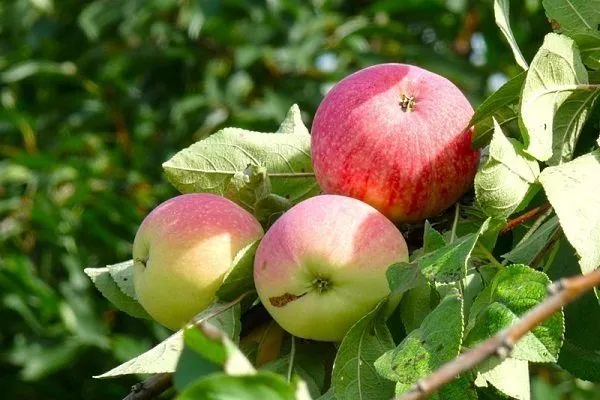
Melba is an early-bearing variety, beginning to bear fruit 3-5 years after planting. On average, a mature tree yields 80-100 kg of fruit.
Moscow Pear
This variety was naturally bred and has existed for two hundred years. The renowned scientist A. T. Bolotov described its characteristics in detail in a scientific paper in 1797.
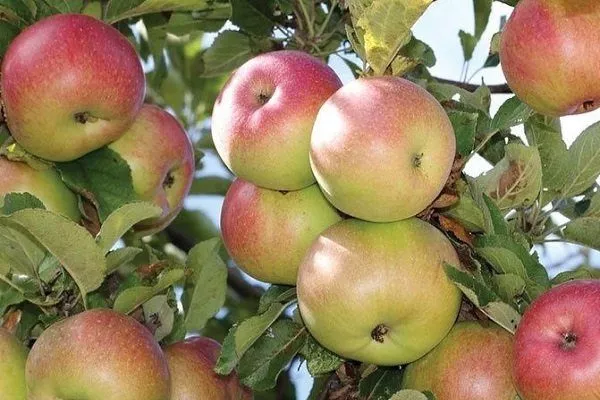
The trees are spreading, sometimes reaching seven meters in height. The crown of a young tree is conical, while that of a mature plant is spherical. The bark is yellow-orange. The apples are small, weighing about 70 g, though occasionally a single fruit can weigh up to 120 g. The ribbed surface and thin skin are green when technically ripe, turning yellow when fully ripe. The juicy, snow-white flesh has a sweet and sour taste and a pleasant aroma.
With proper care, the tree lives for about 60 years. Fruit begins to ripen five years after planting. The harvest is collected in late July or early August. One mature tree can produce between 1 and 2 tons of fruit.
Arkadik
An early summer variety developed by V.V. Kichina. The work was conducted at the All-Russian Institute of Selection and Technology of Horticulture and Nursery. The ancient Russian variety "Arkada" (yellow summer) and the American donor variety "SR0523" were used in the development.
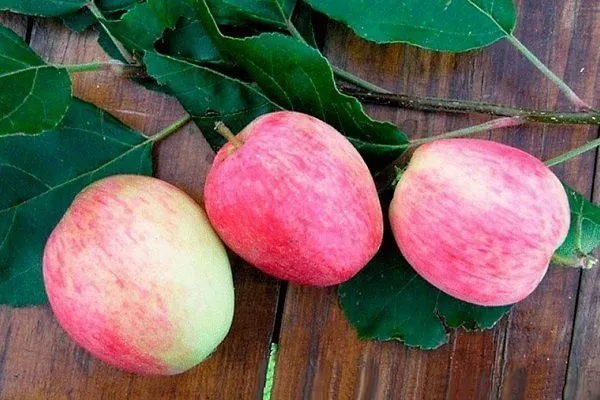
The tree is tall, reaching up to 10 meters. The crown is rounded, slightly narrowing toward the top. The shoots are reddish. The leaves are medium-sized, elongated, oval, and green with a matte surface. The fruits are large, weighing approximately 350 g. The apples are a regular, round-oblong shape with juicy, buttery, fine-grained flesh and thin, light-green skin. The flavor is slightly tart and the aroma is distinct.
Fruiting begins in the third year. The harvest is in mid-August. On average, a single tree yields up to 200 kg of fruit.
Lungwort
Breeder S. I. Isaev succeeded in developing a unique summer variety. Crossbreeding of two apple varieties (Cinnamon Striped and Wesley) was conducted in the 1930s. Lungwort inherited only the best qualities from its "parents."
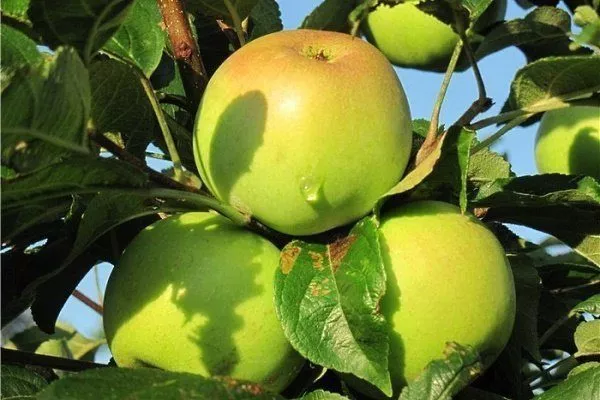
The plant reaches a height of 4-5 meters. The tree has a broad, robust crown and oval, elongated dark green leaves. The fruits are round, slightly flattened, and medium-sized, each weighing 100-150 g. The apples are covered with a dense yellow-green skin, with a noticeable blush on the sunny side. The light cream-colored flesh is juicy, sweet, and firm. The flavor is good, with a delicate aroma.
Fruiting begins in the third year after planting. The fruits ripen in late August. Gardeners can obtain up to 180 kg of ripe fruit from a single tree. Lungwort is noted for its increased resistance to scab. It is a frost-hardy variety.
Apple Savior
The variety was developed in 2004 by specialists from the All-Russian Research Institute of Fruit Crop Breeding. Yablochny Spas was obtained through polyploidy.
The trees grow tall, with a robust, rounded crown. The trunk is smooth, and the leaves are pointed, matte, and green. The fruits are large, weighing approximately 210 g. The skin is yellow with a slight green tint. A red vertical stripe runs down one side. The skin is dense and smooth. The light-colored flesh with a greenish tint is juicy and medium-firm.
This is an early-ripening summer variety, producing a harvest in early to mid-August. Ripening and harvest times vary by region. In some areas, the fruit is harvested in early September.
Orlinka
This summer variety was developed by three breeders (E. Sedov, N. Krasov, and Z. Serov) by crossing the American apple tree Stark Erlies Prekos and the Russian variety Pervyi Salut. In 2001, the variety was added to the State Register of Russian Cultivars.
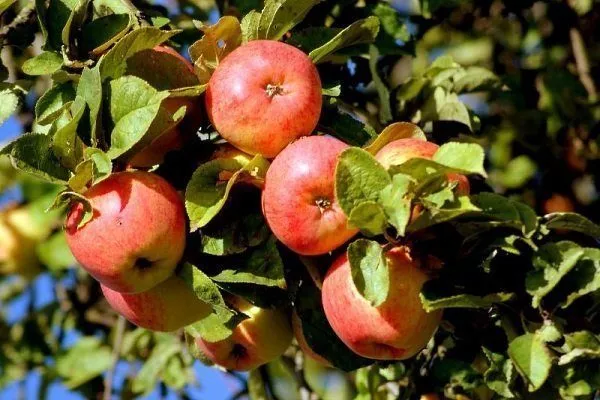
The tree is tall, reaching up to 5 m in height. The crown is rounded, and the leaves are large and dark green. The fruits are medium to large, weighing from 120 to 200 g. The apples are round and slightly flattened. The skin is yellow-green, turning yellow with red stripes when fully ripe. Subcutaneous spots are present. The delicate creamy flesh is dense, coarse-grained, juicy, and aromatic. The flavor is predominantly sweet, but the acidity is noticeable.
The first harvest is collected in the second year after planting. By the age of four, the plant produces abundant fruit, yielding 20 to 40 kg of fruit. A ten-year-old plant can yield up to 160 kg of fruit.
Wonderful
The breeder M. A. Mazunin worked on developing the variety, crossing the German apple tree Eliza Ratke and the Russian variety Uralskoye Zimneye.
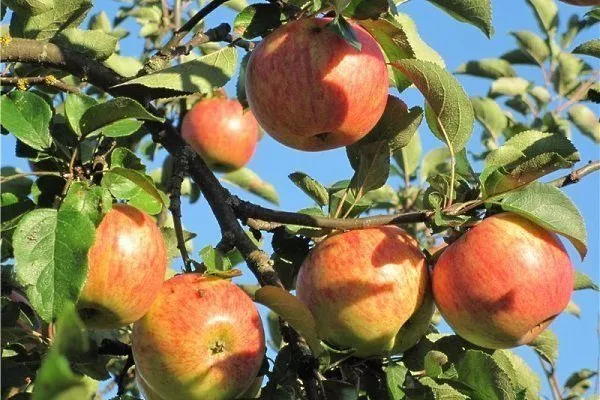
The plant is dwarf, reaching 1.5-2 m in height at maturity. The crown is broad and branched. The shoots are arched and green. The fruits are medium to large, weighing from 120 to 200 g, with some specimens weighing around 400 g. The apples are round, slightly flattened. The skin is yellow-green with a bright red blush. Subtle subcutaneous dots are present. The flesh is white, fine-grained, crisp, and juicy.
This late-summer, high-yielding variety begins bearing fruit in the third year after planting. Harvesting begins in early August and continues until the end of the month. A single mature tree yields up to 80 kg of fruit.
Delight
The renowned breeder S. I. Isaev developed the variety. During the breeding process, cultivated and wild apple varieties were crossed. A positive result was achieved in 1961. The variety tolerates cold well and is rarely affected by scab.
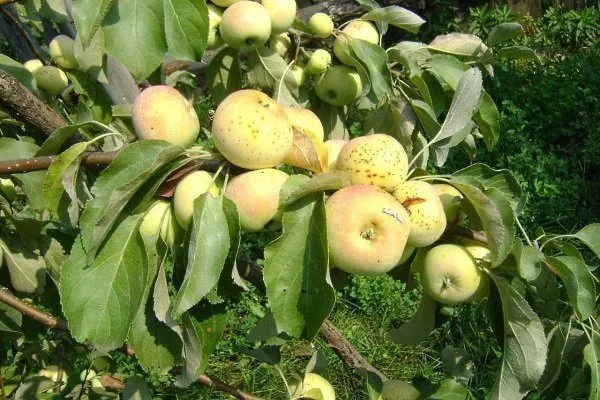
This medium-sized plant grows no more than 3-4 meters tall, resembling a dwarf tree. In the first few years after planting, the crown is typically round, becoming oval as the plant matures. Large fruits weigh up to 170 g. The apples have green skin with a bright crimson blush. Subtle subcutaneous spots are present. The white flesh is sweet, with a light raspberry flavor and a delicate aroma.
Harvesting begins in late August or early September. The tree begins to bear fruit four to five years after planting. On average, one mature tree yields 60 to 80 kg of ripe fruit.
Folder
The Papirovka apple variety was first discovered in the Baltic region in the early 19th century. It is believed to have been obtained through natural pollination. The variety was described in detail by breeders such as S. P. Kedrin, M. V. Rytov, and S. F. Chernenko.
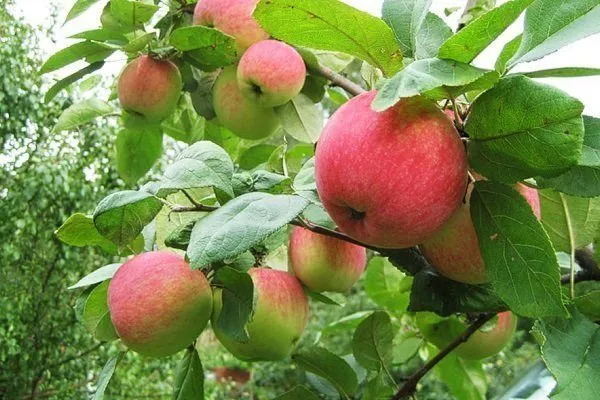
The plant is low-growing, with a triangular crown that becomes rounded with age. The shoots are brown. The leaves are medium-sized, oval, and gray-green. The fruits are small, weighing about 100 g. The apples are round, sometimes conical. The skin is green-yellow. The flesh is white, loose, and juicy. The taste is sweet and sour.
The plant begins bearing fruit in its fifth or sixth year. Harvesting occurs in late July or early August. On average, a single tree yields up to 50 kg of fruit.
Winter varieties of apples
Winter apple varieties are good not only because the fruit ripens in winter, but also because the fruit is resistant to severe frosts, does not spoil during storage for several months, and is rarely susceptible to disease.
| Name | Yield (kg per tree) | Ripening period | Disease resistance |
|---|---|---|---|
| Bogatyr | 55-80 | Winter | High |
| Bolotovskoye | 200 | Winter | Very high |
| Welsey | 200-250 | Winter | High |
| Aphrodite | 150 | Winter | High |
| A gift to Count | 250 | Winter | High |
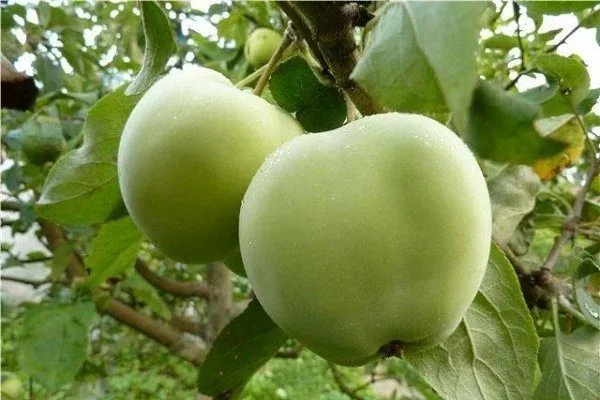
Bogatyr
The variety was developed by breeder S. F. Chernenko, who crossed the Antonovka variety with the Renet Landsberg variety. The late-winter Bogatyr variety is considered one of the most productive and high-yielding.
The plant can reach seven meters in height. The crown is thinned and spreading. The plant has dark green, oval-shaped leaves. The tree produces flat-round fruits with a wide base, weighing up to 200 g. The surface is smooth and ribbed, the skin is light green, later turning yellow with a slight blush. The white flesh is fine-grained, juicy, and crisp. It has a pleasant aroma.
The variety begins to bear fruit abundantly 6-7 years after planting. One mature tree produces 55-80 kg of fruit. The fruit is fully ripe by mid-October. The fruit can be stored for about 4-5 months.
Bolotovskoye
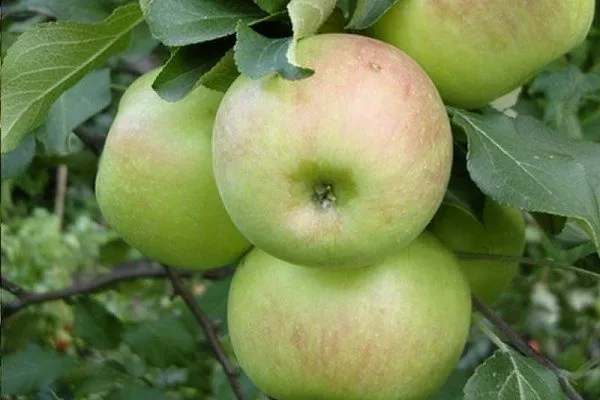
When developing this variety, breeder Evgeny Nikolaevich Sedov's primary goal was to create a variety resistant to scab. In 1977, the breeder succeeded in creating a new, unique variety, Bolotovskoye, a hybrid of the Skryzhapelkh 1924 variety.
The tree bears elongated, dark green leaves. The plant has a spherical, open crown. It is medium-sized and grows quickly. The shoots and branches have smooth brown bark. The fruit is medium-sized, weighing up to 160 g each. The skin is initially light green, developing a pink blush when fully ripe. The flesh is soft green, dense, and juicy. The aroma is pleasant and distinct.
Fruiting begins 7-8 years after planting the seedling in open ground. Harvesting begins in mid-September. A mature tree yields approximately 200 kg of fruit. Proper storage ensures long-lasting fruit preservation, right through to the end of winter.
Welsey
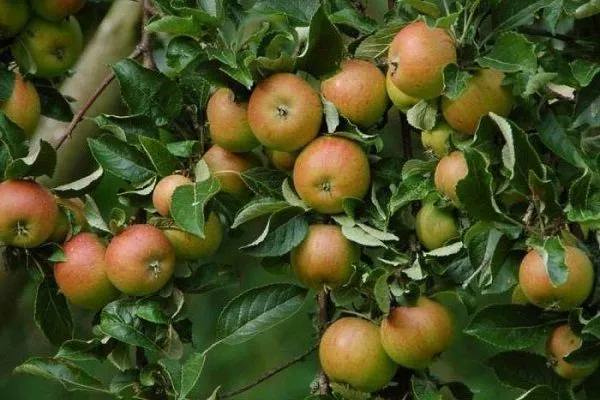
The variety was bred in 1860 in the US state of Minnesota. Seeds were used for the work. Siberian apple treeWelsh has been grown in Russia since the end of the 19th century.
The trees are medium-sized, reaching 4-5 meters in height. The crown has a broad, pyramidal shape, becoming rounded with age. The leaves are small, glossy, and dark green. The fruits are characterized by high consumer qualities. The average weight of one fruit reaches 80-150 g. The apples have a flattened, round, regular shape. The skin is smooth, thin, and light yellow. There are light, clearly visible subcutaneous spots. The flesh is white, juicy, and firm. The taste is sweet and sour, with a pleasant aroma.
The plant begins bearing fruit in the third or fourth year, but the fruits ripen every other year, not every year. Apples ripen unevenly, so the harvest is carried out twice: in early September and early October. On average, a single tree yields approximately 200-250 kg of fruit per season.
Aphrodite
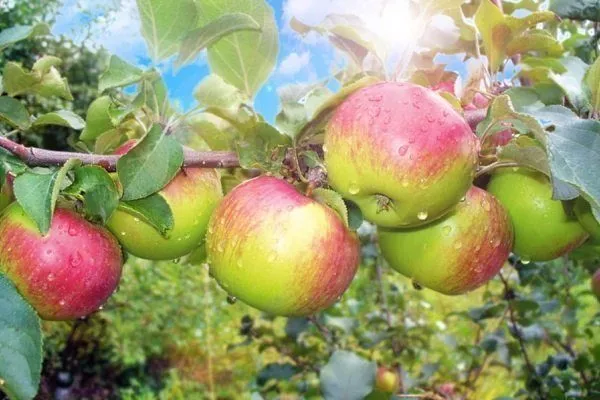
The Aphrodite variety was bred in 1981 at the All-Russian Research Institute of Selection and Breeding of Crops from open-pollinated seeds of hybrid form 814. Four breeders worked on developing the variety: E. A. Dolmatova, V. V. Zhdanov, E. N. Sedov, and Z. M. Serova.
The trees are tall and grow quickly, reaching up to 10 meters in height. The crown is dense and rounded. The shoots are brown. A mature tree has smooth, greenish-brown bark. The leaves are medium-sized, oblong, and dark green with a yellowish tint. The fruits are medium-sized, weighing up to 140 g. The skin is thick, greenish-yellow, and smooth. The flesh is firm, white, with pink veins. The taste is sweet and sour.
The plant begins bearing fruit 4-5 years after planting. Harvesting occurs in mid- to late September. In a cool room, the fruit can be stored until the end of the year. On average, a single tree yields up to 150 kg of apples.
A gift to Count
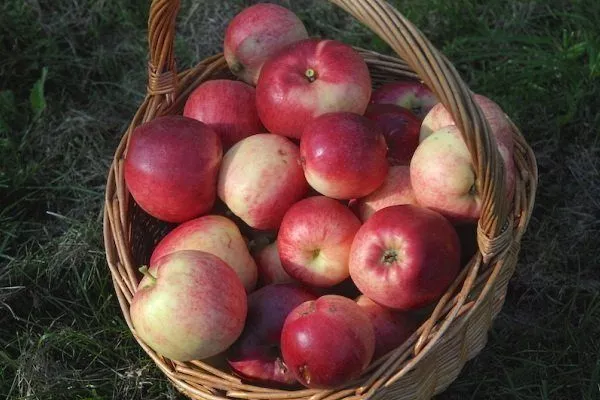
This variety was bred in 1979 at the Institute of Selection and Technology. V. V. Kichina, N. G. Morozova, L. F. Tulinova, and V. P. Yagunov worked on its creation. The apple tree was created by crossing the donor D101 and the Vyaznikovka variety. The name was given in honor of M. G. Grafsky, director of the 17th MUD state farm.
The tree is vigorous, standard, and fast-growing. The crown is inversely pyramidal. The bark on the branches is dark gray. The leaves are medium-sized, elongated, slightly wavy, and dark green. The fruits are large, weighing between 200 and 350 g. The apples are round-conical, slightly ribbed, and uneven in size. The skin is thick, yellow in color, with a purple-red outer layer. The flesh is light yellow, sweet and sour, fine-grained, and juicy. The aroma is subtle and pleasant.
The plant begins bearing fruit 4-5 years after planting. The fruit ripens in early October, reaching consumer maturity by the end of the month. On average, a mature plant yields up to 250 kg of fruit.
Autumn apple tree varieties in the Moscow region
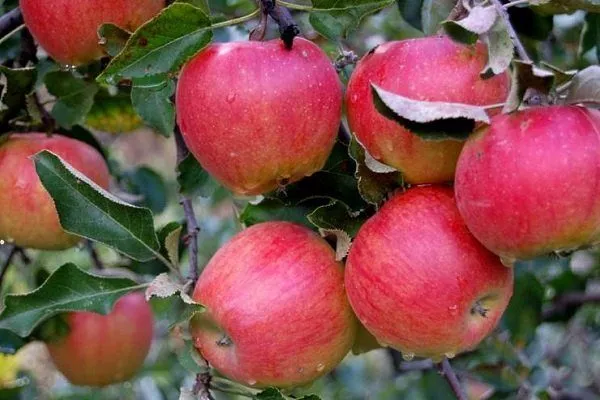
Many gardeners highlight several excellent autumn varieties for planting in the Moscow region. The fruits ripen in the fall and have a long shelf life without losing their appearance or flavor.
| Name | Yield (kg per tree) | Ripening period | Disease resistance |
|---|---|---|---|
| Strifel | 220 | Autumn | High |
| Michurinskaya seedless | 220 | Autumn | High |
| Orlovskoe striped | 80 | Autumn | High |
| Sun | 140 | Autumn | High |
| Antonovka ordinary | 200 | Autumn | High |
| Saffron pepin | 280 | Autumn | High |
| Zhigulevskoe | 240 | Autumn | High |
| Slav | 200 | Autumn | High |
| Marat Busurin | 100-120 | Autumn | High |
Strifel
Shtrifel, or Autumn Striped, is a variety whose origins are unknown. It is believed to have come from Germany or Holland via the Baltics.
The plant is vigorous and tall, reaching 7-8 meters in height. The crown is wide-spreading and dome-shaped. The leaves are rounded and dark green. The fruits are medium-sized, weighing 80-110 g each. The apples are predominantly round, although lopsided specimens are occasionally encountered. The skin is smooth, firm, greenish-yellow or yellow with a characteristic blush of vertical red stripes. The flesh is yellowish, juicy, and sweet and tart.
The plant begins bearing fruit 7-8 years after planting. It reaches its peak yield only at 15-18 years.
Michurinskaya seedless
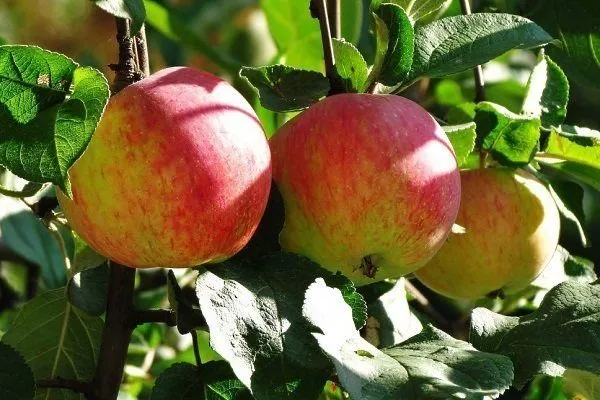
The variety was developed by the renowned breeder I.V. Michurin, hence its name. Two varieties were used in the crossbreeding: Skryzhapel and Bessemyanka Komsinskaya.
The tree is tall and robust, with a powerful, rounded crown. The plant is characterized by large, wrinkled leaves with an emerald hue. The fruits are large, weighing approximately 175 g, and are predominantly rounded and slightly ribbed. The skin is yellow with a slight green tint, with a crimson blush. The flesh is soft, tender, and juicy, with a noticeable light wine flavor.
This is a high-yielding variety that begins bearing fruit 5-6 years after planting. Harvesting can begin as early as mid-September. A single plant yields approximately 220 kg of fruit. On average, the apples have a shelf life of 3-3.5 months from the date of harvest.
Orlovskoe striped
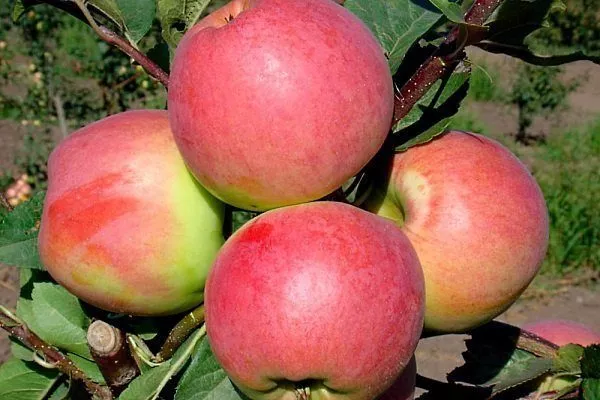
The variety was bred at the All-Russian Research Institute of Selective Fruit Crops (VNIISPK) by two renowned breeders in 1957. The crossbreeding was carried out by T. A. Trofimova and E. N. Sedov, who crossed the Bessemyanka Michurinskoy and Makintosh apple trees.
The tree is medium-sized, with a broad, round crown. The plants are frost-resistant and produce good yields. The leaves are round, large, and green. The fruits are large, weighing 120-150 g each, sometimes reaching 220 g. The apples are oblong and broadly conical in shape. The skin is generally greenish-yellow. When fully ripe, the fruits acquire a yellow tint.
Fruiting begins in the fourth year after planting. Eight-year-old trees produce 40 to 50 kg of fruit, while fifteen-year-old trees can yield up to 80 kg. Harvesting begins in early September. Apples can be stored in a cool place for up to four months.
Sun
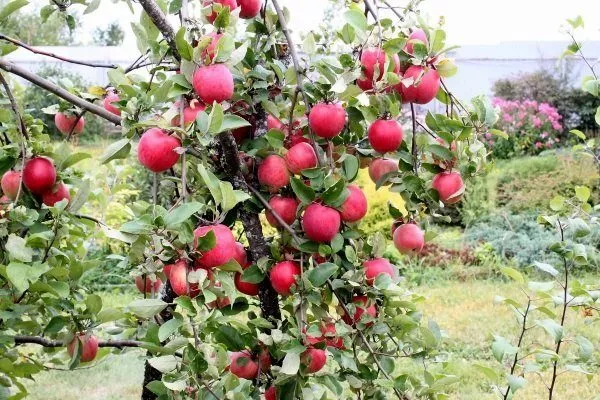
To develop the Solnyshko variety, breeders used seeds from an open-pollinated harvest in the early 1980s. The first fruits appeared in 1990. The apple tree was developed by E. N. Serov, V. V. Zhdanov, Z. M. Serova, and E. A. Dolmatov.
The plant is short and characterized by a rounded crown. The trunks and main branches are covered with smooth reddish-brown bark. The leaves are ovoid, small, and dark green. The fruits are medium-sized, weighing up to 140 g, oblong, slightly beveled, and broadly ribbed. When picked from the tree, the peel is yellow-green, later turning light yellow with a raspberry blush. The flesh is juicy.
Harvesting takes place in the fall, when the fruits are fully ripe. This period occurs between September and October, when the fruits begin to turn red.
Antonovka ordinary
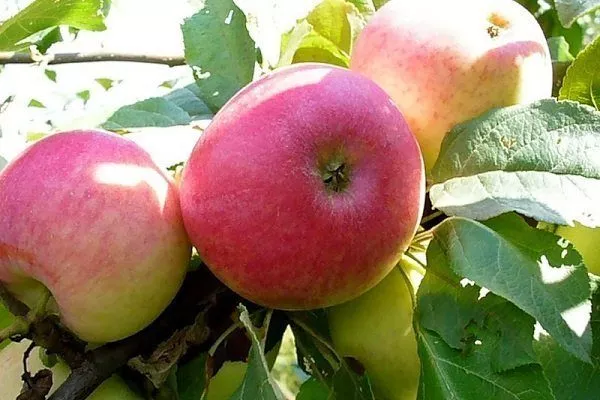
There is no data on how this variety originated. Some scientists are convinced that Antonovka was an accidental hybrid of a cultivated variety that developed naturally from a wild forest apple tree. However, most breeders are certain of one thing: the apple tree originated in the Tula or Kursk regions. N.I. Krasnoglazov first described the Antonovka variety in detail in 1848.
The tree is characterized by an oval crown, which becomes spherical as the plant matures. Young branches and shoots have a brown tint. Elongated, bright green leaves adorn the plant. The apples are medium-sized, weighing up to 160 g. Their skin has a greenish-yellow hue at harvest. During storage, the fruits turn yellow. The flesh is light, slightly sweet, with a distinct tartness.
The tree begins bearing fruit 7-8 years after planting. Apples fully ripen in late September or early October. As the plant grows, the yield increases. At 20 years old, a single tree can produce up to 200 kg of fruit. The fruit has a long shelf life of 3-4 months.
Saffron pepin
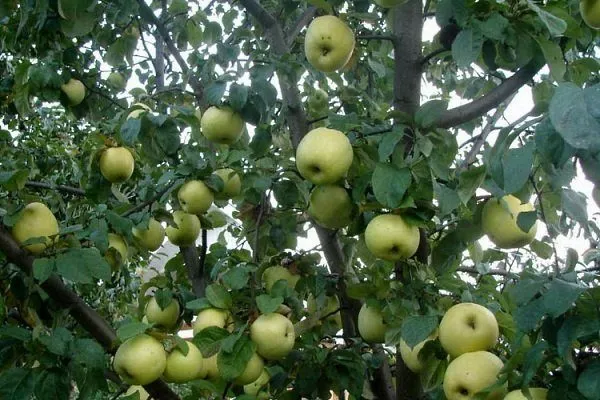
This variety was developed in the early 20th century by the renowned breeder I. V. Michurin. The selection involved the Reinette Orleans variety and a hybrid of Chinese and Lithuanian pepinka.
The tree is medium-sized, reaching a height of three meters. The crown is rounded. The leaves are small and green. The fruits are medium to small, averaging up to 140 g. The skin is thick and smooth. The apples are round-conical or cylindrical. The skin is yellow-green with a dark red blush. Subcutaneous spots are present. The flesh is dense, aromatic, and creamy. The apples are sweet and sour, aromatic, and flavorful.
The plant begins bearing fruit in the third year after planting. Dwarf trees begin bearing fruit in the second year. The harvest is good—up to 280 kg of apples can be harvested from a single tree. The fruit has a long shelf life, and its flavor and appearance are not affected by transportation.
Zhigulevskoe
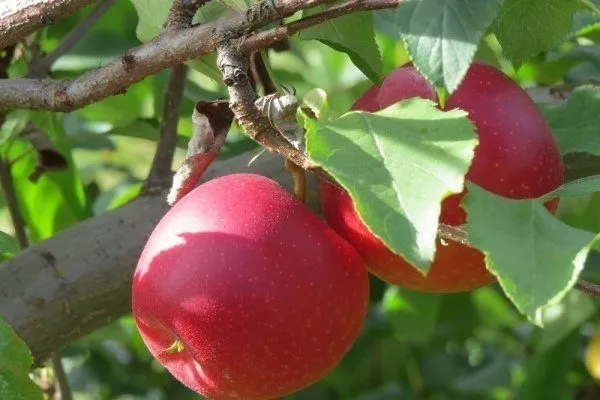
The variety was developed by breeder S. P. Kedrin. He crossed the American Wagner variety with the Borovinki apple variety, resulting in a new autumn variety that has become popular in Russia.
The tree has a broadly pyramidal or tall, rounded crown, which acquires this shape during the fruiting season. The plant is medium-sized, reaching a height of 4-5 m. The trunks and shoots are dark brown. The foliage is dense, with dark green leaf blades. The leaves are oblong, ovoid, and large. The apples are heavy, weighing between 120-200 g each. The fruit is round, sometimes broadly ribbed. The light yellow skin is dense and oily, with subcutaneous gray spots. The creamy, coarse-grained flesh has a sweet and sour taste.
This is an early-maturing, high-yielding variety, beginning to bear fruit 4-5 years after planting. Apple harvesting begins in early September. On average, one mature plant produces up to 240 kg of fruit.
Slav
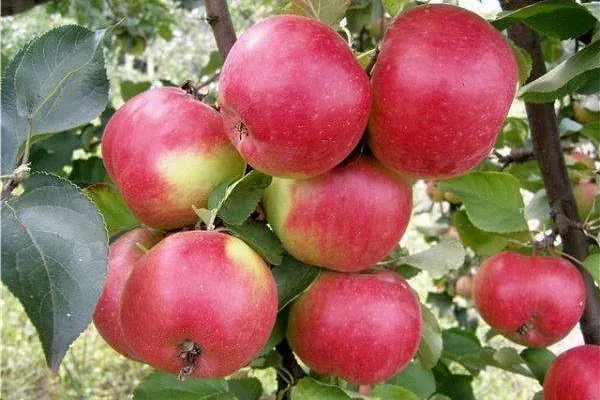
The autumn variety Slavyanin was developed using the Antonovka Krasnobochka apple tree and the SR 0523 variety [Red Melba x (Wolf River x Mastrosanguinea 804)]. The crossbreeding was carried out by breeder E. N. Sedov.
The tree is medium-sized and grows rapidly, with a rounded crown. The fruits are large, weighing up to 160 g. The apples have a flattened, conical shape. The skin is shiny, greenish-yellow. The flesh is cream-colored, medium-flat, juicy, and tender. The flavor is sweet and sour, with a faint aroma.
The tree begins to bear fruit 3-4 years after planting. A single plant can yield up to 200 kg of juicy fruit.
Marat Busurin
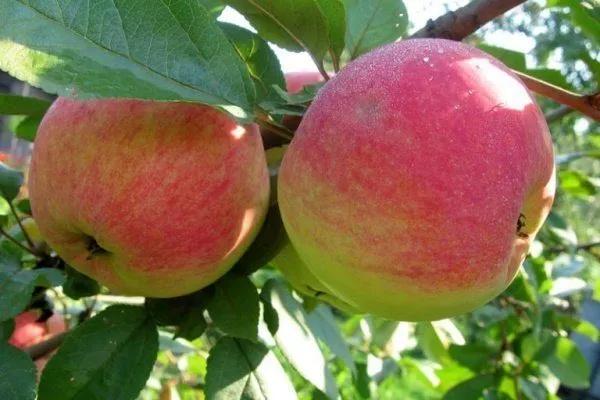
This is a new variety, entered into the State Register of Breeding Achievements in 2001. It was created in 1998 by breeder V. V. Kichina, who crossed the well-known variety Osennyaya Radoshota and the donor sample SR0523.
The tree is characterized by a neat, rounded crown, dark gray bark on the shoots, and curved, light green leaves with a slight yellow tint. The fruits are large, weighing 175-200 g. The apples are round and slightly flattened. The skin is smooth, green-yellow with faint red stripes. They reach consumer maturity when the skin turns almost white.
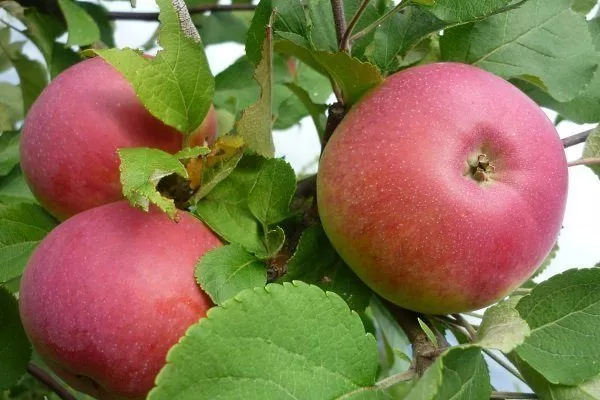
The variety begins bearing fruit 3-4 years after planting. The advantages of the Marat Busurin include abundant and regular fruiting. The apple tree does not require annual breaks from fruit set. The average yield is 100-120 kg per mature plant.
With a wide variety of apples available, gardeners can choose the ones that best match their desired characteristics. Numerous summer, fall, and winter varieties have been developed for cultivation in the Moscow region, boasting excellent yields.