
Fruit-bearing trees sometimes break under the weight of their fruit, from lightning strikes, or other factors. This problem is common among varietal apple trees. A damaged tree can stunt its growth, lose its leaves, and fail to produce a harvest. It's important to know how to deal with this problem.
Why do branches break off apple trees?
Apple trees often encounter problems such as broken branches, cracked trunks, and split bark. There are several causes:
- the tree's crown is not formed correctly;
- the branches are heavily laden with apples;
- the forks under the branches were not installed in a timely manner;
- strong wind;
- sudden changes in temperature;
- the pruning of branches was too intensive;
- incorrect fruit picking;
- freezing of a tree in winter;
- heavy snowfall.
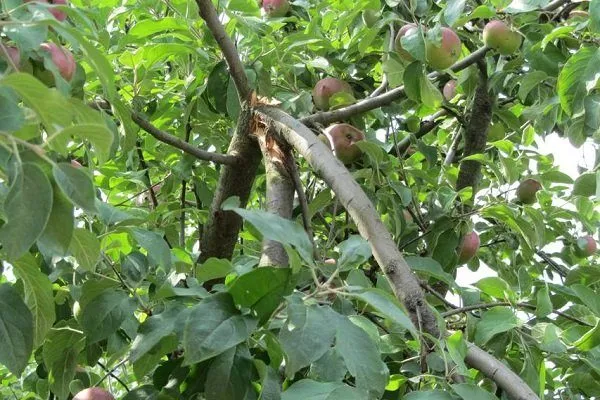
Actions depending on the situation
Broken apple tree branches cause the tree to stop growing, produce significantly fewer fruits, and experience reduced flowering (if the branches were damaged in the spring). The most dangerous aspect is the introduction of pathogenic bacteria into the tree.
Wounds on an apple tree require careful and timely treatment.
A small fracture
If the branch is connected to the trunk by bark, it's best to cut off the broken branch. Afterward, it's recommended to treat the cut with garden pitch or a specialized paint containing a growth stimulant and fungicides. This will ensure that buds will appear at the base of the branch within a year, and new shoots will begin to form.
If the branch is small and slightly broken, apply a splint:
- Take two wooden blocks.
- Place a blanket around the affected branch.
- Tie the elements together with rope.
Try to connect the branch to the apple tree trunk as accurately as possible.
To help your tree recover, follow these steps:
- In the fall, after harvesting, add phosphorus, potassium, and calcium to the apple tree.
- Dig to a depth of at least 7 cm.
If the branch is attached to the trunk by an additional piece of bark, you can also try to save it. Before beginning the procedure, trim the branch back to healthy tissue. Then, proceed as follows:
- Nail or staple the joint. Tie the branch to the trunk with ropes (or support it with forks).
- Clean the connection area with a knife and paint it.
If the branch breakage problem occurs in winter, you need to act immediately; this is the only way to save the tree. If the branch was damaged in the spring, when buds were forming, remove them. This will promote healing, as the branch will not waste energy on crossing.
The branch with fruits broke
If a branch bearing fruit breaks, it will need to be cared for in the coming years. Saving the tree involves the following:
- Collect all fruits from the affected area.
- Apply a splint.
- For several years, pluck off the buds so that the apple tree spends its energy on recovery rather than on fruiting.
A large branch broke off
A broken large branch has a detrimental effect on the growth and fruiting of the entire tree. Therefore, this problem requires more serious intervention.
The algorithm for restoring a branch is as follows:
- Remove all remaining bark, chips, and splinters. Use a chisel or sharp knife.
- Let the wound dry a little.
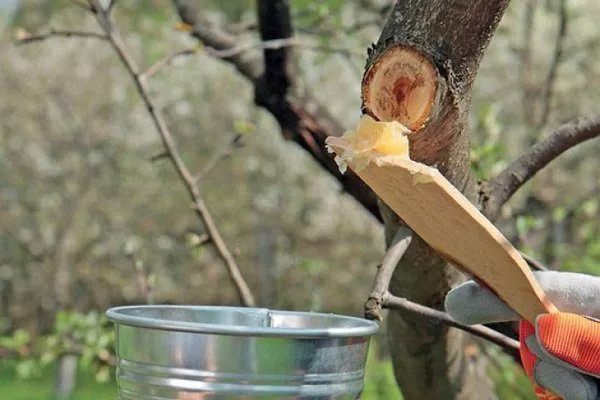
- Evenly coat the branch with garden pitch or natural drying oil-based paint. It's easiest to apply the paint with a spatula.
- Additionally, wrap the damaged area with burlap, gardening bandage, or another airtight material. Do not remove the covering until next spring.
A good alternative to garden pitch or paint is Bugorkov's Balsam, which is available in specialty stores. It contains wax, perfume oil, and various growth stimulants that are essential for the branch's recovery process.
A thin branch broke off
Breaking off small branches that don't function as main branches isn't dangerous for an apple tree. The tree can easily repair small wounds on its own, without human intervention. Simply "repair" the branch:
- Using a sharp knife, remove any uneven areas of the branch where it breaks and any damaged bark.
- Give the tree time to recover on its own.
For additional support, wrap the damaged area in a plastic bag. Periodically inspect for rot. If so, sand the affected area smooth and treat with specialized products.
Garden varnish used for treating trees doesn't necessarily have to be purchased in stores. You can make it yourself. The base can be beeswax, tree resin, or various oils. You can also add alcohol or an antiseptic. This component promotes rapid bark healing.
If you don't have garden pitch, an alternative would be clay mixed with copper sulfate, sorrel porridge, or mullein with straw.
- ✓ Contains natural ingredients such as beeswax or tree resin, which provide protection and promote healing.
- ✓ Can be used in cold weather, which is critical for early spring or late autumn treatments.
The apple tree trunk broke/a branch broke off with part of the trunk
Trunk damage is a major blow to an apple tree. To keep the tree fruiting, treat it as follows:
- Use a wire brush to remove damaged bark from the trunk. Make sure there's no rotten tissue left in the cracks of the branch. Otherwise, the tree will become infected with pathogenic bacteria, become diseased, stop bearing fruit, and develop a hollow.
- Let the wound dry a little.
- Coat the affected area with garden pitch or putty.
The seedling broke
When a sapling breaks, the first thing to do is assess the damage. You need to determine which part of the tree is damaged:
- One or two main branches have broken off. Having planted the seedling in the ground, do the trimmingRemove the branch below the break by one healthy bud. If the branches are broken at the base, where they extend from the trunk, carefully cut them off at the break.
Next, clean the damaged area and apply the tar. After completing all the steps, plant the seedling in its permanent location. - If the trunk of a seedling is damaged in the area of the rootstock. Proceed as follows:
- When the bark has peeled off and the wood is visible, carefully clean the affected area and treat it with resin;
- If the seedling breaks in the trunk area just above the grafting site, then plant it in a separate area until it is completely restored (cut the seedling below the break, but up to the grafting site);
- If the seedling is damaged below the grafting site, then familiarize yourself with the technique apple tree grafting and cut the tree, plant it separately.
Repair of a complete fracture of a seedling is carried out as follows:
- Apply a rubber gasket to the barrel.
- Wrap it around with 5mm thick wire or rope.
- Tighten the mount until it holds the barrel securely.
- Cover the base of the seedling with a mixture of ash, clay, mullein and copper sulfate.
- Wrap with a bandage and lubricate the surface with a solution with a regenerating effect.
- In the fall, remove the bandage, wash the mixture off the trunk, and leave the wire in place. Treat the cracks with garden pitch.
- Repeat the procedure in spring.
The apple tree was split
Branch splitting is considered the most dangerous disease for a fruit-bearing apple tree. As a result, the tree's branches die, it begins to rot, and hollows form.
If the severed branch is immediately (within an hour) returned to its original position and securely supported, it will be able to grow and bear fruit. To do this:
- Using a sharp knife, carefully and gently clean the wound.
- Secure the branch. Use wooden blocks 20 cm long and 2 cm thick. Secure them with metal wire or bolts. Place a piece of burlap or rubber under the blocks.
Compounds for patching a broken branch
A broken apple tree branch can be sealed with a homemade solution. Its components are as follows:
- 60% fatty clay;
- 30% mullein (it gives strength for recovery);
- 10% copper or iron sulfate (250 ml of sulfate per 10 liters of composition);
- some ash.
Dilute all these ingredients with water. The mixture should have the consistency of thin sour cream.
Garden varnish is prepared at home as follows:
- Take 60 grams of rosin, 200 grams of wax, 100 grams of unsalted fat (lamb fat is ideal), 50 ml of alcohol.
- Heat the rosin.
- Add wax, grate it first.
- Once the ingredients have melted, stir the mixture and add the fat.
- Remove the brew from the heat, let it cool, and pour in the alcohol. Do this slowly.
The mixture must be warmed up before use. It can be used to lubricate branches even in cold weather.
In addition to garden pitch, you can use the following as putty:
- 3% Bordeaux mixture;
- store-bought varieties, for example, "August";
- RanNet paste;
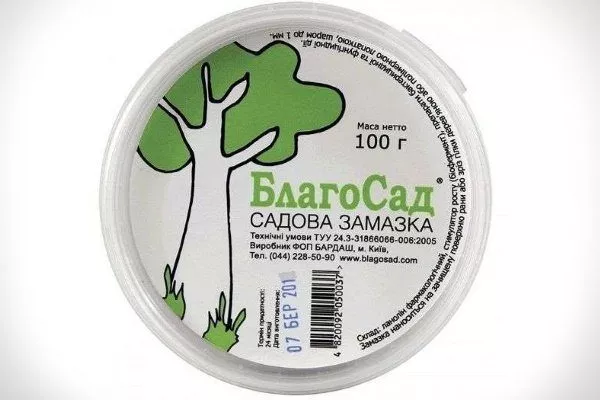
- putty "Blagosad".
Lubricate large broken branches with the following solution:
- Mix the root with wood ash and foundation (in a ratio of 1:1:1).
- Add a pre-crushed tablet of Immunocytitis.
- Add BF6 glue, which has the consistency of 20% sour cream.
Tips from experienced gardeners: how to avoid the problem?
To avoid branch breakage and splits, you can take preventative measures. These are as follows:
- adhere to the rules of agricultural technology for growing apple trees and the planting scheme;
- carry out pruning and crown shaping wisely, carefully and in a timely manner;
- If the tree is actively bearing fruit, install forks;
- In case of heavy snowfall, remove the mound from the branches;
- Cover young trees, i.e. protect them from temperature changes.
The choice of emergency treatment for an apple tree in the event of broken branches depends on many factors:
- age;
- condition and thickness of the trunk;
- the size of the damaged area;
- condition of the wound surface.
Experienced gardeners give two important tips:
- to stimulate the growth of lateral shoots after planting the seedling in the ground, shorten the trunk by 2-3 buds;
- Tie young apple trees with spruce branches or reeds until the trunk gets stronger, otherwise the tree may be attacked by rodents.
Fruit apple trees with broken branches can be saved if restoration measures are taken promptly. The gardener's actions depend on the affected area and the nature of the breakage. If store-bought putty is unavailable, use homemade garden varnish.