
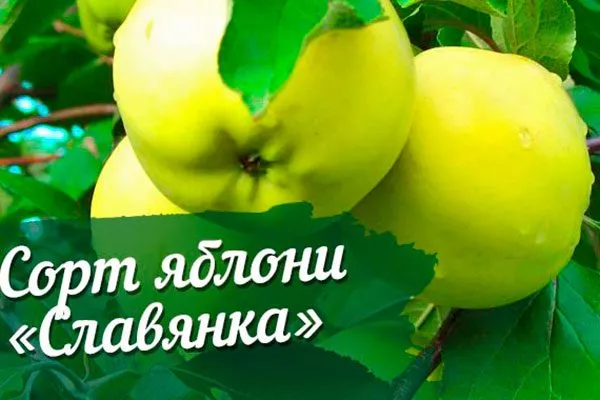
The Slavyanka apple tree is deservedly prized for its high productivity and winter hardiness. This variety is characterized by early fruiting and self-fertility, ensuring a stable harvest even without neighboring pollinators. The apples are juicy, flavorful, and store well, and the tree has a strong immune system. It is the best choice for growing in a variety of climates.
History of selection and zoning
This ancient variety was bred in 1889 by the eminent scientist I. V. Michurin. He improved the Antonovka by fertilizing its flowers with pollen from the Pineapple Reinette variety.
The seeds obtained from this cross were planted in 1890 and germinated successfully, with the first apples appearing in 1896. These breeding experiments resulted in the development of an apple tree distinguished by its early fruiting and high yield.
Slavyanka is successfully cultivated in various regions of Russia, including:
- Crimea;
- various regions of the Central Belt;
- North Caucasus;
- some northern areas;
- Ural and Volga regions.
Description
Slavyanka is one of the oldest apple trees, prized for its excellent garden qualities. The fruits of this variety are noted for their high consumer qualities.
The appearance of the tree
The plant is medium-sized, reaching up to 3.5 m in height. Annual growth ranges from 50 cm to 1 m.
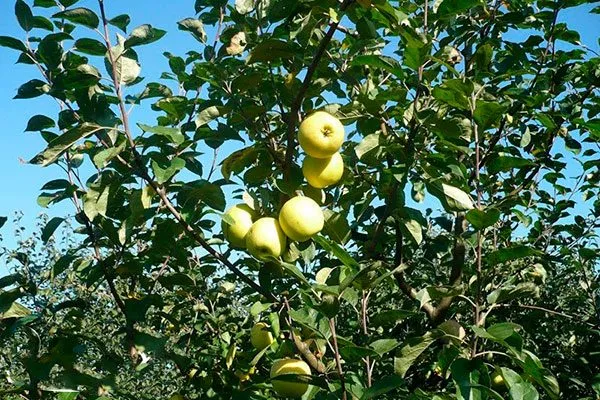
Characteristics of wood include:
- powerful, highly branched root system;
- compact, dense crown of a round shape up to 3 m wide;
- flexible, elastic branches of light brown color;
- oval leaves of a bright green hue with elongated edges;
- small snow-white inflorescences.
Description of fruits
Most apples are medium or slightly smaller in size. Their weight ranges from 75 to 130 grams, but they can be slightly smaller or larger in different years.
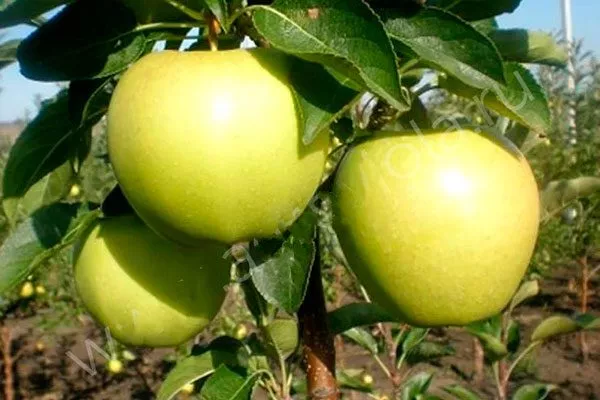
Other distinctive features:
- The fruit is typically round-elongated, sometimes slightly flattened or onion-shaped, with a smooth surface and mild to moderate ribbing that is clearly visible. A distinct lateral suture is sometimes visible. These characteristics depend largely on the rootstock and tree care.
- The apple skin is thick and glossy, with a noticeable oily coating; when ripe, it turns green or greenish-yellow. The blush appears as pale, blurred, streaky spots—ranging from light scarlet to pinkish or carmine-red hues—most often on the sunny side.
- Subcutaneous dots are numerous, light and greyish-green, and clearly visible.
The chemical composition per 100 g of fruit includes:
- P-active substances (catechins) – 289 mg;
- ascorbic acid (vitamin C) – 7 mg;
- sugars (fructose) – 10.8%;
- pectins (fiber) – 13.8%;
- titratable acids – 0.46%.
Characteristics of the apple tree
The Slavyanka apple tree, bred by Michurin, possesses unique qualities that have made this variety very popular in Russian gardens. Before planting, it's important to study all the characteristics of the cultivar.
Taste and uses
This is a dessert variety. Its flavor is rich, harmonious, and well-balanced. The fruits have a distinct sweetness with a light, pleasant acidity in the aftertaste, making them especially appealing to lovers of delicate fruits.
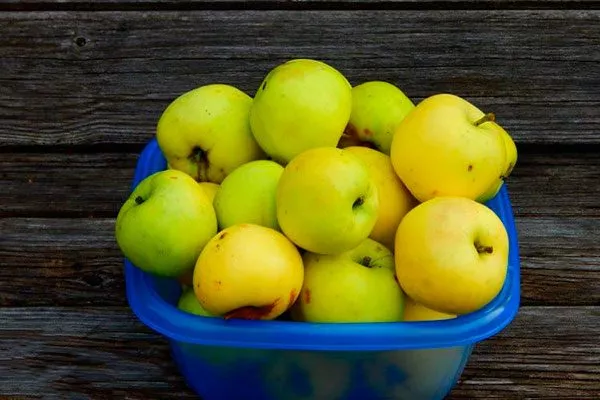
According to the results of professional tasting, this variety receives high marks – 4.4 points for taste and 4.5 for appearance.
Apples are excellent for fresh consumption, as well as for desserts, baked goods, and preserves. Their dense, juicy flesh allows them to retain their shape well during cooking.
Ripening time, fruiting
Slavyanka belongs to the winter group and ripens under normal conditions from approximately September 25 to October 5. The apple tree bears fruit annually, with the fruit production remaining stable. The first flowers appear 2-3 years after planting, but they are still few in number and produce a relatively small number of fruits.
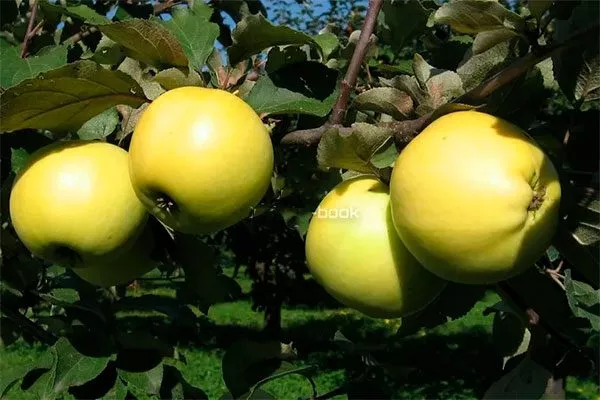
The first significant harvest occurs between the fourth and sixth years of the tree's life, when a single plant can yield between 5 and 15 kg of apples. In most regions, flowering occurs in May – the saucer-shaped flowers are white or light green.
Winter hardiness
The plant tolerates harsh winters well, withstanding temperatures down to -40°C. With proper shelter, surviving cold periods is easy. The variety is highly resistant to recurrent frosts, and the tree quickly recovers from them.
Pollinators and productivity
The variety is completely self-fertile, meaning it doesn't require other apple trees nearby to set fruit. However, in windy weather and active bees, the harvest becomes noticeably richer. Experienced gardeners often plant trees near apiaries or spray the trunks with sugar syrup to attract insects.
To increase productivity, you can plant other apple trees. The best neighbors for Slavyanka are:
- Cinnamon Striped;
- Antonovka ordinary;
- Saffron pepin;
- Bellefleur the Chinese.
A mature tree can produce up to 200 kg of apples per season, usually in the range of 185 to 210 kg.
Disease resistance
Slavyanka is renowned for its strong immunity to various fungal diseases. It rarely suffers from problems such as scab, rot, or powdery mildew. When diseases do occur, only the foliage is affected, while the fruit remains high-quality and suitable for consumption.
Pests can cause serious damage to trees, so it is recommended to use insecticides in a timely manner to protect the crop and maintain its health.
Subspecies and rootstocks
This variety has no subspecies, and it's unlikely that any will appear in the future. However, it is cultivated on various rootstocks, which influence some of the tree's characteristics.
For example, apple trees grafted onto wildings are characterized by increased frost resistance and can thrive even in the Far East. Trees grown on dwarf and semi-dwarf rootstocks develop a more compact crown, and their fruit is usually slightly larger.
Planting an apple tree
For successful cultivation, it's important to follow the recommendations of experienced gardeners. The tree's future development and yield depend on proper management.
Deadlines
Choose the planting period based on the region's climate. In southern regions, autumn is considered the optimal time, while in northern regions, spring is preferable.
This is because in the south, hot spring weather can make it difficult for young trees to establish, while in the north, spring is the ideal time for planting. Autumn in the north is short, so the quickly approaching frosts prevent seedlings from taking root properly.
Site requirements
To ensure a good apple harvest, it's important to choose the right planting site, taking into account the tree's biological characteristics and soil and climate requirements. Choose a suitable site:
- open, well-lit, without drafts;
- absence of accumulation of cold air and melt water;
- the depth of groundwater is not less than 3-3.5 m from the surface;
- soils – moisture-retentive, breathable, sandy loam or loamy with neutral acidity.
Selection and preparation of seedlings
When purchasing a tree, carefully select the planting material. Avoid random sellers and choose reputable nurseries that specialize in growing trees adapted to local conditions.
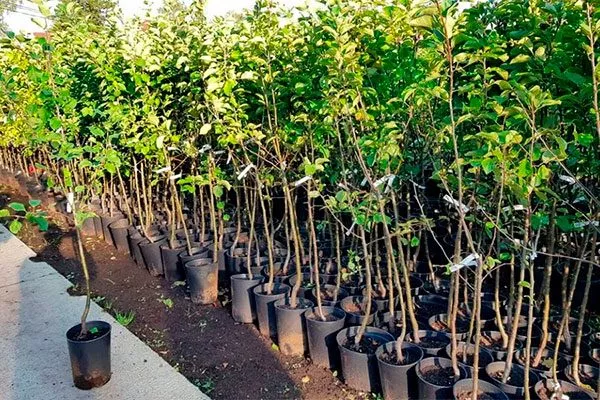
When choosing a seedling, pay attention to the following points:
- age not older than 1-2 years;
- absence of damage and growths on the roots and trunk;
- roots - moist and elastic;
- Bright green wood should be visible under the bark.
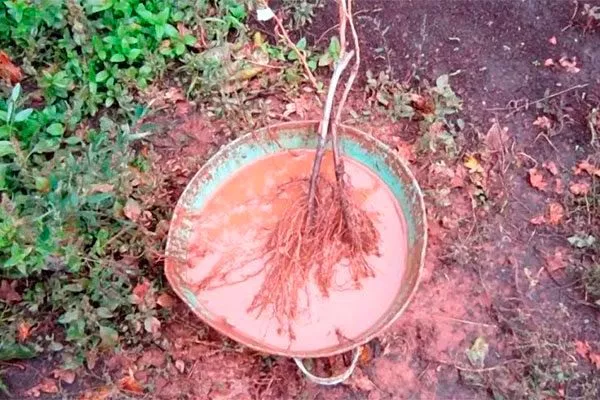
Before planting, soak the root system in water for 2-4 hours, and then treat it with a clay slurry for better rooting.
Scheme and rules
Prepare the hole 2-3 weeks before planting. Fill it with a nutrient-rich mixture of humus, rotted manure, fertile soil, and mineral fertilizer. Cover with clean soil.
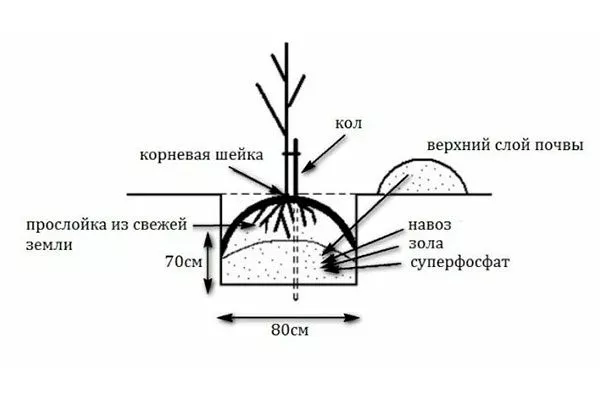
Planting a tree involves several stages. Here's a step-by-step guide:
- Drive a stake into the ground to support the young tree.
- Carefully place the seedling in the hole, spreading the roots evenly so that they are not twisted or bent.
- Fill with fertile soil, being careful not to damage the roots, then compact the soil. The root collar should be approximately 10 cm above the soil level.
- Tie the seedling to a stake and water it well – you will need 20-30 liters of water.
- Mulch the tree trunk circle with peat or compost with a layer of about 6-7 cm.
- Carry out pruning, shortening the shoots by 3 buds.
Care instructions
For an apple tree to thrive and consistently produce a bountiful harvest, it requires proper care and attention. Follow these simple agricultural practices:
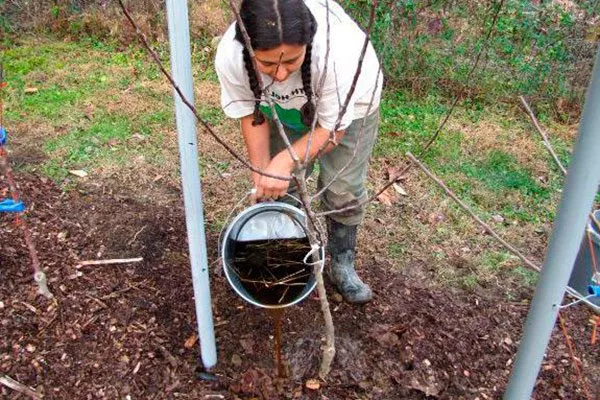
- Watering. During the first 1.5-2 months after planting, water the young tree regularly—about once a week, using about 10 liters of water. Then, increase the intervals between waterings to 2-3 weeks. Do this in the morning or evening, when the sun is not too strong.

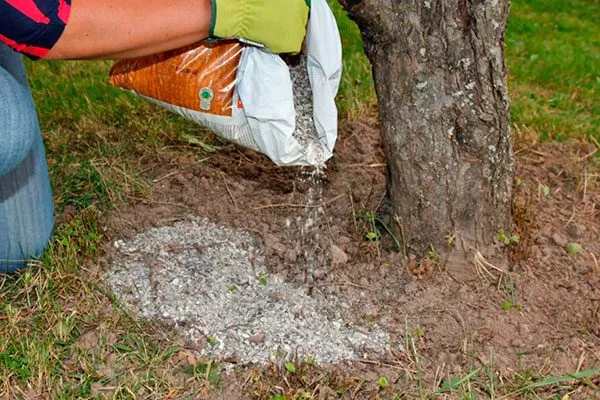
Adjust watering frequency depending on the weather: during frequent rainfall, additional watering is not necessary, as excess moisture can harm the tree. Afterward, mulch the area around the tree trunk—this technique keeps the soil moist, reduces weed growth, and reduces the need for frequent tilling. - Top dressing. The Slavyanka variety begins bearing fruit quickly and is characterized by high yields, which depletes the soil, so it is important to feed the tree promptly.
Urea, ash, nitroammophoska, and superphosphate are effective—they can be applied as liquid solutions or scattered around the tree trunk at a dose per square meter. Compost, humus, and peat are good organic matter—use them in the fall when digging around the tree trunks.
The main stages of fertilization:- during active growth and vegetation;
- during the period of ovary formation;
- when the fruits ripen;
- after harvesting.
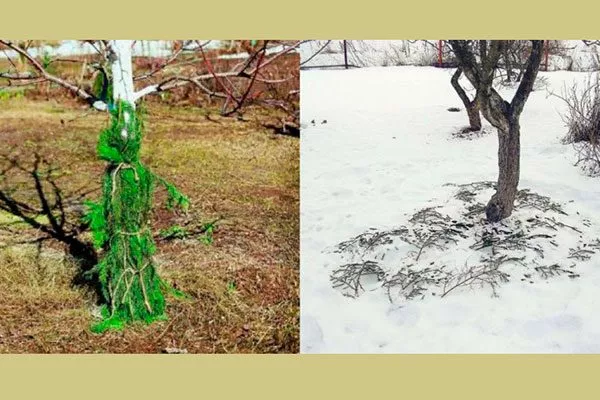
- Preparing for winter. For successful overwintering, cover young seedlings with agrofibre or burlap, and mulch the area around the trunk with peat or manure to a depth of about 10 cm. Install special traps to protect the tree from rodents. To protect the trunk from hares, tie it with spruce branches or netting. Whitewash the trunk and the base of branches with lime or water-based paint.
Features of shaping and pruning
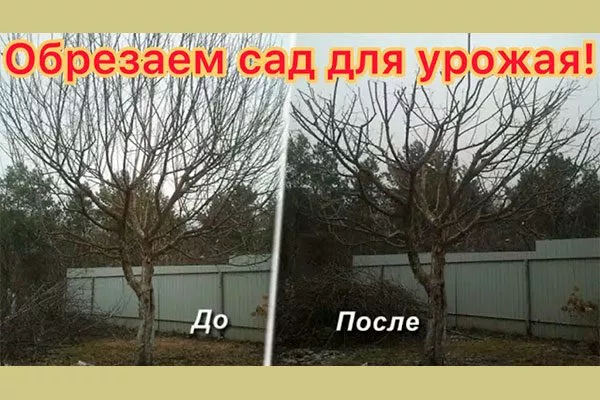
This process is usually straightforward, even for novice gardeners. The tree will naturally shape itself into a regular, rounded or broom-shaped crown, and all that's required is maintaining it in good condition.
Basic requirements:
- In the first year, shorten the central conductor by about a third, and the skeletal branches by 5-8 cm.
- Perform sanitary pruning in spring and autumn: remove damaged, diseased, dry branches, as well as shoots growing inward and vertically upward.
- Start rejuvenating pruning when the tree is about 15-18 years old: cut off 2-3 old branches to stimulate the growth of young ones.
Collection and storage
Pick apples in late September or early October, when they are fully ripe and have acquired their characteristic dessert flavor. Gently twist them, being careful not to damage the stems, to preserve their appearance and extend their shelf life.
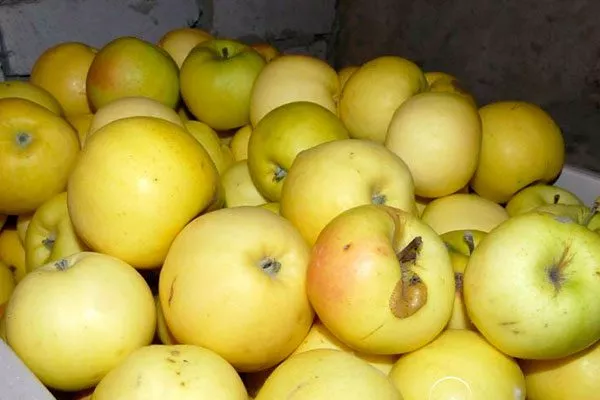
Store the harvest in well-ventilated, dark, and cool areas with temperatures between 0 and 2°C and humidity between 85 and 90%. Under these conditions, the fruit will retain its freshness and flavor for up to 3 to 4 months.
Pros and cons
Reviews
Slavyanka combines productivity and ease of maintenance, which is especially important for gardeners of all levels of experience. Its resistance to disease and wind, as well as the good shelf life of its fruit, make it a practical and profitable variety. Thanks to these positive qualities, it remains popular and is often a welcome addition to garden plots.