
Scarlett is the name of a variety of ornamental apple tree characterized by excellent frost resistance and low maintenance requirements. This beautiful tree easily survives winter in central Russia, where it is widely used in landscaping of private plots, city parks, and squares.
Description of the variety
The Scarlett apple tree is distinguished by its vigorous growth. It is a fairly tall and robust deciduous tree. Its appearance is described as follows:
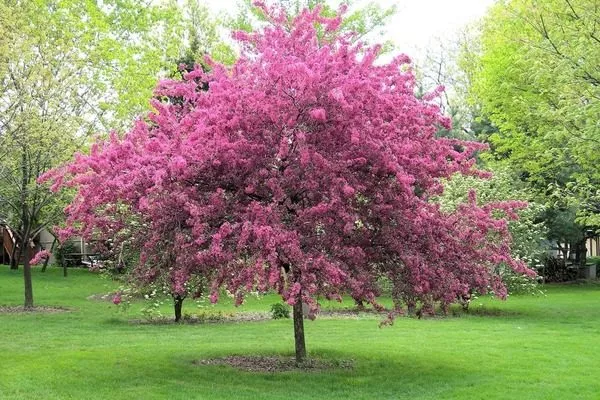
- Height: varies from 3 m to 5 m (the average is 4-4.5 m).
- Crown: oval, spreading, dense, luxurious, reaching 3-4.5 m in diameter.
- Branches: purple in colour when young, later brown, covered with dark, slightly rough bark, well foliated.
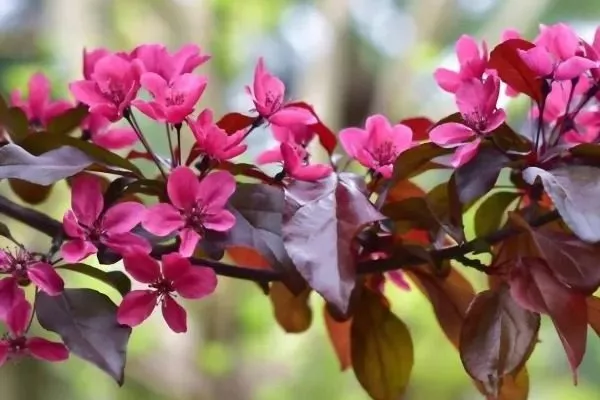
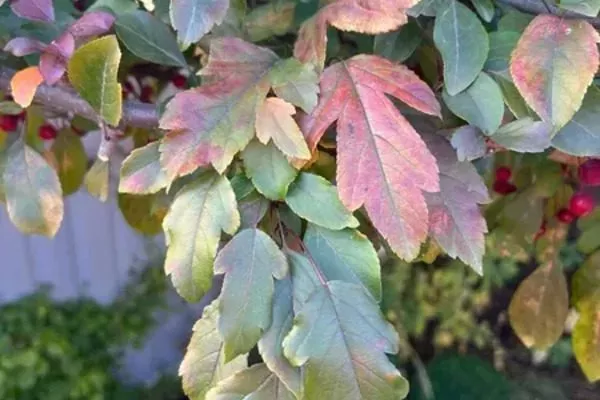
- Foliage: medium-sized, oval, deeply lobed, glossy, green with a purple-bronze tint (its color changes depending on the season: brown-red in early spring, green with a purple tint in the summer months, red or brownish-orange in the fall).
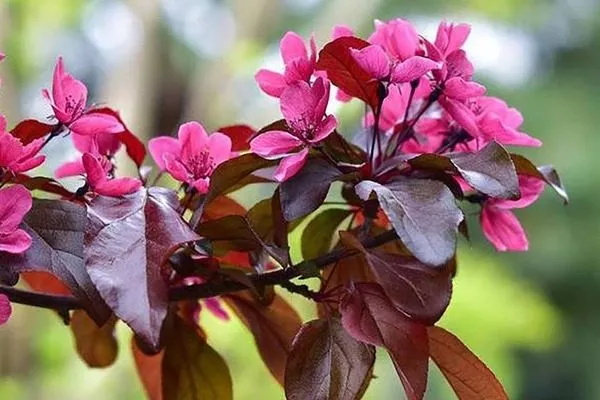
- Flowers: small, no more than 3-4 cm in diameter, numerous, dark pink or purple, emitting a rich sweet aroma that attracts pollinating insects (bees, bumblebees) to the tree.
The tree is exceptionally beautiful in bloom. Its variegated, richly colored foliage maintains its appeal throughout the growing season.
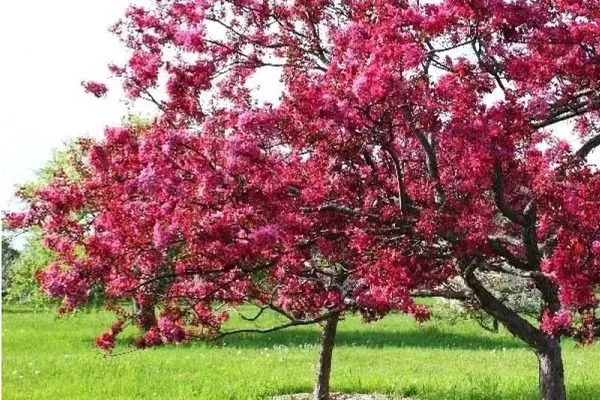
Its main purpose, like other ornamental varieties of apple trees (for example, Makovetsky), is used to decorate garden plots, country house grounds, urban green spaces, and alleys. It is applicable in:
- single landing;
- small tree and shrub groups that form a landscape composition;
- trellises, hedges.
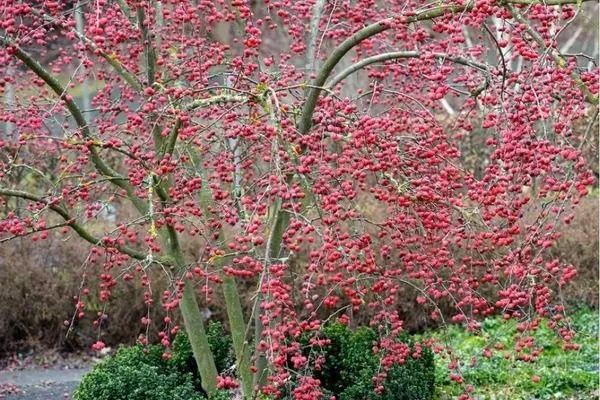
The fruits add decorative appeal to the tree. They resemble ripe cherries gathered in voluminous clusters. They are characterized by a rich red or purple color (when ripe). Their characteristics are as follows:
- shape - round;
- diameter - 1.5-2 cm;
- weight - 5-8 g.
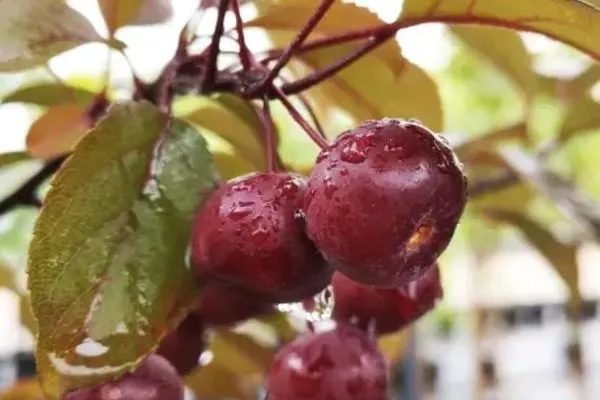
Scarlet apples are very sweet with a slightly tart flavor. They ripen in October and remain on the branches for a long time without falling. They can be seen on the tree until December. They are a valuable nutritional supplement to the diet of city birds. They can also be used in home cooking (jam, compote).
These miniature fruits contain numerous vitamins, minerals, and other beneficial substances. They are popularly known as "paradise apples."
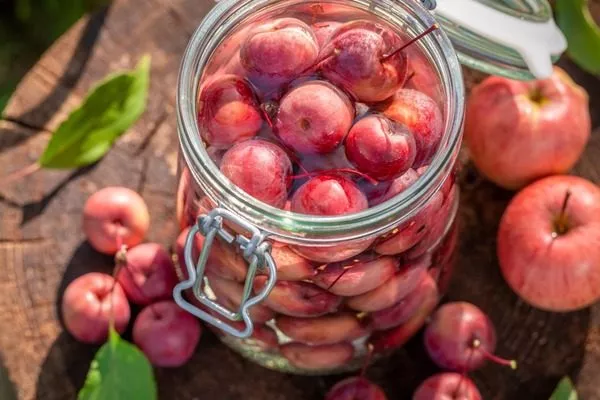
Traditional medicine attributes healing properties to them and suggests using them for the following purposes:
- as a remedy for anemia;
- to achieve a laxative effect in case of constipation;
- as a general tonic and immunity-boosting product.
Main characteristics
This ornamental tree is adapted for cultivation in the central Russian region, particularly in Moscow and the Moscow region. Gardeners appreciate its high winter hardiness. The tree can withstand temperatures as low as -32°C if properly prepared for winter.
The Scarlett apple tree's yield is relatively high. It bears fruit abundantly, but the miniature fruits are typically not harvested or weighed. The variety's value lies not in its productivity, but in its ornamental appearance.
This beautiful tree can't boast a strong immune system. It has moderate resistance to diseases and pests, particularly:
- scab;
- black apple cancer;
- aphid;
- bark beetles.
Features of the Scarlet apple tree's flowering
By providing this ornamental plant with proper care, you can admire its luxurious blooms every year. Numerous purple buds bloom on the branches in spring, in May. They transform the tree into a fragrant, dark pink cloud, spreading its sweet aroma for many meters around.
The budding period for the Scarlet variety varies depending on the climate of the growing region and the weather:
- flowering begins in late April or early May;
- its duration is up to 14 days (under favorable conditions);
- the first flowers bloom at temperatures of +10-15°C;
- It takes 1 week to 10 days for the buds to fully open.
Factors affecting flowering time
To ensure your ornamental tree delights you with its beautiful blooms on time, it requires the most favorable conditions possible:
- Temperature conditionsFlower buds require stable warmth (10-15°C) to open. Protect the apple tree from sudden cold snaps and recurrent frosts.
- LightingTo ensure the apple tree blooms as early as possible, provide it with plenty of sun. Daylight hours should be at least 12 hours. To achieve this, choose the right planting location. It should be sunny and open, not shaded.
- A successful winteringA plant that has survived the cold season well will open its buds on time and produce a large number of flowers.
To achieve this result, you can use high-quality insulation of your garden crop in the fall: mulching the tree's trunk area, wrapping the trunk and lower branches with burlap or non-woven material, and hilling it with snow.
Flowering times also depend on the age of the apple tree. Young trees tend to enter the budding phase earlier than mature plants.
Scarlett apple tree flowering stages
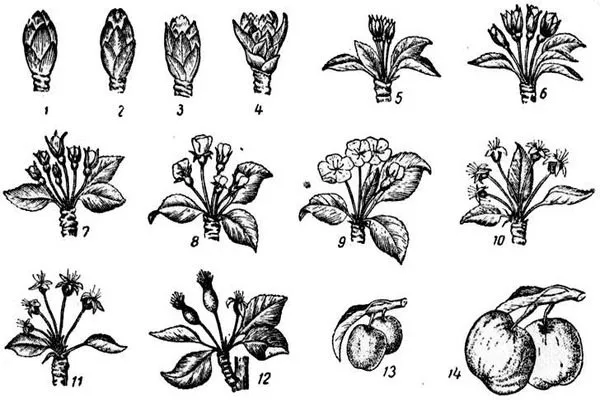
Every spring, ornamental trees go through the following sequential stages that make up the flowering process:
- Bud formationThis phase begins when the air temperature reaches a consistently positive temperature. Buds typically appear first at the ends of branches, and then along their entire length.
- The beginning of floweringThe first buds, located in the central part of the crown, are opening. At first, delicate pink tones predominate in the flowers' color. Gradually, their petals darken, becoming a rich purple.
- Peak of floweringDuring this phase, the crown is completely covered with blossoming buds. This is when active pollination occurs. It lasts 5-7 days.
- FadingThis is the final stage, characterized by the wilting of flowers and the shedding of petals. Fruit buds begin to form in the place where the former buds once were.
Flowering problems and their solutions
Despite the Scarlett apple tree's undemanding nature, it sometimes experiences difficulties during flowering. The most common problems gardeners report include:
- Complete absence of floweringThe complication is caused by nutritional deficiency or improper crown pruning.
To improve the situation, strictly adhere to the fertilizing schedule, and do not neglect the sanitary procedure of removing diseased, weak, broken, and dry shoots (carry this out in the fall). - Formation of inflorescences in small quantitiesThe problem is caused by a lack of pollinators. It can also be triggered by unfavorable weather conditions.
To ensure that flowering is not sparse, grow other varieties of garden crops next to the beautiful apple tree, which will serve as pollen donors for it.
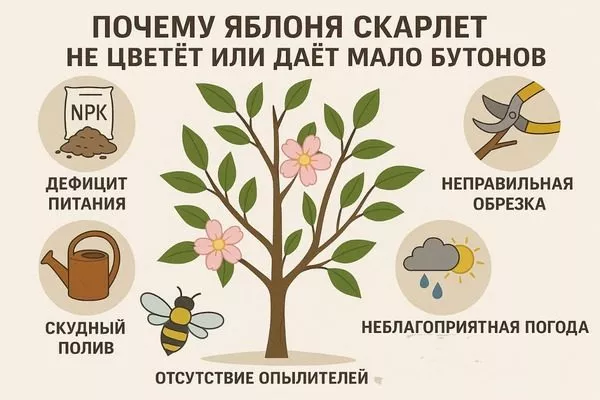
- Shedding of budsThis problem occurs due to sudden temperature changes or lack of moisture. Regular watering and frost protection will help prevent early apple blossom drop.
Growing and care
The Scarlet apple tree's cultivation practices are standard. They differ little from those of other fruit tree varieties and are even somewhat simplified due to the variety's low maintenance and lack of need for harvesting.
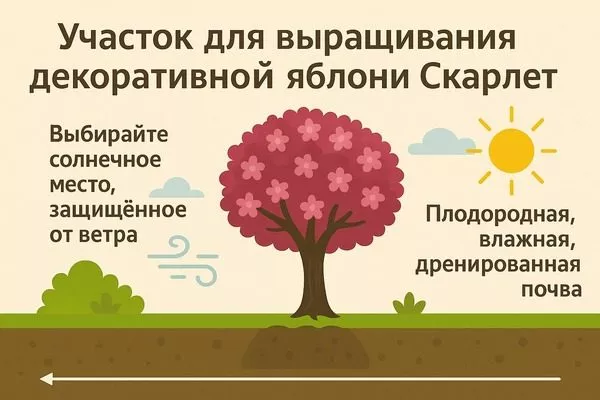
If you're planning to plant an ornamental plant in your garden, start by choosing the right location. Choose a spot that has the following characteristics:
- abundant sunlight throughout the day (in the shade, the color of the flowers and foliage will be less saturated and bright, and flowering will begin later than expected);
- having protection from drafts and cold and gusty winds (the latter provoke premature shedding of flowers);
- not located in a lowland with damp and cold air;
- not flooded by groundwater and not swampy;
- with loose garden soil, loamy or sandy loam, fertile (rich in humus), well-drained, moderately moist, not acidic.
Begin planting in early spring or fall (no later than 30 days before the first frost). Follow these step-by-step instructions carefully:
- Dig a hole in advance, making it 80x80-100 cm in size. If group planting is planned, the distance between holes should be 4-5 m.
- Fill the hole 2/3 full with leaf mold mixed with humus and sand (1:3:2). Enrich the soil mixture with double superphosphate. Adding 300 g of mineral fertilizer per hole is sufficient. Never use fresh manure or chlorine-containing compounds.
- Make a mound of the mixture at the bottom of the hole. Place the seedling on top of it. Carefully spread out the plant's roots.
- Cover them with soil and compact it around the trunk.
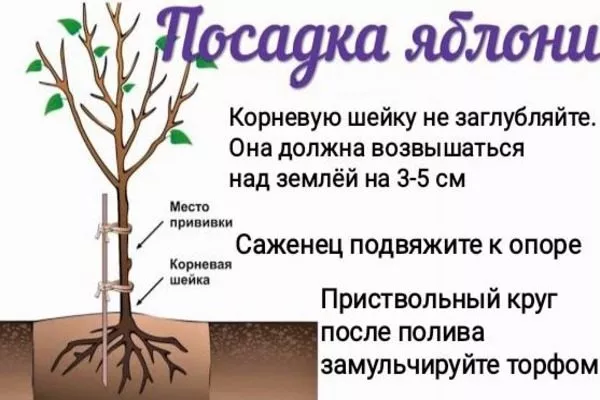
- Water the tree using at least 20-30 liters of lukewarm, settled water per trunk.
- To support the young tree, install a stake next to it and tie it to it with soft material.
- Cover the area around the tree trunk with a layer of mulch to better retain moisture and prevent weeds. Use peat, sawdust, or shredded tree bark.
- Provide the young plant with protection from the scorching sun for the first few days. Provide it with a special "tent" by stretching agrofibre over the supports.
When planting the Scarlet apple tree, leave its root collar 5 cm above the ground. There is no need to bury it deeper.
Provide your beautiful flowering tree with good care if you want it to grow and thrive, stay healthy, and delight the eye with its decorative appearance. Follow these essential care steps:
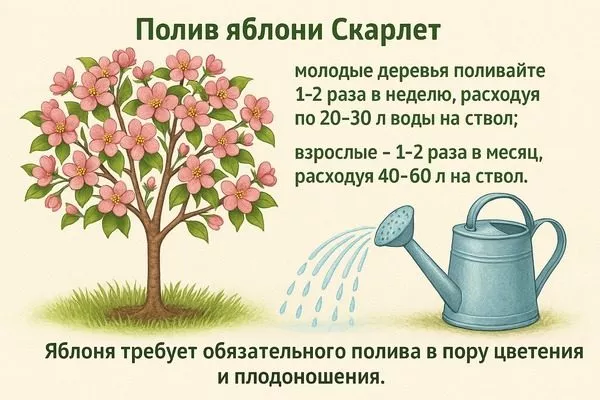
- WateringIdeally, the soil under an apple tree should be consistently moderately moist, but not waterlogged. Stagnant water is unacceptable, as is prolonged dryness.
Water young trees 1-2 times every 7 days, using 20-30 liters of lukewarm, settled water per trunk. Mature trees require less frequent watering, 1-2 times per month. The recommended rate is 40-60 liters per trunk.
Scarlett has an increased need for watering during flowering and fruiting.
- Weeding and looseningRemove any weeds that appear around the tree's trunk. At the same time, loosen the soil. This will improve air flow to the apple tree's roots.
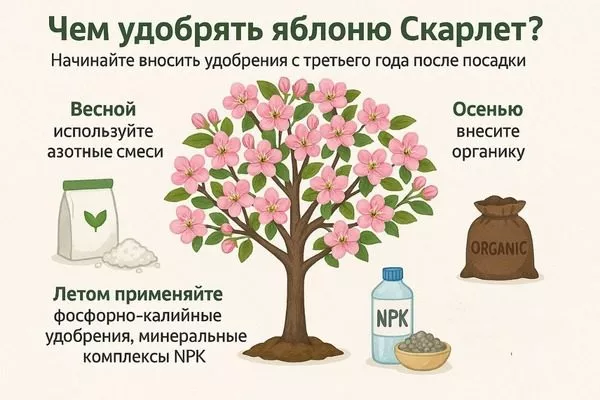
Prevent a dense soil crust from forming on the soil surface after heavy rains and watering. To reduce weeding and improve soil moisture retention, mulch with organic matter. - FertilizingThis won't be necessary for the first two years after planting the tree in a generously fertilized hole. After that, provide the apple tree with additional nutrients: use nitrogen-based fertilizers in the spring, phosphorus and potassium fertilizers in the summer, and organic matter in the fall.
- TrimmingTo give the tree's crown a beautiful shape and promote better fruiting shoot growth, carry out this procedure. Begin in the spring, before the buds swell. Prune out damaged, dried, frost-damaged, and crowded branches.
During the first few years of an apple tree's life, focus on shaping its appearance by performing formative pruning. This involves shortening the trunk by 1/3 of its height and creating 2-4 scaffold branches (these will need to be spaced at different levels and widely spaced).
In subsequent years, you will only need to maintain the crown in order, shortening excess and removing everything unnecessary.
The Scarlet variety has average resistance to infections and pests. If grown in unsuitable conditions and with poor care, the crop may suffer from:
- scabies;
- black cancer (the disease is curable only in the early stages).
If you don't plan to harvest or eat the fruit, you can treat the tree with a broad-spectrum chemical fungicide. Spray during and after flowering. Products such as Skor and Topaz, Bordeaux mixture, and copper sulfate will help protect your apple tree from fungus. Learn more about fruit tree diseases and their treatment. Here.
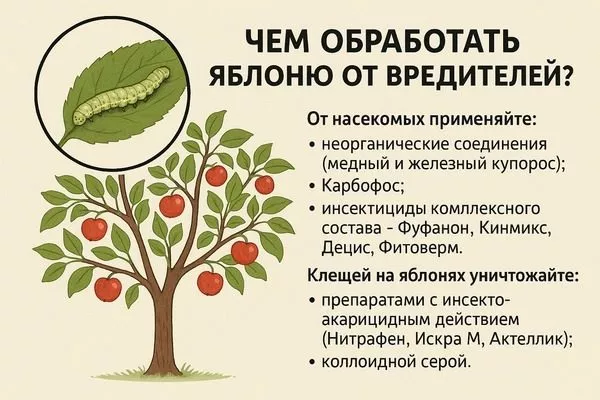
Insects, particularly aphids and bark beetles, can also damage the beauty of the Scarlett variety. To combat them, use systemic insecticides or folk remedies.
Pros and cons
Domestic gardeners enjoy growing ornamental apple trees in their gardens to beautify and enhance their appearance. Its attractive appearance, which lasts for most of the year, isn't its only advantage. This beautifully flowering tree also has other advantages and disadvantages that should be considered by those considering planting it in their garden.
Reviews
Scarlett is an interesting apple tree variety, beloved by Russian gardeners for its beautiful appearance, good winter hardiness, and low maintenance. Even a novice gardener can grow it. Its decorative appeal rivals that of popular varieties such as cherry trees, magnolias, and other plants used for landscaping.