
Semerenko apples are a variety that has been renowned since the times of Ancient Rus'. Not only are they distinguished by their high nutritional value and excellent agronomic characteristics, but they are also noteworthy for their ability to retain freshness for a long time. When cultivating this variety, it's important to follow certain rules to achieve maximum productivity each year.
History of selection
The origin of this apple variety remains a matter of debate. Legend has it that the first tree was discovered by Lev Simirenko, a renowned horticulturalist and pomologist, in his orchards near the village of Mlieva, located in the Kyiv region of Ukraine. The expert named the new apple variety after his father, Platon Simirenko.
The scientist was puzzled about its origin, suggesting that it could have been an ancient variety that had been forgotten in Europe and had somehow ended up in his gardens.
Features of historical data:
- In 1947, the apple was officially registered in the State Register under the name Ranet Platon Simirenko, but over time this name underwent changes. The term "ranet" was replaced with "renet," and the apple's discoverer's surname became Semerenko.
- The variety has several alternative names: Renet Simirenko, Green Renet Simirenko, and Simirinka. In literature, distortions of the variety's name are sometimes found, such as Ranet Simirenko or Renet Semerenko.
Area of distribution
This apple tree requires a particularly mild climate for productive fruiting. This variety is especially prized in southern Russia, the Kuban region, the Central Black Earth Plain, and Ukraine. Renet Simirenko thrives in steppe and forest-steppe zones. Its healthy growth requires not only warm winters but also fertile soil.
In the Central Region, where winters can be harsher, gardeners face additional challenges in cultivation. Proper winter protection and careful attention to care are essential.
At the same time, there are areas of the Russian Federation where cultivation is not recommended due to colder climatic conditions:
- Moscow region;
- Siberia;
- Ural;
- Leningrad region;
- Northwest.
Semerenko is registered in the State Register of Varieties for cultivation in the North Caucasus and Lower Volga regions. It is widely grown in Crimean gardens and is also common in private plots in Adygea and North Ossetia.
Description of the winter variety
Experienced gardeners say they easily distinguish the Renet Simirenko apple tree variety from others due to the unique characteristics and appearance of the plant and its fruit.
Tree
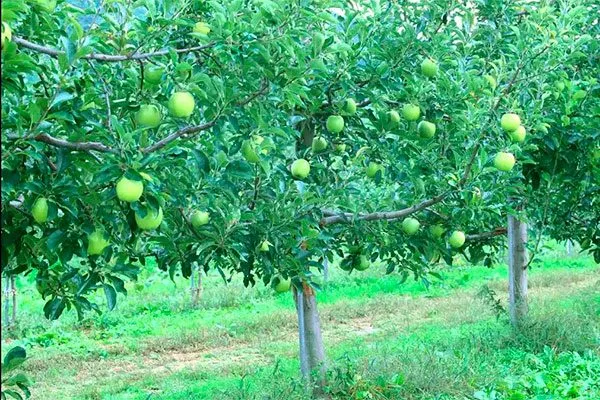
The apple tree reaches a height of 400-450 cm, which is above average. On weak clonal rootstocks, its height is approximately 320-350 cm. Other varietal characteristics:
- The crown has widely spaced branches and a pyramidal shape that can become denser. The upper branches grow almost perpendicular to the trunk and then angle downward, while the lower branches are positioned at an angle of 60-70 degrees.

- The bark on older shoots is dark gray, but can take on a blush-red tint when exposed to direct sunlight. Young branches are medium-thick, covered in green-brown bark, and straight. Lenticels on them are sparse and small.
- Annual shoot growth is 55-60 cm for young apple trees and 40-45 cm for mature trees. This species has a high rate of shoot formation.
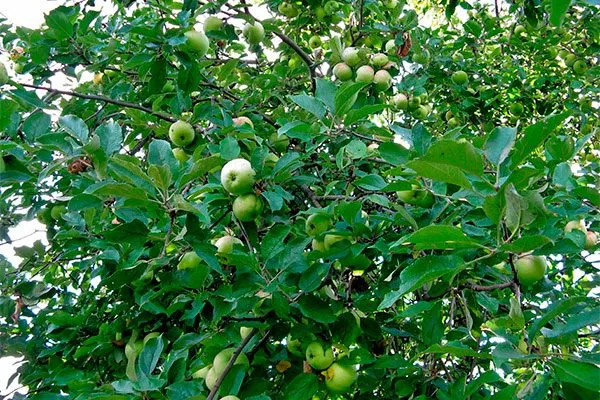
- The leaves are a rich green with a slight sheen. They are ovoid in shape with a rounded base. The leaf margin is slightly curved, creating a boat-like outline.
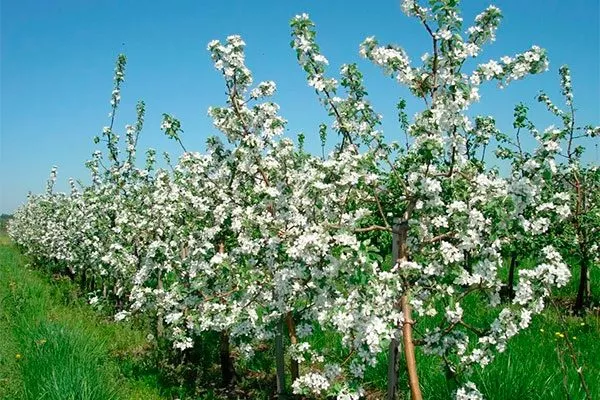
The underside of the leaf blade is covered with light fluff. The leaf petioles are medium-length, and the stipules are narrow and oval or linear-lanceolate. - Renet Simirenko blooms with white flowers. The buds are medium-sized and rounded, resembling a cup. Budding occurs later than other varieties, but is particularly profuse.
Fruit
Late-ripening apples have a unique appearance and characteristics, making them easily recognizable. These varieties are characterized by the following:
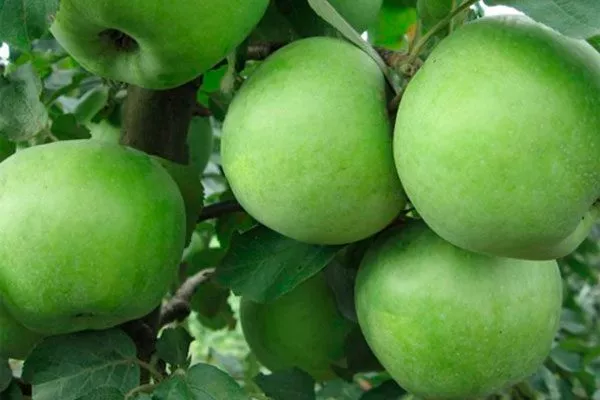
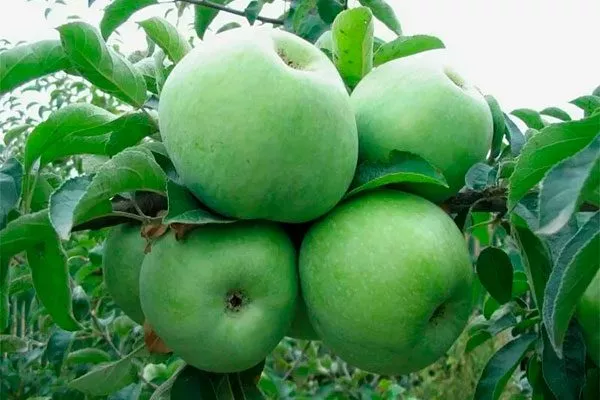
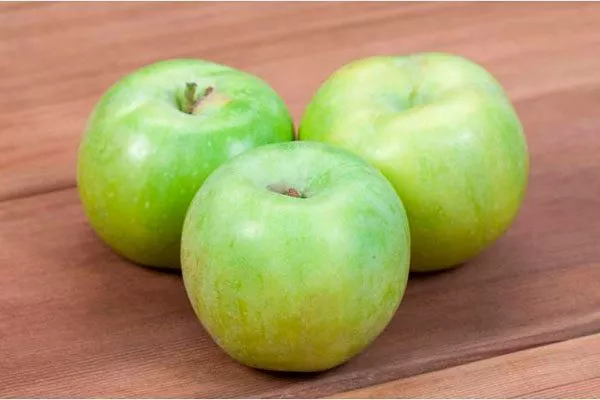
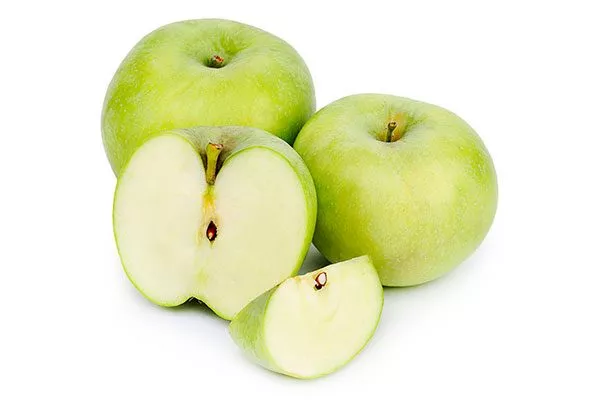
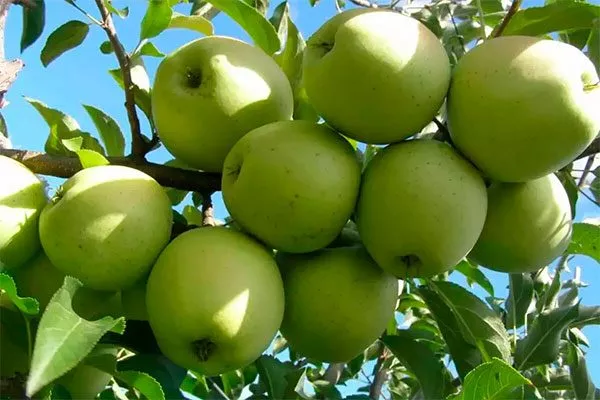
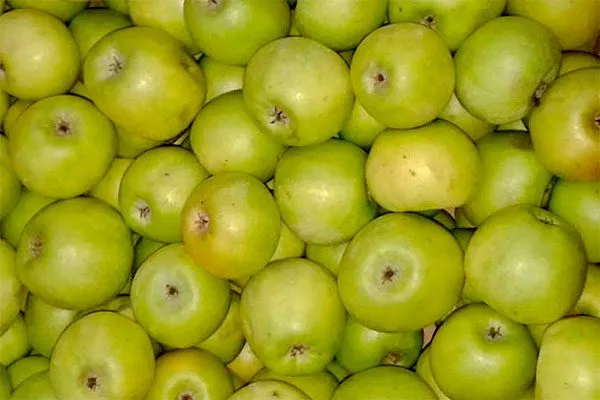
- Appearance. The apple skin is bright green with shiny, light spots. In sunny years, a very slight blush may be visible on the apples.
The unique feature of this variety is the small warts on the surface of the skin, reaching 5-7 mm in diameter, of which there can be two to three on each apple.
The fruit's shape can range from rounded-conical to more flattened-round with subtle asymmetry. The skin is covered with a moderate waxy layer. - Weight. The apples are quite large, their weight can vary from 150 to 200 g.
- Pulp. It is distinguished by its high juiciness, whitish color with a slight light green tint, and rich aroma. The pulp has a fine-grained texture.
- Safety. This apple variety has excellent storage qualities. In a cellar, they can retain their quality for 6-7 months, and in a refrigerator, until the end of May. Over time, the skin acquires a yellowish tint, and the flesh becomes more crumbly.
- Taste. It's sweet and sour with a pleasant spicy undertone. Gardeners also note the apples' wine-like aroma, which leads to a high score from tasters—4.7 points.
Benefits of the variety
Renet Simirenko is a source of a variety of beneficial components for our body and organism. 100 g of the fruit contains 7-9 mg of vitamin C, 12% fructose (in moderate amounts), 12% sugars, 110 mg of P-active elements, 0.7% titratable acids, as well as a lot of pectin and free iron.
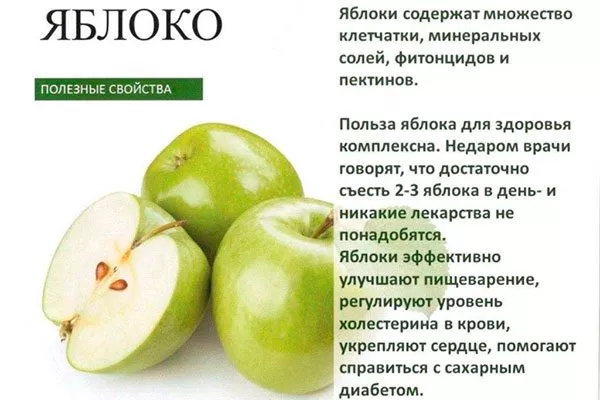
The peel and pulp contain a variety of vitamins: A, B, K, PP, P, C, E, as well as a number of other elements important for health:
- copper;
- phosphorus;
- folic acid;
- calcium;
- magnesium.
Benefit:
- From 6 months, the fruits can be given to babies by turning the pulp into a soft puree with a small addition of water;
- apples are recommended to support the functions of the stomach, liver and intestines;
- Moderate consumption can help with gastritis;
- Due to the fibrous structure of the pulp, the fruits help regulate digestion and prevent constipation.
Renet Simirenko is a variety with an incredible flavor palette. These apples can be eaten fresh or used for canning and desserts.
Winter hardiness
The tree's frost tolerance is rated as moderate. The apple tree is susceptible to damage at temperatures as low as -25°C. Gardeners report that the tree is at risk of frost damage approximately every 4-5 years, which can lead to significant crown loss due to wood damage.
Wood has a high capacity for regeneration, but a young tree may not be able to withstand such cold stress. However, thanks to its ability to rapidly grow new shoots, an apple tree can completely restore its crown in just three years.
Pollination and list of pollinators
The Semerenko apple tree is classified as a self-sterile variety. Under natural pollination conditions, it produces only 3-11% of its total fruit. The self-fertility rate of this variety is influenced by environmental factors.
To achieve maximum yield, this variety requires the presence of donor varieties whose flowering coincides with its mid-late budding period. Suitable partners for this role include:
- Memory of Sergeev;
- Idared;
- Stone or ordinary Antonovka;
- Korea;
- Golden Delicious;
- Snowy Calville;
- Kuban spur.
Productivity
A young tree begins to bear fruit annually, and then its productivity can develop in one of two ways:
- the tree may reduce its yield but continue to bear fruit annually;
- switch to periodic fruiting, which occurs every other year, but with greater productivity.
Between six and ten years, an apple tree yields 12-18 kg per tree. After ten years, the yield can reach hundreds of kilograms.
Ripening and fruiting of apple trees
Fruiting on different fruit formations is varied:
- An apple tree on a vegetative rootstock will only begin bearing fruit in its sixth to eighth year. However, the flavor of a few apples can be appreciated within five years.
- On dwarf and semi-dwarf rootstocks, the period of the beginning of fruiting is shortened – the opportunity to try apples appears already in the second or third year.
Other characteristic features:
- Budding begins in mid- to late May. Flowering lasts no more than ten days and is accompanied by an intense aroma that can be detected from afar.
- Apple trees begin to increase their yield at 10-11 years of age. A full harvest is virtually impossible until 15 years of age, but by the eighth or ninth year, the tree can produce up to 50 kg of flavorful apples.
- The tree grows particularly quickly and can reach 30 to 50 cm in a growing season, which is significant.
- Edible apples reach maturity around September 20th or October 1st-5th, but they can be picked as late as November, provided there's no frost. They don't fall from the branches, so the harvest is not susceptible to spoilage. When picked, they are firm and slightly tart, but after a month of storage, they acquire the distinctive flavor for which this variety is so prized.
- The fruits are well preserved and transported, and are not affected by significant temperature fluctuations.
How to harvest and store properly?
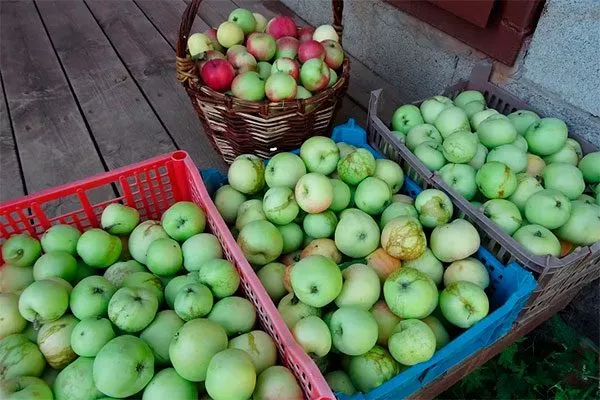
Renet Simirenko apples are known for their ability to remain fresh for a long time. To further extend their shelf life, it's important to follow specific guidelines during harvesting and preparation. The following aspects should be considered:
- Pick fruit only when there's no rain. Wet apples are not suitable for long-term storage.
- Before storing, dry the harvest in a cool, dry place or under a canopy. This takes about two weeks.
- Apples must be carefully sorted. Larger fruits do not store well and should be sown for early consumption. Damaged or overripe apples are also unsuitable for storage.
- The storage area should be prepared in advance. Ideally, a darkened cellar or basement with a temperature of 0 to 5 degrees Celsius is ideal.
- It is not recommended to combine apples with vegetables (especially cabbage and potatoes) in the same room.
- Fruit should be placed in wooden crates, with wood shavings or straw between the layers. Maximum capacity is three layers.
Rootstocks and similar varieties
Several decades have passed since the beginning of breeding work, so today there are several subvarieties to choose from. Each has its own characteristics, which should be considered when purchasing a seedling for your plot and desired outcome:
- Dwarf rootstock - It is distinguished by its miniature size, not exceeding 300 cm. These trees begin to bear fruit in the second or third year after planting, but their life cycle is shorter than that of semi-dwarf trees, lasting only 25-30 years.
- Semi-dwarf variety – It is characterized by a moderate height—around 450 cm—which makes garden maintenance easier. Its lifespan is also shortened—up to 45-50 years, after which it needs to be replaced with a young tree. Fruiting begins within four years of planting.
- Vigorous type – is the most common and undemanding in terms of care. These trees reach significant sizes (over 500 cm) and produce abundant harvests, but fruiting does not begin until 7-8 years have passed. This variety is not suitable for planting in confined spaces, near buildings, or in areas with high groundwater levels.
Among the varieties that can be confused with Semerenka, the green ones—Granny Smith and Antonovka—are worth noting. They have an identical appearance. Apples of other colors with many similar characteristics include Ranet Chernenko, Antey, and Zhigulevskoye.
Landing features
To ensure that your apple tree is healthy and produces a bountiful, high-quality harvest, it is important to strictly follow agronomic recommendations.
Planting dates
Semerenko is planted in early spring, usually after March 20th, but before the buds open. This is when the snow has already begun to melt, giving the seedling plenty of time to acclimate to the new conditions and establish itself before the cold weather sets in.
Autumn plantings occur between September 12 and October 20, but only if there's about a month left before the first frost. When spring arrives and the weather warms up, the seedlings will begin to develop quickly.
Selecting a site
This variety prefers to grow in areas with ample sunlight. If planted in the shade, its apples will be too sour. To protect the plant from cool northern winds, place it on the south side of a building or fence.
Other parameters:
- Semerenko does not tolerate waterlogged and excessively wet soils;
- groundwater should be at a depth of at least 150-200 cm;
- For optimal growth, fertile, well-aerated soils are best;
- Loams, sandy loams, chernozems and sod-podzolic soils are of particular value.
Selecting a seedling
The best option would be seedlings that are one to two years old, as they adapt more quickly. It's important to consider the following:
- The root system should be intact, free of damage, rot, or air pockets. A healthy root is characterized by the presence of 3-4 main roots covered with a network of fine root fibers for water absorption. To check for root dryness, wrap the cuttings around your fingers: a fresh root will curl freely and will not make a crunching sound.
- A healthy trunk is smooth, without wrinkles, signs of disease, scars or physical damage.
- A one-year-old seedling can be without branches, while older trees need at least three branches.
- The root collar should not be covered with growths.
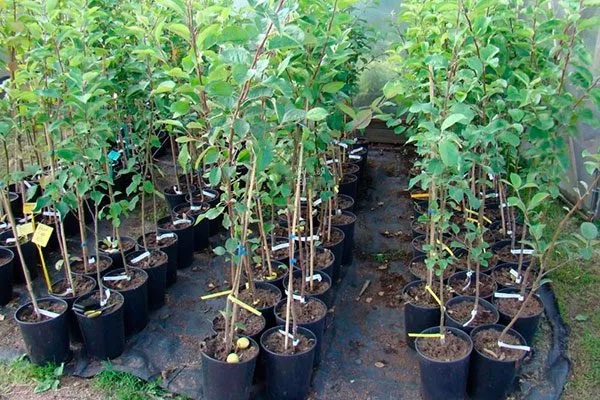
When transporting a purchased plant home, pay special attention to protecting the roots. To prevent them from drying out, it is recommended to wrap the root system in a damp cloth.
Preparing the planting hole
Approach the preparation of the planting site responsibly:
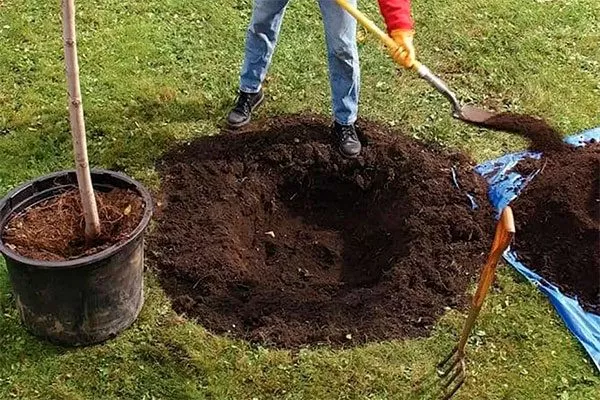
- Dig a hole. This is a depression 90-100 cm in diameter and 60-70 cm deep.
- Install a support. This can be a 200 cm high stake. If you choose wood as the stake material, be sure to treat it with a preservative to prevent rot.
- Prepare the soil. For optimal growth, use a mixture of fertile soil, compost, and river sand. The bottom of the hole should be thoroughly loosened to a depth of 20 cm and a mound of prepared soil should be created.
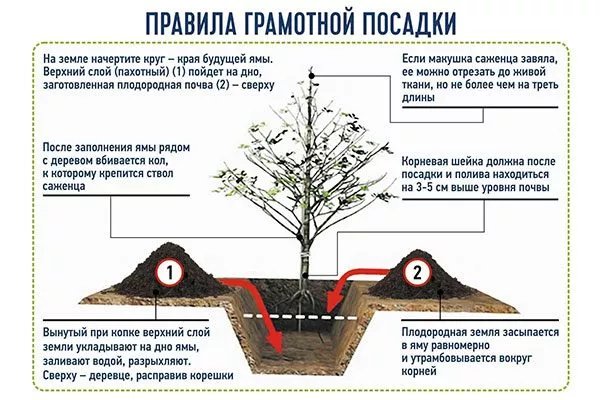
Planting diagram
Instructions for planting a seedling:
- Place the tree in the center of the dug hole, laying the roots in an even layer.
- Fill halfway with soil, gently tamping it down around the roots.
- Place a 2:1 mixture of compost and wood ash into the hole to improve soil fertility.
- Secure the seedling to a specially installed stake using rope, making a figure-eight knot to ensure the stability of the plant.
- Water the seedling with 35-40 liters of water.
- Place a covering around the trunk of the future tree. Use a layer of sawdust or grass to protect the soil from frost and weeds.
Basics of apple tree care
Although the Semerenko apple tree bears fruit particularly well in the southern regions of our country, with careful care it can also produce a bountiful harvest in more northern climates.
Watering
Watering is key, especially for young plants. During the growing season, seedlings need to be watered regularly—every 1-2 weeks, depending on rainfall and temperature. One tree will require approximately 20 liters of water.
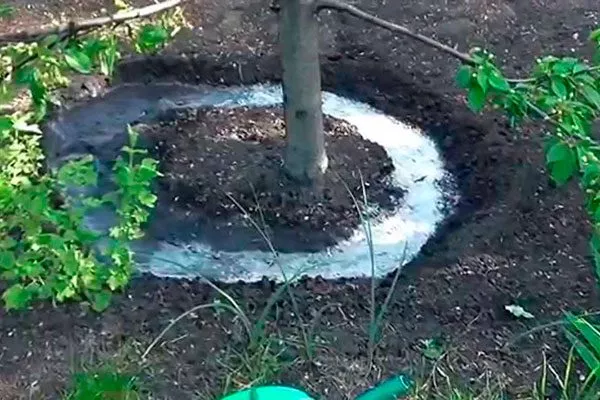
The watering details for a mature apple tree of this variety are as follows:
- three to four moistenings during the spring and summer months are sufficient:
- immediately before the beginning of budding;
- immediately after flowering ends;
- during the fruiting period.
- a mature tree requires a large volume of water to penetrate the soil to a depth of 40 cm, which corresponds to approximately 40-50 liters;
- Before the onset of cold weather, it is recommended to carry out abundant pre-winter watering, but this is only necessary in case of dry autumn weather.
For best results, divide the process into two stages: morning and evening, using half the total amount of water each time. This will ensure more even soil moisture.
Top dressing
In the third year after planting, the first fertilizing will be necessary, as the fertilizer initially applied to the soil will be depleted. What and how to do:
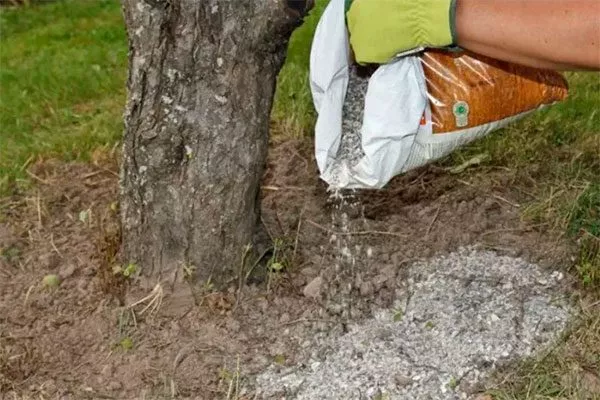
- In spring and early summer, apply high-nitrogen fertilizers (20 g of urea per young tree and 50 g per mature tree). Spread the fertilizer evenly around the tree trunk, either dry or pre-dissolved in water.
- After the apple harvest, in mid-autumn, the tree is fertilized with mixtures containing potassium and phosphorus. This approach strengthens the wood and helps it survive winter conditions. These fertilizers can be provided in either dissolved or dry form.
- Don't neglect organic fertilizers. Typically, 25-30 kg of compost or manure is added to the tree trunk circle. This material also helps improve the soil structure. If the soil in the area is sufficiently fertile, apply organic fertilizer every two or three years, rather than annually.
Trimming
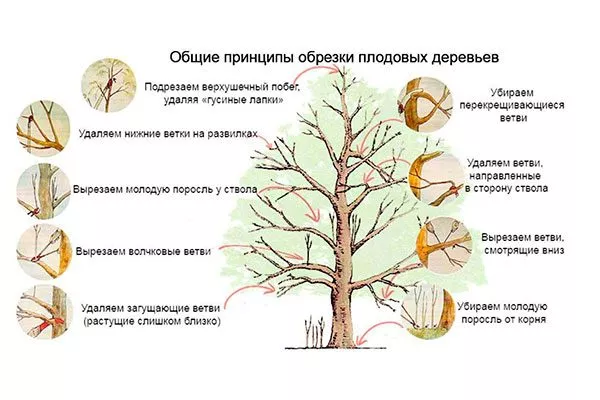
The Semerenko apple tree is prone to vigorous crown growth, which can lead to reduced fruit production and increased risk of disease. Therefore, regular pruning in spring and fall is essential. Features:
- remove excess, dried, damaged, old and diseased shoots, as well as those that are growing incorrectly;
- treat the cuts with oil paint or a special garden varnish;
- Avoid too intensive pruning, which can be more than 30-35% of the total crown area, as the plant will require significant time to recover;
- use only sharp and sharpened tools;
- Make cuts in such a way that no stumps remain;
- Do not touch the fruit-bearing spears and branches, as the future harvest depends on them.
Preparing for winter
The Semerenko apple tree is resistant to low temperatures, but it can suffer from sudden climate fluctuations, so autumn preparation is key.
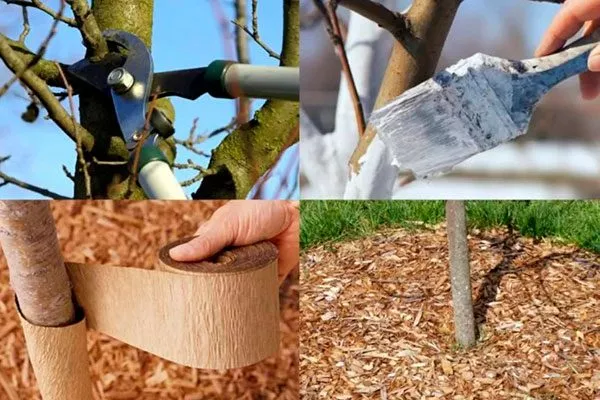
First, remove fallen leaves from around the tree, prune it, and paint the lower part of the trunk white. Next:
- treat the crown with a pest control agent;
- water the apple tree if the weather does not predict precipitation;
- protect the area around the roots with a layer of mulch (for example, manure or dry grass);
- Install a fine mesh rodent control net.
Diseases and pests
Renet Simirenko most often encounters scab and powdery mildew. The key to combating these problems is prevention, not treatment:
- Preventative measures include clearing the garden of fallen leaves and fruit and treating the trees with special fungicides, such as Bordeaux mixture at a concentration of 3% or copper sulfate of the same concentration.
- Biopreparations such as Zircon, Raek and Fitosporin, which require multiple treatments, also prove effective.
- To treat affected trees, specialized products are used, including Nitrafen, DNOC, Euparen, and Polycarbacin. However, it is recommended to use DNOC no more than once every three years.
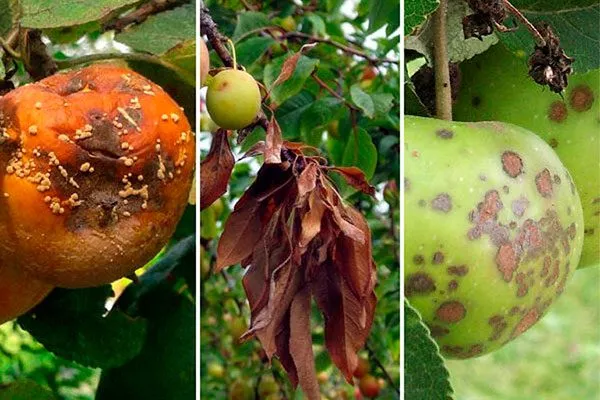
Pests that threaten this variety include codling moth, apple blossom beetle, and aphids. Insecticides (Iskra, Decis, and Fufanon) are used to control them.
Why doesn't the apple tree bear fruit?
The fruiting process may be delayed or suddenly interrupted:
- Young tree. It's possible that the tree is still too young to bear fruit. Depending on the rootstock, the first harvest can appear between the 3rd and 8th year of the plant's life. Planting errors or adaptation issues can delay this process.
- Does not bloom. Lack of budding may indicate disease, pest infestation, root damage, or a lack of nutrients in the soil.
- It blooms but does not produce fruit. The first flowering of apple trees may be fruitless, and the ovary may be damaged by late cold weather, which occurs after the beginning of budding.
In other cases, this may indicate that the pollination process did not occur on time, which may be due to errors by the gardener or unfavorable weather conditions. - It bloomed, ovaries formed, but quickly fell off. Complete fruit drop may indicate frost damage or any disease. If there's an anthill in the area, an aphid infestation may be the cause.
- The mature tree does not bear fruit. Old apple trees of this variety may experience intermittent fruiting periods.
Pros and cons
This apple variety continues to be in constant demand among gardeners due to a number of advantages:
It is also worth considering some of the disadvantages of this culture:
Reviews
Growing the Semerenko apple tree doesn't require excessive attention or effort, but a few rules should be followed. In return, the tree will reward you generously with an excellent harvest, allowing you to enjoy fresh apples even in spring. This variety is recommended for cultivation in temperate and warm climates.