
Apple tree pruning is not just a gardening procedure; it requires experience, patience, and an understanding of tree biology. Proper pruning promotes a healthy crown, more fruit, and improved fruit quality.
Why do apple trees need pruning?
This agronomic practice is aimed at structuring a healthy, productive tree and ensuring a bountiful harvest of high-quality fruit. Without regular pruning, the plant quickly becomes dense, which leads to decreased light within the crown and reduced fruit production.
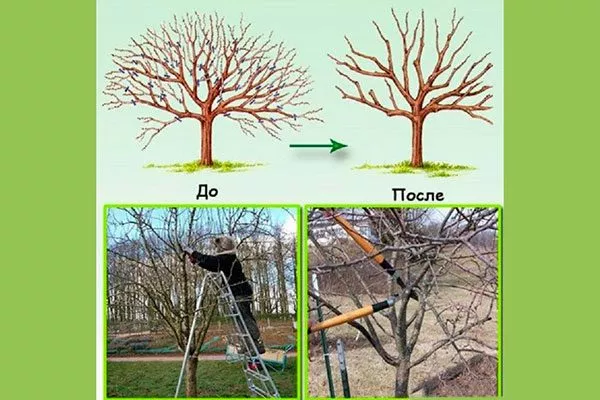
The main purposes of pruning are:
- Structuring. Proper care helps create an optimal crown structure that ensures even sunlight distribution and air circulation. This promotes healthy tree growth and increases disease resistance.

- Increased productivity. Removing excess and weak branches stimulates the formation of new fruit buds and increases the number of apples.
- Rejuvenation. Removing old and diseased branches promotes the growth of new, strong shoots, prolonging life and maintaining productivity.
When to perform the procedure?
To maintain the tree in good condition and obtain a stable harvest, it is important to choose the right moment for intervention and take weather conditions into account.
Seasonal haircut:
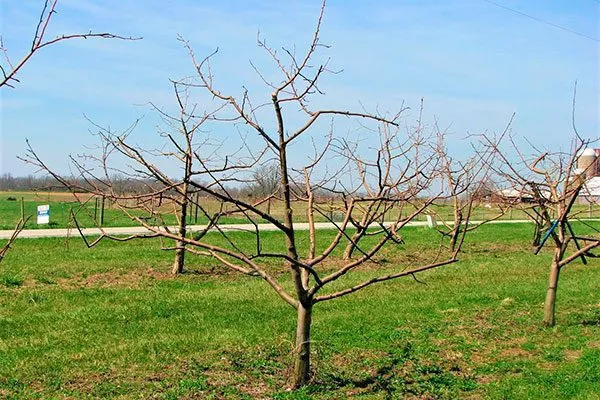
- In the spring. Spring pruning is the most basic and important. Perform it before the sap begins to flow, but after severe frosts have passed, approximately from late February to early April (depending on the region).
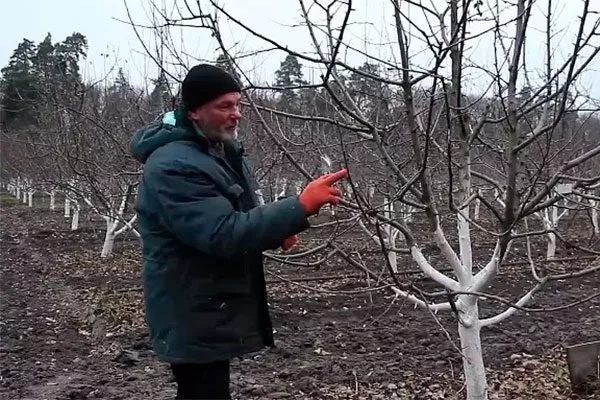
This event allows you to remove frozen and broken branches, shape the crown, and improve lighting and ventilation. - In autumn. Perform this procedure after the leaves fall, in October-November, but before the onset of sustained frost. It is designed to remove diseased, dry, and thickened shoots before winter. Make cuts carefully to avoid weakening the tree before the cold weather sets in. Avoid deep pruning in the fall.
- In summer. Apply less frequently and very sparingly, primarily on young trees. Schedule the procedure for June-July. The main goal is to pinch or shorten green shoots and remove suckers and weak growth. This procedure helps direct growth and improve canopy light exposure during the growing season.
- In winter. During this season, pruning is permissible in southern regions when temperatures do not drop below -10 to -15°C. Perform pruning in February, during dry and calm weather. The tree is dormant, but the wounds will heal slowly until spring.
Necessary tools
When working in the garden, it's important to have high-quality tools ready. To prune fruit tree branches, you'll need:
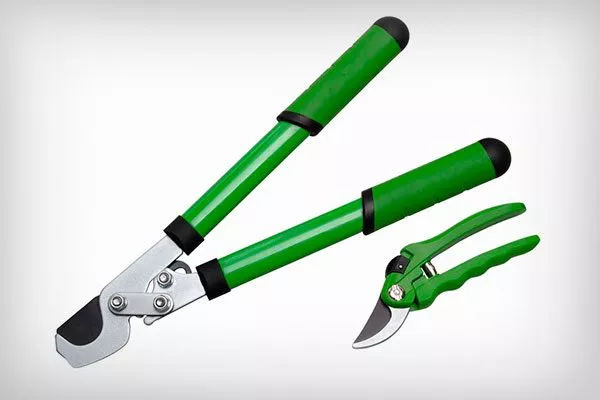
- Secateurs or loppers. Pruning shears are ideal for trimming thin branches up to 2 cm in diameter. Loppers are useful for thicker branches, up to 5 cm in diameter, especially in hard-to-reach areas.
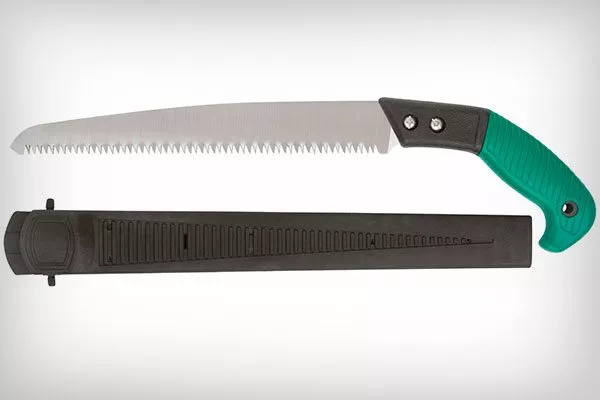
- Garden saw or hacksaw. Necessary for removing the thickest branches that cannot be cut with pruning shears or loppers.
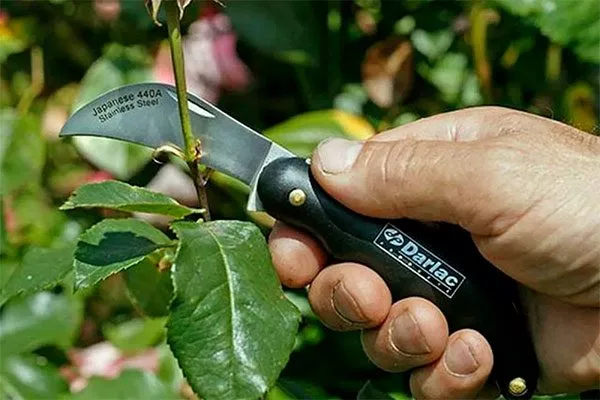
- A sharp knife. Can be useful for cleaning cuts and removing small shoots.
Types
There are several options for tree pruning. The choice depends on the gardener's goals.
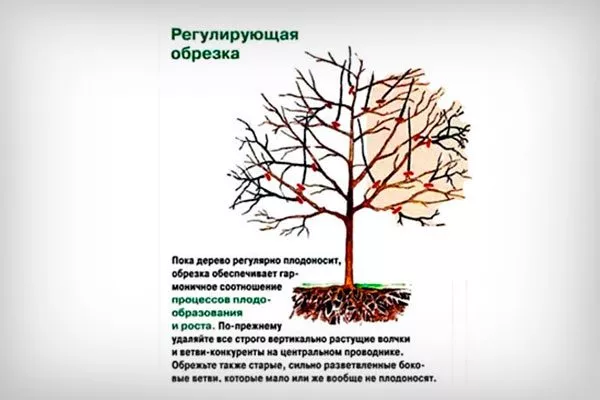
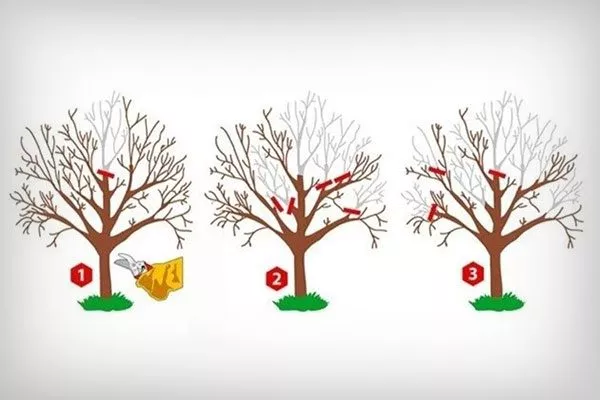
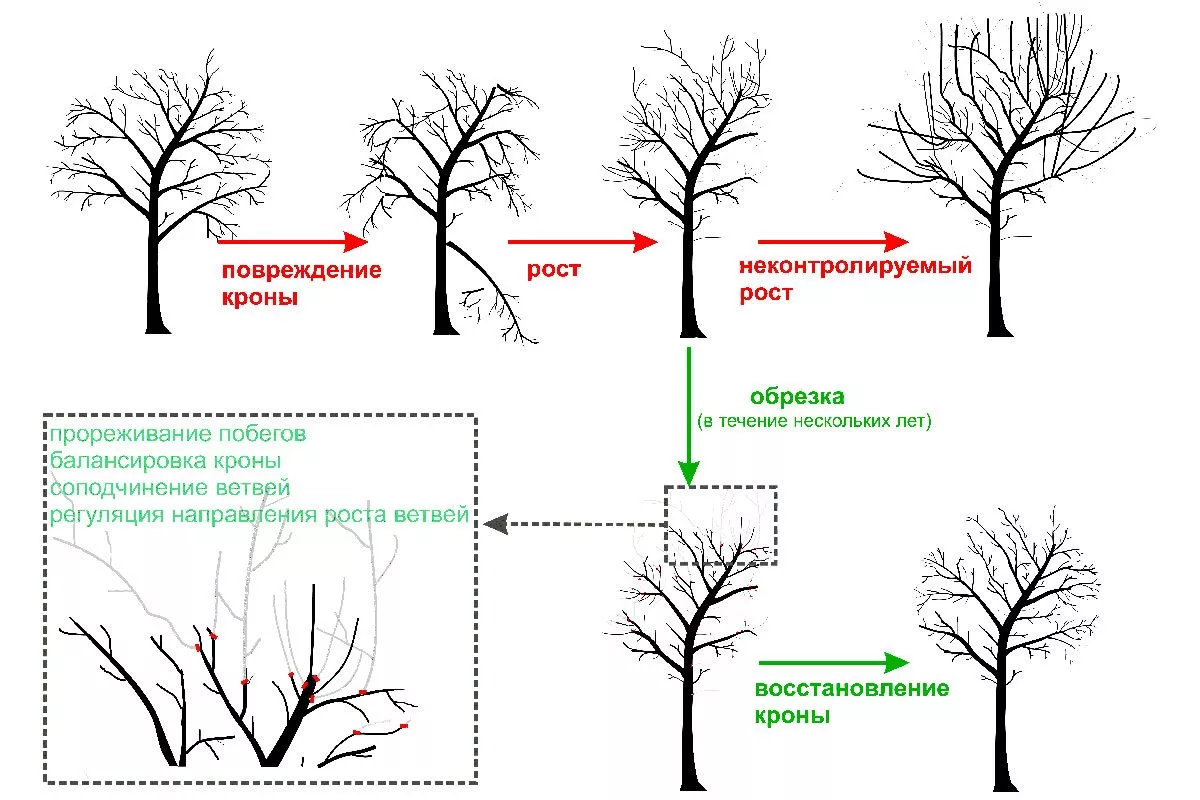
Regulatory
The main tasks of regulatory pruning:
- Preventing crown thickening – it impairs the penetration of light into the tree and shifts fruiting to the periphery.
- Tree height control – necessary to simplify the collection of fruits.
- Crop Load Balancing – helps to avoid both overload and lack of ovaries in certain areas of the crown.
Formative
Pruning aimed at shaping the apple tree's crown is important in the early years of its development, as it helps create a strong, comfortable, and well-lit structure. The overall health of the tree, the stability of fruiting, and the yield of the harvest depend on the correct execution of this procedure.
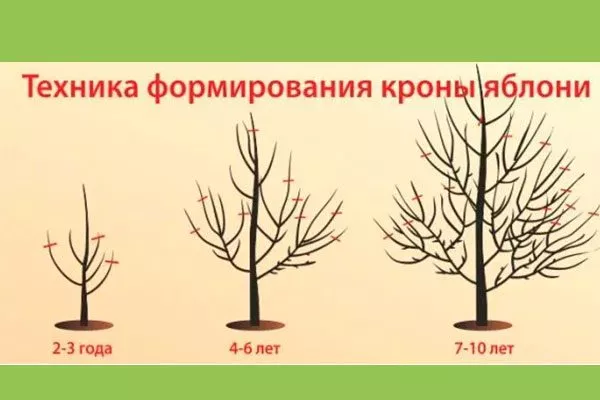
Recommendations for formative pruning:
- Do this at the beginning of spring, before the buds begin to swell.
- In the first year after planting, shorten the main trunk and leave three to five evenly distributed lateral branches.
- In the 2nd to 4th year, begin shaping subsequent tiers, removing branches that compete with the main ones and those that create excessive density. The central leader should always rise above the lateral shoots.
- Don't prune too much - remove no more than 25% of the total growth per year.
- Every spring, make corrections to the shape by removing branches that grow inward, weak or damaged.
Sanitary
Pruning can be done at any time of year, but autumn is considered the best time, as the garden prepares for winter dormancy. At this time, it's important to ensure the trees enter the winter healthy, free of diseased or weakened branches.
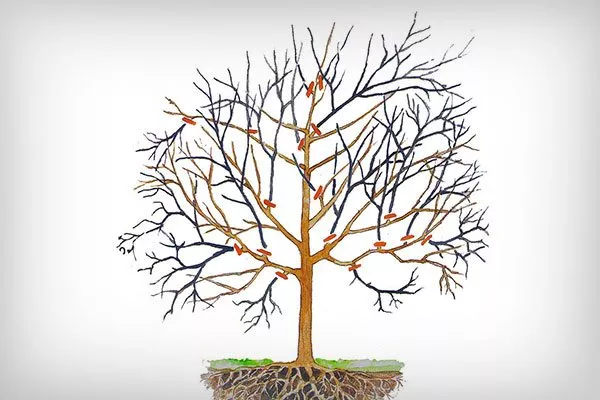
Pruning recommendations:
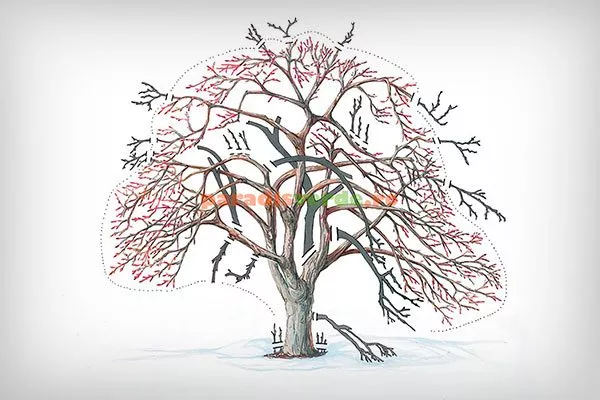
- Before starting work, carefully inspect the tree. Remove all dead, weakened, or infected branches. Such shoots not only slow the tree's growth but also become breeding grounds for fungal diseases and harbor pests.
- Check the trunk's condition. If there are any cracks or damage in the bark, carefully clean them and treat them with copper sulfate. This will help protect the tree from pests that may survive the winter under the bark.
- Early spring is the time for a second pruning. Before the buds open, inspect the tree again: some branches may have broken off or frozen over the winter. Spring pruning is especially important for maintaining the tree's health and shape.
If you have to prune in winter or summer, take weather conditions into account:
- do not prune at temperatures below -20°C or above +25°C;
- Avoid working in rainy or very wet weather.
Rejuvenating
As apple trees age, growth slows and the apples become smaller. Rejuvenating pruning will help extend the tree's lifespan and its fruiting potential.
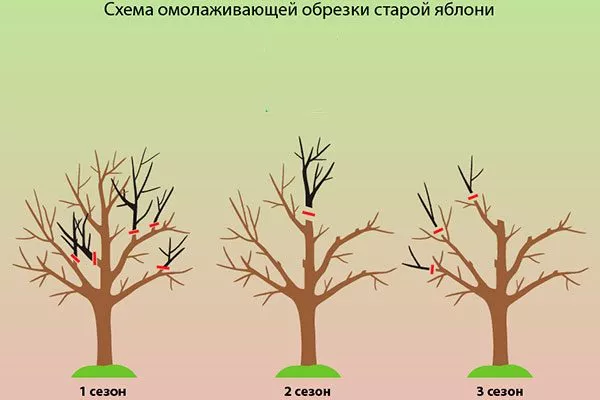
It is important to follow certain recommendations:
- It is not recommended to remove more than two old, non-fruiting, large branches in one year.
- Branches whose growth over the year was less than 40 cm should be shortened.
- The crown should be formed using young shoots, with the gradual removal of old branches.
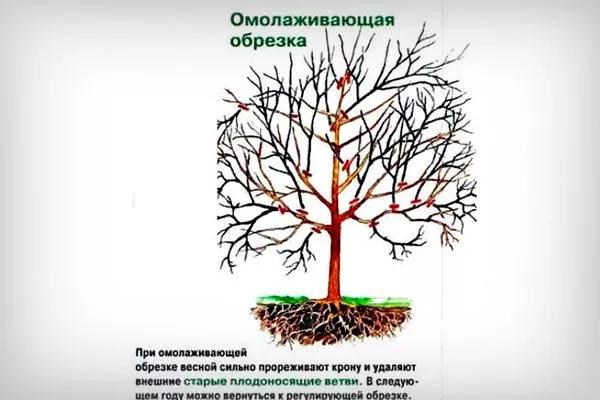
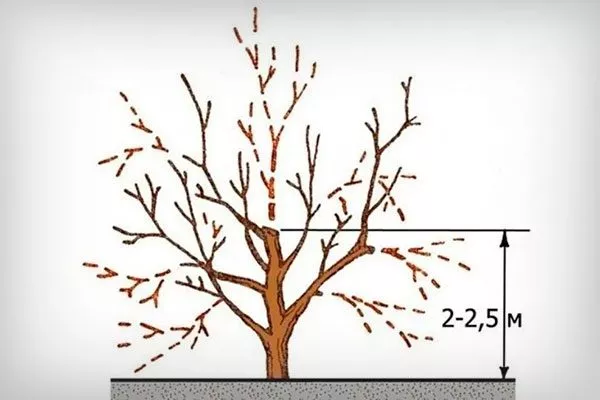
Prune only trees with strong main branches and a healthy trunk from the root collar to the first main branch. After pruning, remove dead bark from the trunk.
Techniques
The branch removal method is selected depending on the branch and the desired outcome: complete removal, partial shortening, or growth angle correction. The most convenient methods are presented below.
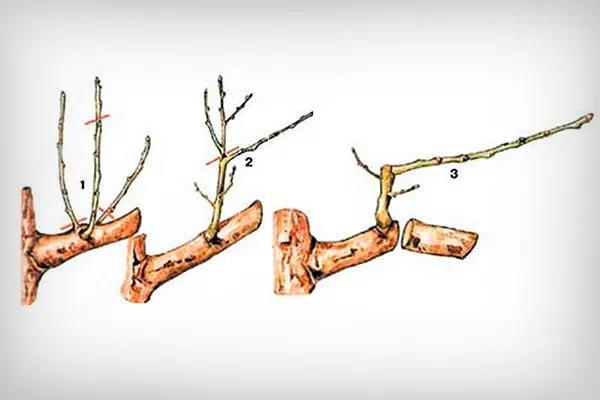
On the ring
This method is used when cutting off an entire branch. At the junction of the branch and the trunk, there is a ring-shaped thickening where active tissue regeneration occurs, ensuring rapid wound healing.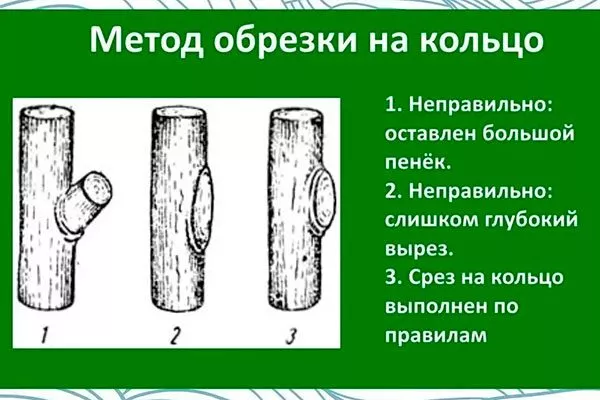
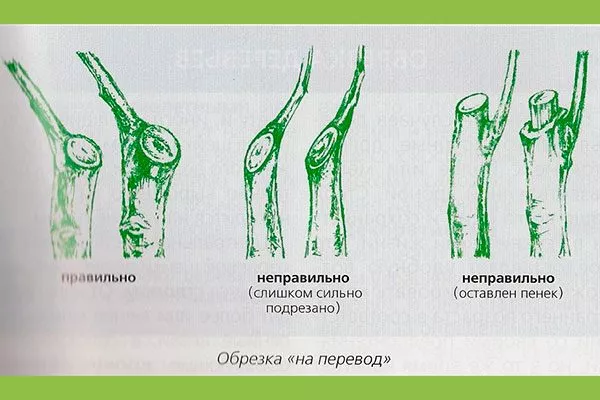
Avoid leaving too much of a branch stump, as it will dry out, fall off, and potentially cause a hollow. Cutting too close to the trunk is also undesirable, as it can cause serious damage to the tree.
On the kidney
When partially pruning a branch, select a suitable bud located above the cut. Use this technique for thinning and shaping the crown. It's crucial to make the cut approximately 5 cm from the bud—leaving the stump too far or cutting too close can damage the bud and branch.
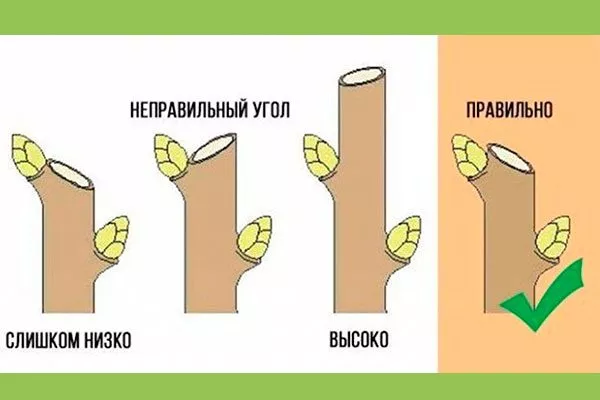
The result of pruning depends on which bud you choose as a guide:
- if it is internal, directed towards the trunk, lift the lower branches and strengthen the skeletal branches, but the crown will thicken;
- If it is external, the crown will become more sparse and expanded, which will improve the penetration of light into the tree.
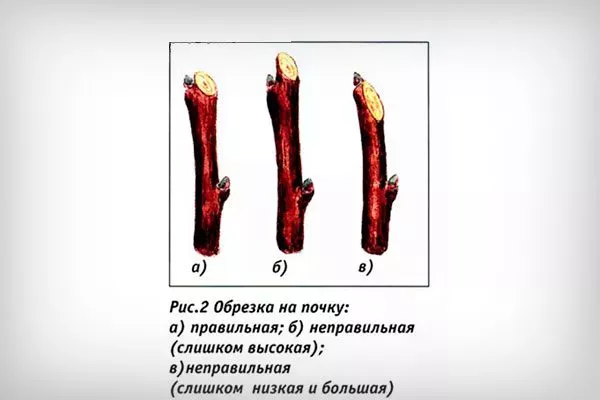
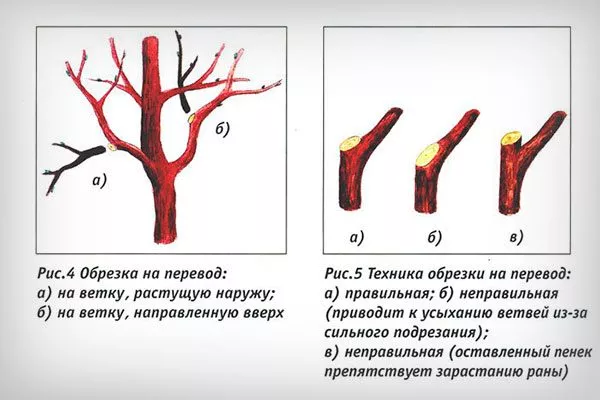
For translation
With this method, the guide is not a bud, but a lateral branch growing in the desired direction. This method is suitable for shortening, thinning, and changing the direction of growth of branches. This results in the growth of the branch left nearby being stimulated.
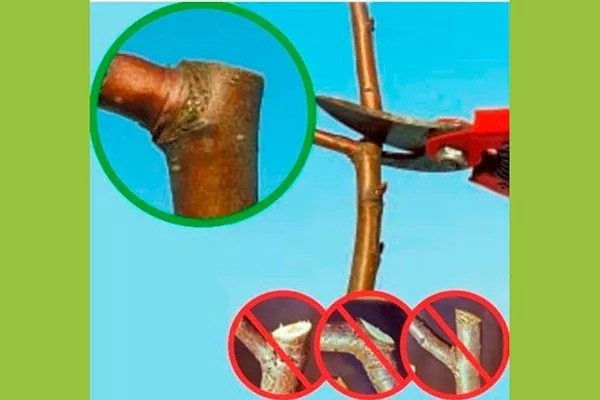
The cut should be located at a distance of 2-3 mm from the base of the selected branch, and the cut itself should be made at an angle of 30 degrees with an inclination in the opposite direction from the branch to which the transfer is being made.
Types of pruning for beginners
To properly care for your apple tree and ensure its healthy growth and fruiting, it is important to study the pruning patterns that apply depending on the age and condition of the tree.
There are three main types of pruning:
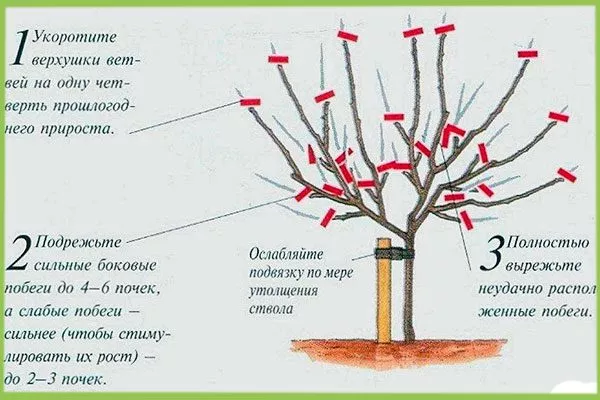
- Weak. Perform this procedure on young trees in spring or fall. During this process, shorten new branches by about a quarter, which stimulates the emergence of new shoots and promotes proper crown formation.
- Average. Suitable for mature trees. Prune mature branches by a third to increase the quantity and quality of the harvest.
- Strong. Trim branches by half. This procedure thins out the dense canopy, improves light penetration, and ensures better fruit ripening in the sun.
Apple tree formation schemes
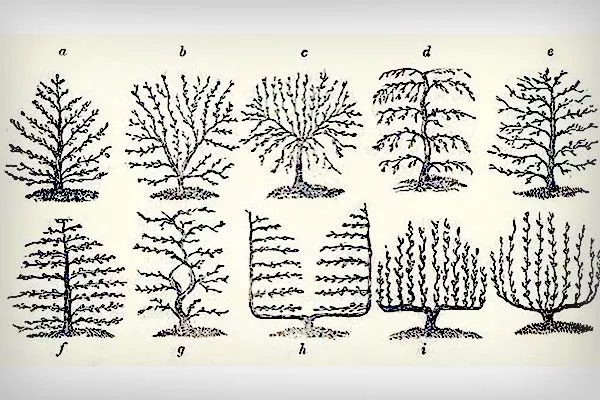
There are several popular tree pruning schemes. It's important to choose the most suitable option for you.
Sparsely tiered crown
The free hemispherical (rounded) crown is formed in stages and is a convenient way to create a compact and productive tree.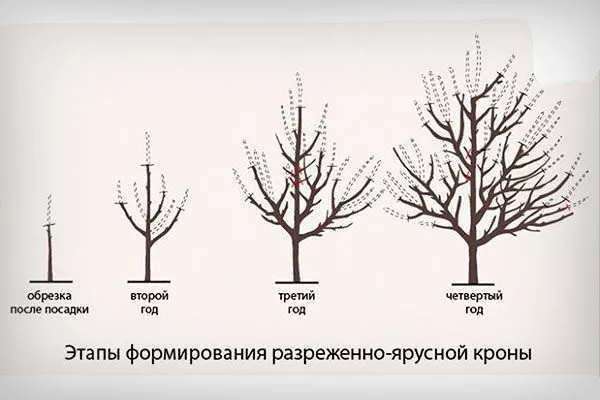
Key Features:
- The first, lower tier consists of 2-3 strong branches, evenly spaced around the trunk. Remove all weak, excess, and poorly growing branches.
- Structure the second tier approximately 60 cm above the upper branches of the first, also from 2-3 skeletal branches, but more sparsely.
- Remove the central conductor (the top of the tree) above the second tier.
In southern regions and with weakly branched trees, even a third tier of skeletal branches can be formed. The result is a mature tree up to 4 meters tall with a combination of tiered and single branches along the trunk.
Tiered
Forming a tiered crown is a method that allows for the creation of a strong, well-lit tree structure, promoting abundant fruiting. Key recommendations:
- First year. Immediately after planting, prune the seedling to a height of approximately 60-80 cm. This will stimulate the development of lateral shoots, which will subsequently form the tiers.
Next spring, select 3-4 of the strongest and most evenly spaced shoots to form the base of the first tier. Remove the remaining shoots. - Second year. On each of the selected first-tier shoots, leave 3-4 buds, pruning them by about a third of their length. Select the strongest shoot in the center of the trunk, which will serve as an extension of the central leader. Prune it to a height of about 50-60 cm above the first tier.
- Third year. Form a second tier from the shoots growing on the central leader, leaving 2-3 of the strongest and most evenly spaced shoots. Prune the rest. Also shorten the second tier's shoots by a third. Prune the central leader to a height of about 40-50 cm above the second tier.
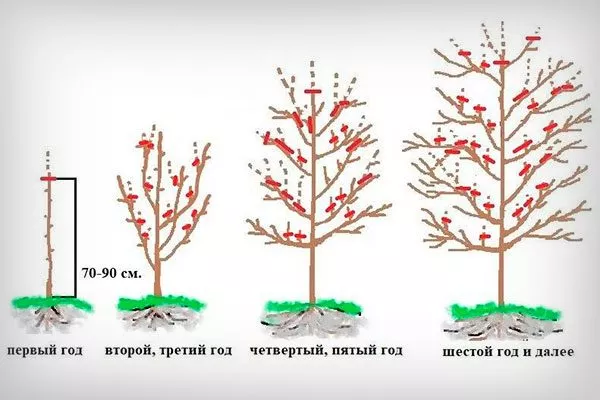
Whorled-tiered crown
This is one method of shaping an apple tree, ensuring good light, ventilation, and ease of maintenance. This method involves several tiers of branches spaced apart on the trunk.
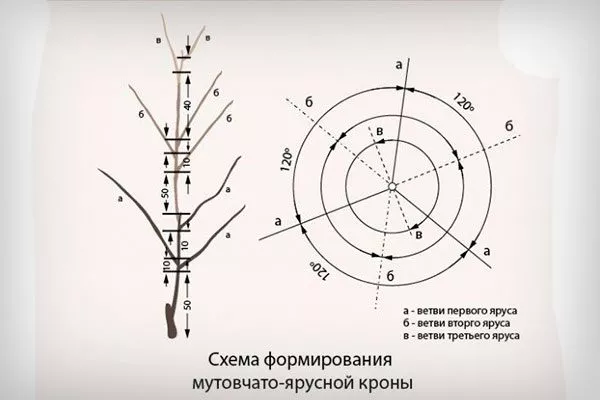
Conduct the event in stages:
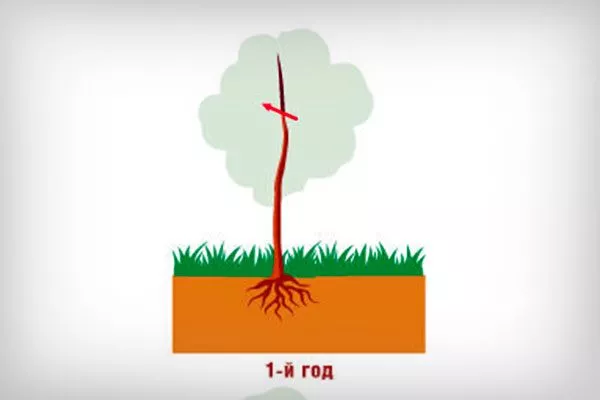
- First year. In the spring, after planting a one-year-old seedling, prune it to a height of 70-80 cm from the ground. This will stimulate the growth of lateral shoots, which will later form the skeletal branches of the first tier.
- Second year. From the emerging shoots, select 3-4 of the strongest, evenly spaced shoots around the trunk. Shorten them by approximately 1/3 of their length. Prune the remaining shoots to a ring. The branches of the first tier should be directed in different directions to ensure even distribution of the load.
- Third year. Form a second tier on the trunk, 50-60 cm above the first tier. Select 2-3 strong shoots located around the trunk and shorten them by 1/3. Remove the remaining shoots.
The third tier is similar to the second – maintain a distance of 50-60 cm between tiers. Branches from the upper tiers should not shade the lower ones. Remove shoots growing inward, crossing, or thickening the crown.
Tiered crown
This is a method of forming an apple tree, in which skeletal branches are located singly or in small groups (2-3 pieces) on the central conductor (trunk) at a considerable distance from each other.
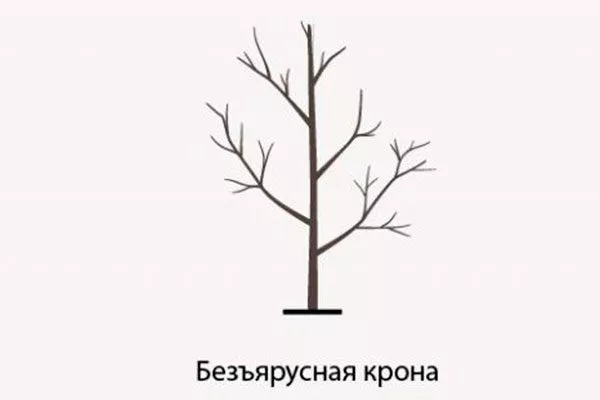
The process of structuring the crown:
- After planting a one-year-old seedling in the spring, prune it to a height of 60-80 cm from the ground. This will stimulate the growth of lateral shoots.
- In the spring, select 2-3 of the strongest and most well-spaced shoots (15-20 cm apart) on the trunk from the newly grown shoots. Prune them back by 1/3 of their length, aiming the cut toward the outer bud. Prune the remaining shoots to a ring. The selected branches should not be positioned one above the other. The key is that they are evenly distributed around the trunk.
Combined crown
It is a type of free rounded crown that combines the advantages of several previously described designs, so various options are possible in its structuring.
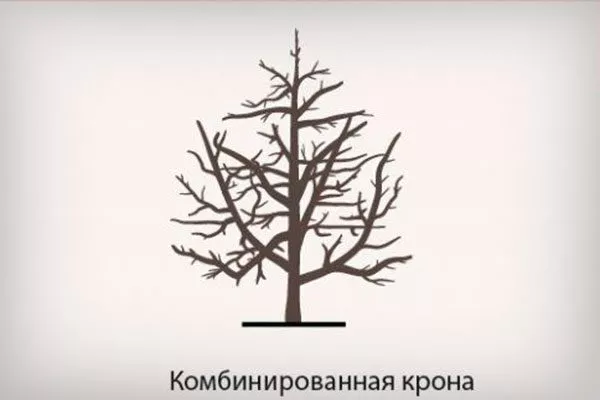
Peculiarities:
- The lower tier consists of 3-5 branches, spaced 2-3 buds apart and directed in different directions. Leave a spare shoot in case one of the skeletal branches breaks.
- Plant upper skeletal branches at intervals of 30-40 cm from the lower tiers. Place second-order branches at the same distance from the trunk on the lower tier, and 40-60 cm on subsequent tiers, ensuring good illumination of the crown from above.
- Leave the lower branches in their natural raised position, and carefully bend the upper branches to a horizontal position (90°) using clothespins and spacers.
Spindle-shaped crown (spindlebusch)
The basic shape of the round crown consists of many semi-skeletal branches, located predominantly horizontally, with only the lower branches being slightly raised for ease of tree care.
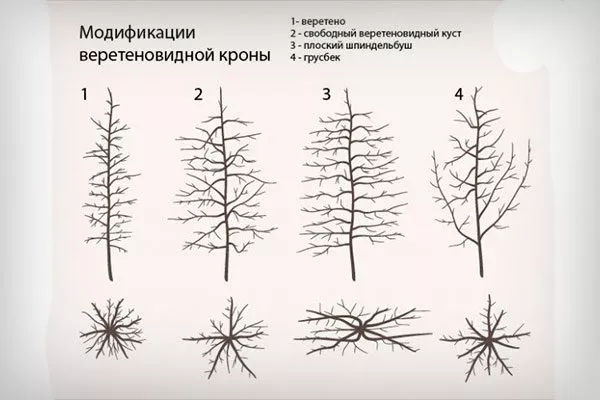
Important recommendations:
- Arrange the branches along the central core in a uniform spiral, spacing them between 1 and 4 buds. Allow them to grow freely during the first year after planting, then bend them back and secure them horizontally in August.
- The following year, shorten the extension shoots by 30-40 cm above the top bent branch to encourage trunk growth. Repeat the procedure in August, moving the new branches to a horizontal position. This care continues for about 6-7 years.
A mature tree with a fully formed crown usually does not exceed 3 m in height and diameter.
For low-growing plants and fruit trees on dwarf rootstocks, there are modifications to this scheme:
- flat spindle bush – the branches are simultaneously bent and placed along the row, which increases the planting density and reduces the distance between rows;
- free-growing spindle-shaped bush – the shoots are left to grow freely, without being pressed into a horizontal position, which simplifies and speeds up formation;
- Grusbek – with a well-defined central conductor, and the crown is filled with overgrowing branches that form naturally.
Bushy crown
The structure consists of 5-8 main skeletal branches with a wide divergence angle, spaced approximately 10 cm apart. Three to four lower branches form a tier, while the rest grow singly. Do not leave any secondary skeletal branches; remove all other shoots.
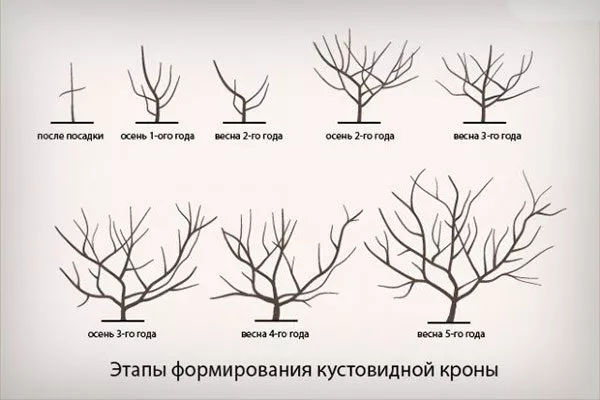
Please follow these guidelines:
- In the first 1-2 years, shorten the growth by about a third, leaving the lower shoots longer and the upper ones shorter.
- Prune the central leader just above the last lateral branch once it has established a stable growth direction. Subsequently, thin the crown only.
Some varieties of this form, such as the creeping-bush and low-stemmed bush-like crowns, produce very squat and low-growing trees, which is especially relevant for northern regions with stable snow cover.
Semi-flat crown
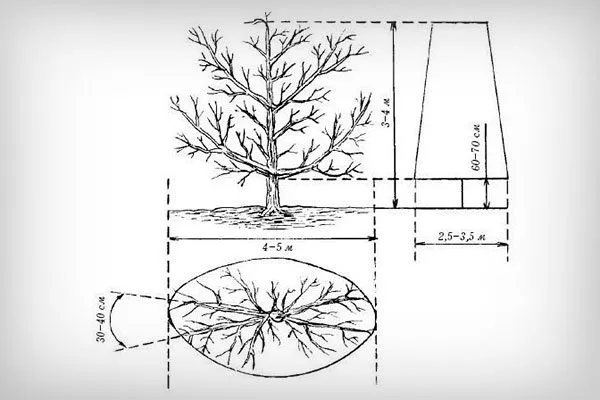
Considered an intermediate form between rounded and flattened, the crown is slightly elongated along the row and flattened between the rows. It consists of a well-developed central conductor and 4-6 primary skeletal branches, arranged in tiers of two within the row.
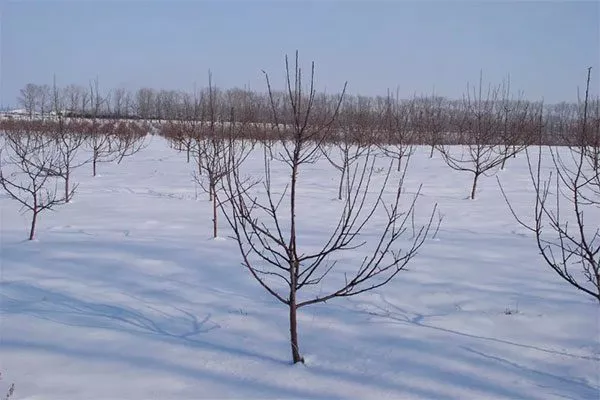
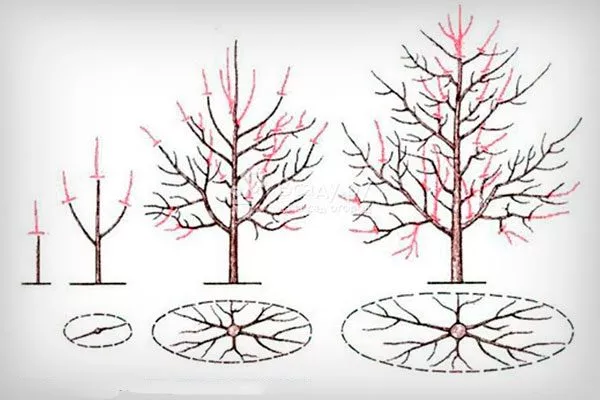
On the first-order skeletal branches, form semi-skeletal branches evenly on both sides, spaced 30-40 cm from the trunk and 20-30 cm apart. Subsequently, thin the crown and shorten the central conductor annually.
Flat crowns – palmettes and cordons
Flat tree shaping and pruning systems are designed specifically for intensive plantings. The following options are available:
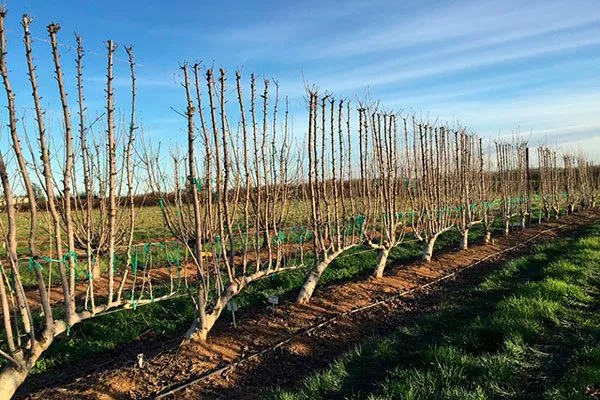
- Palmette - A crown in which all skeletal or semi-skeletal branches of the first order are arranged in a single vertical plane along a row. In this type of planting, trees planted close to each other interlock with their branches, forming a dense hedge.
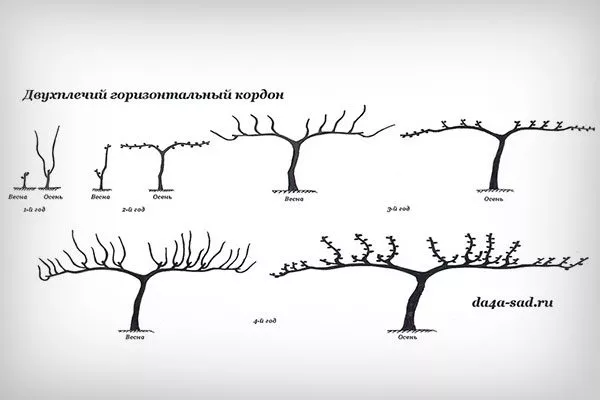
For vigorous trees, trellis-like supports are often used in this system. There are several types of palmettes—oblique, single-tier, free, combined, and others—that vary in the number, direction, and tiering of branches, as well as the spacing between them. - Cordon – A form with an elongated trunk, on which only short fruiting branches are evenly spaced. It is formed by short pruning of lateral shoots in the spring and repeated pinching of green shoots in the summer.
Cordon modifications include oblique, vertical, and horizontal options, differing in the direction of the trunk and branches.
Cup-shaped
Trees with a cup-shaped crown are considered short-lived – their lifespan usually does not exceed 10 years, and they do not grow very tall.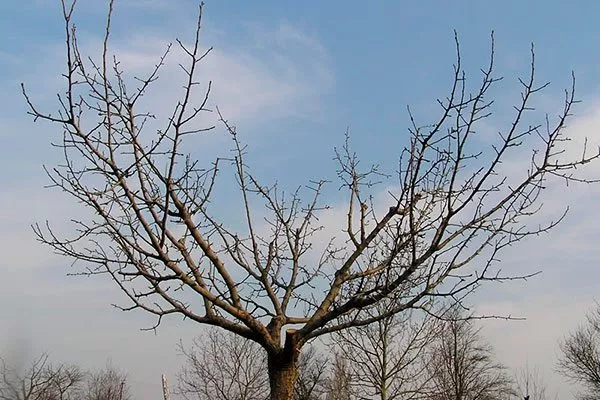
Bowl-shaped pruning is carried out in stages:
- In the second year in spring, cut the seedling to a height of about 1 m.
- Space the three main branches evenly at an angle of approximately 120° from each other.
- Shorten the branches to 50 cm, and trim the trunk at the second or third bud from the fork.
- In subsequent years, it is important to prevent the crown from becoming too dense – remove the strongest branches growing inwards.
- Pinch off unnecessary buds.
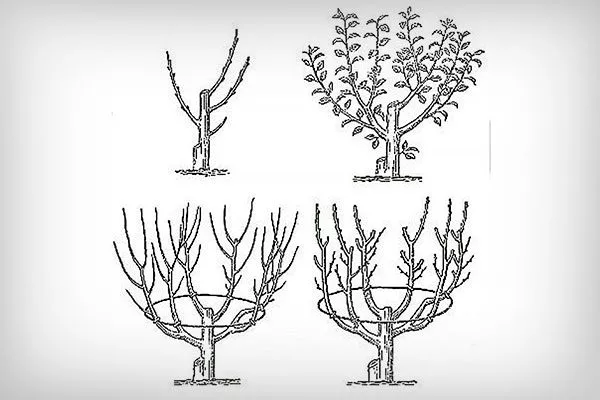
Do not touch the short side branches, as they are the ones that will provide the future harvest.
slate
The principle of crown formation is to preserve two horizontal tiers of branches, while removing all others. The main advantage of this crown is the low growth rate of the tree, which allows for harvesting without the use of a stepladder.
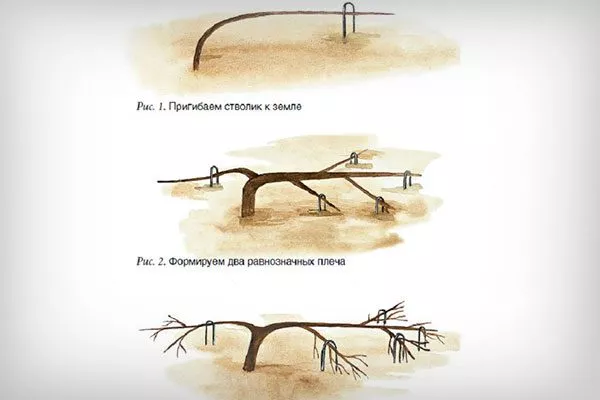
To structure, follow these steps:
- Grow the tree to a height of 2-2.5 m.
- Remove all buds and shoots from the trunk in advance, except for those that form two opposite skeletal branches - a total of four branches should remain.
- When the tree reaches a height of up to 2.5 m, cut the trunk at this level.
- Using trellis beams and guy lines, direct the skeletal branches parallel to the ground.
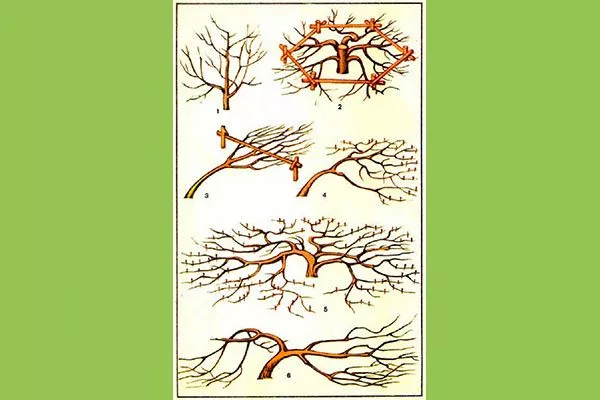
After the formation of the creeping crown, regularly remove all unnecessary branches, shoots and root formations.
Apple tree shoot pruning technique
Apply oil paint to the cut edges of large branches, but branches up to 1 cm thick don't require treatment. Follow these recommendations:
- The correct cut is positioned so that its base is aligned with the underside of the bud, and the top is slightly above the bud. Avoid cutting too close to the bud to avoid damaging its sheath, but also avoid leaving a stub that's too long, as it could dry out and become a source of infection.
- Remove branches along the trunk, cutting smoothly above the "collar"—the ring-shaped swelling at the base of the branch. This promotes rapid healing and callus formation.
- When cutting down thick specimens, first make a shallow cut from the bottom to prevent the branch from damaging the tree's bark when breaking off. Then make the cut from the top.
- If a stump remains, cut it off along the ring, clean up the uneven areas with a sharp knife and treat the cut area with oil paint.
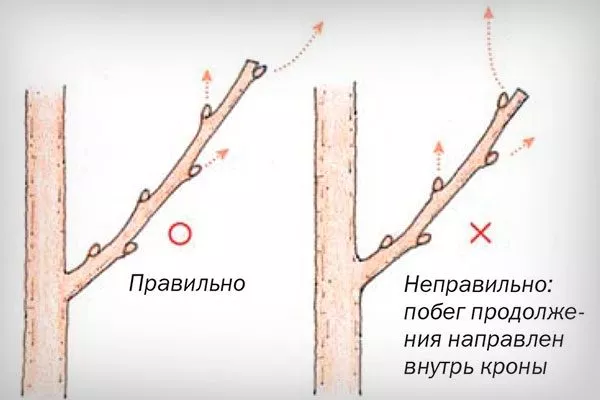
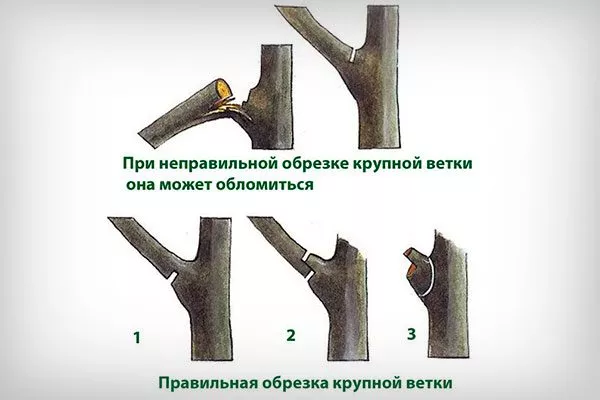
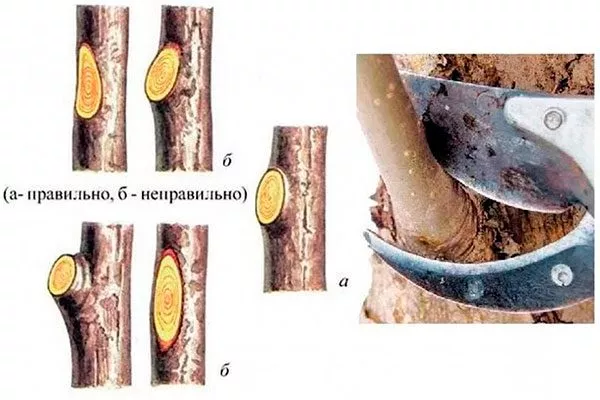
Do not cut deep into the trunk or tissue of the supporting branch when cutting, so as not to damage the vascular layers through which the sap flows.
Features depending on the age of the apple tree
Beginning gardeners often use the same pruning methods for both young and mature trees, although the processes differ significantly. Proper pruning practices directly impact the plant's future growth and yield.
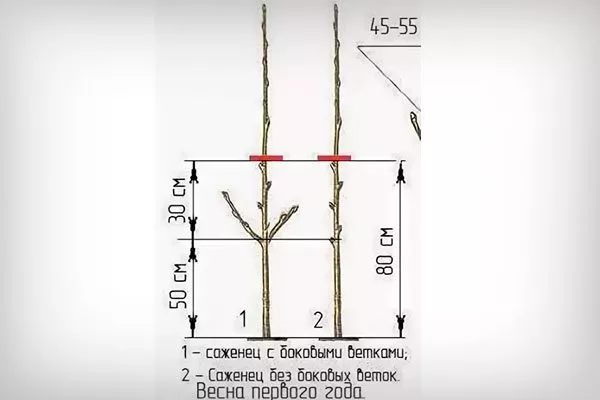
One-year-old seedlings
The first pruning of a young tree is intended to curb its rapid growth and stimulate the development of lateral shoots to properly shape the trunk. To do this, follow these guidelines:
- leave the central shoot no more than 1 m long, remove the rest;
- select and mark three skeletal branches so that they do not need to be pruned in subsequent years;
- remove all branches and shoots below 1.5 m from the ground;
- Leave 3-5 buds on the skeletal branches.
Two-year-olds
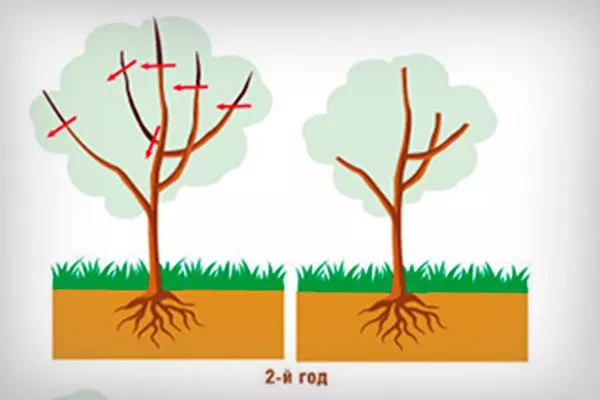
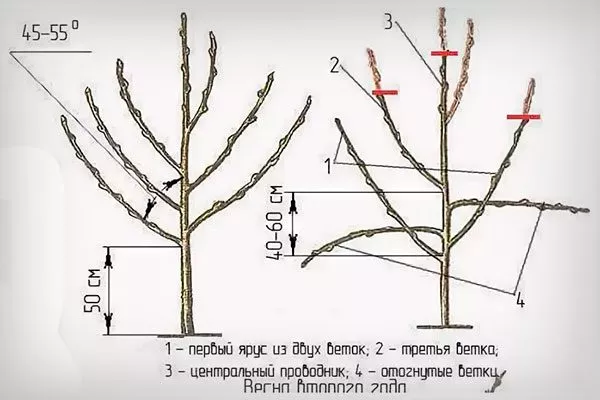
At this age, continue to perform formative and regulating pruning. Follow these guidelines:
- determine the number of tiers, while the distance between them should be from 40 to 60 cm;
- each level should contain from two to five skeletal branches;
- Remove all unnecessary branches and shorten the skeletal ones to properly structure the crown.
Three-year-olds
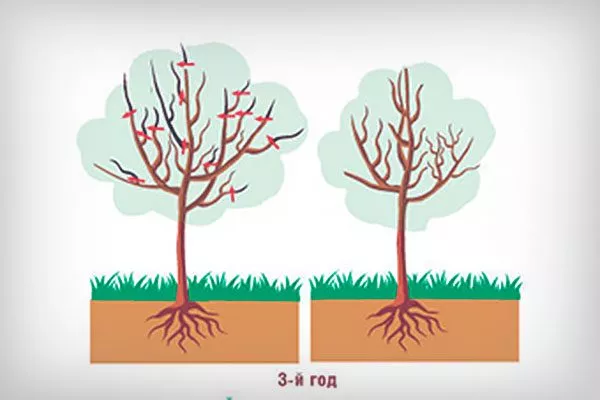
The three-year-old tree is almost fully formed thanks to the work done earlier. At this stage, follow these steps:
- cut off the shoots growing on the trunk;
- Do not remove one-year-old branches between tiers, but carefully bend them down - these are the ones that will produce the first harvest.
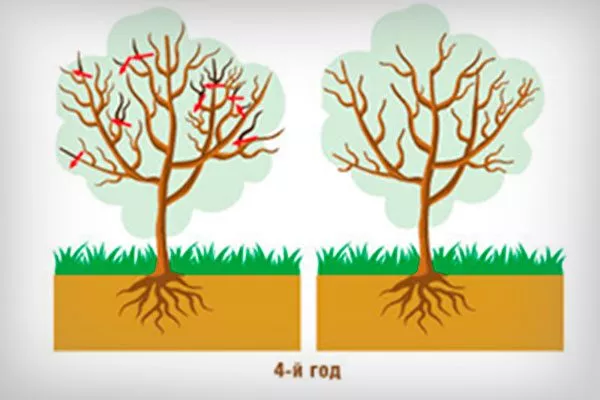
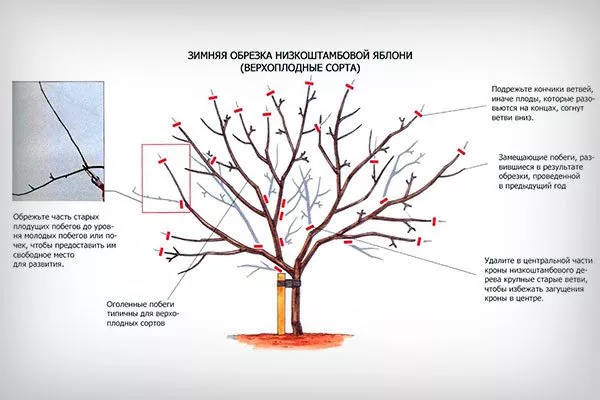
Four years and older
Once the apple tree reaches maturity and the crown is formed, light rejuvenating pruning can begin. Key steps:
- cut out some of the water sprouts - branches without buds with dense foliage that do not bear fruit;
- remove all crossing branches on the ring, as well as those growing inside the crown;
- destroy root suckers;
- remove branches with low or no yield;
- shorten the central shoot to 3.5 m.
Nuances for different types of apple trees
Pruning apple trees of different species has its own specific characteristics, particularly noticeable in dwarf and ornamental varieties. Detailed guidelines are provided below.
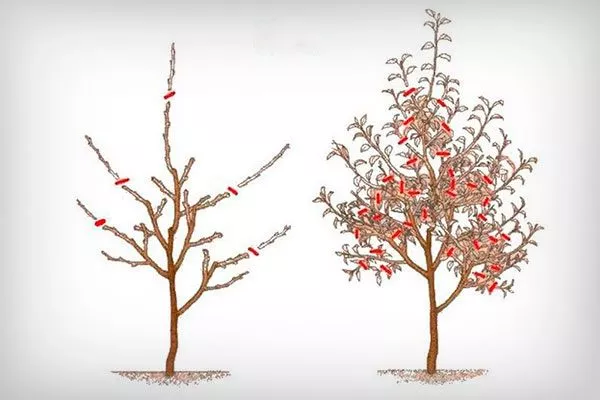
Dwarf
A dwarf apple tree retains all the characteristics of the variety except height and produces a good harvest. However, without annual pruning, the tree quickly stops bearing fruit, so it's important:
- for a one-year-old seedling, cut the central shoot to 70 cm;
- choose the crown shape (triangle, ball);
- trim the shoots, giving them the desired shape;
- shorten the skeletal branches.
Columnar
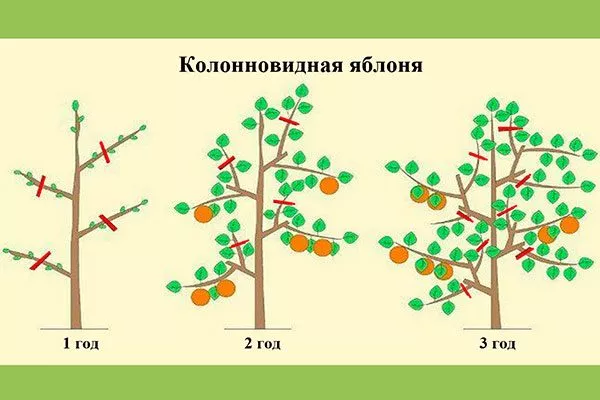
The plant develops into a single trunk with short lateral branches, which produce fruit. If the apical bud is damaged, the tree may begin to branch aggressively. This isn't necessarily a bad thing—if you're happy with the appearance, you don't need to interfere.
However, if the classic columnar shape is important, during spring pruning, select one strong shoot for the new central trunk and remove the others. When planting, the distance between trees should be:
- 50-60 cm – for a classic columnar apple tree;
- 90-100 cm – for a compact dwarf tree with several trunks.
Vaccinated
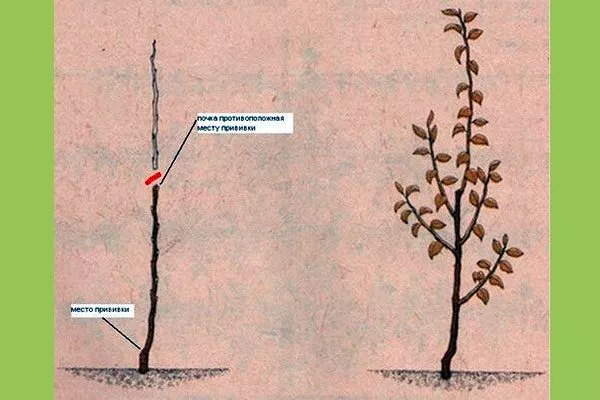
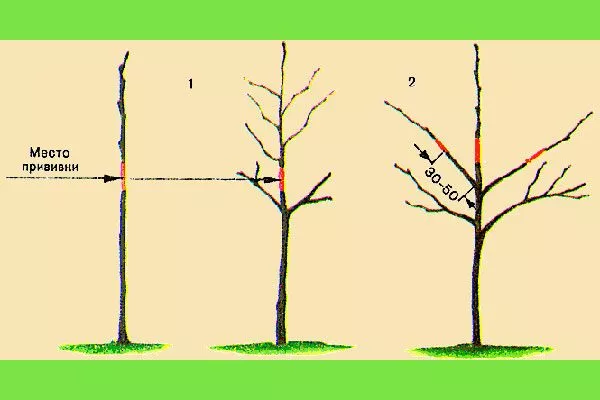
Pruning a grafted apple tree is usually no different from caring for a regular tree. However, if the plant has been re-grafted, the following spring, following the procedure, is necessary:
- remove ungrafted branches and young shoots;
- shorten the grafted branches;
- select one main shoot from each graft, cut the rest shorter, subordinating them to the main one;
- Over the next five years, shape the crown by regularly thinning out branches and adjusting their growth angle.
Decorative
Ornamental apple trees are pruned rarely and with great care, as they do not tolerate this procedure well. Their crowns are usually attractive as is.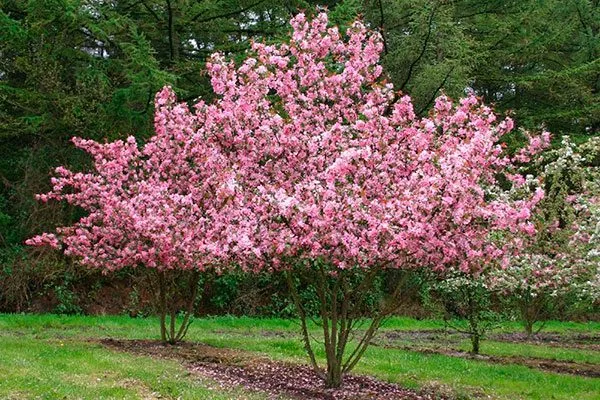
If it is too dense or the plant is old, perform regulatory or rejuvenating pruning, removing damaged and dry branches, branches growing inward from the crown, and crossing shoots.
Care after pruning
The apple tree requires special attention. At this time, the tree is weakened and vulnerable, so it's important to support it to ensure a quick and uncomplicated recovery.
What to do after pruning:
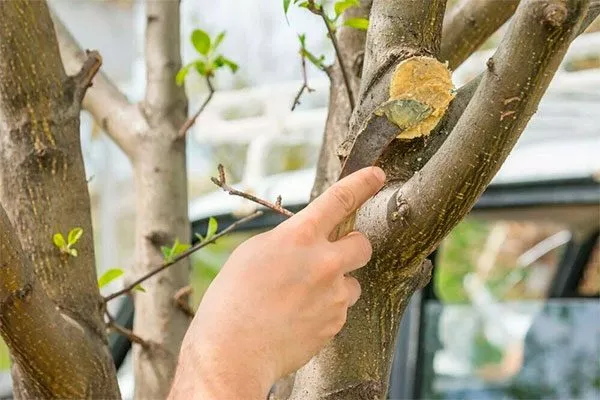
- Process the cuts. Seal all large cuts with garden pitch or a special healing paste to protect the wood from moisture, fungi and pests.
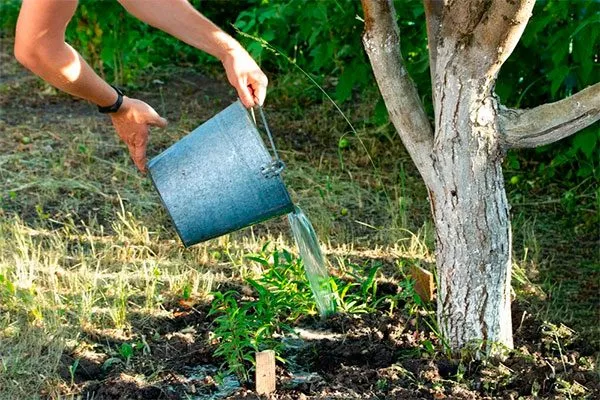
- Water the tree generously. This will reduce stress and support metabolic processes. Pour 20-30 liters of warm water under the tree, especially if pruning was done in the spring or summer.
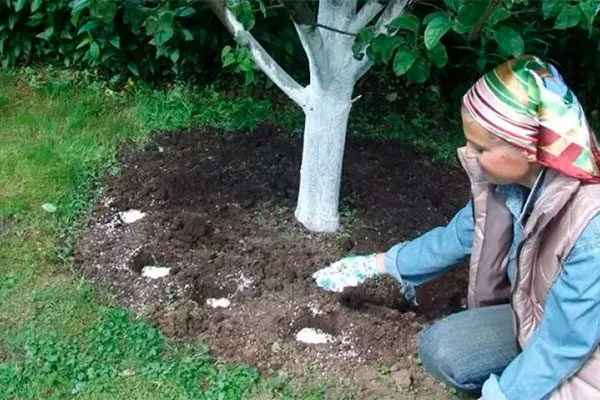
- Apply fertilizer. After 10-14 days, feed the apple tree with organic matter or nitrogen fertilizers (for example, manure infusion or urea solution) to stimulate the growth of new shoots.
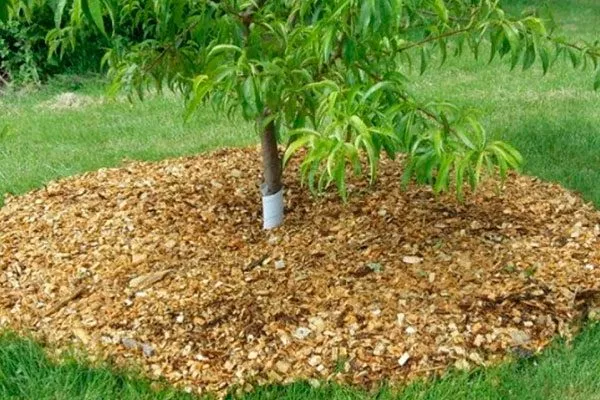
- Mulch the tree trunk circle. This will help retain moisture and improve the soil structure. Use humus, peat, or straw.
Apple tree pruning is an essential part of garden maintenance, significantly impacting the tree's health and fruiting ability. Proper pruning optimizes light exposure to the crown, stimulates fruit bud development, and creates a shape that's easy to harvest. Regular pruning ensures longevity and consistently high yields.