
The Rozovy Naliv apple tree is an old summer variety, popular with gardeners and summer residents for generations. Its early apples are distinguished by their excellent flavor, and the tree itself is unpretentious and hardy.
Description of the Pink Naliv apple tree
The Pink Filling tree is small and very beautiful when the fruit is ripe. With proper care, this variety easily becomes a true garden ornament.
Tree
The tree is small, with a compact but dense, pyramidal crown. It reaches 2-3 meters in height. The trunk is strong and robust. With age, branches begin to branch out from the trunk at almost a right angle, resulting in a broad, oval, spreading crown.
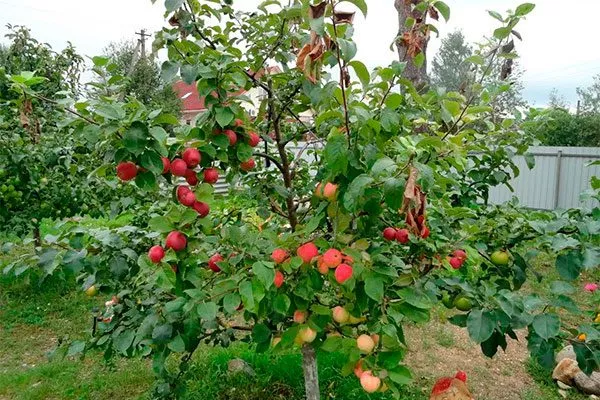
The leaves are alternately arranged, oval or ovate, and slightly curve downward. They have pointed tips, serrated margins, and slight pubescence. Young leaves are bright green, while older leaves are dark green.
The tree's branches are robust, well-foliated, and have brown bark that takes on a beautiful sheen in bright sunlight. The annual shoots are not particularly thick, dark burgundy, and studded with small, light-colored lenticels.
Fruit
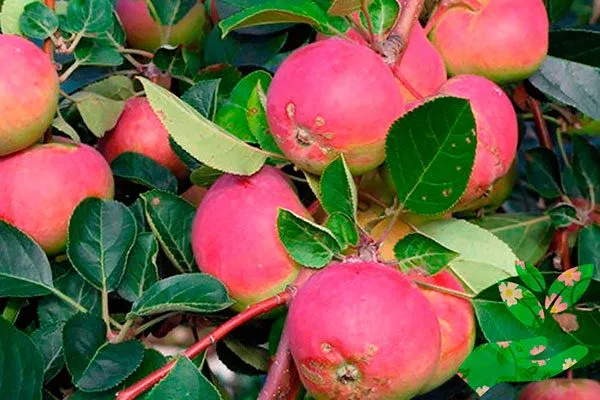
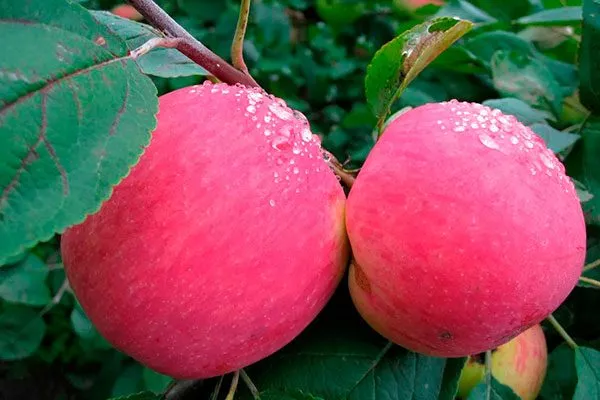
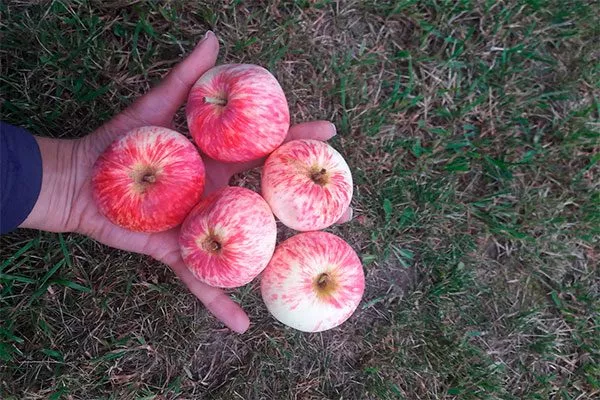
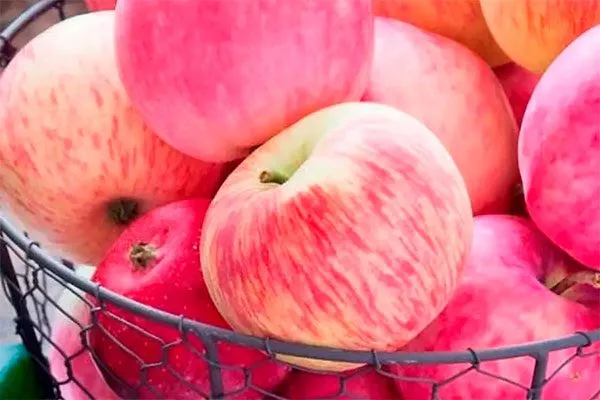
Malinovka's fruits are beautiful, soft pink, and medium-sized. It's immediately obvious that these are summer apples—juicy and sweet.
Fruit characteristics:
- Color — the main color is light green or white with a crimson blush.
- Form - round or round-conical, sometimes slightly flattened.
- Weight — 120-150 g.
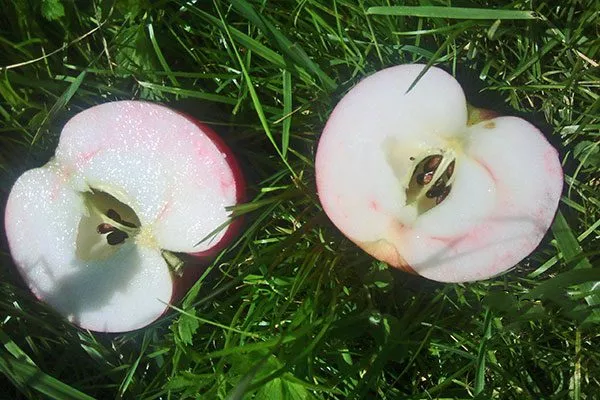
- Pulp: juicy, coarse-grained, white and dense, with a greenish tint.
- Skin: thin and smooth, glossy, with a characteristic bluish coating.
Who and when developed the Pink filling variety?
The Roziv Naliv apple tree is considered a "folk selection" variety. Its history dates back at least a hundred years. It is believed to have first appeared in the Nizhny Novgorod region and then spread throughout the country.
In 1947, the variety was submitted for state testing, and in 1959 it was included in the State Register for the Volga-Vyatka region. Synonyms for the name: Malinovka.
Characteristics
The Rozovy Naliv apple tree has long been cultivated in Russian orchards, and its popularity remains undiminished. This is due to the combination of the apple's excellent flavor and the Malinovka's excellent agronomic characteristics, allowing it to thrive in a wide variety of conditions.
Ripening time
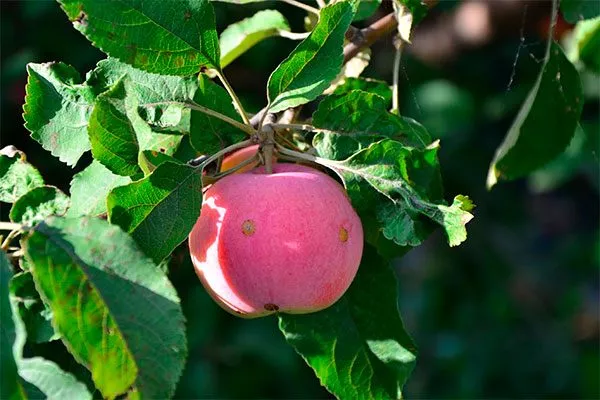
Ripening times vary depending on the growing region. In central Russia, Pink Naliv apples begin to ripen around mid-August, while in southern regions, harvesting can begin as early as late July. In more northern regions, harvesting continues until September.
The harvest time is largely influenced by weather. If there's a prolonged period of heat or cold, apple harvesting may be delayed by 7-10 days.
Productivity
This variety is early-bearing, so gardeners can harvest their first crop as early as 3-4 years after planting. A single mature tree can yield 70 to 95 kg of apples.
Taste and purpose
The ripe Malinovka has a dessert-like, sweet and sour flavor, perfectly balanced. Its flesh is juicy, sweet, tender, and soft, with a distinct aroma and a slightly refreshing tartness. The fruit is primarily intended for fresh consumption.
Pink-filled apples are also widely used for compotes and juices. They also make excellent jams, preserves, and other preserves. Ripe apples are used to make a variety of desserts, pie fillings, and other baked goods.
Malinovka fruits are high in pectin, making them excellent jellies, preserves, marmalade, and apple pastilles. If the harvest is bountiful, the apples can be used to make alcoholic beverages such as cider and wine.
Frost resistance
This variety is highly frost-resistant, making it suitable for cultivation in most regions of the country. The tree can withstand prolonged frosts down to -35°C and short-term frosts down to -40°C.
Disease resistance
It has a high natural resistance to major fruit crop diseases, including scab and powdery mildew. However, Malinovka lacks genetic immunity to many diseases.
Self-fertility
The Pink Naliv is self-fertile, so it can bear fruit without additional pollination. However, the presence of apple trees blooming at the same time as the Malinovka can significantly increase its yield.
Without pollinators, apple trees only set 50% of their fruit; with pollinators, they set 100%. Suitable varieties include Grushovka and Melba.
Landing
To ensure the Roziv Naliv apple tree grows and develops well, produces abundant harvests, and is disease-free, it needs to be planted correctly. Purchase high-quality seedlings, choose a good location, and plant according to established practices.
How to choose seedlings?
Good seedlings, free from diseases and defects, should be sought from specialized nurseries. They also offer a guarantee of varietal quality, which can't be said for planting material purchased from random sellers.
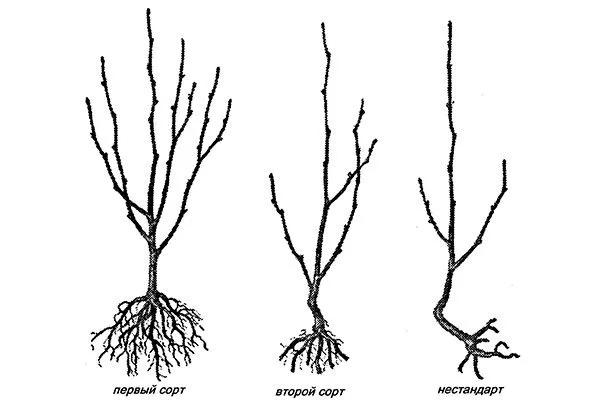
Requirements for seedlings:
- Age — 1-2 years. Such trees take root better than older ones.
- Bark - smooth, without damage, signs of disease and defects, of the same color along the entire length of the seedling.
- Roots — strong, branched, with numerous fine roots. The main shoots are 20-30 cm long, with 3-5 of them.
- Leaves - green, without signs of fungal diseases or pests.
- Graft - high quality, clearly expressed.
Seedlings can have either open or closed root systems. Exposed roots dry out quickly when exposed to air, so the time from purchase to planting should be kept to a minimum.
Trees with closed roots tolerate transplantation better, and most importantly, they can be planted throughout the season, including the summer period.
Selecting a site
Apple trees require plenty of light to thrive, so choose a well-lit site for planting. Cold, gusty winds are harmful to the tree, so the site should be protected from north winds and avoid drafts.
The groundwater level should be no more than 2 meters. If it gets any closer, there's a risk of root rot and subsequent tree death. If there's a risk of flooding, plant the apple tree on higher ground or add a thick drainage layer to the planting hole.
Apple trees should not be planted in low-lying areas or marshy areas. Sandy soils containing lime, crushed stone, or clay are also contraindicated for planting. The soil should be loose, fertile, and neutral or slightly acidic. Loamy or sandy loam soils with good drainage are best.
Site preparation
If you plan to plant apple trees in the spring, it's best to prepare the site in the fall. The soil should be fertile, loose, and well-drained. If it doesn't meet these requirements, add the necessary nutrients and fertilizers before digging.
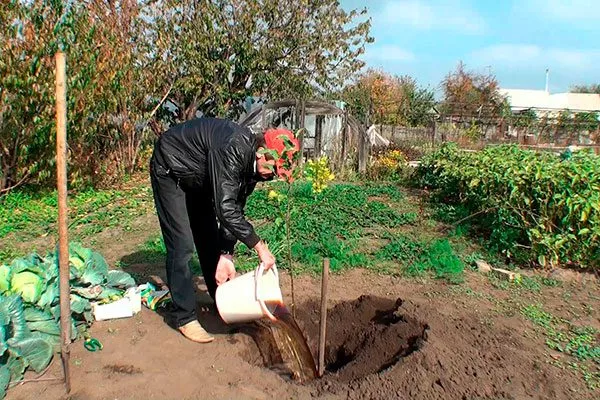
Features of autumn site preparation:
- The soil is dug to a depth of a shovel blade, after clearing it of plant debris and weeds. During digging, all the rhizomes of perennial weeds are removed from the soil.
- Before applying fertilizer, you need to determine the soil's acidity. This can be done using special test strips, which are available at agricultural supply stores. The optimal soil acidity is a pH of 6.0-7.0. Depending on the results, apply the appropriate components.
- In case of increased acidity, lime (slaked) or dolomite flour is added during digging, approximately 300 g per 1 sq. m. In alkaline soils, high-moor peat is added.
- To increase fertility, add organic fertilizers: 10-15 kg of compost or humus per 1 sq. m, 200-300 g of potassium salt and 300 g of wood ash (it, like dolomite flour, acts as an acidifier).
Preparing the planting hole
The planting hole, like the plot itself, is prepared in the fall or a month before planting. It needs to sit for the fertilizer to dissolve and the soil to settle slightly. Otherwise, the root collar will sink after planting and end up underground, where it can rot and decompose.
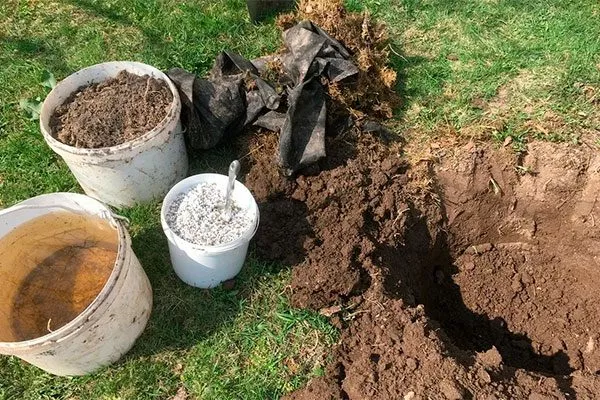
Features of preparing a planting hole for the Pink filling variety:
- The hole should be large enough to accommodate the seedling's roots. Typically, the hole for Malinovka is 80-90 cm deep and 90-100 cm wide. In heavy clay soils, the hole is dug 10-20% larger.
- When digging a hole, the top fertile layer is put aside so that it can later be used to prepare a nutritious soil mixture that will fill the hole.
- The excavated soil (10-20 cm of the top layer) is mixed with 30 liters of humus, superphosphate and potassium chloride are added, 100 and 70 g respectively.
- A drainage layer (10-15 cm) of crushed stone, expanded clay, nut shells, and crushed brick is poured onto the bottom of the pit.
- The hole is filled halfway to form a mound of earth. Another layer of fertile soil is added on top. A wooden stake 1.5-2 meters high is driven into the center of the mound. The hole is left to settle before planting.
When preparing the hole, it's important not to use fresh manure, as its decomposition products—ammonia and hydrogen sulfide—can poison the tree's roots and cause them to burn. Organic matter must decompose for at least six months before it can be used for planting. If you didn't prepare the hole in the fall, you'll have to do it in the spring, about 10 days before planting.
Planting a seedling
For planting apple trees, choose calm, cloudy weather. Sun and wind are detrimental to young trees. Soak the roots of the seedlings in water for 24 hours before planting.
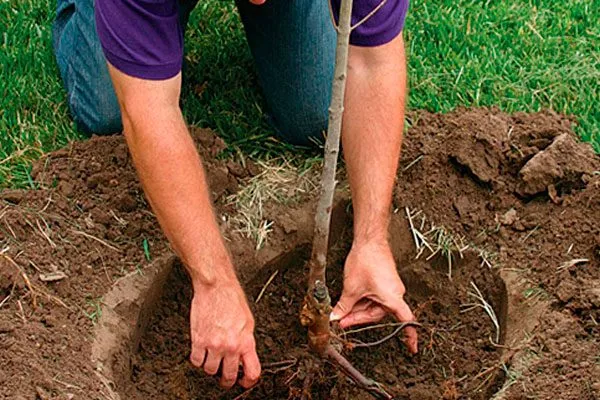
Features of planting a seedling:
- The tree is placed on top of a mound of earth, with its roots carefully spread out.
- The seedling is placed at such a height that after planting the grafting site is 5-7 cm above the ground surface.
- The seedling's roots and the empty space are filled with fertile soil. Periodically, the soil is compacted by hand to prevent air pockets from forming between the roots. By compacting the soil, a circle is formed around the trunk to facilitate watering.
- The planted seedling is tied to a support with soft twine and watered with warm, settled water. The recommended watering rate is 40-50 liters. Once the water has been absorbed, the soil is covered with mulch—compost, peat, sawdust, tree bark, hay, straw, etc.
Care
The Roziv Naliv variety doesn't require any special care; standard maintenance is sufficient—watering, fertilizing, and spraying. The key is to do everything on time and regularly. The apple tree's yield directly depends on the quality of care.
Watering
A mature tree is watered regularly, approximately 3-4 times per season, assuming normal rainfall. It's especially important to provide the apple tree with water before bud break, three weeks after flowering, a month before harvest, and during leaf fall. In hot weather, watering frequency doubles, while in damp and cool weather, water less frequently.
For watering, use warm water (16…20°C). Water should be applied to the roots, and the soil should be loosened and mulched after watering. To determine whether the tree needs watering, take a handful of soil from a depth of 15–20 cm and squeeze it firmly in your fist: if it forms a lump, the soil is sufficiently moist; if it crumbles, the apple tree needs watering immediately.
Young trees, newly planted, are watered much more frequently to ensure they establish well. During hot and dry weather, watering should be done once or twice a week. Apple trees should be watered early in the morning or late in the evening. The recommended watering amount for a young tree is 10-15 liters per session, while for a mature tree, it's 30-60 liters.
Top dressing
Apple trees are fertilized throughout the season—spring, summer, and fall—3-4 times a year. The choice of fertilizer depends on the growing season and the tree's needs.
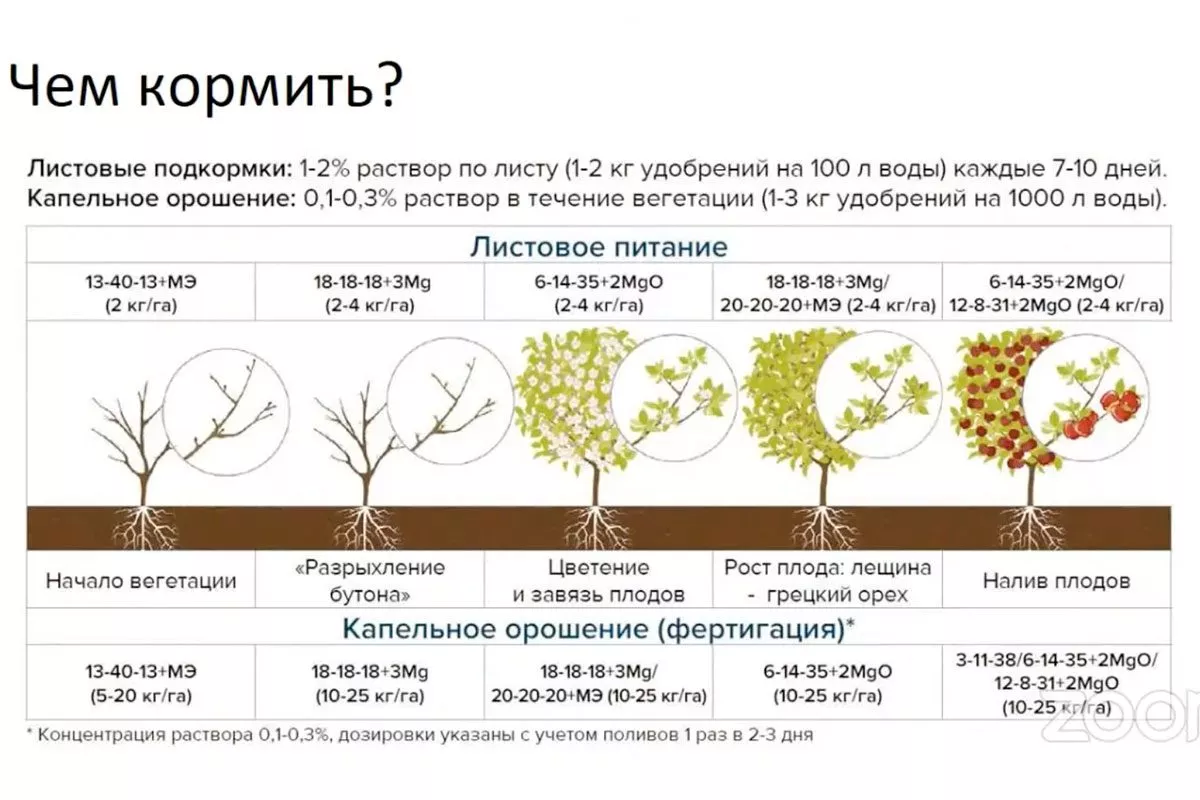
In spring, fertilizer is applied before flowering, when the tree is recovering from winter. At this stage, more nitrogen is needed to build green mass, as well as potassium and phosphorus.
Spring feeding options:
- Urea. Dilute 3 tablespoons in 10 liters of water. Or scatter the granules around the tree trunk, lightly incorporating them into the soil.
- Complex mineral fertilizer. Add superphosphate or potassium sulfate - 100 g and 60 g, respectively, diluted in 10 liters of water.
- Organic. You can use an infusion of mullein or bird droppings, diluted in water 1:10 and 1:15, respectively.
In summer, fertilizers are applied during the fruit-setting period. At this time, the tree requires both organic and mineral fertilizers.
Summer feeding options:
- OrganicsDiluted liquid manure 1:10.
- Mineral compositions. Ammonium nitrate or potassium sulfate - 40 g and 30 g per 10 liters of water.
Fertilizer is applied to furrows dug around the tree's perimeter. A nutrient solution is poured into the furrows, and once it's absorbed, the furrows are filled with soil and the apple tree is watered.
The final fertilizing is done after the harvest. Potassium-phosphorus compounds are added, including superphosphate, potassium magnesium sulfate, and potassium sulfate. Nitrogen levels during this period should be minimal or zero, as excess nitrogen impedes normal wood maturation and the tree's preparation for winter.
In the pre-winter period, you can also add organic fertilizers to the apple tree—well-rotted compost, humus, and wood ash. After applying the fertilizer, water the soil generously to prevent root burns.
Trimming
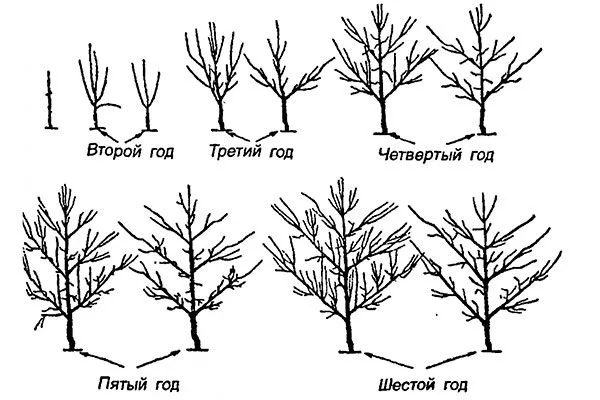
The tree requires sanitary and formative pruning. The variety is prone to becoming overgrown, so this is done annually. This procedure is performed in the spring, before the sap begins to flow, or in the fall, after the leaves have fallen.
Peculiarities of pruning the Pink filling apple tree:
- Sanitary — remove all dry, diseased, frozen, and damaged branches. Also prune shoots growing inward.

- Formative — This begins in the second year after planting. Branches near the trunk and some of the previous year's growth are pruned. Branches growing vertically upward are also removed. The crown is shaped to have 3-4 tiers of evenly spaced strong branches, with the branches in the lower tiers slightly longer than those in the upper tiers.
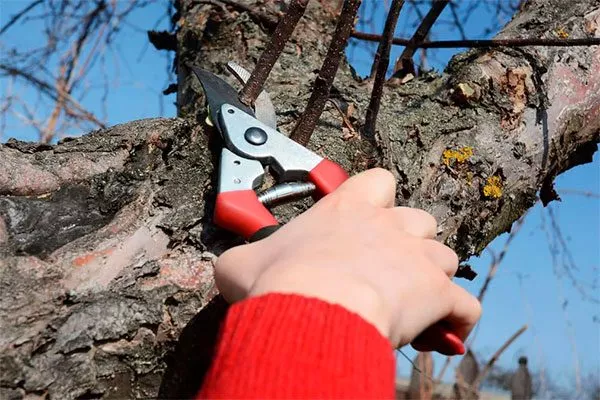
Pruning is done with a sharp, disinfected tool. The cuts are smooth and neat, without splinters. They are sealed with garden pitch or oil paint.
Shelter for the winter
Young apple trees must be covered for the winter to protect the roots from freezing and the trunk from rodents. The covering material must be warm and breathable to prevent the tree trunk from rotting or decaying during thaws.
To insulate the trunk, you can use spruce branches, agrofibre, or regular burlap. The area around the tree trunks is covered with a thick layer of mulch, peat, or rotted manure. The layer should be 10-15 cm thick.
Pest and disease control
Under unfavorable growing conditions and violation of care rules, as well as in the event of a widespread spread of infections, the variety can be affected by fungal, bacterial and viral infections.
The Malinovka variety most often suffers from:
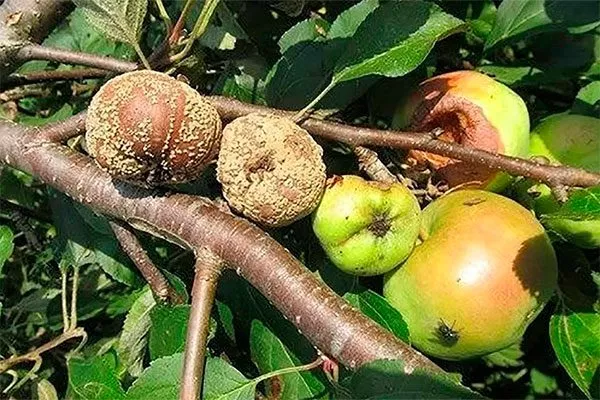
- Fruit rot. It causes leaves to curl and dry out, and flowers to drop. Bordeaux mixture, Skor, Horus, and other fungicides are used for prevention and treatment.
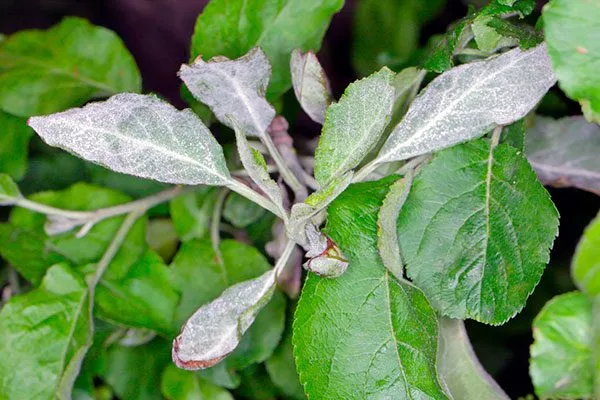
- Powdery mildew. It is accompanied by the appearance of a dirty gray coating, causing damage to leaves, shoots, and buds. Treatment includes Fitosporin-M, Topaz, and other medications.
Among the pests that pose the greatest threat to the Malinovka apple tree are aphids, codling moths, and apple sawflies. To control them, biological products such as Fitoverm or Lepidocide are primarily used. If fruiting is still a long time away, chemical insecticides such as Aktara or Karbofos can be used.
Harvesting and storage
Apple ripeness is determined visually. The main sign of ripeness is a characteristic reddening. This reddening should cover at least 50% of the apple's surface.
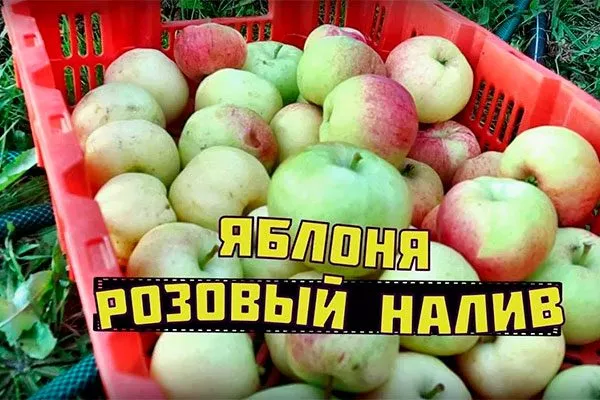
Ripe fruits are much softer when pressed than unripe ones. Moreover, ripe apples' stems easily separate from the branches. When overripe, the fruits begin to fall to the ground.
Apples should be picked in dry weather, preferably after the dew has dried. Apples are picked by hand and placed in shallow crates. Optimum storage temperature: +2…+4°C. Humidity: 85-90%. The shelf life is approximately 3-4 weeks.
Reviews
The Roziv Naliv apple tree is simply the perfect summer variety. It will definitely be appreciated by lovers of early, juicy, and sweet apples. The tree requires some care, especially protection from diseases and pests, but overall, it's an easy-to-grow variety that doesn't present any particular problems.