
The Rozhdestvenskoye apple tree is one of the most popular winter varieties due to its high productivity and excellent fruit flavor. It is frost-resistant and rarely affected by scab. Its attractive apples are suitable for both fresh eating and various preserves.
Breeding history and regions of approval
Breeding research to develop apple trees with genetic resistance to scab is ongoing at the All-Russian Research Institute of Fruit Crop Breeding. In 1985, scientists E. N. Sedov, Z. M. Serova, V. V. Zhdanov, and E. A. Dolmatov developed the Rozhdestvenskoye variety by crossing the Welsey variety with the BM41497 form.
That same year, the variety began to be tested on various farms. In 2001, it was included in the State Register and recommended for cultivation in the Central Federal District, Central Black Earth, North Caucasus, and Northwestern regions. The tree also thrives in the Volga region.
Description and characteristics of the variety
The Rozhdestvenskoye apple tree is a popular variety that produces high-quality fruit. It is prized by gardeners for its high resistance to diseases and pests.
What does a tree look like?
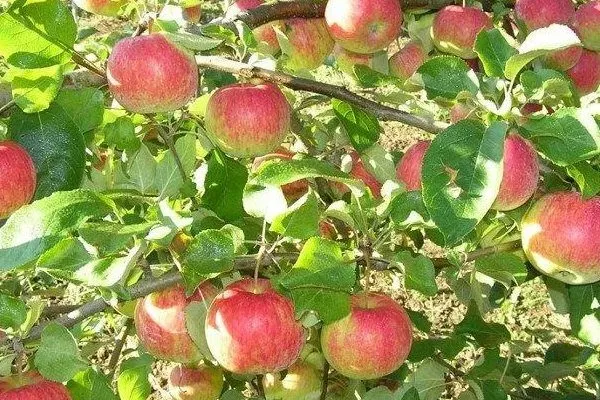
The plant is medium-sized, reaching up to 3 m in height. Distinguishing characteristics:
- crown – wide, pyramidal;
- leaves - neat ovoid shape with a short pointed end, green, with a wrinkled matte surface and a spirally twisted top;
- skeletal branches – depart from the trunk at an angle close to a right angle;
- shoots – medium thickness, slightly geniculate, with a rounded cross-section, brown in color, slightly pubescent;
- flowers – saucer-shaped, medium-sized, with round petals of a pale pink hue.
Features of fruits, taste and application
Rozhdestvenskoye apples are prized by gardeners for their versatility and excellent taste – they are eaten fresh or used for processing.
Main characteristics of the fruits:
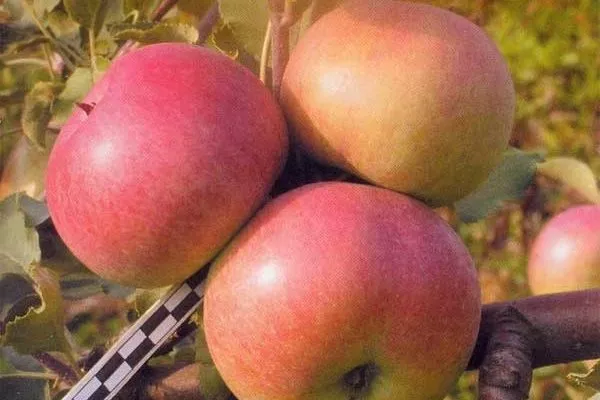
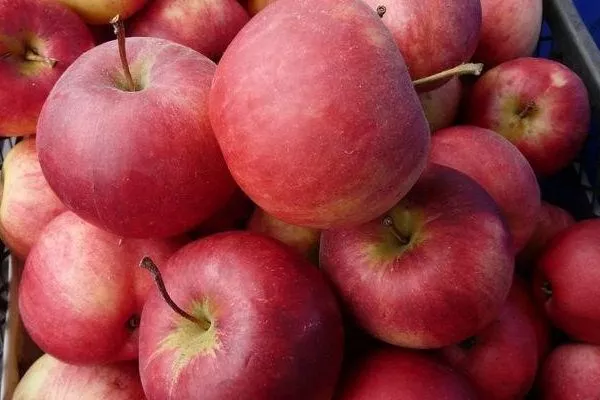
- size - medium, on average they weigh 140-150 g;
- form - slightly flattened;
- main background – greenish, and the covering color occupies most of the surface in the form of blurred red blush with cherry specks;
- skin – glossy, green, with large gray subcutaneous dots;
- pulp – dense, slightly crispy, yet juicy and tender, white or creamy in color;
- taste - dessert, sweet and sour, balanced and harmonious, with a subtle aroma.
Drought and frost resistance, resistance to diseases and pests
The plant tolerates frosts well. Laboratory tests have shown that temperatures as low as -40°C have no negative impact on the tree's growth and development. Its winter hardiness is considered moderate: the shallow root system is vulnerable to freezing.
The variety has average drought tolerance. Due to its shallow root system, the plant is unable to extract moisture from deeper soil layers. Therefore, the Rozhdestvenskoye apple tree requires regular watering. Prolonged drought may slow growth and reduce fruit set.
This variety has genetic immunity to scab and powdery mildew, virtually eliminating the risk of infection with these diseases. Insect pests pose the main threat to the tree, but with timely preventative measures, their occurrence can be effectively prevented.
Self-fertility and pollinators
The Rozhdestvenskoye apple tree is a triploid variety and is partially self-fertile. Without cross-pollination, the tree is capable of producing no more than 5% of its fruit. Recommended varieties include:
- Antonovka;
- Melba;
- White filling;
- Folder.
For a full harvest, pollinators located no further than 50 m are required.
Ripening and fruiting of apple trees
The crop is characterized by early fruiting: in the Oryol region, apples ripen as early as the first weeks of September, while in other regions, maturity often occurs by mid-autumn. When grafted onto a mature tree, you'll get your first harvest as early as the fourth year.
Productivity
The Rozhdestvenskoye apple tree stands out from many other varieties thanks to its high productivity. Young trees can yield up to 180 centners of apples per hectare, almost double the yield of older varieties.
In a garden plot, up to 100 kg of ripe fruit can be harvested from one compact tree per season – an impressive result, especially considering the moderate size of the plant.
Types of rootstocks
The most suitable rootstocks for the Rozhdestvenskoye apple tree variety are dwarf and semi-dwarf. They ensure a moderate growth rate: the tree's height does not exceed 3 m, and the crown width is approximately 2 m.
As for the columnar form of the Rozhdestvenskoye apple tree, such a variety currently doesn't exist. However, in general, such trees are a good choice for small plots. They don't form skeletal branches, grow as a single trunk, and are only 20-30 cm wide.
Prospects for the development of the variety
Recent research demonstrates the Rozhdestvenskoye apple tree's high potential in the face of climate change. Scientists are actively working to develop new clonal rootstocks that can improve the crop's winter hardiness and yield.
Precision gardening technologies, including automated irrigation and remote tree monitoring, are rapidly developing. This will allow for more efficient management of growing processes.
Particular attention is being paid to improving fruit storage methods. The use of new controlled-atmosphere technologies allows apples to remain fresh longer without losing their flavor, opening up new opportunities for improving shelf life and transporting the harvest.
Landing rules
Gardeners planning to grow the Rozhdestvenskoye apple tree variety in their garden should follow proper planting guidelines. This involves preparatory work and subsequent placement of the tree in the garden.
Selecting a seedling and timing
Purchase planting material from reputable nurseries, preferably in your region or with a similar climate. This will help the plants adapt better.
When choosing seedlings, consider the following aspects:
- Age. Young trees take root better and are easier to shape, but the first fruits will appear later. Two-year-old trees are ideal for fall planting.
- Rootstock type. Dwarf - promotes earlier fruiting and makes harvesting easier, while the semi-dwarf rootstock has a stronger root system.
- Trunk health. It is free of damage, growths, swellings, or hardening. The underbark should be bright green.
- Roots. They are moist and show no signs of rot.
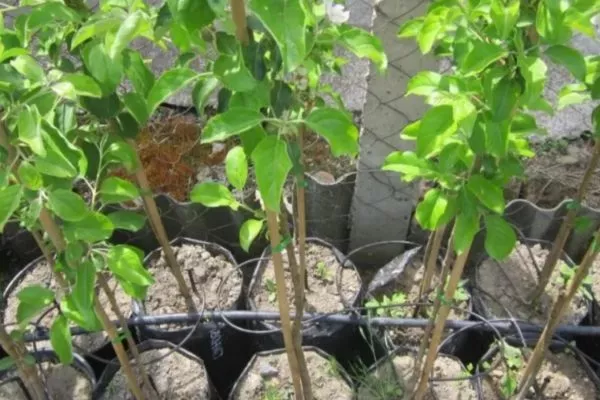
The choice of seedlings depends on the planting time. If the planting is planned for autumn, the plants should be leafless. Seedlings with a closed root system take root more easily and are less susceptible to damage during transplantation.
Plants with closed root systems can be planted throughout the warm season. For other types, planting is possible:
- in spring, before the buds open;
- in autumn, after the leaves have fallen.
Spring planting is especially suitable for regions with cold winters, where temperatures can drop below -20-30°C. Fall planting should be carried out a few weeks before the first frost to allow the plants to acclimate.
Selecting and preparing a planting site
The Rozhdestvenskoye apple tree prefers sunny ridges. Basic site requirements:
- The soil should be light and permeable, with sandy loam and loamy soils preferred. If the soil is heavy, add peat, sand, or compost to improve the structure.
- Soil reaction: neutral or slightly acidic.
- Groundwater: at least 2.5 m from the surface (you can create a mound).
Begin preparing the planting site at least a month before the planned work. If you're planting in the spring, begin the work in the fall.
Preparing the seedling
A healthy Rozhdestvenskoye apple tree seedling should not have thickenings on the roots, spots on the shoots or fractures.
Follow these recommendations:
- Before planting, soak closed root plants in water for several days.
- Carefully cut off damaged areas of the roots and sprinkle with wood ash.
- Cut the central stem to 1 m, and cut all young branches to a length containing 3-5 live buds.
- Remove shoots that grow from the trunk at an acute angle, as they can lead to improper crown formation and excessive thickening.
Landing technology
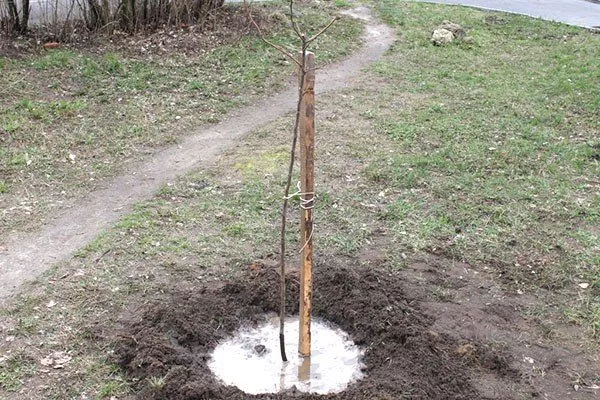
The following dimensions are optimal for the Rozhdestvenskoye apple tree: depth – 60 cm, width – 50-80 cm. Step-by-step algorithm:
- Dig a hole, placing the fertile soil layer separately.
- Loosen the bottom and install the support stake.
- Create a mound of the following mixture: garden soil, 6-7 kg of compost, peat, 100 g of superphosphate, and 40 g of potassium salt. For clay soils, add 10 kg of sand.
- Place the seedling vertically.
- Straighten the roots, directing them downwards.
- Tie the tree to the support – the grafting point should be above the soil level.
- Fill the hole with soil, compacting it layer by layer.
- Form a mound of earth around the plant.
- Water the seedling generously.
Do not add fresh manure to the planting hole, as it releases ammonia and hydrogen sulfide, which inhibit the root system and reduce the survival rate of the seedling.
Care Features
The Rozhdestvenskoye apple tree requires comprehensive agricultural management, which includes standard measures to ensure plant health and a good harvest. Caring for the plant is an important step in increasing yield.
Watering and loosening
The crop is drought-tolerant, but a lack of moisture can lead to leaf drop and slower growth and development. Follow these guidelines:
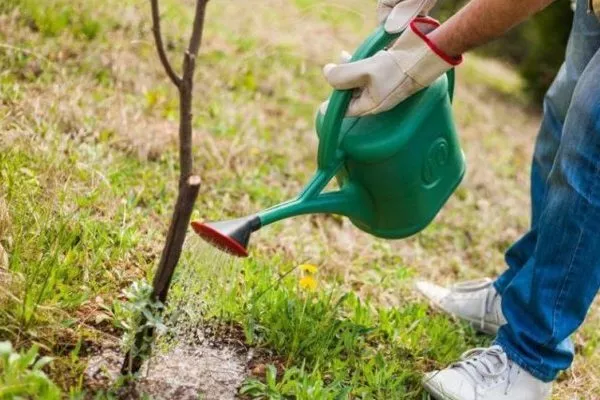
- After planting, water the seedlings, maintaining moderate moisture in the area around the trunk. Fluff the soil after each watering.
- Water established trees approximately every 1.5 weeks. Increase watering during dry periods, and stop during prolonged rainfall. The amount of water per tree should be equal to its age.
Top dressing
Do not fertilize the tree during the first year after planting. Feed a two-year-old tree with a solution of bird droppings: 300 g per 7 liters of warm water. Let the solution sit for half a day, then water the plant.
Fertilizers depending on the period:
- In the springWhen the temperature is consistently above 0°C, use mineral substances during digging: 500 g of urea, 5 kg of humus or 35 g of ammonium nitrate or nitroammophoska.
- During flowering Apply 2 liters of chicken manure solution, 300 g of urea or 100 g of superphosphate and 65 g of potassium sulfate.
- In the fall Apply a potassium-phosphorus fertilizer and add well-rotted manure. For crown spraying, prepare a solution of 100-150 g of superphosphate per 10 liters of water. Use up to 20 kg of well-rotted manure per tree. Dig to a depth of 20 cm and moisten thoroughly.
- After flowering When the fruit is ripening, feed the apple tree with a solution of 500 g of nitrophoska and 10 g of sodium humate dissolved in 10 liters of water. This amount is enough for three trees.
Trimming
When growing the Rozhdestvenskoye apple tree, regular pruning is essential. Follow these recommendations:
- In the fall, after the leaves have fallen, remove broken, diseased and old branches.
- In spring, thin out the shoots and shape the crown.
- If there is an excessive number of ovaries, leave a gap between branches of about 10 cm.
- When the tree reaches 20 years of age, begin rejuvenating pruning to increase productivity.
Winter shelter and protection from rodents
The apple tree's root system is located close to the soil surface, making it vulnerable to freezing. Therefore, adequate frost protection, especially in the early stages, is crucial.
To protect against the cold, use the following materials:
- roofing felt;
- roofing felt;
- spruce branches;
- hay;
- straw sheaves;
- specialized insulating materials.
Such shelters can attract hungry rodents, who often seek to move closer to human dwellings and feast on young tree bark. To prevent damage, coat the trunks with special mixtures, such as lard or grease. To protect against insects, whitewash the trees in the fall.
Diseases and pests – control, prevention
The Rozhdestvenskoye variety has strong immunity thanks to its unique gene composition, protecting it from five strains of apple scab and most fungal diseases. However, the risk of pest damage remains high. Control may require up to 10 preventative sprays per year.
Approximate treatment schedule and recommended preparations:
- In the spring, before the buds swell, To protect against insects that overwinter in the soil and under the bark, use a solution of copper sulfate and the insectofungicide DNOC.
- After the leaves appear To combat codling moths, weevils, aphids and mites, use Urea, Nitrofen and Bordeaux mixture.
- At the bud stage, before flowering begins, Treat with copper sulfate and Inta-Vir.
- After flowering Chlorophos and Benzophosphate are effective.
- During active fruit growth Spray the plant with Matcha, Topaz and Bordeaux mixture.
- After the leaves fall Urea and iron sulfate will help get rid of larvae and beetles that overwinter in plants and soil.
Collection, storage, shelf life
Rozhdestvensky's fruits reach harvestable maturity in the second half of September and continue to ripen until October. Since this variety's fruits are prone to shedding, harvest them in several stages.
The fruits have good shelf life and can stay fresh for 3-4 months in a cool, dry place. For longer storage, wrap each apple in paper. However, toward the end of their shelf life, the flesh becomes soft, which can reduce their flavor.
Pros and cons
The Rozhdestvenskoye apple variety is popular among gardeners due to its numerous advantages:
But the variety also has its disadvantages:
Reviews
Rozhdestvenskoye is an ideal choice for planting in a small area due to its small tree size. Thanks to its disease resistance and excellent shelf life, the apples remain tasty until severe frosts. The variety easily adapts to various climates. It requires careful care but rewards with abundant harvests.