
The Paradise apple tree is noteworthy for its high frost resistance and low maintenance requirements. It is a compact tree with a decorative crown and small, yet highly nutritious, vitamin-rich fruits. Thanks to its consistent yield and disease resistance, it is ideal for growing in a variety of climates, delighting gardeners and homesteaders.
Description of the culture
Mature, vigorous plants can reach various heights, and their crown shape varies significantly depending on the rootstock used. Not all fruit trees grow tall—most often, their crowns are medium or wide-spreading. Columnar forms with narrow, tall crowns are extremely rare.
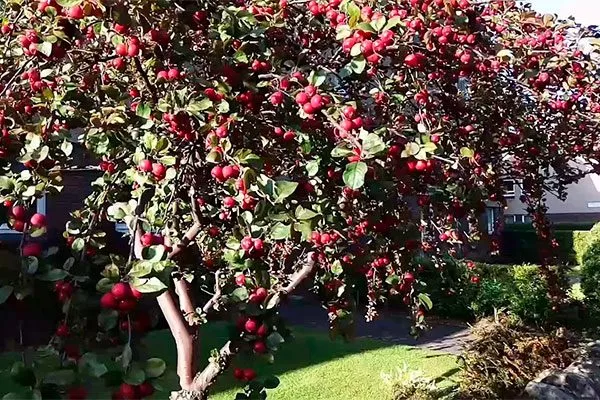
Distinguishing features:
- Apple trees grown in orchards do not exceed 2.3 meters in height. Their root system is vertical and extends deep into the soil. This allows the tree to absorb moisture from the lower soil layers and maintain frost resistance in winter.
- The plant's foliage is green, with a characteristic lamellar structure.
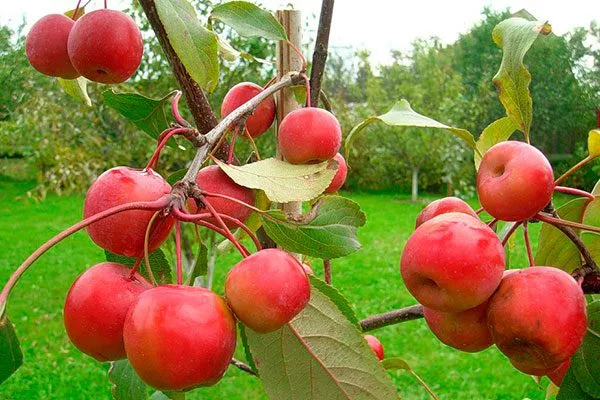
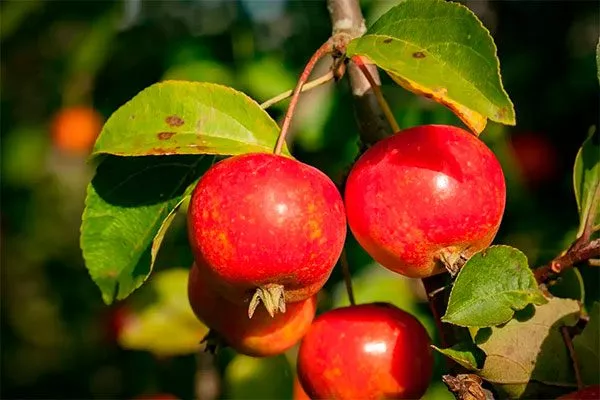
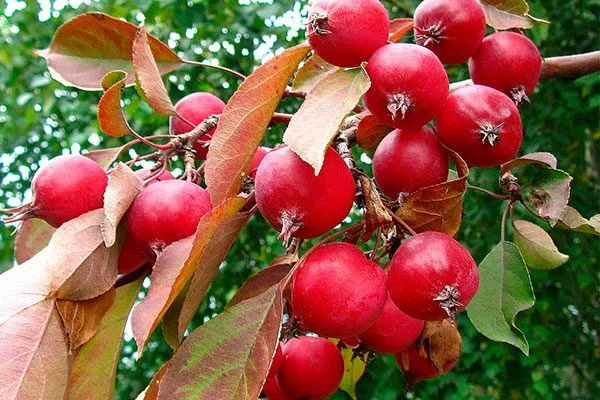
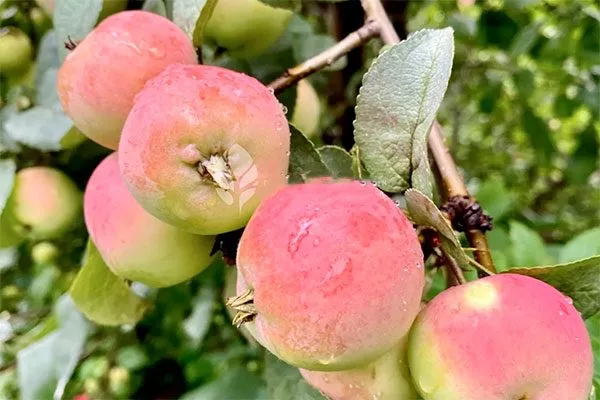
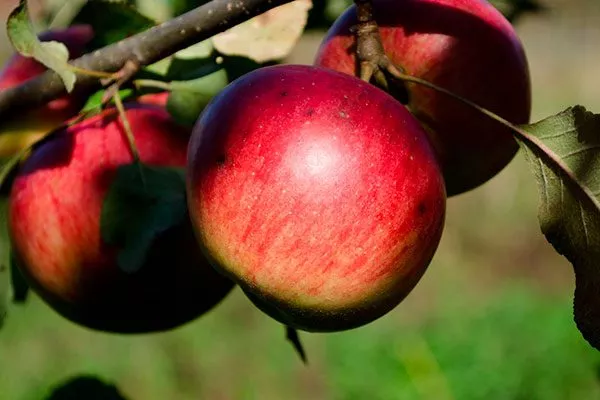
- The apples are red with a slight bluish tint. They are round and lightly ribbed. They average 15 to 20 grams in weight and 2 to 3 cm in diameter.
- Despite their small size, the fruits are characterized by a rich flavor. They successfully combine sweetness, acidity, and a slight tartness, making this variety particularly appealing.
Paradise apples are rich in vitamins and microelements. Regular consumption helps:
- improve digestion;
- normalize bowel function;
- lower blood pressure;
- cleanse the blood of cholesterol, toxins and excess fluid;
- strengthen the walls of blood vessels;
- prevent the formation of atherosclerotic plaques;
- improve immunity;
- strengthen the body's defenses.
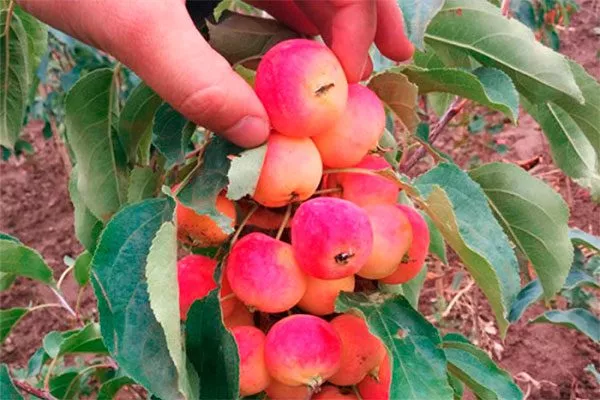
Apples are versatile: they are eaten fresh, but they are also used to make juices, jams, desserts, and preserves.
Technical parameters
This variety was developed from the Nizkaya apple variety. It is widely grown in Central Asia and southern Europe. Czech specialists made a significant contribution to the breeding process by crossing the wild apple with two varieties – Katka and Champion. The result is a high-yielding hybrid with excellent fruiting characteristics.
Resistance to sub-zero temperatures
Some varieties of paradise apple trees can withstand harsh winter conditions, including frosts down to -40°C and severe snowstorms.
However, there are also more sensitive varieties. They don't tolerate cold and drafts very well.
Susceptibility to diseases and infections
The Paradise apple's main advantage is its immunity. This fruit tree is highly resistant to most common garden diseases.
Pests are virtually unproblematic. Problems typically arise only when the tree is weakened by inadequate or improper care.
Pollinator varieties and use as rootstock
Although most varieties are self-fertile, it is recommended to plant additional plants with similar flowering times nearby. This promotes cross-pollination, which ultimately increases yield and improves the taste and appearance of the fruit.
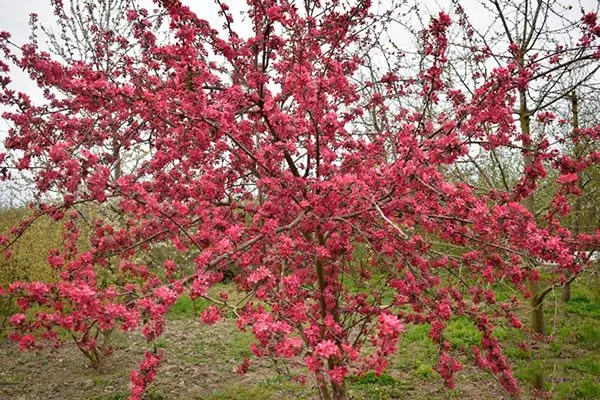
Moreover, paradise apple trees themselves also serve as excellent pollinators for other varieties. Seedlings are often used as rootstocks for growing dwarf and semi-dwarf trees due to their good compatibility and resilience.
Ripening and fruiting
The apple tree begins to produce apples in the fourth year after planting if it was grafted onto a seed rootstock. When grown from seed, the first harvest appears much later.
Yield and taste of apples
The apples are distinguished by their unique flavor, with a distinct sourness and a slight tartness, making them easily recognizable. Gardeners note the crop's high productivity.
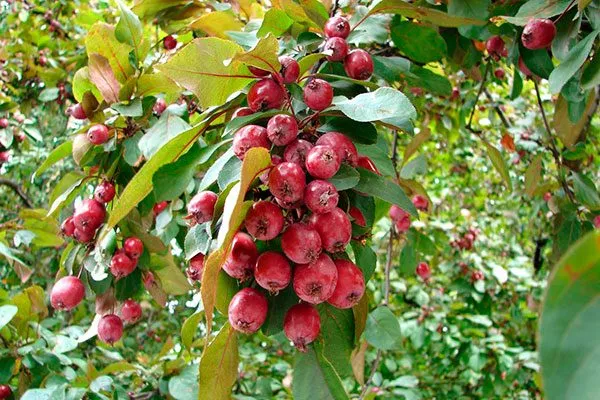
A mature tree can yield approximately 30 kg of fruit, but this figure can vary depending on the subspecies.
In which regions is it preferable to plant?
Thanks to their excellent frost resistance, paradise apple trees are successfully grown in virtually all regions of Russia and neighboring countries. The trees are adapted to harsh climates and thrive in:
- Ukraine;
- Kazakhstan;
- Belarus;
- different climatic zones of the country.
Varieties
Paradise apple trees are not only a decorative addition to any property, but also fruit trees with high frost resistance, abundant flowering, and miniature, yet vibrant and delicious fruits.
Thanks to their appearance and hardiness, they have long been popular with gardeners in various climates. They come in several varieties, each with its own characteristics:
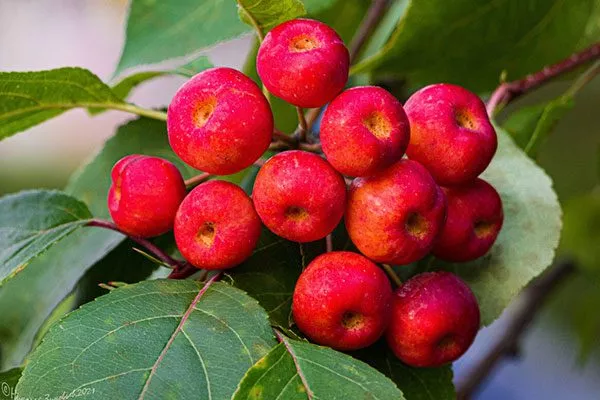
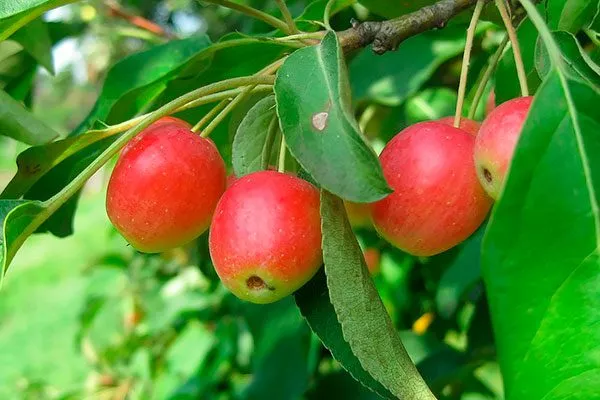
- Siberian berry. This subspecies is most often grown in Siberia and the Far East. It is easily recognized by a distinctive feature: the calyx of the fruit dries out before it is fully ripe. It is prized for its exceptional frost resistance, ease of cultivation, and consistent yield.
In spring it is covered with numerous large, soft pink flowers, and from mid-summer to autumn it is decorated with bright, decorative apples.

- Chinese apple (plum-leaved apple). The variety gets its name from its leaves, which resemble the green of the Chinese plum. The tree forms a wide, spreading crown and is covered with fruits of various shades.
The flowering Chinese lily actively attracts bees, thereby improving pollination not only of its own flowers but also of nearby plants in the garden. This makes it useful not only as an ornamental but also as a side plant.
- Ranetka. The hybrid was created by crossing the Kitayka and the Siberian Berry varieties. The variety is renowned for its ability to grow in harsh climates, such as the Trans-Urals and the Far East. It also tolerates temperature fluctuations.
The tree has a compact crown, and the apples are juicy, yellow or burgundy in color, with a rich flavor and aroma.
Varieties
Among the late-ripening paradise apple trees, several particularly interesting varieties stand out. Popular varieties include:
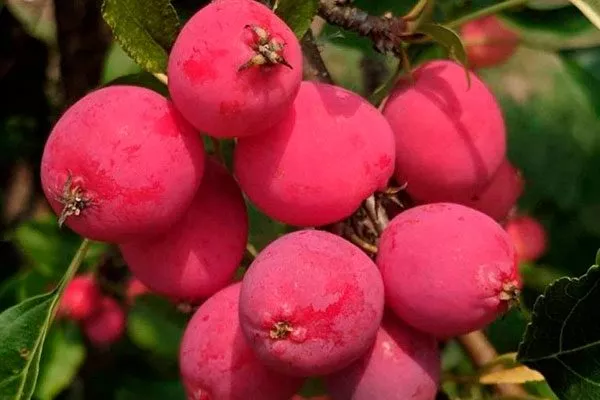
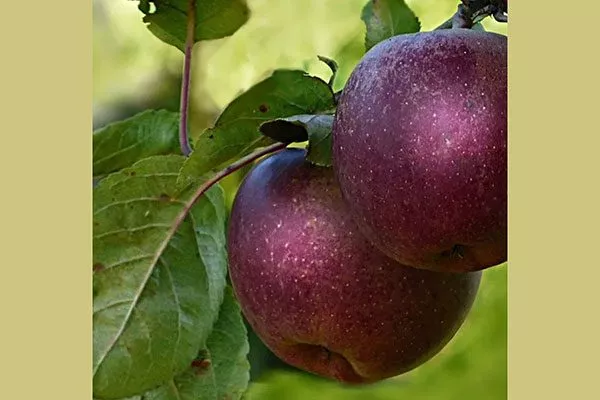
- For a long time - A variety native to the USA. A medium-sized tree with a dense, rounded crown. The fruits weigh up to 30 g, are elongated and tapering at the tip. The skin is bright crimson, the flesh is juicy, with a wine-like flavor and distinct aroma.
Yields up to 30 kg per tree. Stores for up to 4 weeks. Resistant to frost, drought, and scab.
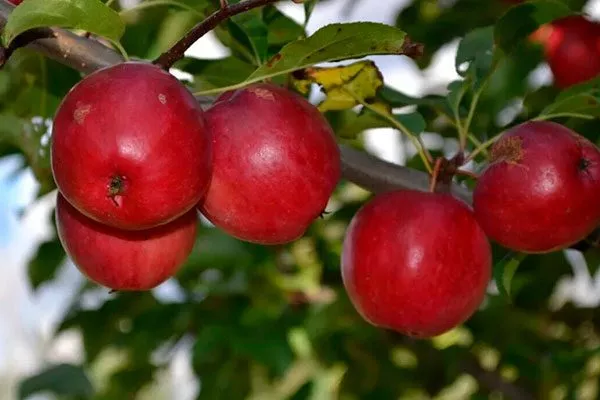
- Kerr - Canadian variety. Burgundy apples weighing up to 40 g are suitable for storage until January.
- Crimson - a low-growing, frost-resistant tree with tart fruits.
- Altai dove – A small plant with a sparse crown. The fruits are golden, flattened, with a crimson blush and a characteristic blue bloom.
- Kashchenko - A compact apple tree. The apples are small, slightly flattened, with golden skin and possible blush.
- Autumn joy – A late variety. Apples weigh up to 50 g, with crimson-golden skin and a light blue bloom. The flavor is sweet and sour, and the shelf life is up to 90 days.
Features of cultivation
When growing paradise apple trees in your garden, it's important to consider a number of characteristics that can impact their development and productivity. It's important to plant the seedling correctly and give it the attention it deserves.
Preparing young seedlings
The paradise apple tree is undemanding when it comes to light conditions, so any corner of the garden—both sunny and partially shaded—is suitable for planting. The key is choosing the right seedling. A young tree has a well-developed, branched root system with no signs of rot or dehydration.
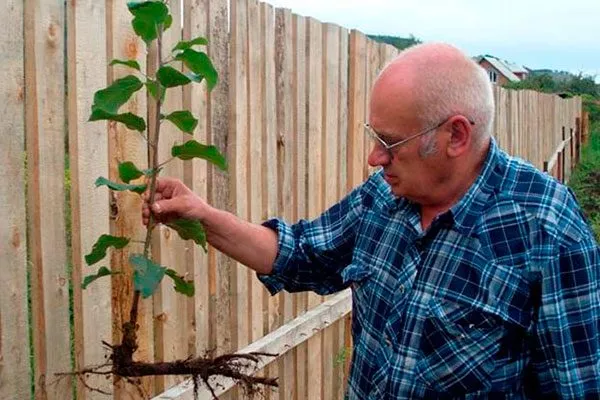
Inspect the seedling and trim the roots if necessary. Remove any damaged or dried out areas. Soak the roots in water for 2-3 hours.
Landing plan and timing
It's recommended to plant apple trees in the spring in areas with harsh climates and late fruit ripening. In regions with warmer, milder weather, the optimal time for planting is autumn.
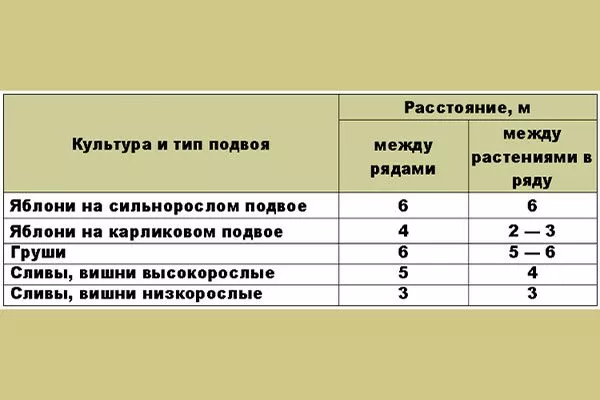
Step-by-step instructions:
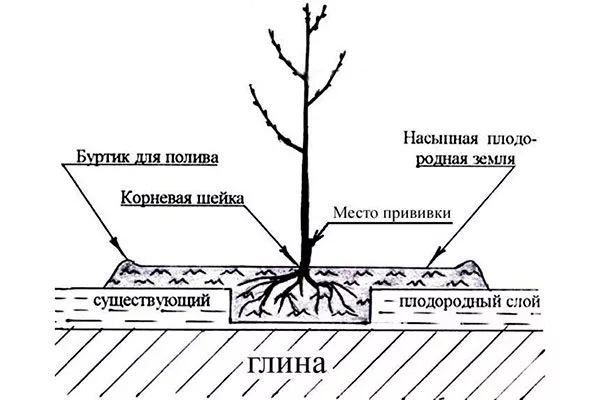
- Find a site with good drainage. Even light shade won't harm the tree. Dig a hole appropriate for the size of the seedling's root system (on average, 60 x 60 cm and 50-60 cm deep).
- Place the tree in the center of the hole. The root collar should be level with the ground surface or slightly above.
- Fill the hole with fertile soil, compacting it slightly as you fill it to ensure there are no air pockets.
- Drive a wooden stake about 60 cm high next to the trunk and tie the seedling to it.
- Water the soil generously (10-15 liters of water) so that it settles well and is nourished.
- After the liquid has been absorbed, mulch the soil around the tree with peat, humus, or dry soil. This will help retain moisture and protect the roots.
Care instructions
Proper care is the key to a stable and abundant harvest. When growing the Raiskaya apple tree, standard agricultural practices are essential.
Watering
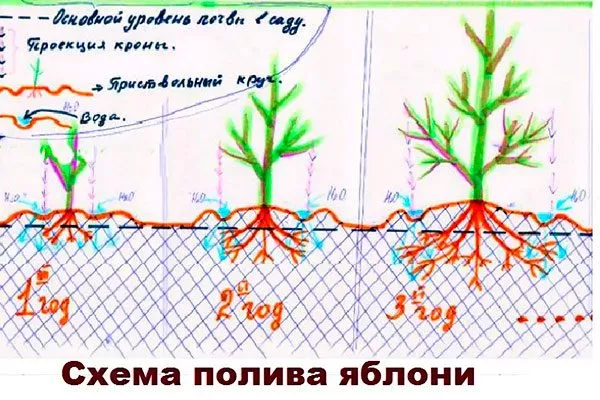
During the first month after planting, water the seedling twice a week, adding 10 liters of water at a time. During hot, dry periods, increase the amount to 15-20 liters. For successful rooting, it's important to thoroughly soak the soil to a depth of 35-40 cm.
Pay special attention to the deadlines:
- The first watering should be done before the buds begin to open;
- In summer, water young trees up to 5 years old approximately once a week in hot weather;
- water adult plants after flowering, during the period of fruit setting;
- The next water supply should be 3-4 weeks before harvest.
Top dressing
If the soil was fertilized before planting, additional feeding is usually not required for the first two years. Over time, the tree will automatically determine whether it needs additional feeding based on its growth:
- less than 20 cm per year – fertilizing is essential;
- 50-70 cm – the tree copes without additional nutrition;
- more than 100 cm per year – the plant is overfed.
In spring, apply nitrogen-containing fertilizers at different times depending on the tree's age: feed non-bearing apple trees in May, and fruiting ones in April. Organic matter, such as compost, or mineral matter, such as urea, are suitable for this purpose.
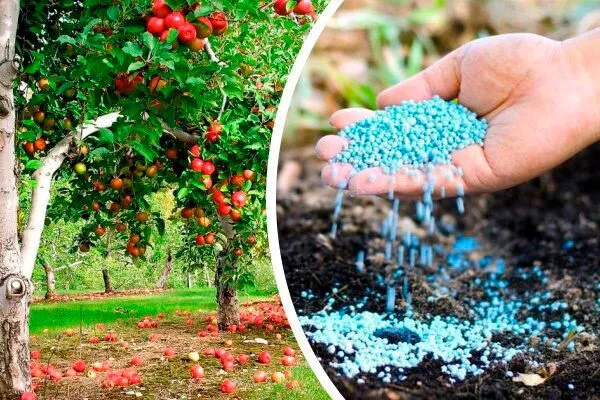
Before flowering, it's helpful to apply additional liquid nitrogen fertilizer. An example solution recipe: 500 g urea, 800 g potassium sulfate, and 1 kg superphosphate per 200 liters of water. Consumption: 30-40 grams per mature tree.
During the summer apple production period, apple trees require potassium supplements. To apply the fertilizer, prepare a solution of the following ingredients per 30 liters of water:
- ammonium nitrate – 120 g;
- potassium sulfate – 90 g;
- Superphosphate – 90 g.
Before applying fertilizer, thoroughly moisten the area around the tree trunk, and after applying fertilizer, moisten the soil again. This will help the nutrients penetrate better to the roots.
In the fall, when the tree is preparing for winter, nutrition is especially important. The best time is September, while the soil is still warm and the roots are active. Applying phosphorus and potassium fertilizers during this period helps increase frost resistance and strengthen the apple tree for the following season.
Trimming
A sparsely layered crown is optimal for this crop. Branches are arranged on the trunk at different levels as follows:
- from the ground to the first tier – height 40-70 cm, while at this level leave no more than 5 branches;
- from the first to the second tier – 40-60 cm, with 3-4 units per tier;
- from the second to the third tier – 20-50 cm, with 2-3 branches.
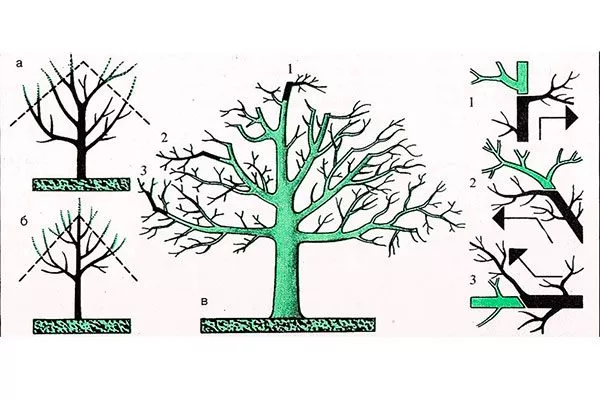
The crown structuring sequence includes the following steps:
- Select and leave the center conductor.
- Remove all excess branches to avoid crowding.
- Start forming the seedling's skeleton.
Preparing for winter
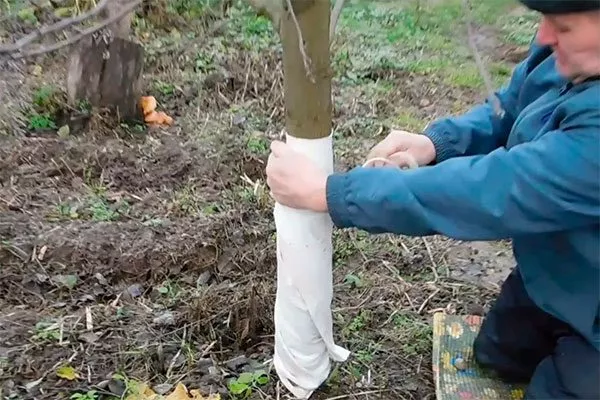
Tying up the trunk and main branches of an apple tree is an important measure to protect against rodents and frostbite. Basic requirements:
- For insulation, use roofing felt, old tights, or spruce branches. Gardeners are increasingly choosing newspaper: mice find it unattractive, and the smell of paint effectively repels pests. Wrap the newspaper around the trunk and main branches, securing it with tape.
This type of tying maintains the optimal temperature longer than outdoor tying. In the spring, cut the tape and remove the insulation. It's best to do this during rainy weather to avoid sunburn on the trunks. - As a preventative measure in the fall, whitewash trees with lime or white water-based paint. The following mixture is recommended: 2 kg of lime, 1 kg of heavy clay, 6 liters of water, 300 g of copper sulfate, and 100 g of wood glue. This whitewash will not only protect the tree but also make it a beautiful addition to your garden.
The Paradise apple tree attracts gardeners not only because of the unusual appearance and taste of its fruits, which differ from ordinary apples, but also because of its unpretentiousness, frost resistance, and stable harvest.
Pest and disease control
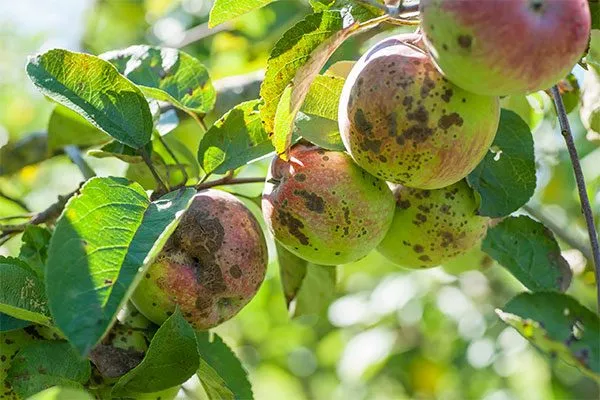
Despite its strong immunity, the crop can be damaged by diseases and insect attacks. This is often due to improper care or unfavorable conditions.
Main problems:
| Disease/Pest | Signs | Methods of struggle |
| Scab | Dark green or brown spots appear on leaves, fruit, and young shoots. Over time, these spots expand, the leaves become deformed and fall off, and the apples become crusty and unusable. | In the fall, collect and destroy fallen leaves and affected fruits.
In spring and summer, spray trees with fungicides (for example, Bordeaux mixture, Horus, Skor). Ensure proper watering and ventilation to avoid excessive humidity. |
| Powdery mildew | A white coating is visible on the leaves and young shoots, the leaves curl, the shoots may become deformed and lag in growth. | Treat with fungicides (Topaz, Fundazol).
Trim and remove damaged parts and fallen leaves. Clean the area thoroughly. |
| Clasterosporium (goblet spot) | Round brown spots with a burgundy border appear on the leaves, which lead to premature shedding of the green mass. | In spring and summer, use copper-containing products. |
| Aphid | Curling and deformation of leaves, sticky coating, massive accumulation of small insects on young shoots and leaves. | Use insecticides (Actellic, Confidor), soap solutions and infusions of garlic or tobacco as a preventative measure.
Attract beneficial insects – ladybugs. |
| Apple blossom weevil | Damage to buds and young leaves, premature flower shedding. | Collect beetles by hand.
Use insecticides before flowering begins. |
| Sawfly | The appearance of holes and passages in the leaves, their yellowing and falling off. | Spray with insecticides.
Remove and burn affected leaves. |
General recommendations:
- Inspect trees regularly for signs of disease and pests;
- Observe agricultural practices: timely pruning, removal of fallen leaves, proper watering regime;
- carry out preventive spraying with fungicides and insecticides in accordance with the plant development phases;
- At the first sign of disease or pests, begin treatment to prevent spread.
Harvesting and storage
Pick apples from the tree early in the morning on a dry, clear day. Place the fruit, stems and all, on a flat, well-ventilated surface under cover for 6-8 hours, then store them in a cellar or refrigerator (this is especially important for early-ripening varieties).
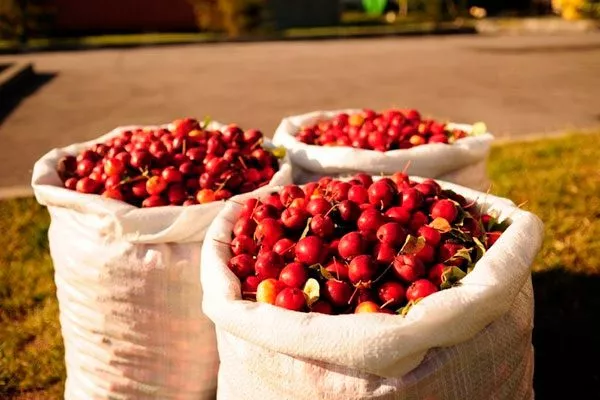
Under the right conditions, late-ripening Raiskaya apples retain their quality for up to three months. However, with prolonged storage, slight deformation and wrinkling may occur due to moisture loss.
Pros and cons
The main disadvantage, according to experienced gardeners, is the small size of the fruits, which is why harvesting fruit, even from dwarf trees, takes a lot of time.
Reviews
The Paradise apple tree is deservedly prized for its ornamental beauty and numerous positive characteristics. It is characterized by good productivity and consistent fruiting even with minimal care. Thanks to its frost resistance and strong immunity, the tree rarely suffers from diseases. With simple farming practices, it can yield abundant harvests every year.