
Watering is one of the most important aspects of apple tree care, directly impacting their health and productivity. The frequency and amount of watering depend on the tree's age, weather conditions, and soil conditions, especially during periods of drought. Proper irrigation helps avoid both under- and over-watering, ensuring optimal conditions for growth and fruiting.
Factors Affecting the Frequency of Apple Tree Watering
The frequency of crop watering is determined by a number of factors that must be considered when developing an irrigation schedule. There is no universal schedule—every garden requires an individual approach.
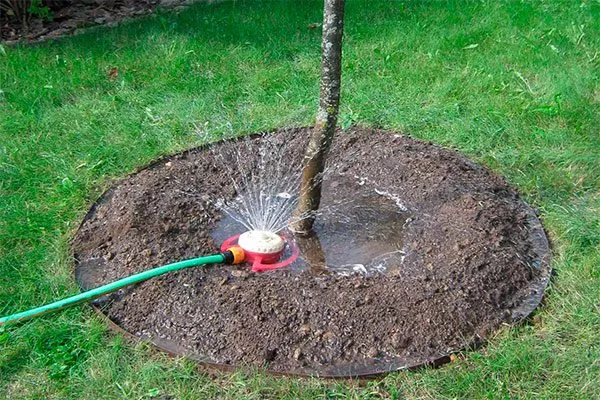
The main conditions that influence the frequency and volume of watering include:
- structure and water-retaining properties of the soil;

- features of the site's relief;
- weather conditions at different times of the year;
- the presence of crops growing nearby;
- use of mulch.
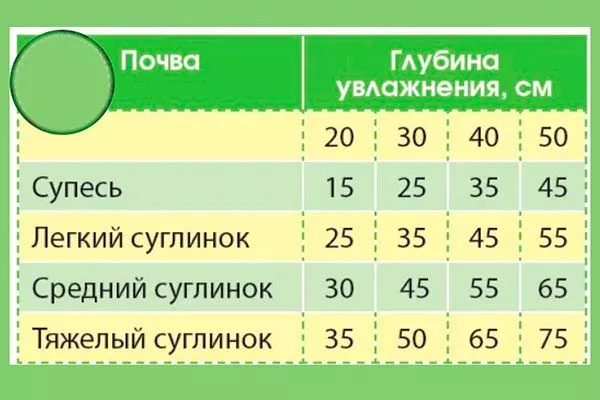
Climate has a greater impact on apple trees' water requirements. In hot and arid regions, trees require more frequent watering than in areas with moderate temperatures and high humidity.
Water requirements
To irrigate crops, you can use water from a variety of sources, including wells, artesian wells, rivers, lakes, ponds, and other natural bodies of water.
But the key factor is water temperature, as excessively cold liquid approaching 0°C can cause stress to plants.
Water at a temperature of +4…+5°C is not recommended for irrigation, but its use is acceptable in dry conditions. Avoid contact with plant trunks and branches, preferably directing it into soil grooves at night – from 10:00 PM to 7:00 AM.
Basic requirements for water for irrigation:
- It should not contain chemicals or toxic substances.
- Melt water, which is soft and has a neutral composition, is the optimal choice.
- Pay special attention to septic tank water, as it may contain dangerous microorganisms, parasites, and viruses that pose a threat to humans and plants. Untreated or thermally disinfected septic tank water is strictly prohibited for surface irrigation.
Watering rates depending on age
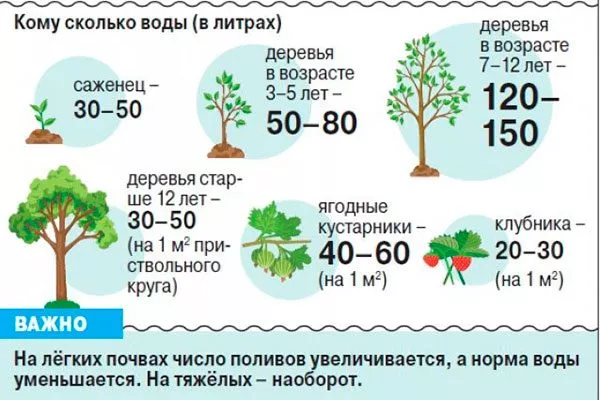
Watering dosage varies depending on a number of factors, including tree maturity, soil type, weather conditions, and climate zone. There's no universal formula, but proven practical guidelines can be used as a guide.
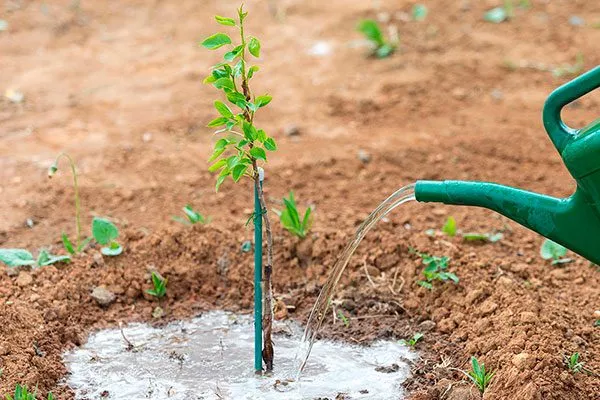
Young apple trees (1–3 years)
To develop a strong root system, young trees require regular and abundant watering. Basic recommendations:
- in hot and dry weather, water the crop 2-3 times a week;
- For one tree, use an average of 10-15 liters of water per watering.
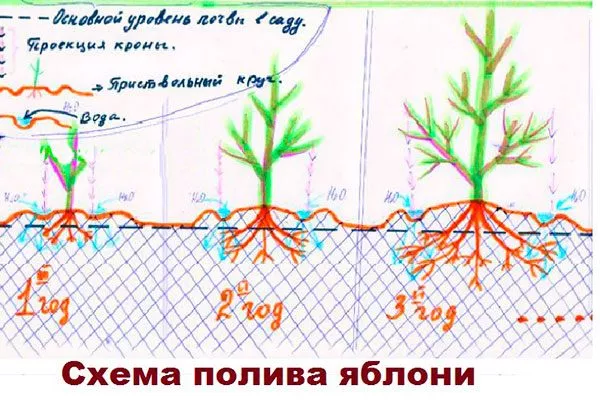
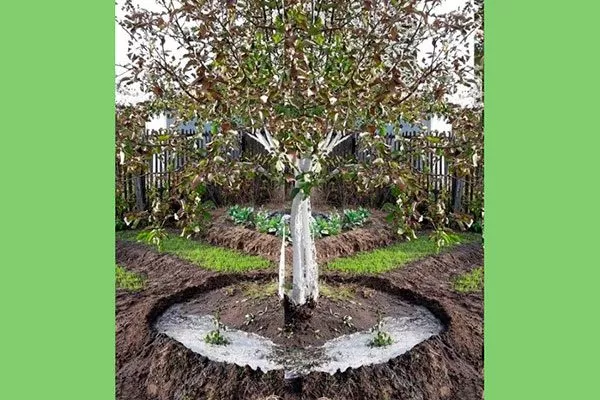
Mature apple trees (over 3 years old)
Trees with extensive root systems tolerate heat and drought better, so watering frequency can be reduced. Important requirements:
- During dry periods, 1-2 irrigations per week are sufficient;
- water consumption per tree is about 20-30 liters at a time.
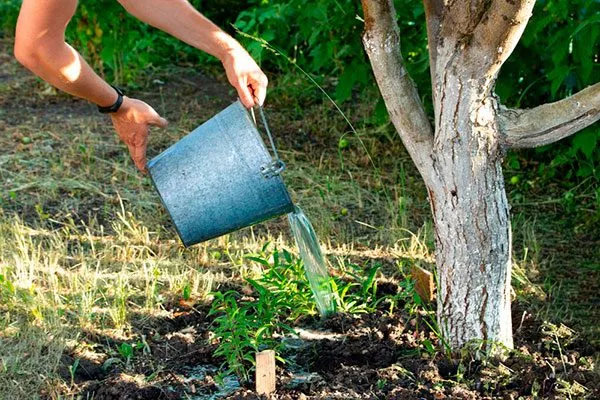
Fruit-bearing apple trees
During flowering and fruit set, trees require more moisture to maintain productivity. Helpful tips:
- increase watering during these stages of development;
- The norm is 30-40 liters of water per tree per watering.
Timely irrigation of the soil helps apple trees not only maintain health, but also produce a high-quality and abundant harvest.
Frequency and rates of watering for mature trees
Apple tree watering regimens are directly dependent on the season, and the approach should be adjusted according to seasonal conditions. Below are guidelines to help you organize watering effectively and timely.
Spring
In many regions, there is sufficient rainfall in the spring, so additional soil moisture is generally not required. In fact, overwatering can harm trees. However, in areas with early, dry, and warm springs, watering is necessary as early as the start of flowering.
Please observe the following important requirements:
- the optimal time to start watering is the bud opening phase;
- If it gets hot during flowering and the soil dries out, evening watering along the furrows is essential;
- One adult tree requires at least 50 liters of water.
Whether to water apple trees after flowering is a contentious issue among beginners. Experienced gardeners rely on soil conditions. If the soil is sufficiently moist, irrigation is not necessary. If drought is observed, watering is necessary, but not too frequently, depending on the weather and the degree of soil dryness.
Summer
This is the most critical period, when it's especially important to monitor soil moisture. Follow these rules:
- In the first half of summer, some of the ovaries naturally fall off (second half of June) – that is when you should perform the first abundant watering.
- Water again after 2-3 weeks.
- During prolonged hot weather, increase the frequency of watering, but leave the volume of water per tree the same.
- In August, if the weather remains typical and without extreme heat, stop watering to avoid stimulating new growth. Excessive moisture in late summer can cause secondary growth of green mass, which will not have time to mature and will die in winter.
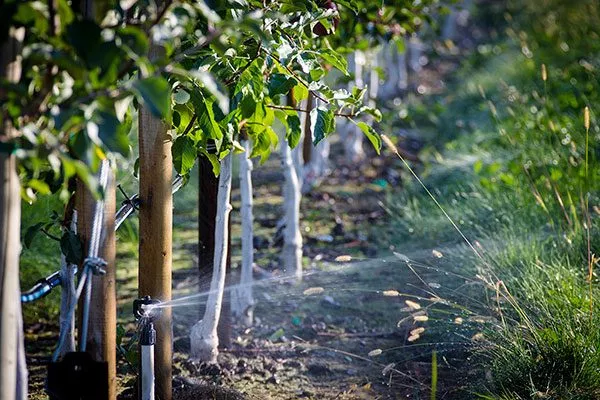
August watering is only permissible during periods of persistent and unusual heat – then trees are saved by making local furrows or holes near the trunks.
Autumn
After fruiting, watering is minimal. The rainy season usually provides sufficient moisture, and artificial irrigation can stimulate late vegetative growth, which reduces the trees' winter hardiness.
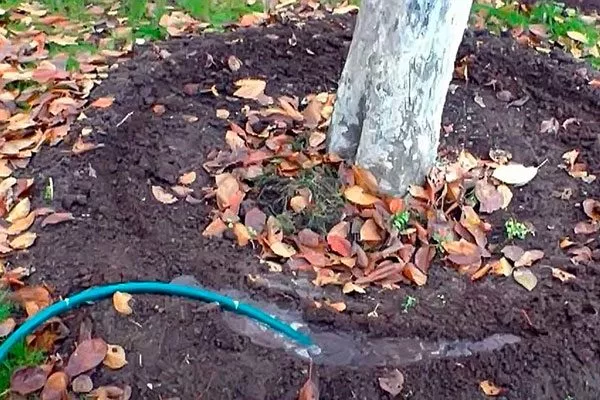
If the autumn is unusually warm and dry, moisture-replenishing irrigation may be possible, but strictly under weather conditions. A properly planned schedule throughout the season helps maintain healthy trees and lay the foundation for a good harvest in the future.
How to determine if an apple tree needs watering?
You can determine whether a crop needs additional moisture based on several factors, including soil condition, plant appearance, and weather conditions. The main diagnostic methods are:
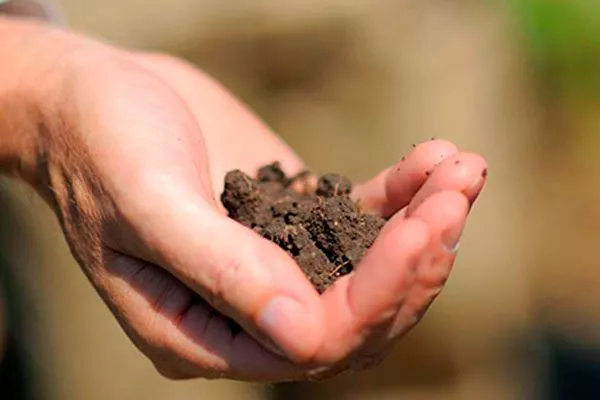
- Take a handful of soil from the tree's trunk at a depth of 15-20 cm (10-15 cm for young trees, up to 40 cm for mature trees). If the soil forms a lump and doesn't fall apart, it's sufficiently moist. If the soil crumbles or is dry, it needs watering.
- Visually inspect the soil: a dry, cracked surface is a sure sign of moisture deficiency.
- Stick it into the ground to the desired depth and remove it: dry dust or dirt on the surface is a signal to water.
- Wilted, slightly drooping, or curling foliage indicates the tree is suffering from a lack of moisture. Slow shoot growth in the middle of the growing season can also be due to water deficiency.
- Small, falling, or poorly developing ovaries are signs of insufficient irrigation. Severe drought may cause premature apple drop.
- During prolonged heat waves, especially in regions with dry summers, the tree needs regular watering, even without obvious external signs. Watering is especially important after strong winds and prolonged periods without rain.
- If the soil under the mulch is completely dry, it means that moisture is no longer being retained, and it’s time to water, even if everything on the surface seems damp.
The best ways to water apple trees
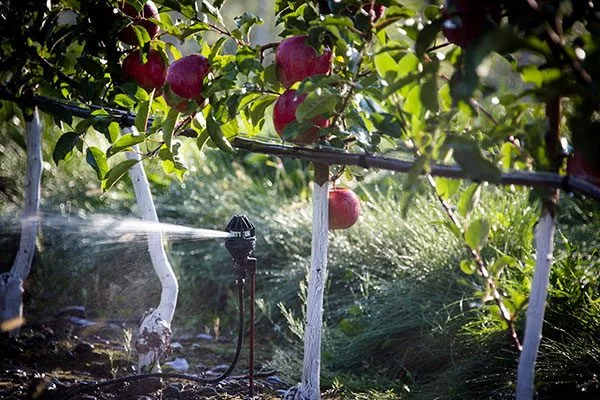
There are several methods for irrigating crops. Many gardeners prefer drip irrigation and sprinkler systems, but other options are no less effective and convenient.
Drip irrigation of fruit trees
The system delivers moisture slowly and precisely – directly to the root zone through special drippers or tapes placed along the edge of the crown or along rows of trees.
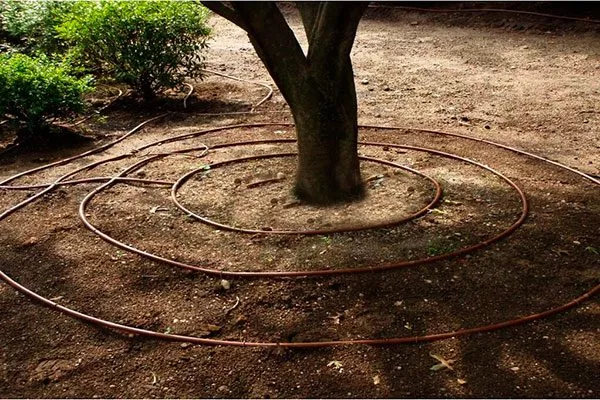
Advantages of drip irrigation:
- reduces evaporation losses – water is not wasted;
- avoids foliage getting wet – important for protection against fungal diseases;
- ensures precise dosing – each tree can be assigned its own moisture volume;
- easily automated – does not require constant monitoring;
- suitable for any conditions – from large gardens to a few plants in a summer house, especially with limited access to water;
- maintains stable moisture in the root zone without the risk of over-wetting the top layer of soil.
A drip system is a reliable way to provide crops with optimal water conditions with minimal resource consumption.
Watering in holes/ditches
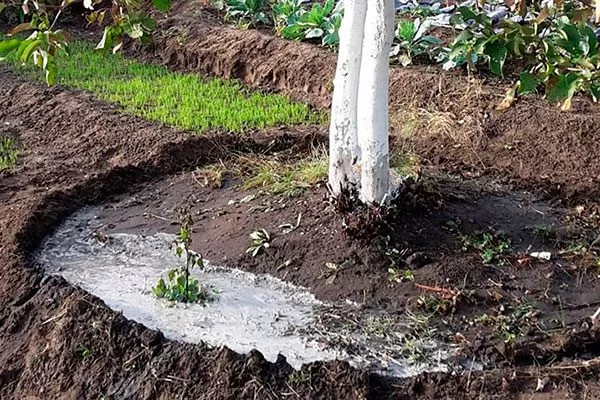
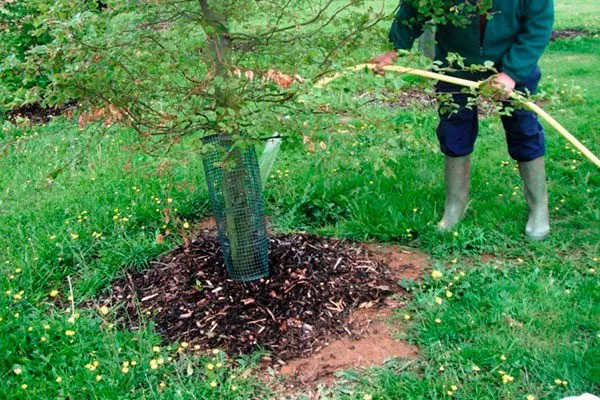
Around the tree, approximately 50-70 cm from the trunk (to avoid wetting the root collar), dig one or more concentric furrows, aligning them with the crown projection, that is, along the line where the outermost branches end. This is where the peripheral roots, which absorb the most moisture, are located.
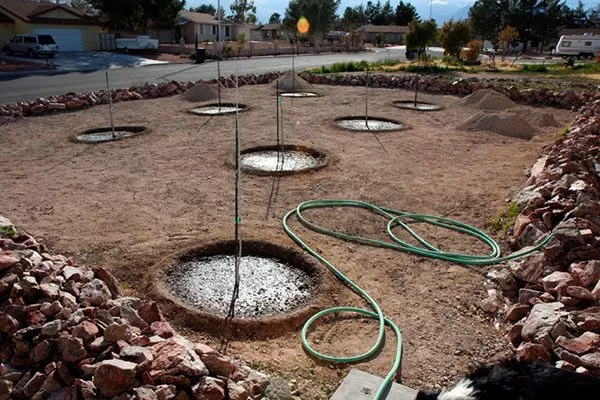
Basic requirements:
- groove depth – 10-15 cm;
- width - about the width of one shovel blade.
Pour water directly into these furrows. It soaks in slowly and reaches the active root zone, preventing runoff and unnecessary evaporation. After watering, fill the furrows back with soil or mulch to retain moisture longer.
Root watering
This is one of the most reliable and effective methods of irrigating apple trees. With this method, water is applied directly to the root zone, either through drippers connected to a hose, or by traditional irrigation into the soil around the trunk.
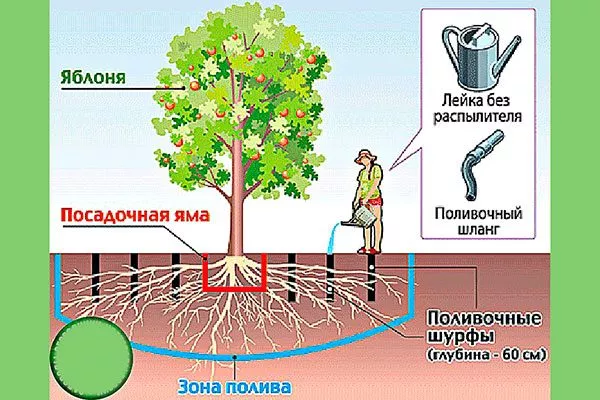
Benefits of root irrigation:
- provides precise and uniform moistening of the root zone, where the plant really needs moisture;
- minimizes evaporation losses, since water does not linger on the surface;
- does not wet the leaves, which reduces the risk of developing fungal diseases;
- prevents over-watering of the above-ground part of the tree.
This method is especially useful during hot and dry periods, when it is important to retain moisture in the soil without damaging the plant.
Sprinkling the garden
An irrigation method that creates artificial rain using special sprinklers. It has both advantages and serious disadvantages, especially in drought conditions.
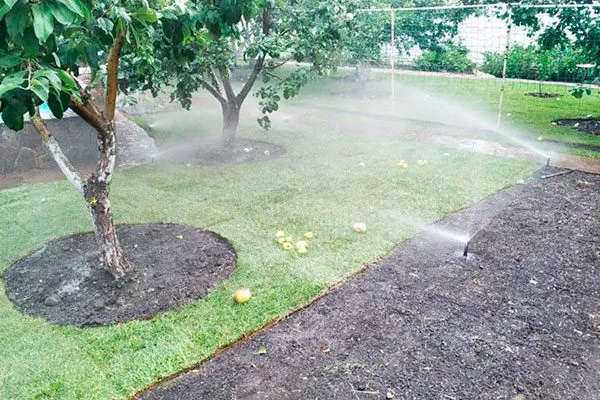
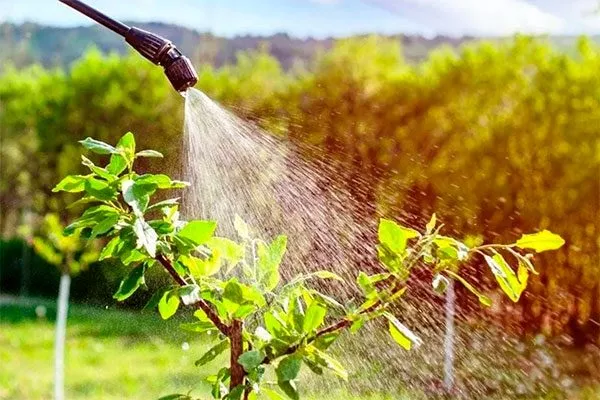
Sprinkler irrigation is not recommended during the day, as the sun's rays act as lenses, causing leaf burn. It's best to turn on sprinklers early in the morning or evening, in calm weather, and only when a more effective method is unavailable.
Watering with drippers using bottles
This inexpensive and simple irrigation method involves using ordinary plastic bottles with holes punched in the lids. Fill the bottles with water and bury them near the apple tree, under the root zone, or under drip lines.
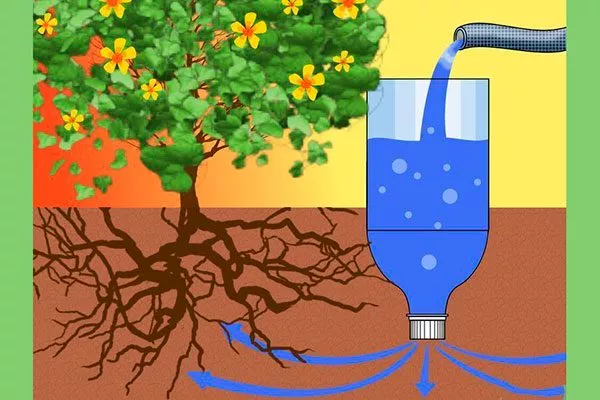
Moisture gradually seeps through the holes, ensuring uniform and continuous moisture around the roots. This method helps maintain stable moisture levels and save water.
Watering using sewer pipes
An unconventional solution for crop irrigation. It involves the use of sewer pipes placed around the apple tree trunk. Water is supplied into the pipe, which is hidden underground and evenly distributes moisture directly to the root zone.
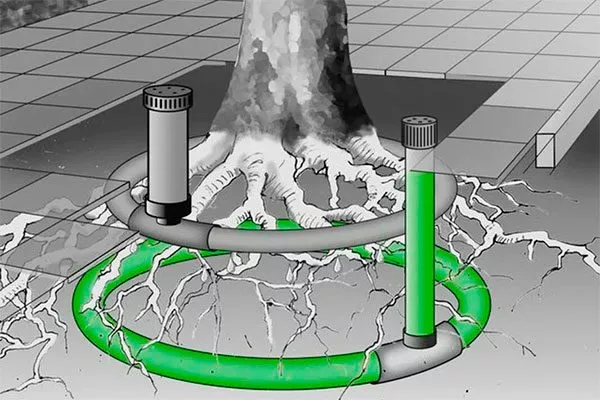
This method ensures effective and deep soil moistening, promoting long-term moisture retention and reducing moisture loss due to evaporation.
How to water an apple tree seedling after planting?
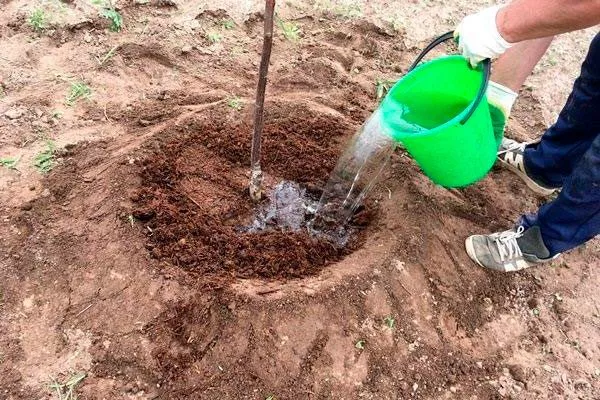
For one- and two-year-old apple trees, moist soil in the root zone is especially important – it helps young seedlings take root more quickly and develop a strong root system.
Basic requirements:
- If you are planting in the fall and the seedling has an open root system, immediately after planting, pour 20-30 liters of water under it (depending on the size of the tree).
- Water again after 5 days. Subsequently, water moderately – 1 to 3 times per month, depending on weather conditions: water more frequently during dry autumns, and less frequently during rainy ones.
- In spring, the scheme is similar. Immediately after planting, add 20-30 liters of water to the tree's trunk, then repeat after 7-10 days. Subsequently, water as needed, ensuring that the soil at the base of the tree remains moderately moist and does not dry out.
Peculiarities of watering trees in hot weather
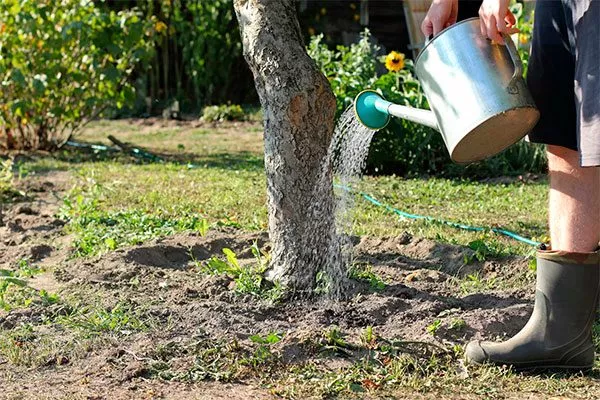
During periods of extreme heat, apple trees are especially in need of moisture, as high temperatures and dry air accelerate evaporation from the soil. Proper watering during these periods helps trees avoid stress, maintain health, and ensure fruit development.
Why is drought dangerous for fruit trees?
Drought is a serious threat to fruit trees, and slight wilting of foliage is not the most serious consequence.
In July, when the heat reaches its peak, apple trees undergo key physiological processes, and a lack of moisture during this period has a particularly negative impact on their development and yield.
Disruption of fetal growth and development
July marks the beginning of the fruit's active ripening period—apples rapidly gain weight, infusing themselves with sugars and aromas. These processes require an intensive water supply: the fruit cells require a large amount of moisture.
When water is deficient, the tree is forced to conserve resources, redistributing moisture to the trunk and skeletal branches. It first removes the most vulnerable parts—the ovaries and small fruits.
Threat to next year's harvest
As fruit ripens in July, fruit buds begin to form—these will be the foundation of the next season's harvest. However, if there's a lack of moisture, this important process is disrupted: the number of buds decreases, they develop weakly, or fail to develop at all.
Weakening of immunity and winter hardiness
Prolonged moisture stress combined with high temperatures is one of the most severe stresses for apple trees. Under such conditions, the tree becomes more susceptible to diseases:
- scab;
- powdery mildew;
- various rots.
It can be attacked by pests:
- aphid;
- codling moth.
A weakened plant is poorly prepared for winter: it tolerates frost and temperature fluctuations less well, and the risk of bark and wood freezing increases.
Therefore, combating the effects of the July drought is not a temporary measure, but a strategic investment in the garden's future. Timely and appropriate watering helps not only preserve the current harvest but also maintain the health of the trees for the next season.
Key rules
Three parameters play a crucial role in apple tree watering: depth of application, frequency, and timing. Proper adherence to each of these parameters determines how effectively moisture reaches the roots and how well the tree tolerates heat and drought.
Water deeply
The bulk of the absorptive roots in mature apple trees are located at a depth of 50-80 cm or deeper. Surface irrigation, which only allows moisture to penetrate 10-15 cm, is not only unhelpful but can actually be harmful: it stimulates the growth of weak surface roots, which easily dry out and fail to provide the tree with moisture.
Choose rare but abundant watering
Frequent, small amounts of water are harmful to apple trees. This is because moisture doesn't reach the root zone, and a thick crust forms on the surface, impeding air exchange. Furthermore, weeds actively grow, drawing out water and nutrients.
Optimal watering regime:
- adult apple trees – 1 time in 7-14 days (depending on weather and soil type);
- young seedlings – Once every 5-7 days.
Before watering, check the soil moisture with a shovel or probe. Watering is only necessary when the soil has truly dried out to a significant depth.
Water during hours of low sun activity
The best time to water apple trees is early morning (before sunrise) or evening (after sunset). Watering during the day is highly undesirable for several reasons:
- water droplets on leaves cause burns;
- at high temperatures, moisture evaporates quickly, without having time to penetrate deep into the soil;
- Cold water from a well or borehole can stress the roots and slow down the tree's growth.
Tree watering rates in July
Determining the exact watering dosage for each tree is difficult because it depends on many factors:
- age and size of the plant;
- varieties;
- rootstock;
- crown density;
- soil type (sandy soils require more moisture than loams);
- degrees of drought;
- the presence of mulch around the trunk.
However, there are guidelines, expressed in liters, that will help ensure effective watering during dry periods:
- Young trees. The root system is still poorly developed, so one seedling requires 40-80 liters per watering.
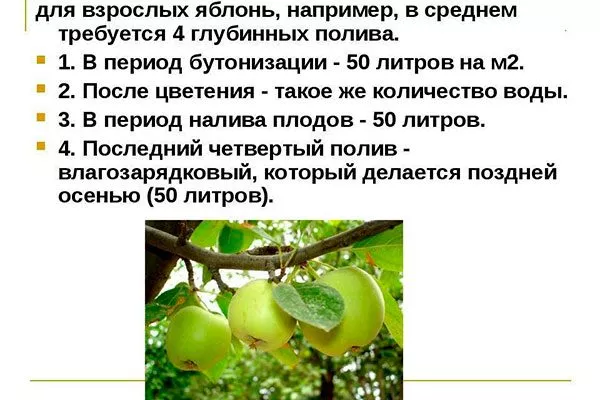
- Plants during the fruiting period. To moisten the root zone, 100-150 liters are required so that the water penetrates deeply and covers the crown projection area.
- Mature apple trees. During dry periods, large trees require 150-250 liters, while for very large and spreading specimens, the norm increases to 300-400 liters. It is important to soak the soil to a depth of at least 50-70 cm across the entire crown projection and slightly beyond, as roots often extend beyond the edges of the branches.
Monitor the condition of the soil - if after watering the soil dries out quickly to the depth of a shovel blade, it means there was not enough water or the soil is too light and quickly loses moisture.
Signs of excess and lack of moisture
Proper watering is the key to healthy and productive apple trees. Both insufficient and excessive moisture can negatively impact the tree's health and fruit quality. It's important to recognize the signs of each condition so you can adjust your care promptly.
Signs of lack of moisture:
- the leaves become wilted, dull and curl at the edges;
- the fruits become smaller and may fall off prematurely;
- shoot growth slows down, the tree looks weakened;
- the root system dries out, which reduces resistance to diseases and frost.
Signs of overwatering:
- the leaves turn yellow and fall off, especially the lower ones;
- the growth and development of shoots slows down;
- Root rot occurs due to lack of oxygen;
- Drops on leaves contribute to the development of fungal diseases - powdery mildew and scab.
Common mistakes gardeners make when watering
Proper irrigation during the hottest months of the year is the key to healthy and abundant apple trees. However, many fruit growers make common mistakes that can harm their trees instead of benefiting them:
- Frequent but superficial watering. Small amounts of water stimulate the growth of surface roots, which are not well-suited to drought and frost. It's better to water less frequently to stimulate the development of deep roots.
- Watering with cold water. Icy water from a well or borehole, especially during the heat of the day, can stress the root system. It is recommended to use settled water warmed to 18–20°C.
- No mulching. Without a layer of mulch, moisture evaporates quickly, the soil cracks, and the roots overheat. Mulching is especially important during dry weather.
- Ignoring the characteristics of the variety. Old apple varieties, such as Antonovka, are more drought-tolerant than dwarf rootstocks like M9. Columnar apple trees require more careful moisture management. Monitor the condition of the leaves, shoots, and fruit—they will indicate whether additional moisture is needed.
- Overwatering. Excess water, even in hot weather, is dangerous: it causes oxygen starvation and root rot, especially in heavy clay soils. Before watering, check the moisture at a depth of 20-30 cm – if the soil is sticky and heavy, it's best to delay watering.
Properly managed irrigation is the key to strong apple trees and bountiful harvests. It's important to consider many factors to avoid over-irrigation and damage to the plant. Equally important is choosing the right method for delivering water to the tree.