
The rootstock is a key component in apple tree cultivation, largely determining the tree's health, growth, yield, and adaptation to environmental conditions. Choosing the right rootstock helps gardeners achieve a compact or vigorous tree that is resistant to disease and climate fluctuations.
The history of the emergence of rootstocks
In the past, apple trees were typically grafted onto seedlings, resulting in tall trees with late fruiting and a gradual increase in yield, often with fruit of poor quality. However, moderately tall specimens have been observed, producing higher-quality fruit.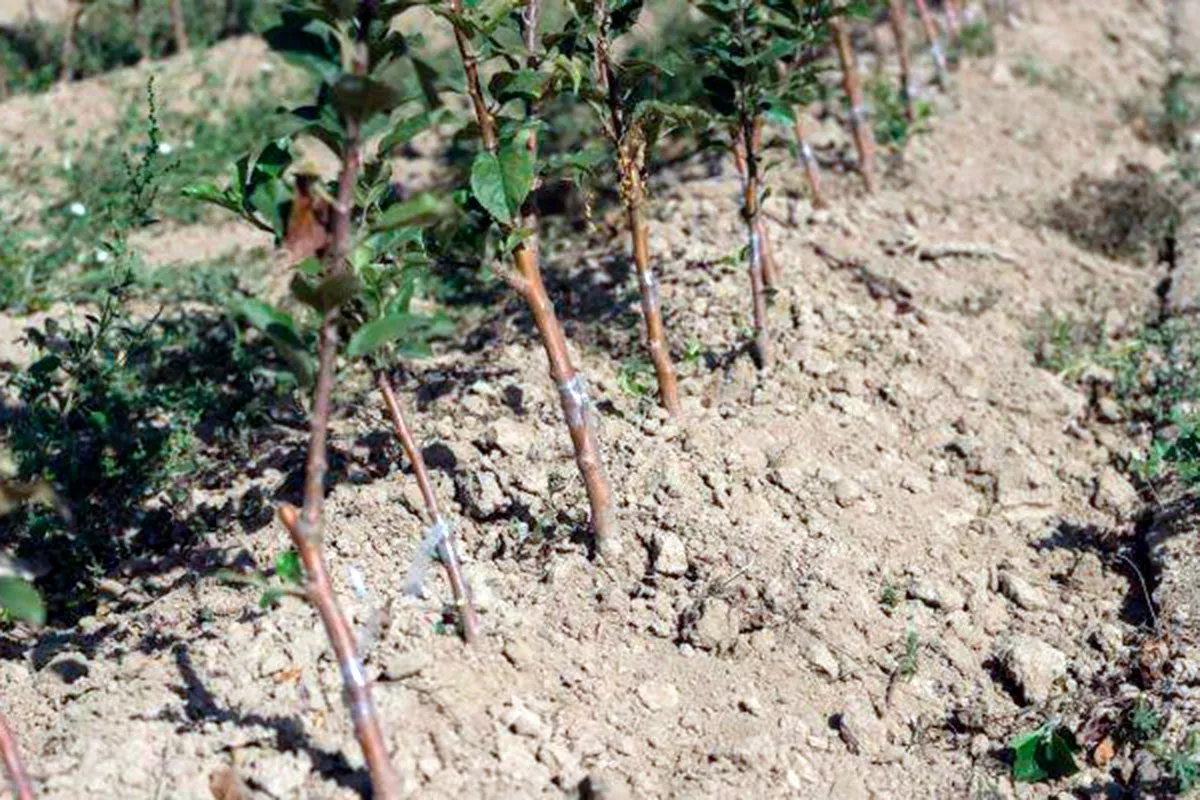
This observation spurred gardeners to search for apple trees suitable for use as rootstocks. Key requirements included high compatibility with cultivated varieties, growth restriction, and the ability to vegetatively propagate.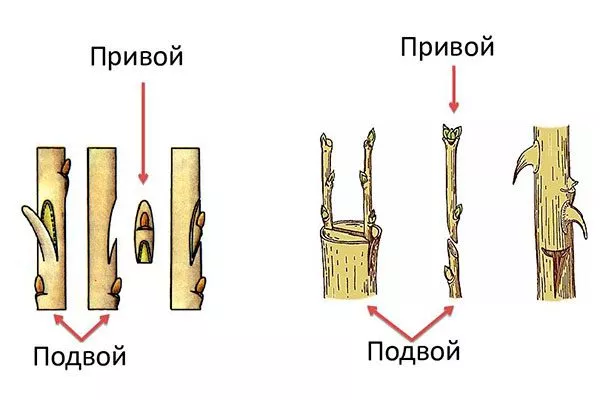
Key Features:
- Large-scale work on rootstock research began in the 19th century, during which various low-growing species and forms were tested and the most promising specimens were selected.
- At the beginning of the 20th century, a significant collection of clonal rootstocks was assembled at East Malling Station in England, where they were studied and classified. As a result, the rootstocks were divided into 16 groups, differing in height and other characteristics.
This classification has received international recognition, and today these rootstocks are known as M1-M16. This list has subsequently been expanded. - Later, the rootstocks MM 101-MM 115 were bred, where the double “M” indicates the collaboration between the East Malling Station and the Institute in Merton.
- I. V. Michurin also worked on clonal rootstocks, but despite their winter hardiness and dwarfism, they did not become widespread.
- In the USSR, the selection of dwarf rootstocks began in the 1940s. In the North Caucasus and Dagestan, clonal rootstocks for southern regions were bred, while in Michurinsk, V. I. Budagovsky developed winter-hardy rootstocks for temperate climates. The result was resistant rootstocks widely used both in Russia and abroad.
What is rootstock and why is it needed?
The rootstock is the lower part of the seedling, including the root system and the part of the trunk onto which the varietal plant (scion) is grafted.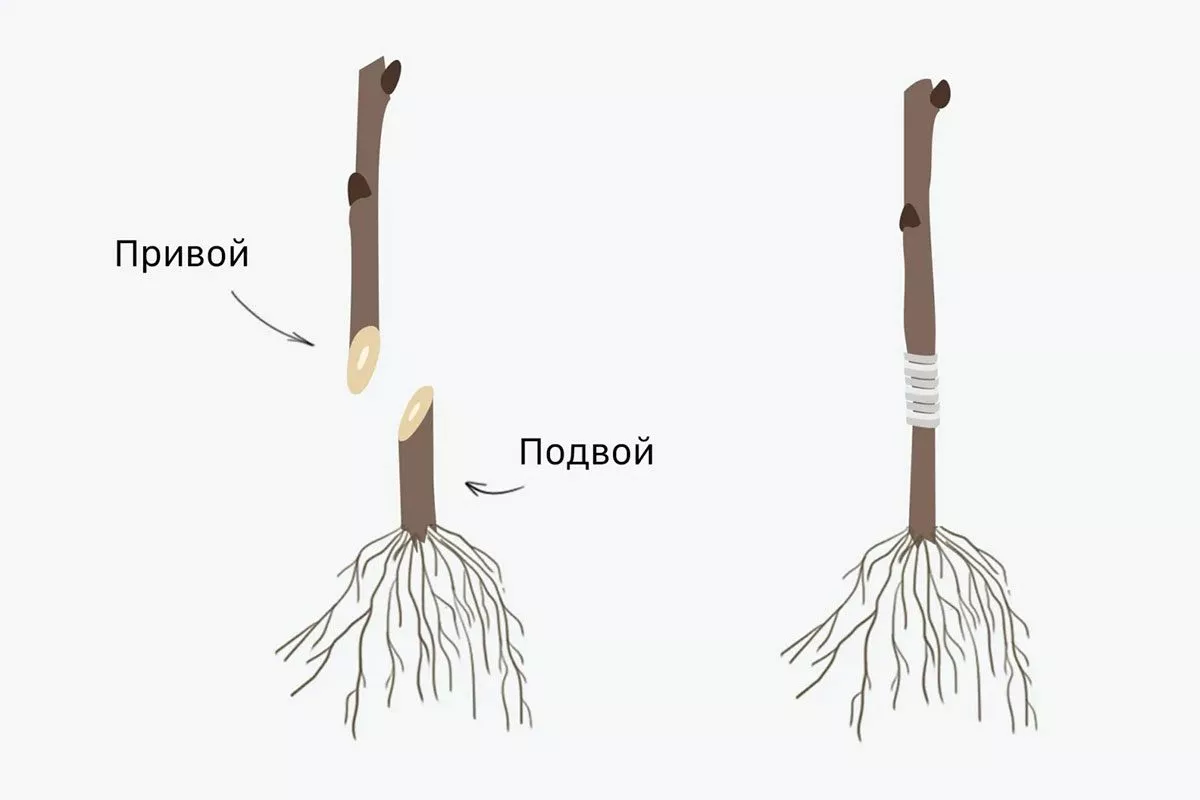
Why is it needed:
- provides the plant with nutrition and water supply through the roots;
- affects the growth force, size of the tree, and fruiting period;
- increases resistance to diseases, pests, frost, drought;
- helps to adapt the cultivated plant to unfavorable soil or climate conditions.

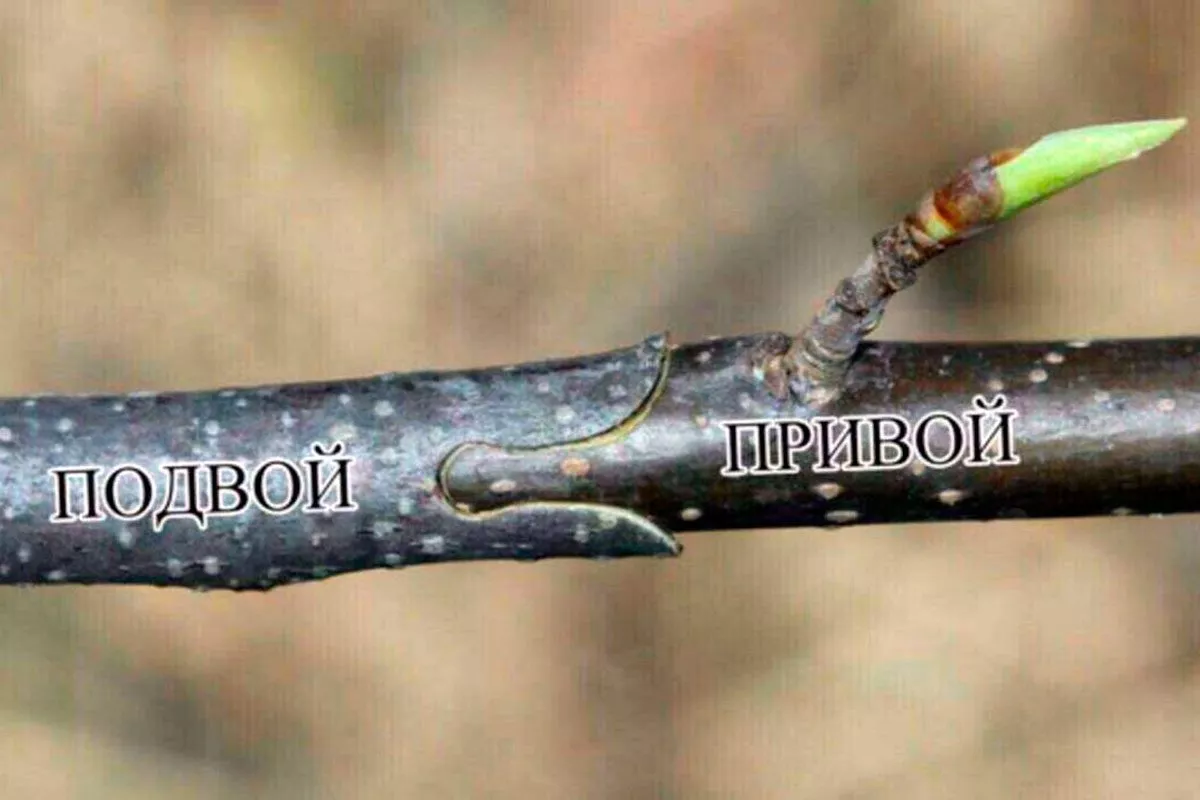
The scion, on the contrary, is responsible for the varietal qualities – the taste of the fruit, its shape, and its yield.
What is the difference between a rootstock and a scion?
- Rootstock – The lower part of the plant containing the root system. It provides nutrition, resistance to external conditions, and determines growth strength.
- Scion - The upper part of the plant that is grafted onto the rootstock. It determines varietal characteristics, including fruit appearance, flavor, size, and yield.
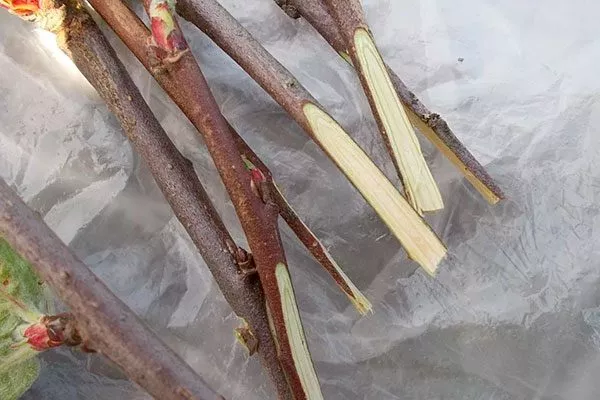
In other words, the rootstock is the base, and the scion is the cultivar. Together, they form a single plant with the desired characteristics.
What types of rootstocks are there and what is the difference between them?
For a deeper understanding of this topic, it's useful to introduce the classification of rootstocks. Each type has its own set of advantages and limitations, which determines its applicability to agricultural enterprises of varying sizes and specializations.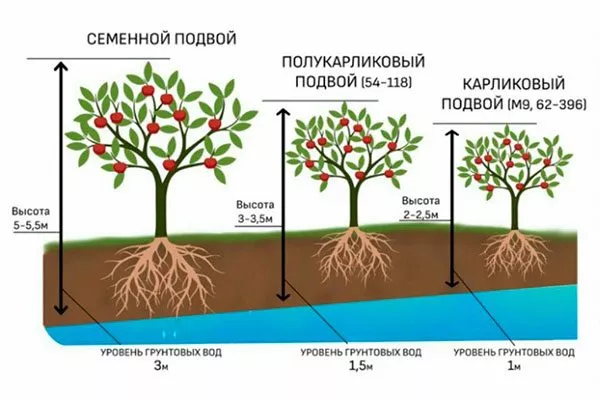
Dwarf
Dwarf trees have a number of characteristics that cause gardeners to disagree about the advisability of growing them. Their advantages include the ability to plant in areas with high groundwater levels, as their root system is shallow.
Apple trees on dwarf rootstocks begin bearing fruit as early as 2-3 years after planting and demonstrate vigorous growth. However, the shallow root system also explains the weaknesses of dwarf trees: they are less resistant to frost, drought, and sudden temperature changes.
The height of trees on dwarf rootstocks rarely exceeds 2.5-3 m, so such plants are well suited for small areas and simplify maintenance.
Semi-dwarf
Semi-dwarf rootstocks occupy a position between dwarf and vigorous trees. They are characterized by a moderate height, good adaptability, and less demanding care. They establish themselves more quickly in new locations, easily combine with different apple varieties, and are suitable for most climate zones.
Semi-dwarf varieties are moderately frost-resistant, produce high yields, and begin bearing fruit around the third to fourth year. Their root system is more developed than that of dwarf varieties, so they tolerate short-term drought better. However, they do not tolerate excess moisture—stagnant water can lead to root rot.
Medium-sized
These rootstocks are similar in size to semi-dwarf varieties, but are more resilient to external conditions and adapt better to climate change. They are easy to grow, have well-developed roots, and provide consistent fruiting, although not as early as dwarf and semi-dwarf varieties—the harvest takes longer to arrive.
These rootstocks produce medium-sized trees that are resistant to drought and many diseases. Many varieties tolerate frost well, especially if the rootstock is chosen correctly for the growing region. They are often used in orchards where a balance between yield, hardiness, and tree size is important.
Types of clonal rootstocks for apple trees
Vegetatively propagated rootstocks, known as clonal rootstocks, are produced not from seeds, but from parts of a mature plant—cuttings. Depending on the vigor of the trees grafted onto them, clonal rootstocks are classified into several categories:
- dwarf;
- semi-dwarf;
- medium-sized;
- vigorous;
- very vigorous.
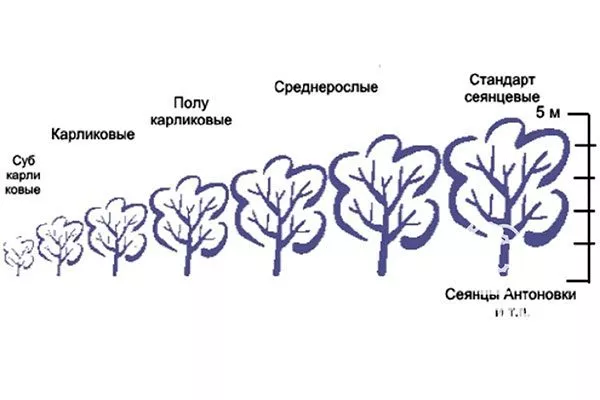
A clonal rootstock is characterized by complete, 100% inheritance of the parent plant's traits. The name "clonal" stems from the fact that each type of such rootstock is a specially selected, genetically uniform clone.
Intercalary or intercalary rootstock
Intercalary rootstock is a method of growing apple trees whereby an intermediate piece—a scion taken from a dwarf rootstock—is inserted between the seedling (a vigorous base) and the scion. This insertion reduces the overall growth of the tree, making it more compact and early fruiting.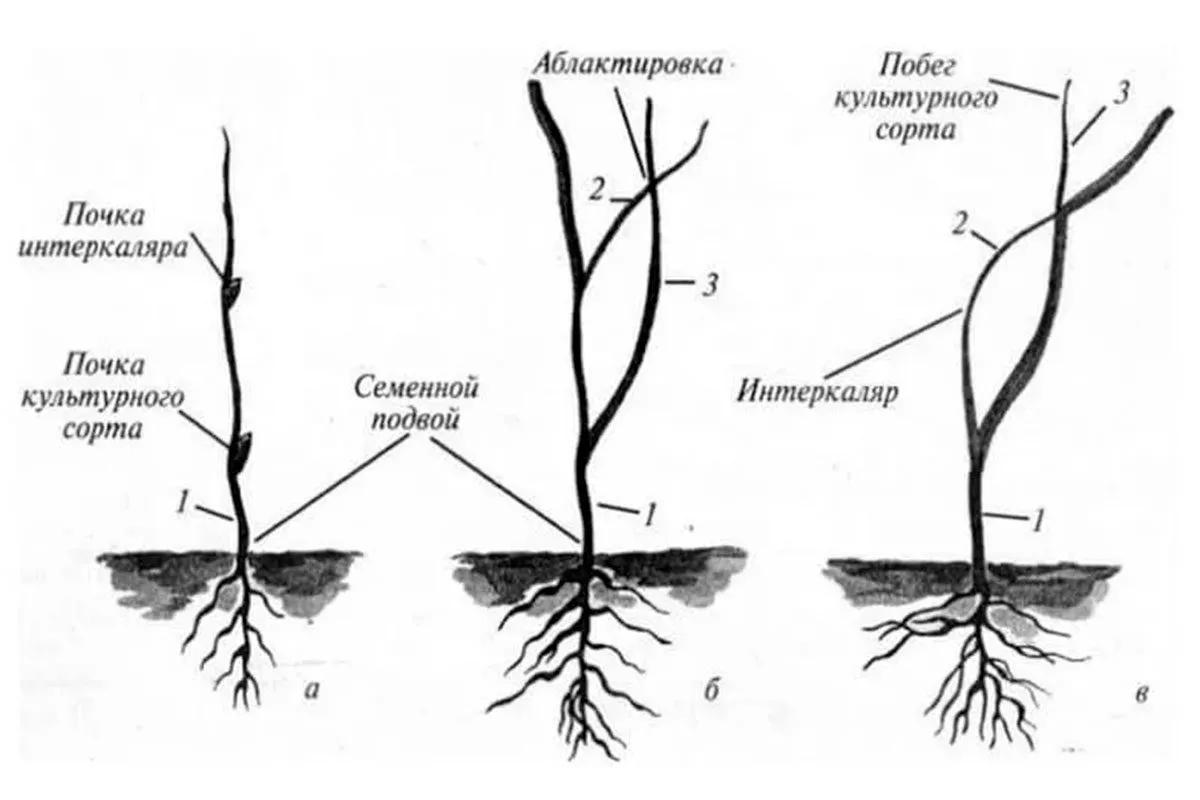
This method produces a plant that combines several characteristics: strong roots from the seed rootstock, compactness and early fruiting from the intercalated rootstock, and varietal qualities from the scion. However, this method has significant limitations.
The main problem is the weakening of the trunk at the insertion point. This makes the tree vulnerable to wind gusts and other mechanical stress. Furthermore, growing an intercalary rootstock requires more time, effort, and care.
Where can I get rootstock for grafting?
There are several ways to obtain rootstock. Follow these recommendations:
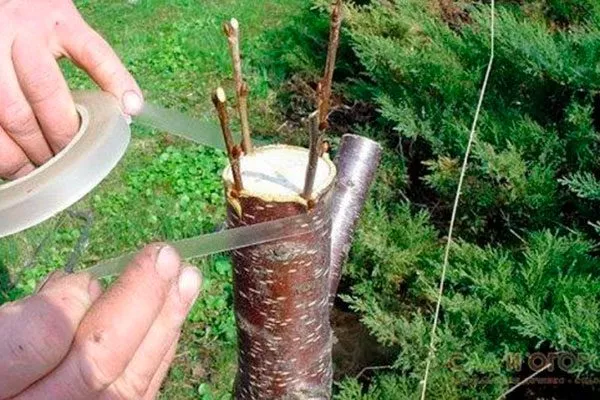
- Use an existing tree in the garden. Let's say you have an apple tree whose fruit you're not happy with, but a neighbor is willing to share a cutting of an excellent variety. This is an excellent option for regrafting.
- Use wild trees as rootstock. They are generally very strong and resilient to adverse conditions, having survived in the wild without any assistance. For example, you can graft cuttings from a cultivar of apple trees onto wild apple trees growing in a meadow.
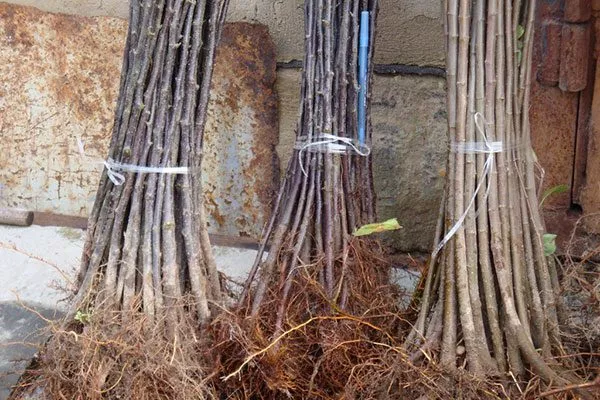
- You can purchase ready-made rootstocks from a specialized nursery. This is probably a more reliable option than using a tree with unknown characteristics that grew from a random seed in a forest or field.
How to grow rootstock yourself?
The easiest way is to purchase a ready-made seedling, plant it, and enjoy the fruits. However, there are quite affordable methods for growing apple tree rootstock yourself. This is not only cost-effective but also allows you to obtain a plant with the desired characteristics.
From seeds
Wild apple seeds are ideal for creating rootstocks, as they possess increased disease resistance and remarkable resilience to all weather conditions, thanks to their natural growth in the wild. Furthermore, they require little special care.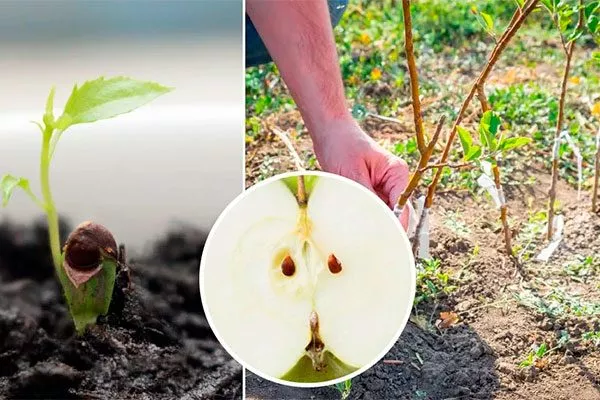
The technology of growing apple trees from seeds includes several stages:
- extraction of seeds from an apple followed by drying;
- mandatory stratification in cold conditions (refrigerator or basement);
- planting in pre-prepared and fertilized soil;
- watering and mulching the area after emergence;
- picking and pinching shoots after several leaves have formed.
Once the seedlings have strengthened, select the strongest ones and plant them at a certain distance from each other, providing them with proper care.
Clonal rootstock from cuttings
Propagating apple trees from cuttings is a multi-step process that involves harvesting the material in the fall, storing it until spring, and rooting it. Follow these guidelines:
- Select a suitable fruiting tree with excellent characteristics for cuttings. The best time to do this is late November or early December.
- Cut shoots from the center of the crown, preferably on the south side, choosing mature branches with no signs of frost damage. The ideal thickness is about 1 cm, and the length should be at least 40 cm. It's important to make the cuts correctly: the top cut should be straight, and the bottom cut should be at an angle just below a bud.
- You can preserve cut shoots until spring by leaving them under the snow. If the winter is light on snow, store the cuttings in the refrigerator or cellar.
- To root, prepare a mixture of equal parts sand and fertile soil. Plant the cuttings in this mixture and cover with a clear bottle to create a greenhouse effect. If you have a greenhouse, you can place the cuttings there directly.
- After rooting, transplant the rootstocks into open ground, where they will spend a couple of years until they reach an age suitable for grafting.
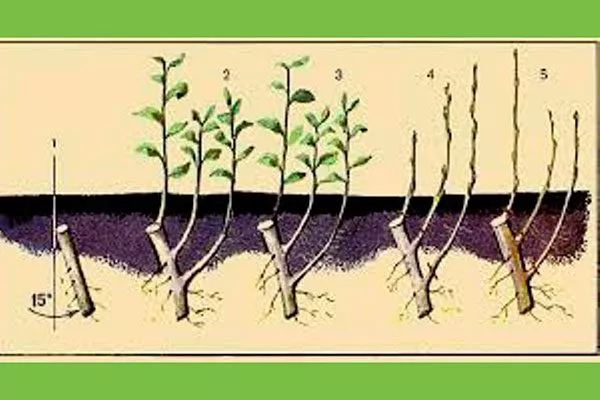
Seedling care includes regular watering during the first few weeks, mulching, loosening the soil, and fertilizing. Some gardeners root the cuttings immediately after cutting them into the ground; in this case, the greenhouse requires additional cover.
Selecting a variety
There are a variety of rootstocks, each with numerous unique qualities and specific characteristics.
Dwarf
Miniature clonal rootstocks are characterized by early fruiting but require proper care. The plants grow compactly. They are classified into five categories based on their growth and development rates.
The most popular are the following:
- M8 – The shortest trees. They have high soil requirements and require support; due to their weak root system, they are poorly anchored in the ground.
- M27 – Super-dwarf plants with a small crown. They have low yields, are characterized by fragile branches, require constant attention, and are most often used in small private gardens.
- D-1071 – The most hardy species, resistant to low temperatures and dry weather, begins to bear fruit in the third year, and is distinguished by high productivity.
Semi-dwarf
Semi-dwarf rootstocks are a happy medium between dwarf and vigorous varieties, combining compactness with relative ease of maintenance. They are larger in size than dwarf rootstocks and less demanding in terms of growing conditions. They root well and are compatible with various apple varieties.
Semi-dwarf varieties are characterized by moderate frost resistance, early fruiting, and high yields. Their extensive root system allows them to tolerate short-term drought, but they are extremely sensitive to excess moisture and stagnant water.
Popular semi-dwarf rootstocks include:
- E-56 and E-63 – Estonian varieties that can withstand temperatures down to -20°C, are robust and resilient, and begin bearing fruit in the fourth year.
- MM-102 – attracts attention with its early maturity, high yield and excellent compatibility.
- M-2, M-3, M-4, M-5 and M-7 – productive rootstocks, but have a low survival rate, which has led to a decrease in their popularity in recent years.
Medium-sized
Practical and easy to use, they have much in common with semi-dwarf varieties, but tolerate climate fluctuations better.
Among the most popular options are:
- MM-104 – It is distinguished by early fruiting and intensive growth, but is inferior to other varieties in terms of yield;
- MM-106 – characterized by high productivity and resistance to low temperatures;
- A-2 – a rootstock with abundant fruiting and a powerful root system;
- M-111 – early-ripening and productive, famous for its good resistance, but sensitive to frost;
- 54-188 – It is distinguished by a strong root system, intensive fruiting and high frost resistance.
Standard vigorous rootstocks
There are several popular varieties of vigorous rootstocks. The most successful are listed below:
- P.18 – Forms vigorous, large trees. Developed in Poland at the Horticultural Institute (Skierniewice), by hybridizing M.4 and Antonovka. Moderate resistance to late blight is noted. Susceptible to bloodworms and moderately susceptible to fire blight. Forms few root suckers.
- Antonovka – Ensures the formation of strong, long-lived, and healthy gardens. It is drought-resistant and adaptable to a variety of soil conditions. The onset of fruiting can vary: for some varieties, it takes 4-6 years, while for others, it can take as little as 2 years.
- M25 – Using this rootstock results in large trees. It is quite common. It was developed in the 1950s as an intermediate between Malling M2 and American Northern Spy.
How to combine apple tree rootstock and scion?
Excellent scion compatibility is observed with the Antonovka, Grushovka, and Borovinka apple tree varieties. However, the least successful choices would be the Ranet Purpurovy or Kitayka varieties.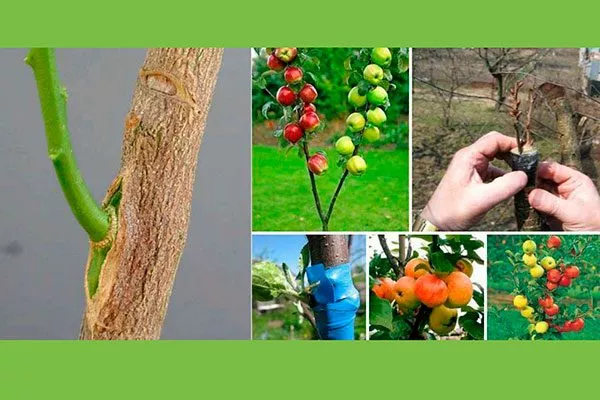
It's especially important to note that the Kitayka rootstock is not suitable for varieties such as Anis and Antonovka. The Barkhatnoye variety and other similar varieties demonstrate good compatibility.
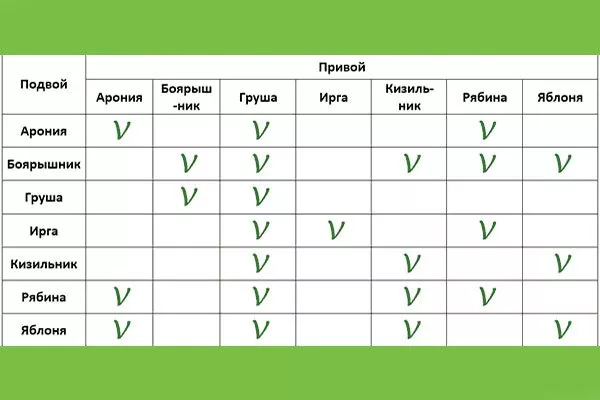
Incompatibility between varieties leads to negative consequences: the tree suffers from a nutrient deficiency, which can ultimately lead to root system death. Apple trees do not do well with hawthorn, serviceberry, and other pome fruits. Such combinations significantly shorten the tree's lifespan.
Non-standard rootstock for apple trees
In horticultural practice, other fruit trees and shrubs are sometimes used as rootstocks. The most suitable are:
- Rowan - It can serve as a rootstock in the absence of more suitable options. However, it should be noted that trees grafted onto rowan trees are short-lived due to incompatibility in growth vigor and trunk thickness.
- Hawthorn - It is sometimes used as a dwarf rootstock for apple trees. It is important to maintain a distance of at least 0.5 m between the graft and the ground. Plants produced this way begin bearing fruit quickly but have a short life cycle.
The use of hawthorn as a rootstock for apple trees is considered inappropriate, except in cases where decorative purposes or scientific interest are pursued. - Irga – Due to its undemanding nature regarding soil and climate conditions, it is considered a possible apple tree rootstock. However, the difference in trunk diameter can negatively impact the development and growth of the grafted plant.
Rules for caring for a grafted apple tree
A grafted apple tree requires careful care, especially in the first few years after planting. Adherence to proper agricultural practices determines the plant's survival, health, fruiting time, and lifespan.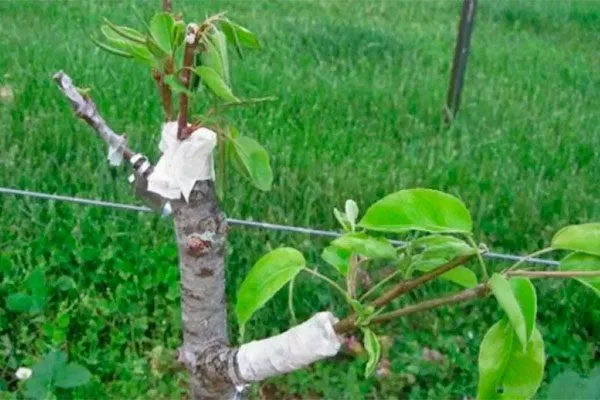
General care recommendations:
- Regularly inspect the grafting site, do not allow it to become damaged, rotted, or overgrown with rootstock shoots.
- Remove all shoots growing below the grafting site - these are wild shoots that weaken the cultivated part of the tree.
- Form the crown from the first year: leave 3-5 strong skeletal branches, remove the rest.
- In the spring, carry out sanitary pruning annually: remove dry, diseased, inward-growing and crossing branches.
- Maintain moderate but regular watering, especially during dry weather and the first 2-3 years after planting.
- Avoid overwatering – standing water at the roots can cause rot and weaken the tree.
- Feed the tree according to the seasons:
- in the spring – nitrogen fertilizers;
- in summer - phosphorus-potassium;
- in autumn – organic matter or ash.
How to determine what rootstock an apple tree is on?
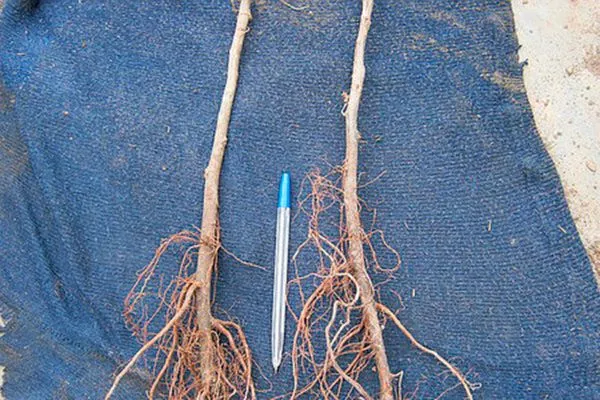
Determining the origin of a rootstock by its shape is a task more suited to professionals than amateurs. However, for gardeners, there's a simpler method: by examining the appearance of the seedling's root system.
A seed rootstock is characterized by a distinct main root from which several large lateral shoots, usually about five, emerge. This root structure provides the tree with high stability and ease of maintenance, as they penetrate deep into the soil.
Unlike seed rootstocks, clonal rootstocks lack a dominant central root. Their root system is fibrous, with numerous fine rootlets located close to the soil surface and covering a large area. This allows apple trees to be grown in areas with high groundwater levels.
How to choose a rootstock?
When choosing a rootstock for fruit trees, it's important to consider a number of key factors. Consider its adaptability to a specific soil type, rooting reliability (the need for support for grafted trees), the prevalence of diseases in the region, and the desired mature tree size.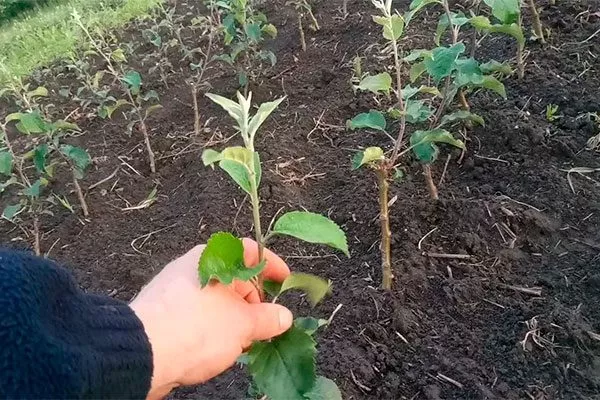
Key Features:
- A rootstock that has proven successful in one climate zone may prove ineffective in another. Of course, the potential yield of the future orchard and the speed at which it begins to bear fruit are also important.
- Rootstocks of the Budagovsky, Geneva and EMLA series are distinguished as excellent options, providing healthy, well-developed trees free from viral diseases.
- Experts consider G.41 to be a particularly successful universal rootstock. Seedlings grown from it transplant well, are resistant to fire blight and bloodworm, and are adaptable to a variety of soil conditions.
- As an alternative, the Antonovka rootstock is recommended for unsupported cultivation. It produces healthy, adaptable trees with a long fruiting period, drought resistance, and undemanding soil conditions.
Rootstocks play a crucial role in shaping the future of an apple tree. Dwarf varieties allow for compact and early-ripening orchards, semi-dwarf varieties balance size and yield, and vigorous varieties ensure vigorous growth and longevity. Each variety has its own advantages and limitations, which are important to consider when choosing.