
Ranetki is a type of apple tree easily recognized by its small, brightly colored fruits that generously cover the tree. All Ranetki are extremely hardy, undemanding, and capable of producing fruit in areas where other apple trees simply cannot survive.
Description of the Ranetka apple tree
Despite the large number of varieties, all apples—their fruits and trees—share some common characteristics. Differences may include tree characteristics, fruit size and shape, and so on.
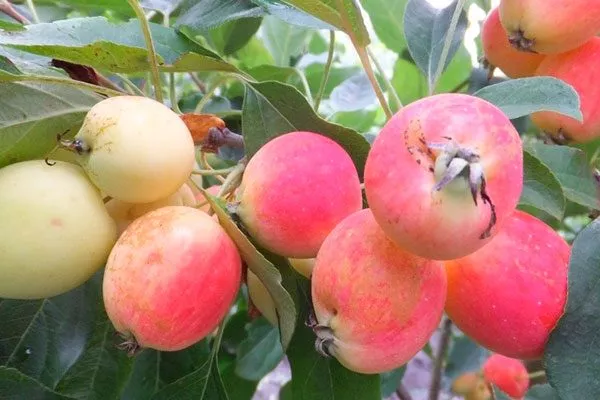
Tree
The crape myrtillus tree has good growth vigor, strong skeletal branches and a tendency to develop a dense crown, so it requires proper shaping.
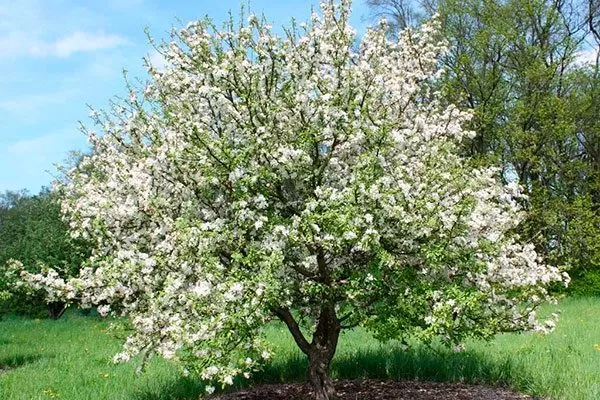
Tree description:
- Trunk - usually smooth.
- Height — up to 5 m.
- Crown - round or pyramidal.
- Branches — brown, smooth. Depending on the variety, they may be drooping or positioned at a right angle to the trunk.
- Leaves — large, oval, dense, and leathery. The base is wide and the tip is tapered. The color is dark green, the surface is smooth, without pubescence.
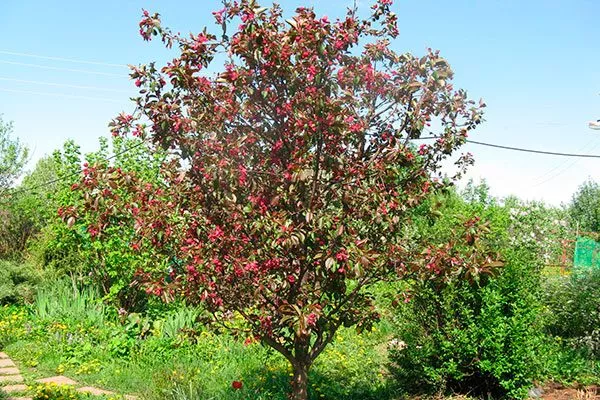
Fruit
The appearance and taste of the fruits of the wild apple may vary depending on the variety.
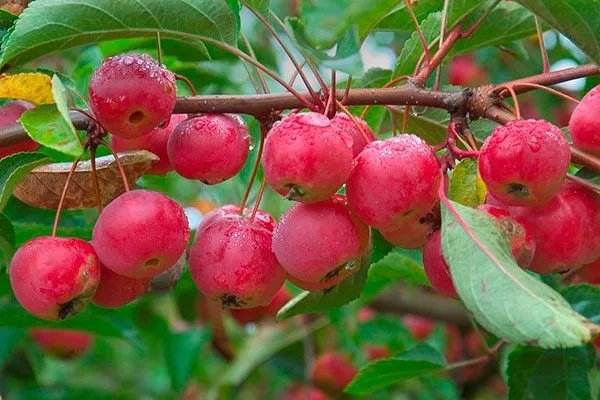
Description of fruits:
- Form - can be round, oval or slightly flattened.
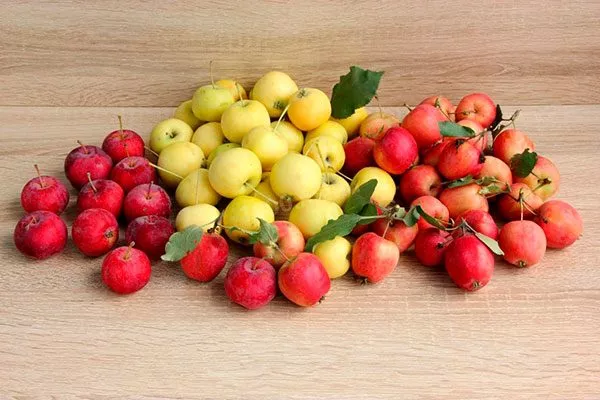
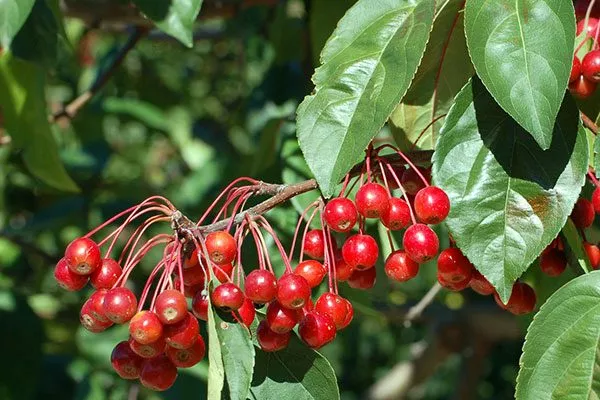
- Coloring — all shades of red. There are varieties with raspberry, carmine, and even yellow apples with a red blush.
- Skin - very dense.
- Pulp - white, sometimes with a pinkish or yellowish tint, there may be “marbled” red streaks.
How to distinguish an apple tree from a wild apple?
The fruits of regular apples differ from those of the wild apple variety primarily in size. All wild apples are small, weighing between 15 and 30 grams, depending on the variety.
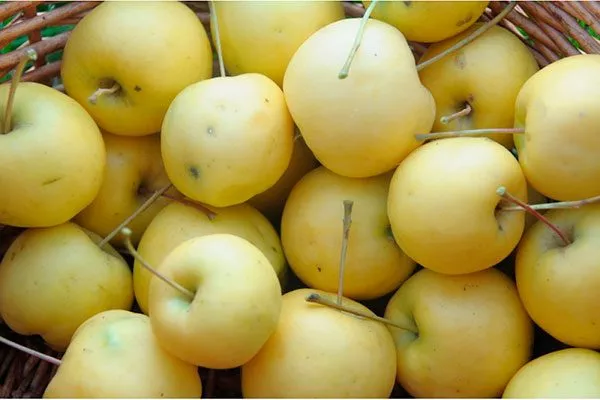
For comparison, the weight of regular apples:
- Small - 100-150 g.
- Medium - 150-220 g.
- Large ones - about 300 g.
When purchasing seedlings, you should also pay attention to the labels. They should indicate the name according to the registry, the variety name, the place of origin, and the seller's contact information. These are the most reliable ways to distinguish apple trees from wild apples; this is extremely difficult to do by external characteristics, and for inexperienced gardeners, practically impossible.
The history of the creation of ranetki
Ranetki apples are not found in the wild. These apple trees are the result of selective breeding and represent the first generation of the original wild species. Ranetki varieties are developed by crossing European varieties with the Siberian berry apple (Sibirka), considered the most winter-hardy in cultivation, or with the plum-leaved apple and its hybrids (Chinese apples).
Crossbreeding common apple trees with winter-hardy varieties began about 150 years ago, when breeders tried to develop apple varieties suitable for growing in Siberia. Today, there are dozens of varieties of crabapple that can bear fruit in the harshest conditions.
Ranetki apple varieties
In Russia, the wild apple variety is predominantly domestically bred. More than a hundred of these varieties have been developed. However, imported wild apple varieties are also popular in our country, such as the Dolgo variety, bred in the USA.
Dobrynya
This apple variety was bred at the Krasnoyarsk Experimental Station. It was added to the State Register in 1959. It is recommended for use in the Krasnoyarsk Krai, Tuva, Khakassia, Buryatia, and the Chita and Irkutsk regions.
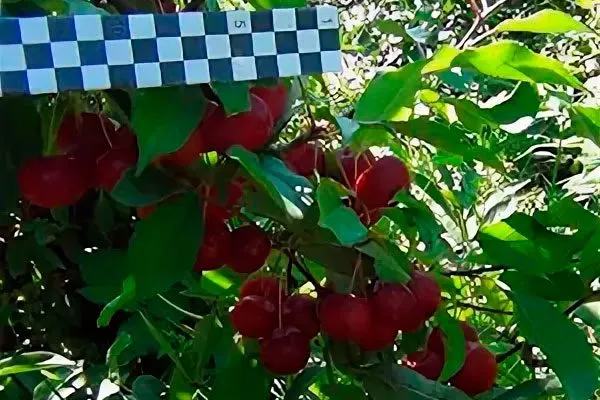
It is a vigorous tree, reaching a height of 2.5-3 m. The fruits are relatively large - 12-14 g each, flat-ribbed, dark purple, with greenish flesh.
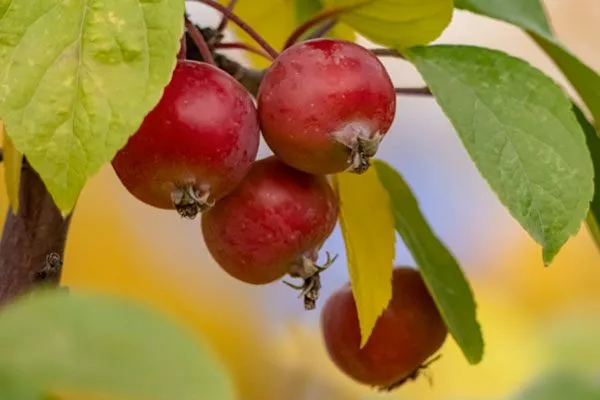
It begins bearing fruit in the fourth year after planting. The average yield is 30-50 kg per tree. The fruits ripen in early September and are stored until February.
The variety is moderately drought-resistant and virtually immune to scab. The fruits can be frozen and retain their excellent flavor after thawing.
For a long time
This is an autumn, small-fruited variety from the crab (ranetka) group, developed by American breeders. It has a medium-sized tree with a broad, rounded crown, reaching a height of 4-5 m. The fruits are small, weighing 11-15 g, and oval-conical in shape. The base color is yellow, with a red covering.
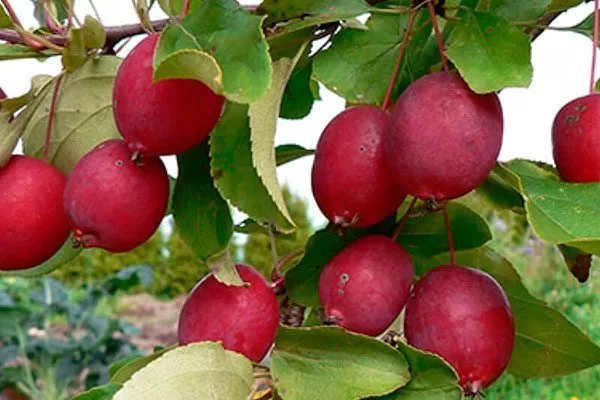
The fruits ripen in early September and can be stored for about a month. The downside is that the pulp tends to soften during storage and fruiting is irregular. This variety is used for industrial purposes. Its fruits are used to make cider, jam, desserts, and other items. The tree begins bearing fruit in its fourth year.
Laletino
This autumn variety was bred in Krasnoyarsk. It produces orange-red fruits with a harmonious combination of tart, sweet, and tart notes. It's ideal for making jam. Harvest occurs in the first ten days of September. The fruits do not fall off the tree.
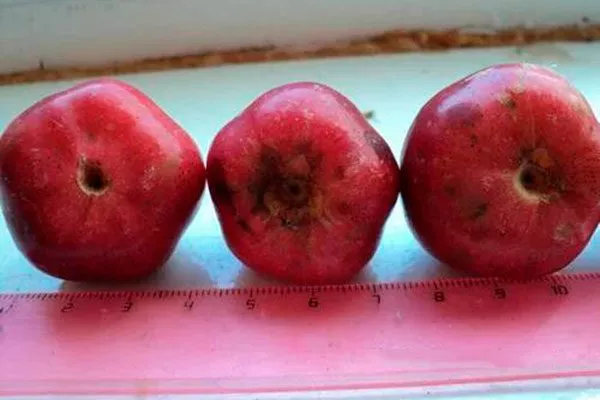
This semi-dwarf variety is suitable for small gardens. Yields range from 4 to 18 kg per tree (depending on its age). However, it does have a drawback: low scab resistance. Recommended pollinators: 'Purple Ranetka,' 'Kopylova Raika,' and 'Kashchenko Bagryanka.'
Purple crabapple
An ancient variety whose origin is unknown. The purple crabapple was first described in 1868. It was brought to Siberia from China in 1900. It was included in the State Register in 1947. It is recommended for cultivation in the West Siberian, East Siberian, and Far Eastern regions.
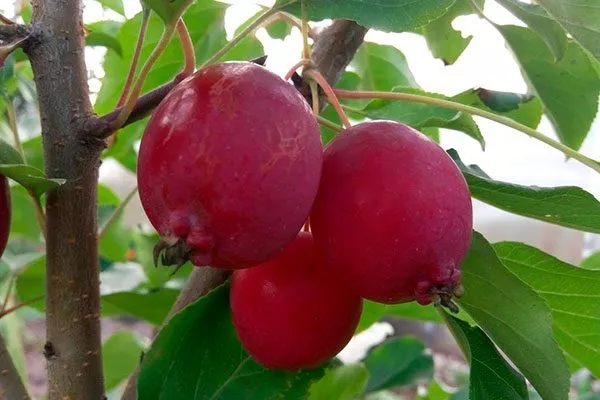
The tree is vigorous, reaching a height of 7-8 m. It has a broadly oval crown and strong skeletal branches. Fruiting begins in the third year. The fruits are dark red, weighing 8-10 g, and the flesh is yellow with red veins, tart and sour.
Ranetka Canned
This variety was bred at the Krasnoyarsk Experimental Fruit Growing Station from an unknown seedling. This wild apple is a medium-sized tree with a pyramidal, open crown. The fruits are yellow with a purple blotch, diffused over the entire surface. Each apple weighs 7-10 g.
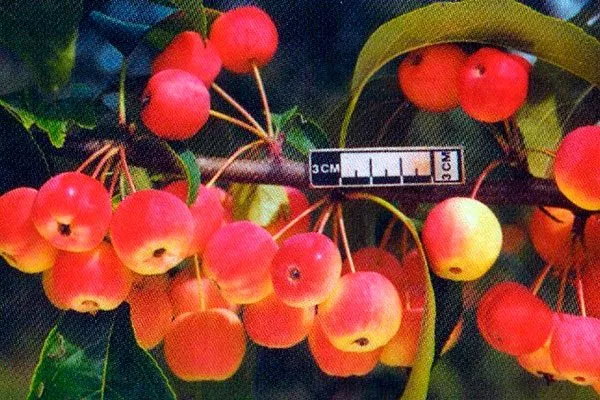
The fruits reach harvest maturity in September and can be stored until mid-February. Fruiting begins in the second or third year after planting. Yields range from 15 to 55 kg per tree (depending on age). The fruit has a mediocre flavor and is used for processing (compotes, preserves, and marmalades). A drawback is its susceptibility to scab.
Ranetka Ermolaeva
This variety was developed by amateur gardener P.S. Ermolaev in 1937 in Minusinsk. Ermolaev's Ranetka was created by crossing the Purple Ranetka and the Summer Arkad. It is zoned for the West Siberian and East Siberian regions. Once widespread in Siberia, it is now rare.
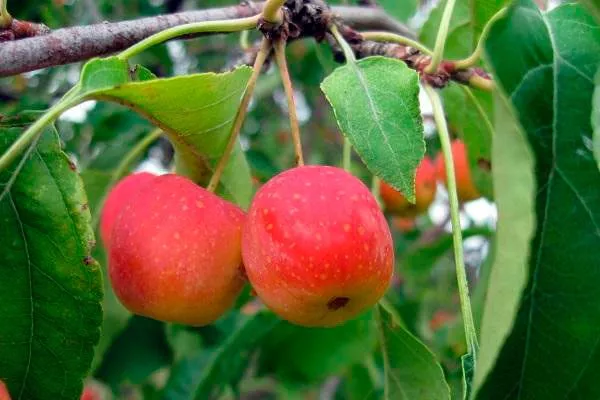
The Ermolaev apple tree is medium-sized, producing round-oval, yellow fruits with a dark red blotch. Each apple weighs 10-12 grams. The flesh is white, sweet and sour, with red veins. The fruits ripen in late August and have a shelf life of up to 20 days. The variety is drought-resistant and susceptible to scab.
Tuvan
This variety was developed at the Minusinsk fruit and berry experimental field in 1934. It was created by crossing the Siberian berry apple with the Borovinka apple. This wild apple tree is vigorous, with a broadly pyramidal crown, and its fruits are flat-round, yellow with a red blush. Each apple weighs 8-12 g. The flesh is creamy, sweet and sour.
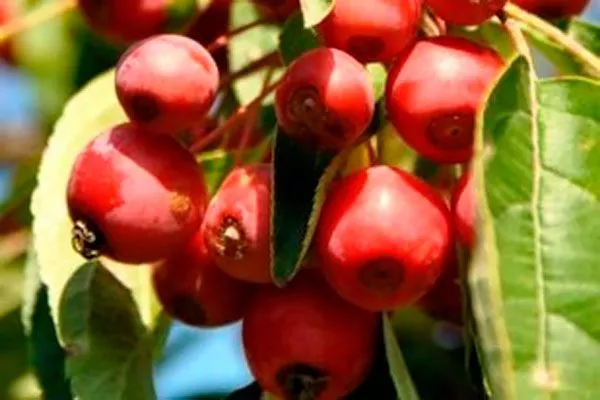
Ripening occurs in mid-August. Yields range from 13 to 30 kg per tree. This variety is used for industrial purposes and is used for processing. Tuvinka begins bearing fruit in the second or third year after planting.
Characteristics
Ranetki apples can grow in virtually all climate zones. However, they are primarily grown in areas where regular apples don't grow. The only areas that aren't suitable for them are the far north.
Wild apples grow and bear fruit successfully in the Urals, Krasnoyarsk Krai, Altai, the Far East, and other regions with harsh winters.
Growing conditions
It's no coincidence that crab apples are called "apples for lazy gardeners." They're an extremely easy-to-grow crop, requiring no special conditions or care.
Wild apples grow and bear fruit well in soils of any acidity. However, the optimal soil pH is considered to be between 5.5 and 6.0.
Productivity
This figure depends on the variety and varies widely. There are apple trees that produce 80-100 kg of apples per tree, but there are also varieties whose yields don't exceed 10-15 kg. The key is that frosts, no matter how severe, don't affect fruiting or harvest volume.
Tasting evaluation
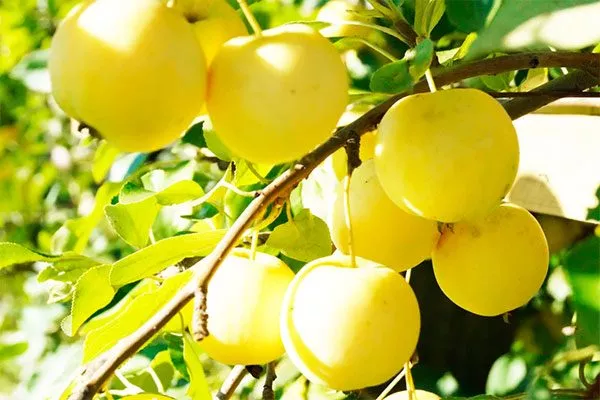
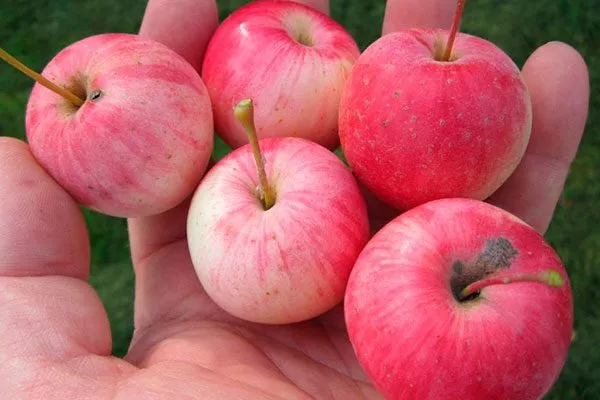
Depending on the variety and tasters, the tasting score for ranetki apples ranges from 3.7 to 4 points out of a possible 5. These apples have a tart, sour flavor. Lightly frost-bitten fruits become tastier and sweeter.
Winter hardiness
Thanks to their kinship with super-hardy apple trees, ranetki can easily survive almost any frost, regardless of its severity or duration. The ranetki's ancestors, in particular, can withstand temperatures as low as -50°C.
Disease resistance
Not only are crab apples very frost-hardy, but they also have strong immunity to various diseases. However, to ensure a good harvest and a healthy tree, certain preventative care is necessary, such as spraying with urea (a solution of this fertilizer repels pests), Bordeaux mixture, and so on.
Lifespan of a tree
Ranetki apples can bear fruit for quite a long time. With proper care and optimal climate conditions, they produce a good harvest for 10-15 years. Moreover, the quality of the apples, their taste, and other characteristics remain unchanged throughout their lifespan.
Pollinator varieties
Ranetki are generally considered partially self-fertile. However, each variety has its own nuances—pollinators are selected based on flowering time, as cross-pollination must occur.
The presence of pollinating varieties increases the yield of wild apples by 50-75%. Examples of varieties that can be used as pollinators include Ranetka Purpurovaya, Tayozhnoye, Kitayka Orange, Ranetka Buraya, and others.
Pros and cons
Each variety of wild apple has its own characteristics, advantages, and disadvantages. However, there are qualities that all wild apples share. When planting these trees in your garden, it's important to familiarize yourself with all their pros and cons beforehand.
Small fruits aren't even a drawback, but a characteristic feature of the cultivar. These small fruits are the tradeoff for their high frost resistance, which other apple trees lack.
Landing
Although crab apples are easy to grow, they require special attention when planting. It's important to select high-quality planting material and plant it correctly; this will determine the tree's entire lifespan, its productivity, and its health.
Selection and preparation of seedlings
It's recommended to purchase wild apple seedlings from a local specialist nursery. They grow and graft trees adapted to the local climate.
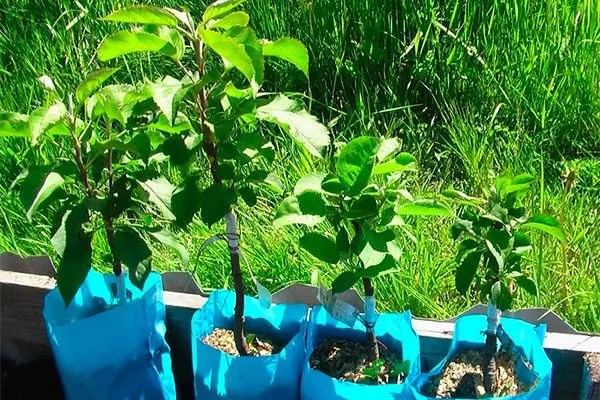
Signs of a good seedling:
- The optimal age is two years. These seedlings take root better and faster. Two-year-old crab apples should have two or three lateral shoots positioned at a 45° or 90° angle to the trunk.
- The height of the seedling is up to 1.5 m.
- The bark on the trunk is smooth, free of scratches, growths, and damage. If you scratch the bark with your fingernail, it turns green.
- The roots are flexible, free of dry or rotten areas. Length: 40 cm. If you pull on the shoot, it stretches but does not break.
- Seedlings with an open root system have no leaves.
Before planting, seedlings must be properly prepared. This will help them take root and adapt to their new location more quickly.
Features of preparing wild apple seedlings for planting:
- The roots are carefully examined. If rotten or dry shoots are found, they are trimmed back to healthy tissue.
- Before planting, the roots of the seedling are placed in water or a growth stimulator solution for 12 hours.
- If the above-ground part is too large and the roots seem underdeveloped, it is necessary to shorten the branches a little.
The most important thing about a seedling is its roots. It's best to choose trees with a small above-ground portion and long, well-developed roots.
Selecting a site
Despite the crab apple's undemanding nature, like any other garden tree, a suitable location is needed. The closer the location meets optimal growing conditions, the higher the yield will be.
How to choose a site:
- Lighting. The best planting location is a southeast, south, or southwest exposure. Shade is acceptable, but it may negatively impact fruit production. Early-ripening varieties are best planted in the shade, allowing them to ripen before daylight hours become too short.
- Wind protection. It's best to keep the site free of drafts and gusty winds. If there's no artificial windbreak—a building or a solid fence—you can plant a shelterbelt of linden, birch, or spruce trees on the leeward side.
- Ground water. The maximum permissible height is 1.5-2 m. A higher height will lead to root rot and subsequent death of the tree.
- Distance to buildings. It should be at least 2-3 meters. Otherwise, the roots will damage the foundation, and the shade from walls and fences will hinder tree growth. Also, there should be at least 3 meters of clearance for gas pipelines, cables, various pipes, and underground utilities.
- Priming. Wild apples grow well in sod-carbonate, sod-weakly podzolic, and light loamy soils. However, they grow best in loam. They also produce well in chernozem and even sandy soils (but these require the addition of humus and superphosphate).
Site preparation
The site is prepared in the fall: it is cleared of weeds, dug, fertilized, and components are added that help improve the quality of the soil—its acidity and/or structure.
Features of preparing a site for planting crab apples:
- When digging, use a shovel blade to remove the rhizomes of perennial plants from the soil.
- Organic matter, such as humus or compost, is added during digging. The optimal dosage is 6-10 kg per square meter. Mineral fertilizers, such as superphosphate (40-50 g per square meter), can also be added.
- If the soil is acidic, add wood ash (50 ml per square meter). River sand (10 kg per square meter) is added to clay soils, and clay (in the same amount) is added to sandy soils.
Preparing the planting hole
It is better to prepare the hole for autumn planting in the fall - the soil will settle over the winter, and the applied fertilizers will dissolve and be better absorbed by the seedlings.
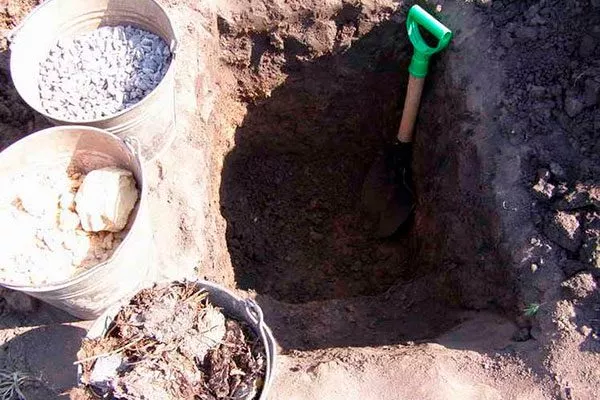
Features of preparing a planting hole for planting wild apples:
- The size of the hole depends on the size of the root system and the soil composition. If the soil is heavy, clayey, or rocky, the hole should be at least 1 m in diameter and 0.5 m deep. In normal soils, the holes are deeper—0.8-1 m.
- If several seedlings are being planted, space them at intervals of 3-4 meters. The distance depends on the height of the trees; the taller they are, the greater the gaps between them.
- When digging a hole, set aside the top 30 cm of soil—it will be needed to prepare the potting mix. To prepare it, add 20-30 liters of humus or compost, 500 g of double superphosphate, 150 g of potassium sulfate, and 1 kg of wood ash. For clay soils, add an additional 10 kg of sand, and for sandy soils, add the same amount of peat.
- A 15-cm-thick drainage layer is placed at the bottom of the hole. This can be pebbles, crushed rock, or broken brick. Drainage is especially important in clay soils and areas with a high groundwater level. A support is driven into the center of the hole to support the seedling, and the soil mixture is added.
After this, the hole is left to settle. If the seedling is planted immediately, its root collar will eventually sink downward as the soil gradually settles.
Planting dates
The crab apples are planted in the spring, before the buds open, or in the fall, after the leaves have fallen, at least a month before the onset of frost.
The planting time depends largely on the climate. If winter arrives too early, it's best to plant apple trees in the spring. In temperate climates and in the south, planting occurs in the fall, from the first half of October to the beginning of November, respectively.
Planting a seedling
Sun and strong winds have a negative impact on young seedlings. It is recommended to plant them in cloudy, windless weather to minimize transplant stress.
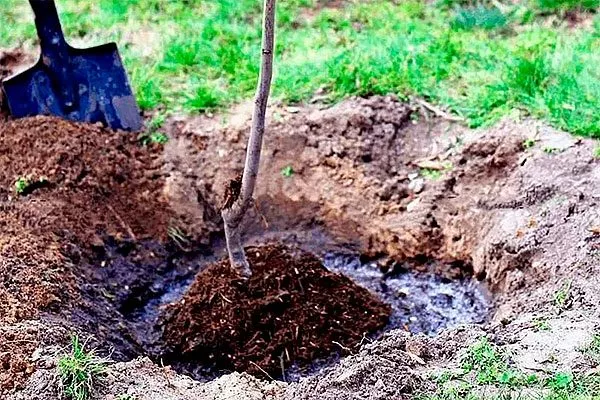
Features of planting a seedling:
- The roots are placed at the top of the mound and carefully spread out. They should not bend upward or to the sides.
- The seedling is positioned so that the support faces south, protecting it from the bright sun. The roots are covered with soil and compacted periodically to eliminate any air pockets.
- After planting, the root collar should be level with the ground; in loose soils, it should be slightly higher—2-3 cm above the ground surface—as light soils allow for additional settling. As the soil settles, add soil periodically.
- The seedling is tied to the support in two or three places with soft twine or bandage. Wire is strictly prohibited, as it will damage the tender bark of the young tree.
- A shallow furrow (about 10 cm) is dug around the perimeter of the planting hole for watering. Small edges are raised on the outside to prevent water from spreading.
- After planting, water the seedling immediately with warm, settled water. Water in 2-3 increments. Apply approximately 30 liters of water—this will ensure more even soil settlement.
- Once the water has been absorbed, the tree trunk area is mulched with compost or peat. The mulch thickness is 6-8 cm.
Care
Ranetki apple trees require minimal care; it seems they could easily survive without it, so hardy are these apple trees. However, to obtain a high-quality and abundant harvest, it's essential to take care of the trees—like other apple trees, they require watering, fertilizing, and everything else necessary for healthy growth and fruiting.
Watering
Not all crabapple trees tolerate drought equally well, so it's important to water the trees regularly. This is based on the weather and soil conditions. If the summer is wet and rainy, young apple trees should be watered at least once a week. The recommended watering rate is 40 liters per mature tree; during dry periods, 50-60 liters.
Water needs are especially high during certain periods: before bud break, three weeks after flowering, a month before harvest, and during leaf fall. When it's time to pick apples, don't water the tree—the apples will crack and won't store well.
Top dressing
Fertilize crab apples three or four times per season, starting three years after planting. Apply a complex fertilizer in early summer, and potassium and phosphorus fertilizers in mid-summer.
Approximate feeding regime:
- End of April — humus (30 kg) and urea (300 g).
- Before flowering — a solution of potassium sulfate (15 g) and superphosphate (50 g).
- At the stage of fruit formation — a solution of potassium humate (30 g) and nitrophoska (30 g).
- After picking the fruits - superphosphate (25-50 g) and potassium sulfate (15 g).
Shelter for the winter
In principle, crab apples can grow without cover, as they can withstand very severe frosts. However, covering them helps increase the tree's stability and preserve its strength. Therefore, it is recommended to insulate young apple trees for the winter.
Wrapping the tree's trunk with rags and spruce branches not only protects it from frost but also from rodents. Mulching the area around the tree's trunk with peat or humus is also recommended. A deep snow cover can also provide natural protection.
Pest and disease control
Wild apples have a strong immune system, but not all varieties are resistant to fungal diseases. Preventative treatments are necessary for protection, especially during damp summers. In spring and fall, treat the tree with copper sulfate, Bordeaux mixture, and fungicides such as Skor, Horus, Strobi, etc.
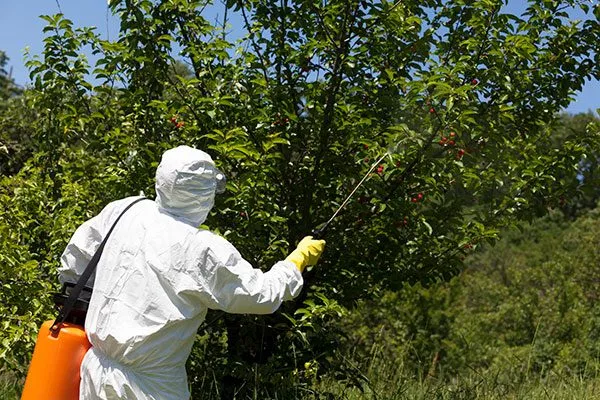
Wild apples can be attacked by mites, caterpillars, and other insect pests. To combat them, use biological products such as Fitoverm, Aktofit, Bitoksibacillin, and others. Chemical pesticides such as Fufanon, Karbofos, and Intavir are also used. Trees are treated before and after flowering, and again a month later to kill codling moths.
Harvesting and storage
Apples are usually harvested in late summer or early September. Harvesting occurs during dry weather.
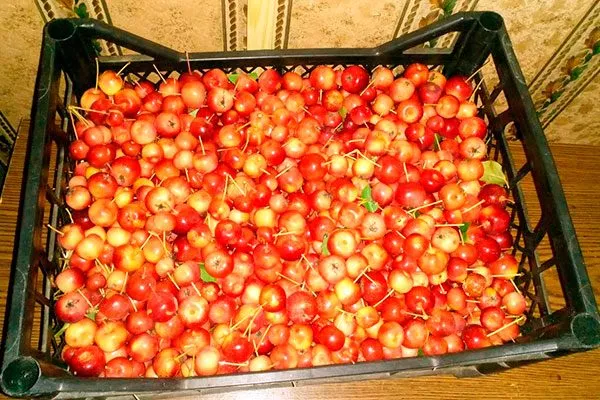
Late (winter) varieties of wild apples are recommended for storage. They are placed in wooden boxes and stored at 0 to +2°C. Wild apples can also be frozen whole.
Reviews
Ranetki apples were developed specifically for Siberia, the Urals, and other regions with harsh climates. Thanks to them, local gardeners can successfully grow apples that, while small, are perfectly edible. However, Ranetki apples can also be grown in other regions. Moreover, these apple trees are very decorative and will easily become a highlight of any garden.