
Growing plants with minimal intervention in natural processes is called organic farming. It's used for a wide variety of crops, including vegetables, fruits, and grains. We'll explain how to grow apples without chemicals or mineral fertilizers, and which varieties are best suited for this.
Principles and goals of organic gardening
Organic farming involves growing plants without disturbing the balance of natural ecosystems. This cultivation method can be applied to any crop, including fruit trees.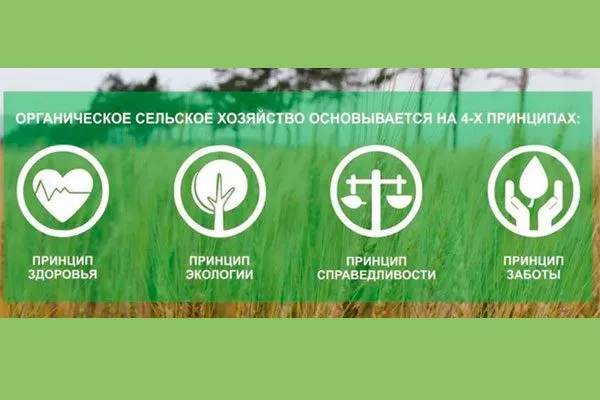
Principles of organic growing:
- Refusal of deep plowing of the land. This prevents the death of beneficial microorganisms, the destruction of the natural structure of the soil, earthworm burrows and plant roots that create the soil “architecture”.
- Refusal to use industrial fertilizers, chemical insecticides, pesticides, any synthetic compounds.
- Use of varieties resistant to diseases and pests, possessing certain genetic properties and suitable for organic cultivation.
- Application of crop rotation, which helps prevent the proliferation and accumulation of pathogens in the soil. For example, after apple harvesting, it is recommended to sow legumes in the tree trunks, which enrich the soil with nitrogen, or plants that suppress the growth of harmful microorganisms.
- Use of organic matter — manure and agricultural waste. Maintaining natural soil fertility with natural fertilizers.
- Mulching the soilProtect it from drying out, temperature changes and weed growth using peat, humus, sawdust and pine needles.
- Introducing biodiversity into the garden - maintaining plant diversity, which contributes to the creation of a sustainable ecosystem.
- Attracting beneficial insects to the garden - pollinating insects and natural enemies of pests.
- Integrated crop protection — combating diseases and pests with the help of agricultural practices, safe biological preparations and natural enemies of pests.
Organic farming eliminates the barbaric treatment of natural resources that is often found in conventional farming—soil is depleted, beneficial microflora is killed, beneficial insects perish, etc.
Pros and cons
Before embarking on an organic apple orchard, it's worth weighing the pros and cons again. This option may prove too complex to guarantee apple production.
Organic apple growing is more suitable for smaller farms, and the transition to this method requires some preparation, including learning its principles and the sequence of steps.
The main stages of organic apple growing
To ensure that apple trees grown without chemicals thrive and produce good harvests, proper planting is essential. At this stage, organic fertilizers are added, the quality and quantity of which largely determine the tree's future life, health, and fruiting potential.
Selecting a site
It's important that not only the plot itself, but the surrounding area as a whole, meets organic farming standards. If the area is regularly polluted by industrial waste, the groundwater is contaminated with toxins, or there's a highway nearby that produces exhaust fumes, then there's little point in organic farming—the fruits will still accumulate toxic substances.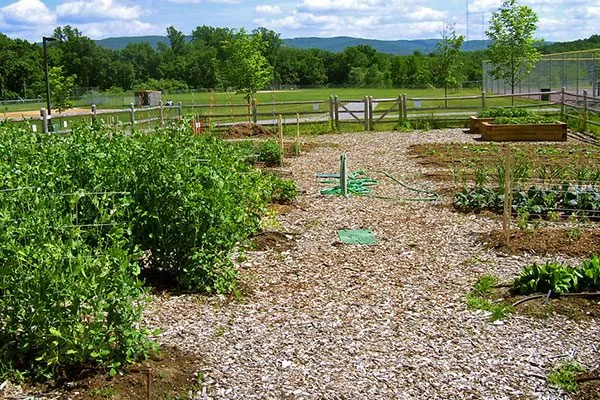
To choose a site suitable for eco-farming, consider the following points:
- The presence of hazardous industries, landfills, burial grounds, cemeteries, livestock farms, etc. nearby.
- Find out how the site was previously used, and whether chemical fertilizers and pesticides were used. If so, at least 3-4 years must have passed since the chemicals were used.
- Note the direction of the prevailing winds and correlate them with the potential for pollutant transport.
If the site meets eco-farming standards, then consider as many natural factors as possible to promote the successful growth and development of the apple orchard. It's important to maximize the use of the terrain, the presence of trees, buildings, etc.
How to choose a site:
- To prevent the blowing winds from causing harm, there must be protection in the form of a wall, a hill, tall trees, etc.
- On plains, completely flat areas should be avoided; raised areas with a slight slope (5-15°) are more suitable, ensuring water runoff during heavy rains and prolonged rains.
- The best location for an organic garden is a small southern, western, or southwestern slope. Northern and northwestern slopes are colder, and the soil there takes longer to warm up (several weeks), which delays tree growth and development.
In the south, where heat and watering are a challenge, north-facing slopes may be preferable. They warm up more slowly but retain moisture better in the summer. - It is strictly forbidden to plant a garden in salt marshes and swampy areas.
- The groundwater level should not exceed 2.5 m from the ground surface.
Soil preparation
The soils in which an organic apple orchard will grow must be loose and fertile, with good water and air permeability. Apple trees grow well in gray forest soils, sod-podzolic soils, chestnut soils, and chernozem soils.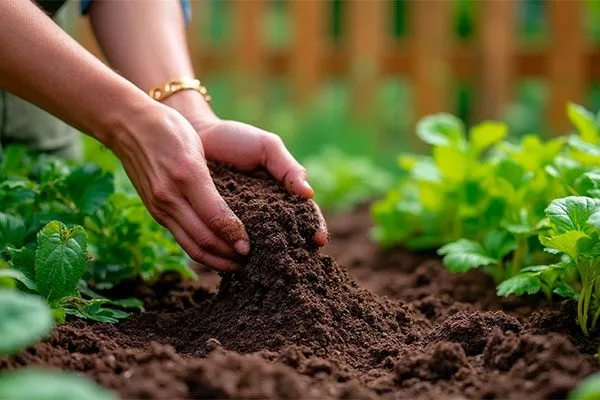
Alkaline and saline soils are absolutely unsuitable for apple orchards. Soils with dense clay horizons located at a depth of 40-90 cm are also unsuitable for apple trees.
When growing organically, it's important to properly prepare the soil on the plot. A soil analysis is necessary beforehand, followed by determining the appropriate fertilizer composition and providing drainage if necessary.
Optimal soil characteristics for growing apple trees:
- acid reaction - pH 5.5-7.0;
- thickness of the fertile layer - from 60 cm;
- humus content - 2-4%;
- filtration coefficient - from 10 to 30 mm per day.
Throughout their life, apple trees in an organic orchard will not receive mineral fertilizers; they will have to draw their nutrients from the soil. Therefore, it's important that the plot and planting holes are rich in organic matter.
How to properly prepare the soil:
- If the site has heavy clay soil, sand should be added, as it doesn't allow water and air to pass through well, which can lead to root rot. Sand will make the soil looser and more permeable to water and air.
- In very light, sandy soils, add compost or manure. Nutrients leach out of such soils too quickly, so it's best to add them directly to the planting holes. It's also beneficial to plant green manure in sandy soils. These can be sown throughout the season.
Preparing the planting hole
About a month to a month and a half before planting, prepare the holes. During this time, the soil should settle. For fall plantings, prepare the holes around September; for spring plantings, it's more convenient to prepare the planting sites in the fall. The planting hole should be 60-70 cm deep and about 80 cm wide.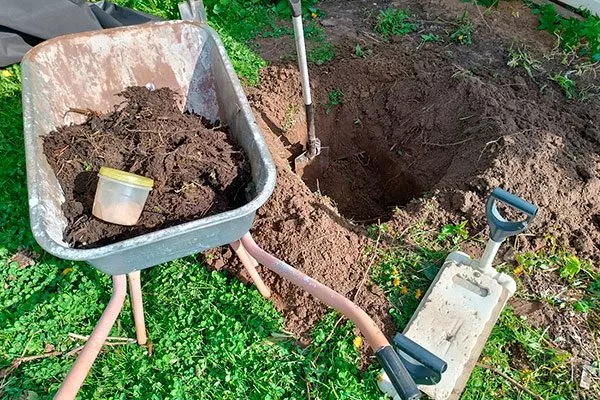
The following is added to the planting holes:
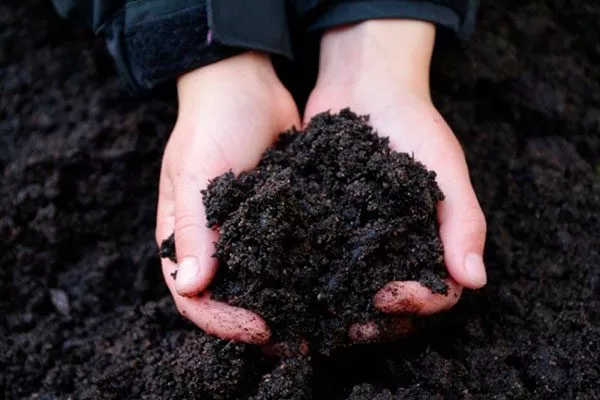
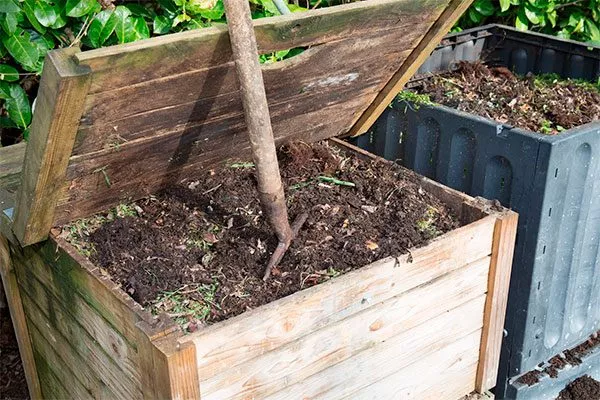
- Humus. It enriches the soil with nutrients for many years to come, rather than just a few years like mineral fertilizers. Apply 20-30 liters of compost per hole, spreading it evenly around the tree. Be sure not to cover the root collar, as this can cause rot.

Humus can be applied in its pure form, but manure should only be diluted, as it can encourage excessive shoot growth, detrimental to yield. Adding fresh manure also promotes the development of fungal infections and can cause root burn. - Compost. It enriches the root zone with nutrients and creates a lumpy soil structure—this is crucial for maintaining favorable air and temperature conditions. Typically, 8-10 kg of unrotted compost is added to each hole. Overrotted material should not be added, as it releases ammonia and hydrogen sulfide, which poison the tree's roots.
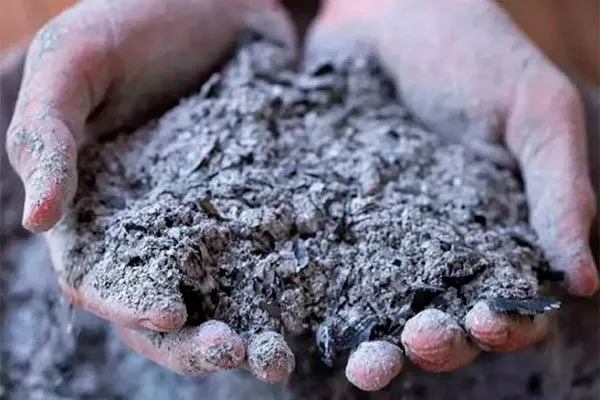
- Wood ash. It enriches the soil with potassium and other easily digestible minerals. Furthermore, ash reduces acidity, so it should only be applied to acidic soils; it's not suitable for alkaline soils. It's also not recommended to apply ash to saline soils or use it in combination with lime.
To improve drainage (removing excess water), you can add coarse sand or perlite to the organic soil mixture used to fill the hole. However, it's best to avoid using crushed stone, as it can retain water without providing adequate drainage.
When growing apple trees traditionally, it's recommended to place poisons against mice and other rodents around the edges of the hole. Organic cultivation is against such control methods. It's recommended to use folk remedies or deterrents, such as electronic and ultrasonic repellents, as well as mechanical traps.
Landing
Planting is done as with regular cultivation—in spring or fall. Seedlings with closed root systems can also be planted in summer.
Recommended timeframe:
- In the spring Apple trees are planted primarily in the central and northern regions. Planting occurs between late April and mid-May. In the southern regions of the country, apple trees are planted much earlier—from early to late March.
- In the fall Apple trees are planted primarily in the south, as regions with harsh winters make it more difficult for seedlings to survive their first winter, which begins just a month after planting. In the central part of the country, apple trees are planted from early September to mid-October, and in the southern regions, until early November.
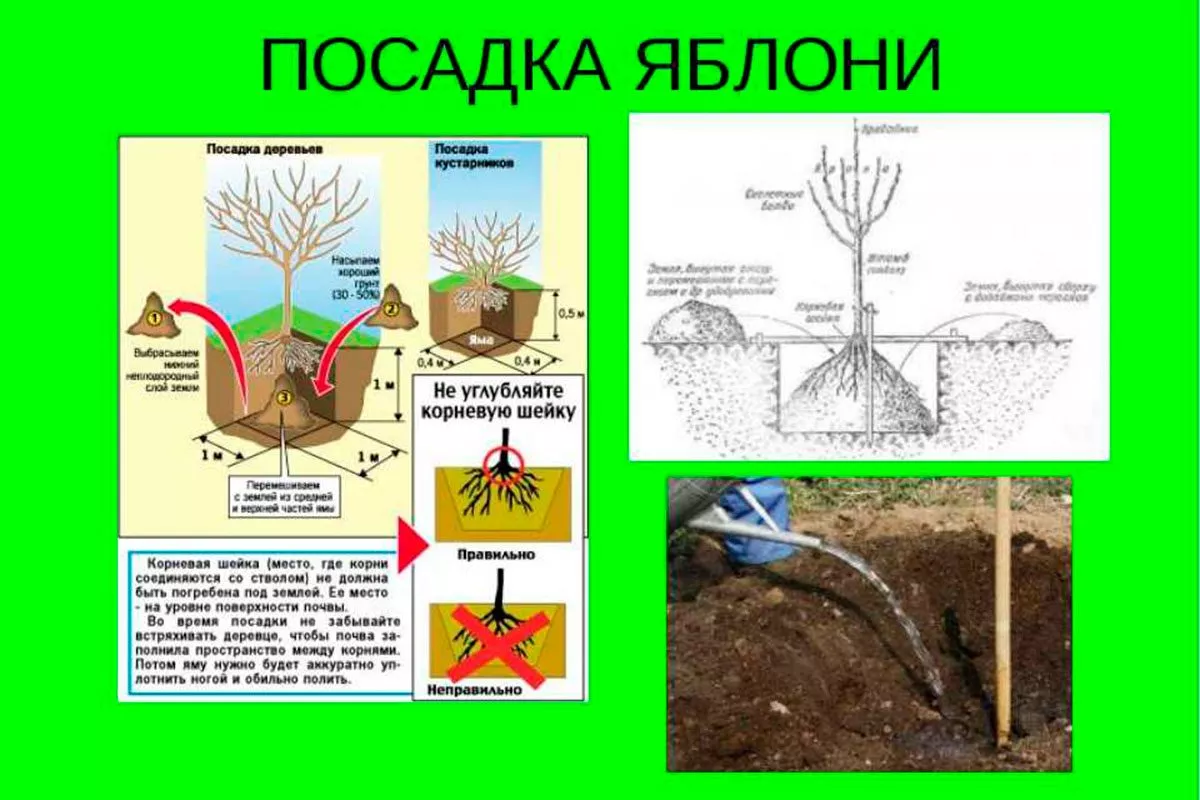
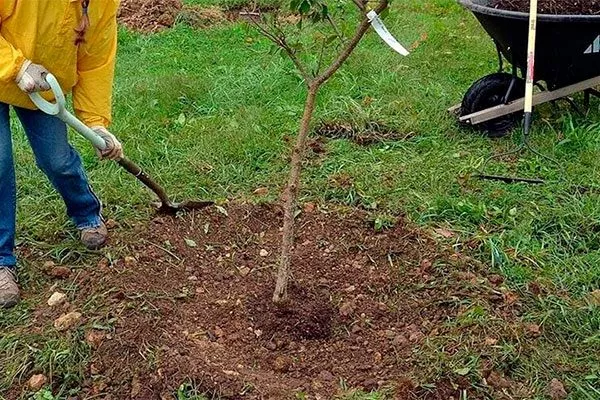
The seedling is planted using the standard technique: it is placed on a mound formed from an organic soil mixture, which is then filled into the planting hole. After planting, the root collar should be 3–5 cm above ground level; it will settle slightly further after the soil settles. The seedling is tied to the support, watered, and the area around the trunk is mulched with peat, compost, or grass clippings.
Protective plantings
Protective plantings or shelterbelts prevent the impact of winds, weeds and pests on fruit trees.
Types of protective plantings for apple trees in large-scale organic cultivation:
- Windbreak lines. They are located along the boundaries of the garden quarters and consist of 1-2 rows.
- Forest edgesThey are placed along the outer boundaries of the garden. They consist of 3-5 rows of tall trees. Shrubs are placed in the lower tier.
- Special plantingsThey are placed along roadsides. They protect the garden from dust and exhaust fumes and prevent animals from entering.
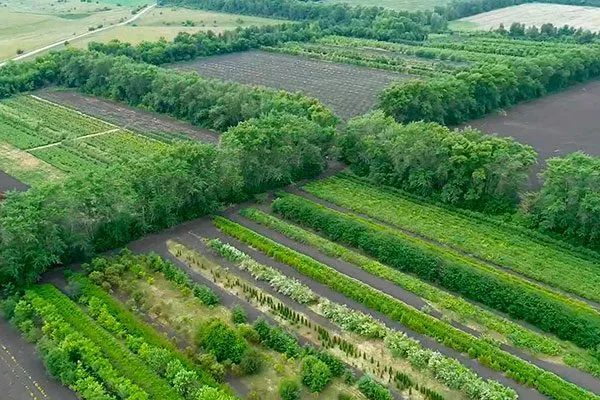
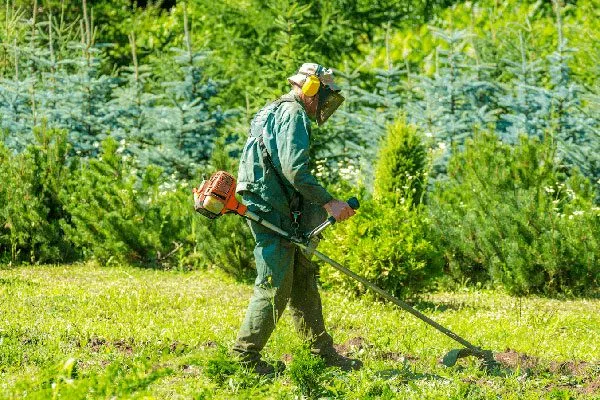

Plants used for protective plantings should grow quickly, be long-lived, have a compact crown, and produce little shoots. Most importantly, they should be free of the pests and diseases common to apple trees.
Protective plantings are placed 10-15 meters away from fruit trees. These plantings are established 3-5 years before apple trees are planted.
Care
Organically grown apple trees require the usual care—watering, fertilizing, loosening, and disease and pest prevention. However, these measures are tailored to the organic farming method.
Watering
Eco-farming involves optimizing water use, allowing it to be used economically and beneficially for trees.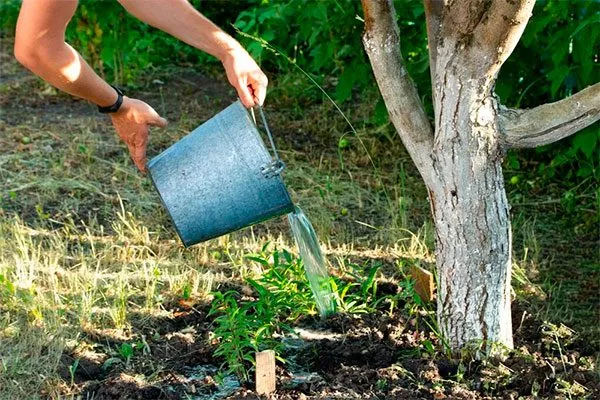
Watering features:
- The amount (norm) of water for each tree is calculated taking into account its age:
- Young apple trees (1-3 years old) require 10-15 liters of water. Watering frequency is once a week, or 2-3 times a week in hot weather.
- Mature trees (over 3 years old) require 20-30 liters of water at a time. Watering frequency is once every two weeks, or once or twice a week in hot weather.
- Fruit-bearing apple trees require 30-40 liters of water. Watering is especially important during flowering and fruit set, as these are the periods when the trees require more water.
- The frequency of watering depends on the characteristics of the soil: if it is clayey and retains moisture well, the frequency of watering can be reduced, but if the soil is sandy and light, the number of waterings can be increased.
- It's important to water the tree generously. Frequent, small waterings are harmful—the water doesn't reach the roots, and a hard crust forms on the surface, impeding air circulation.
- It's best to water apple trees in the morning, before sunrise, or in the evening, after sunset. Avoid watering during the day, as water splashing on the leaves will cause burns, and rapid evaporation prevents the water from penetrating deep into the soil.
For watering apple trees, it is recommended to use drip irrigation, where water is delivered directly to the root zone of each apple tree, minimizing water loss due to evaporation and runoff.
It's recommended to check the soil moisture before watering. Watering should only occur after the soil has dried out to a depth of several centimeters.
It's important to monitor the tree's condition, including its leaves, shoots, and fruit—these can be used to assess its water needs. If the soil quickly dries out to the depth of a spade after watering, it means the tree hasn't received enough water.
Top dressing
In organic farming, organic matter is the basis of root nutrition. The same organic fertilizers used in preparation for planting are used for fertilizing apple trees: humus, rotted manure, bird droppings, wood ash, and compost.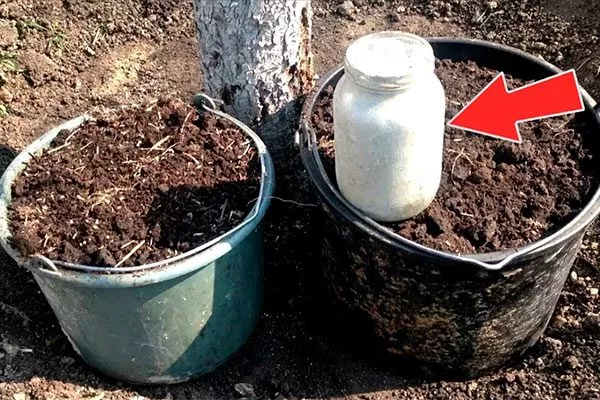
Fertilizer is scattered around the tree trunk and worked in to a depth of 15 cm with a hoe. Manure and cow manure are diluted with water at a rate of 100 g per 15-20 liters of water. The mixture is left to infuse for about a week. Liquid organic fertilizers are applied when the soil warms to 16-18°C, when microbial activity reaches optimal levels.
In early spring or autumn, it is recommended to stock up on organic matter in the soil - humus is placed in holes dug along the crown projection.
There are two ways to apply fertilizer:
- Down to the root. Fertilizers are applied in dry or liquid form. To ensure even nutrition reaches the roots, the fertilizer is distributed around the trunk. It can also be worked into the soil to a depth of 10-15 cm, followed by watering.
- Foliar method. Fertilizers, such as a wood ash solution, are used for foliar spraying.
Fertilizers are applied not at the base of the tree, but at a distance. To do this, holes are dug around the perimeter (at a distance of 1-1.5 m) and the organic matter is added.
Loosening
When growing organically, weeds are controlled with hoes and mulching. They are pulled out during tillage, as pesticides are not allowed in organic farming.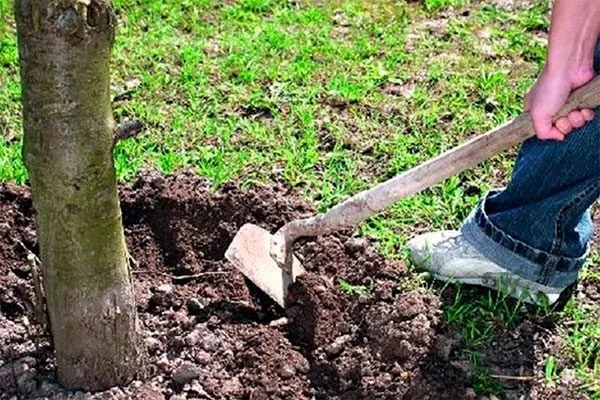
For weeding, it's recommended to use a sharp hoe—either a Dutch hoe or a triangular hoe. Weeding should be done frequently, repeatedly cutting off any regrowing shoots. This weakens the weeds, and their growth will slow or stop altogether over time.
Protecting apple trees from pests and diseases without pesticides
To combat apple tree diseases in organic farming, biofungicides can be used—an excellent alternative to chemicals. Biofungicides do not pollute the soil or water and pose no danger to humans or the environment. They are also safe for bees and other pollinating insects.
To protect apple trees when grown organically, you can use, for example, the following biological preparations:
- Biofungicides with "hay bacillus" "Alirin-B," "Gamair," and "Fitosporin-M." Beneficial bacteria colonize leaf blades and fruits. Here, they begin to secrete natural antibiotics that displace harmful fungi.
- "Pseudobacterin-2" This preparation contains pseudomonas bacteria, which suppress pathogens that cause a wide range of infections. It is used, in particular, for fire blight, moniliosis, scab, and root rot.
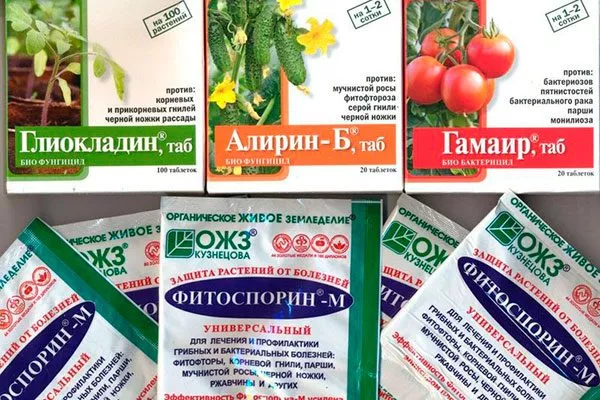

To dilute the preparations, use only non-chlorinated water - rainwater, settled or filtered, since chlorine kills beneficial bacteria.
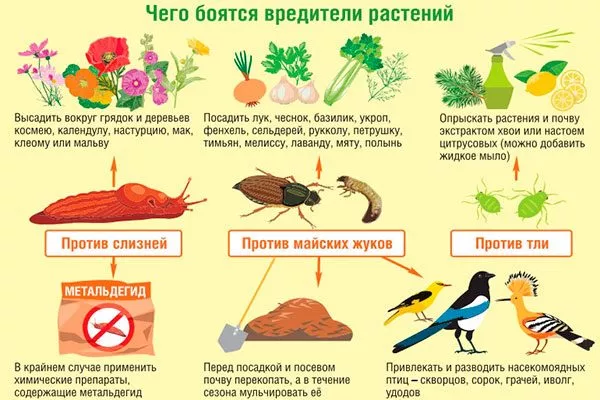
To protect against pests in an "organic" garden, the following methods are used:
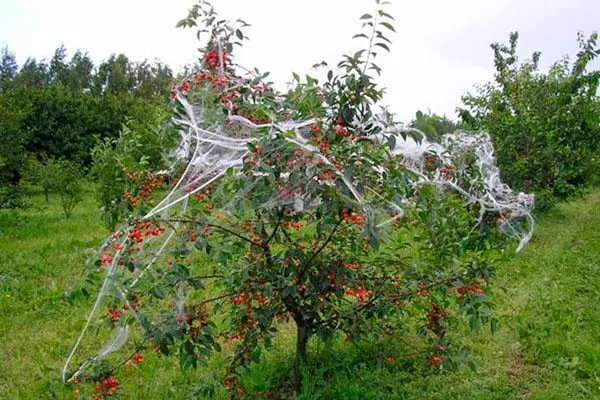
- Mechanical protection. A barrier of draping mesh is created above each row of fruit trees. This protects the trees from various pests, such as the codling moth. The mesh rests on the apple trees and is secured at their base with ties. However, the mesh does not interfere with beneficial insects, such as ladybugs, which control aphids.
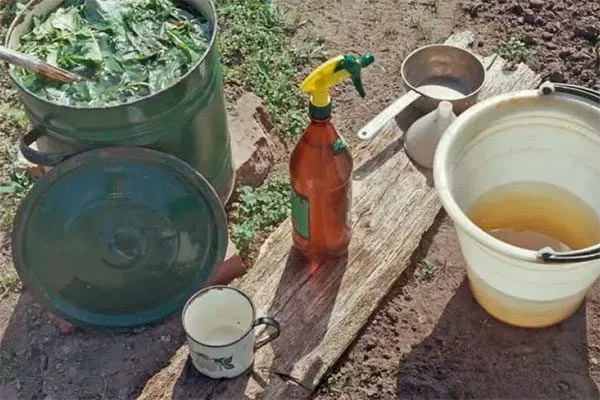
- Spraying. Herbal infusions of wormwood, yarrow, potato or tomato tops, garlic and ash infusions, and soapy water are used to spray the crown. These folk remedies are effective against leaf rollers, aphids, caterpillars, weevils, ants, and codling moths.
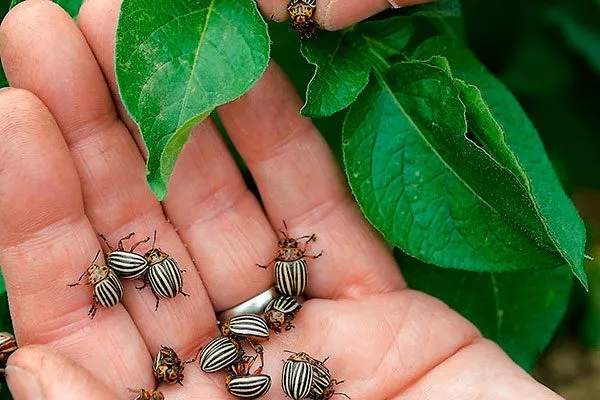
- Manual collection. Pests can be collected by hand and shaken off onto a film spread on the ground.
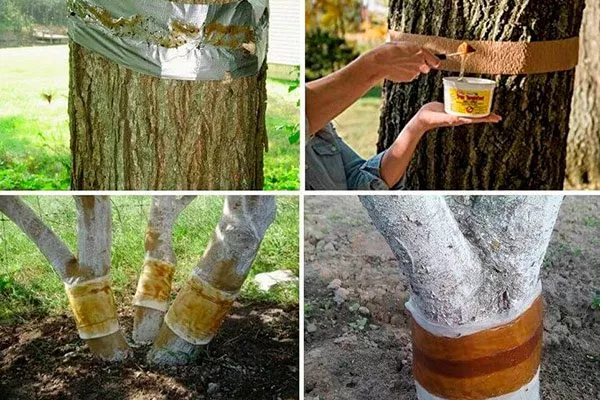
- Mechanical traps. To catch pests such as caterpillars and ants, you can use special sticky trapping belts.
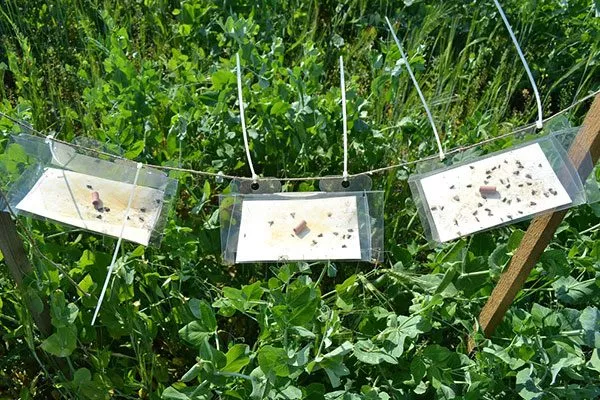
- Pheromone traps. They use synthetic analogues of insect pheromones to attract and disorient individuals of a particular species.
- Repelling with smell. It's recommended to plant fragrant herbs near apple trees to repel pests with their aroma: garlic, onions, wormwood, chamomile, tobacco, marigolds, and calendula. Their flowers can be plucked and scattered around the tree trunks.
How to choose the right apple tree variety
Organic gardening involves selecting apple varieties with a range of characteristics that increase the chances of a successful harvest. The most important thing is that the variety's ecological and biological properties match the natural conditions of the growing region.
How to choose apple varieties for organic farming:
- Resistance to diseasesVarieties with very strong immunity are needed, in particular, to common diseases such as scab and powdery mildew.
- Frost resistance. Preference is given to varieties that are resistant to cold and other adverse natural influences, such as drought, heat, and recurrent frosts.
Apple tree varieties suitable for organic growing:
- Greensleeves. A medium-sized tree with a compact crown. This variety produces fruit early and is resistant to scab, powdery mildew, and brown leaf spot. The fruits are spherical, greenish-yellow, and have a sweet and sour taste. They weigh 130-170 g.
- Kandil Orlovsky. Medium-sized, winter-hardy apple trees with uniform greenish-yellow fruit are highly resistant to fruit and leaf scab. This variety is early-bearing but requires pollinators. The fruit is oblong-conical, ribbed, and has a raspberry blush. Average weight: 120 g.
- Memory of the Yesaul. A medium-sized, early-winter variety with a compact, oval crown. The fruits are light green with a bright purple blush. The shape is truncated oval, elongated. Fruit weight is 170-220 g. The variety is highly resistant to scab.
- Peach. A late-winter variety for short-season orchards. The tree is medium-sized, producing very large fruits, weighing 250-270 g. The fruit is light green with a pink-red blush. The variety is resistant to frost and drought, scab, and powdery mildew.
- Red Chief. An early winter American variety with large, green-yellow conical fruits. They weigh 180-200 g, with some specimens reaching 400 g. The variety is self-sterile, requires pollinators, and has good resistance to powdery mildew.
- Golden B. A late-winter variety and a clone of Golden Delicious. The fruits are round-conical and greenish-yellow, without the rustiness typical of Golden Delicious. The variety is frost-hardy, partially self-fertile, highly resistant to powdery mildew, and moderately resistant to scab.
- Enterprise. A late-winter, non-self-fertile variety with large, round fruits in yellow, red, or dark burgundy. Average fruit weight is 200 g. It is immune to scab.
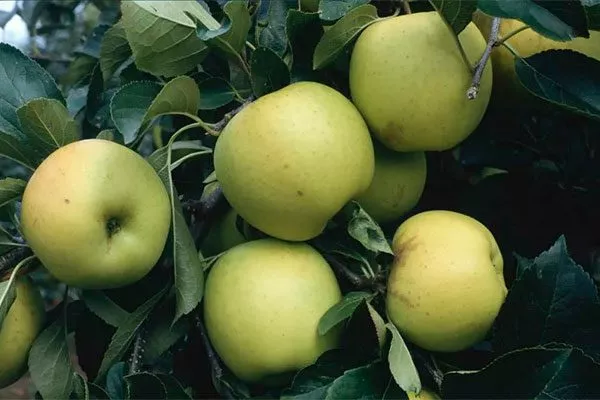
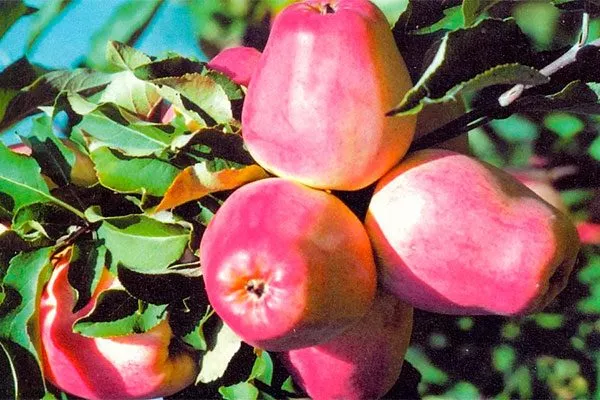
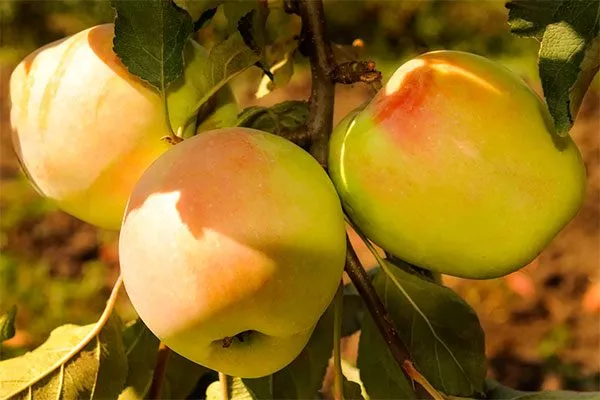
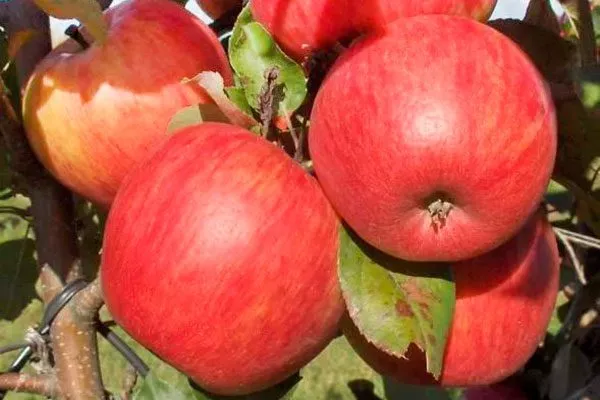
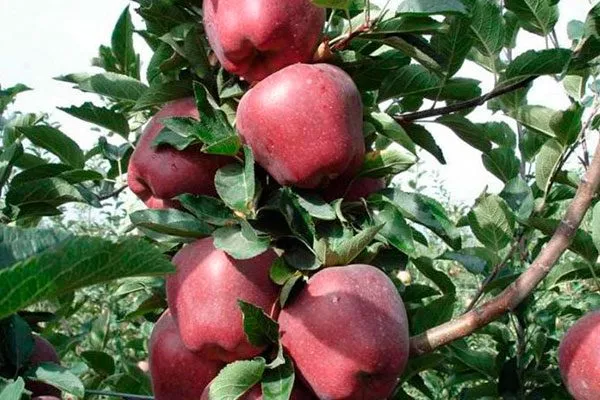
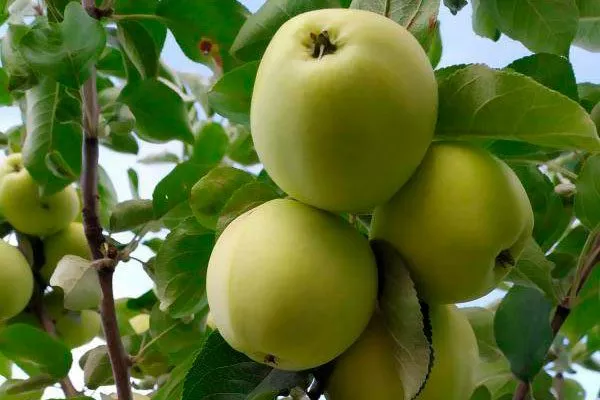
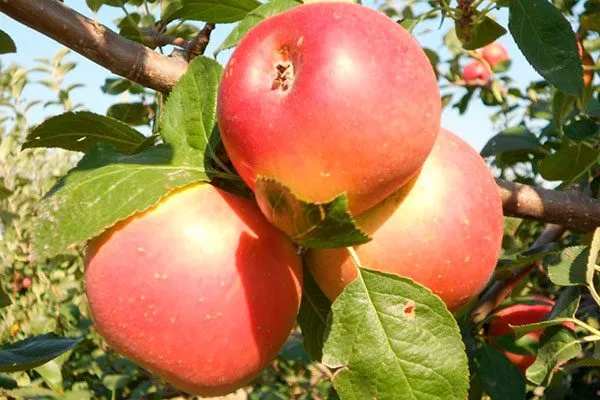
Also suitable for organic farming are the varieties Solnyshko, Natira, Prikubanskoe, Kubanskoe Bagryanoe, Krasna Darya, Rudolf, Baltika, Serebryanoe Kopyttse, Uralskoe Nalivnoe, Kholotaya Osen, Solntsedar and many others.
Conversion of apple trees to organic plantings
You don't have to start an organic garden from scratch. If you already have apple trees, you can convert them to organic farming. However, this is only possible if the garden is highly productive and has already reached full fruiting.
Converting a conventional garden to an organic one involves the following steps:
- Replacement of all mineral fertilizers with organic ones.
- Switch 100% from chemical methods of pest and disease control to biological ones.
- Instead of herbicides, use mechanical methods of weed control.
Growing organic apples is expensive. Producing environmentally friendly produce without the use of conventional fertilizers and pesticides requires considerable time and effort. If you're willing to forego mineral fertilizers, chemical pesticides, and pesticides, you can harvest organic apples in a few years without harming the environment.