
The Orlovskoye Polosatoye variety stands out for its consistent fruiting from the fourth year onward, high marketability, and disease resistance. Despite its thin skin, the apples store well until frost, retaining their flavor and aroma. This variety is excellent for fresh consumption and storage, and is deservedly popular in various regions.
How did the variety appear and where is it grown?
This variety was developed at the All-Russian Research Institute of Fruit Crops Hybridization by crossing the McIntosh and Bessemyanka Michurinskaya varieties. Its creators were breeders E. N. Sedov and T. A. Trofimova.
Some facts from history:
- Work on developing the variety began in the late 1950s, and the first seeds were sown the following season. The breeders harvested the grapes eight years later, after which Orlovskoye Polosatoye was recognized as an elite variety.
- In the 1970s, the crop was submitted to state trials, the goal of which was to obtain approval for industrial cultivation and regionalization in Central Russia, the Central Black Earth Region, and some regions of Belarus. The variety was included in the State Register in 1986.
- From 1977 to 1984, the Orlovskoye striped breed was exhibited at international exhibitions in Germany, where it was repeatedly awarded gold medals. In the 1990s, the variety received a diploma at the "Revival of the Russian Village" exhibition held at VDNKh-EXPO.
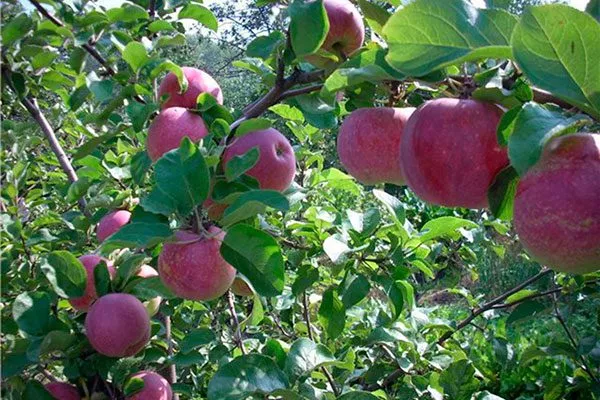
The apple tree is renowned for its aromatic and delicious fruit. It is successfully cultivated in the following regions:
- Northwestern;
- Northern;
- Central Black Earth.
In addition, the plant is cultivated in the Middle Volga and Lower Volga regions.
Features and specifications
Scientists' breeding efforts are focused on developing varieties capable of consistently yielding fruit in a variety of climates and soils. Orlovskoye Polosatoye is a prime example of such a versatile and adaptable crop.
The appearance of the tree
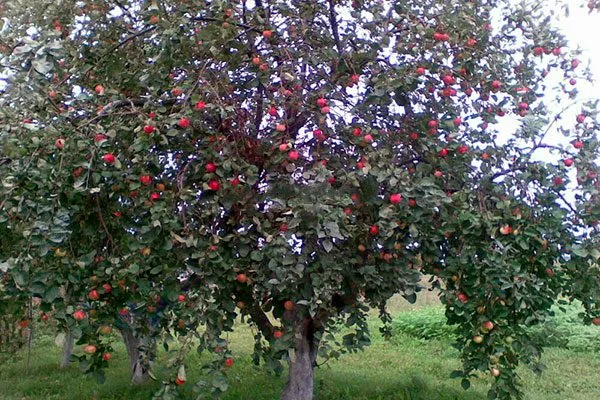
The plant is medium-sized, reaching a height of up to 5 m, with a broad, rounded crown. Other distinctive characteristics:
- skeletal branches – extend from the trunk at a right angle, directed upwards and covered with smooth brown bark;
- shoots – thick, dark cherry-colored, slightly curved, with light pubescence;
- kidneys – large, noticeably convex;
- leaves - are densely located, large, broadly ovoid in shape with a serrated edge, shiny, with a pronounced wrinkled relief and rough veins, slightly pubescent;
- foliage coloring – bright green, petioles dense and strong.
The flowers are large and saucer-shaped. During the budding phase, the petals are white-pink, and after opening, they turn light pink, effectively decorating the tree in spring.
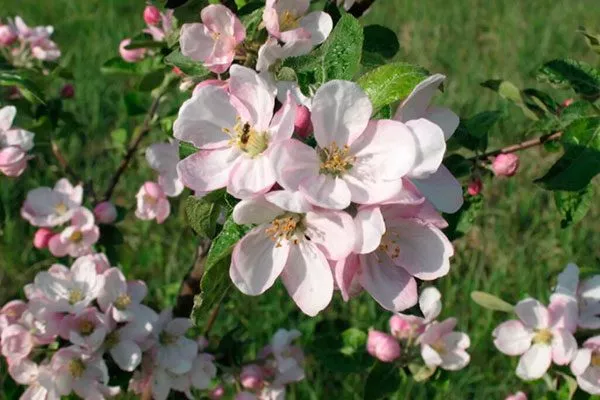
The petals are rounded, concave, with overlapping edges. The pistil is developed and robust, surrounded by numerous stamens, with the stigma located above the anthers.
Description of fruits
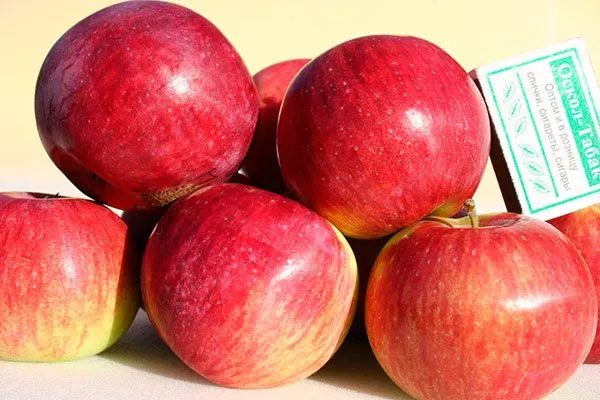
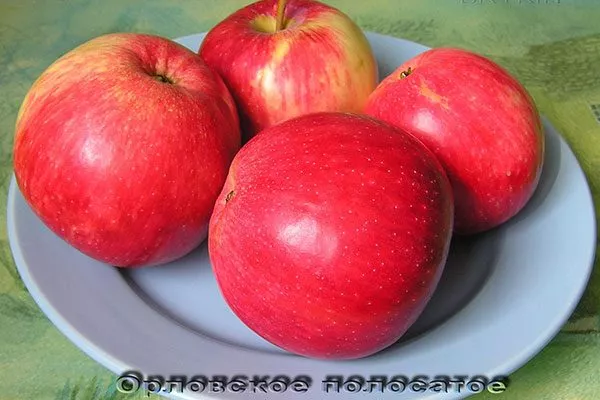
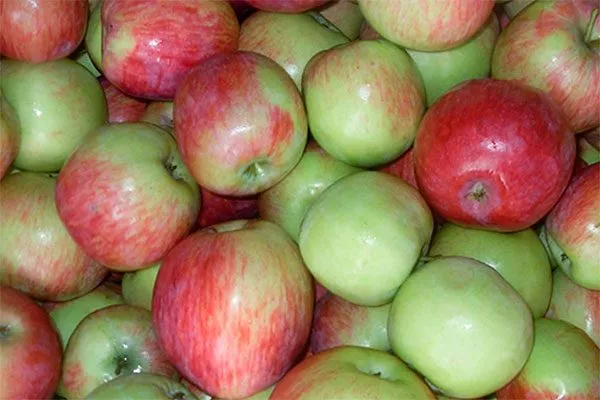
The apples are oblong-conical in shape and weigh an average of 120-150 g. Features and characteristics:
- main color - greenish-yellow or golden, on which blurred stripes and specks of purple-crimson hue are visible, superimposed on a pink blush;

- skin – smooth, shiny and thin, with an oily texture, covered with a bluish waxy coating and strewn with light subcutaneous dots;
- pulp – light, creamy in color, tender, fine-grained and very juicy;
- taste - harmonious, with a pronounced acidity and rich aroma.
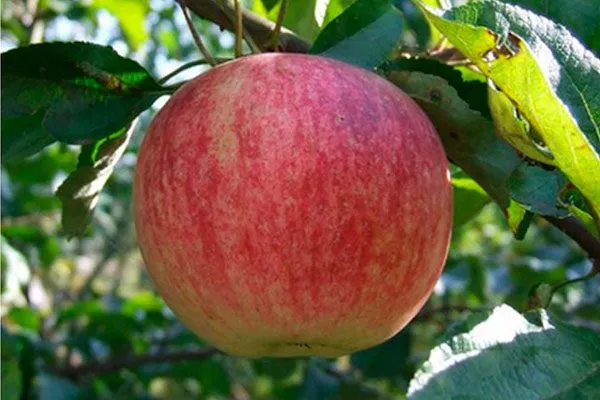
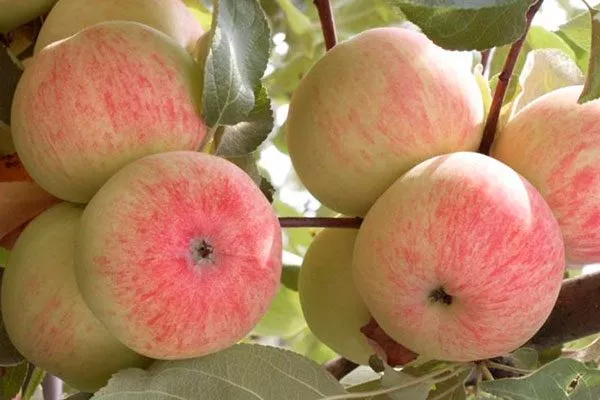
On the tasting scale, the variety scores 4.2-4.6 points. The fruits store well, until the end of December, and are especially good for fresh consumption.
Apple tree pollinators
Orlovskoye Polosatoye is a variety with low self-fertility, so pollinators are necessary for consistent fruiting. The following varieties are considered best for cross-pollination:
- Antonovka;
- Orlik;
- Memory of the warrior;
- Welsey.
Ripening and fruiting, yield
This is a late-autumn variety. Apple harvesting begins in early September, when they reach full harvest maturity. The tree begins bearing fruit in the fourth year after planting, making it a relatively early-bearing variety.
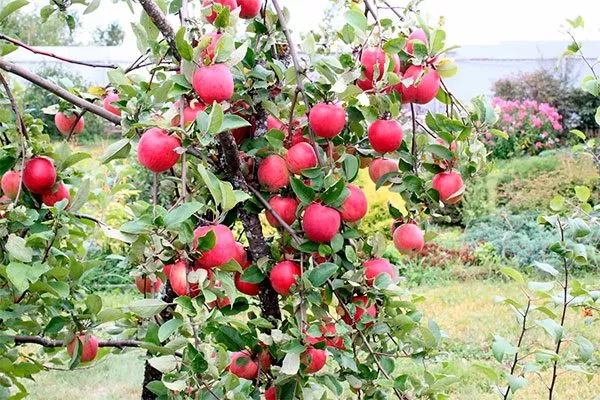
The crop is characterized by good productivity. Up to 200 kg of apples can be harvested from just 1 hectare. The yield increases with the tree's age: at 8 years of age, an apple tree can yield up to 50 kg, and by 15 years, up to 80 kg per specimen.
Resistance to frost, diseases and insects
The Orlovskoye Striped apple tree is moderately winter-hardy and can withstand temperatures down to -25°C. However, it can also be successfully grown in harsher climates. To do this:
- shape the tree into a slatted form;
- remove the top and leave the lower branches;
- In winter, use shelter and cover trees with snow to protect them from freezing.
The variety is resistant to scab, making it less susceptible to this common disease. However, the tree is vulnerable to cytosporosis, especially when its immunity is weakened by improper care, frost cracks, sunburn, or mechanical damage.
Planting an apple tree
When grown properly, the Orlovskoye Polosatoye apple tree thrives and begins bearing fruit quickly. To ensure a strong and healthy tree, it's important to choose the right location, properly prepare the soil, and adhere to the planting timing.
Preparation
Choose sites with good light—the plant prefers sunny spots protected from cold winds. South- or southwest-facing slopes are best.
Basic requirements:
- The soil should be loose, fertile and neutral acidity.
- Do not plant apple trees in areas with stagnant water or a high groundwater level (above 1.5 m from the surface).
- 2-3 weeks before planting, dig up the area, remove weeds and add humus or compost at a rate of 5-6 kg per 1 sq. m.
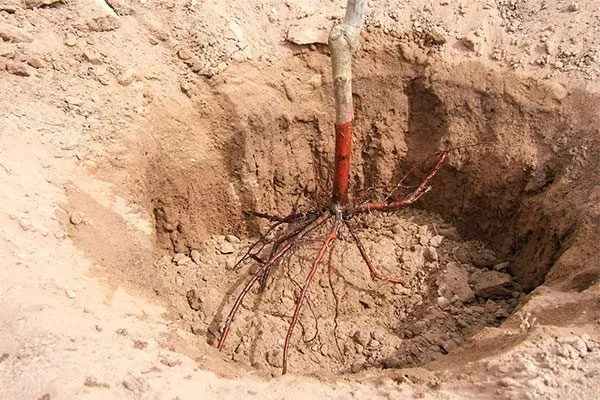
- Prepare a planting hole approximately 70 cm deep and wide. Place a drainage layer (crushed stone, expanded clay) on the bottom, then a mixture of fertile soil, humus, 200 g of superphosphate and 50 g of potassium salt.
- The seedling should have a well-developed root system, no damage, and 2-3 main skeletal branches. Before planting, trim the roots to 30 cm and soak them in water or a clay slurry for 2-3 hours.
Dates and plan of disembarkation
Start planting apple trees in early spring, before the buds open, or in autumn, 3-4 weeks before the first frost.
Step-by-step algorithm:
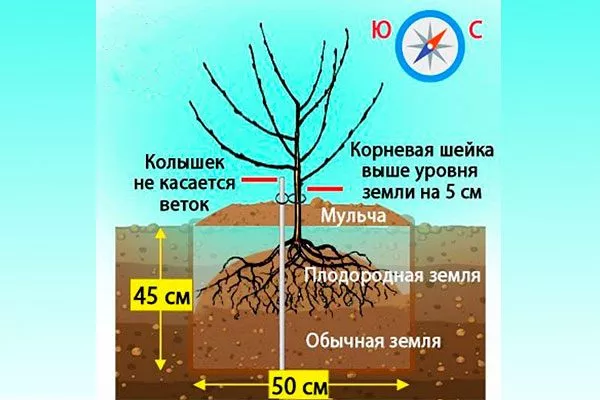
- Place the seedling in the center of the hole, carefully spreading out the roots.
- Fill the hole with the prepared soil mixture, lightly compacting each layer.
- Make sure the root collar remains at soil level.
- Drive a stake nearby and tie the tree so that it grows straight.
- Water generously (20-30 liters per plant).
- Mulch the tree trunk circle with peat, humus or dry soil.
Care Features
The Orlovskoye Striped apple tree requires regular and careful care to maintain its health and high yield. Standard agricultural practices are essential. Without proper care, the tree may weaken, become susceptible to disease, and produce poor-quality fruit.
Top dressing
Apple orchards located on black soil typically don't require additional fertilizer. However, when grown on sandy or loamy soils, annual fertilizer application is necessary.
Follow these recommendations:
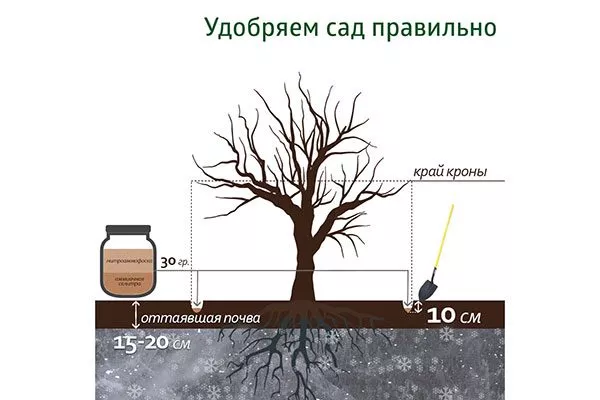
- Apply the first fertilizer in the second or third year after planting, adding approximately 10 kg of humus or compost per square meter. Repeat the fertilizer application several times throughout the season, moistening the soil thoroughly after each application to ensure the roots can fully absorb the nutrients.
- During the formation of flower buds, use a urea solution (300 g per 10 l of water) or replace it with manure infusion (5 l per 10 l of water).
- Two weeks after flowering ends, apply a mixture of 150 g of nitrophoska and 5 g of sodium humate dissolved in 30 liters of water.
- With the arrival of autumn, fertilize the trees with complex fertilizers without nitrogen: 40 g of superphosphate, 20 g of potassium and 20 g of calcium.
Watering
Young seedlings require at least five irrigations per season. This is best done in the morning and evening, applying 40 liters of water under each tree at a time. Since apple trees do not tolerate excess soil moisture, adjust the frequency of irrigation depending on weather conditions.
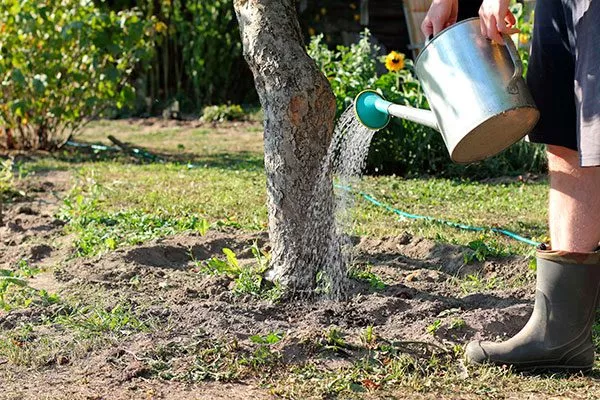
The tree's moisture requirements peak during the period of flower bud formation and apple ripening—usually mid- to late August. The last watering should be done in late summer or early fall, after the tree has shed its leaves—this helps increase its winter frost resistance.
Loosening and pruning
After watering, loosen the soil to maintain its moisture and air permeability. It's equally important to promptly remove weeds, which can cause dense plantings and deplete the soil.
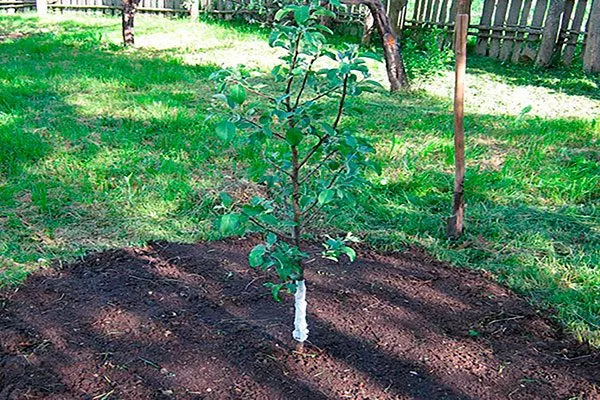
Basic rules for tree pruning:
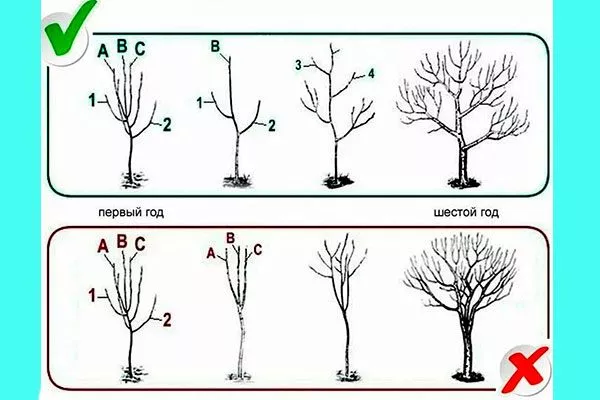
- When planting a seedling, cut the branches by about a third - this will promote faster crown formation.
- Mature trees should undergo this procedure annually in April.
- When pruning, cut branches at the base, leaving no stumps. Remove branches that droop to the ground under the weight of the fruit.
- When cutting young shoots, leave only the strongest ones and those growing upward at an angle to the trunk; remove the rest.
Preparing for winter
Before covering, treat the apple tree trunks with a special composition: mix 280 g of copper sulfate, 150 g of casein glue, 200 g of acrylic paint and 2.3 kg of slaked lime.
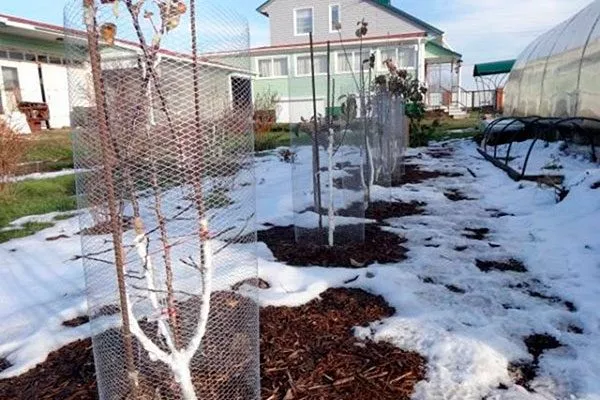
Before the first autumn frosts, mulch the tree trunk with rotted cow or horse manure. Wrap the trunk with non-woven material for additional protection.
Pest and disease control
The Orlovskoye Striped apple tree is fairly resistant to scab. However, if improperly cared for, it can be susceptible to pests and diseases such as codling moth, powdery mildew, aphids, and cytosporosis.
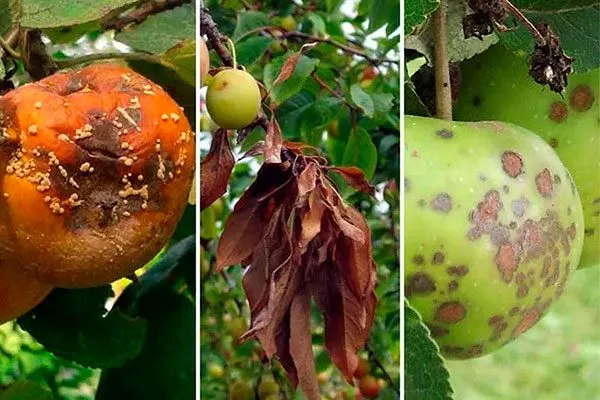
To strengthen the plant's immune system, periodically add fertilizer, such as nitrophoska, to the soil. Treat other diseases with appropriate medications, selected depending on the type of infection.
To prevent cytosporosis, carry out treatments during key periods of development:
- when the buds swell;
- at the beginning and immediately after flowering;
- before the onset of frost.
In the spring, whitewash the tree trunks. After the solution dries, mulch the area around the tree trunks with pine needles or other dry material – this covering helps protect the apple tree from rodents and other pests.
Collection and storage
Orlovskoye Polosatoye apples ripen in early September and produce a consistent annual harvest starting in the tree's fourth year. The fruits must be picked carefully to avoid damaging the thin skin.
Optimal storage conditions include a temperature of +1-2°C and humidity no higher than 60%. Apples are best stored in wooden crates, arranged in several layers with cardboard between each layer.
If you're harvesting a small amount, wrap each fruit in paper or newspaper. This will keep the harvest fresh until January. You can store the fruit in the refrigerator or on a glassed-in balcony or loggia.
Pros and cons
Some gardeners point out that the apples' thin skin is a disadvantage, requiring careful harvesting to avoid damaging them.
Reviews
Orlovskoye Polosatoye is a late-season apple variety that combines good productivity with excellent fruit flavor. The tree is medium-height with a robust crown, resistant to scab and a number of other diseases. Its apples have a vibrant aroma, juicy flesh, and excellent shelf life, making it popular with both amateur gardeners and farmers.