
The Orlovim apple tree is a variety with high frost and scab resistance, making it ideal for growing in a variety of climates. The tree begins bearing fruit early and is characterized by good productivity. Its apples have excellent flavor and attractive appearance, making it a favorite among experienced gardeners and a favorite choice for beginners.
Breeding history and similar varieties
| Variety | Productivity | Scab resistance | Frost resistance | Shelf life |
|---|---|---|---|---|
| Orlovim | 60-120 kg/tree | High | Up to -35°C | 3-4 weeks |
| Melba | 50-80 kg/tree | Average | Up to -25°C | 1-2 months |
| Scarlet anise | 70-100 kg/tree | High | Up to -30°C | 2-3 months |
| Saffron pepin | 80-150 kg/tree | Average | Up to -25°C | 4-5 months |
| Antonovka | 100-200 kg/tree | High | Up to -40°C | 3-4 months |
This relatively young variety is already widely grown in both private gardens and commercial plantings. Its popularity stems not only from the excellent taste of its fruit, but also from its disease resistance, ease of care, and adaptability to temperate climates.
Key facts:
- Orlovim was bred in 1977 at the All-Russian Research Institute of Fruit Crops Selection by crossing Antonovka Obyknovennaya with seedlings of the Swedish variety SR 0523, known for its early yield.
- Scientists E. N. Sedov, Z. M. Serova, and V. V. Zhdanov worked on the variety's development. Since 1989, the apple tree has undergone state trials, and in 1999, it was included in the State Register and zoned.
Orlov should not be confused with other Orlov varieties, for example, with Orlovskiy Pioneer, also bred with the participation of SR 0523, but based on Antonovka Krasnobochka.
In taste and appearance, Orlovim is closest to the Melba variety, but it is significantly more disease and cold-resistant. Furthermore, many prefer its flavor: it is more similar to the Anis and Saffron Pepin varieties, although the latter ripens slightly later.
Characteristics
Among the many apple tree varieties, the Orlovim stands out for its low maintenance and a number of valuable qualities. Before growing this crop, it's important to carefully study its key characteristics.
Zoning
Since 1999, the variety has been officially zoned for the Central Federal District of Russia. However, in practice, it is successfully cultivated in the Central Black Earth Region and the Volga region. Thanks to its high frost resistance, the apple tree thrives in harsh climates such as the Far East, Siberia, and other regions with cold winters.
Even at low temperatures, yields remain stable. This is possible thanks to the tree's robust root system, which further enhances its drought resistance—another important advantage.
Description of the tree
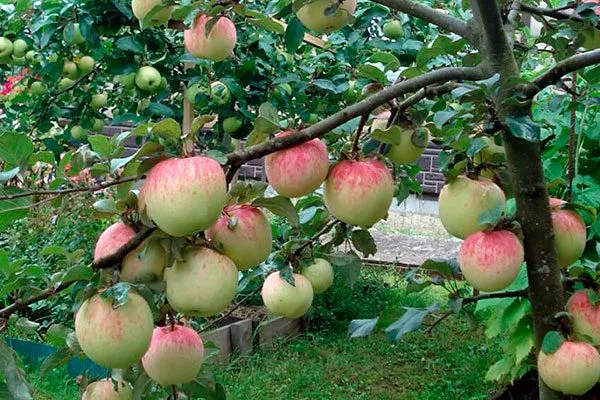
A medium-sized apple tree reaches 4-5 m in height and exhibits rapid growth. Many gardeners prefer to train the crown to 3-4 m for ease of maintenance and fruit harvesting.
Distinguishing features:
- Crown – When young, the tree is pyramidal, later becoming rounded, cup-shaped, or spherical. It is characterized by medium density, not prone to thickening, and reaches a spread of 5-6 m.
- Escapes – Thin, noticeably bumpy and pubescent, round in cross-section. Color: green-brown or brown; smooth and shiny in young shoots; cracks and a brownish tint appear with age.
- Leaves - Medium-sized, oblong-ovate with a faintly tapering tip. The leaf blade is thin, slightly curved downward, and the upper surface is often spirally twisted. The edges of the leaves are finely serrated, without pronounced ripples or notches. They are green in color, not glossy, but with a slight matte finish and slight wrinkling.
- Fruit buds – oblong, conical, pubescent.
- Branches – They depart from the trunk at an angle close to a right angle - this significantly reduces the risk of breaks, which is an important advantage compared to many other varieties.
- Root system - A strong, branched plant with well-developed roots, both vertical and horizontal. It can have either a distinct taproot or a fibrous root, depending on the rootstock.
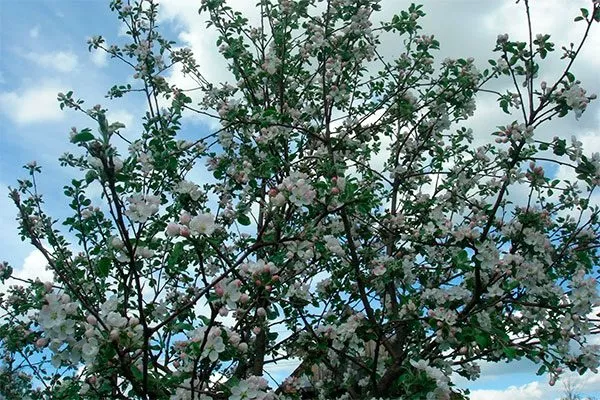
The roots extend up to 4.5 meters deep, providing access to moisture during dry periods, protection from freezing, and wind resistance. This allows the tree to require less mulching and maintain high vitality even under adverse conditions. - Flowers – Noticeably large and wide, with white petals with almost no pink tint. The buds are a delicate, light pink. The petals are raised and closed in a boat shape.
This variety is distinguished by its rich, wide-ranging aroma, effectively attracting pollinating insects. This ensures rapid and complete pollination.
The annual tree growth ranges from 20 to 50 cm, with an average of 35-40 cm. The lifespan of the plant ranges from 50 to 60 years.
The Orlovim variety has a light-loving, moderately spreading crown, allowing sunlight to penetrate easily. This reduces the risk of fruit becoming smaller, developing excess acidity, and developing a watery taste. However, the large size of the tree can make harvesting difficult.
Fruit
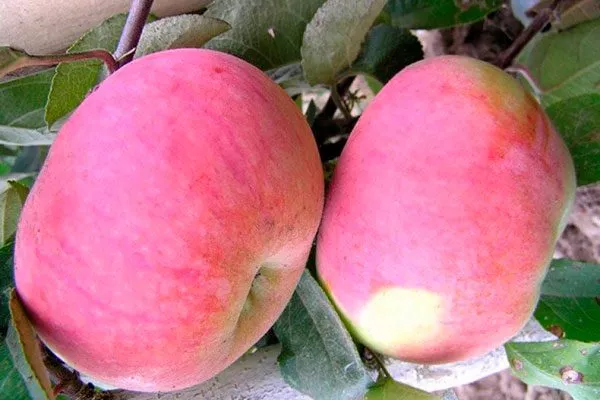
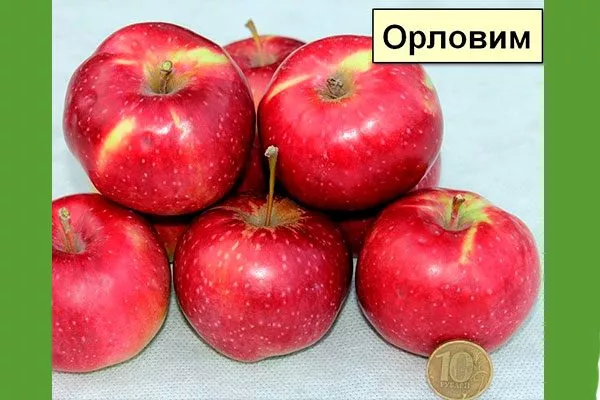
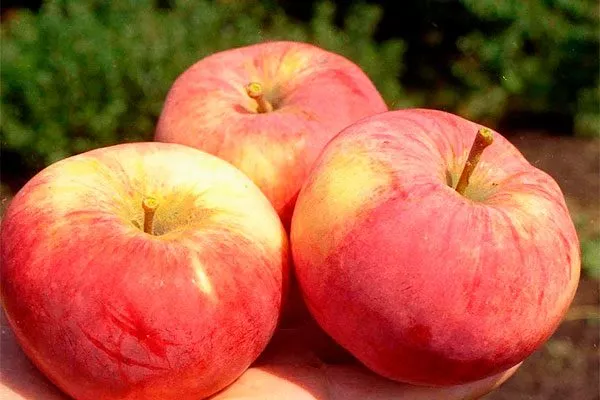
The apples have an attractive appearance: a light yellow base color complemented by a washed-out blush and red stripes. Other characteristics of the fruit:
- form - conical, slightly flattened and slightly asymmetrical, with barely noticeable ribbing;
- weight - varies from 130 to 150 g;
- pulp – creamy, dense, juicy and crispy, with a harmonious sweet and sour taste;
- aroma – pronounced, reminiscent of Antonovka;
- skin – smooth, shiny, with small, almost invisible subcutaneous dots.
Frost resistance
The roots don't freeze even without mulch. This makes the variety particularly hardy in harsh climates. This high frost resistance is inherited from Antonovka, one of its parent varieties.
Orlovim demonstrates exceptional cold tolerance, withstanding temperatures down to -35°C without additional cover. This level of hardiness is more typical of winter apple varieties, making this summer variety particularly valuable for regions with harsh winters.
Pollination and yield
It's a self-sterile species, so for full fruiting, pollinators with matching flowering times are needed. It blooms slightly earlier than most summer varieties—in early to mid-May—which is important to consider when selecting partners.
Suitable pollinator varieties:
- Antonovka;
- Scarlet anise;
- Saffron pepin;
- Welsey.
Although artificial pollination is possible, it requires significant effort and expense, so natural methods are more often used.
Orlovim's yield is high and consistent. Fruiting begins five years after planting. Trees under 10 years old yield an average of 60-80 kg of apples, while more mature trees yield up to 100-120 kg. Approximately 200 centners of fruit are harvested per hectare of planting.
Features of fruiting
Apples don't ripen all at once, so harvesting should be done selectively. Focus on the degree of ripeness:
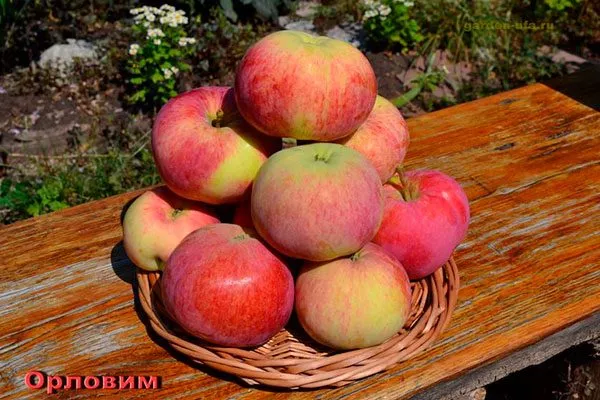
- Removable – The ripening season begins in the second half of August. At this time, the fruits have only a slight blush, and the majority of the skin remains greenish. These fruits have a better shelf life—up to 4-5 months—and withstand transportation well.
- Consumer – The apples are ripening in early to mid-September. By this time, 60-80% of the fruit is blushed, with the remainder having a yellow tint. However, the harvest cannot be stored for long—30-35 days maximum. Consume the apples fresh or process them quickly—for juice, jam, preserves, etc.
Storing the apple harvest
It's important to create the right conditions to ensure the fruit retains its flavor and juiciness for as long as possible. Key requirements:
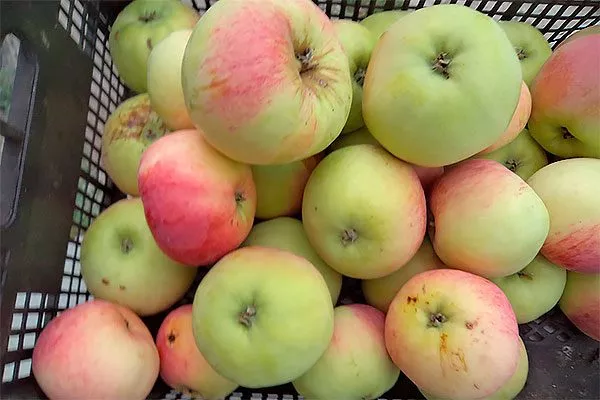
- the room should be darkened and cool, with a temperature within the range of +3…+7°C;
- access to fresh air is necessary, but without drafts (a basement, cellar or closed part of the balcony in winter is ideal);
- storage containers – wooden or plastic boxes with ventilation slots;
- Avoid placing apples close to the ground or near root vegetables to avoid increased humidity and spoilage.
Landing rules
Cultivating this crop doesn't require any special skills or experience, but some knowledge will help you carry it out correctly. This knowledge will determine the tree's development and fruiting.
How to choose the best seedling and prepare it?
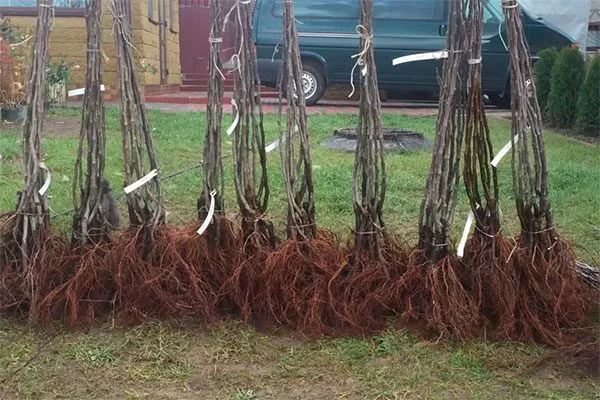
Purchase planting material from reputable, large nurseries. Trees may be sold bare-root in plastic packaging or in pots with briquettes. The former option is usually cheaper, but planting should be done as quickly as possible to prevent the roots from drying out.
Main criteria:
- A healthy seedling has firm, clean bark, and the roots should be slightly moist. The ideal age for a plant is 1-2 years, with a height of approximately 1-1.4 m.
- There should be no signs of rot, damage, disease, drying out, or frost cracks. The root system should have at least three strong, large roots and numerous small shoots.
In case of damage or rot on the roots, planting is permitted only if such areas are isolated and the defective parts are removed down to healthy tissue, followed by soaking the roots in a solution of fungicide, insecticide or potassium permanganate. - The grafting site (trunk collar) should have only a neat scar without swelling. The buds should be firm and evenly distributed along the trunk. Mature seedlings should preferably have at least 3-4 branches.
Avoid buying plants with trimmed roots. Soak the seedling in warm water or a liquid mixture of soil and clay 8-9 hours before planting. Before soaking, soak it for 30-60 minutes in a weak solution of potassium permanganate, insecticide, or fungicide.
Requirements for the location
The Orlovim apple tree requires a sunny location, as it does not tolerate shade. It benefits from ample space and a good supply of fresh air, but drafts should be avoided, especially for young seedlings.
Follow these recommendations:
- Loamy and sandy loam soils are considered optimal. Excessively damp locations, such as near bodies of water, are not suitable for this variety. The exception is dwarf rootstocks, whose root system is located closer to the surface.
- The apple tree's deep root system ensures frost resistance and protects against freezing, but if the groundwater is too close to the surface, the roots may rot. Therefore, choose elevated sites or create an artificial mound or drainage system.
- The distances between planting holes should be increased due to the wide crown of the tree: between seedlings - 4-6 m, between rows - 3-4 m.
- Prepare the hole in advance: if you plan to plant in the fall, dig it 3-5 weeks beforehand. For spring planting, dig the hole in the fall and leave it over the summer to settle.
The ideal option is to pre-fertilize the hole so that the soil is fertile, but the roots do not come into contact with concentrated nutrients, which can harm the young tree.
Algorithm for carrying out planting operations
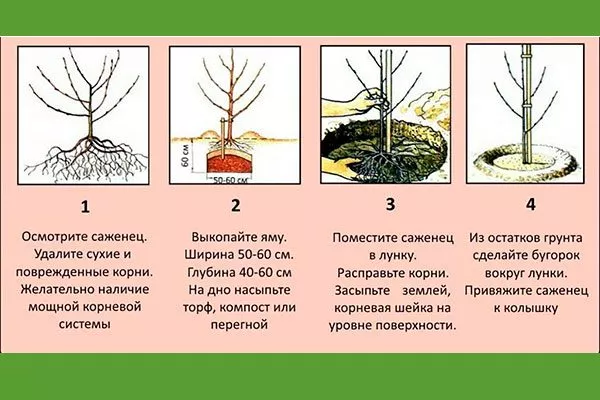
First, inspect the seedling's roots and remove any rotted or damaged areas. Next, follow these step-by-step instructions:
- Loosen the bottom of the planting hole. Drive a sturdy stake into the north side of the hole to secure it. It should extend a few dozen centimeters above the point where the branches begin. Remove it after 5-6 years.
- Remove the top fertile soil layer to a depth of about 20 cm, setting the remaining soil aside. Mix it with 30-40 kg of compost, 1.5 liters of wood ash, 250 g each of superphosphate and potassium sulfate. Cow manure or bird droppings can also be used. If the soil is already fertile, adding only organic matter is sufficient.
- Place a mound of prepared soil at the bottom of the hole, place the seedling on it, carefully spread the roots, and gradually fill it with soil, compacting it lightly with your hands. Add the remaining soil.
- Firm the soil around the seedling without compacting it.
- Form a tree trunk circle with a radius of 50-60 cm, and create a mound or ditch around the edge for irrigation. Add 40 liters of water and allow the soil to settle.
Landing dates
The Orlovim variety thrives when planted in both spring and fall. The optimal planting date is as follows:
- spring - in mid-April, around the tenth day of the month, when the threat of frost has passed and the soil has warmed up sufficiently;
- autumn - in mid-October, but no later than the end of the month, so that the tree has time to take root before the onset of cold weather.
However, the spring period is considered preferable, since young plants at this time are less susceptible to stress from low temperatures.
How to care?
It's crucial to strictly adhere to agricultural guidelines when growing the Orlovim apple tree. Following certain rules will ensure healthy tree growth and a high, consistent yield.
Schedule of major works
- March: sanitary pruning
- April: Application of nitrogen fertilizers
- May: Preventive treatment against pests
- June: Summer feeding
- August: Preparing for the harvest
- October: Moisture-recharging irrigation
- November: whitewashing of tree trunks
Watering and mulching
Loosen the soil and apply a layer of mulch at least twice a year—in spring and fall. At the same time, and more often if necessary, clear the area around the tree trunk of debris, rotting organic matter, weeds, root suckers, and shoots from other plants and trees.
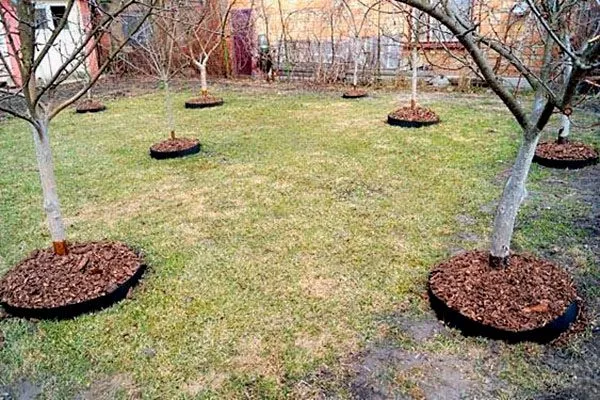
Mulching helps keep roots warm in winter and retain soil moisture during warmer months. This is a recommended practice, but without it, it won't harm the tree.
Regarding watering, three irrigations per season are usually sufficient, even during dry periods. The required amount of water is 40-60 liters, best divided into two waterings – morning and evening. During rainy seasons or high groundwater levels, you may not need to water at all.
Trimming
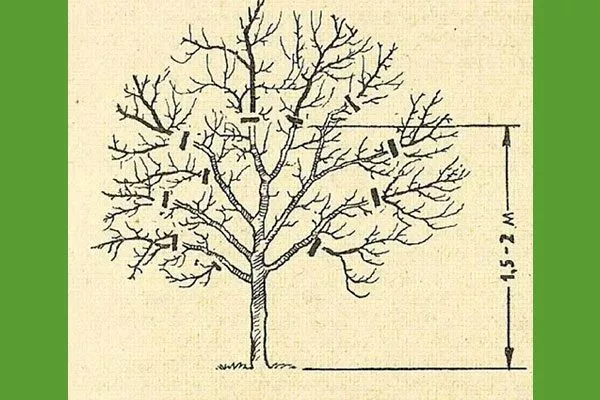
Since Orlovim is not a columnar variety, it is suitable for various crown types: palmette, spindle-shaped, tiered, sparsely tiered, and cup-shaped. Prune at two main times:
- in the spring – before the sap begins to flow and the buds appear, usually in late March or early April;
- in autumn – after the leaves have fallen, but before the onset of frost.
According to standard guidelines, shorten the central trunk by about a third in the first year after planting. In subsequent years, prune the branches as well, but keep them shorter than the central trunk. Remove shoots growing at sharp angles and those growing inward.
Top dressing
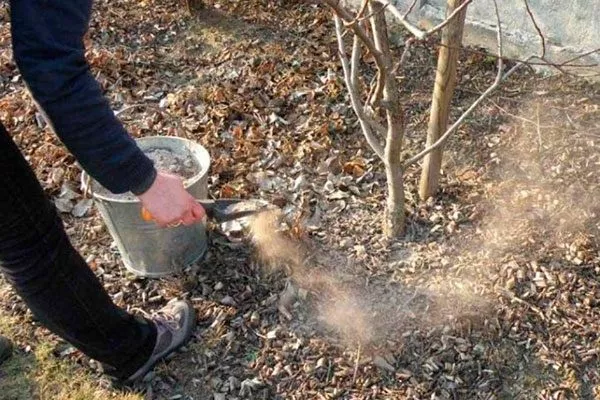
Fertilize your apple tree 2-3 times a year – in spring, summer, and fall. It's important not to overdo it, as this can cause harm to the tree.
Key recommendations:
- Simple but effective mixtures are suitable for this variety, for example: mullein infusion, diluted bird droppings (1:20 with water), bone meal, humus and urea.
- At a young age, organic matter is preferable - humus, bird droppings and similar fertilizers.
- Start using mineral fertilizers 2-3 years after planting.
In the fall, apply complex mixtures containing potassium, phosphates, and organic matter, and in the spring, apply nitrogen fertilizers. Orlovim grows vigorously and doesn't require enhanced nitrogen nutrition, so you can reduce the amount of fertilizer applied.
Diseases and pests, protective measures
The crop is characterized by good resistance to scab, but can sometimes be affected by powdery mildew, a fungal disease that most often appears on the leaves. A dense whitish coating forms on affected areas.
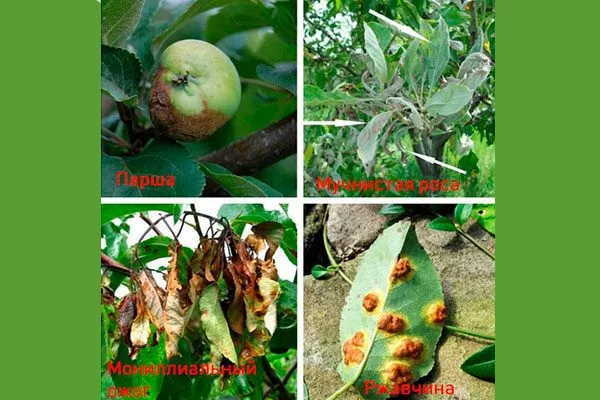
Failure to take preventative measures can result in a 40 to 60% crop loss, and the tree's frost resistance will also be significantly reduced. In densely populated orchards, the disease spreads rapidly.
To effectively combat powdery mildew, regular spraying of the crown with specialized products, colloidal sulfur, or a potassium permanganate solution is recommended. For preventative purposes, treatment with Bordeaux mixture is useful.
| Problem | Signs | Control measures | Processing times |
|---|---|---|---|
| Powdery mildew | White coating on leaves | Topaz, Skor | Before flowering |
| Codling moth | Wormy fruits | Fufanon, Kinmiks | After flowering |
| Aphid | Twisted leaves | Aktara, Iskra | Upon detection |
| Scab | Spots on leaves and fruits | Rayok, Horus | Early spring |
| Black crayfish | Ulcers on the bark | Cutting out the affected areas | All year round |
Advantages and Disadvantages
Gardeners' reviews
Orlovim is attractive for its stable yields, good immunity, and minimal maintenance with timely pruning. Frost and disease resistance ensure longevity. Although the apples don't have a long shelf life, their flavor and aroma make this variety a worthy choice for gardening.