
The Orlinka apple tree is considered easy to grow, boasting high yields and frost resistance. It is an early summer variety with striped skin and a sweet and sour flavor. It is popular with many gardeners.
Description
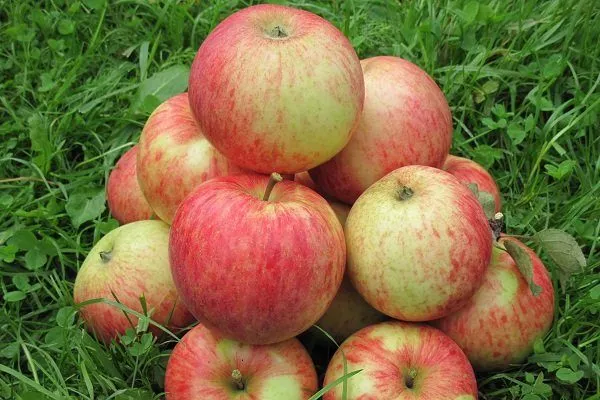
It's difficult to confuse this apple tree with other varieties, as its fruit has a distinctive appearance that isn't considered marketable. However, its flavor is quite distinctive. Gardeners love this variety for its ease of care and undemanding conditions.
Origin
In 1978, the Orlinka variety was bred at the All-Russian Research Institute of Fruit Crops by pollinating the First Salute variety with the American apple tree Stark Early Precoce. This was the work of a group of Russian breeders, including N.G. Krasova, Z.M. Serova, and E.N. Sedov.
In 1994, Orlinka was officially accepted for testing, for which seedlings were distributed to farms. In 2001, the variety was zoned for the Central Black Earth District.
Growing regions
The State Register of the Russian Federation indicates that the variety was tested in the Tambov, Lipetsk, Oryol, Kursk, Voronezh, and Belgorod regions. It is recommended for cultivation in these regions.
Despite this, Orlinka adapts well to any climate. It grows in Perm, the Vladimir region, Kaliningrad, throughout the Central Black Earth, Central, and Volga regions, all the way to the Urals.
It is not grown in the more northern parts of the country, as the tree dies from too severe frosts.
Appearance
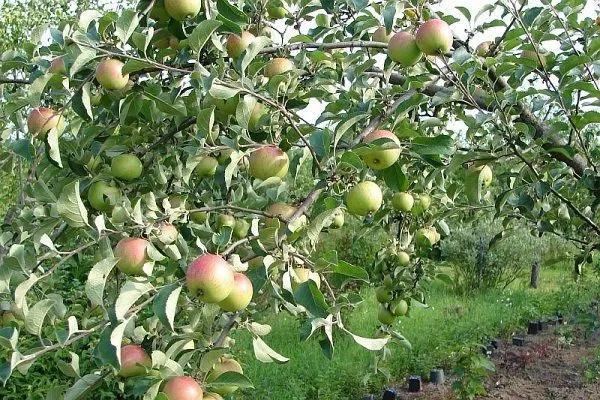
The Orlinka is considered a large, but medium-sized tree, reaching 3-5 m in height. Characteristic features of the tree:
- Crown. In maturity, it is spherical and round.
- Branches. Compact, growing at an acute angle to the trunk.
- Bark color. When young it is greyish, when mature it is dark grey with cracks.
- Crown diameter. It is up to 3 m.
- Shade of leaves. Usually matte green.
- Flowers. Large, pink.
- Root system. Up to 5-7 m with a large number of branches.
- Foliage shape. Rounded, with a sharp end and serrated edges.
Fruit characteristics
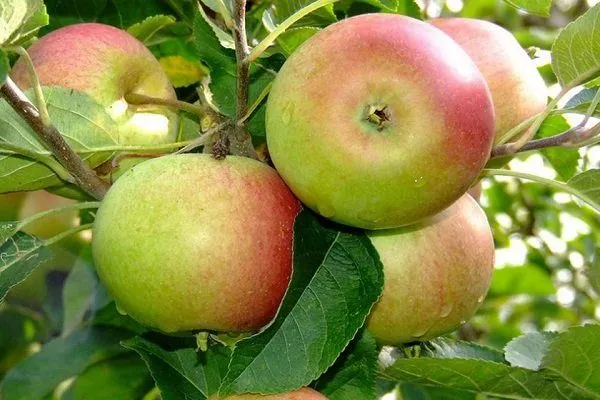
The fruits of this variety are considered table fruits, are medium or larger in size, and are characterized as follows:
- weight varies from 120 to 210 g;
- form - round or slightly flattened on one side;
- surface - smooth;
- peel - compacted;
- skin color – green at the beginning of growth, yellow-green at technical maturity;
- stripes present;
- blush – slightly reddish, located at 75-80%;
- subcutaneous points - in small quantities, green shade:
- taste - sweet and sour;
- peduncle - curved, rounded;
- funnel - narrow, small, pointed conical;
- cup - semi-open;
- heart - large, round;
- seminal chamber - large and open;
- seeds – small, round, dark brown;
- aroma - pronounced;
- pulp color – creamy$
- structure – dense, juicy, coarse-grained;
- assessment of tasting qualities on a 5-point scale – taste 4.3-4.4, external indicators 4-4.2.
Apples are considered highly nutritious and healthy, 100 g contains:
- fructose – from 9.3 to 9.5%;
- vitamin C – from 6.5 to 6.7 mg;
- fiber (pectins) – from 12.8 to 13.5%;
- P-active elements – from 312 to 315 mg;
- titratable acids – from 0.8 to 0.82%.
Productivity
A young apple tree produces up to 45 kg of fruit per season. After 12 years (under proper conditions), it reaches 100-120 kg.
Transportability and shelf life
The variety was originally bred to consistently produce high yields. This goal was achieved, but since Orlinka is an early-ripening variety, its shelf life is less than a month.
It's best to process apples immediately. Transporting the fruit is only permitted within 20 days of harvest.
Winter hardiness
Frost resistance is slightly above average, as the tree can withstand temperatures down to -30-35°C, provided it is insulated. For these reasons, the variety is not grown in harsher conditions than the Urals.
Disease resistance
Orlinka is considered resistant to all apple diseases, but only under favorable conditions—the right soil composition, moisture, pruning, etc. If the seedlings are transported to another region, the immune system is slightly weakened.
To prevent this from happening, experts recommend carrying out preventative treatment of trees in a timely manner.
Pollination
The variety is self-fertile and does not require assisted pollination. In fact, Orlinka is considered an excellent pollinator for other trees. However, additional pollination is recommended to increase yield.
To achieve this, plant apple varieties that bloom at the same time as the Orlinka tree near the tree, or place the seedlings near an apiary with pollinating bees. The best varieties are "Pamyat Voinu," "Melba," and "Orlovskie Polosatye."
Advantages and disadvantages
Subspecies
The optimal option for Orlinka is rootstock on dwarf trees. This has numerous advantages:
- earlier fruiting than on a vigorous rootstock;
- higher yield;
- ease of care;
- the fruits are tastier and juicier because they are exposed to more sunlight;
- more free space in the garden.
Despite this, frost resistance and fruiting period are reduced (only 10-15 years), and increased fertilizing is required.
Features of the best options:
- On a semi-dwarf rootstock. The varieties used are 60-164, 54-118, 57-545, and 60-160. Fruiting begins after at least 4 years, with apples weighing up to 170-180 g and reaching a height of 4 m.
- On a dwarf rootstock. The varieties Malysh, B9, and Paradizka are used. The first fruiting occurs after three years, with fruit weights reaching 130-150 g and tree heights reaching a maximum of 2-3 m.
Landing features
Before planting a seedling, choose the right location, prepare the area, fertilize, and treat the young tree. Most importantly, follow the planting technique and pattern specific to the Orlinka variety.
- ✓ Soil pH should be between 6.0-6.5 for optimal growth.
- ✓ The depth of the fertile layer is not less than 40 cm.
Choosing a location
This apple tree variety produces fruit well only in loose, light soil. It should be sandy loam or loamy. If the site has black soil or other heavy soil, amend it with river sand or peat. The proportions depend on the soil conditions.
Location parameters:
- full illumination;
- ventilation;
- side - south-east, south, which is especially important on the slopes;
- location of groundwater - the further, the better, since the root system is long and sensitive to high humidity.
If the groundwater is close, provide drainage or, as an alternative, the following:
- Dig a hole to a depth greater than required (approximately 1 m).
- Place a slate sheet on the bottom.
- Sprinkle it with fertile soil.
- Plant a seedling.
Preparatory work
The first thing you need to do is choose a seedling. It should be at least one year old. One-year-olds grow and bear fruit faster.
- 24 hours before planting, soak the roots of the seedling in water with the addition of rooting agent.
- Before planting, trim damaged roots back to healthy tissue.
- Treat root cuts with wood ash to prevent diseases.
Other rules:
- take into account the zoning and level of frost resistance;
- buy seedlings with whole, undamaged roots and crowns;
- Avoid specimens that show signs of disease or pest infestation.
How to prepare planting material:
- Carefully inspect the roots. If there's any damage, trim it off with sharp pruning shears. If the roots are bare, remove 80-90% of the leaves, ensuring each branch has at least one.
- Check the branches - if they are very branchy, cut back the side shoots by a third.
- 2-3 hours before planting, soak the seedling in a clay slurry or ordinary water, but make sure it is settled.
The site also requires preparatory measures:
- If the work is carried out in the fall, dig holes 2 weeks before planting, which will help the soil settle;
- If planting is done in spring, make the hole in autumn, immediately after all the leaves have fallen;
- hole width – 1–1.2 m;
- depth – 0.6-0.8 m;
- Add fertilizer to the soil dug from the holes: 10 kg of rotted manure or compost, 40 g of nitroammophoska and 30 g of ammonium nitrate per 1 sq. m (minerals can be replaced with 0.5 kg of urea), then pour the soil mixture back into the holes.
If the soil is heavy or there is groundwater nearby, add 20 kg of sand and 1 kg of wood ash.
Deadlines
Plant the Orlinka apple tree in autumn or spring.
Conditions:
- From mid-April to mid-May. A mandatory requirement is for the soil and air to warm to a temperature of 12 to 14°C. No recurring frosts should be expected, otherwise the young tree will die. Caring for the seedling should begin after 8 to 14 days.
- Throughout October. All the leaves in the garden should have fallen. The first frost should be about 30 days away. After planting, keep the seedlings warm.
Helpful tips:
- For the South, autumn planting is ideal, since in spring the air warms up too quickly, causing foliage to develop, but the roots do not have time to strengthen;
- for a cool climate, the best option is spring, since frosts occur too early and sharply in autumn;
- Autumn is also suitable for the Moscow region, as heavy rains begin here, thoroughly soaking the soil.
Technology
The process of planting the Orlinka apple tree is simple:
- On the prepared area, dig holes again and remove the soil mixture to the required depth.
- Form a small mound in the center of the bottom.
- Place a seedling on it.
- Hold the tree with one hand and with the other, carefully spread out all the root shoots across the width of the hole.
- Fill with soil mixture and compact lightly.
- Water generously – 25 to 30 liters per seedling.
- Mulch. Use straw, grass clippings, spruce branches, and peat as mulch.
- Insert heavy stakes near each tree and tie them in place. Remove the supports after at least two years.
Schemes
Plant the eagle lily according to the standard scheme, which includes the following parameters:
- depth – from 0.6 to 0.8 m;
- width – 1 m;
- the distance between trees in one row is from 3 to 4 m;
- distance between rows – 4-5 m.
It is important to take the rootstock into account: for semi-dwarf seedlings, the distance between rows is 4 m, between seedlings in a row - 3 m, for dwarf - 3.5 and 2.5, respectively.
A review of the Orlinka variety can be found here:
Orlinka's agricultural technology
Orlinka's cultivation practices are no different from those for other apple varieties. There are only minor nuances that affect yield. Pay particular attention to these.
Watering
For the first 15 days after planting, water the Orlinka twice a day with 5-7 liters of water. Then, reduce the frequency of watering by half until flowering. Until fruiting begins, watering is recommended once every two weeks.
When the tree becomes mature, follow these rules:
- water before and after flowering, when the ovaries are shed and during fruit formation, 2 weeks before harvesting and before the onset of cold weather;
- pour 60-120 liters of water under one tree, depending on the age of the apple tree;
- minimum liquid penetration depth – 5 m;
- Moisten the plant using grooves made around the trunk with a diameter of 1-1.5 m.
After watering, be sure to mulch the trees under the trunk.
Loosening the soil
The area around the trunk should be kept clean to prevent diseases and pests. To achieve this, weed as weeds grow. Don't neglect loosening the soil to a depth of 7-10 cm—this allows the root system to receive oxygen.
Top dressing
In the first half of the growing season, the Orlinka apple tree needs nitrogen and phosphorus, in the second – potassium and phosphorus.
| Type of feeding | Period of contribution | Quantity per tree |
|---|---|---|
| Organic (compost) | April | 10 kg |
| Mineral (nitroammophoska) | May | 40 g |
| Potassium-phosphorus | September | 150 g |
How to fertilize:
- in April – an infusion of bird droppings or mullein (1 kg of organic matter per 10 liters of water), for one adult tree 20-25 liters are needed;
- in May pour a mixture of 20 liters of water, 80 g of potassium, 100 g of superphosphate and 50 g of urea under the tree;
- in June repeat the previous procedure;
- in July dissolve 2.5 g of sodium and 110 g of nitrophoska in 25 liters of water;
- after harvest, that is, in September, 150 g of phosphorus and potassium are required per 20 liters of water.
Crown formation
The beauty of the Orlinka is that its crown is easy to shape – it can be given the most unusual appearance, which will decorate the garden plot.
There are several types of pruning:
- Formative. The first time should be done 12 months after planting the seedling, but it should definitely be in the spring. If the trees were planted in the fall, the "rest" period is extended. Gardeners typically create spindle-shaped, sparsely tiered, or simply tiered plants.
Pruning rules: cut off 1 branch out of 3, shorten by 3/4, and leave the shoot located in the center. - Supportive. Helps maintain the desired crown shape. Additionally, thin out branches, as Orlinka's branches grow at an acute angle.
- Sanitary. Carry out the procedure in the fall. Remove all dry, broken, and diseased branches.
- Rejuvenating. Perform this after 10-15 years of growth. To do this, completely cut off three mature shoots.
Treatment against diseases and pests
For preventative measures against insects and diseases, treat trees from mid-February to the end of March (the timing depends on the climate and weather). For this, use products such as Hom, copper sulfate, and Fufanon. Next, apply the following products:
- in April-May – Aktara, Urea, Nitrafen;
- in June-August (at least twice) – ZOV, Aktara;
- after harvest – Fufanon, Urea, iron sulfate.
Preparing for winter
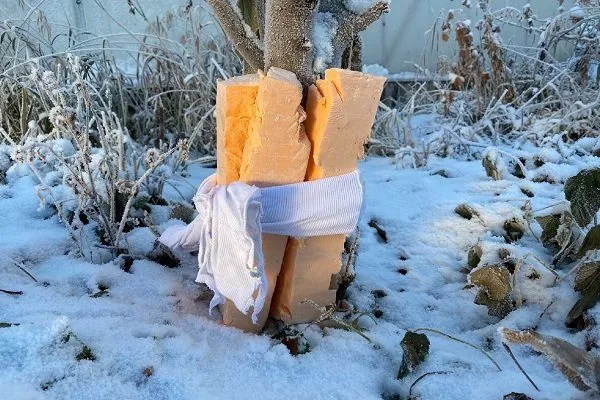
If winter temperatures don't exceed -20°C, the Orlinka apple tree doesn't require insulation. If the climate or upcoming weather conditions predict more severe frost, apply mulch around the trunk and wrap the trunk with any warm material.
Fruiting
Orlinka is an apple tree that begins bearing fruit relatively early. This is due to its short stature. The early ripening of the variety precludes long-term storage of the fruit, so it's important to know how to store it properly to extend its shelf life.
The beginning of fruiting
The first fruits can be harvested 2-3 years after planting, but they are small – 2-3 kg at most. After 4-5 years, the tree produces 5 to 10 kg, and the full harvest is harvested after 6-8 years.
Flowering period
Early Orlinka blooms from early May to mid-May, depending on climate conditions. The flowers are large and slightly pinkish.
Fruit ripening time
The first harvest is picked in early August in the southern regions and in mid-August in the rest of Russia. The last fruit may ripen by early September.
When and how to harvest?
Harvest the Orlinka apple tree in 2-3 stages, as it ripens. Choose dry, sunny weather and use scissors or pruning shears. If you don't have these tools, follow these steps:
- Grasp the fruit with all your fingers so that your index finger is on the stalk.
- Lift the apple up slightly and pull.
Do not twist or pull the fruit downwards – this reduces the shelf life by 10 days.
Rules for storing apples
Orlinka is best stored in the refrigerator or basement. In the latter case, it's advisable to do the following:
- Wrap each fruit in paper (not newspaper, not glossy).
- Sprinkle with sawdust.
- Place in a wooden box with slots, interleaving each layer with paper.
Possible problems
Sometimes problems arise that a novice gardener can't solve because they don't know the cause. The following difficulties are typical for Orlinka:
- The apples are falling. Causes include pest infestations, disease development, overripeness, dense branches, and improper watering (fruit drop due to overwatering and drought). How to solve the problem:
- identify the type of pest or diseases (there are many that cause apples to fall off - leaf rollers, sawflies, codling moths, chlorosis, powdery mildew, black cancer, etc.), then carry out the treatment;
- thin out the tree in a timely manner;
- normalize watering.
- The tree does not bloom or bear fruit. Causes include adding too much water at once, dense branches, insufficient sunlight, or the presence of pests and diseases. To correct the situation, follow the same steps as in the first case.
Reviews of the variety
The Orlinka apple tree is considered easy to grow and offers many advantages. Its fruits are excellent for pickling, marinating, drying, and preserving. The key is to harvest the apples early and not let them overripe.