
For apple trees to achieve peak productivity and produce a good harvest, they require proper care. One such care step is autumn pruning, which maintains the tree's health and positively impacts the crown.
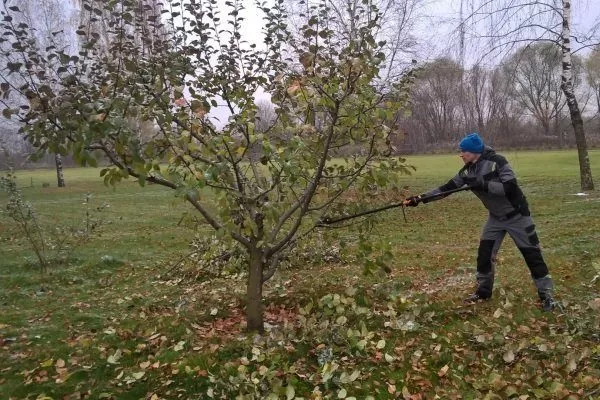
Why do you need to prune an apple tree in the fall?
Timely and proper fall pruning, supplemented with fertilizer, guarantees high yields and longevity of the apple tree. Fall pruning is also necessary for:
- Giving a beautiful shape to the apple tree crown begins during the seedling stage and continues throughout the entire life cycle of the tree;
- strengthen new branches;
- to preserve the strength of the branches that they will need during the winter;
- so that young branches can replace old ones;
- With the arrival of spring, the tree's growth improved.
If tree pruning in the fall is done incorrectly, this can have serious consequences: the plant begins to lack nutrition, which affects the quality and quantity of fruit.
If pruning deadlines are not observed, frost may damage the bark and wood, which may lead to the death of the trees.
Recommended timeframes
When pruning an apple tree in the fall, follow two rules:
- Pruning begins before the leaves have completely fallen.
- Finish before the first frost.
It's also crucial to consider the region where the trees grow. For example, apple trees in the Urals require late-ripening varieties considered frost-resistant, as the climate there is harsh and cold. Choose locally bred varieties, as they are already adapted to the specific climate. In the Moscow region, however, the tree pruning pattern is standard: it begins with crown formation and the varieties planted are those that should be pruned in the fall—dwarf and columnar apple trees.
Read also the article about the best varieties of apples.
Some gardeners use the lunar calendar to determine pruning times. Lunar cycles influence all biological processes, and fruit trees are no exception – sap flow becomes more active during the waning moon, as well as under all zodiac signs except Pisces, Cancer, and Aquarius.
Unfavorable days are considered to be the days of the waxing moon - the sap flow is directed upward and the tree cuts become too sensitive, as well as when the moon changes its cycle - full moon and new moon.
Preparing for pruning
Before you begin pruning, you should do some preparation: learn the pruning process, select the necessary gardening tools, and purchase or prepare cutting treatments.
This video will show you how to properly prune an apple tree:
Tools and materials
To carry out this type of work you will need special tools:
- Garden saw A hacksaw is a saber-shaped tool that tapers toward the end of the blade. The saw's teeth have special holes that prevent sawdust from accumulating. For pruning, a garden tool with a special profile and angled blade is used for ease of use.
- Secateurs – the tool should be as simple and easy to use as possible – don’t use one with a ratchet mechanism, as you’ll have to press on it several times when cutting.
- Air pruner – The pruning shears are attached to a long pole and operated using ropes and levers. This tool can be used for pruning hard-to-reach branches.
- ✓ The tool should be made of high-quality steel to ensure durability and ease of sharpening.
- ✓ The weight of the tool should be balanced to minimize fatigue during long-term work.
You also need equipment:
- special clothing;
- gloves;
- ladder;
- comfortable shoes.
Thin branches can be cut with pruning shears, but for stronger branches, a saw is best. An important aspect of tool preparation is that it must be as sharp as a razor and clean as possible to avoid damaging the tree and creating jagged cuts, which will delay the healing process, as dull tools will severely fray the bark.
Introduction to pruning rules
Pruning apple trees in the fall is considered a rare procedure, as improper pruning or unfavorable weather can cause trees to freeze or die. However, while there are positive aspects, it's important to time the pruning within the right timeframe to ensure a successful outcome and to consider a few points.
In autumn, the pruning rules are as follows:
- Use a stepladder or lay boards around the tree. This is to prevent the tree's roots from getting cut off by trampling around it in the wet soil and compacting it.
- First, remove large broken or dry branches.
- Next, the weakest branches among those that are located too close to each other are removed.
- Branches that grow at too sharp an angle are cut off.
- All damage caused during pruning must be treated with special means.
- All cut branches must be collected or burned.
Products for processing cuts
The apple tree recovery process after pruning will be faster if you use special solutions to treat cuts.
Garden varnish is sold ready-made, but you can also make it yourself. To do this, you'll need:
- beeswax;
- fat;
- vegetable based oil;
- drying oil;
- alcohol;
- agrotechnical compositions;
- resin;
The wax prevents water from penetrating the wood and prevents the putty from running off the wound. Rosin is sticky, allowing the varnish to adhere well to the wood, and the fat prevents the putty from cracking.
You can use any unsalted fat and replace it with oil or drying oil, and instead of wax you can use turpentine.
Garden pitch can be warm and liquid:
- Warm brew Heat 250 grams of rosin, 5 grams of resin, 10 grams of rendered beef or lamb fat, and wood resin over medium heat. After heating the mixture, add half a liter of alcohol in small portions.
- Cold brewTake 500 grams of turpentine, rosin, and 250 grams of linseed oil and mix them together. This will create a semi-solid mixture that should be applied to the strips and then wrapped around the cut and other damaged areas.
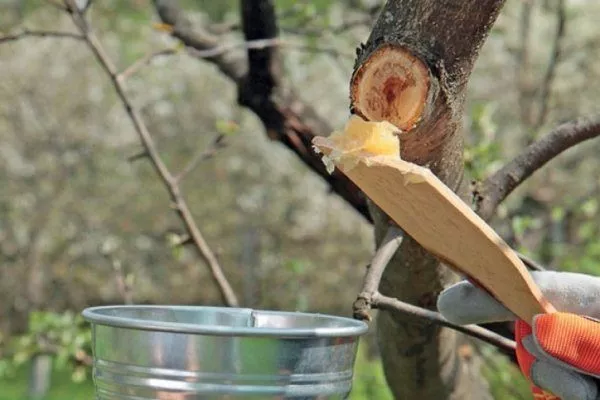
Other cut treatments include:
- Dye – Use olive ochre or dilute it with 500 grams of linseed oil. Do not use white or nitro enamel.
- Clay mash – Take 2 parts clay, 1 part mullein, and some chopped hay or straw. Add water and stir until the mixture reaches the consistency of sour cream.
- Cement mortar – Take one part cement, three parts fine sand, mix with water, and add a little drying oil. Suitable for filling deep wounds and cracks.
- Disinfectant solution – from lime and copper sulfate taken in a ratio of 10:1.
Only old, dry branches should be treated immediately, and you should wait at least a day before treating new cuts.
Classification of pruning
Pruning apple trees has a beneficial effect on their development and subsequent fruit yield. There are several classifications for pruning.
Depending on the type
There are two types of pruning process depending on its type:
- Shortening – This type of pruning involves shortening only part of the branch, focusing on fruit-bearing branches, especially if the tree is overloaded. This type of pruning helps promote new buds, increase branching, and change the growth pattern of branches—some branches will grow more vigorously than others.
- Thinning – shoots at the base are completely removed, especially dried or deformed ones.
By degree of pruning
In autumn, several types of pruning can be carried out, depending on the age of the apple tree:
- Weak – applied to young trees. Only new branches that have grown during the year are pruned. Their length is shortened by 1/4.
- Average – used on trees aged 5 to 7 years and on older trees to increase the number of productive branches and to shape the crown. Their length is shortened by 1/3.
- Strong – used to thin tree branches to allow more sunlight for faster ripening. Their length is shortened by half.
They are singled out separately pruning of dried tree branchesThe most important thing in this procedure is not to prune the branch directly at the apple tree trunk, as this will cause a hollow and ultimately the death of the tree. The branch should be cut down to the point where the first bud appears. Then, use a fine-toothed saw to trim the stump so that the cut is directed away from the trunk toward the branch being cut. Treat the cut only with garden pitch, and repeat the treatment if there has been precipitation.
Depending on the purpose
Depending on the purpose of pruning, there are different types of pruning:
- Formative – helps to create a certain crown shape and subsequently maintain it, thanks to which the skeletal part becomes resistant to stress.
- Regulating fruiting – helps maintain the shape of the crown, keep the branches illuminated and not overload the skeletal part of the tree with young branches.
- Sanitary – Remove all diseased, dry, and broken branches to create a crown that is uniformly light-permeable and well-ventilated. This procedure can be performed year-round, except during frosty days. After pruning, all tools used should be wiped with alcohol. This procedure is performed throughout the growing season.
- Restorative – restores the ability of plants damaged (for various reasons) to grow, bloom and bear fruit.
- Rejuvenating – stimulates new branch growth (suitable for older trees that are losing their decorative appeal). If annual growth is 10-15 cm, branches should be pruned to stimulate adventitious and dormant buds. This should be done in early fall.
- Structural – branches that interfere with the main ones are removed – they cross them, grow incorrectly, make the crown too dense or hinder the growth of other trees.
Methods for pruning apple trees in autumn
It's important to pay attention to making the right branch cuts, as this can either be beneficial or detrimental if done incorrectly. There are several apple tree pruning techniques.
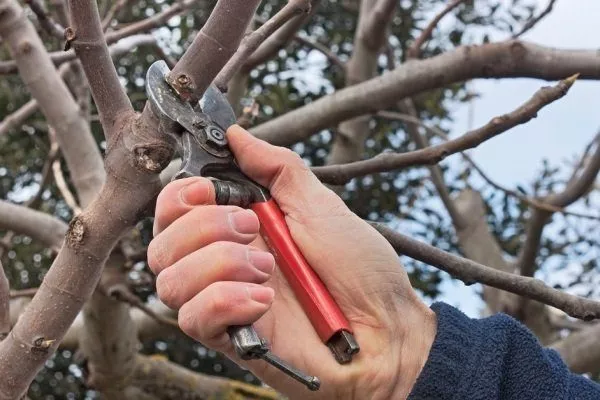
To the side branch
This type of pruning is used when it's necessary to shift the growth direction from one branch to another. One branch is removed—relative to the remaining branch, the cut will act as a continuation of it, thus making the lateral branch the main branch.
On the ring
It's used when a large branch needs to be completely cut—one that's dead, weak, or barren. If you examine the branch closely, you'll see a ring-shaped growth at its base, which contains cells capable of rapid reproduction. These cells help the tool's wounds heal more quickly, so the branch is cut along the upper edge of this ring.
First, use a hacksaw to cut the branch from below by a third of its thickness, 25-30 cm away from the ring. Then, move the saw 2-3 cm to the side and cut from above. After trimming the branch, saw off the stump along the top of the ring. If the cut is uneven, smooth it out with a knife, as a smooth cut promotes faster healing.
Avoid cutting a branch too high to leave a stump or cutting it off with the ring attached. These mistakes can result in a hollow, cracked wood, or drying out the branch. If the ring isn't visible but the branch must be cut, it's recommended to draw a line along the branch from which the branch being removed originates, and a second line perpendicular to the branch being removed. Bisect the resulting angle—the bisector—and this will be the direction of the cut.
On the kidney
This pruning technique is considered important, although the procedure is not particularly difficult. The goal is to shorten branches to encourage branching. It is used on young trees. If the plant has a dense center and needs to thin out the crown, pruning is performed on an "outer bud"—the branch is shortened to an outward-facing bud extending from the center.
If the tree is too spreading or the lower branches need to be raised and the center strengthened, then pruning is done on the “inner bud” - directed towards the center of the crown.
As with pruning for a ring, it's important to make the cut correctly—at an angle, no higher than 1.5 centimeters from the bud. Cutting too high will impede wound healing, while cutting too low could damage the bud.
If brown wood appears at the cut site, it means the branch has begun to die, so it needs to be shortened to a healthy part or removed completely.
The pruning process
Pruning is done on a case-by-case basis, depending on the region the tree is growing in and its current condition. Pruning begins in the tree's first year to restore balance between its diminished root system and the spreading aboveground portion of the tree, which will require more water and nutrients. In the following 3-5 years, trees are not pruned; instead, broken and dried branches are simply removed.
Before pruning a tree, pay attention to the following factors:
- Degree of development.
- Size.
- Age.
- Is the wood healthy?
- How developed is the tree crown?
- What is the recovery period?
After landing
Following all pruning rules, the upper branches of trees are pruned by 2/3 if they are young and 3/4 if they are mature, while the lower branches are pruned by 1/3 of their total length. For poorly formed seedlings—those with a lopsided crown or other abnormalities—emphasis should be placed on shortening the lateral shoots so they grow away from the center of the crown.
The inner branches should not become too dense, because then the branches stop receiving the necessary amount of sunlight and begin to lag in physical development. Therefore, to prevent these processes, the branches should be correctly directed during pruning.
Young apple tree
If a young apple tree is growing in a permanent location, pruning should be done carefully so that the tree can retain more foliage and quickly restore its root system.
Rules for the first pruning of a young apple tree:
- Competing branches are removed completely, without stumps, to prevent the formation of suckers or buds.
- Excessively long main branches are shortened. If the crown is pyramidal, pruning is performed on the outer bud (relative to the central core), and if the crown is spreading, on the inner bud. The central core of a tree with a spreading crown should be 10-15 cm high, while for a pyramidal tree, it should be 20 cm high.
- Weights are hung on the lower branches so that they take a horizontal position.
- Pruning is only done when necessary: thin and weak branches can be attached to the conductor so they are positioned vertically. Strong and robust branches are bent to the ground so they are positioned horizontally.
- The lowest branches can be positioned as low as 50 cm above the ground, but they should not be positioned above the last quarter of the tree's height. Otherwise, the tree will grow too large, creating significant difficulties during harvesting and maintenance. A radical solution to this problem is to prune the sapling at a height of 70-80 cm, leaving only the bare trunk. New branches will subsequently begin to grow from this trunk, forming the crown.
Rules for crown formation:
- The central conductor occupies the main position;
- He should have no competitors;
- The main branches are distributed evenly and they should also develop approximately equally.
Fruit-bearing apple tree
Pruning is carried out regularly, since after a year or two, if there are gaps, it will be necessary to remove large branches, which will activate the growth of small ones.
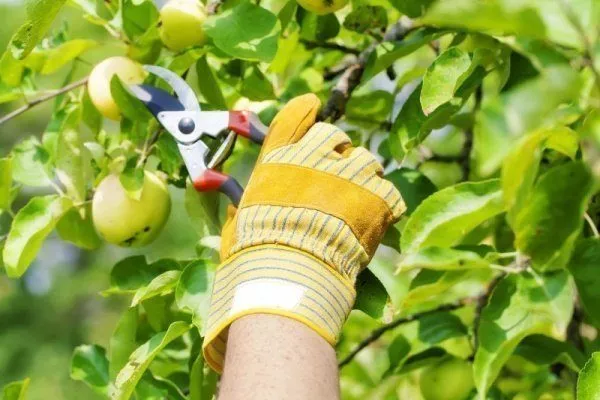
The pruning scheme is as follows: thin the crown moderately and block excessive upward growth. If suckers are detected, prune them back to the ring. As the apple tree ages, fruiting frequency increases, and to rejuvenate the tree, pinching—the process of pruning branches whose tips have slowed—is necessary.
Old apple tree (rejuvenation)
An old tree (over 20 years old) can no longer withstand drastic and severe pruning, so the procedure is performed in several stages over several years. Before pruning, check that the trunk and skeletal branches are still viable and free of rot and wood diseases.
The crown should be divided into several zones, where pruning will be carried out over the course of several years according to the following scheme:
- In autumn, pruning is carried out above the outer buds on the south side.
- The following year, the same pruning is done, but from the opposite side, and the vertically growing shoots that have formed during the year are also trimmed.
The pruning process begins with removing inward-growing and vertical branches, as well as any dead, diseased, or non-fruiting ones. When rejuvenating a tree, it's better to remove a large branch at once rather than numerous small ones. After this, uncover the center of the crown.
- Shorten the trunk at a height of 3-3.5 meters from the standard.
- Cut off all branches and twigs that are located above young shoots.
- Remove the shoots growing towards the center (about 10 pieces).
This scheme ensures successful tree restoration, gradual crown growth and increased fruiting.
Rejuvenation of old apple trees is carried out once every 5 years.
Columnar apple tree
These apple trees are pruned only to the competing shoots with the apical bud, as the main shoot cannot be pruned. These shoots can later be used for grafting. On older trees, the trunk is pruned at a height of 70-80 cm.
The biggest mistake a gardener makes is pruning a tree that's 2-3 years old. New shoots from such trees will never produce fruit and will grow vertically, crowding the crown. The apples on such trees will be small, and their color won't match the variety.
Dwarf apple tree
When planting a dwarf apple tree in the fall, the crown branches should be cut back by 1/3 or 1/4 of their length, depending on the size of the root system—the smaller the root system, the more branches need to be cut. The following year, the apple tree's first-order branches are pruned back to 30-35 cm from the trunk, above the selected buds. These will later become the second-order branches, and care must be taken to ensure they are positioned on the outer part of the crown, avoiding forks at sharp angles. Branches unsuitable for second-order growth should be pruned back to 25-30 cm from the trunk.
Later, as branches and fruiting shoots develop, the tree's crown is formed. The main goal of pruning during this period is to remove diseased and crowding branches.
During active fruiting, dwarf apple trees should have their first-year shoots on the main branches pruned by a quarter if they have grown more than 20 cm. This is done to prevent the tree from being depleted of fruit production. If after five years, fruit production declines and the fruit itself becomes small, a rejuvenation procedure is necessary.
Caring for an apple tree after pruning
As mentioned above, treat the cuts with special products after pruning. Warm weather can sometimes return before winter, causing the trees to revive and delight the gardener with a large number of suckers. These are unnecessary and should be removed as well. An important aspect of care is protecting the tree's bark from external influences. Cover them with whitewash and a special protective fiber. Read more about whitewashing apple trees. here.
Also, ensure protection against parasites, insects, and rodents. Use special solutions and preparations, as well as protective nets that fit over the tree trunk and are guaranteed to protect it from damage caused by various pests.
- Conduct a final inspection of the tree for damage and disease.
- Treat all cuts and damage with special products.
- Install protective nets against rodents.
- Whitewash the trunks to protect them from sunburn.
The next step is fertilizing. If done correctly and on time, this can improve the tree's immunity and winter hardiness. If the soil in the area isn't particularly rich, apply up to 8 kg of organic fertilizer, up to 10 g of nitrogen, potassium, and 6 g of phosphorus to the tree's trunk. 150-250 grams of wood ash can be used as a substitute for phosphorus-potassium fertilizer.
After spreading the fertilizer, it is pressed into the soil to a depth of 15 cm. If the soil is very low in nutrients, the fertilizer is placed in special wells or cut grooves. For a tree approximately 30 years old, at least 20 wells are needed, and the fertilizer is poured into them in dissolved form.
If you know of weak branches, install supports under them for the winter and during the ripening period of the harvest - this will prevent the branches from breaking off either due to a large amount of snow on them or due to heavy fruits.
Common mistakes beginners make
Pruning apple trees in the fall is considered a challenging task for beginners, so mistakes are likely. It's important to understand that only light, formative or maintenance pruning is possible in the fall.
We recommend watching a video where a gardener talks about his mistake of improperly pruning an apple tree:
The errors are listed below:
- If you over-prun a young apple tree, the resulting shoots will begin to grow vertically, crowding the crown. The fruit on these trees will be small, and yields will decline.
- Inexperienced gardeners, during periods of abundant fruiting, replace the main fruiting branches in the crown area every 3-4 years. When a large number of shoots grow in the central part, this not only thickens the crown but also increases susceptibility to diseases and pests and reduces the yield and quality of the fruit.
To help a beginner figure out what to prune and what not, they can use different colored ribbons. Choose a color for each branch category:
- branches that are not fruitful or have a small number of fruits;
- branches bearing abundant fruit;
- young branches.
Proper pruning will determine not only the yield but also the tree's health throughout the following year. If the apple tree is neglected and neglected for several years, it will be very difficult to revive, and extensive pruning will be required.
good article
The article is helpful; I watched the video with interest, though it's a shame the second one doesn't open. Considering I've planted many apple trees on my property, and they all require pruning, I'll be returning to this page again. The only thing I'm missing is some illustrations; I'd like to see a photo or drawing of pruning methods (ring, bud, or lateral branch). I understand the logic, but I'd also like to see an example to avoid making mistakes when pruning. Otherwise, it's well-written and clear; tomorrow I'll try pruning my apple trees for the fall!
I agree, but the video opens. You need to click "Watch on YouTube."